-
-
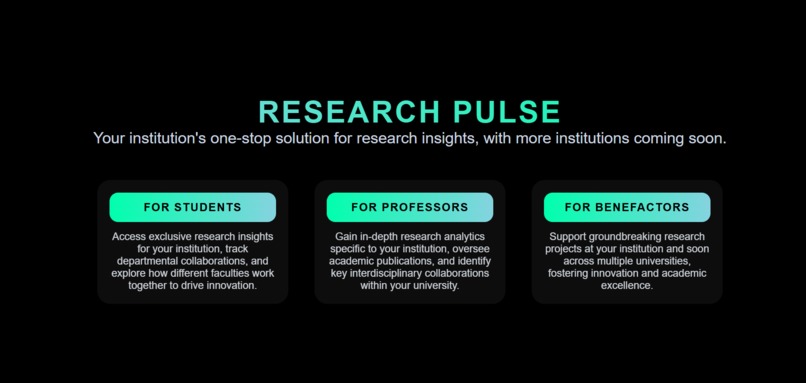
Research pulse - An AI driven research ecosystem
-
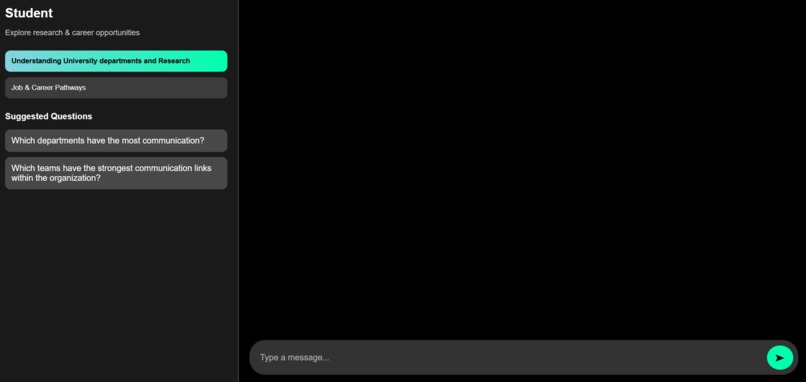
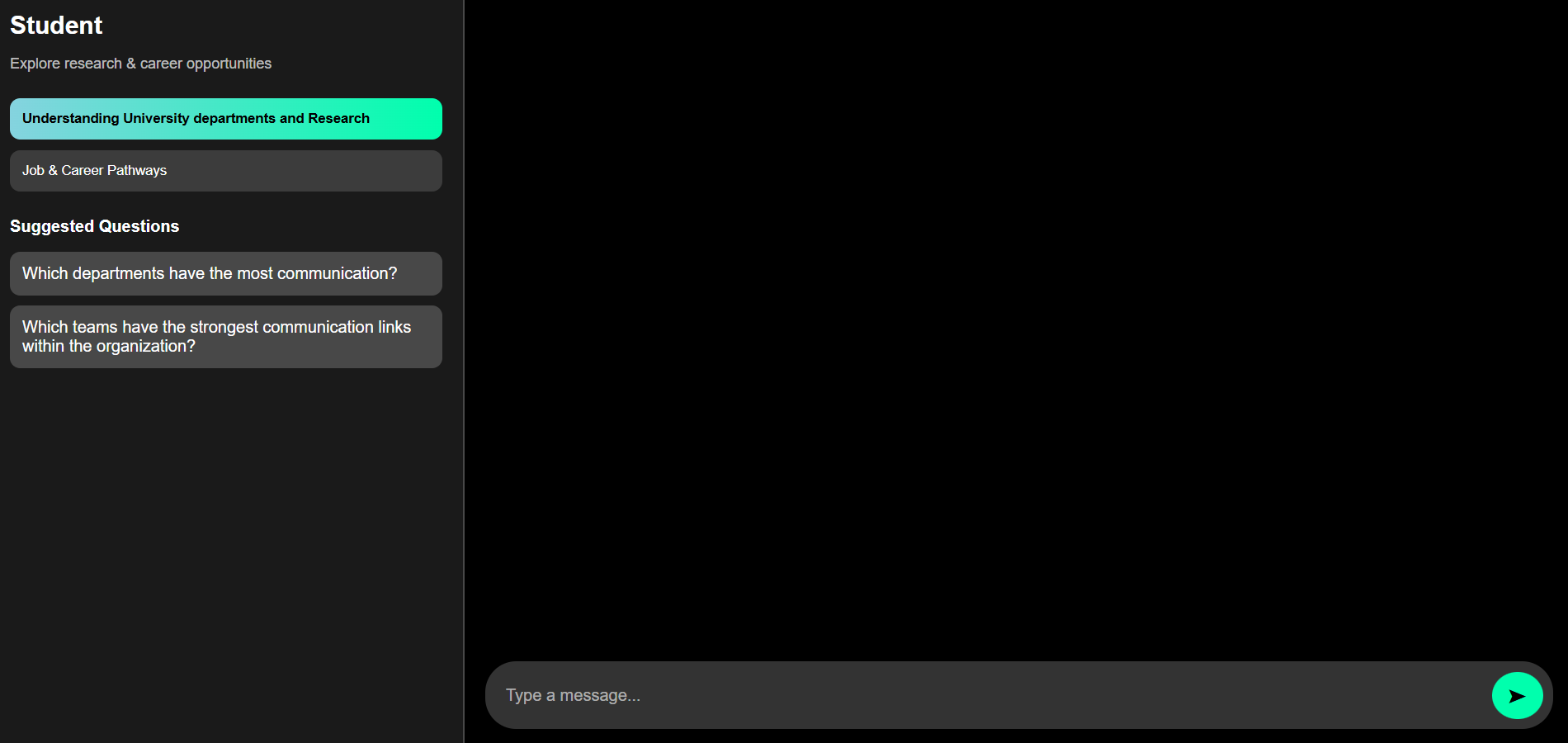
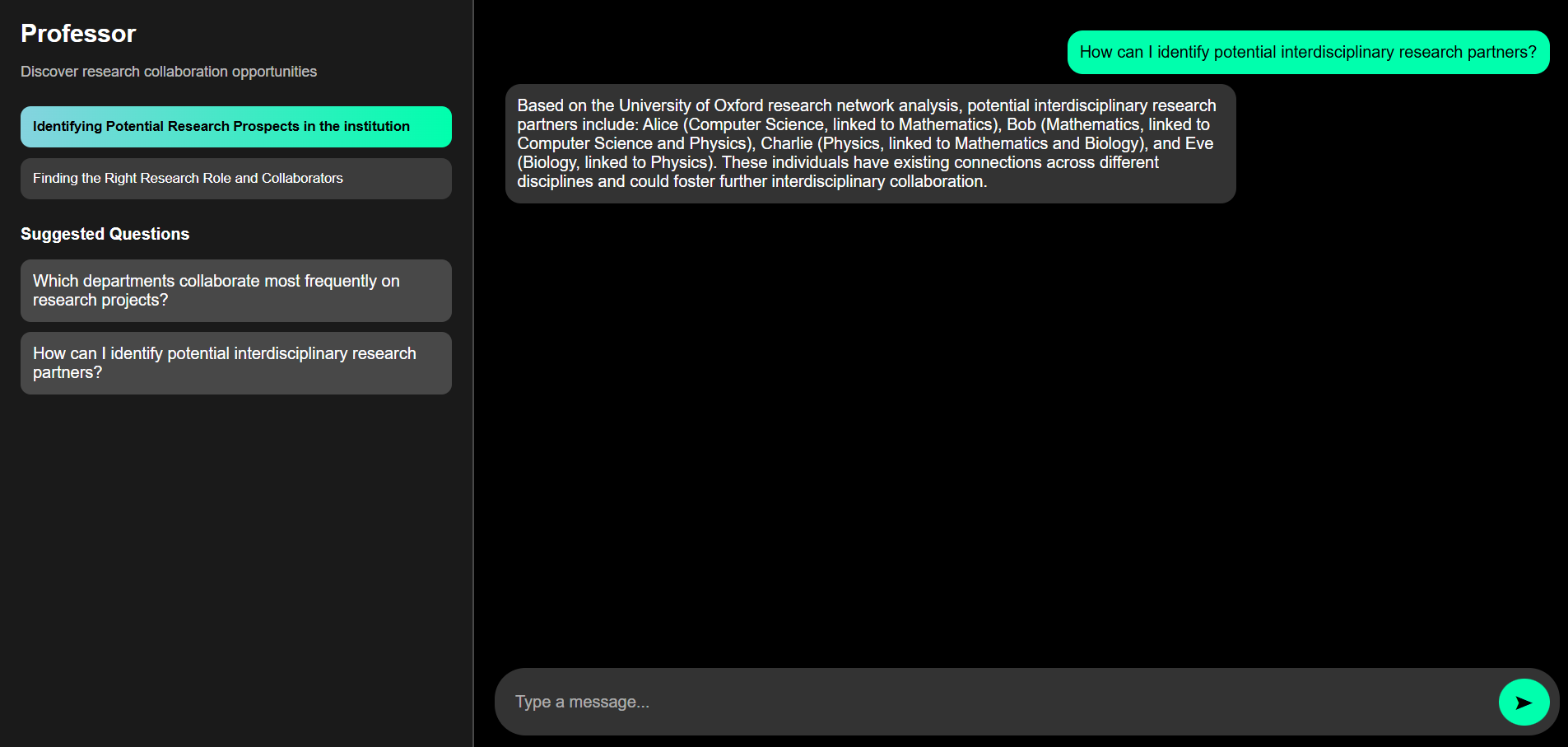
Suggestive questions for different personas
-
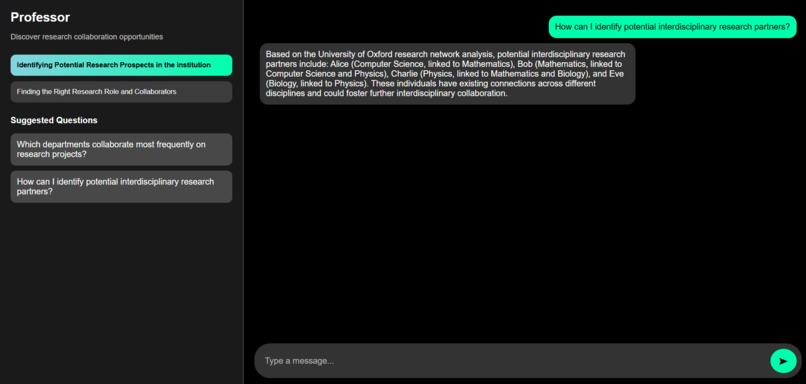
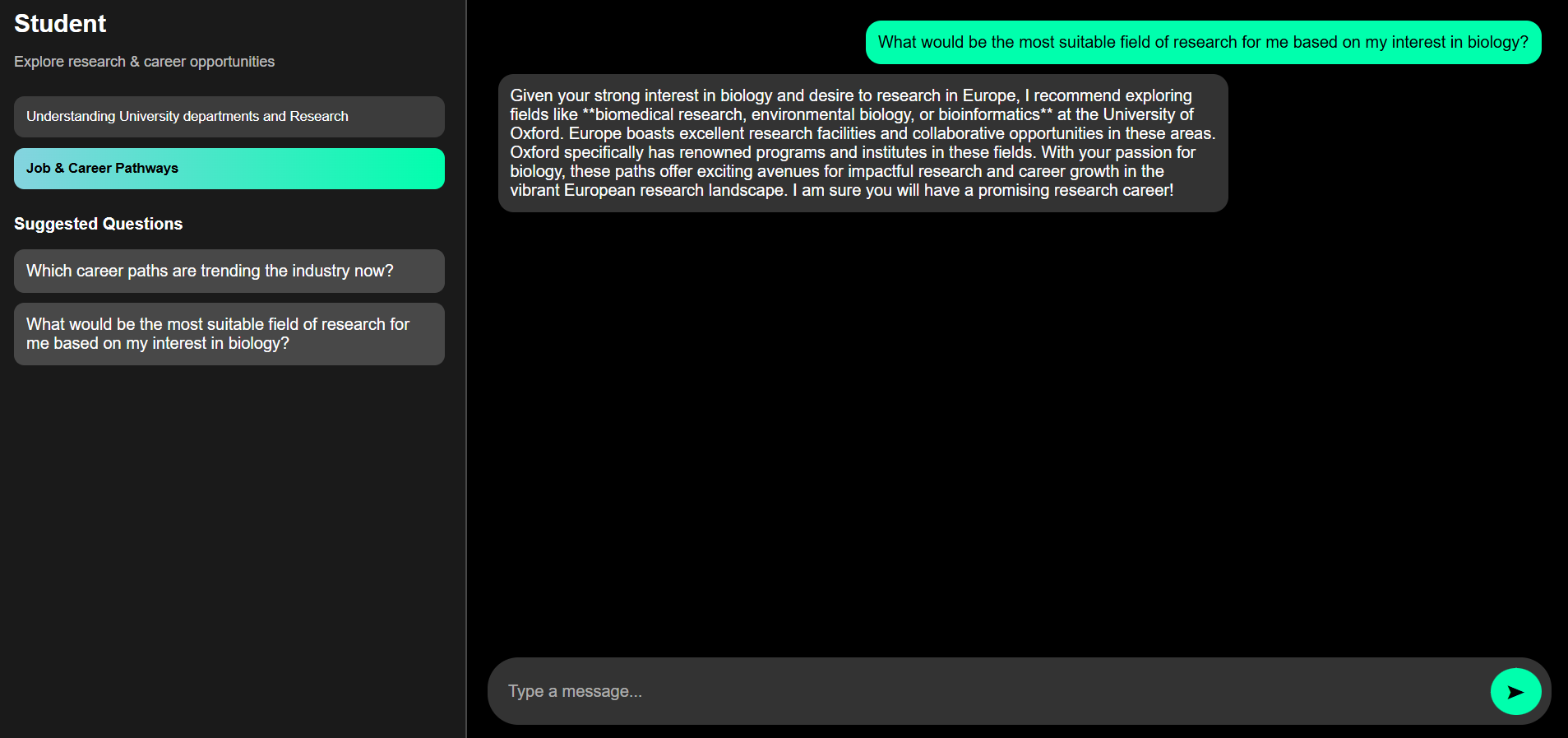
QnA support to cater to different questions helping decision making
-
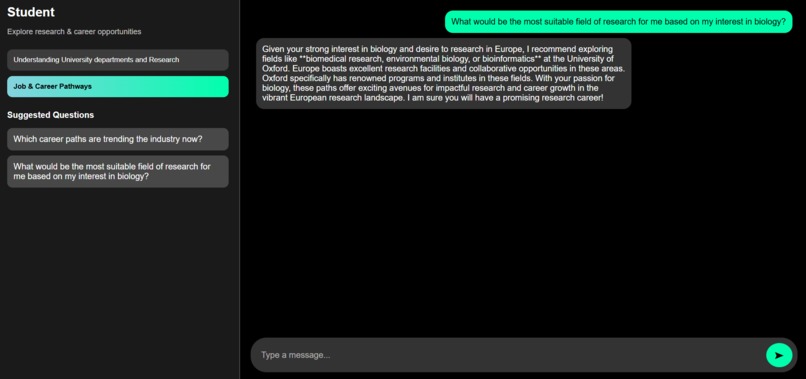
QnA support to cater to different questions helping decision making
Inspiration
In our college, we faced significant challenges regarding research—students often struggled with not knowing the right people to approach, whether for mentorship, collaboration, or funding. Many promising research ideas were left unexplored simply because there was no clear pathway to connect with the right professors or benefactors. Additionally, we didn't know whom to reach out to for help or how to approach the right department for guidance. This lack of structure made it difficult to navigate research opportunities efficiently. This inspired us to build a solution that bridges this gap and creates a unified ecosystem for research, ensuring that students, professors, and benefactors can seamlessly connect and collaborate, leading them to take informed decisions.
What it does
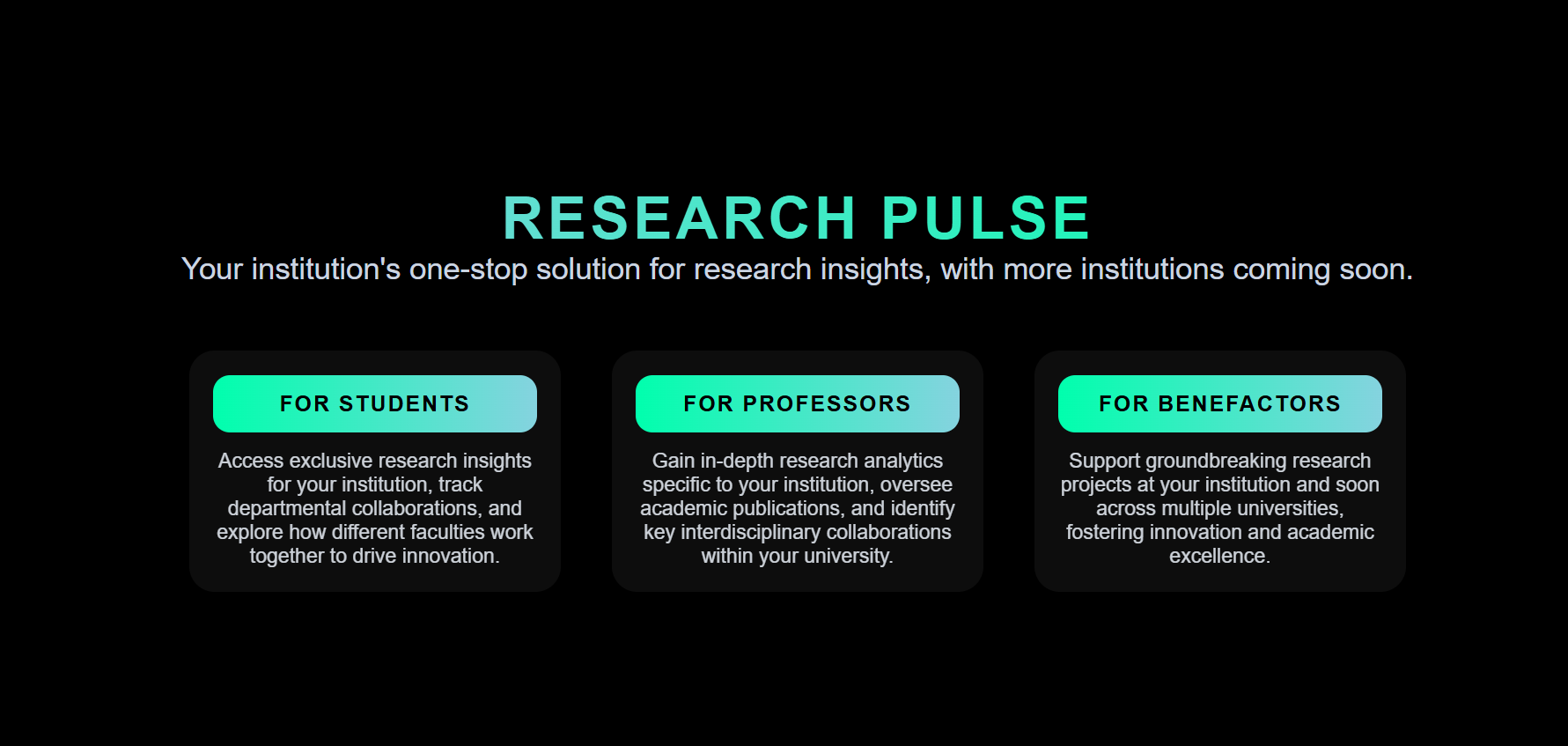
Research Pulse is an agentic app designed to facilitate seamless collaboration between students, professors, and benefactors. The platform provides:
- A unified space where researchers, mentors, and funders can connect.
- Tailored Q&A systems that offer curated suggestions based on user personas.
- External data enrichment to enhance decision-making with broader insights.
- A structured approach to help students find relevant research opportunities, professors discover potential collaborators, and benefactors identify impactful projects to fund.
How we built it
- We used GraphRAG & NVIDIA cuGraph to build the app’s intelligence, enabling efficient knowledge retrieval.
- The backend is powered by Python and an ArangoDB database, ensuring smooth data handling.
- The frontend is developed using React, providing an interactive and user-friendly experience.
- The solution is structured around three personas—students, professors, and benefactors—each having a dedicated module to cater to their specific needs.
- We created a Colab Notebook for easy walkthroughs and a demo app to showcase our work.
Challenges we ran into
- Data Limitations: We initially worked with a restricted dataset, so we had to assume the University of Oxford as our model institution.
- Complex Persona Interactions: Balancing the different needs of students, professors, and benefactors while keeping the platform intuitive was a challenge.
- Graph Processing Optimization: Implementing NVIDIA cuGraph efficiently for handling research connections required fine-tuning.
Accomplishments that we're proud of
- Successfully built an agentic app that personalizes research assistance for different personas.
- Integrated graph-based retrieval to enhance research connections.
- Designed an intuitive Q&A system that provides intelligent suggestions.
- Created a Visualization feature that allows stakeholders to interpret data not just through text but also through graphs and visuals, making decision-making more intuitive and informed.
- Created a solution that has the potential to scale globally and impact the research community.
What we learned
- The power of graph-based AI in organizing and retrieving relevant research insights.
- How to optimize agentic applications for handling multiple personas.
- The importance of data enrichment in making research recommendations more impactful.
- The challenges involved in bridging academia and funding institutions through technology.
What's next for Research Pulse
We aim to scale Research Pulse into a global network by:
- Integrating data from multiple institutions to expand collaboration opportunities.
- Enabling cross-institution research visibility, allowing researchers to explore projects beyond their university.
- Using advanced AI models to provide deeper insights and funding recommendations.
- Enhancing decision-making tools through richer datasets and predictive analytics.


Log in or sign up for Devpost to join the conversation.