-
-

Research Pro app icon — exact 1024 × 1024 source asset.
-
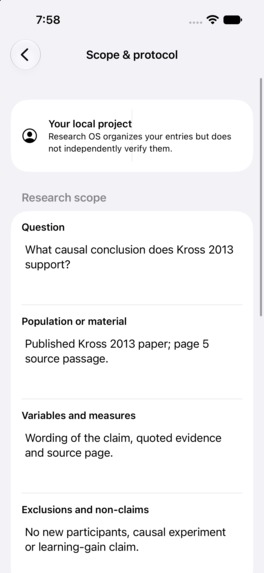
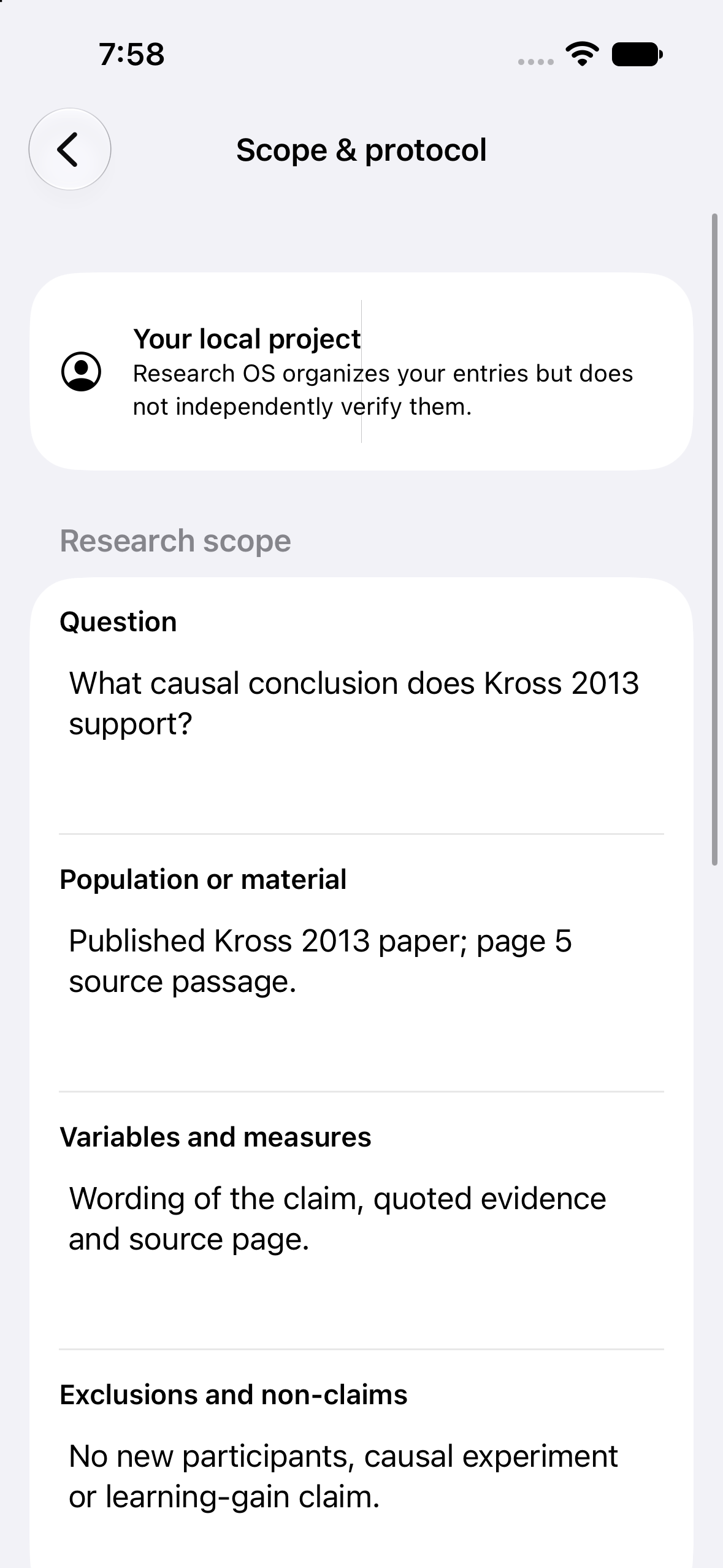
Filled research scope. Scripted iOS simulator capture; native 1179 × 2556 pixels, no device frame.
-
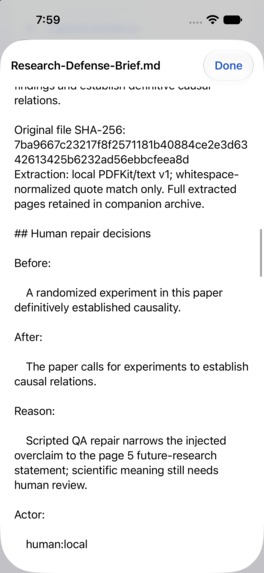
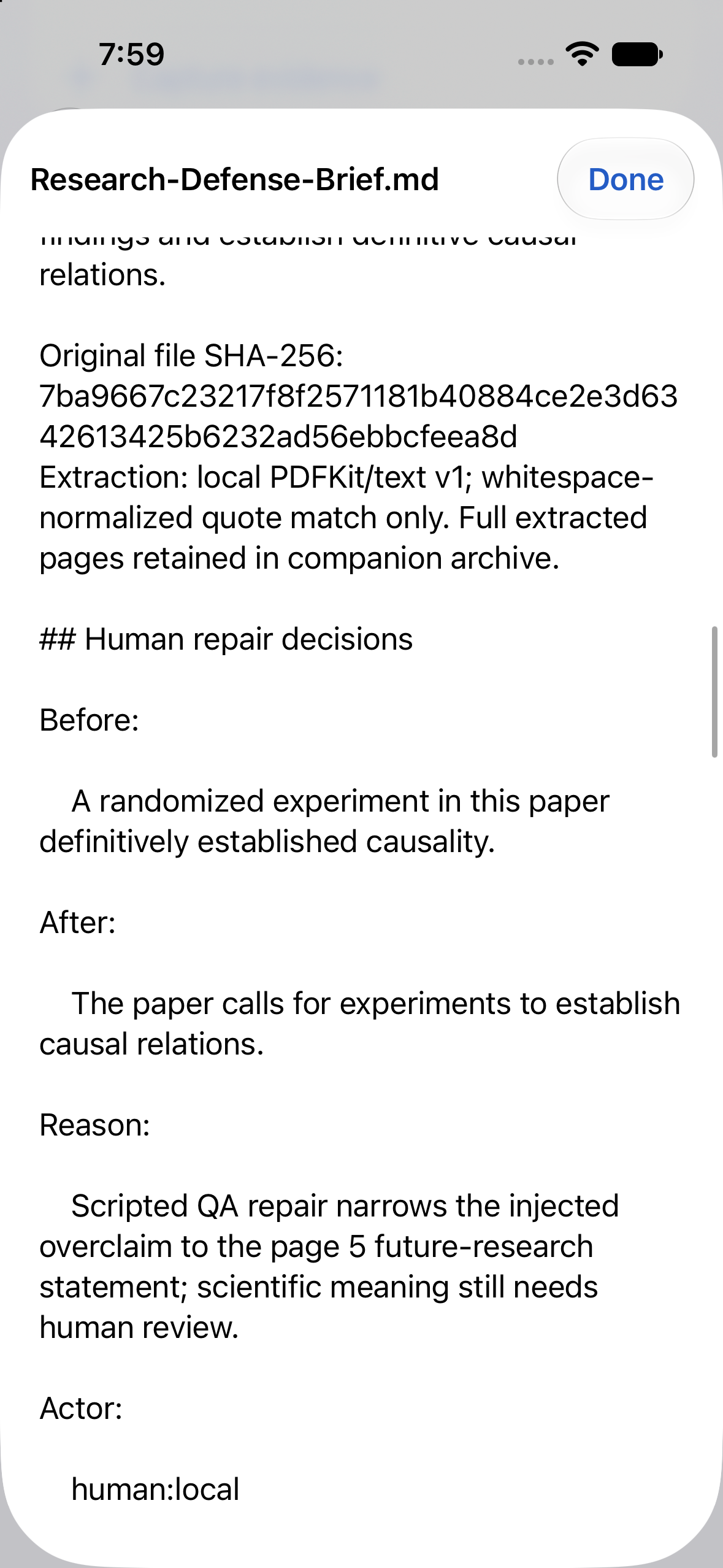
Readable research brief preserves the claim revision and its reason. Scripted iOS simulator QA.
-
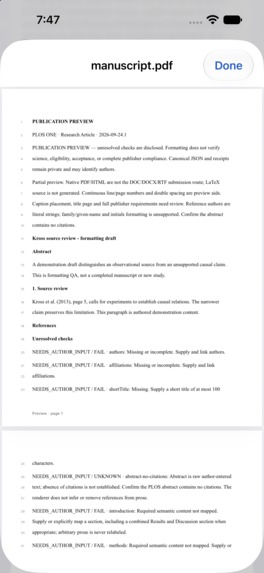
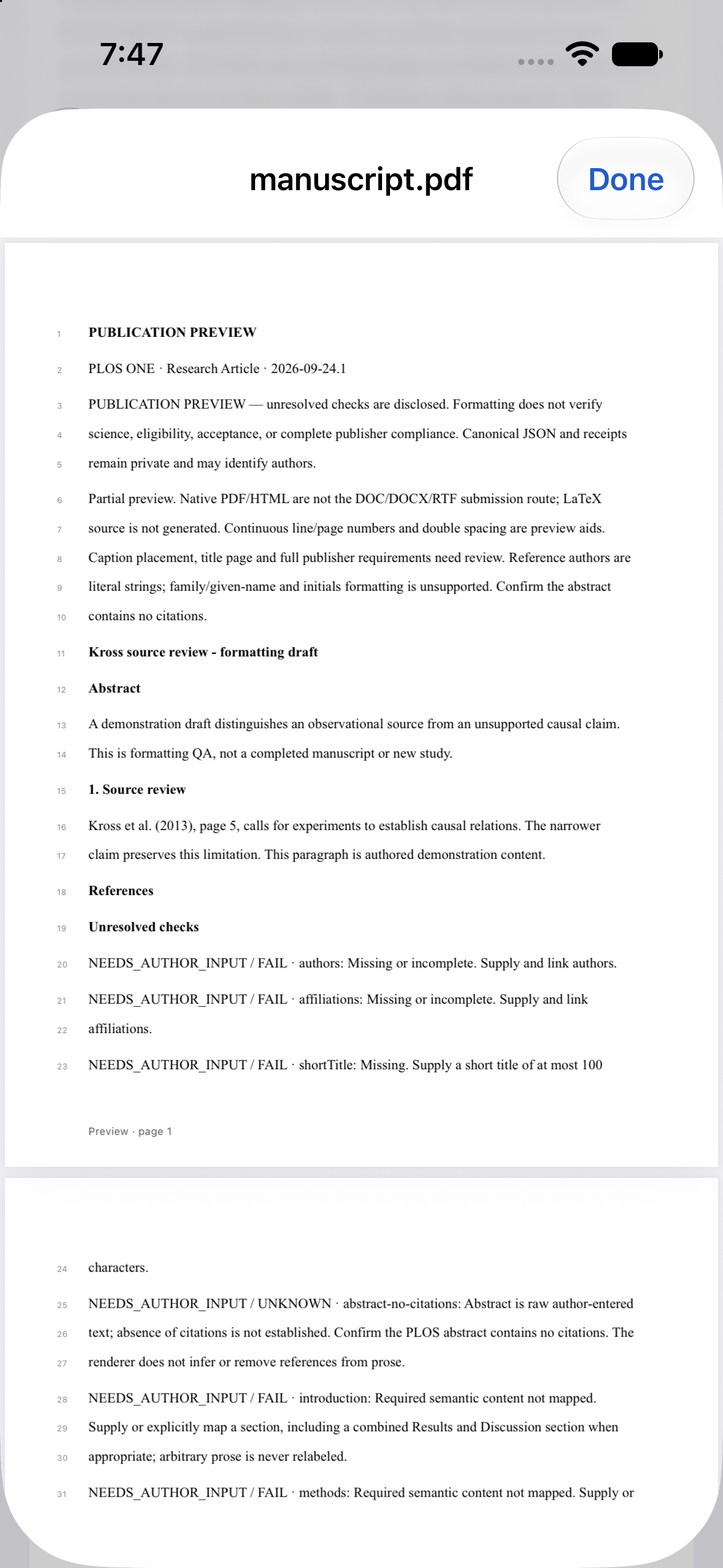
PLOS ONE partial formatting preview. Outstanding checks remain; no publisher-compliance claim.

Research Pro
Research Pro helps a writer keep a claim connected to the passage that supports it—and explain why the claim changed. Reading a paper is only part of research. The harder step is deciding what its evidence allows you to say, then keeping that reasoning available for someone else to question.
The native iOS prototype brings that work into one project: import a selectable-text PDF, locate an exact quotation on a page, connect it to a claim, review potentially overstated wording, and explicitly accept a revision with a reason. Defense Lab asks the writer to explain the evidence and acknowledge a limitation. A readable brief and local archive carry the source, claim history and explanation forward.
Our current demonstration uses Kross et al. (2013), Facebook Use Predicts Declines in Subjective Well-Being in Young Adults, with author/source and Creative Commons Attribution credit. We deliberately enter a false causal claim as test input. The writer returns to page 5, types a narrower claim and reason, previews the change, accepts it, and saves a source-linked defense. These deterministic checks prompt review; they do not decide scientific truth.
The project also holds seven scope/protocol fields and a separately authored manuscript. Three built-in profiles—PLOS ONE Research Article, ICLR 2027 Initial submission and Generic research—check supported rules and render the same saved manuscript. They are partial formatting previews, not certified venue-ready submissions; Generic makes no venue claim. Custom style import is unavailable. The manuscript shown was typed separately, not generated from the repaired claim.
We built on the earlier Research OS/Challa, Research Flight Recorder/Reverie and Mobile V2 foundation. Pranav Reddy Challa supplied native handoffs, UI/publication direction, the export-review and wording patch, and presentation drafts. Aditya Chandran Arvind coordinated product direction, Mac integration, verification, source/evidence packaging and media with Codex assistance. We do not present the inherited foundation as entirely created during this event. This latest pass preserves application source and adds capture drivers, fresh verification and clearer evidence.
The SwiftUI client uses PDFKit and versioned local project records. Its archive retains extracted pages and the original file’s fingerprint, not the original PDF bytes. Candidate 53e32f408d16c5cc6afa4d0230af76fd927853c9 freshly passed 147 native tests, 51 Python tests, six release guards and five selected UI scenarios. Two earlier scope-driver attempts failed and remain disclosed. A separately configured RevenueCat Test Store build passed a zero-charge annual purchase, actual Restore, relaunch, two-project access, and saving/reopening a seven-answer advanced Defense session. That is development Test Store evidence, not Apple production billing.
The remaining gaps are concrete: the readable brief omits Primary outcome and Change policy despite persisting both; legacy Claims & evidence shows zero links while the newer argument workflow holds the repaired claim; a nonfatal frame-dimension warning remains. All recordings are scripted simulator QA, not physical-device or student-outcome validation. The next work is synchronizing those views and exports, completing publication formats, and testing with people on devices.
OpenAI Codex, including verified gpt-6-astra sessions, assisted engineering, testing, review, documentation and media. Other contributors’ historical model use is not fully confirmed. The demonstrated local checks need no runtime generative-model service. The current film is silent and captioned.

Log in or sign up for Devpost to join the conversation.