Inspiration
Modern research—whether academic, UX, or product testing—is slow, expensive, and biased toward limited participant pools. Recruiting the right participants, screening them correctly, and extracting insights from responses often takes more time than the actual experiment.
We wanted to build a system where AI acts as a co-researcher, handling the repetitive and error-prone parts of the research workflow so humans can focus on discovery and decision-making.
What We Built
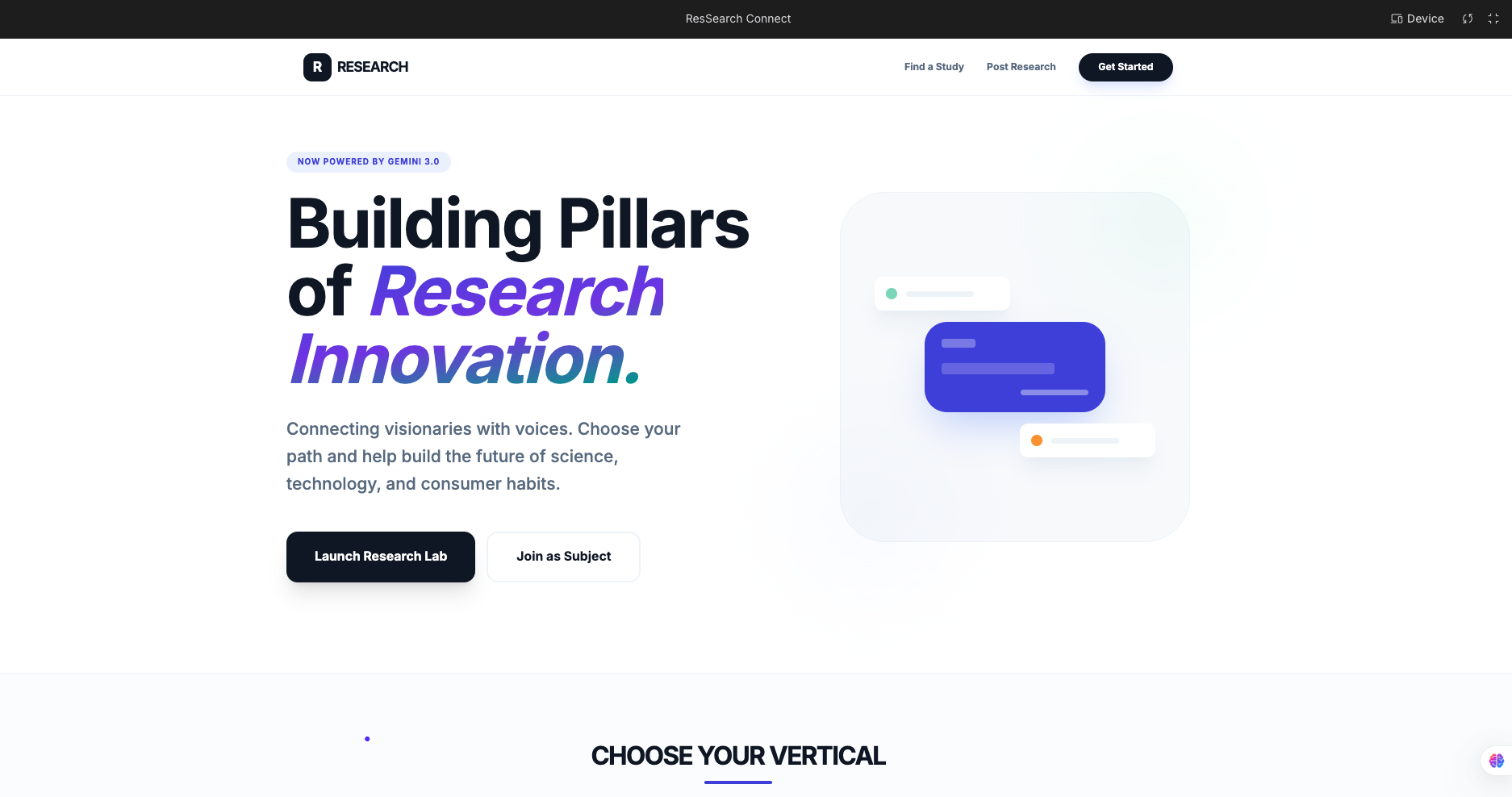
Research Connect is a full-stack, AI-powered research and user-testing platform that connects:
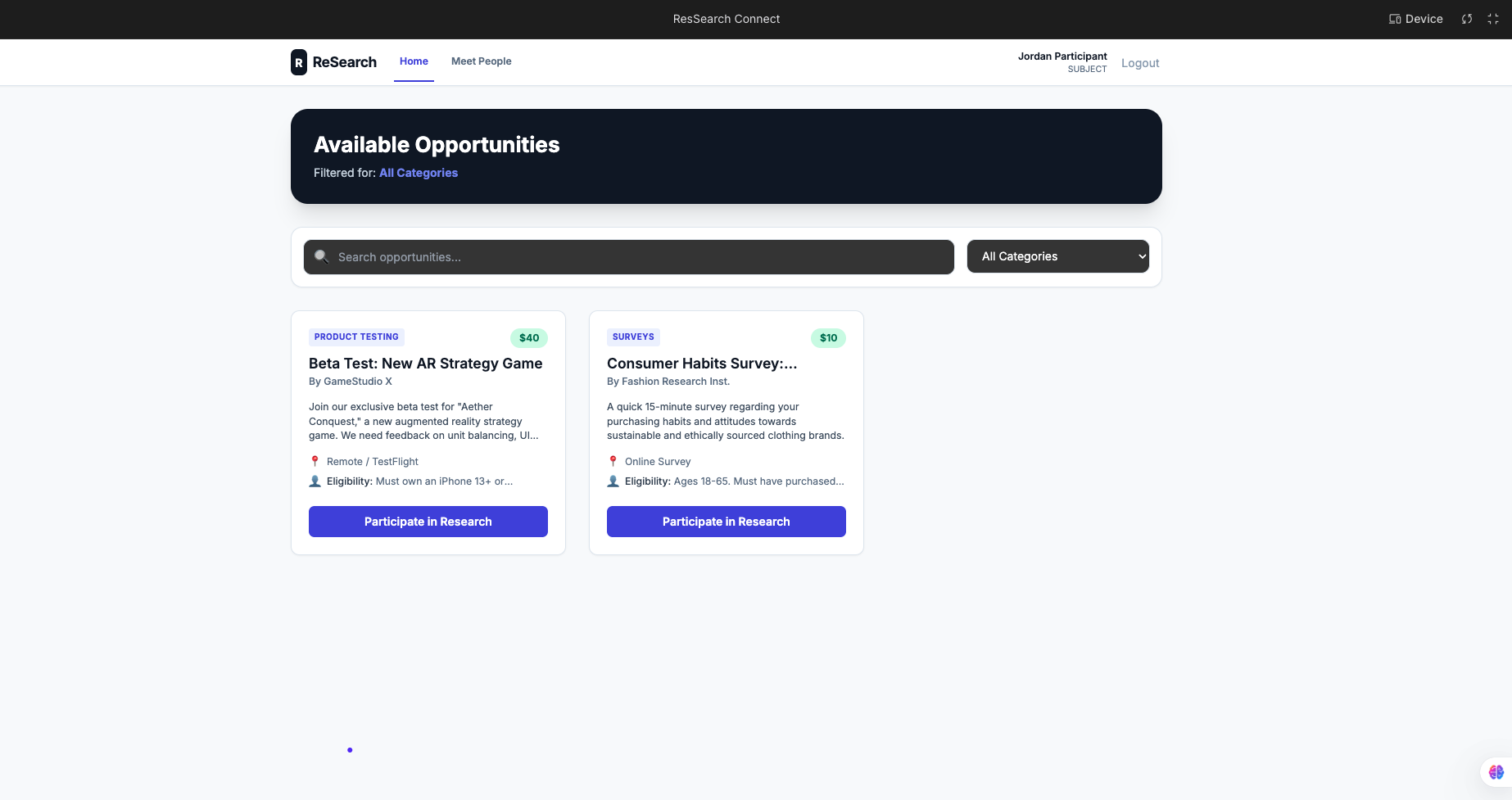
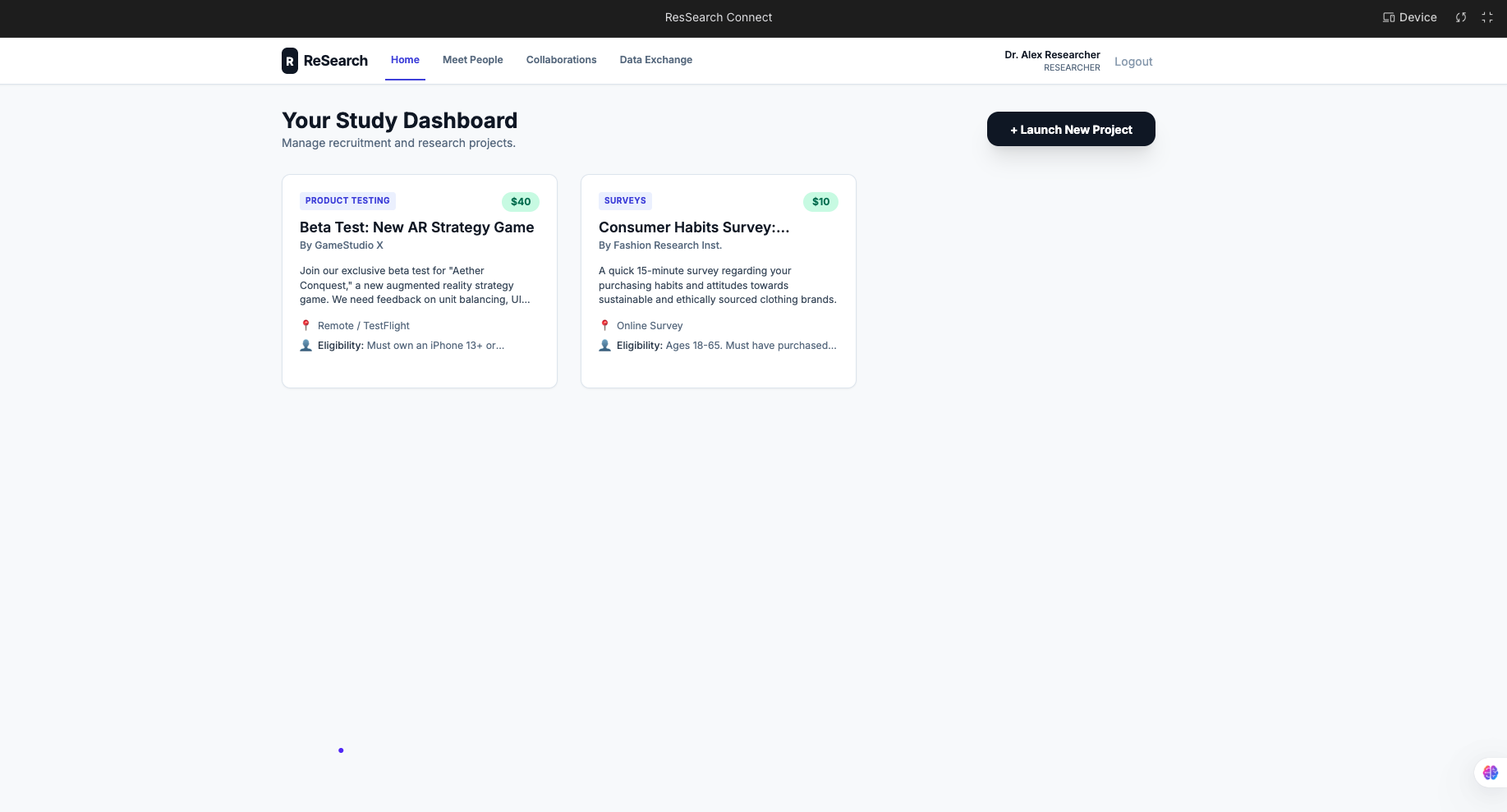
Researchers who want to run studies, product tests, or surveys
Participants who want to contribute and get rewarded
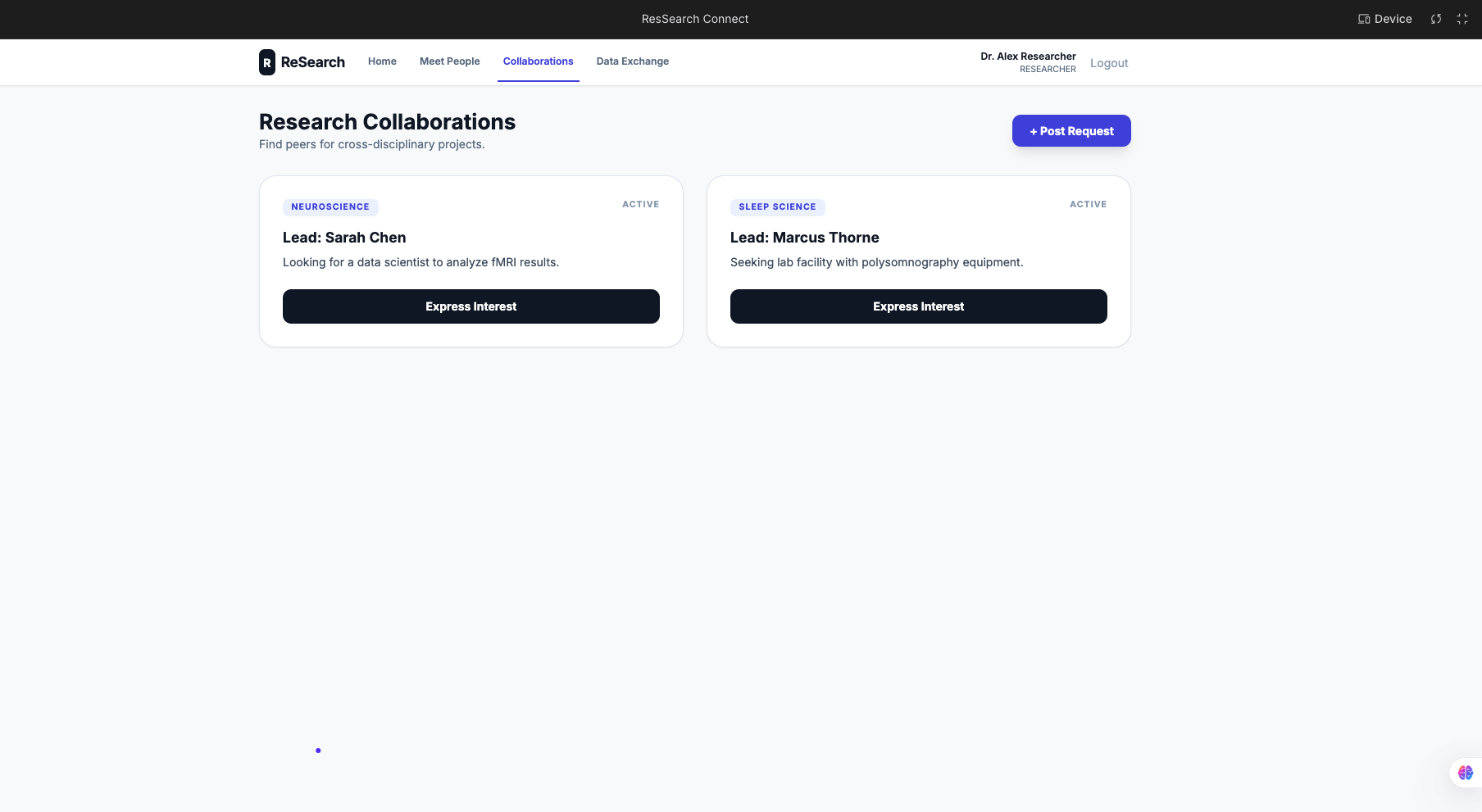
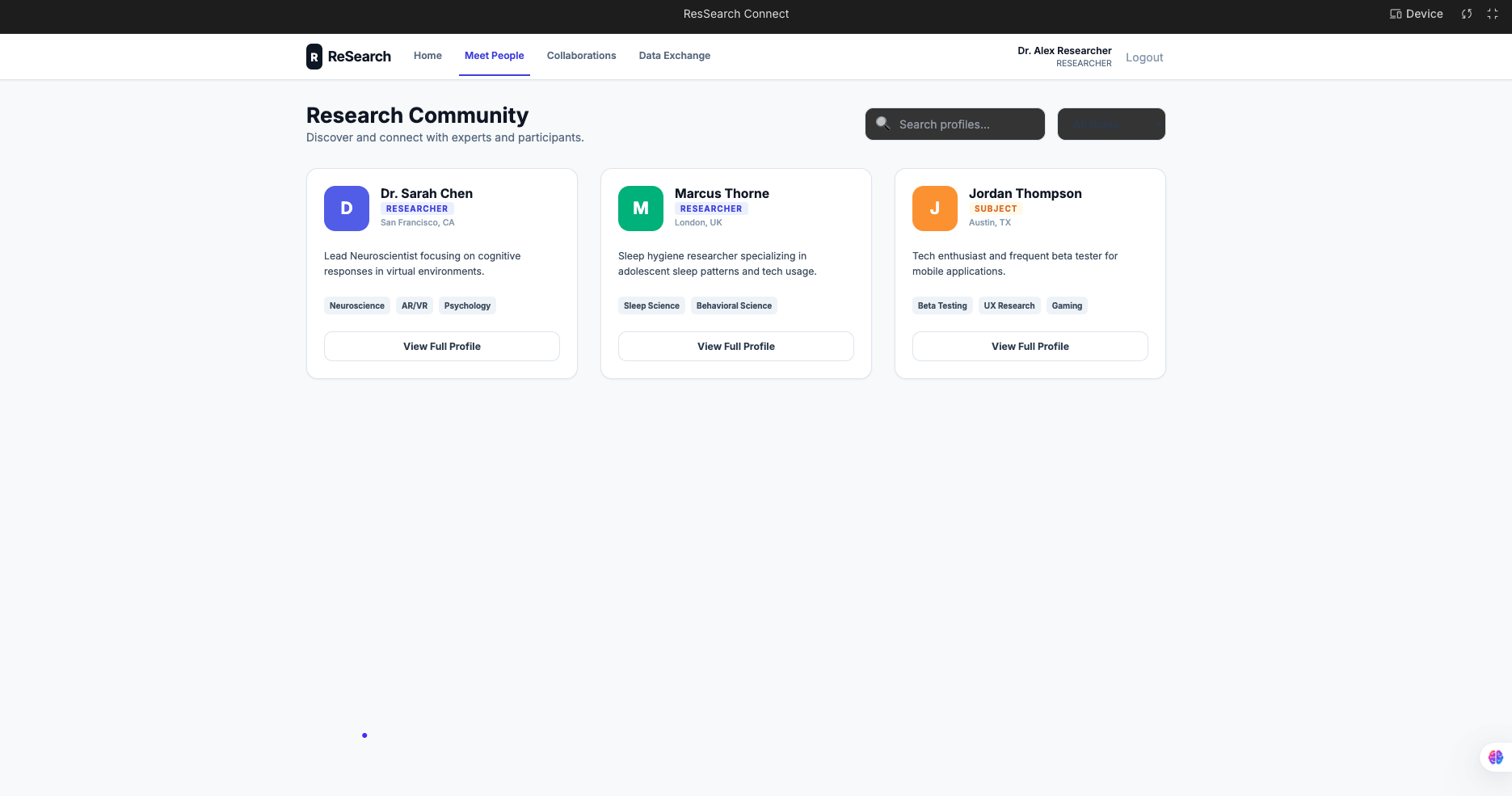
Collaborators who want to work across disciplines
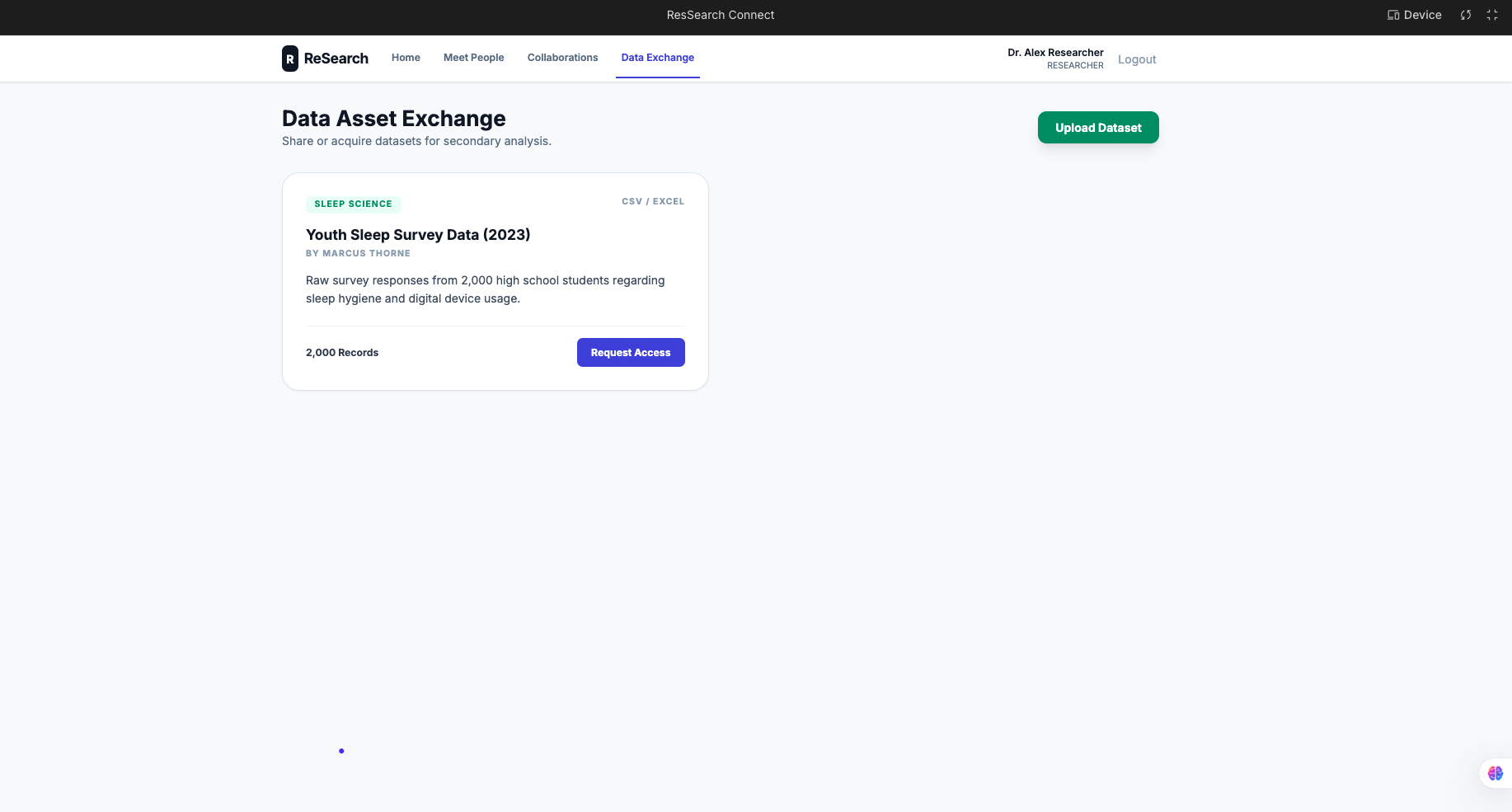
Data consumers who want access to structured research datasets
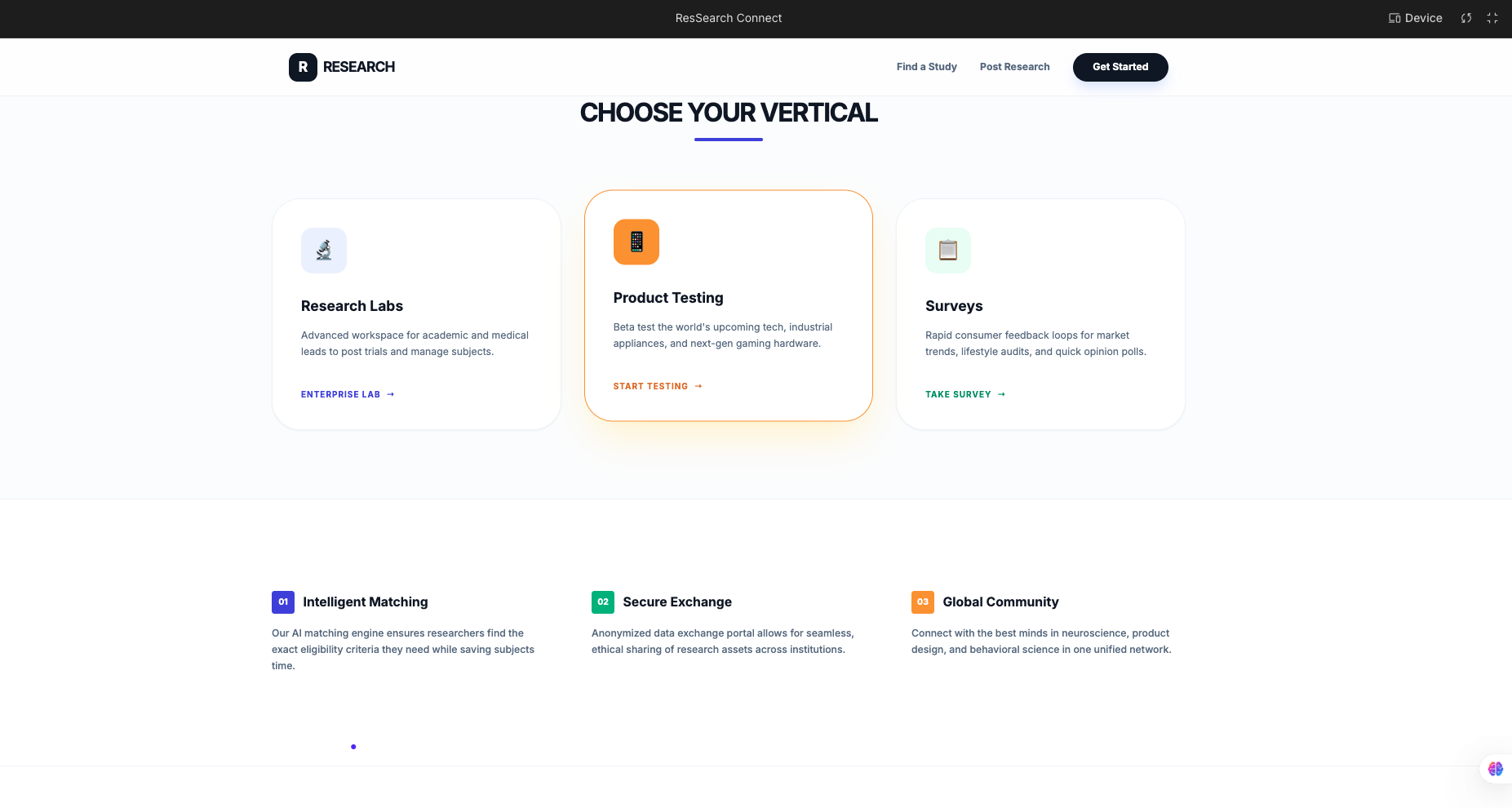
The platform supports multiple research verticals:
Product testing
Surveys
Research labs & academic studies
At its core, Research Connect uses AI agents to:
Match participants to studies using eligibility and context
Pre-screen users before participation
Summarize and analyze research responses
Surface patterns, anomalies, and insights automatically
How We Used AI
AI is not an add-on—it’s the backbone of the system.
We implemented:
AI Match Scoring: Each participant receives a match score for a study based on eligibility, background, and context.
AI Screening & Summarization: Responses are automatically cleaned and summarized into researcher-ready insights.
AI Collaboration Discovery: Researchers can discover peers working on related topics.
Agent-Driven Pipelines: When a study closes, AI agents process results end-to-end.
This turns raw qualitative data into structured intelligence.
How We Built It
We built Research Connect as a modular, scalable platform:
A clean multi-role frontend for researchers and participants
AI workflows running in secure, isolated environments
Agent-based processing pipelines for screening and analysis
A flexible architecture that supports multiple AI providers and models
We intentionally focused on realistic production architecture, not just a demo, so the system could scale beyond the hackathon.
Challenges We Faced
Designing AI outputs that are explainable, not just “smart”
Balancing automation with human trust in research workflows
Structuring research data so it remains reusable and shareable
Making AI visible and intuitive in the user experience
Solving these forced us to think deeply about human-AI collaboration, not just model performance.
What We Learned
AI is most powerful when it augments expert workflows, not replaces them
Clear UX around AI decisions builds trust faster than raw accuracy
Infrastructure and agent orchestration matter as much as models
Research tools benefit enormously from automation done right
Future Work
Real-time voice-based research interviews
Deeper trust and verification layers for researchers and participants
Advanced analytics dashboards for longitudinal studies
Embedded research inside product flows and live user journeys
Built With
- .cv
- ai/ml-apis
- concept
- daytona-(secure-execution)
- elevenlabs-(voice)
- google-gemini
- identity
- leanmcp-(ai-agents)
- next.js
- node.js
- typescript


Log in or sign up for Devpost to join the conversation.