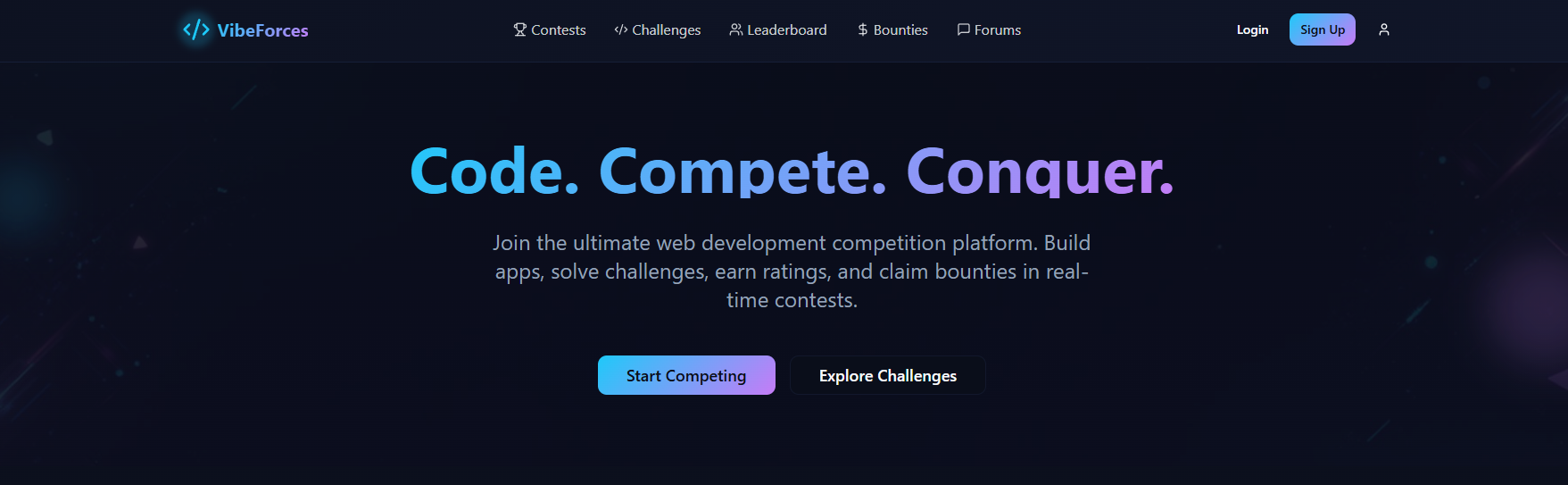
About Vibeforces
Inspiration
As a competitive coder and web developer, I wanted a contest platform that went beyond algorithms, one focused on building real, runnable web apps instead of isolated scripts or static problems. Vibeforces was born during the Kiro Hackathon, inspired by a desire for genuine developer battles, instant automated feedback, and true community-driven discussions.
What I Learned
- Spec-driven development accelerates everything. Organizing features as specs let me move fast from idea to implementation, thanks to Kiro’s agentic IDE for scaffolding and automation.
- Automation transforms judging. Integrating Playwright/Puppeteer made submission validation instant and reliable.
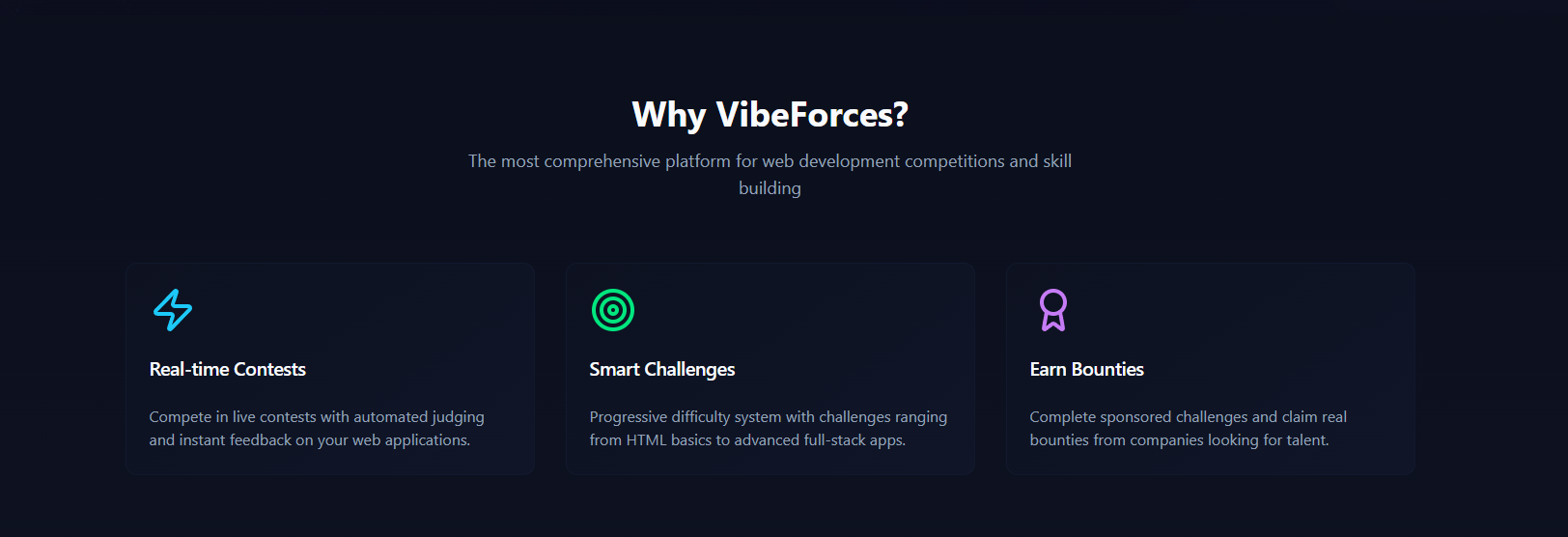
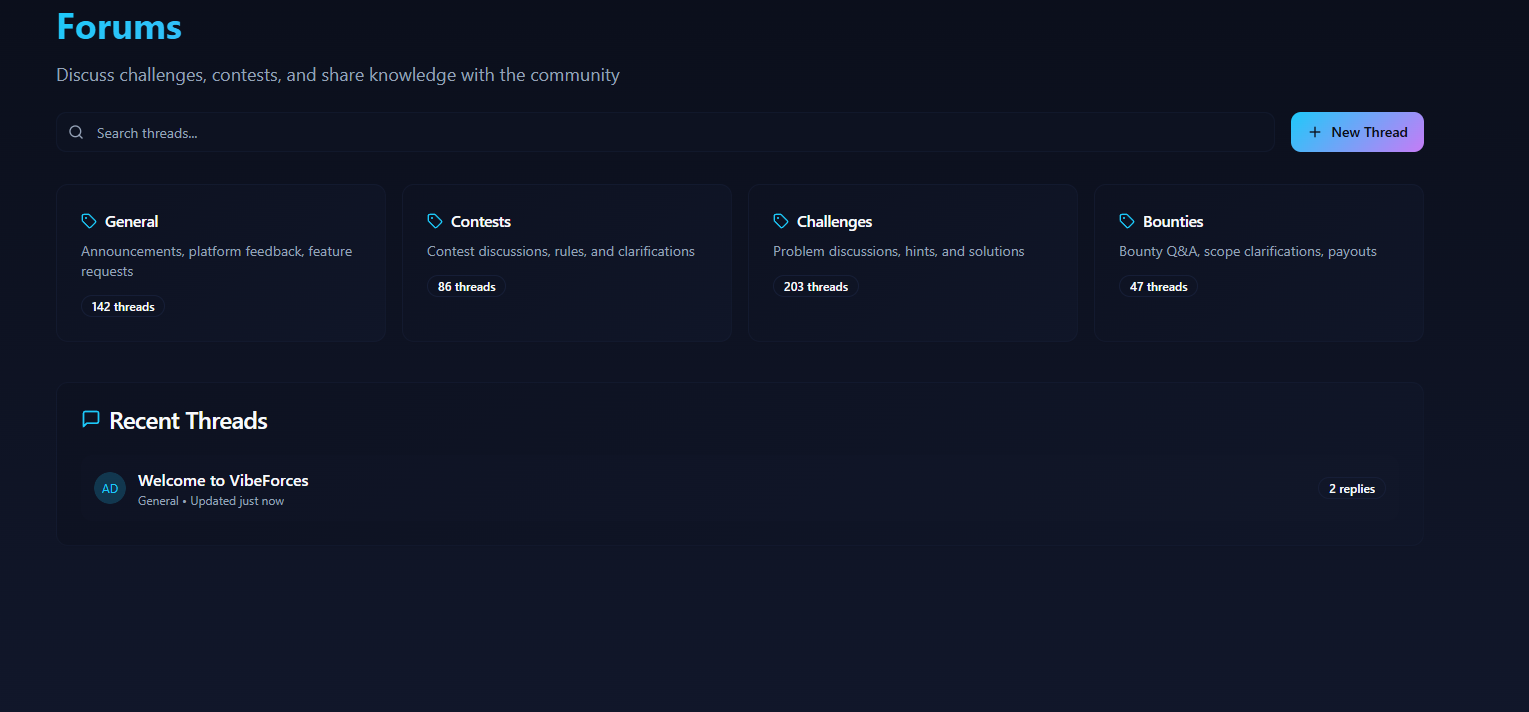
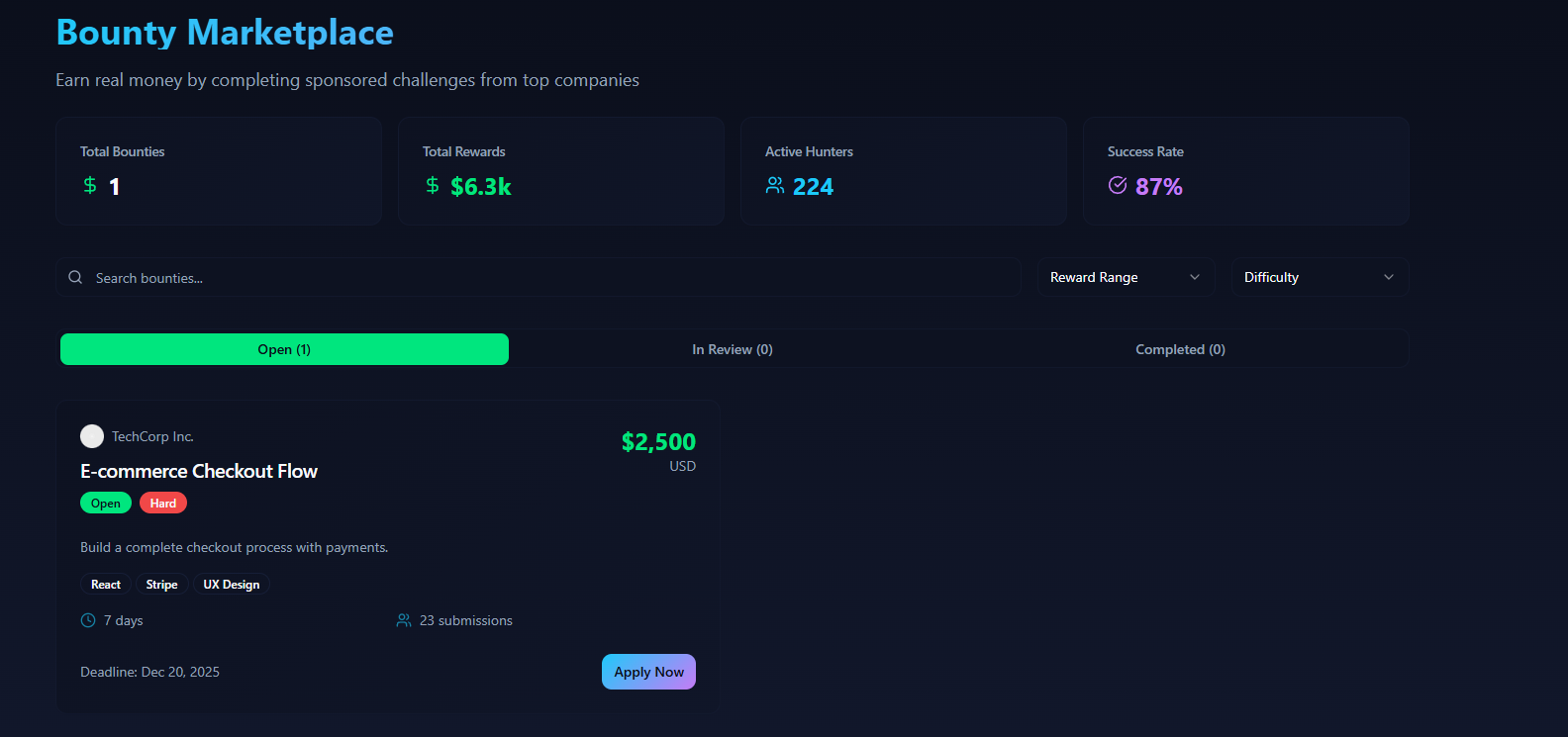
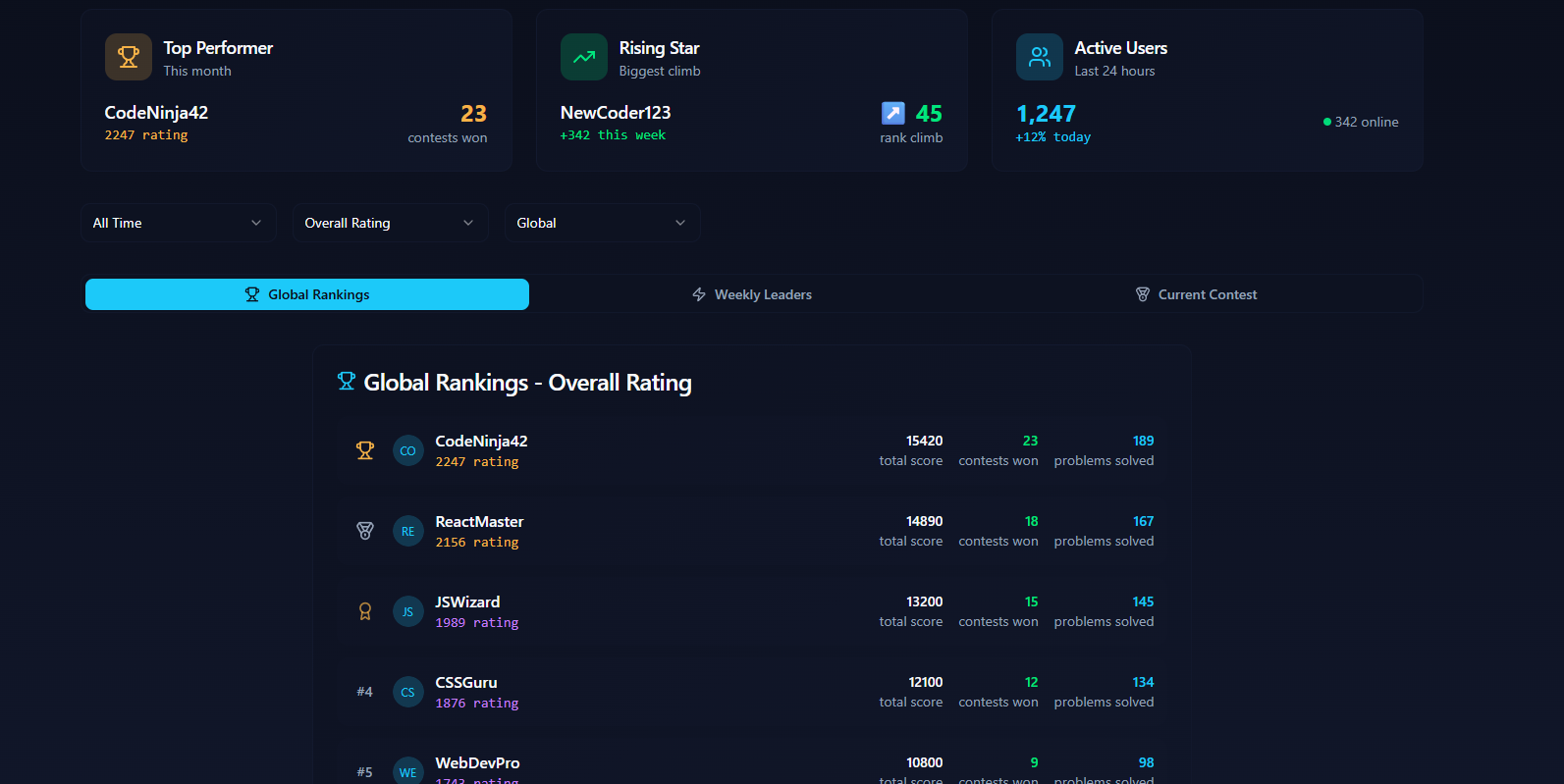
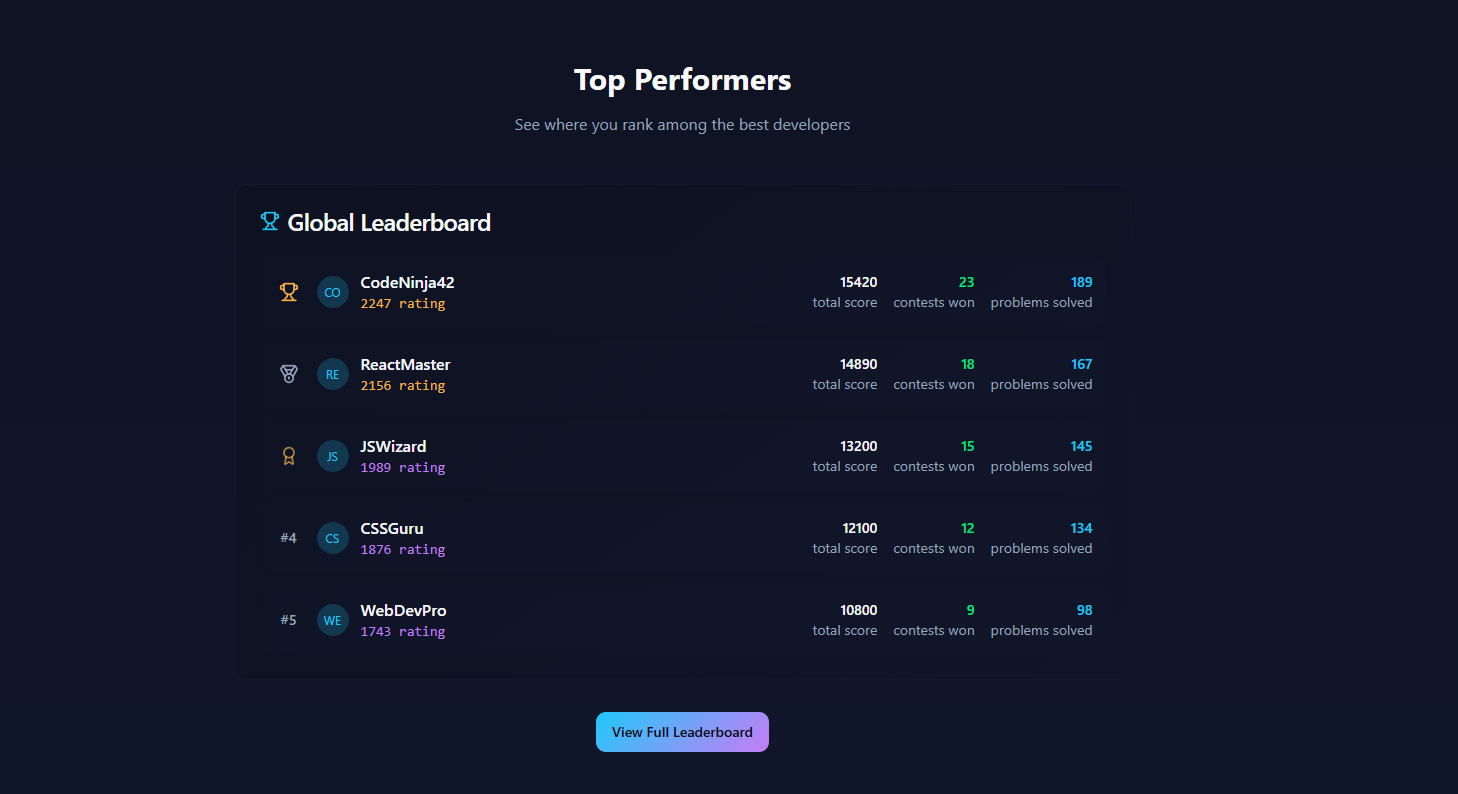
- Community features are key. Leaderboards, bounties, discussion forums, and editorials turn coding into a collaborative event—not just a solo grind.
How I Built Vibeforces
- Specs First
- Defined every feature, contest workflow, and judging rule as specs (
requirements.mdanddesign.md) using Kiro.
- Defined every feature, contest workflow, and judging rule as specs (
- Agent Hooks for Automation
- Set up hooks to automate linting, sandbox testing, and secure execution for project submissions.
- Contextual Prompts
- Used Kiro’s chat panel to request multi-file code generation (frontend, backend, database, tests) linked to requirements and context.
- Demo Data
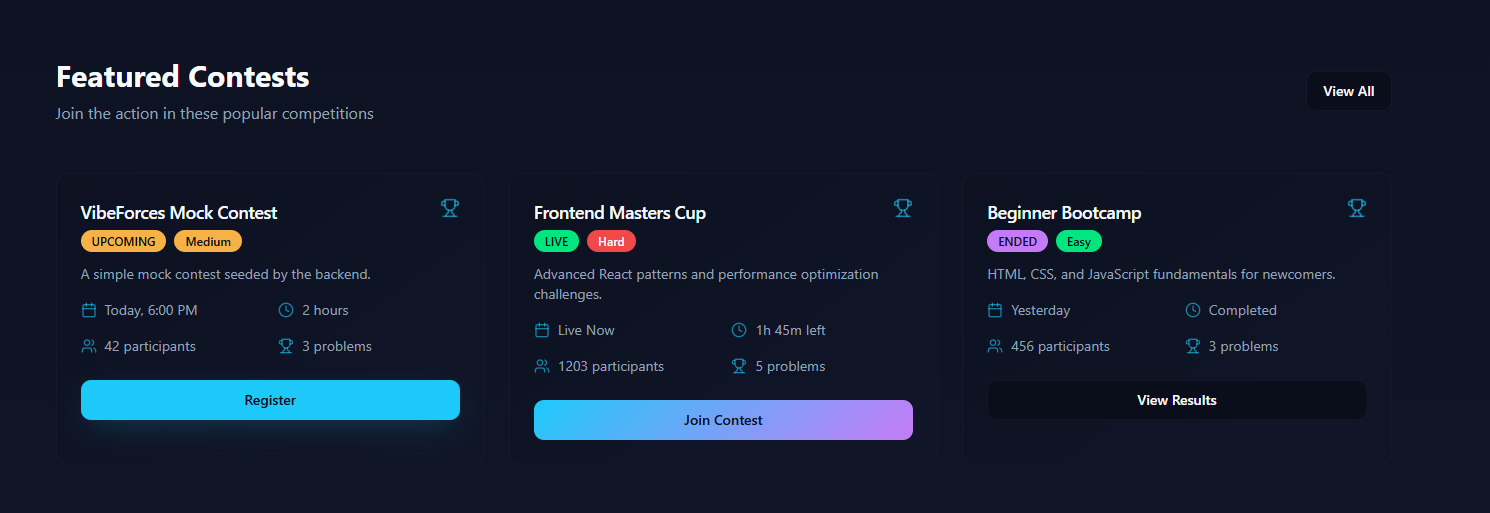
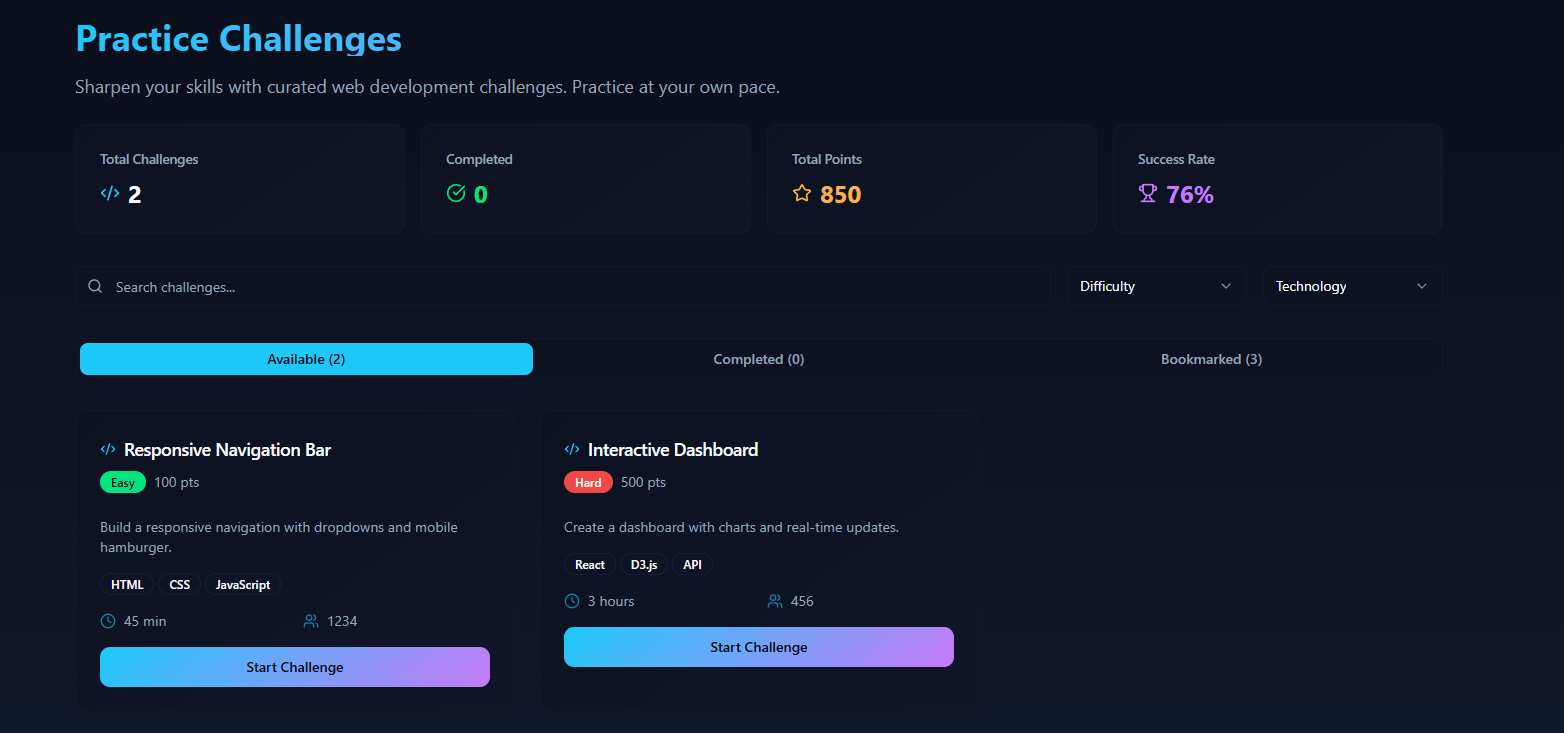
- Seeded the platform with five users, six sample challenges, and one starter contest.
Challenges Faced
- Implementing WebSocket-powered live leaderboards and contest sync was complex—Kiro’s planning tools helped resolve it.
Final Thoughts
Vibeforces is proof that spec-driven, agentic development can turn big ideas into live platforms quickly. Kiro helped me learn the value of clear specs, workflow automation, and building for community as much as code.
Currently on 0.5v


Log in or sign up for Devpost to join the conversation.