Inspiration
As a self taught ML undergrad I often face significant challenges in implementing machine learning papers:
Understanding complex methodologies. Lack of clear or ready-to-use code. Difficulty replicating experimental results. Frustration with manual environment setups.
What it does
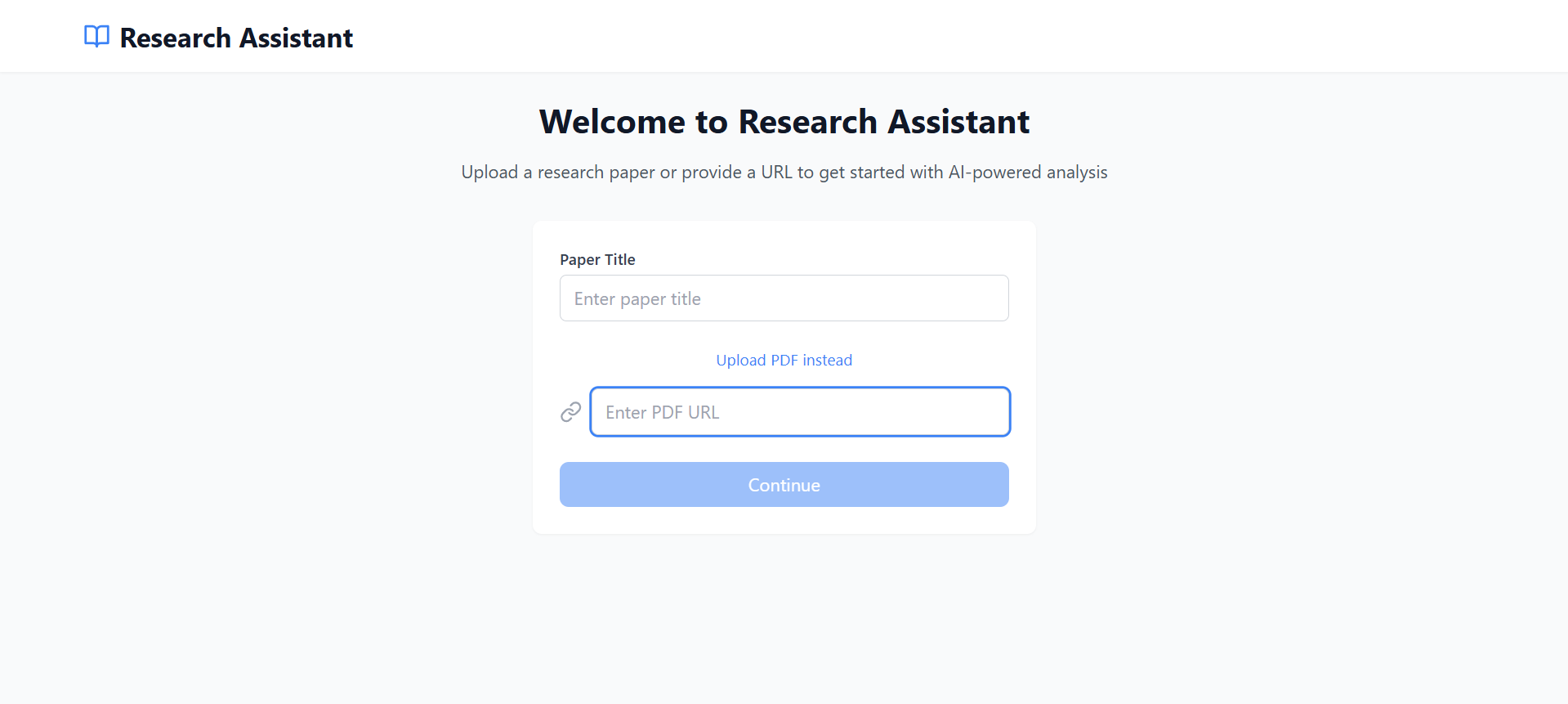
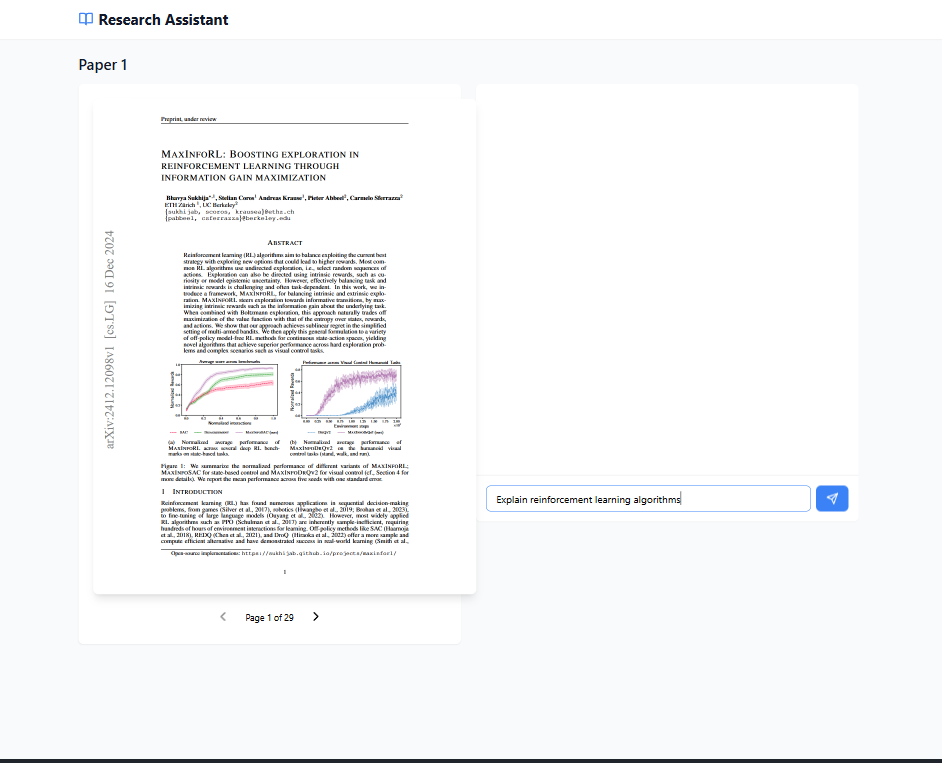
Paper Parsing: Extracts key components (methods, datasets, results) from an uploaded ML research paper (PDF). Code Generation: Automatically generates code snippets based on paper algorithms and architectures. Interactive Q&A: Allows users to ask implementation-related questions and troubleshoot issues. Environment Setup: Provides step-by-step guidance for dependencies and framework configurations. Reproducibility Workflow: Ensures the user can replicate the original paper results seamlessly.
How I built it
Frontend: React.js + TailwindCSS (for a responsive user interface). Backend: Buildship AI Models: Gemini Flash (for content extraction, Q&A, and code generation). PDF Parsing: react-pdf (to extract and analyze research paper content). Deployment: Vercel.
Challenges I ran into
PDF Parsing Limitations: Extracting content accurately from diverse and poorly formatted ML papers. Complex Methodologies: Generating usable code for unconventional algorithms and frameworks. Code Accuracy: Ensuring generated code matches the described algorithm or model architecture. Dependencies: Handling environment setups for various frameworks like TensorFlow, PyTorch, and Scikit-learn. Scalability: Designing the system to handle large papers efficiently.
Accomplishments that I'm proud of
Successfully integrated GPT-powered AI to: Extract key sections from research papers. Generate functional code snippets aligned with paper algorithms. Built a seamless interactive Q&A system to assist users in real time. Developed an end-to-end solution that simplifies ML paper implementation. Achieved a working MVP that bridges the gap between research and application.
What I learned
AI for NLP: Leveraging GPT models and LangChain for document comprehension and reasoning. PDF Processing: Challenges and solutions for extracting structured content from PDFs. Code Generation: Techniques to translate paper content into functional programming logic. User Experience (UX): The importance of creating an intuitive and interactive interface for seamless research workflows.
What's next for Research Assistant AI
Multi-Paper Comparison: Implement and compare methods across multiple papers automatically. Dataset Auto-Integration: Identify and fetch relevant datasets for papers using public repositories like Kaggle. Custom Framework Support: Extend support for PyTorch, TensorFlow, ONNX, and other ML libraries. Auto-Benchmarking: Allow users to compare implementation performance against original paper results. Collaborative Features: Enable sharing of implementations and refined code among researchers.


Log in or sign up for Devpost to join the conversation.