-
-
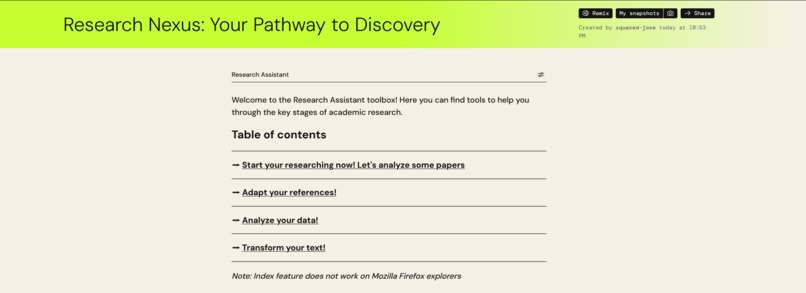
Index
-
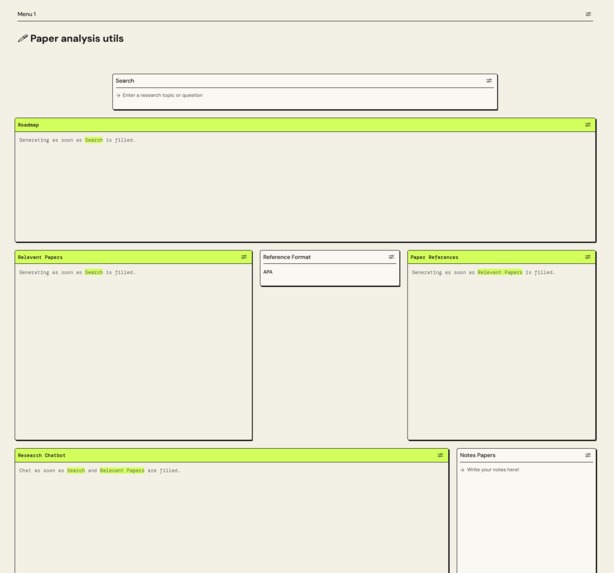
Paper analysis utils
-
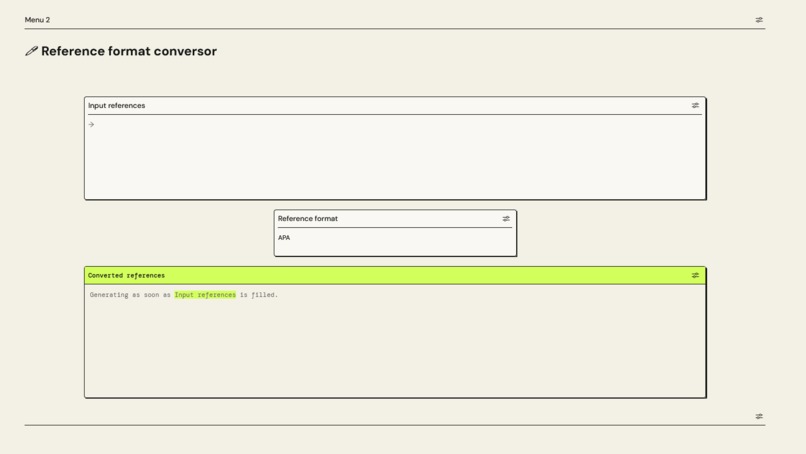
Reference format conversor
-
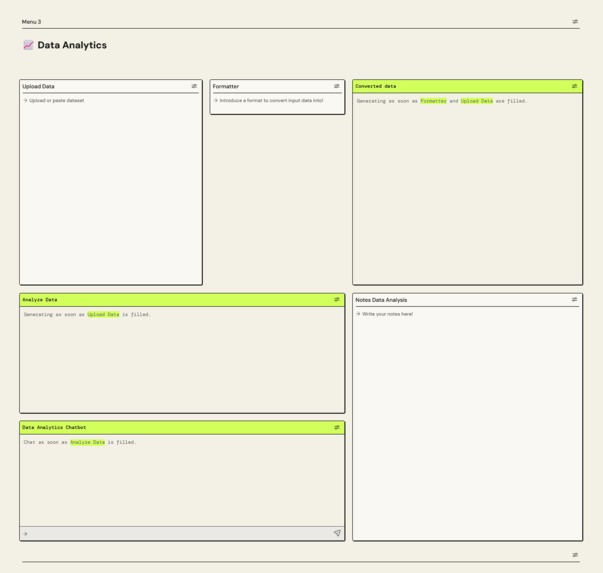
Data analysis
-
Text tools


The Research Nexus is an innovative application powered by generative AI designed to streamline research processes for academics, students, and professionals. This system harnesses the capabilities of AI to analyze papers, extract insights, format and summarize texts and references, and analyze datasets efficiently.
Inspiration
The inspiration behind our project stems from the growing demand for streamlined research assistance tools that can handle the vast amount of information available in academic literature. As researchers ourselves, we often found it challenging to efficiently analyze papers, extract insights, and manage references while conducting literature reviews and data analysis for our own projects. This led us to explore the possibilities of leveraging generative AI to develop a comprehensive toolbox for research assistants.
What it does
Our research assistant toolbox system utilizes generative AI to perform a variety of tasks aimed at enhancing the efficiency of research processes:
Paper Analysis and Insight Extraction: The system can analyze academic papers techniques to extract key insights, identify trends, and summarize findings with the help of a chatbot and a conveniently situated note cell.
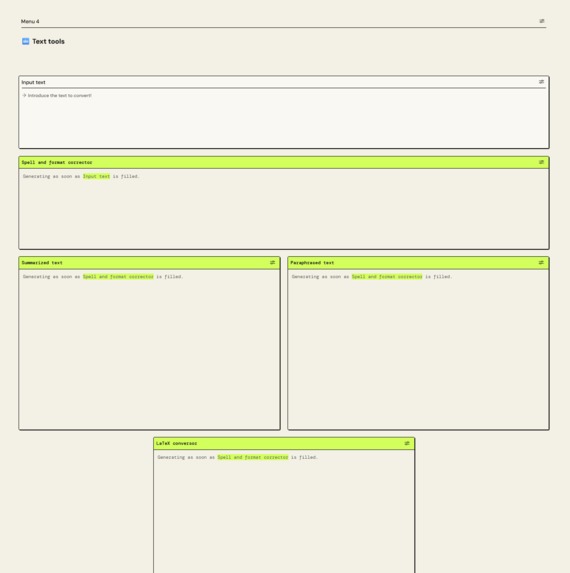
Text Formatting and Summarization: It offers tools for formatting, correcting, extending and summarizing texts, allowing researchers to adapt their texts easily depending on what they are looking for.
Reference Management: The system can automatically extract and format references from papers, helping researchers maintain organized bibliographies.
Dataset Analysis: It provides capabilities for analyzing datasets, including data cleaning, visualization, and statistical analysis, to support evidence-based research with the help of a chatbot.
How we built it
We utilized a prompting approach to construct our research assistant toolbox system:
Generative AI Models: We leveraged state-of-the-art generative AI models, such as Claude, to power the natural language understanding and generation capabilities of the system.
User Interface: We designed an intuitive user interface using PartyRock functionalities that allows researchers to interact with the system seamlessly, enabling them to access its features and insights effortlessly.
Challenges we ran into
Building the research assistant toolbox system presented a major challenge:
- Model Optimization: Optimizing the performance of the generative AI models for tasks such as summarization and insight extraction demanded careful prompt design and experimentation to achieve satisfactory results.
Accomplishments that we're proud of
Despite the challenges, we're proud to have developed a comprehensive research assistant toolbox system that offers valuable functionalities to researchers:
Efficiency Enhancement: Our system streamlines various aspects of the research process, saving researchers time and effort in analyzing papers, managing references, and analyzing datasets.
Accuracy and Reliability: Through rigorous testing and refinement, we've achieved a high level of accuracy and reliability in the system's ability to extract insights, format texts, and analyze data.
User-Friendly Interface: We've created an easy-to-use user interface that makes the system accessible to researchers of all backgrounds, ensuring a seamless and productive user experience.
What we learned
Through the development of our research assistant toolbox system, we've learned valuable lessons about:
AI Applications in Research: Exploring the potential of generative AI in research assistance has deepened our understanding of its capabilities and limitations in handling complex academic tasks.
User-Centric Design: Prioritizing user needs and feedback in the design process has underscored the importance of creating intuitive and user-friendly interfaces for research tools.
What's next for research
Looking ahead, we envision several avenues for further enhancement and expansion of our research assistant toolbox system:
Enhanced AI Capabilities: Continuously refining and expanding the system's AI capabilities to support advanced tasks such as entity recognition, and knowledge graph construction.
Accessibility and Inclusivity: Ensuring the system is accessible to researchers from diverse backgrounds and disciplines, including non-native English speakers.
By pursuing these directions, we aim to further empower researchers and advance the frontiers of knowledge across various domains.
Built With
- claude
- partyrock

Log in or sign up for Devpost to join the conversation.