-
-
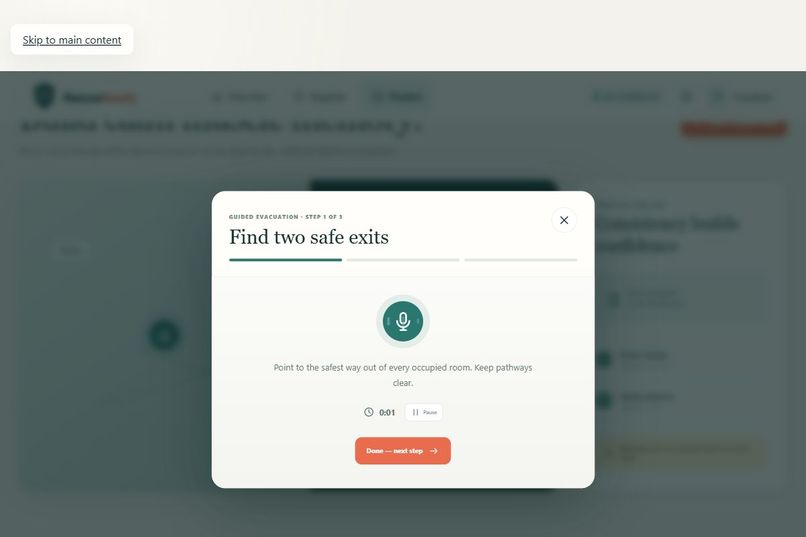
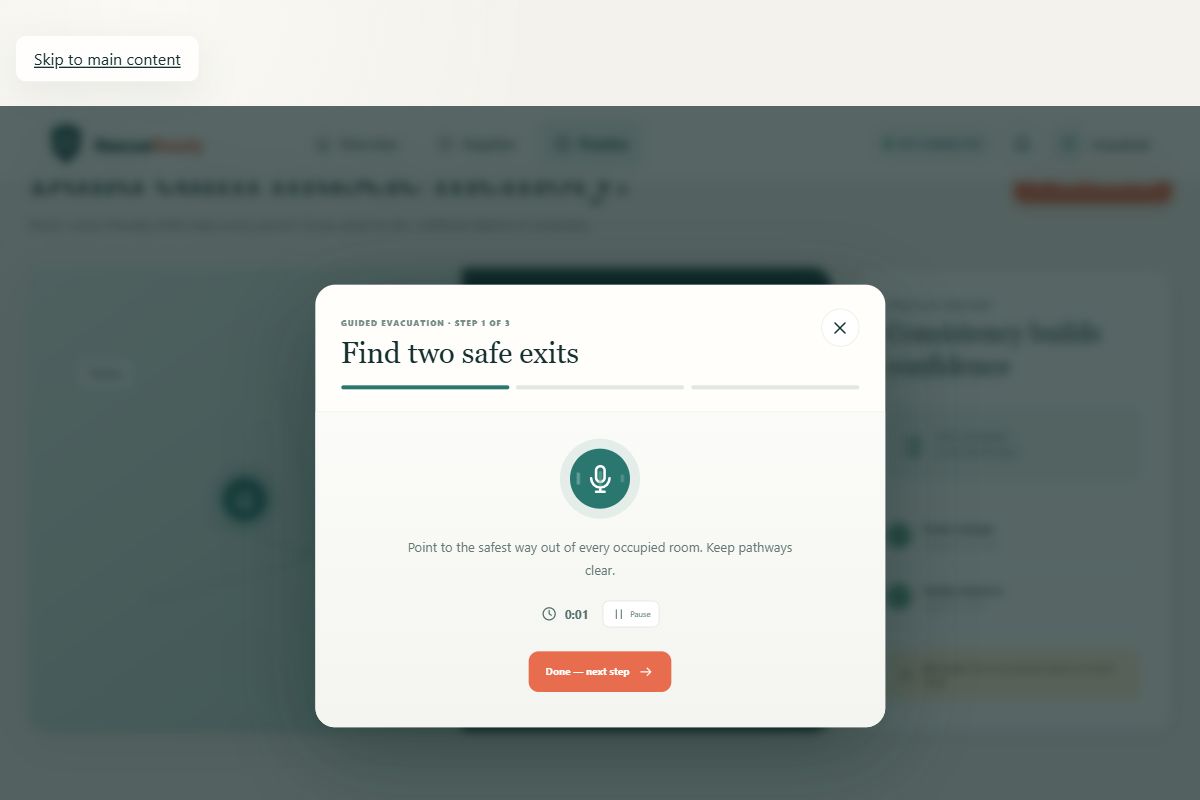
Guided evacuation drill with calm, step-by-step household practice.
-
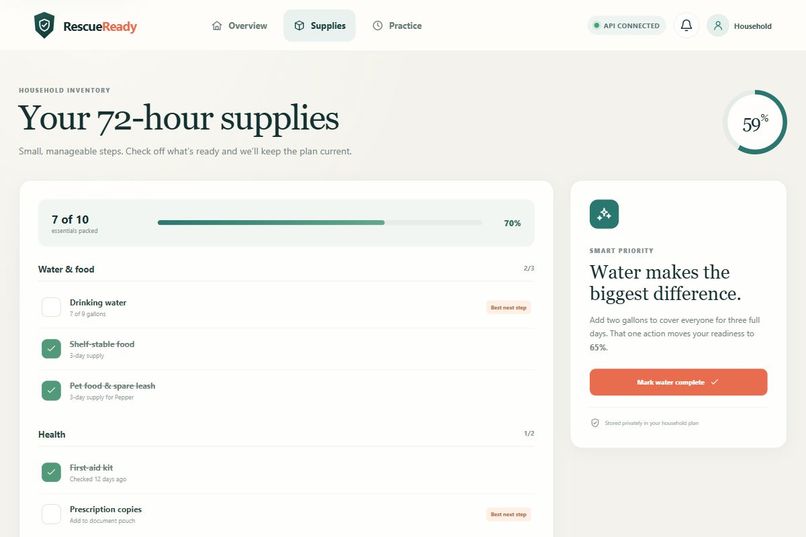
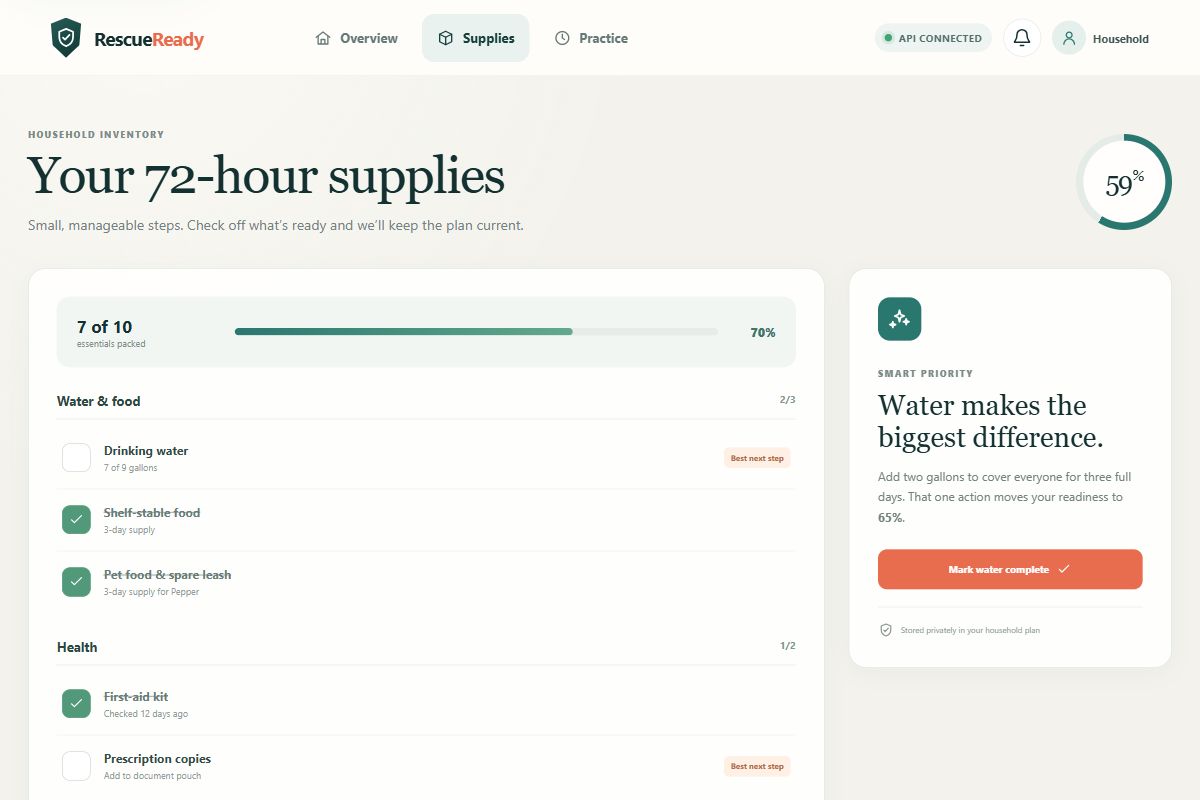
Supply readiness checklist highlights the highest-impact gaps.
-
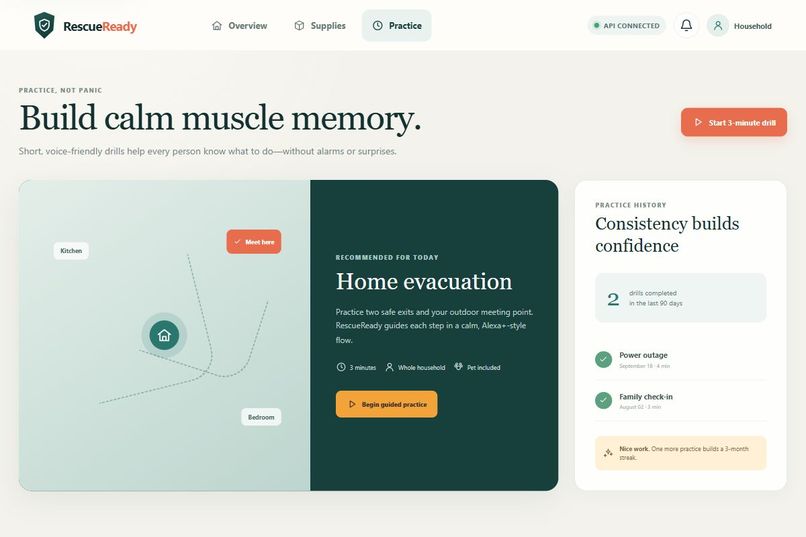
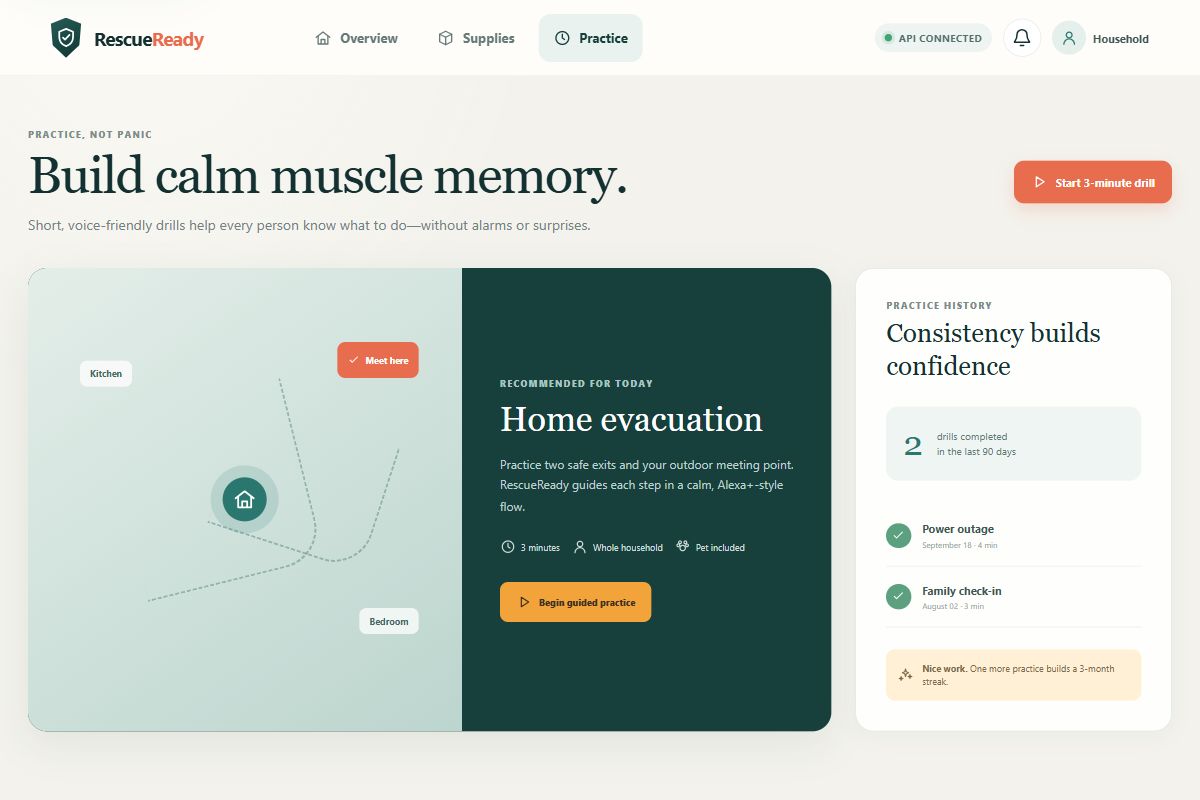
Three-minute guided practice builds calm household muscle memory.
-
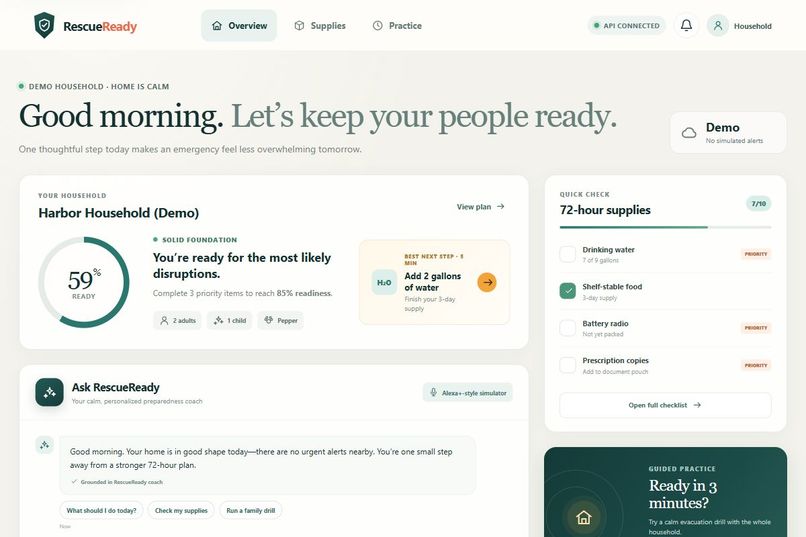
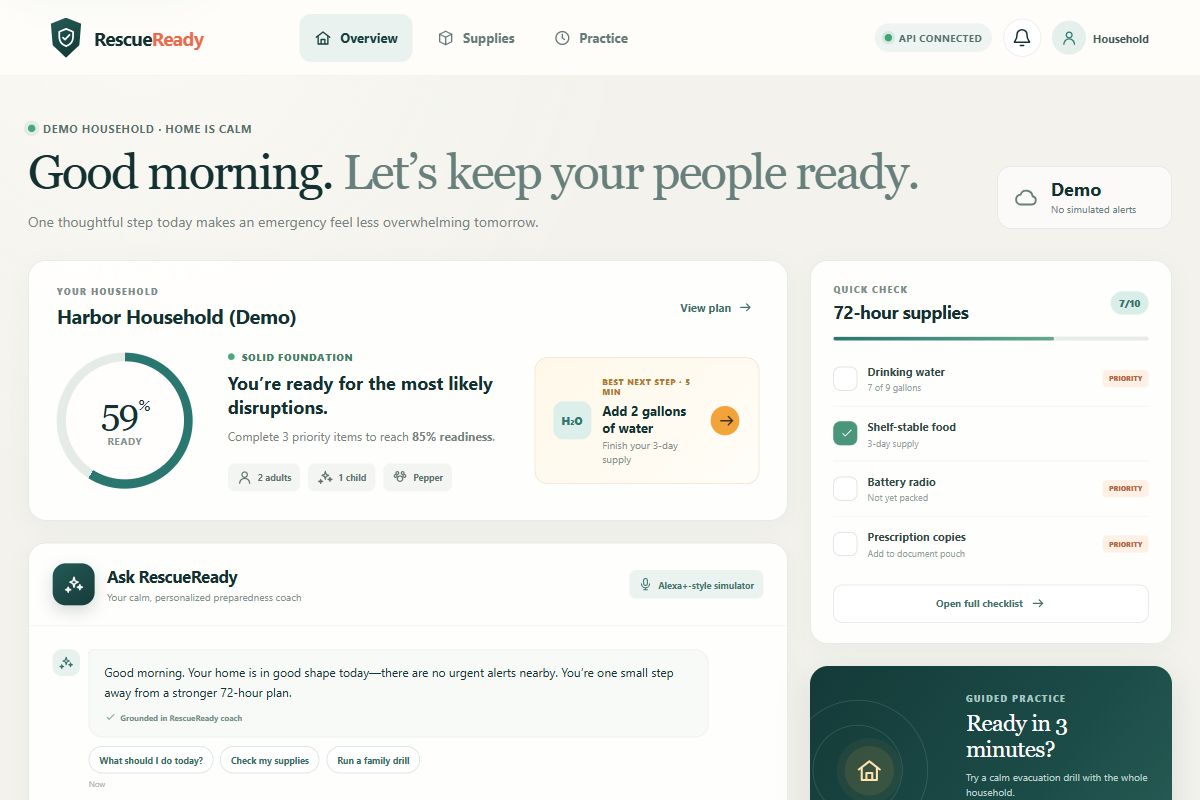
Personalized household dashboard with readiness score and next action.
Inspiration
Emergency-preparedness guidance is often technically correct but practically overwhelming. A generic checklist rarely accounts for a child, a pet, mobility needs, available supplies, or the fact that people learn better through small rehearsed steps. We wanted to explore a calmer model: an Alexa+ coach that helps a household prepare before an emergency, then turns the plan into short, voice-friendly drills people can actually practice.
What it does
RescueReady creates a personalized preparedness plan from a fictional household profile, checks supplies, identifies the most important gaps, and guides the household through short practice drills. The web simulator shows a local activity trace of REST and demo actions. The separate /mcp endpoint can be demonstrated with an MCP client; no production Alexa+ integration is claimed.
The prototype deliberately separates preparation from emergency response. It does not diagnose, dispatch, or replace local authorities. During an active emergency, users are directed to official local guidance and emergency services.
How we built it
The project has two main pieces:
- A responsive React and TypeScript simulator for the conversational flow, readiness dashboard, supply gaps, drills, and simulated activity trace.
- A self-hosted TypeScript MCP service using Streamable HTTP. Its six tools manage the demo household, generate plans, calculate readiness, and record drill progress.
The default path is deterministic and works without credentials, which makes judging reproducible. The server also includes an optional Amazon Bedrock integration path. Bedrock was not configured or demonstrated in this build and is not claimed as an active integration.
Challenges we ran into
Voice experiences need to be brief without becoming vague. Preparedness advice also has safety implications, so the project must avoid presenting itself as a live-response authority. We addressed both issues with structured tool outputs, short prioritized actions, a visible safety boundary, and an activity trace that identifies each answer source.
Accomplishments we are proud of
- A complete Alexa+-style flow that remains testable without gated hardware.
- A real MCP endpoint rather than a purely visual mockup.
- Reproducible readiness scoring and voice-friendly drills.
- Privacy-conscious fictional demo data and clear safety guardrails.
- A UI that makes each simulator/API action and answer source visible to judges.
What we learned
Agent experiences are stronger when tools return small, explicit state changes instead of large opaque answers. We also learned that a preparedness coach is most useful when it converts information into practice: a checklist can be forgotten, but a completed drill builds confidence.
What is next
Next steps include verified Bedrock personalization, multilingual plan adaptation, opt-in reminders, richer accessibility modes, and curated regional templates reviewed against official sources. Any production version would add authentication, encryption, consent-based retention, and expert review before handling real household data.
Built With
- css3
- express.js
- html5
- model-context-protocol
- node.js
- react
- rest-api
- streamable-http
- typescript
- vite
- vitest
- zod


Log in or sign up for Devpost to join the conversation.