Inspiration
Creating RescuePlate has been a deeply inspiring and educational journey for me. The project was born from a stark observation of the disparity between food wastage and food insecurity. On the one hand, I noticed that affluent parties, restaurants, and various events waste significant amounts of food daily. On the other hand, countless individuals and families struggle to secure their next meal. This stark contrast motivated me to develop a solution to bridge this gap and make a tangible difference. The primary inspiration for RescuePlate came from witnessing the staggering amount of food being discarded at social events and restaurants. Seeing perfectly edible food being thrown away while knowing that many people go hungry daily was deeply troubling. This drove me to think about ways to redirect surplus food to those in need, effectively addressing food wastage and food insecurity.
What it does
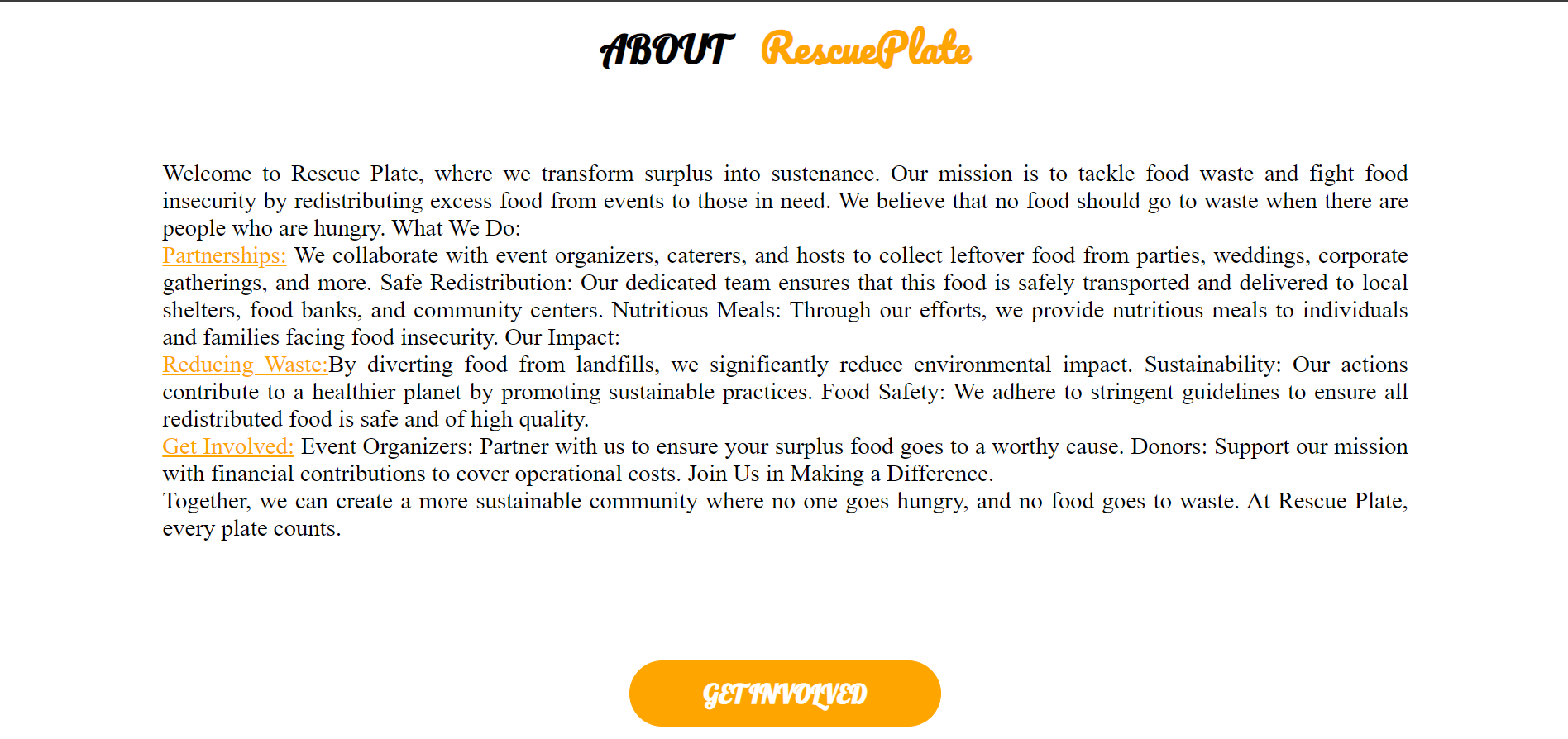
RescuePlate serves as a platform connecting surplus food donors with those in need. Through its interface, users can:
Donation Coordination: Donors, such as restaurants or event organizers, can list surplus food items available for donation.
Recipient Matching: Recipient organizations, such as shelters or food banks, can browse available donations and request pickups based on their needs.
Real-Time Communication: The platform facilitates real-time communication between donors and recipients, streamlining the coordination of food pickups and deliveries.
Waste Reduction: By diverting surplus food from being wasted, RescuePlate helps reduce food waste while simultaneously addressing food insecurity in communities.
Overall, RescuePlate simplifies the process of surplus food distribution, ensuring that edible food reaches those who need it most before it goes to waste.
How we built it
1) Interface Development: Created the initial interface design for RescuePlate using PowerPoint, later implementing it with HTML, CSS, and JavaScript. 2) Innovative Approach: Demonstrated creativity by utilizing PowerPoint as a prototyping tool, effectively translating designs into functional front-end elements. 3) Technical Implementation: Implemented frontend features using HTML for structure, CSS for styling, and JavaScript for interactivity, ensuring a cohesive and user-friendly platform. 4) Community Engagement: Engaged local partners to raise awareness about food waste and insecurity, fostering collaboration and support. 5) Network Establishment: Established initial connections with NGOs and potential collaborators, laying the groundwork for future partnerships. 6) Impactful Redistribution: Enabled surplus food redistribution, making a tangible positive impact on communities in need. 7) Skill Development: Developed technical proficiency and problem-solving skills throughout the project, enhancing capabilities for future endeavours.
Challenges we ran into
Accomplishments:
1) Developed RescuePlate, a solution simplifying surplus food distribution to those in need. 2) Overcoming challenges to implement frontend using HTML, CSS, and JavaScript. 3) Engaged local partners, raising awareness about food waste and insecurity. 4) Established a preliminary network of potential NGO collaborators. 5) Facilitated surplus food redistribution, making a positive impact. 6) Gained technical skills and problem-solving abilities during the project.
Accomplishments that we're proud of
Developing RescuePlate has been a rewarding experience with several key accomplishments:
Effective Solution Development:
Successfully created a solution that simplifies the distribution of surplus food, ensuring it reaches those in need before it goes to waste. Technical Skills Development:
Gained a solid understanding of JavaScript and its application in developing interactive and dynamic web applications. Acquired foundational knowledge in backend development, including database management and API integration. Community Engagement:
Established initial partnerships with local restaurants and event organizers willing to donate surplus food. Raised awareness about food waste and food insecurity within the community through outreach efforts. Network Building:
Built a preliminary network of potential NGO partners interested in collaborating to distribute surplus food to those in need. Initial Impact:
Facilitated the redistribution of surplus food from several events and restaurants, providing meals to individuals and families in need. Learning and Growth:
Deepened my understanding of the environmental impact of food waste and the importance of sustainable practices. Developed problem-solving and project management skills, essential for navigating challenges encountered during the project. These accomplishments have laid a strong foundation for the continued development and expansion of RescuePlate, moving closer to the goal of reducing food waste and alleviating food insecurity.
What we learned
Throughout the development of RescuePlate, I learned several important lessons that extended beyond the technical aspects of building the project:
JavaScript Basics: I gained an understanding of JavaScript, which adds up new things to write in my CV. and enable me to make a better interface for users.
The Importance of Food and Its Role in the Environment: I delved into the significance of food as a critical resource. I learned how food production, distribution, and waste profoundly impact the environment. Reducing food waste helps alleviate hunger, minimizes greenhouse gas emissions, and conserves resources such as water and energy. I came up with a new idea about resolving the complexity of surplus food distribution by making nearby NGOs available to you, so it will become efficient to distribute more surplus to those who need it.
Complexities of Food Distribution: I gained insights into the logistical challenges involved in redistributing surplus food. This included understanding the best practices for handling, transporting, and storing perishable items to ensure they remain safe for consumption. It was so complex to build as a solo developer to achieve this solution that it needed a lot of work . so, I can present only FRONTEND PART.
Legal and Health Regulations: Navigating the legalities surrounding food donation was a critical part of the learning process. I learned about liability issues, health regulations, and the necessary steps to ensure compliance with food safety standards.
Community Engagement and Advocacy: I discovered the importance of raising awareness about food wastage and food insecurity. Engaging with the community, building partnerships, and advocating for change were all crucial elements in making RescuePlate successful.
Problem-Solving and Adaptability: Developing RescuePlate required innovative problem-solving and the ability to adapt to unforeseen challenges. This included finding solutions to logistical hurdles, addressing legal concerns, and continually improving the system based on feedback from users.
Overall, these lessons not only contributed to the successful creation of RescuePlate but also enriched my understanding of how technology can be leveraged to address significant social and environmental issues.
What's next for RescuePlate
Moving forward, my primary goals for RescuePlate are to build its backend, make the platform fully functional, and connect with nearby NGOs to unite efforts in reducing food waste and combating food insecurity.
Building the Backend:
Development: Learn and implement backend technologies such as Node.js, Python (Flask/Django), or Ruby on Rails. Database Management: Set up a database (SQL or NoSQL) to store information on donors, recipients, food items, and transactions. API Integration: Develop RESTful APIs to handle communication between the front end and back end. Security: Implement user authentication and security measures to protect data. Deployment: Test and deploy the backend on a cloud service provider like AWS, Google Cloud, or Heroku. Uniting with Local NGOs:
Outreach: Identify and reach out to local NGOs focused on hunger relief. Partnerships: Establish formal partnerships with interested NGOs. Onboarding: Provide training sessions to NGO staff on using the platform. Making the Platform Functional:
User Onboarding: Develop an easy sign-up process and guided tutorials for users. Real-Time Matching: Implement a system to connect food donors with nearby NGOs. Tracking and Reporting: Add features for tracking food pickups and deliveries, and generating reports. Community Engagement and Awareness:
Campaigns: Launch awareness campaigns to promote RescuePlate. Volunteer Recruitment: Recruit volunteers to assist with various aspects of the project. These steps will help make RescuePlate a fully functional platform and unite efforts with local NGOs to address food wastage and insecurity effectively.


Log in or sign up for Devpost to join the conversation.