-
-
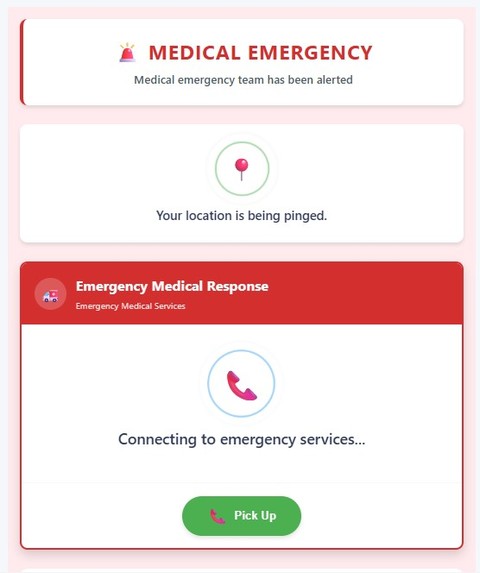
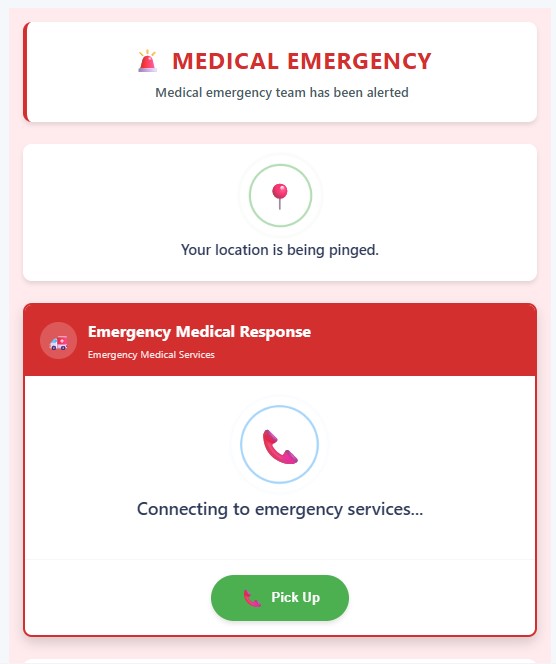
DisAID handling emergency situation
-
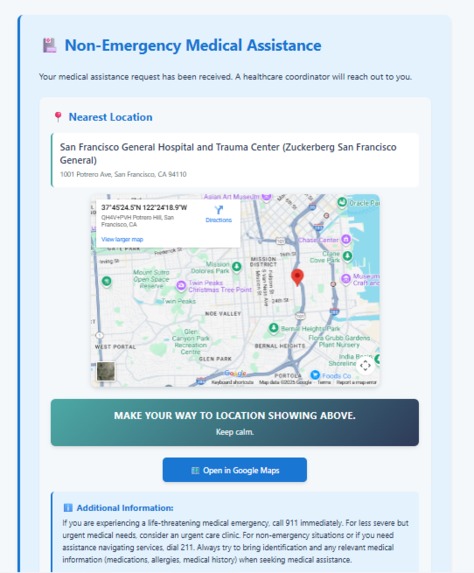
DisAID on non-emergency situation
-
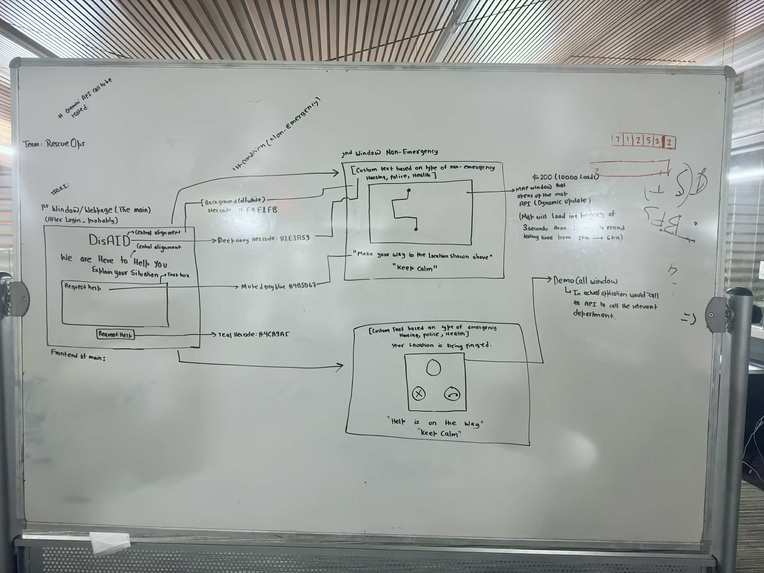
Initial Design and Workflow
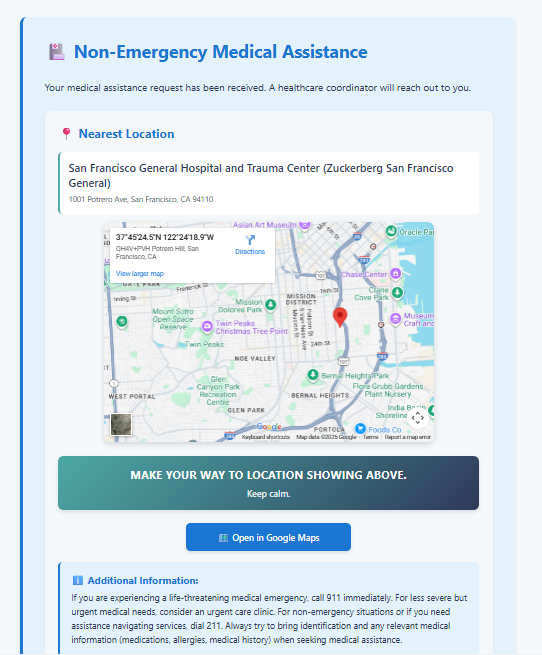
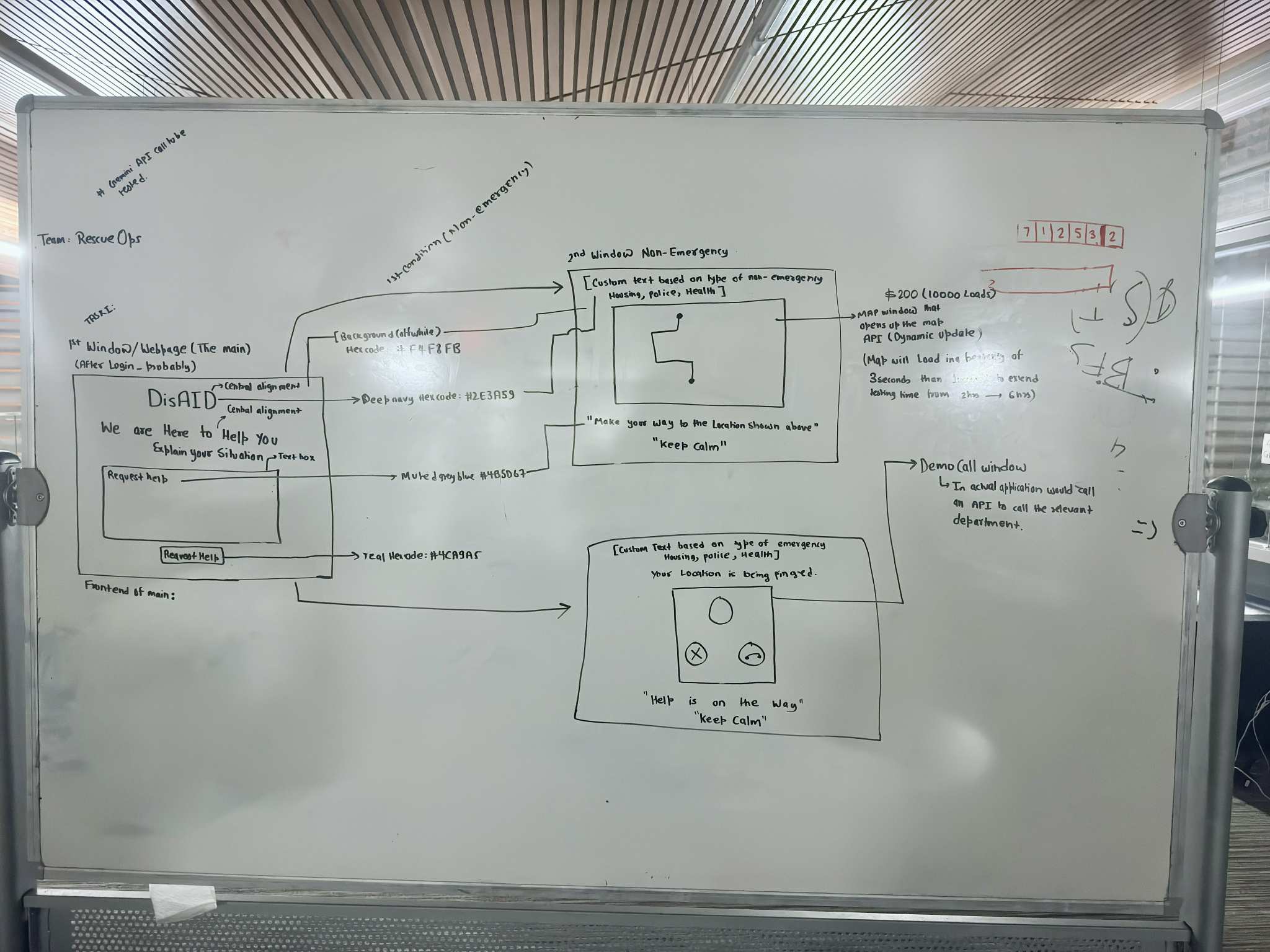
Inspiration : We never know when disasters can hit, human help is there but immediate help is limited. DisAID aims to fill the gaps in times of difficulty. Most of the times one only needs a simple direction, and this application aims to be in that position.
What does it do? : DisAID is an application that takes a help request from the patron and based on if the situation is emergency or non-emergency guides the patron to a relevant location based on their need or shares their current location and puts the relevant authority on the line so they can be assisted further. This helps to distribute workflow among humans and machines as now machines through LLM’s have certain reasoning abilities which for this application is accessed through an API. This application could help people see more stars in the long run.
How we built this? : We built this application through Visual Studio Code, native visual studio code copilot and Google Gemini for learning and integrating newer technologies like API integration and system design.
Challenges : Making a fully working application came with its own set of challenges, we had to fix a lot of bugs when we tried to add new features. We had to learn newer concepts within specific timelines so we could have a working version of the project. Adding UI tweaks and using newer features had its own learning moments even though they were tough.
What did we learn? : We learned a lot about API integration, calling and receiving data from API’s, encapsulating API keys for maintaining security and integrity. UI design matters depending on the application. Teamwork and discussions are equally as important as coding and making something work first then refining it later was a key learning point.
What’s next for DisAID? : DisAID is in its prototype phase where it only exists in the present as a native react app, in the future it can be an alternative to amber alerts, be a disaster app which becomes ready on release or be on standing booths that disaster relief teams can deploy. It can also act as a module or a feature to existing disaster policies.
Acknowledgement : Team RescueOps would like to express our sincere gratitude to the organizers and mentors of HackTex for providing an inspiring and collaborative environment to bring this project to life. A special thanks goes to Google’s Gemini API, which played a central role in the development and functionality of this project.
Tech Stacks : Node.js, React, Express, SQLite, API(Google Gemini)
Try it out : https://github.com/samrakshanadhikari/RescueOps


Log in or sign up for Devpost to join the conversation.