Inspiration
In late 2026, catastrophic monsoon downpours struck Nepal, triggering unprecedented flash floods and deadly landslides across the Kathmandu Valley and surrounding districts. Rivers like the Bagmati and Koshi violently breached their banks, sweeping away homes, washing out major highway bridges, and stranding thousands of families on rooftops in the pitch dark.
During this crisis, the systemic flaws of traditional disaster response became glaringly clear:
- Overwhelmed Emergency Lines: Local emergency phone lines were jammed instantly by thousands of frantic callers. Most people simply heard busy tones while floodwaters rose to their ceilings.
- Deadly Information Blindspots: Civilians attempted to evacuate on foot, only to walk directly into washed-out roads or landslide zones because there was no real-time route intelligence.
- Isolated Communities: Entire riverbank settlements were cut off without power or cell connectivity, with authorities unable to determine who was trapped where.
Seeing families in Nepal waving torches from tin roofs, desperate for help that couldn't locate them, sparked our mission.
We asked ourselves: Why are we still waiting for drowning victims to dial an overloaded phone number? What if the emergency system analyzed satellite and drone telemetry to proactively call at-risk families first, warning them of approaching flood crests and guiding them around submerged roads to safe high ground?
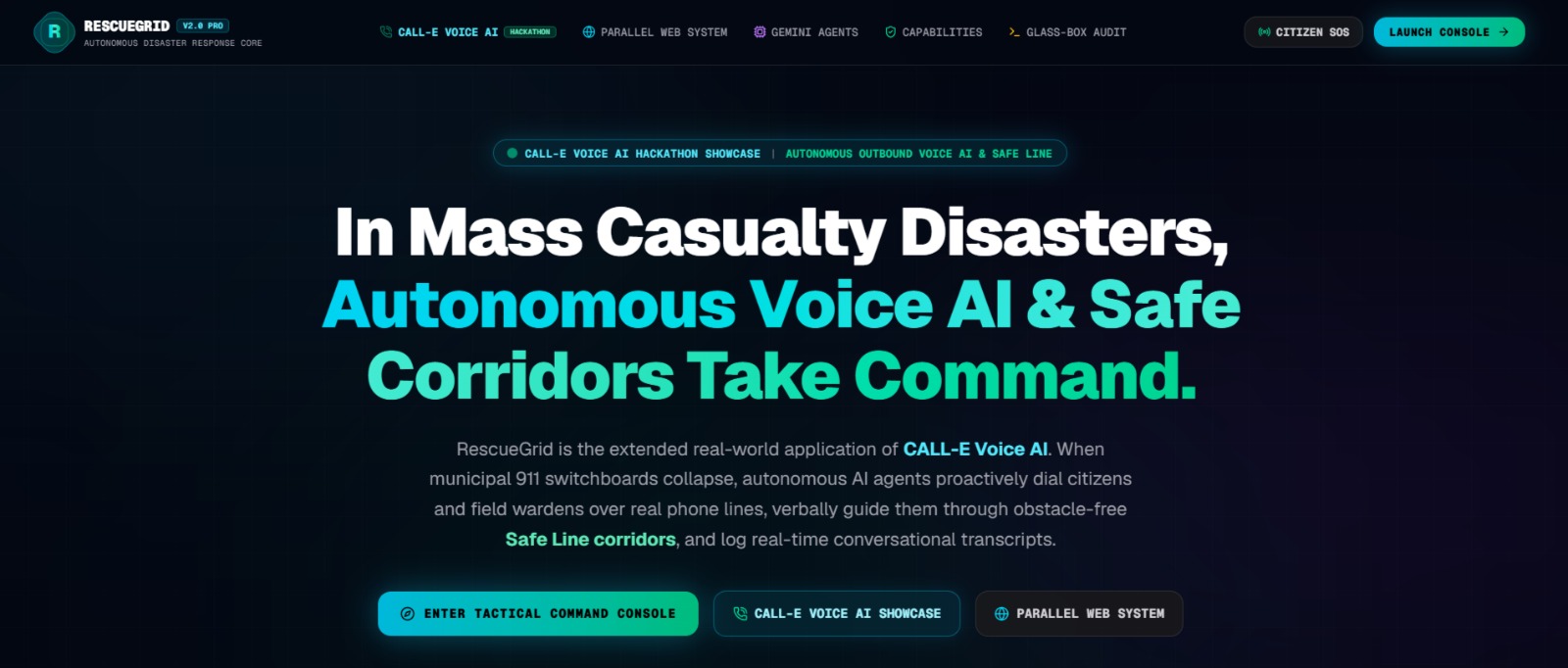
That disaster was our call to action. We built RescueGrid and its voice AI officer CALL-E so that no family is left in the dark when the waters rise.
Built With
- better-sqlite3
- calle-voice-ai
- framer-motion
- google-gemini
- google-maps
- leaflet.js
- next.js
- react
- tailwindcss
- web-speech-api
- zustand


Log in or sign up for Devpost to join the conversation.