-
-
-
Agenda
-
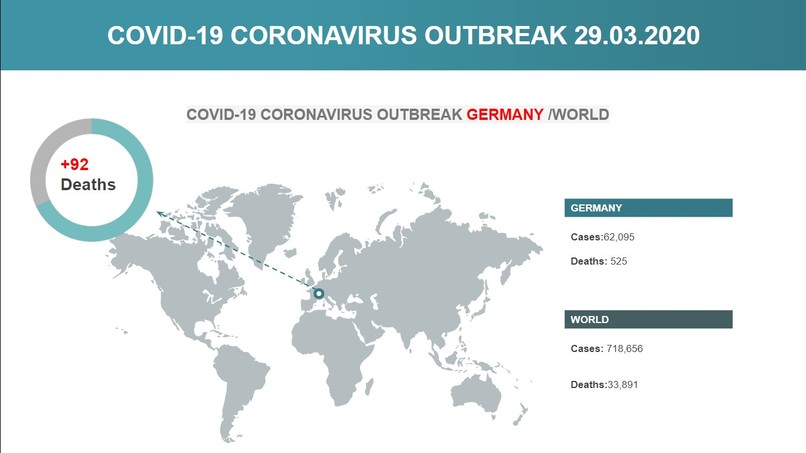
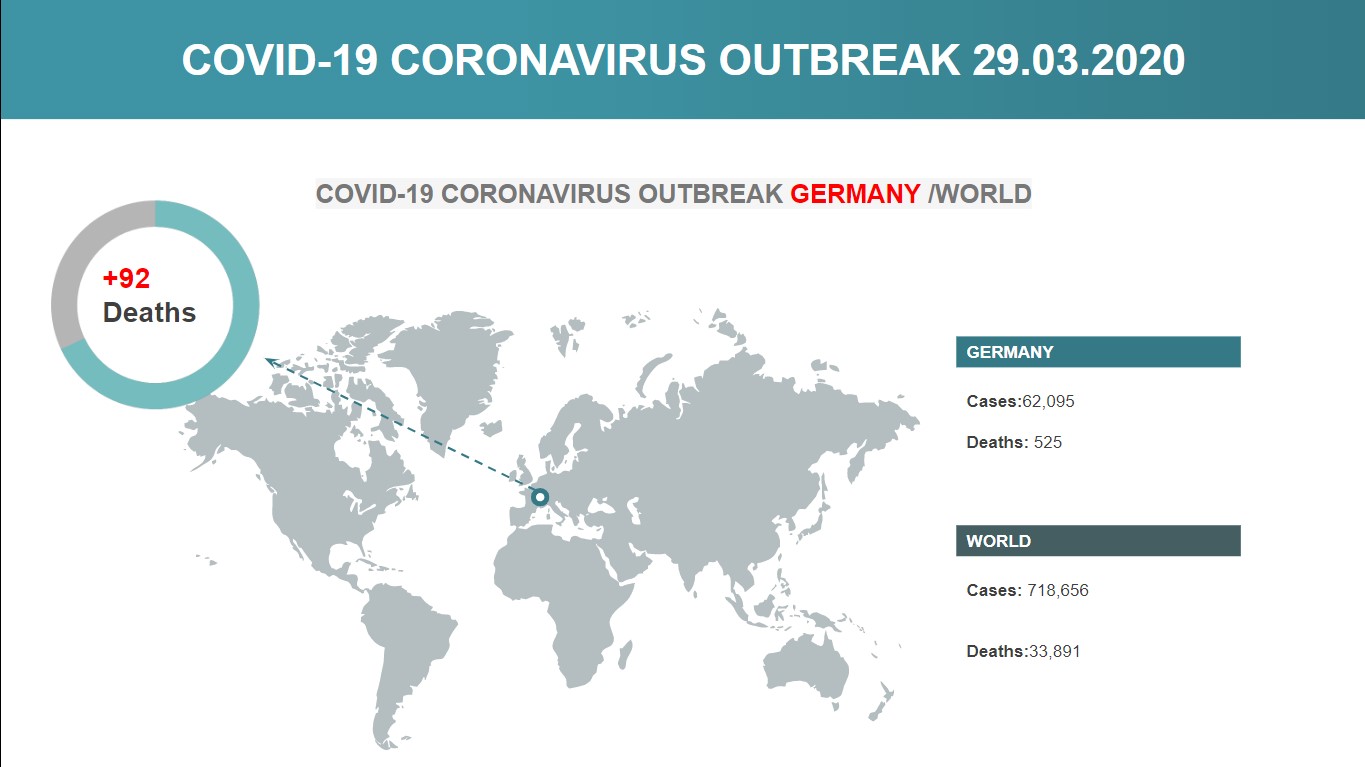
COVID-19 CORONAVIRUS OUTBREAK 29.03.2020
-
Project Inspiration
-
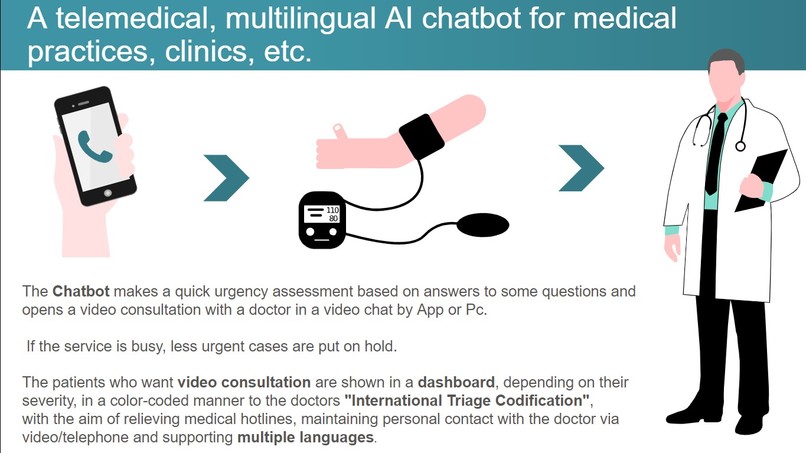
Telemedical, multilingual AI chatbot
-
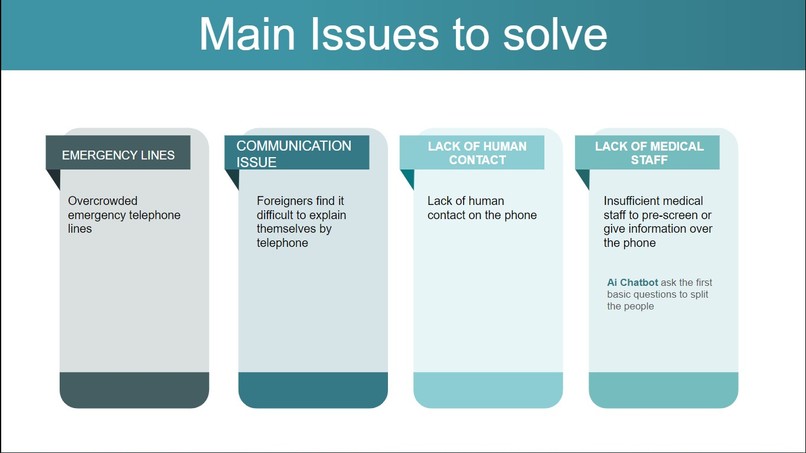
Issues
-
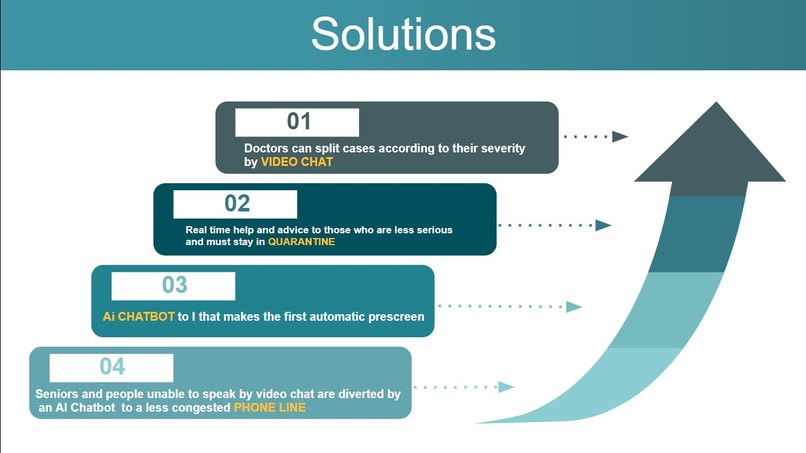
Solution
-
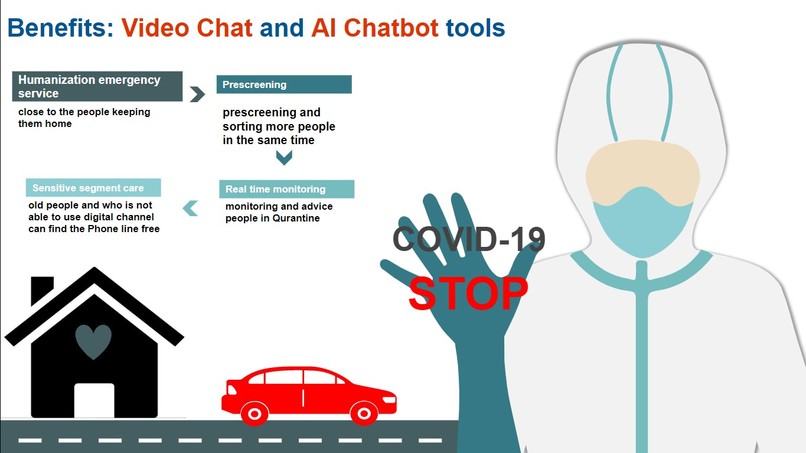
Benefits
-
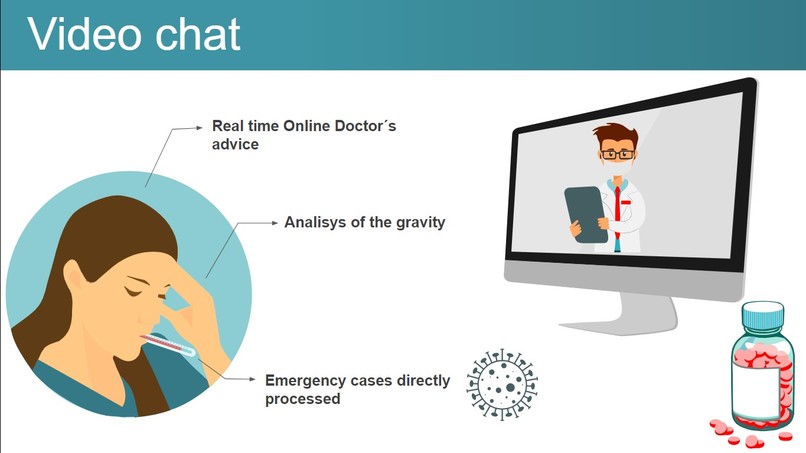
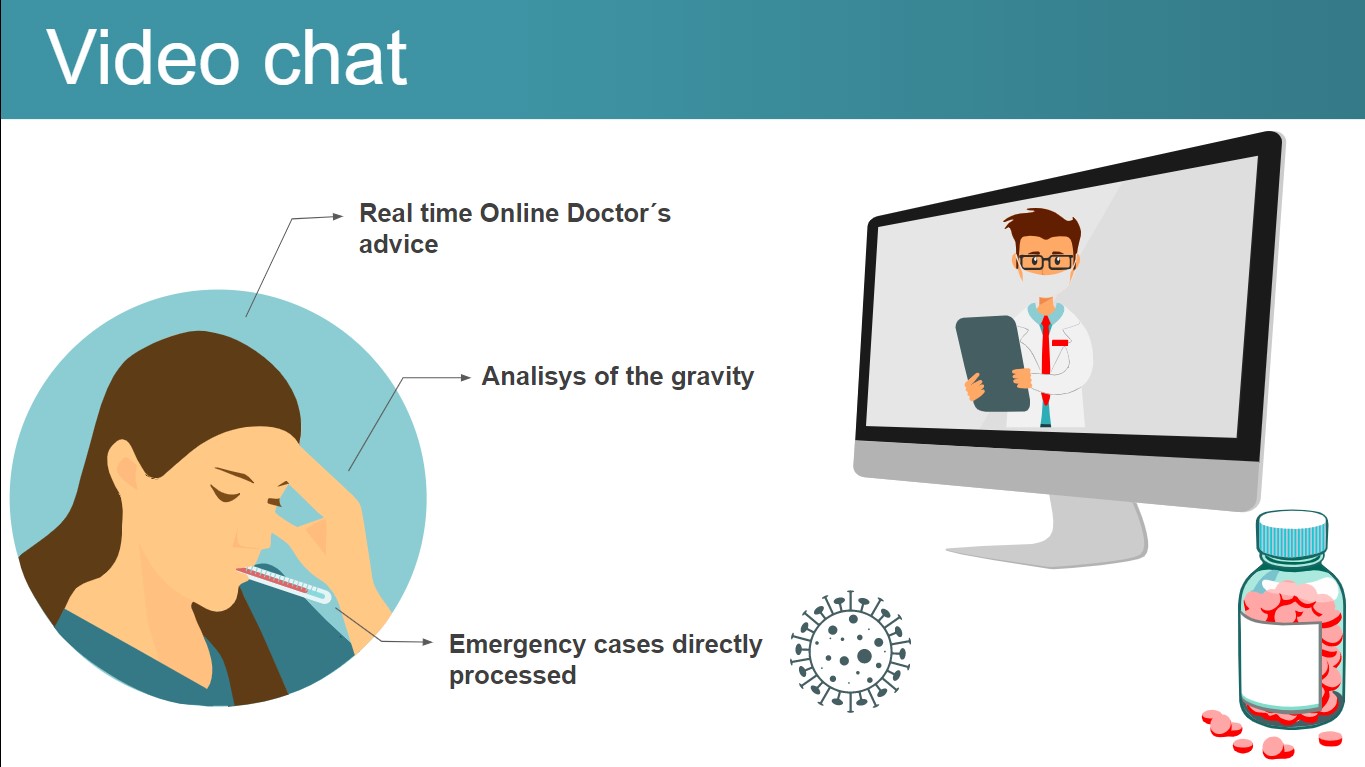
Video Chat
-
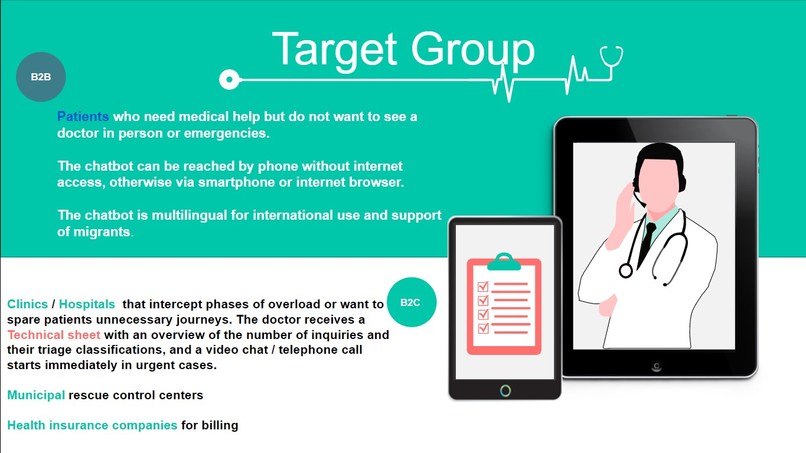
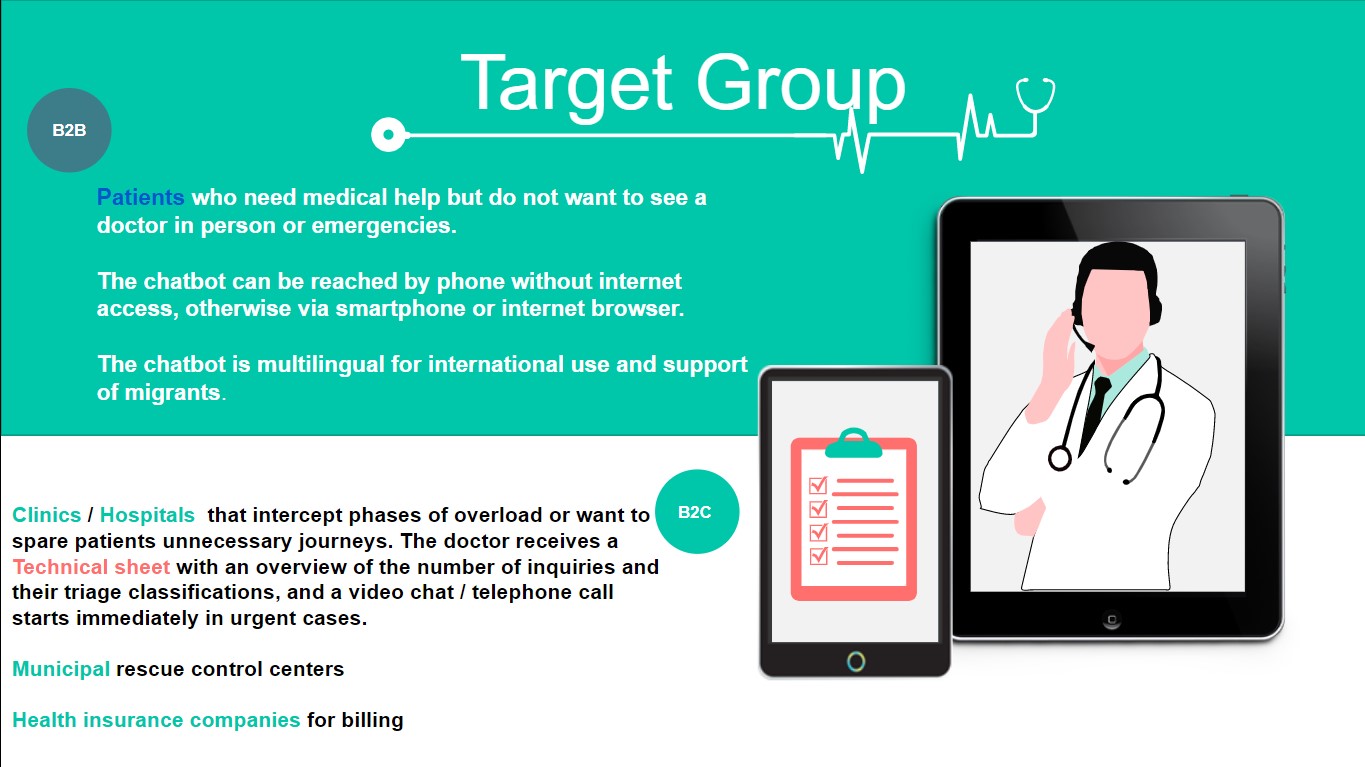
Target Group
-
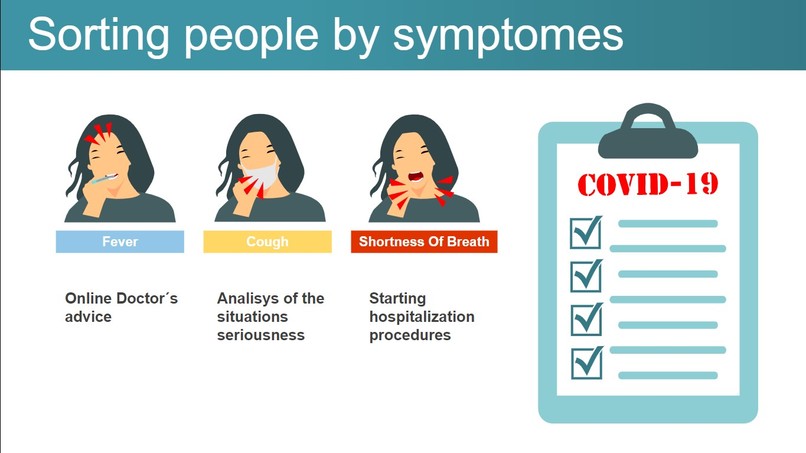
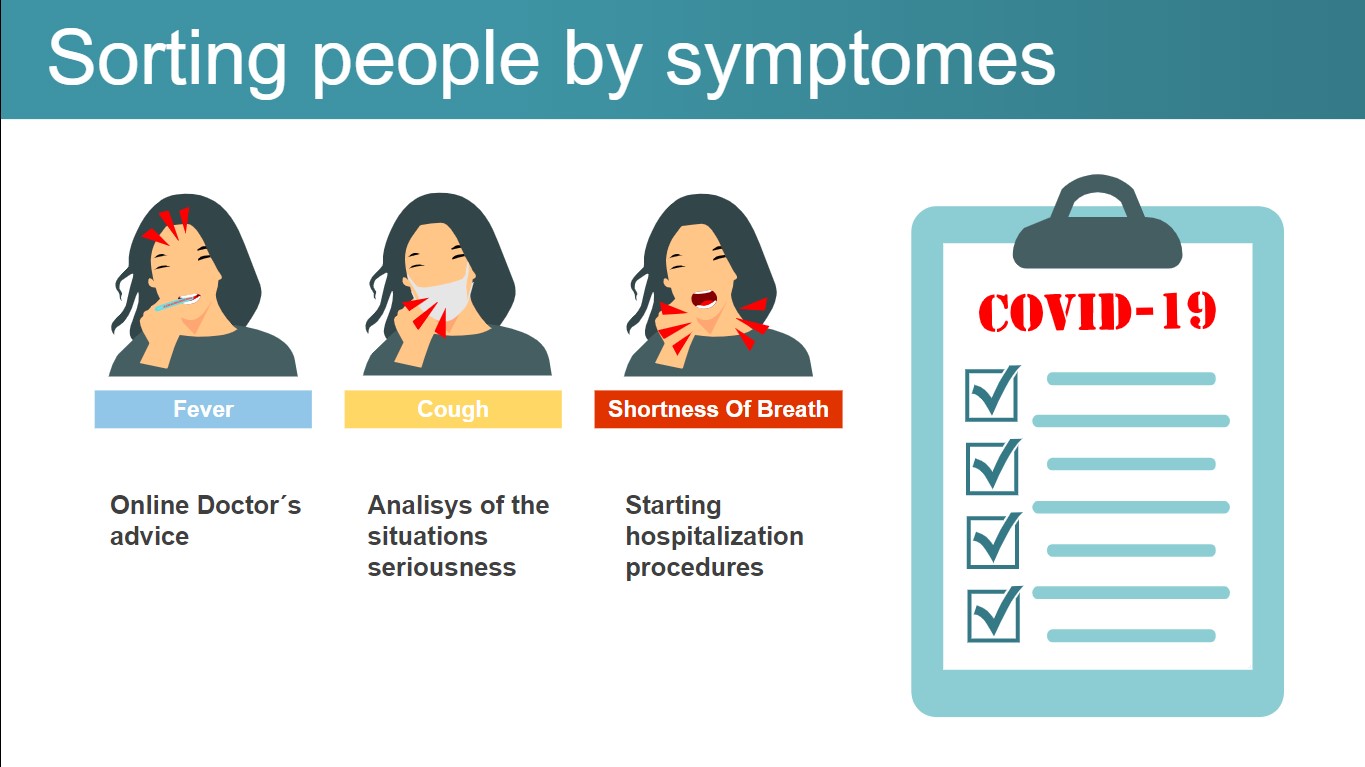
Sorting People by Symptomes
-
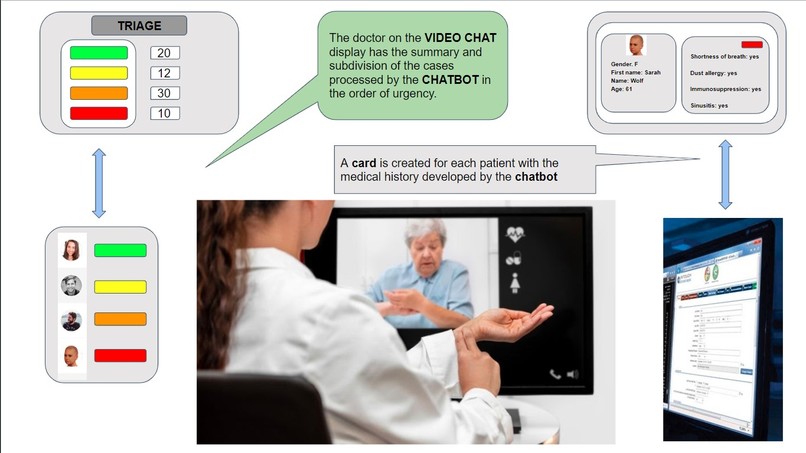
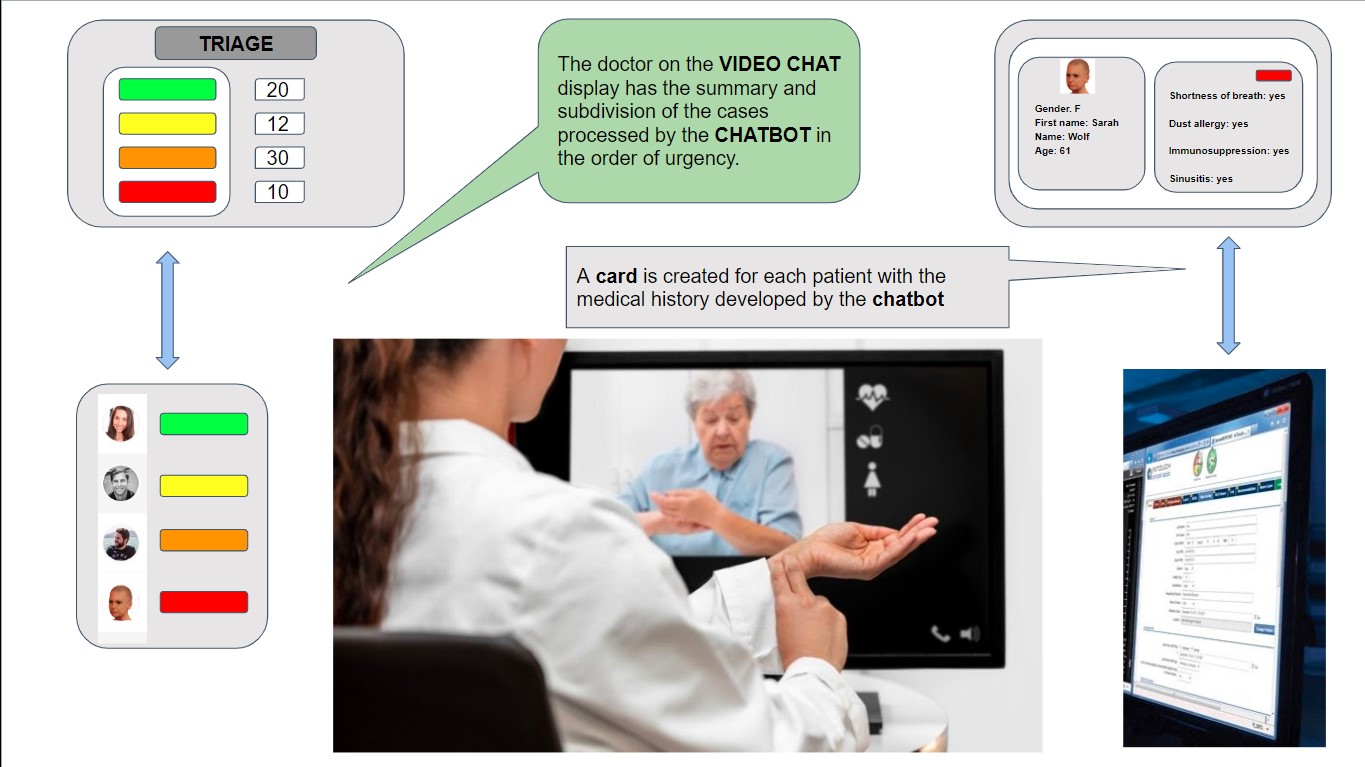
Digital Triage
-
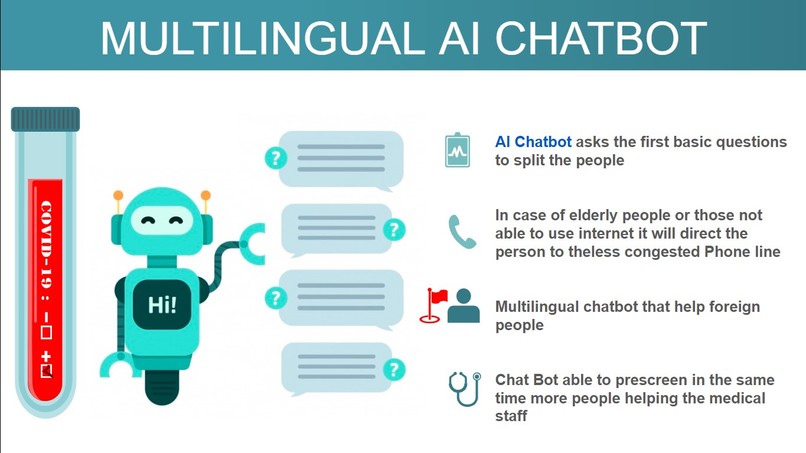
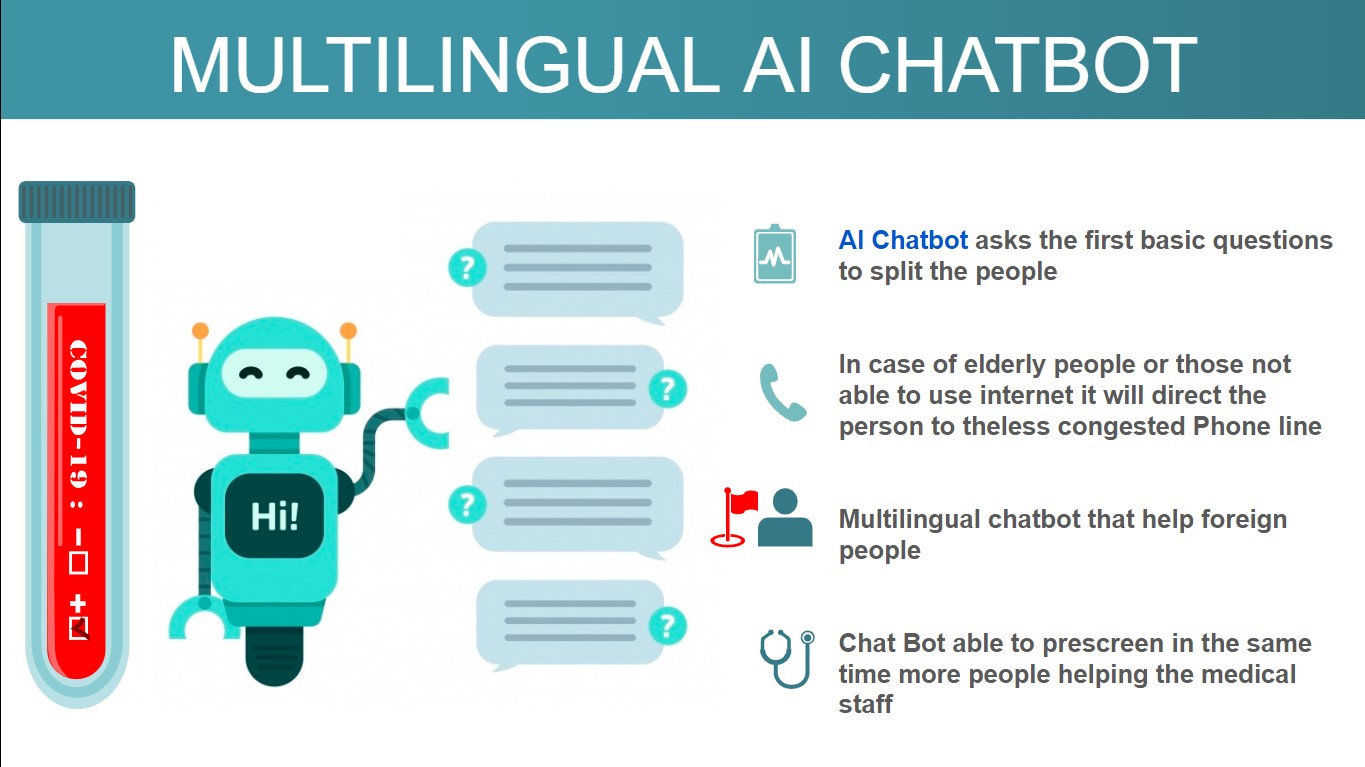
Multilingual AI Chatbot
-
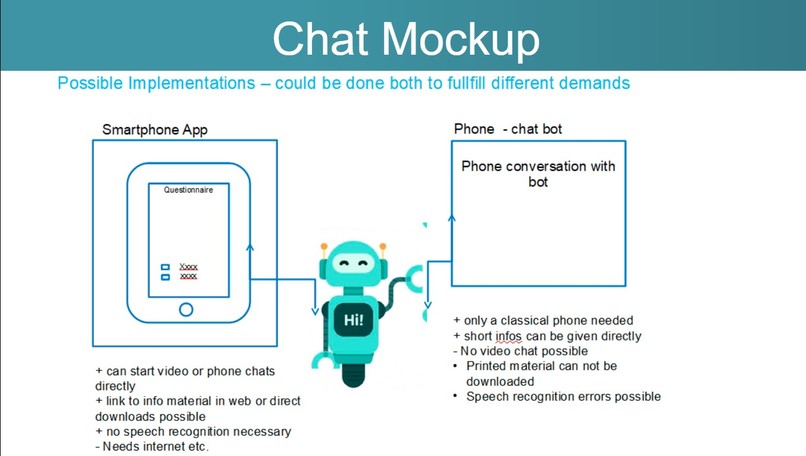
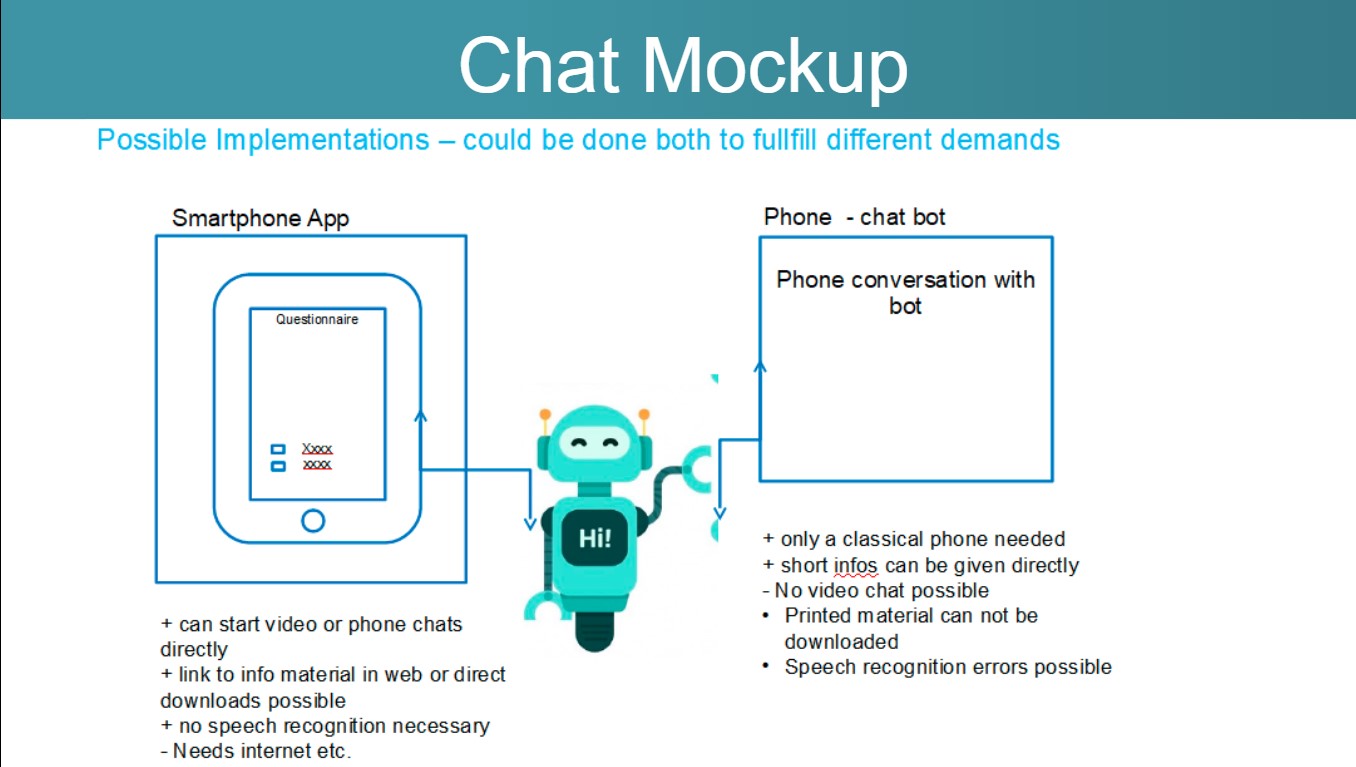
Chatbot Mockup
-
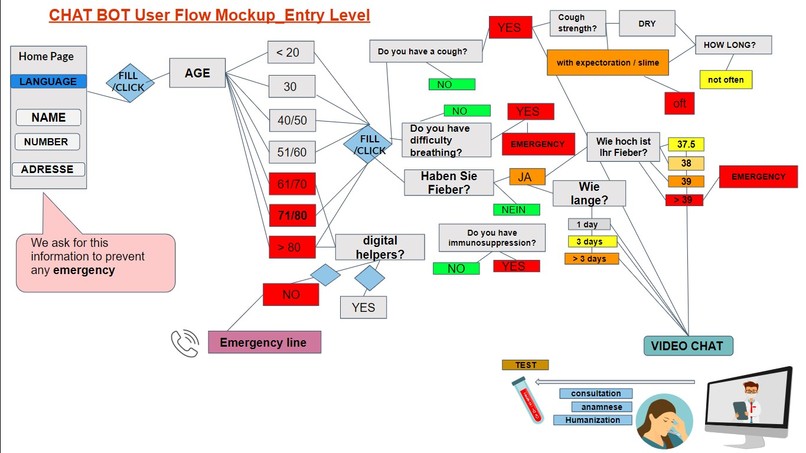
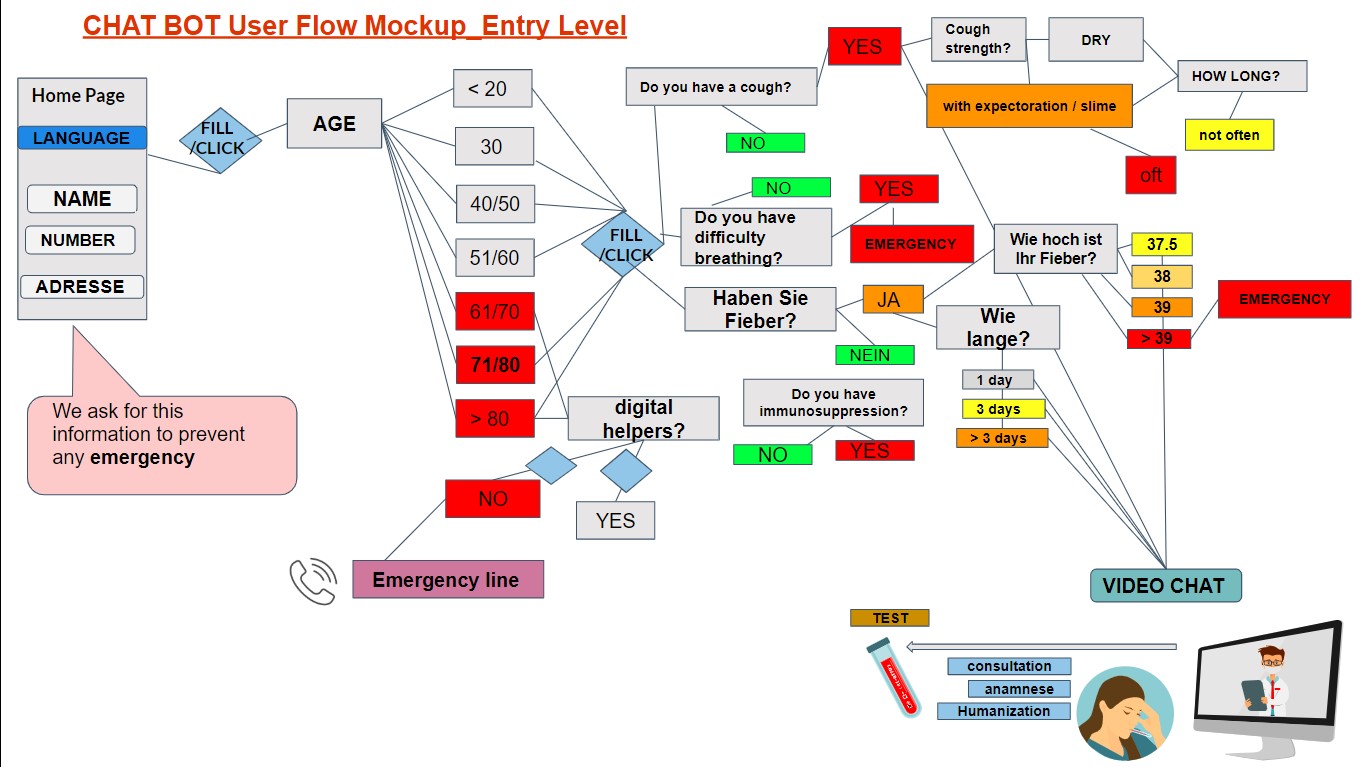
Entry leven Flow
-
Thank You
Summary
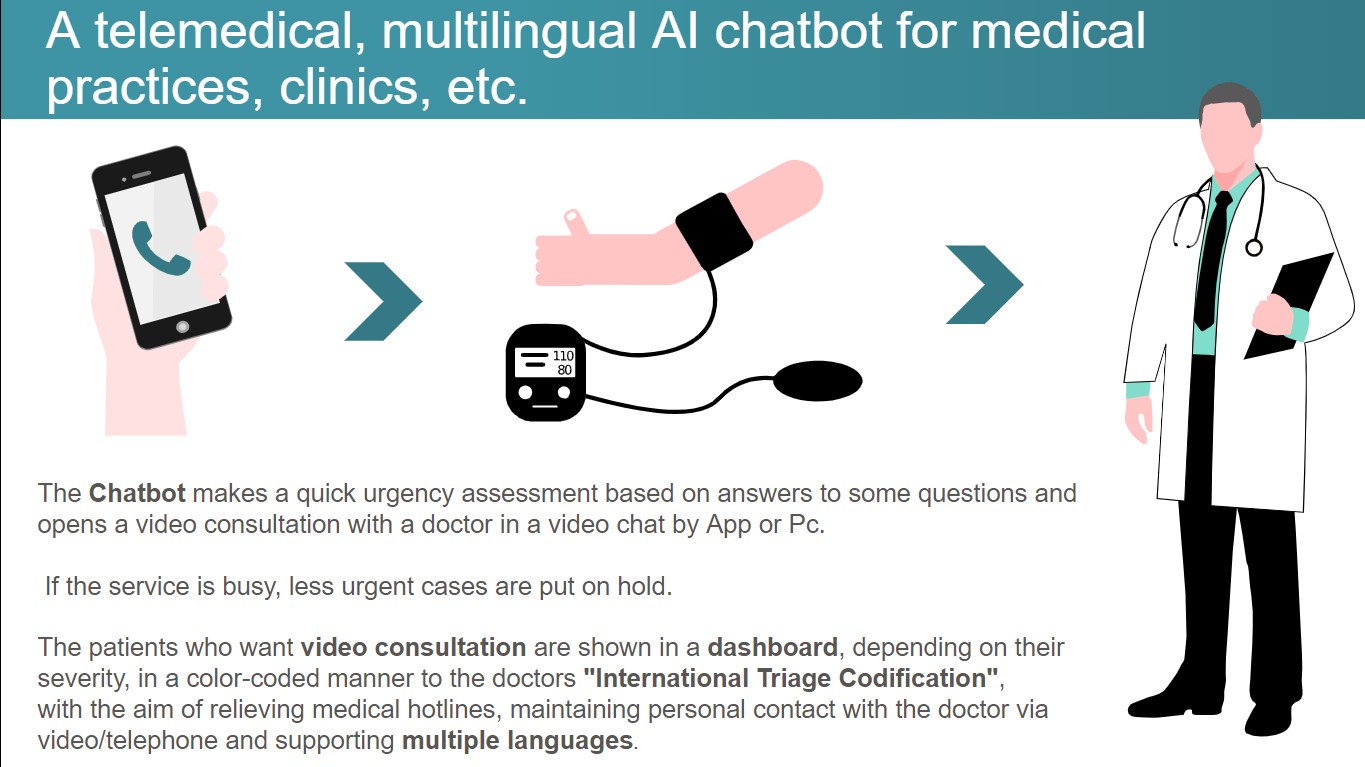
A telemedical, multilingual AI chatbot for medical practices, clinics, etc. The chatbot makes a quick urgency assessment based on answers to some questions and opens a video consultation with a doctor in a video chat. If the service is busy, less urgent cases are put on hold. The patients who want video consultation are shown in a dashboard, depending on their severity, in a color-coded manner to the doctors "International Triage Codification", with the aim of relieving medical hotlines, maintaining personal contact with the doctor via video/telephone and supporting multiple languages.
The Challenge
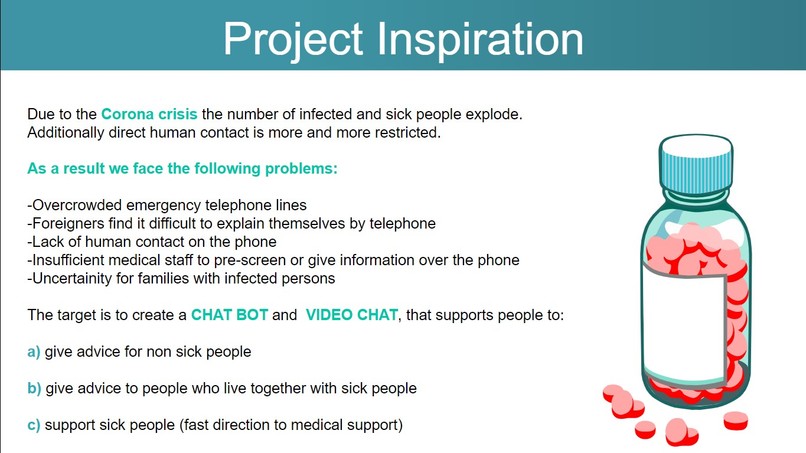
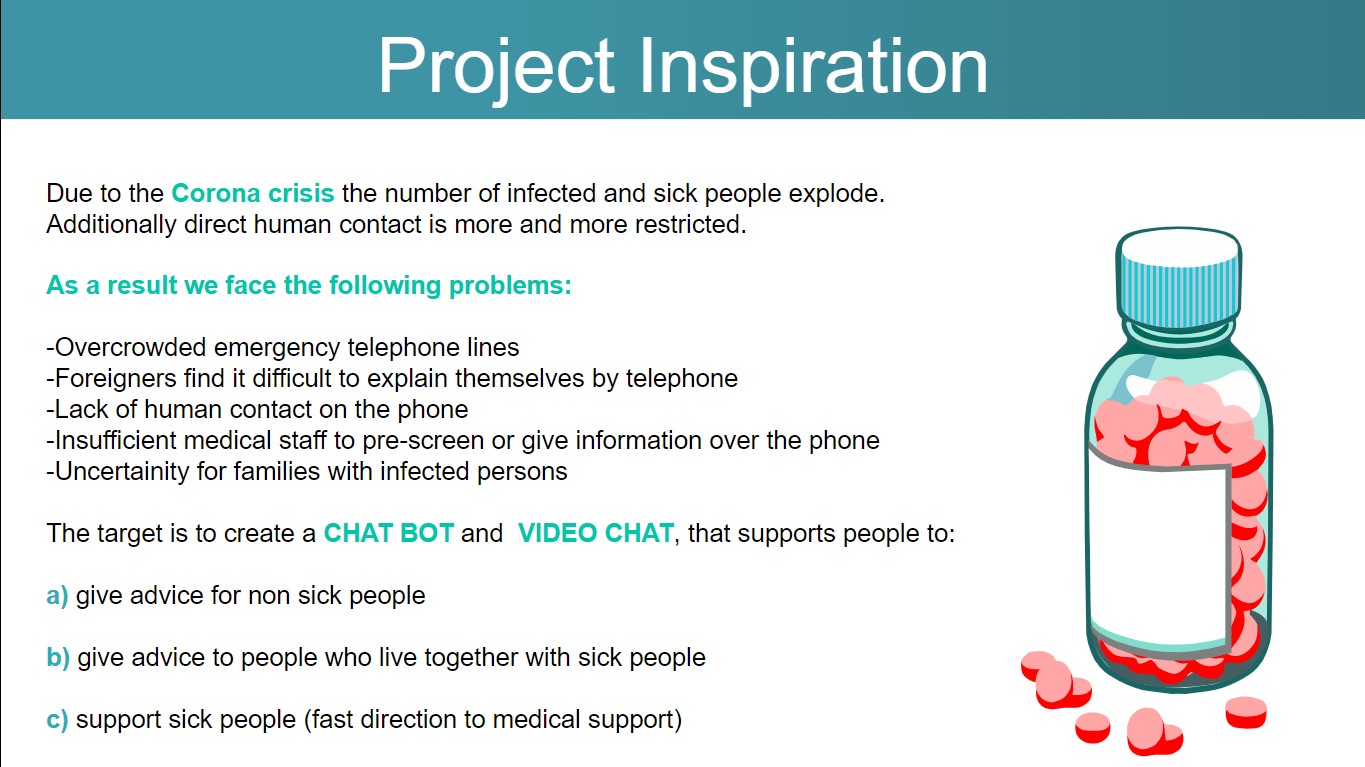
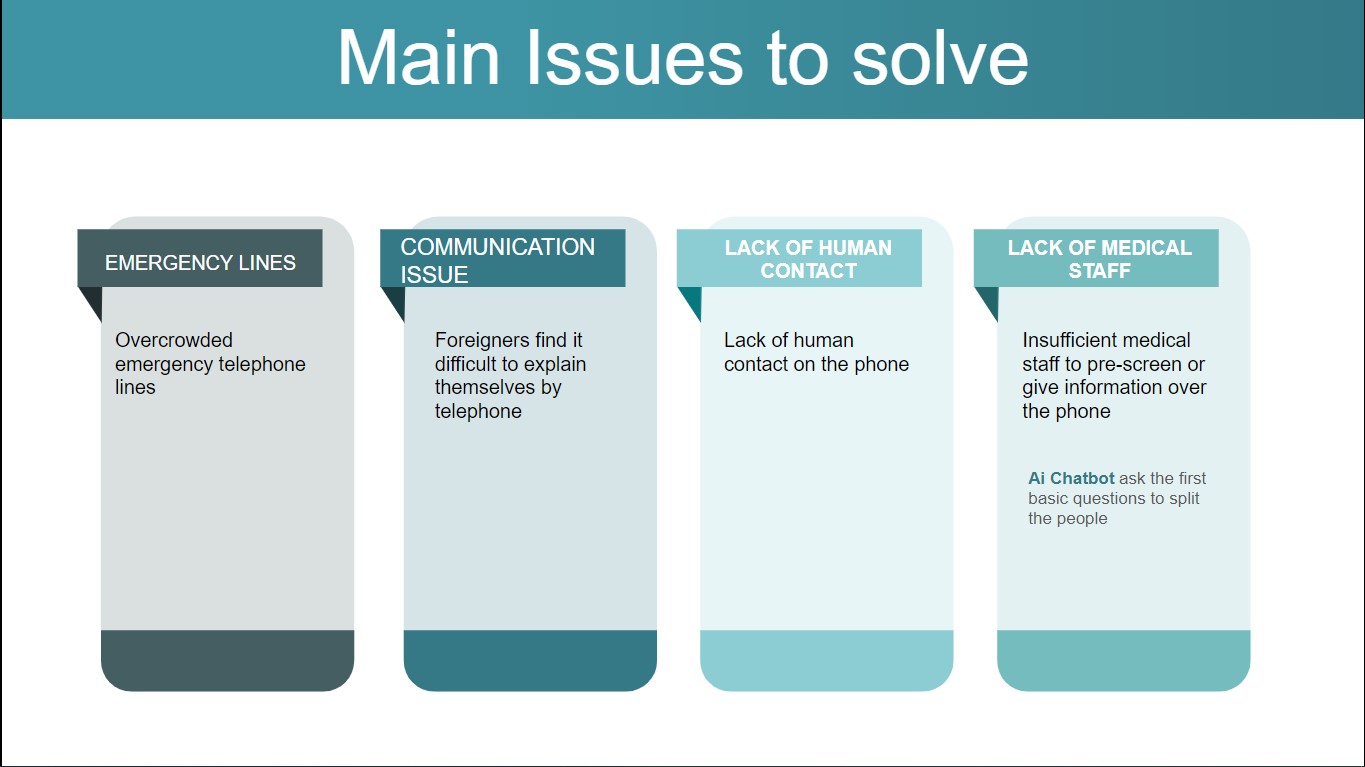
Due to the Corona crisis the number of infected and sick people explode. Additionally direct human contact is more and more restricted. As a result we face the following problems:
- Overcrowded emergency telephone lines.
- Foreigners find it difficult to explain themselves by telephone.
- Lack of human contact on the phone.
- Insufficient medical staff to pre-screen or give information over the phone.
- Uncertainity for families with infected persons.
The Idea and its Benefits
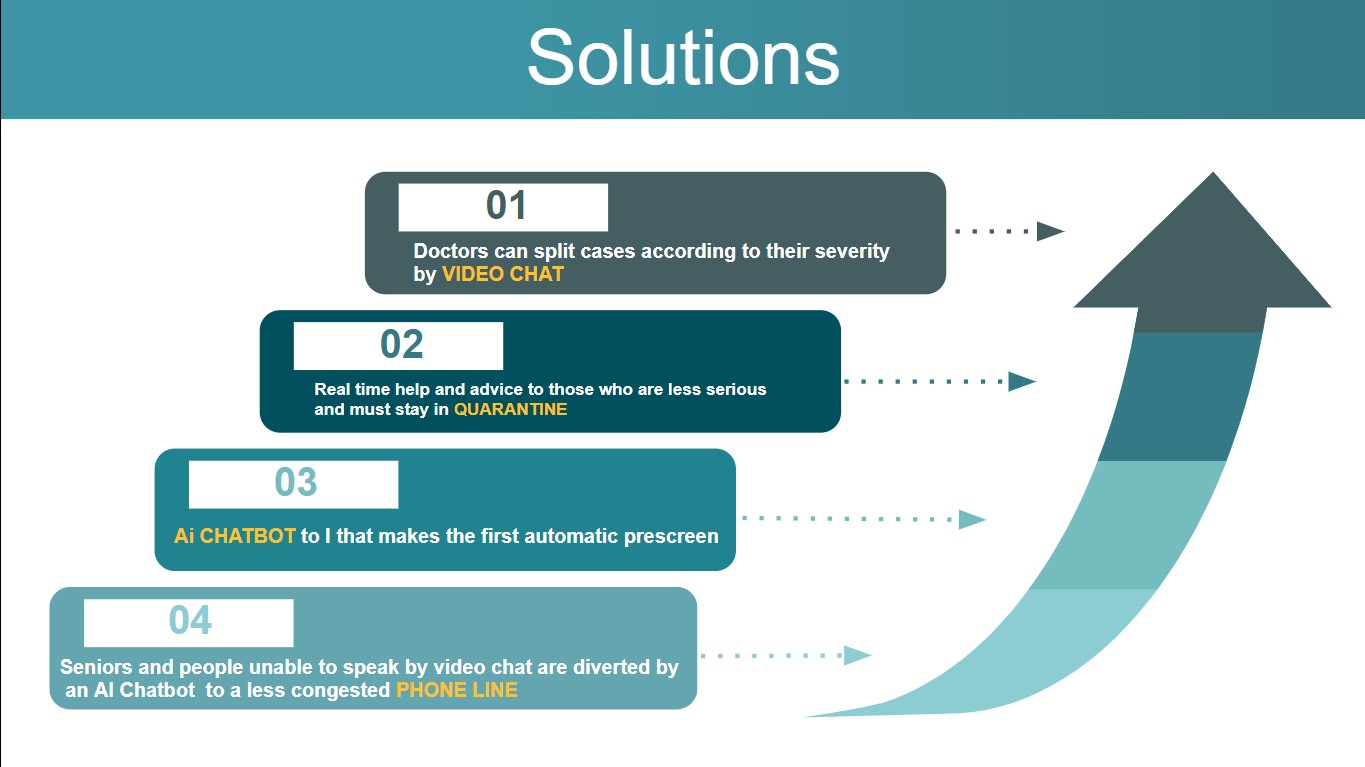
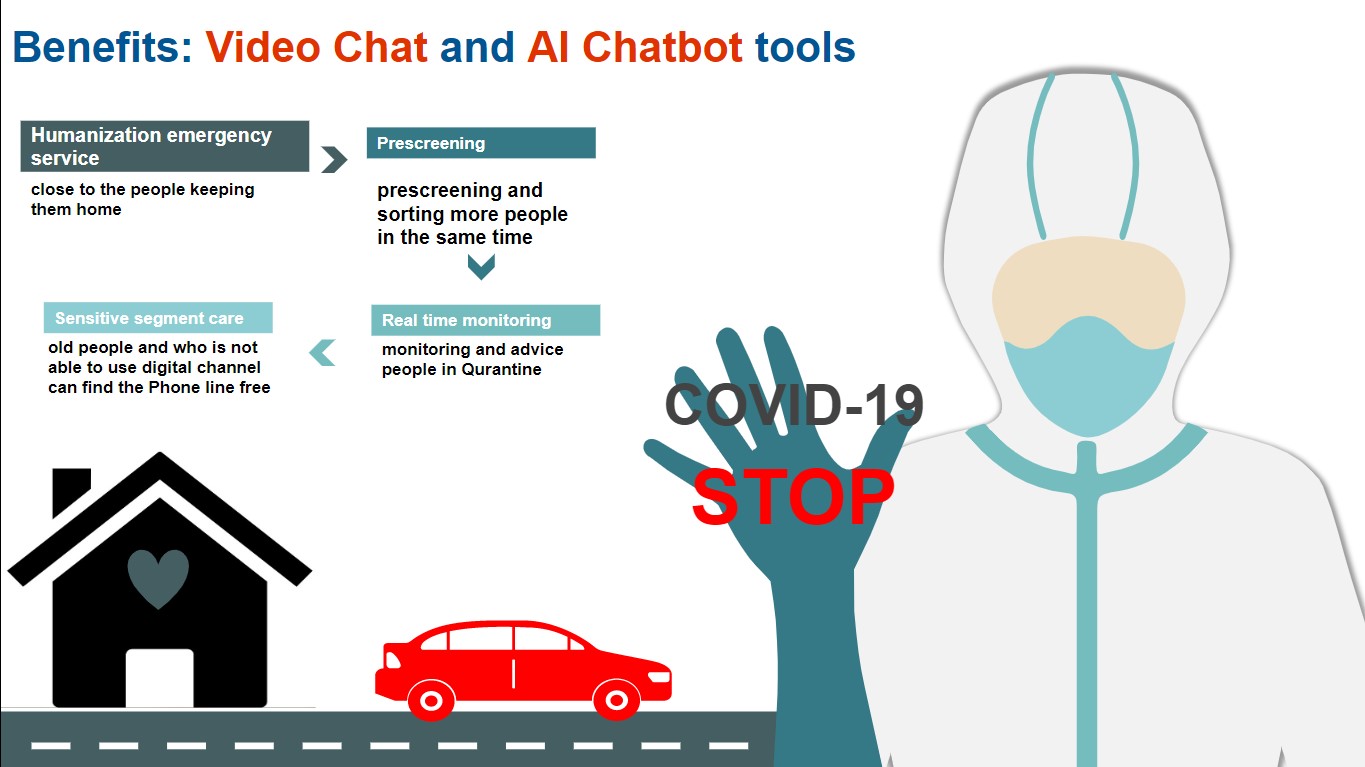
Implement an AI chatbot combines with a video chat option that can be reached via the smartphone app, internet or phone. The target is to relieve medical hotlines by:
- Directing only urgent cases directly to a video chat or phone line with a doctor.
- Putting low priority cases into a waiting loop or a call back list.
- When possible the Chatbot gives people standard information f.e. in case of COVID-19 Testing.
- The Chatbot will be able to understand and speak or write several languages so that every user can use his or her favorite language.
The project has 2 target groups:
B2C:
Patients who need medical advice but have to stay at home or emergencies. The chatbot can be reached by phone without internet access, otherwise via smartphone or internet. The chatbot is multilingual for international use and support of migrants.B2B:
- Clinics / practices that intercept phases of overload or want to spare patients unnecessary journeys.
- Municipal rescue control centers
- Health insurance companies for billing
To guarantee usability the following rules should be fulfilled for the final workflow:
- A flow can never guarantee to catch all possible real cases. So there must always be a path to a chat with a doctor at least with low priority (waiting loop).
- To minimize speech recognition errors and decision paths use closed questions in questionnaires where possible. (closed questions can be answered with yes or no, a number, or a given set of alternatives)
- The chatbot should stop asking questions when a classification is clear.
- Time emergency: ‘Stop breathing’ might be classified as more time-critical than ‘high fever’. Time-critical questions have to be asked first to avoid losing time.
The Result Today
Given the short time, at the moment, we have developed only the initial part of the Chatbot and VideoChat Prototypes, but we are very interested in having concrete opportunities to create synergies and collaborations with institutions and companies and continue the project.
Further features ideas
- Extend on further diagnosis.
- Make available through speech synthesis / recognition interface (voice).
- Integrate with home assistant systems for aged or handicapped people.
- Integrate with home assistant systems like Alexa or Google Assistant.
- Enrich web interface with face showing emphatic feelings.
- Feature to give specialist appointments for planned examinations.
- Make appointments for second opinion doctors.
- Feature to revoke emergency calls made a moment ago.
- Find blood donation opportunities.
- Identify possible organ donors.
- Use emotion recognition from voice modalities and facial expression recognition to identify stress levels.






Log in or sign up for Devpost to join the conversation.