-
-
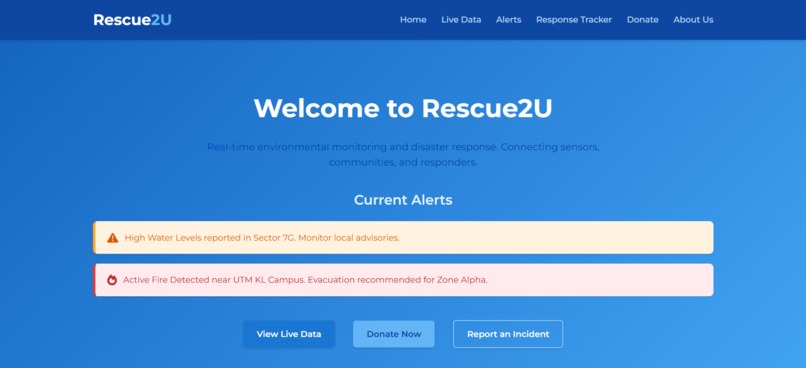
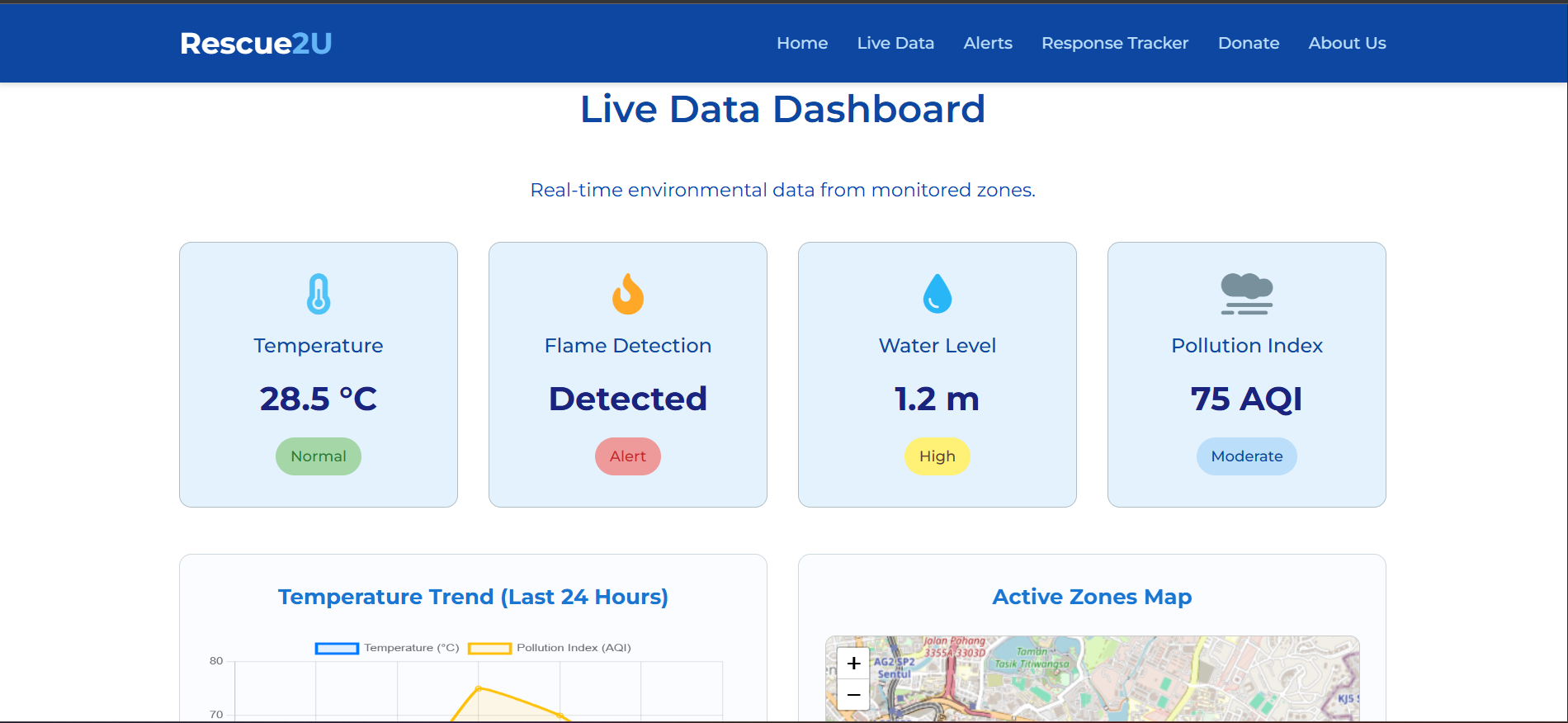
Rescue2U Main Page
-
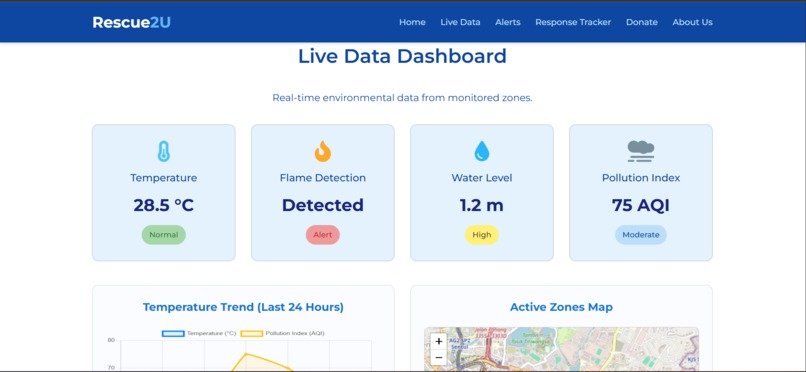
Live Data Dashboard
-
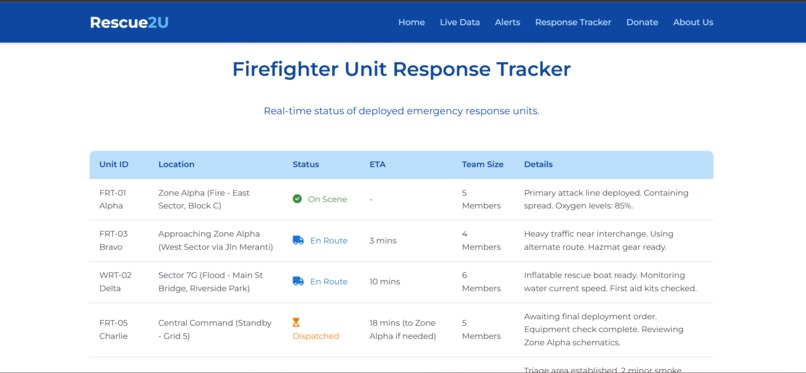
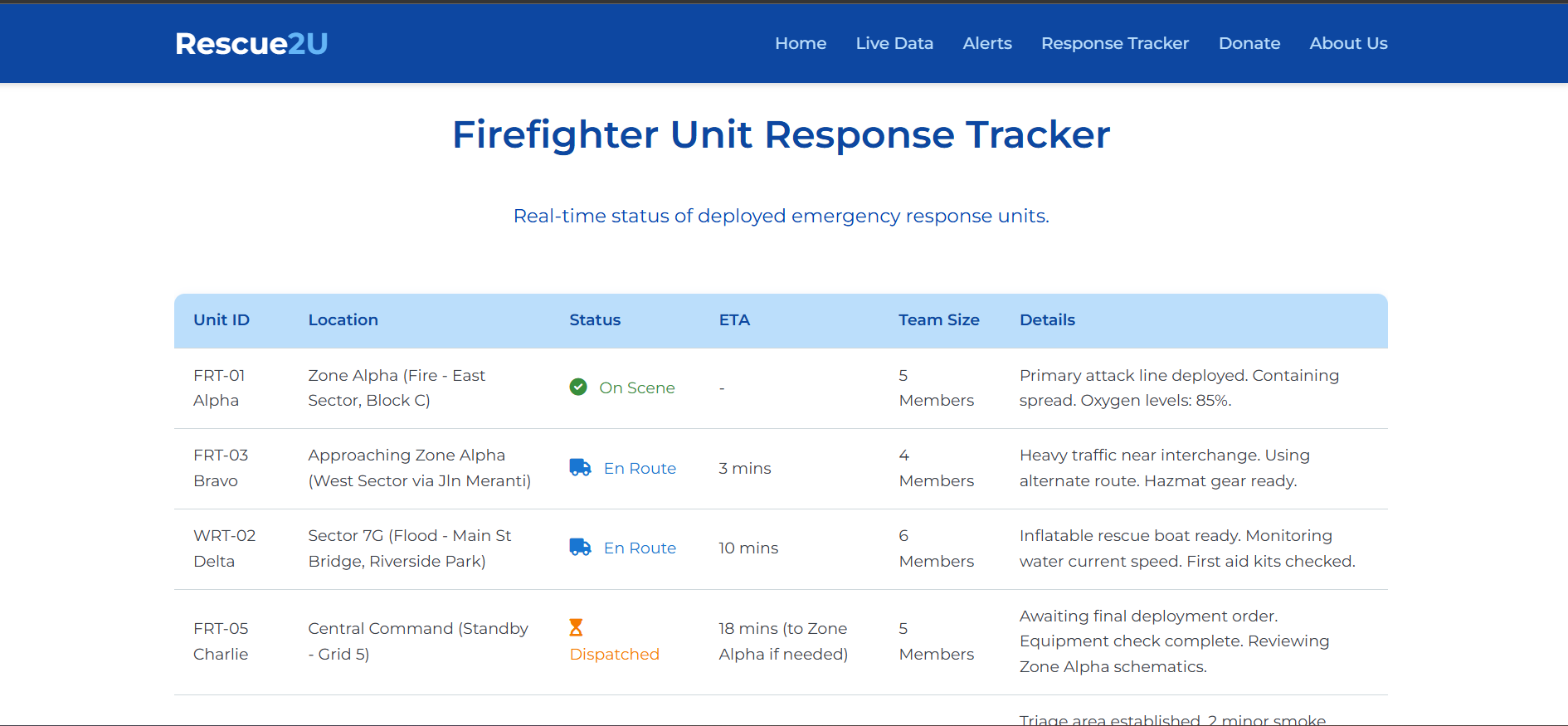
Firefighter Unit Response Tracker Page
-
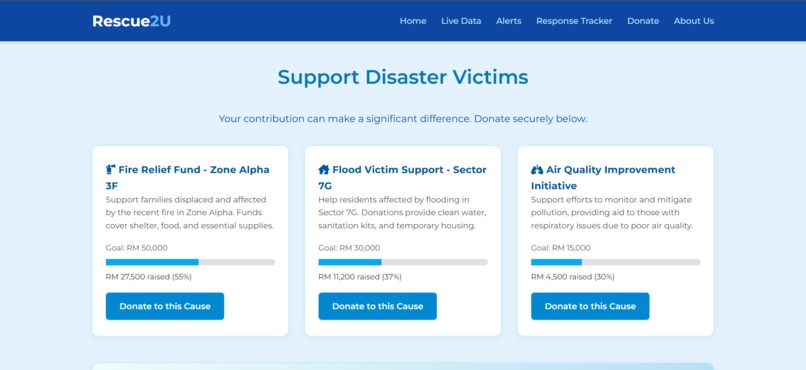
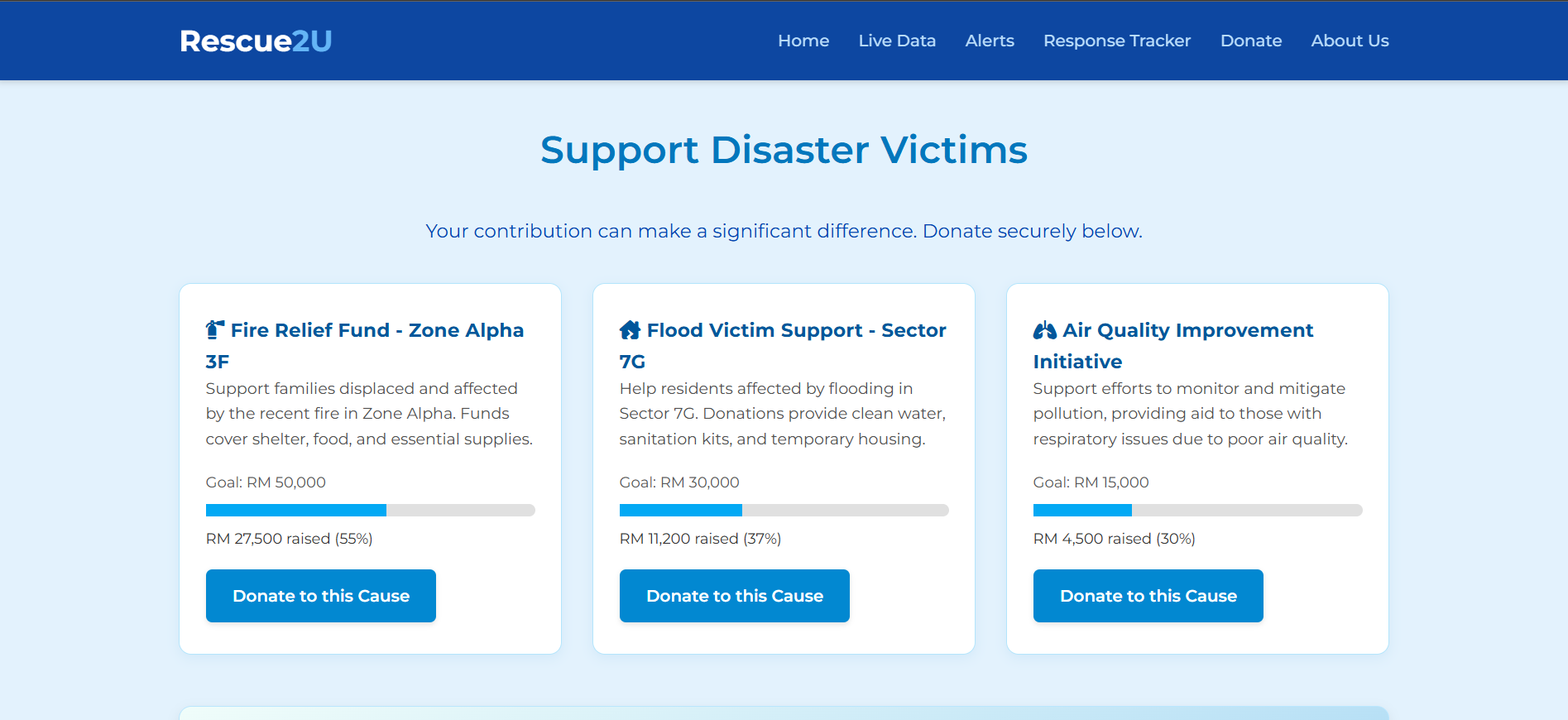
Donation Page

Rescue2U
Protecting Homes. Empowering Communities.
Inspiration
Natural disasters such as floods, fires, and air pollution events often strike with little warning, especially in communities that lack affordable, real-time monitoring systems. In Malaysia and many other regions, delayed alerts can mean the difference between safety and loss of life or property.
Rescue2U was inspired by a simple but powerful idea:
Sensors don’t sleep — early warnings save time, and time saves lives.
We wanted to build a low-cost, AI-powered disaster detection system that not only detects danger early, but also connects communities, first responders, and donors on a single platform.
What it does
Rescue2U is a multi-hazard disaster detection and alert system that:
- Collects real-time environmental data (temperature, humidity, smoke, rain, air quality, distance)
- Uses AI models to predict disasters such as:
- Floods
- Fires
- Air pollution events
- Floods
- Sends instant alerts to:
- Safety responders (e.g., firefighters)
- Residents in affected areas
- Displays actionable insights on a web application
- Enables community donations to support disaster victims
- Operates sustainably using solar power
How we built it
Hardware
- Raspberry Pi (central controller)
- Raspberry Pi Camera (visual monitoring)
- Sensors:
- Air quality sensor
- Smoke sensor
- Temperature & humidity sensor
- Rain sensor
- Ultrasonic sensor (flood level detection)
- Solar panel for sustainable power
Software & AI
- Real-time data collection on Raspberry Pi
- AI models for disaster classification:
- Flood
- Fire
- Air pollution
- Web application for:
- Live monitoring
- Alerts
- Public awareness
- Donation management
System Flow
- Collect real-time sensor data
- Run AI prediction model
- Check: Is a disaster detected?
- If Yes → Send alerts to responders & residents
- If No → Continue monitoring
Challenges we ran into
- Sensor calibration to avoid false alarms
- Integrating multiple sensors with reliable timing
- Balancing real-time performance with AI inference on limited hardware
- Designing alerts that are fast, clear, and actionable
- Ensuring the system remains low-cost and scalable
Each challenge pushed us to think carefully about optimization, reliability, and user impact.
Accomplishments that we’re proud of
- Built a working multi-hazard detection system
- Successfully integrated AI predictions with real-time sensors
- Designed a dual-purpose platform:
- Emergency alerts
- Community donation support
- Created a sustainable, solar-powered prototype
- Delivered a solution with real social and environmental relevance
What we learned
- AI is most powerful when combined with real-world data
- Early detection is more valuable than complex post-disaster analysis
- Hardware–software integration requires patience and testing
- Designing for people under stress (during disasters) is as important as technical accuracy
- Teamwork across roles (ML, UI/UX, Web, Systems) is critical for real-world impact
What’s next for Rescue2U
We plan to expand Rescue2U with:
- AI-powered evacuation route planning
- Gamified disaster preparedness to educate communities
- Detection of additional disaster types
- Wider deployment in high-risk regions
- Improved AI accuracy with larger datasets
Rescue2U is more than a project — it’s a step toward safer, smarter, and more resilient communities.
Built With
- css
- environment-sensor
- html
- javascript
- machine-learning
- python
- raspberry-pi

Log in or sign up for Devpost to join the conversation.