-
-
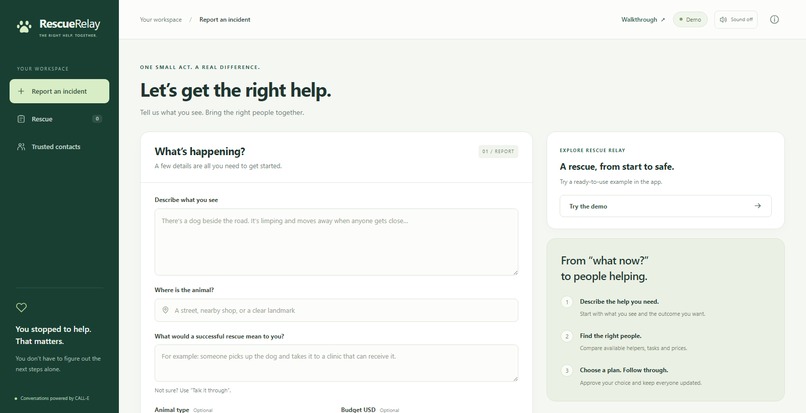
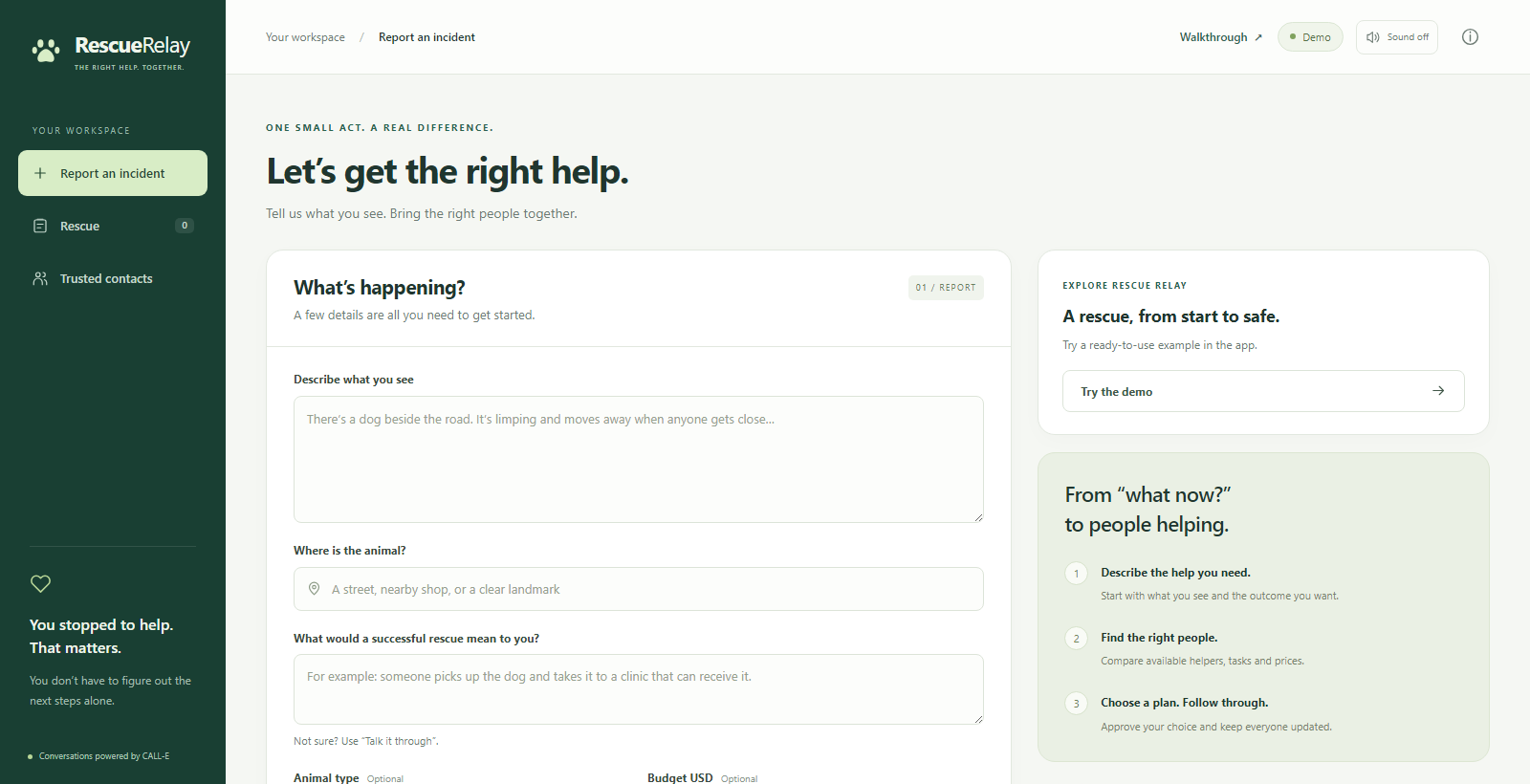
Report the incident with a USD 200 rescue budget.
-
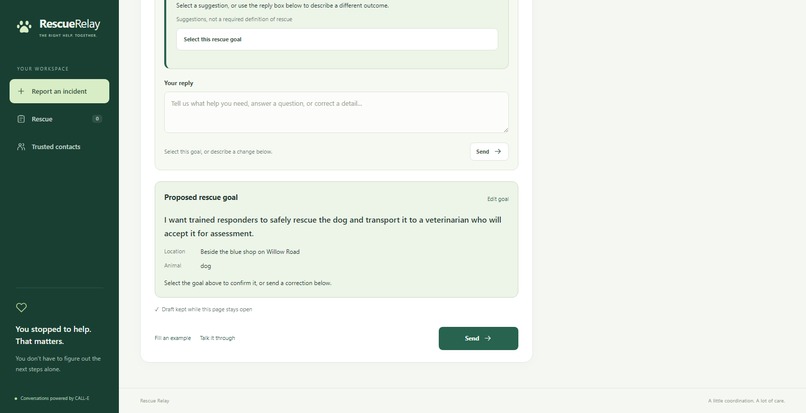
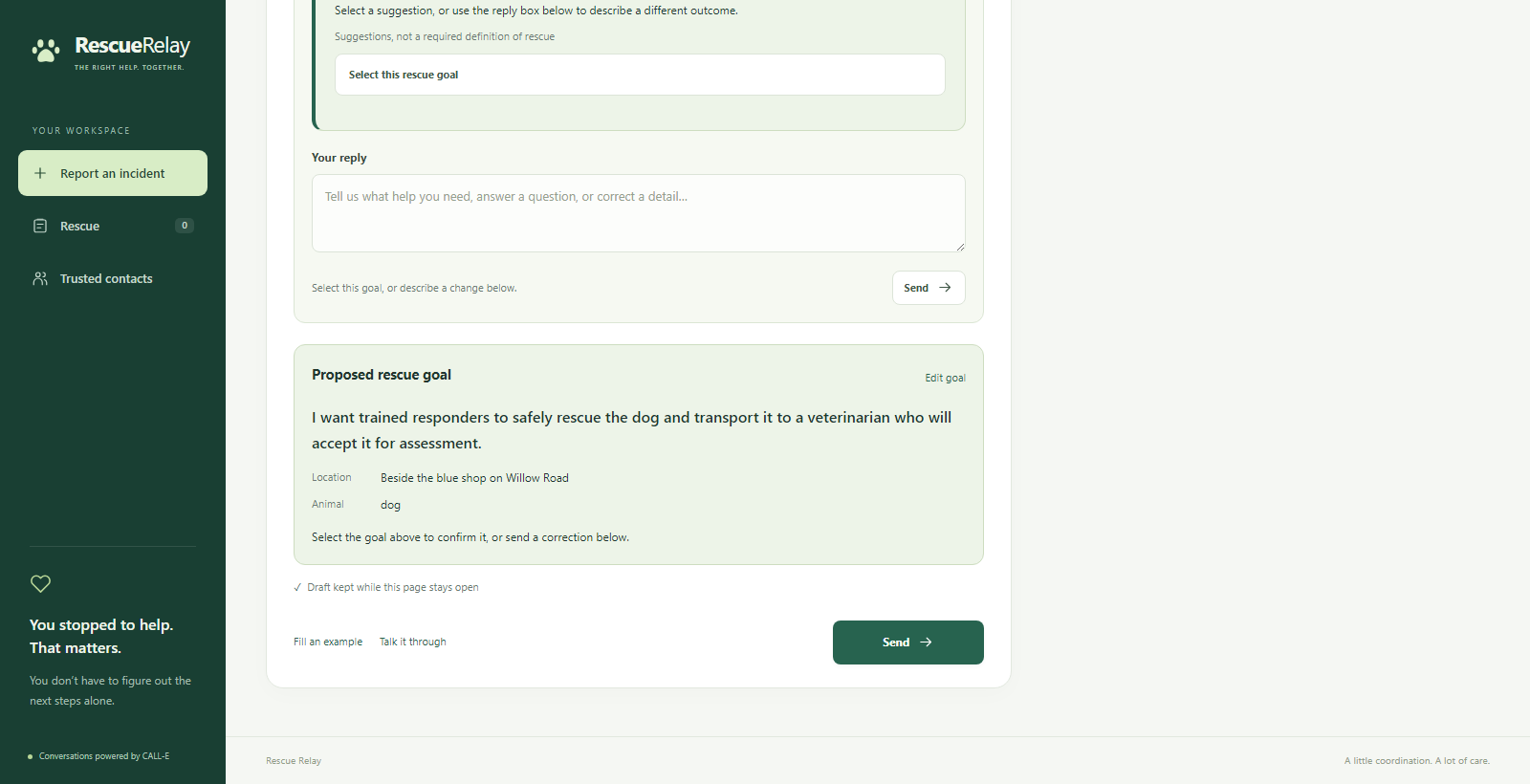
Review and confirm the rescue goal before contacting helpers.
-
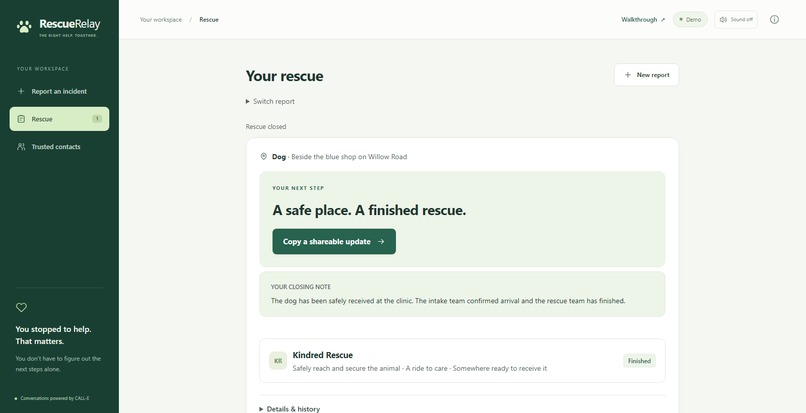
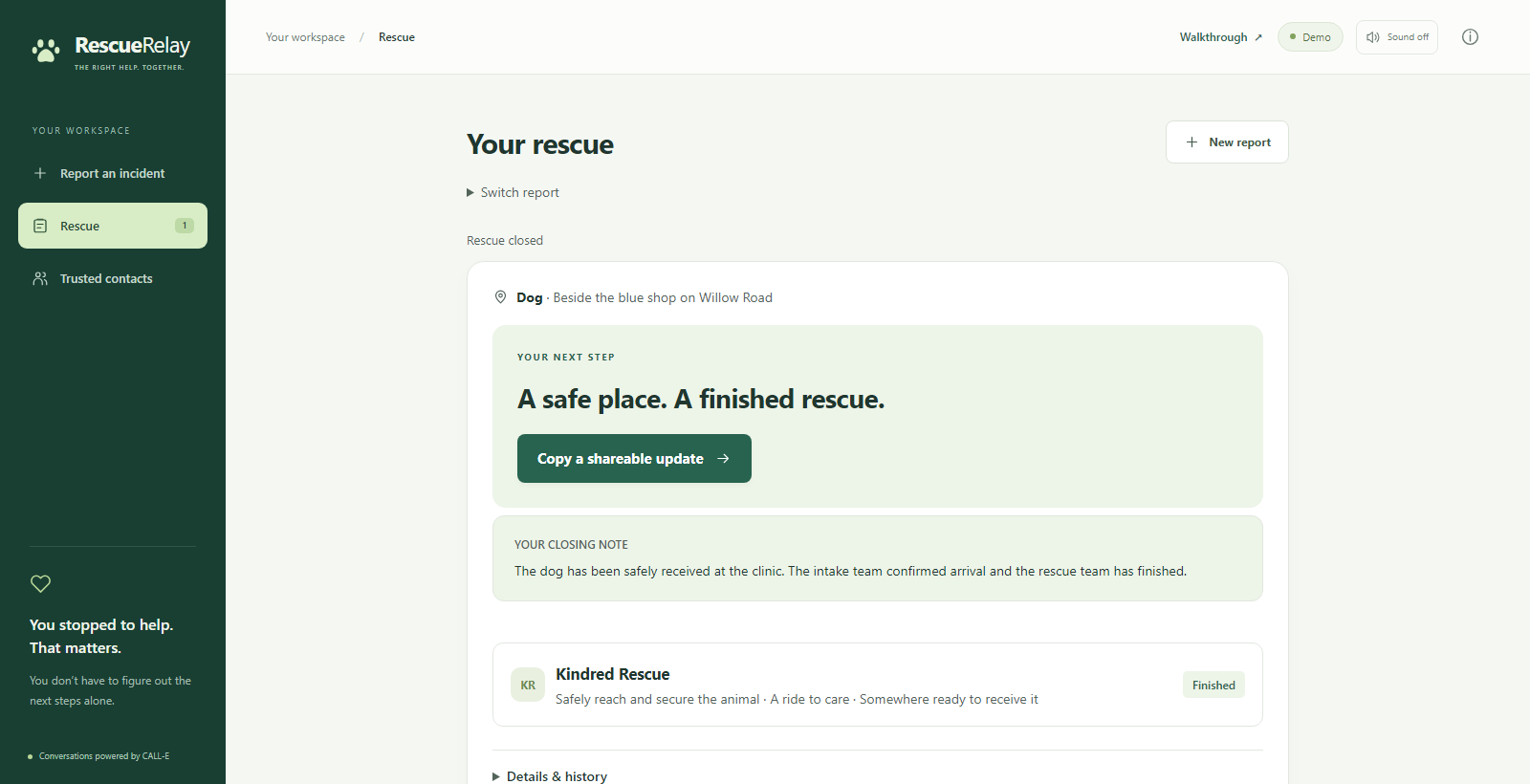
Close the rescue only after recording the safe outcome.
-
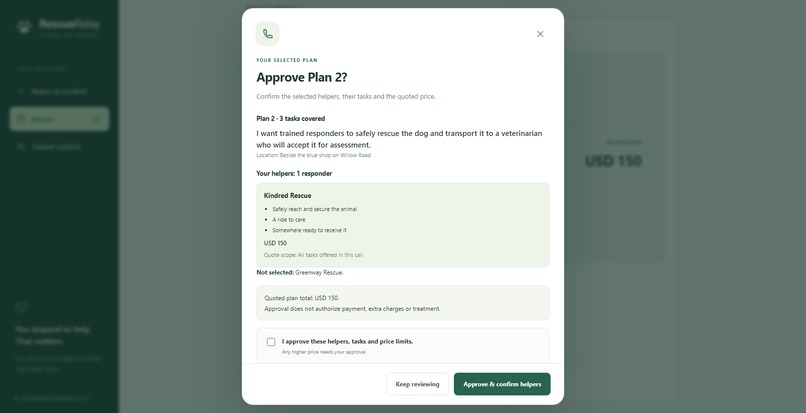
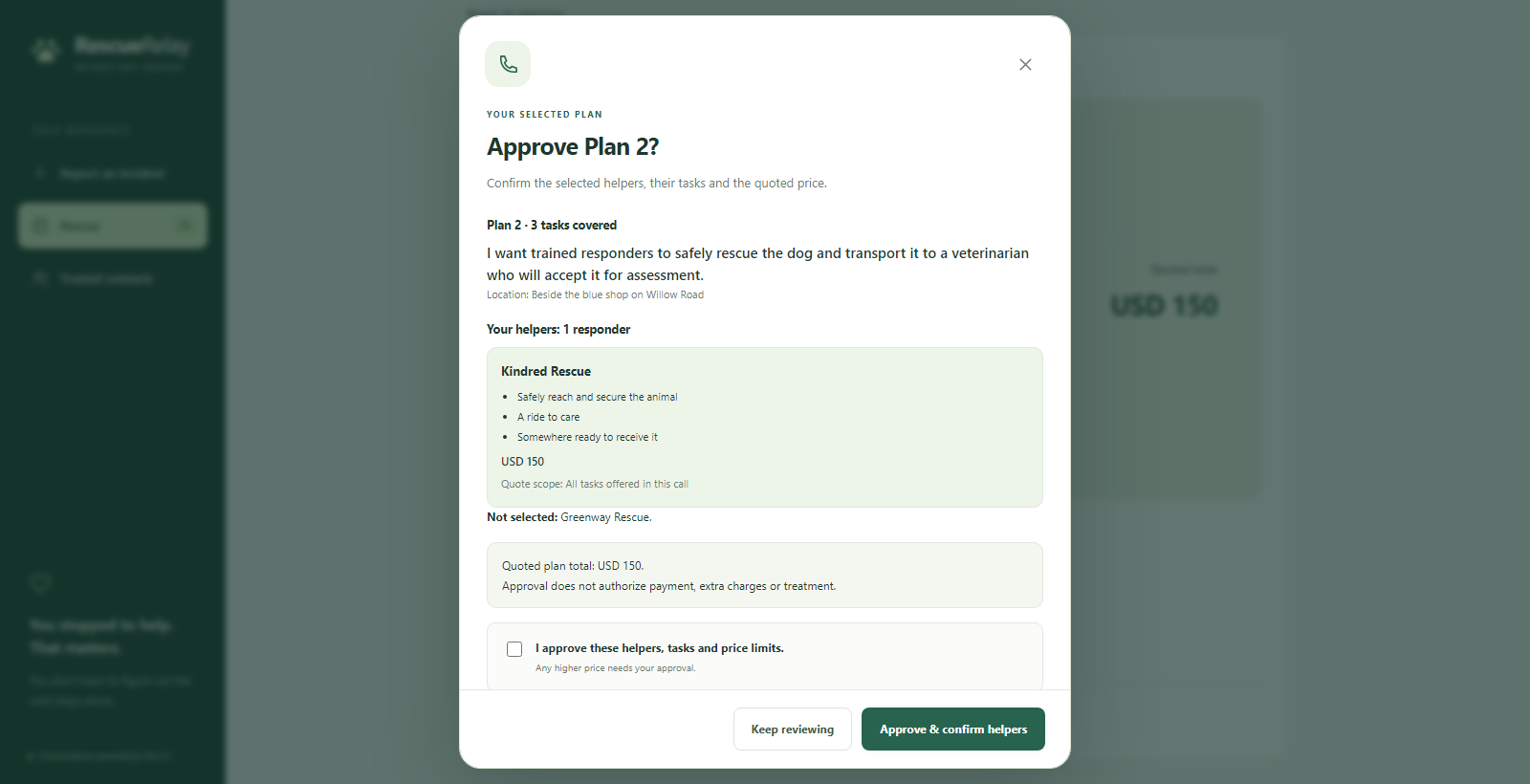
Approve only the selected helper, tasks, and price.
-
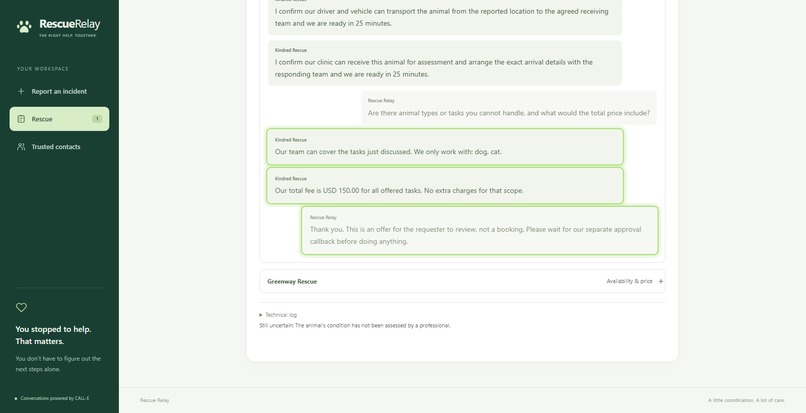
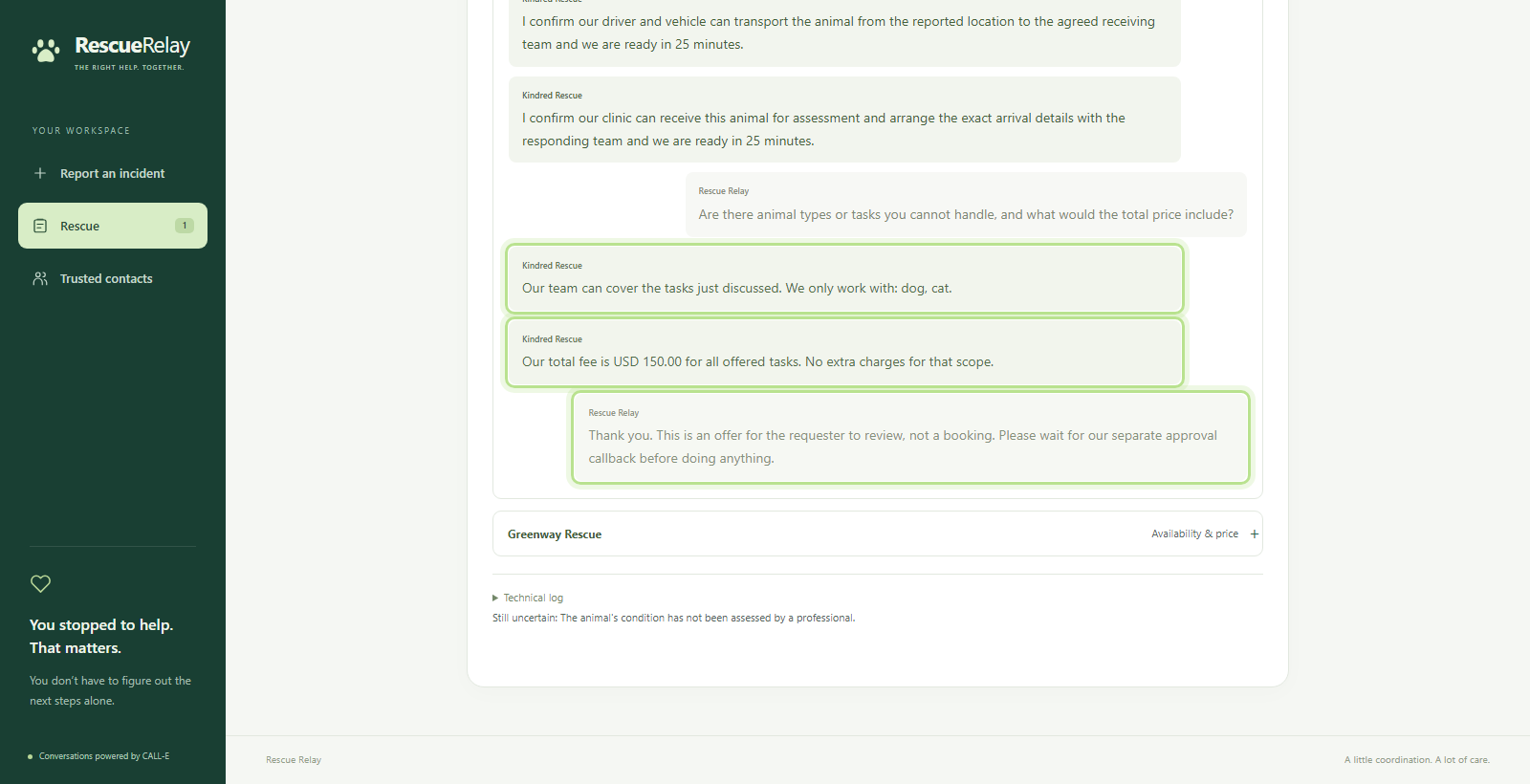
Inspect the saved helper conversation and all-in USD 150 offer.
-
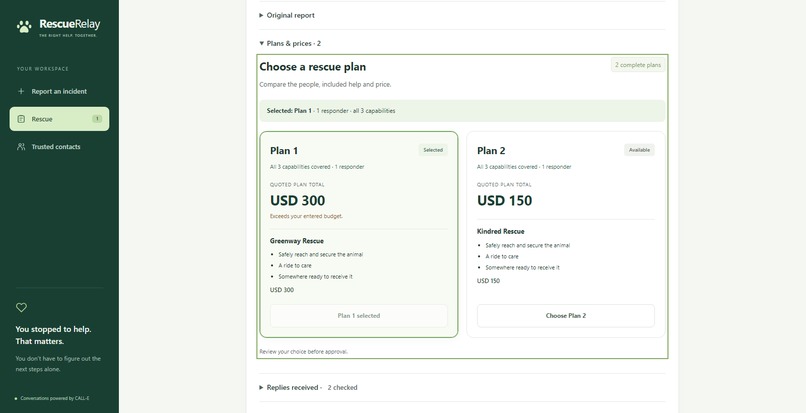
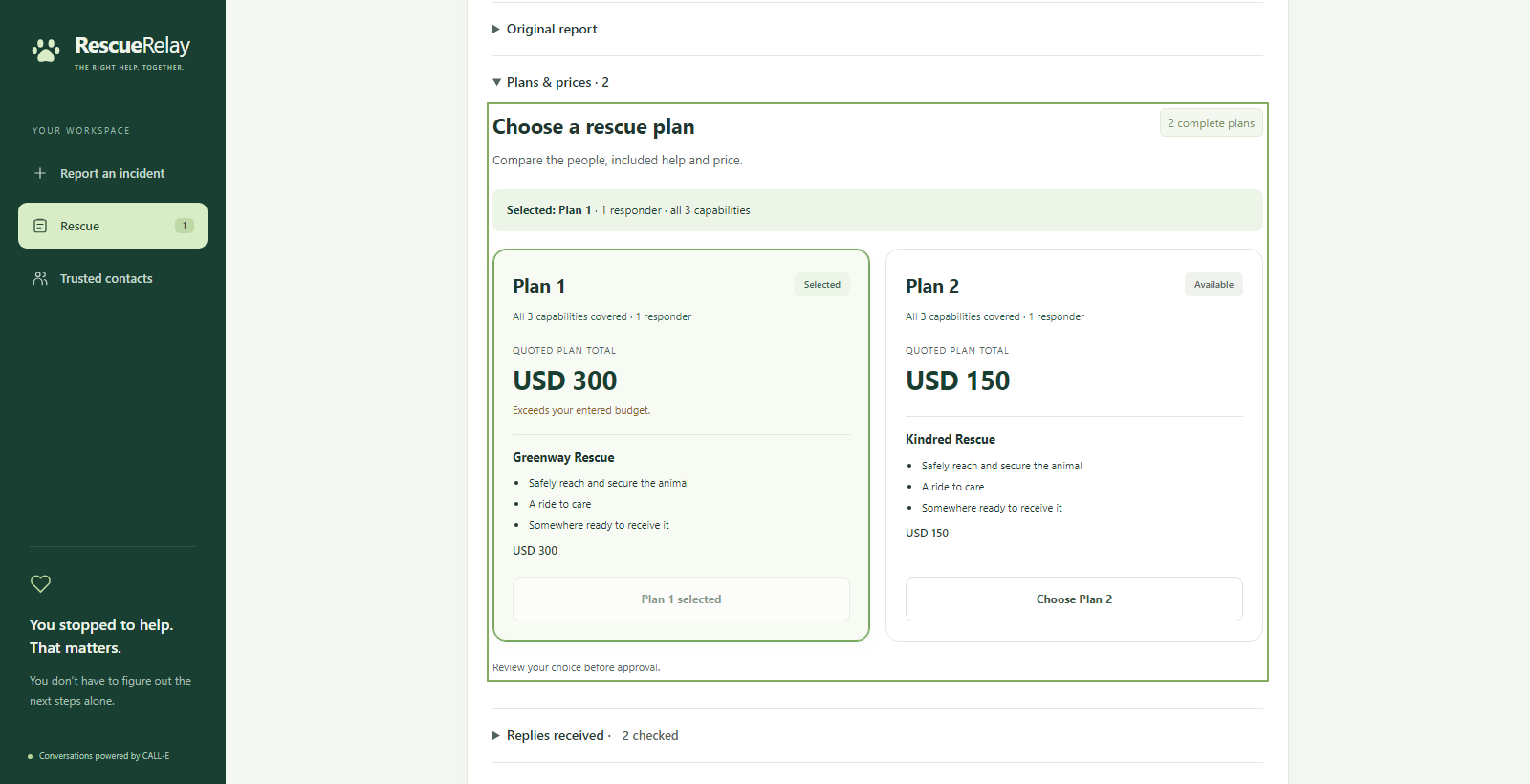
Compare complete USD 300 and USD 150 plans.
Inspiration
When someone stops to help an animal, finding a phone number is only the beginning. They still need to discover who can safely reach the animal, who can transport it, where it can be received, what each option costs, and whether the people involved have actually agreed to help.
Rescue Relay turns those separate conversations into one clear, accountable rescue plan without taking the reporter out of the decision.
What it does
The reporter describes what they see, gives the location, and clarifies the desired outcome. Rescue Relay checks trusted, approved contacts for the services, availability, and prices needed to fulfil that goal.
The first complete plan pauses the search. The reporter can keep it or ask for another option, compare complete plans, and choose the one that works for them. Choosing an offer does not book anyone. A separate approval step confirms the selected helpers, tasks, and price limits before confirmation callbacks.
The workspace follows the rescue through human-confirmed updates. A helper agreeing to help is not treated as an automatic departure or arrival. The case closes only when the reporter records the outcome and confirms that the animal is safe.
How we built it
Rescue Relay uses Python, FastAPI, and SQLite with a lightweight HTML, CSS, and JavaScript interface. CALL-E’s REST API handles live phone transport. The app submits a task for one approved saved destination, records the provider call ID, polls the result, and analyses saved recipient transcript turns. Availability inquiries and approved-helper callbacks have different purposes and permissions.
An optional official OpenAI HTTPS endpoint supports intake and offer interpretation; credential-free loopback /v1 development is also supported. Other remote origins are rejected before any client or case-data request is created, and the key remains backend-only. A conservative built-in fallback makes the fictional product test reproducible without credentials. The app keeps model-generated interpretation, saved evidence, and human approval distinct.
The product demonstration and live experience share the same frontend and rescue workflow. The final recording was captured by typing and clicking the running v5.6 app against an isolated fictional-data API. It is not a separate presentation interface.
Challenges we ran into
The difficult part was preserving the difference between an offer, an approval, and a confirmed action. A conditional answer cannot be counted as coverage. A missing price cannot quietly become free. A comparison cannot silently change the selected plan. A timeout cannot safely trigger an automatic redial.
Another challenge was making those boundaries understandable without filling the dashboard with implementation commentary. The final interface keeps the next action, price, helper status, and closing note visible, while saved conversations and technical history remain available on demand.
Accomplishments that we're proud of
Rescue Relay supports a complete journey: report, clarification, comparable offers in USD, explicit plan approval, selected-helper confirmation, progress, and safe closure. The same report also supports unresolved conditions and incomplete callback recovery without discarding prior evidence.
The final package includes a reproducible 2:55 product demonstration, a chaptered tutorial, responsive screens, and automated checks for the decision boundaries—not just the happy ending.
What we learned
A trustworthy calling experience needs more than a fluent conversation. It needs clear limits, preserved uncertainty, and a visible point at which a person makes the decision. Removing repeated explanations made the workspace calmer without removing the approvals that matter.
What's next for Rescue Relay
Validate the local live workflow with consenting rescue partners, then add the account isolation, access controls, privacy controls, and operational supervision required before considering a real shared deployment. Explore a clearer handoff between responders and receiving teams based on their actual feedback.


Log in or sign up for Devpost to join the conversation.