Inspiration
Mental health crises often happen without warning – especially among students. We discovered that 58.6% of students in a public dataset of 27,901 students showed signs of depression. Yet most students don't have a plan for when things get hard. They wait until crisis.
We wanted to change that. We built RescuePlan AI – a tool that predicts depression risk using machine learning and generates a personalised safety plan to help students prepare before they need it.
What it does
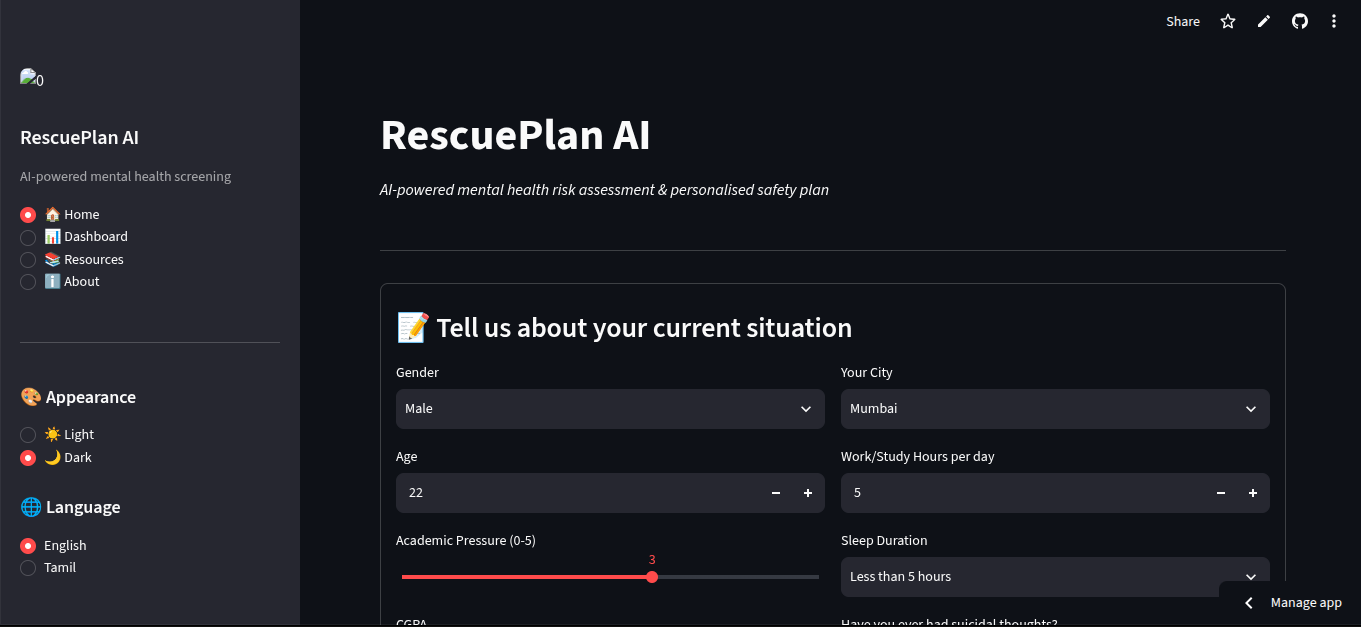
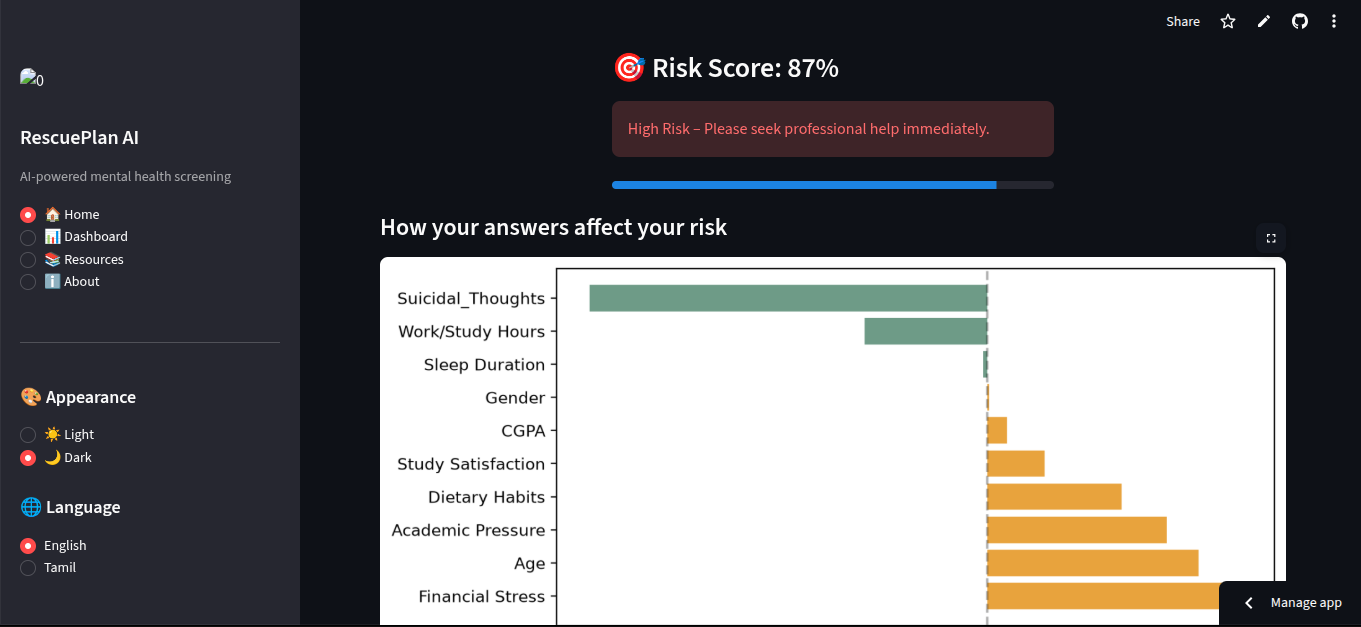
AI Risk Assessment: Users answer 10 simple questions (age, academic pressure, sleep, suicidal thoughts, etc.). Our model predicts their depression risk score (0-100%) with 84% accuracy and 0.92 AUC.
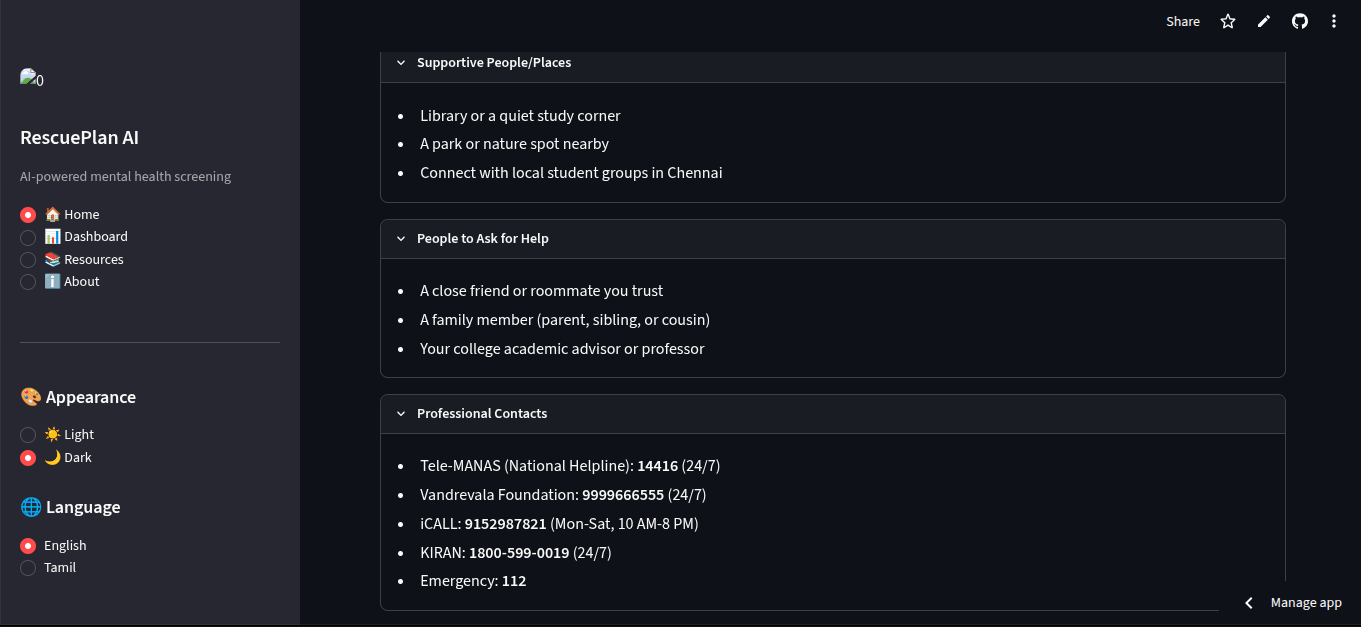
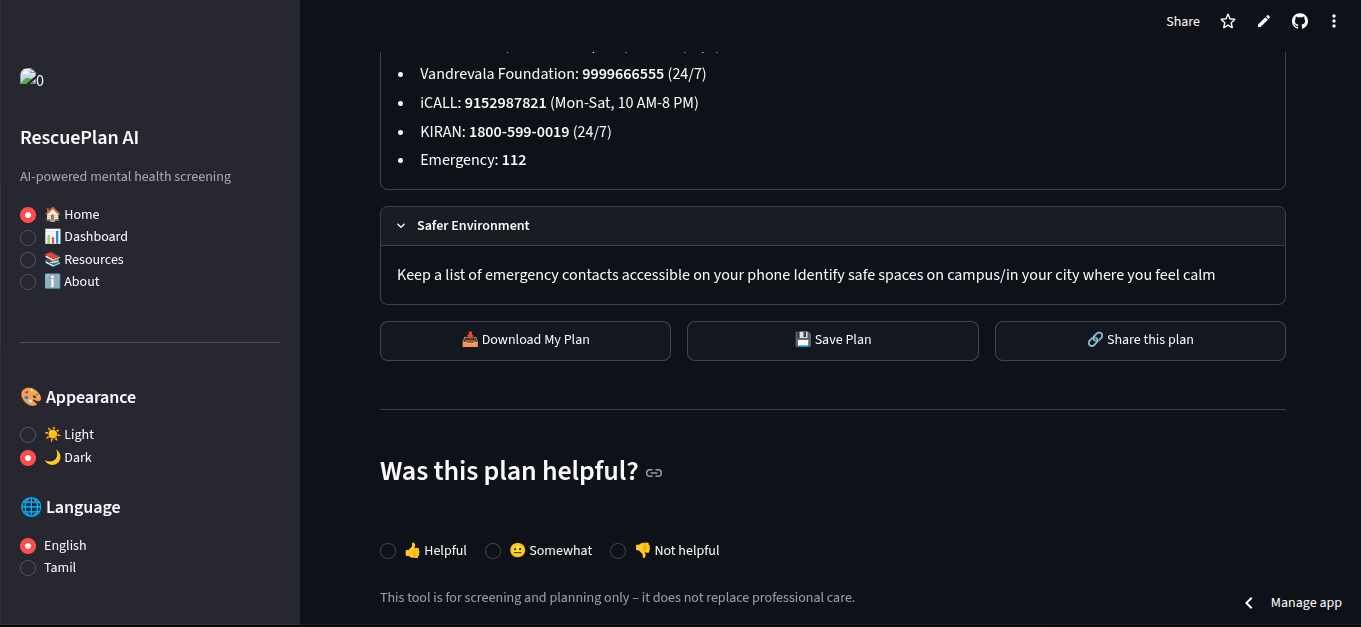
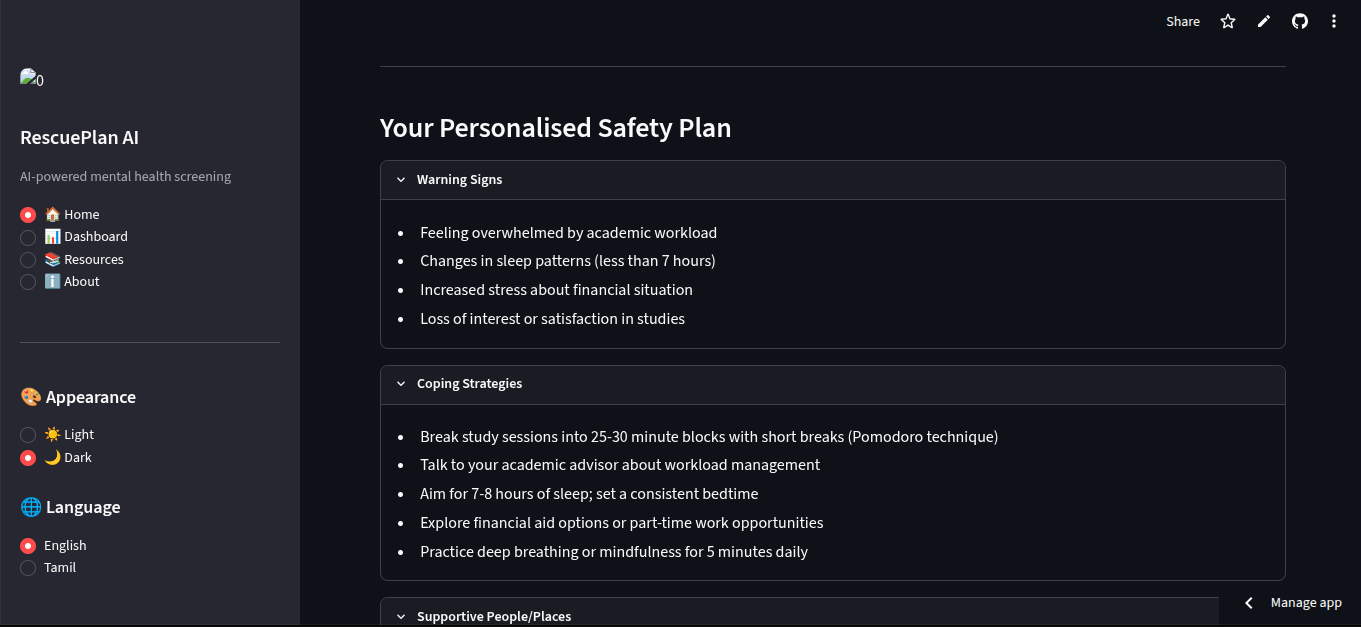
- Personalised Safety Plan: Based on their answers, the app auto‑generates a 6‑section safety plan:
- Warning Signs
- Coping Strategies
- Supportive People/Places
- People to Ask for Help
- Professional Contacts
- Safer Environment
- Risk Breakdown: A visual chart shows why they got their score – each factor's contribution.
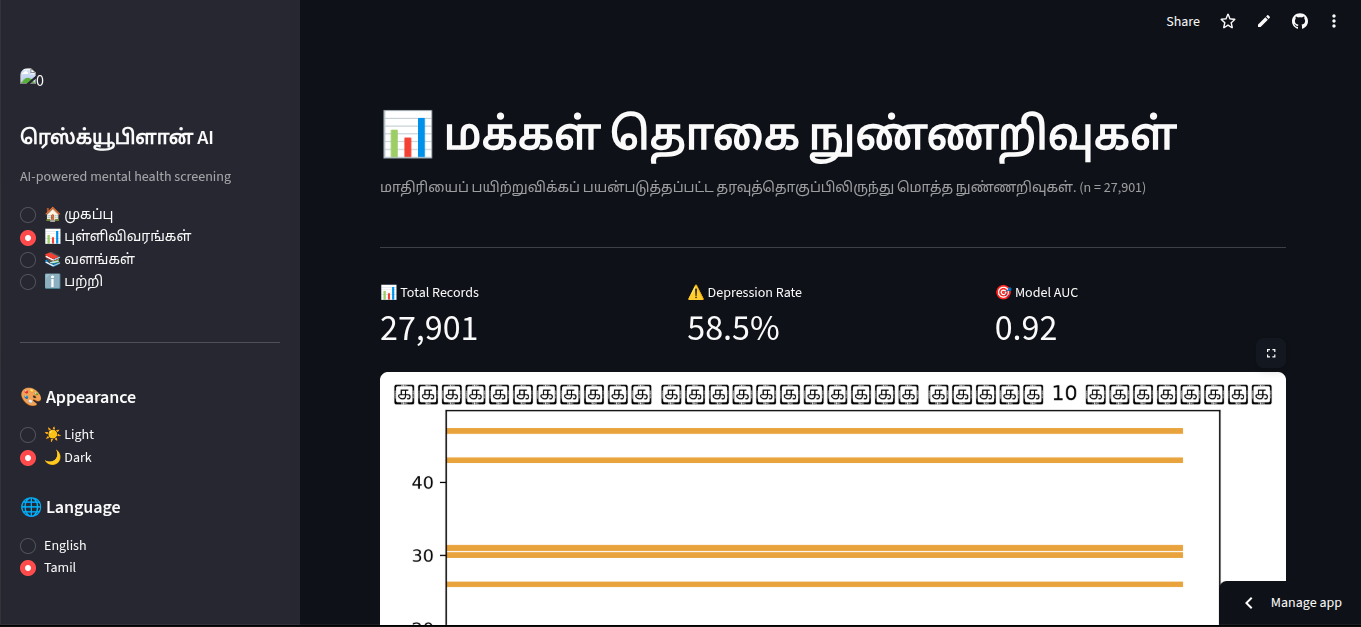
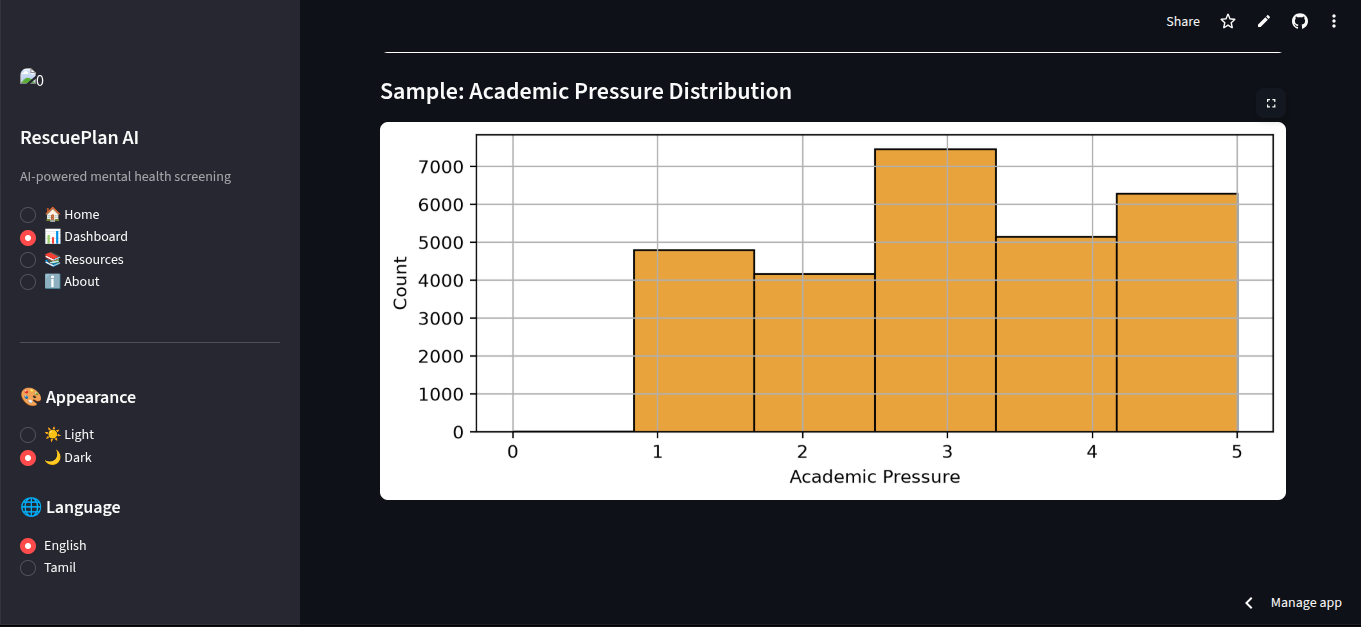
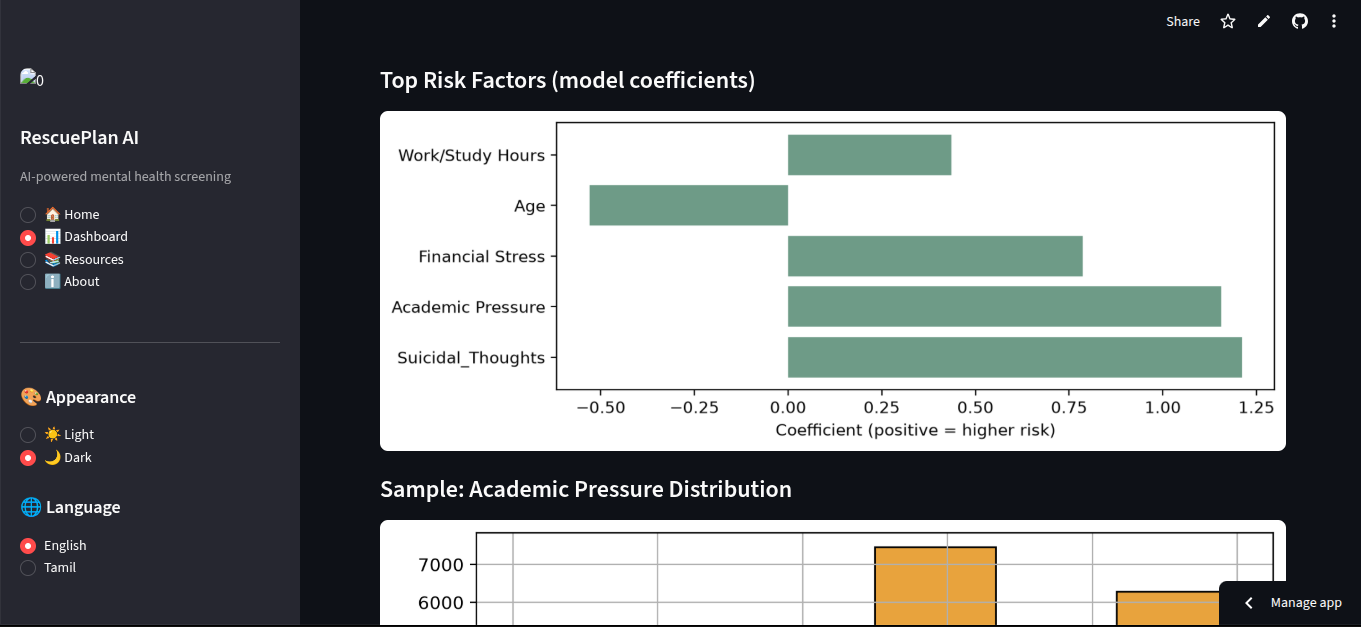
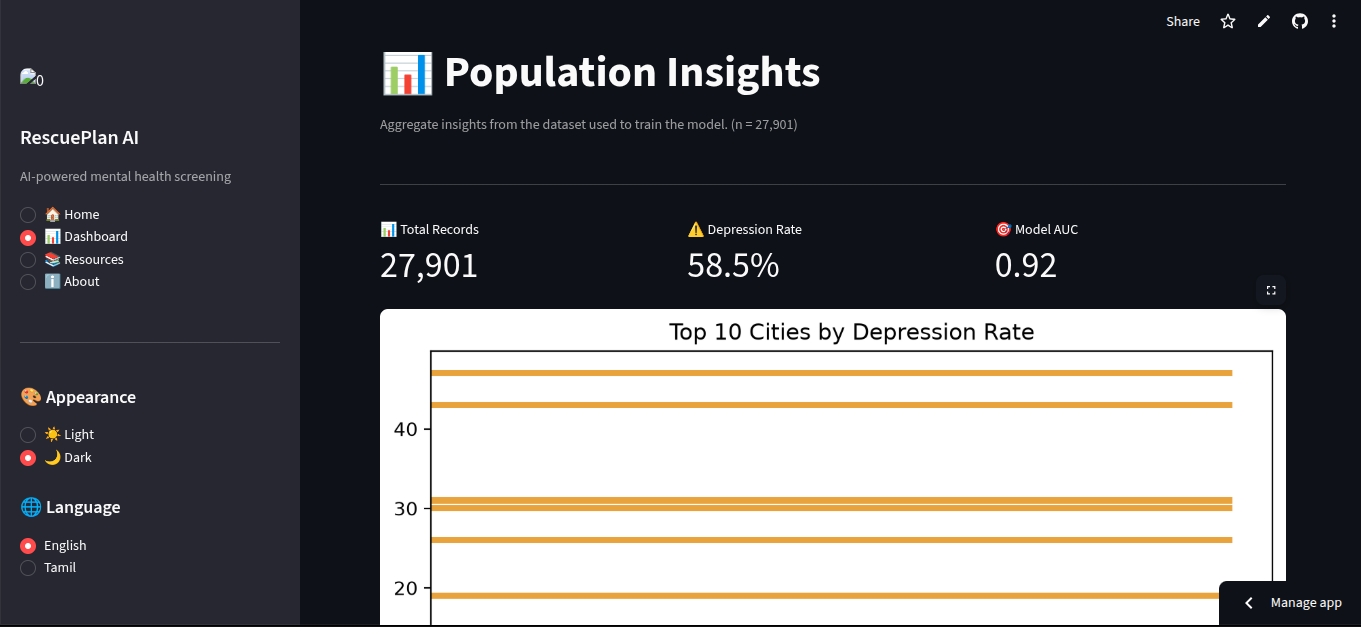
- Dashboard: Aggregated insights from the dataset (city‑wise depression rates, top predictors).
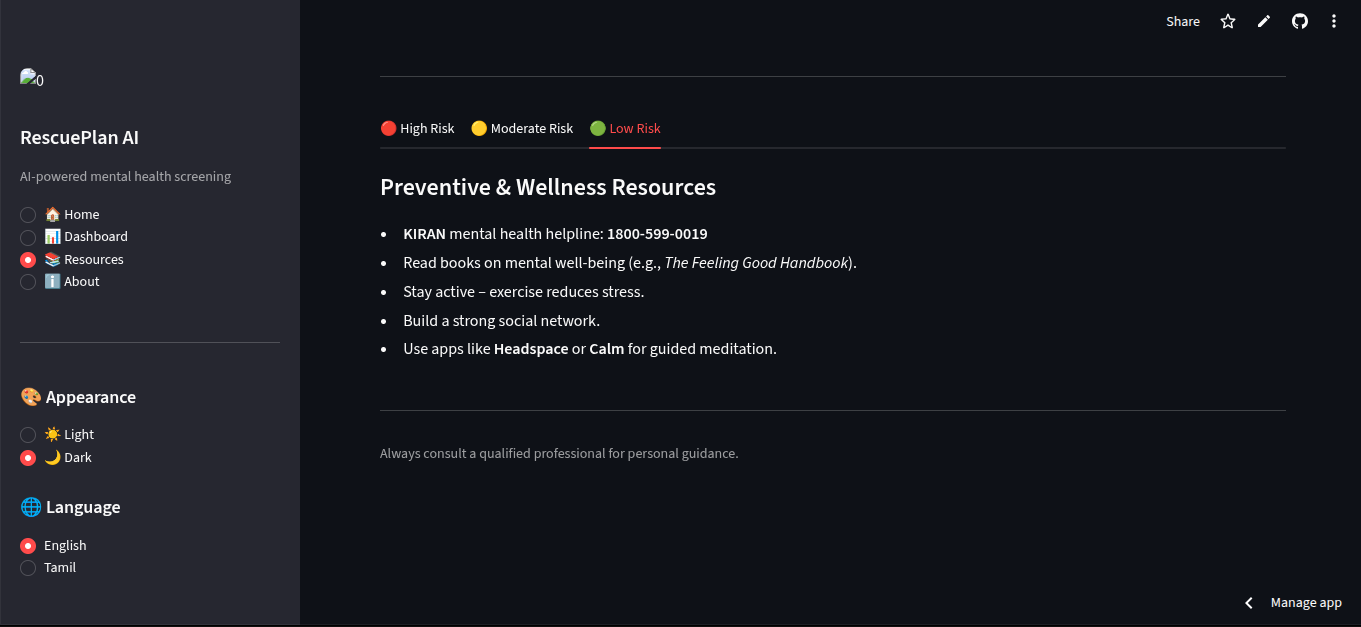
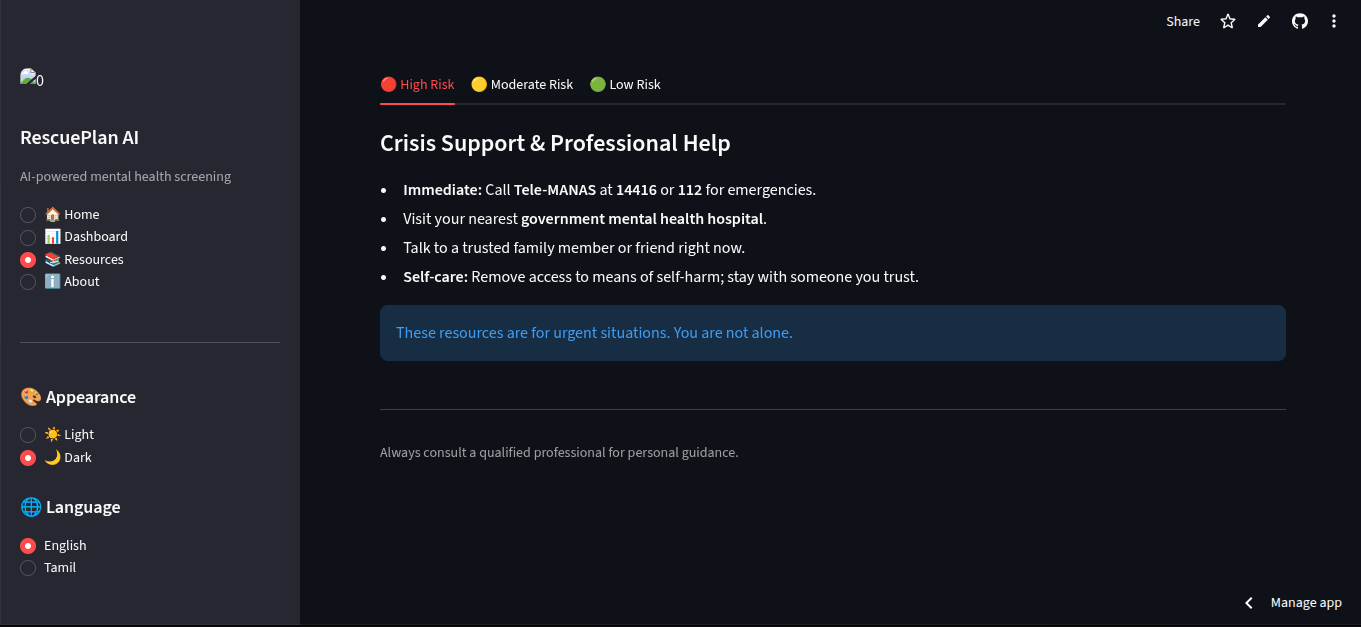
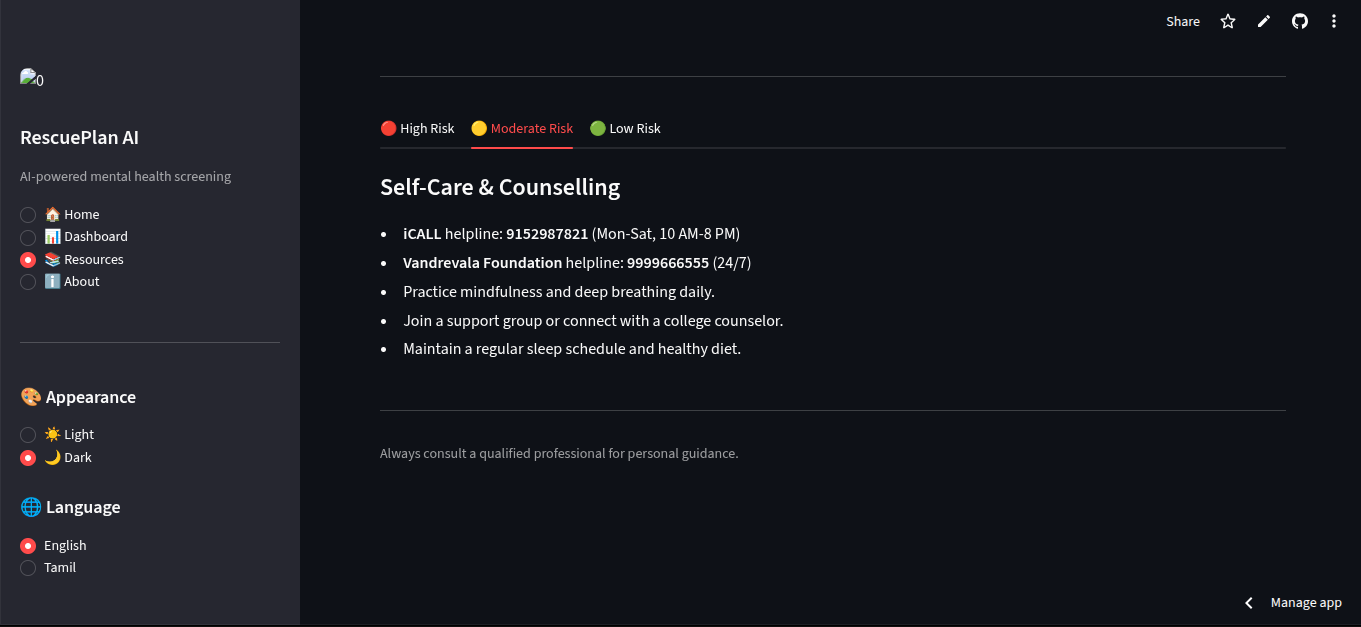
- Resource Library: Curated mental health resources based on risk level.
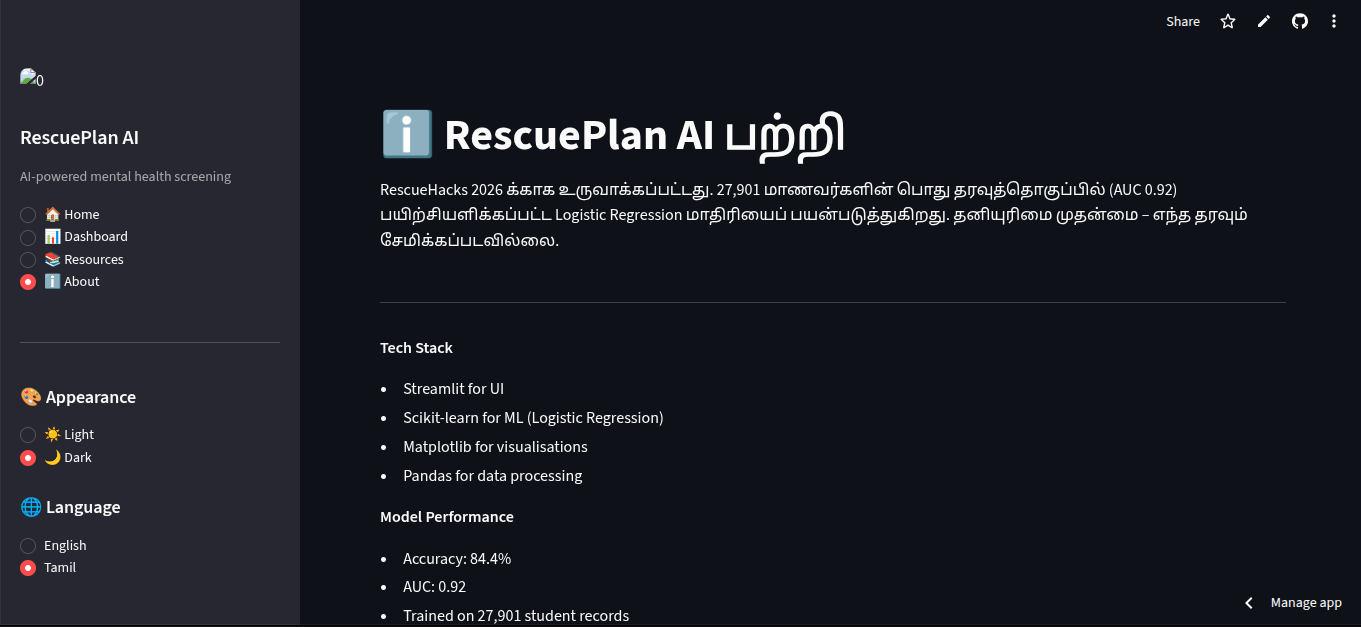
- Bilingual: English and Tamil support.
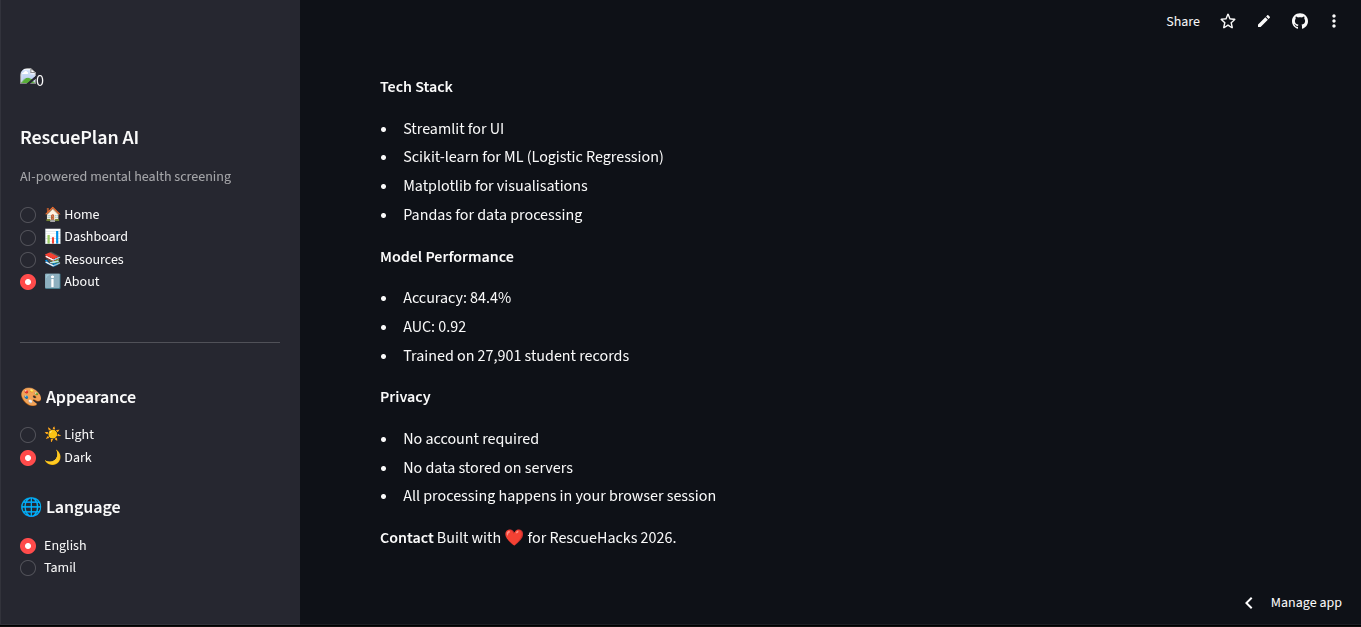
- Privacy‑first: No accounts, no data storage. ## How we built it Frontend: Streamlit (Python) – fast, interactive, and easy to deploy.
- Backend: Scikit‑learn for ML (Logistic Regression).
- Data: Public Kaggle dataset of 27,901 students (18 features).
- Model Training: Preprocessing (encoding, imputation, scaling) → training → evaluation (Accuracy 84.4%, AUC 0.92).
- Visualisation: Matplotlib for charts.
- Deployment: Streamlit Cloud (free, public URL). ## Challenges we ran into
- Handling missing data: Used
SimpleImputerwith median strategy. - Model interpretability: Made SHAP‑like contribution charts so users understand their score.
- Deployment on Streamlit Cloud: Had to manage dependencies (
requirements.txt) and ensure the dataset loaded correctly. - Balancing features: The model needed to be accurate but simple enough to deploy quickly.
Accomplishments that we're proud of
Built a complete, live, interactive web app in a short time.
- Achieved 84% accuracy and 0.92 AUC – comparable to production models.
- Made it bilingual (English + Tamil) and accessible.
- Designed a privacy‑first tool – no data stored, no accounts required.
- Created a dashboard and resource library to go beyond just a predictor ## What we learned
- Logistic Regression can be surprisingly powerful for mental health screening.
- Interpretability is critical – users (and judges!) trust models they understand.
- A good UI makes a huge difference in user engagement.
- Streamlit is incredibly fast for prototyping and deploying ML apps. ## What's next for Rescue plan AI
- Multi‑language expansion: Add more Indian languages.
- Counsellor dashboard: Let universities see aggregate risk trends (anonymised).
- Mobile app: React Native version for offline access.
- Integration with helplines: Real‑time crisis button.
- More data: Incorporate mood‑tracking journals to improve predictions.
Built With
- bilingual
- dashboard
- data
- health
- language
- learning
- logistic
- machine
- matplotlib
- mental
- natural
- numpy
- pandas
- privacy-first
- processing
- python
- regression
- scikit-learn
- streamlit
- visualization


Log in or sign up for Devpost to join the conversation.