-
-
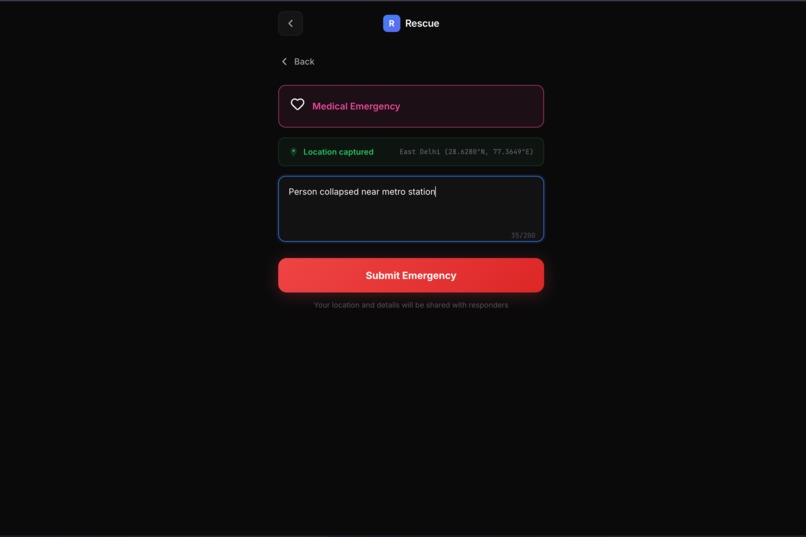
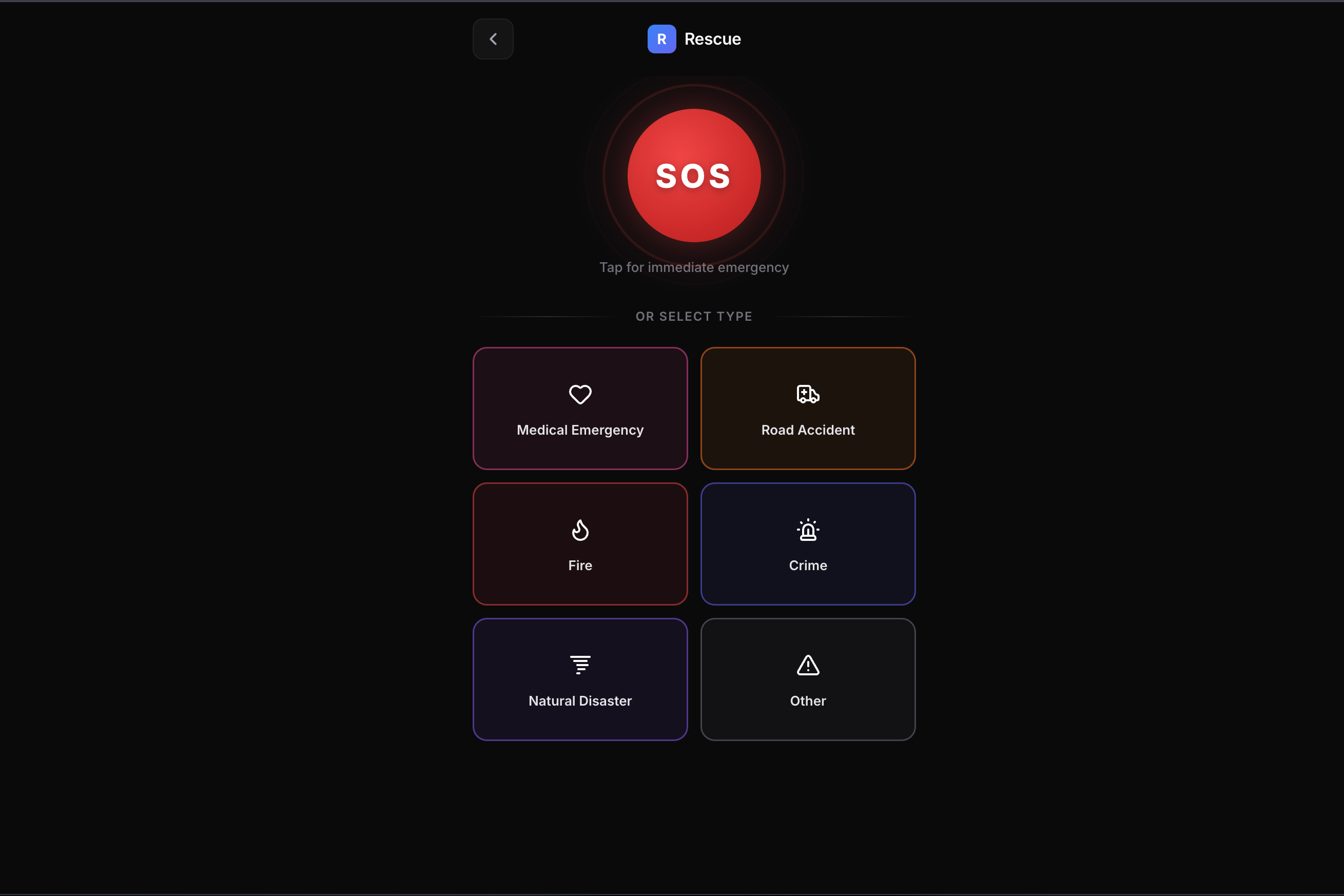
Report Incident
-
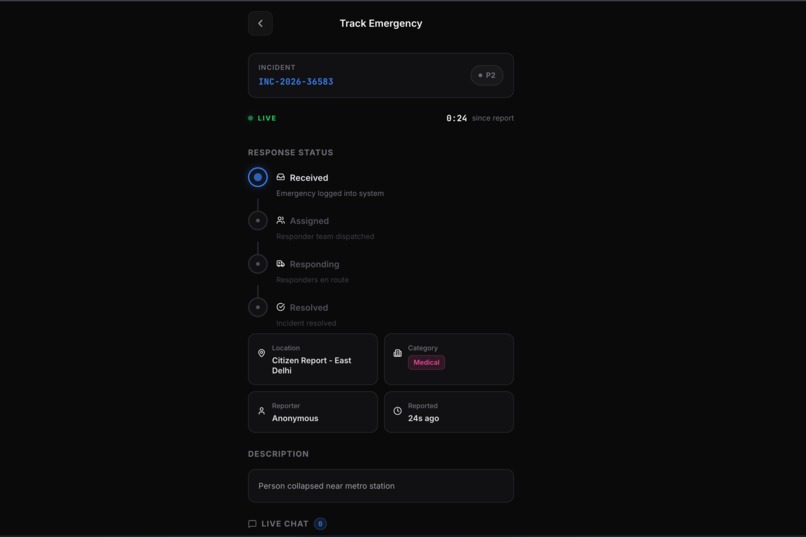
Report Incident
-
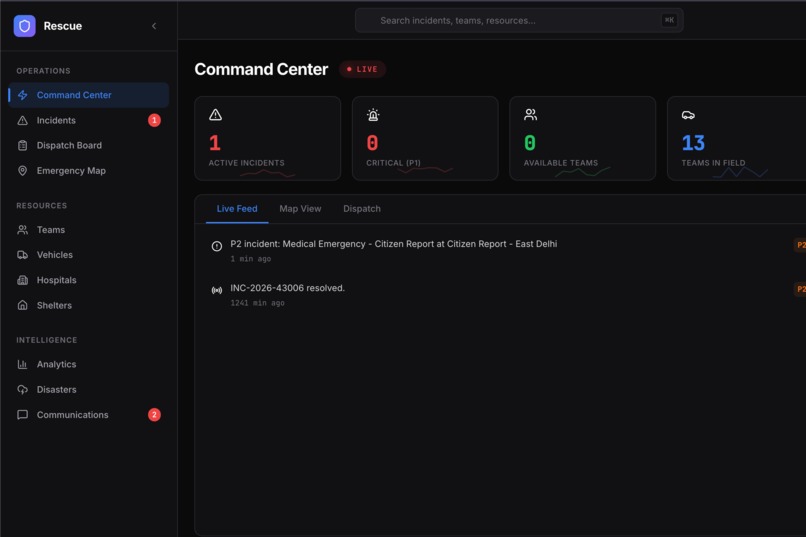
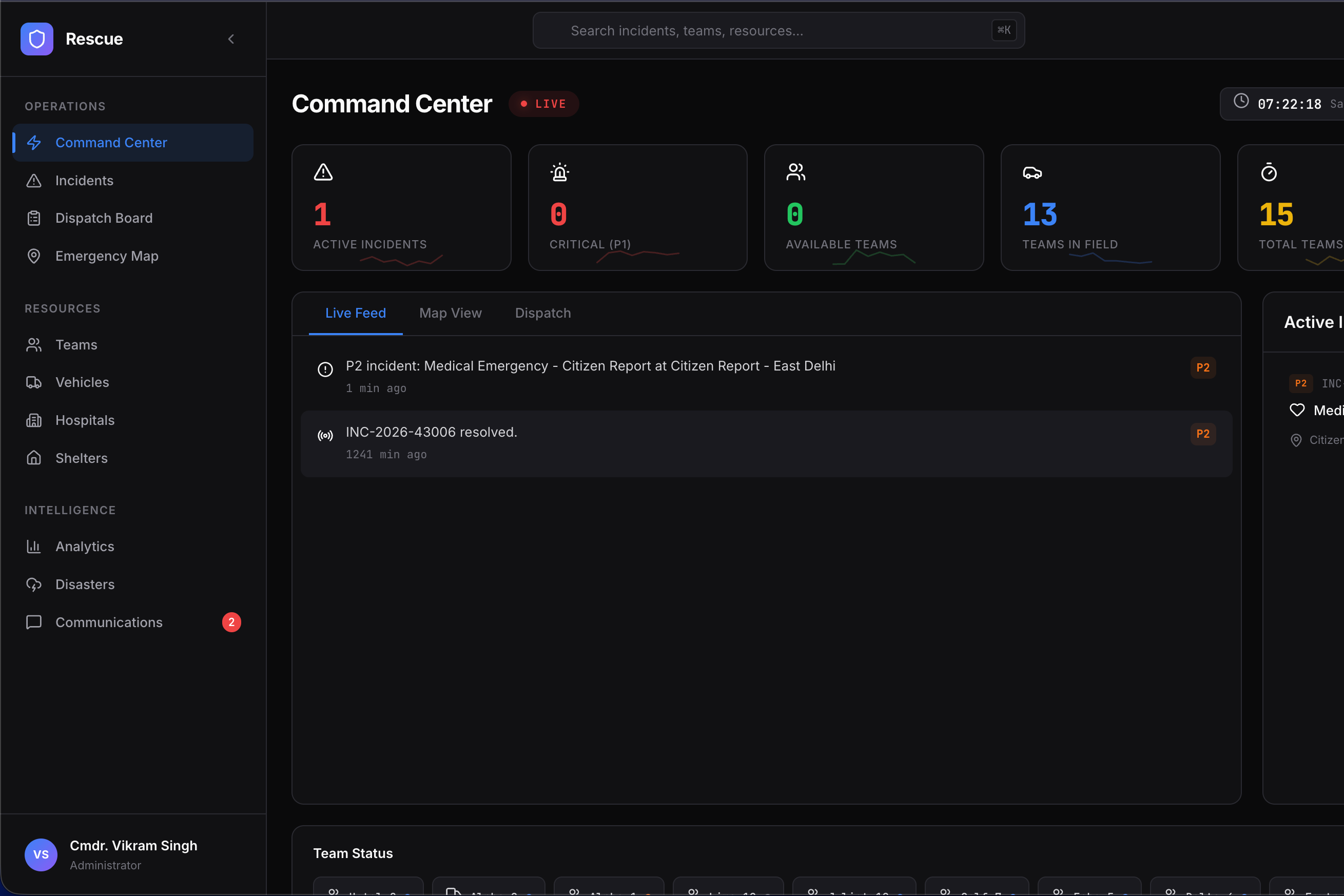
Command Center
-
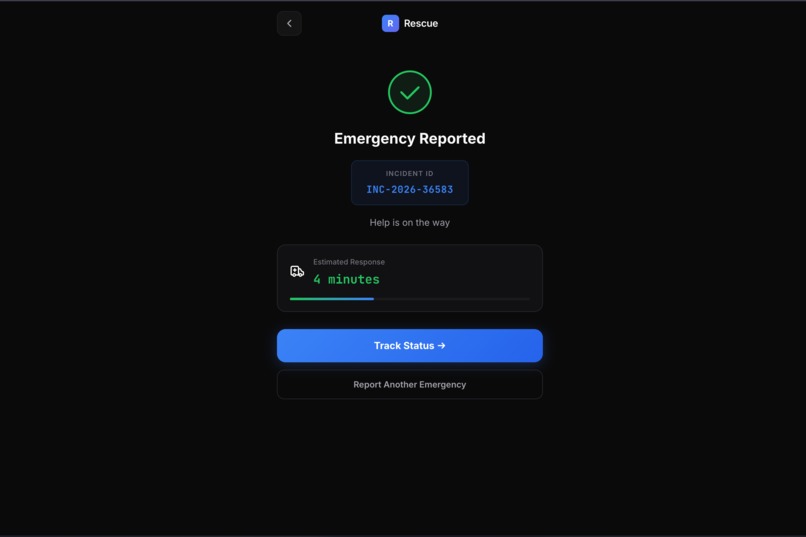
Report Incident
-
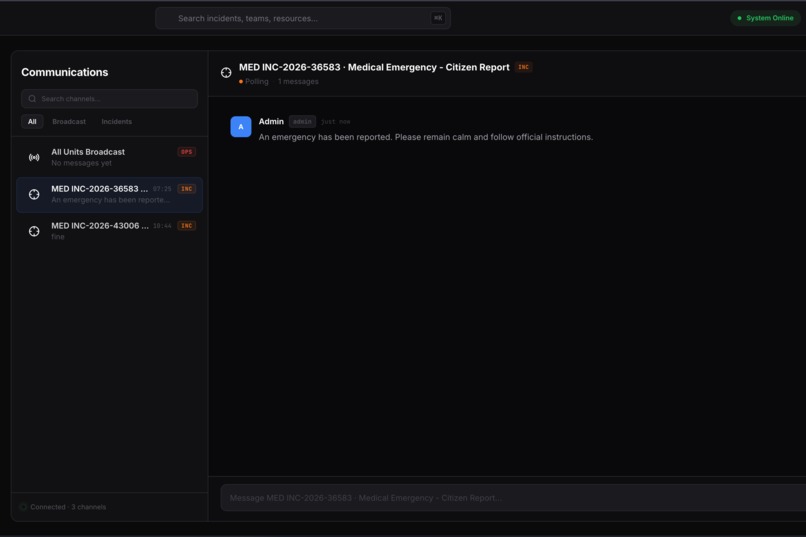
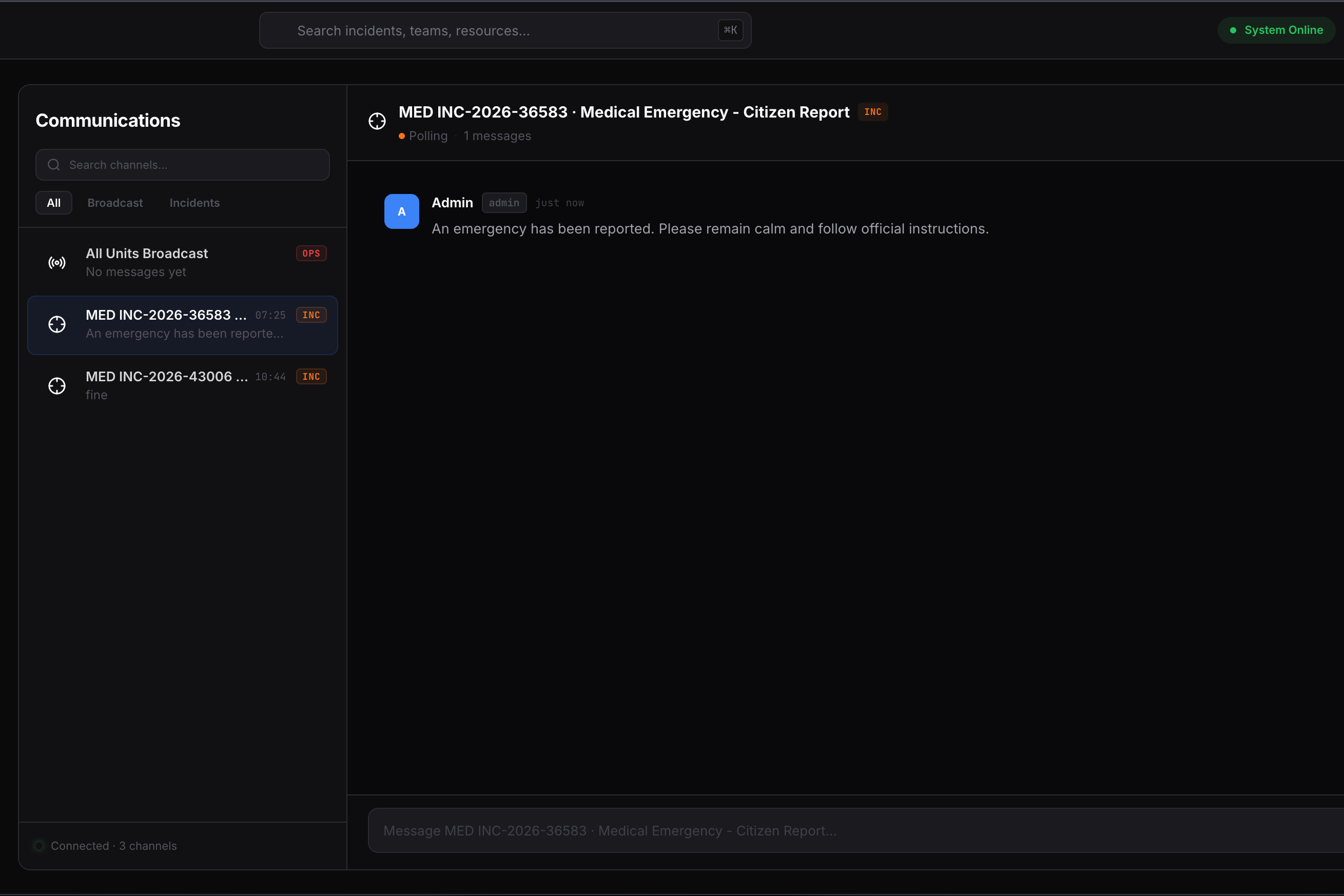
Communications
-
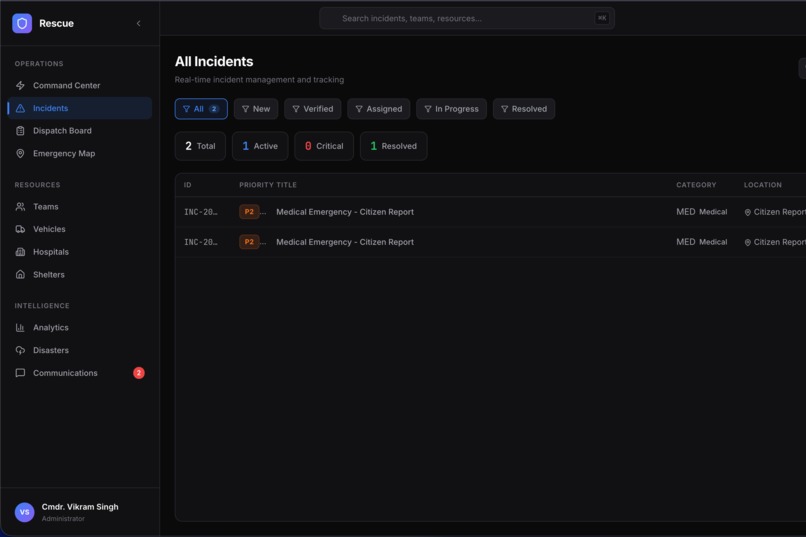
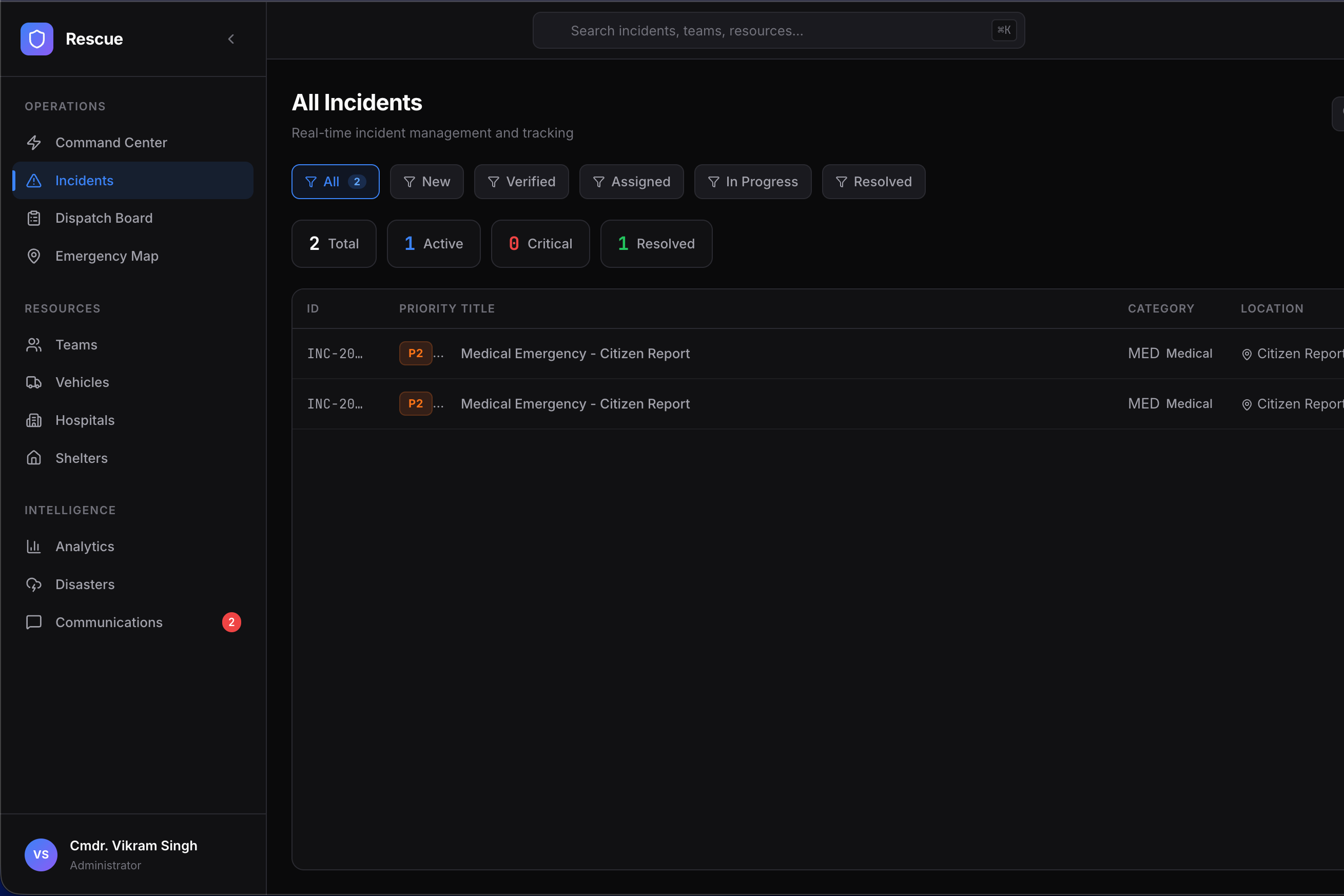
All Incidents
-
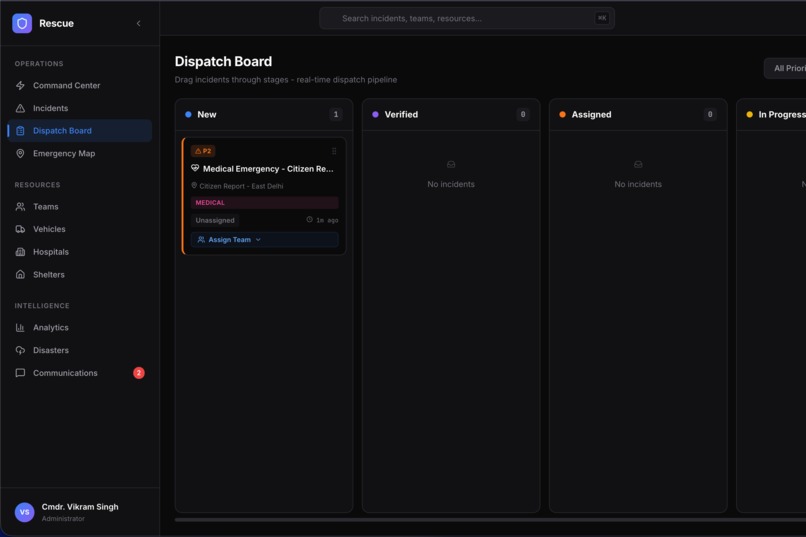
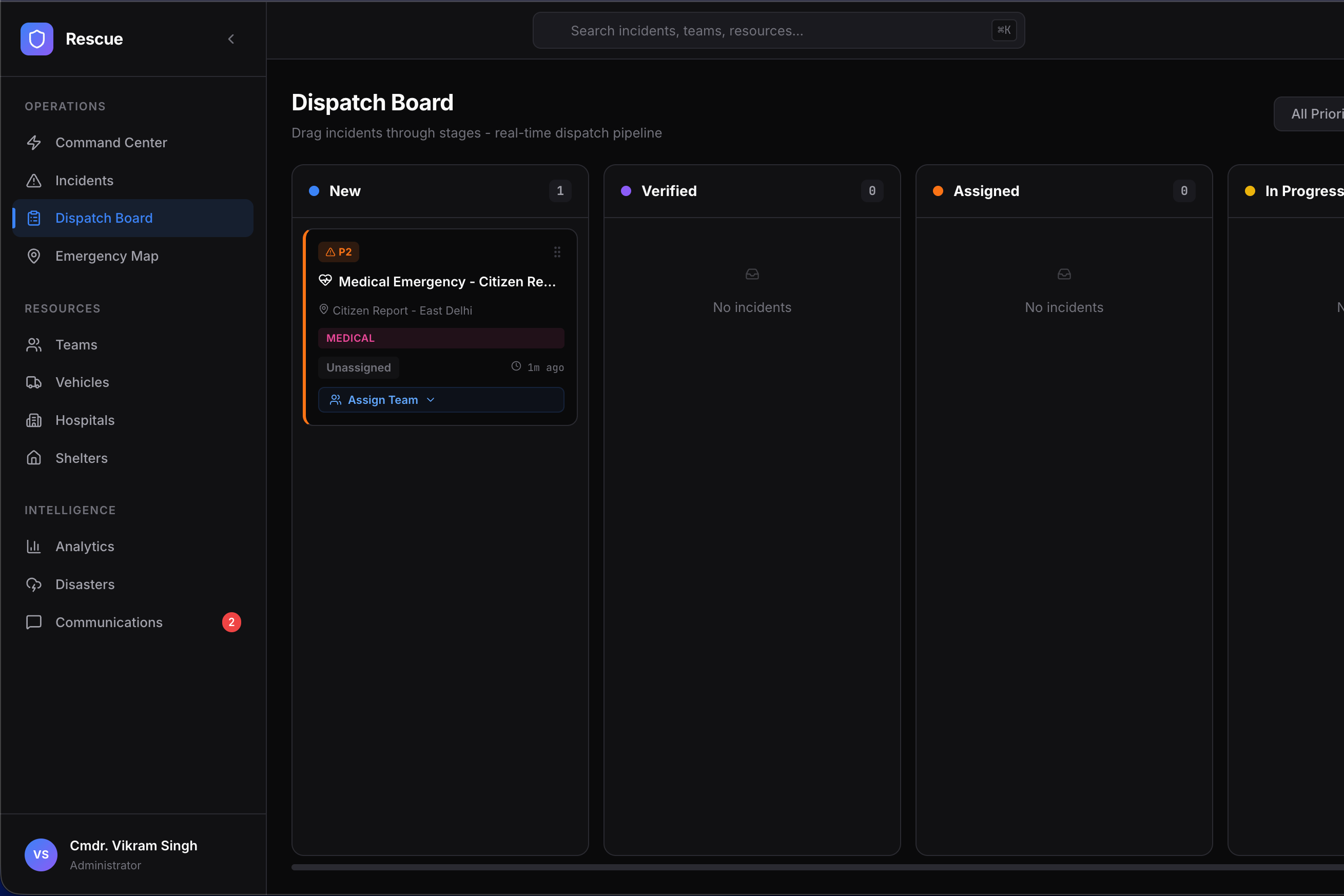
Dispatch Board
-
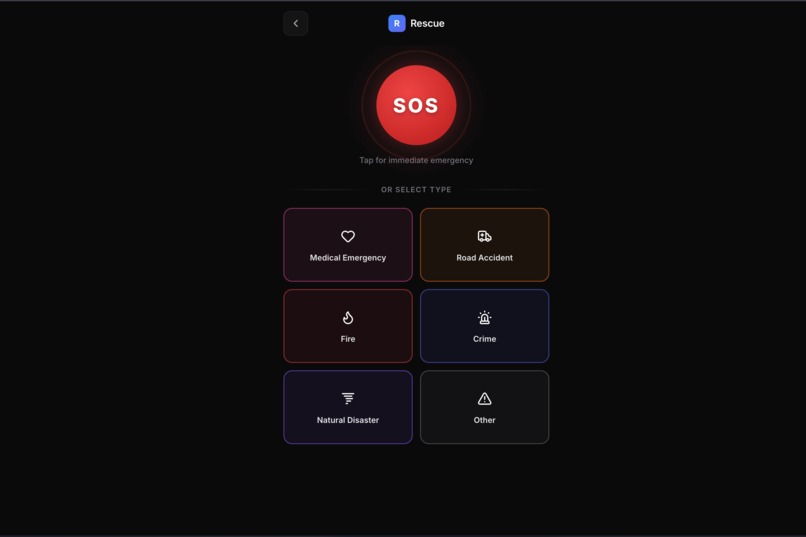
Report Incident
-
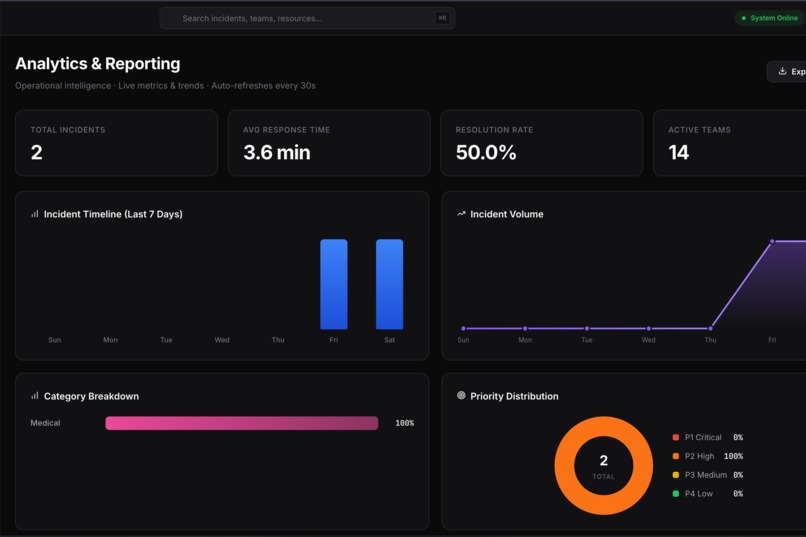
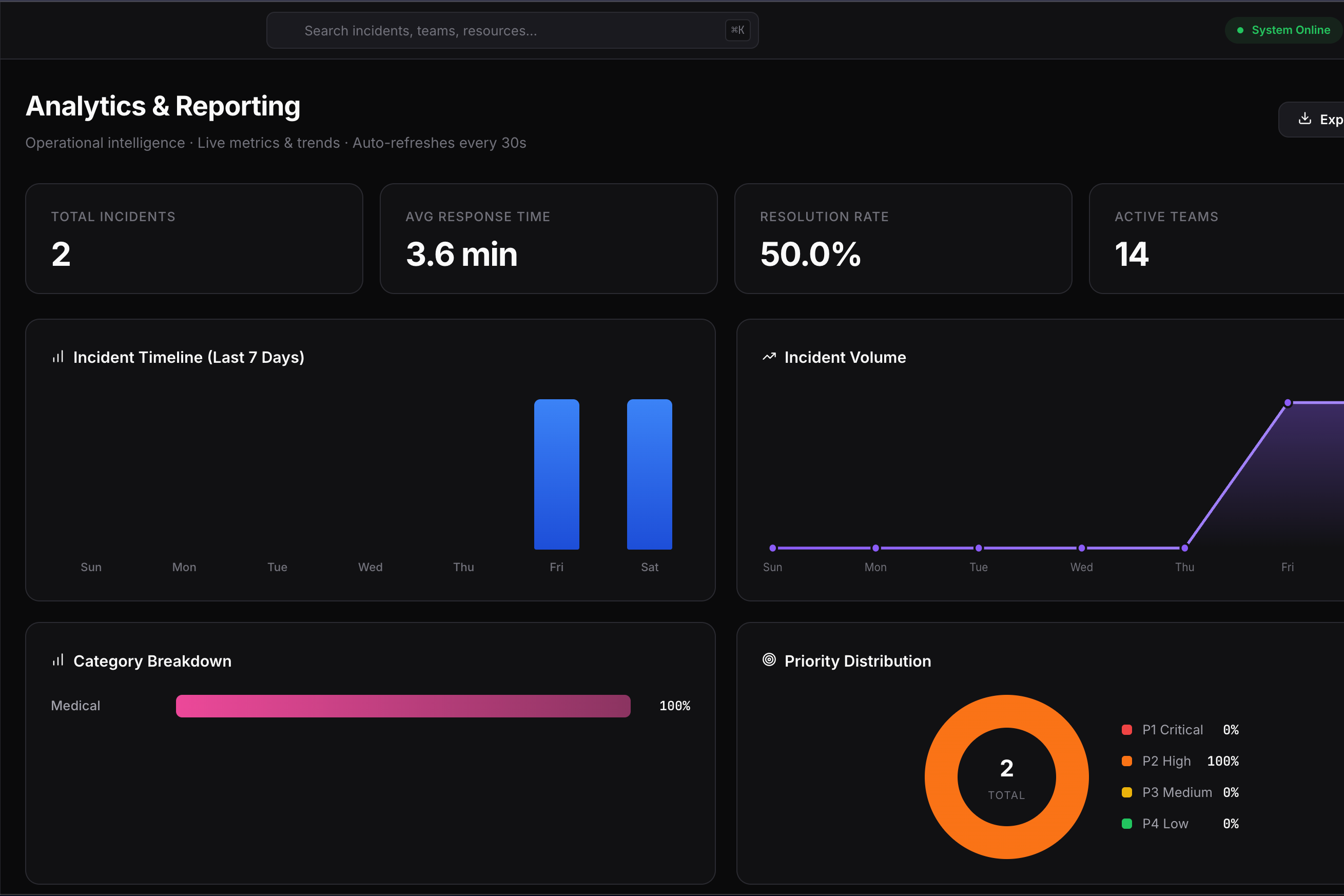
Analytics & Reporting
-
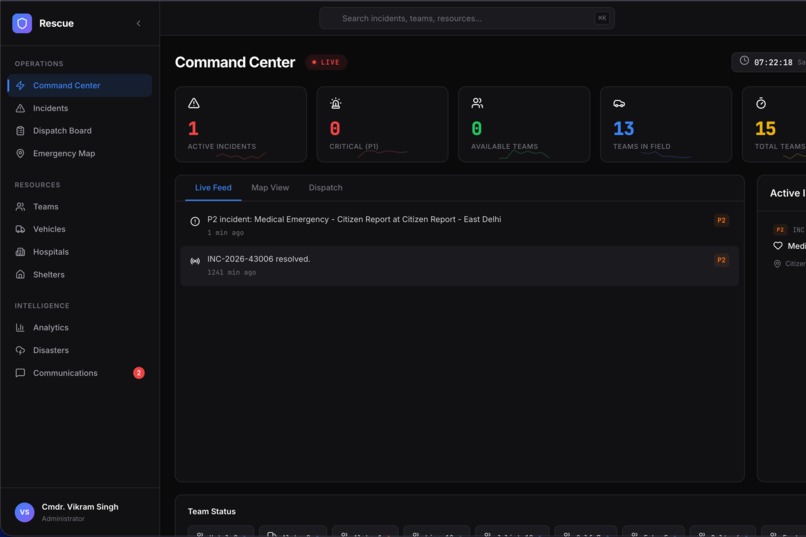
Command Center
-
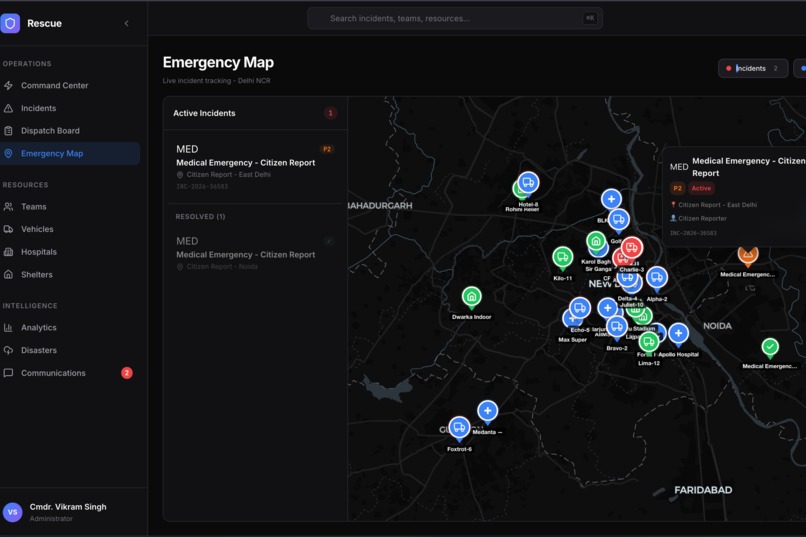
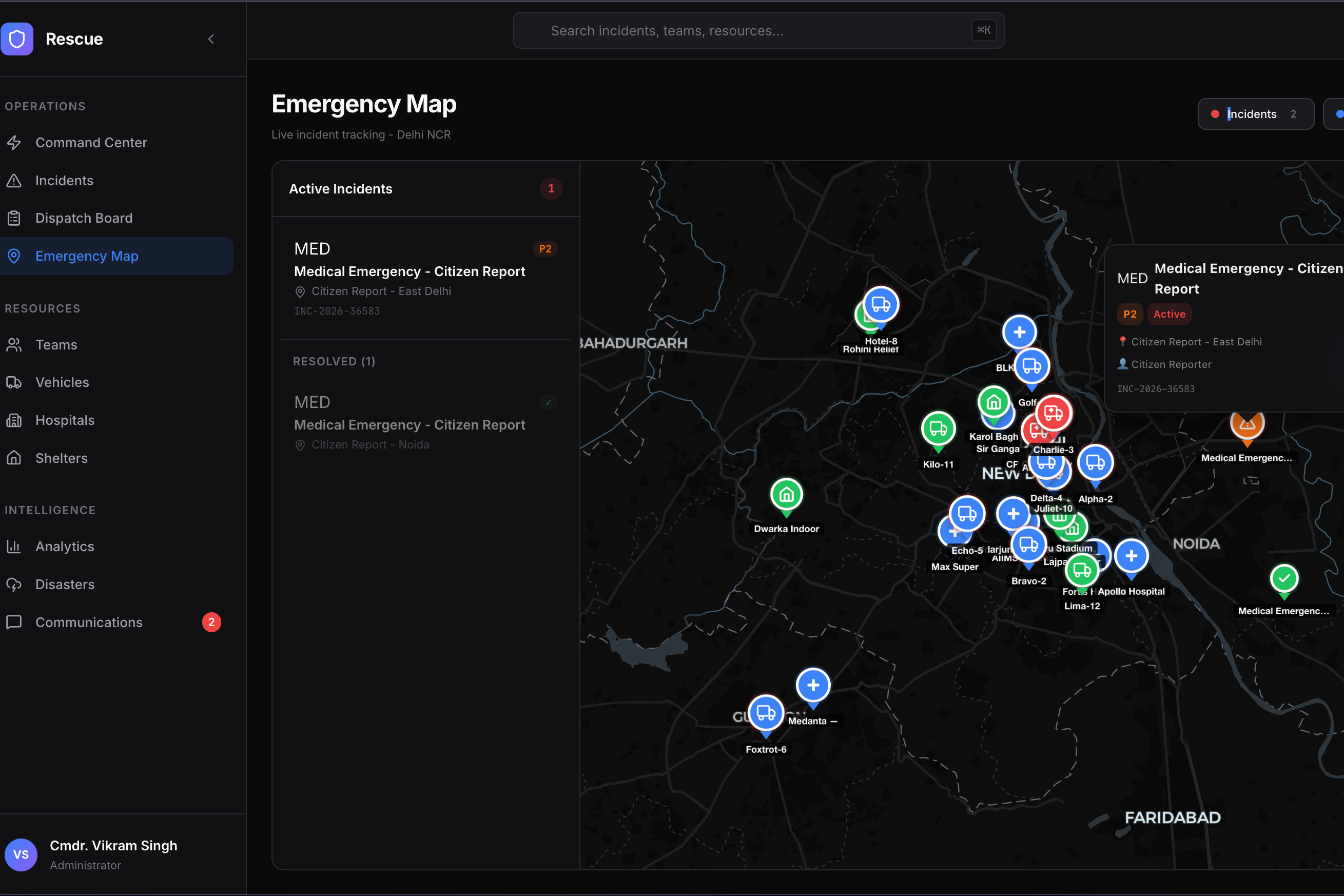
Emergency Map
-
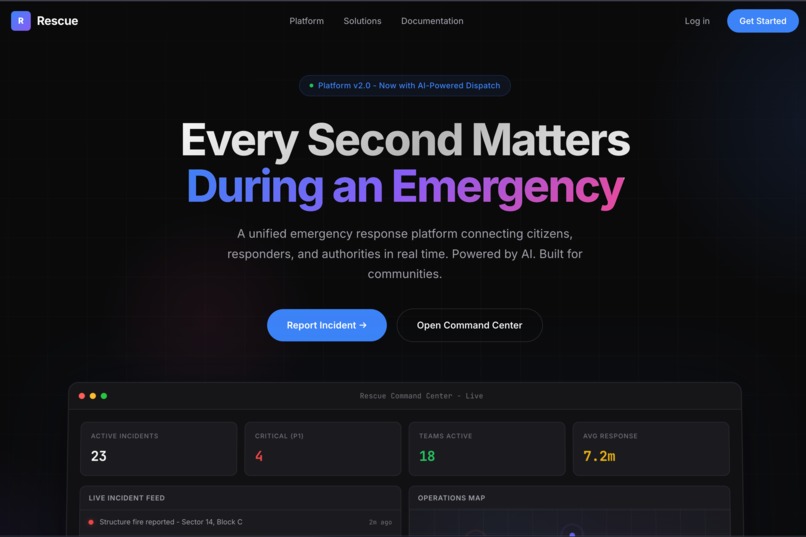
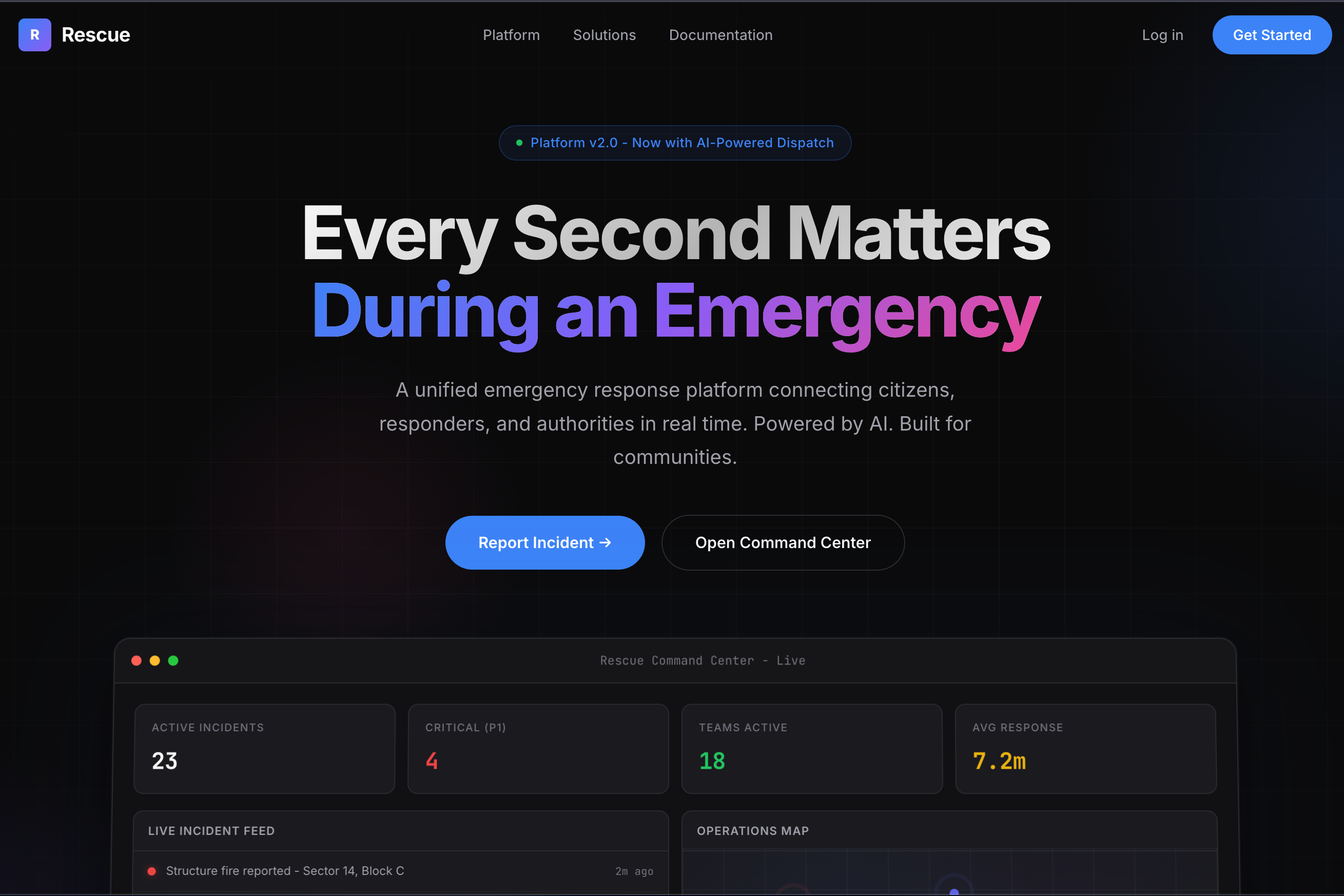
Home Page
Rescue: Smart Emergency Response Platform
Inspiration
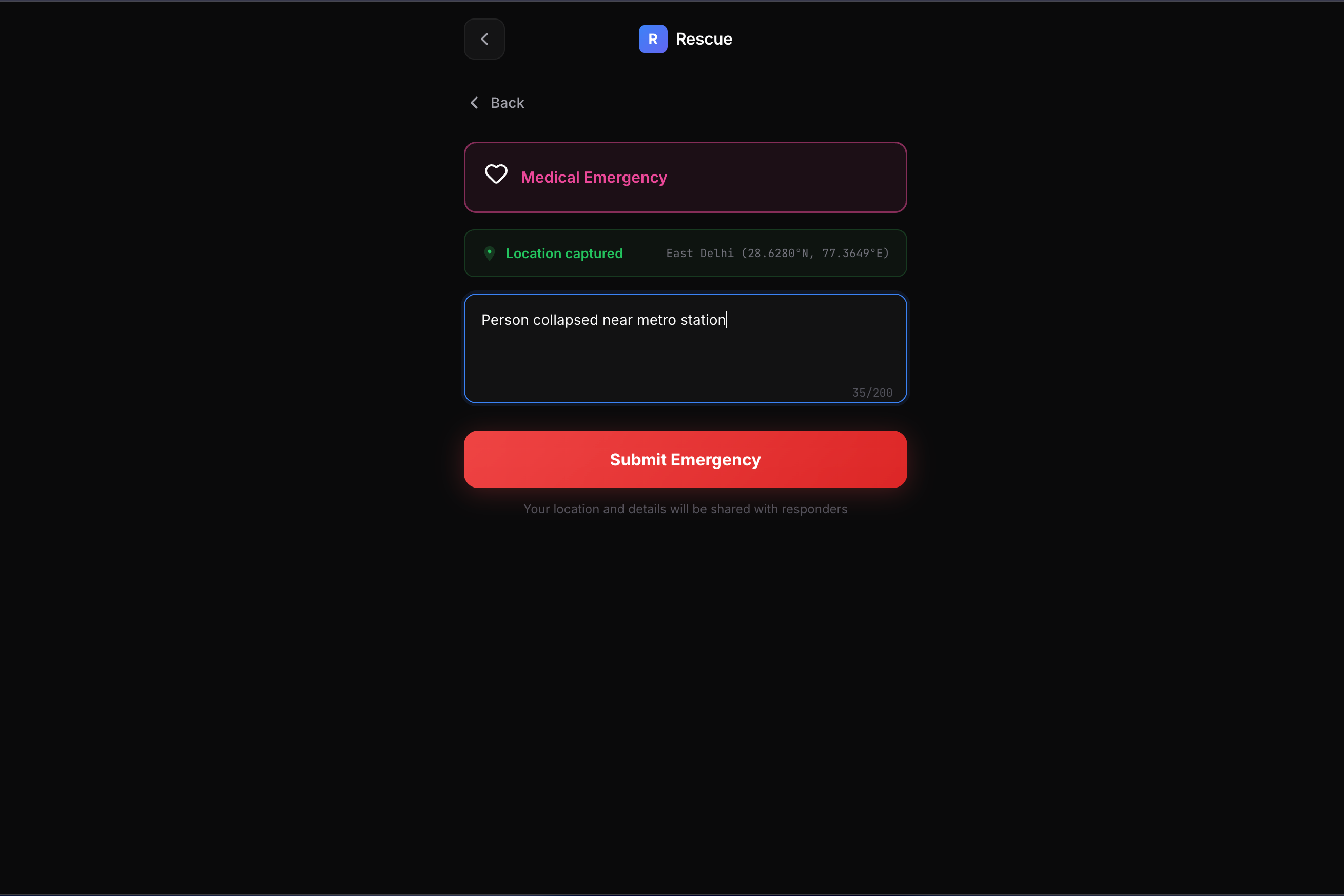
The idea for Rescue came from a simple observation. During an emergency, people often lose valuable time trying to contact the right service or explain their situation. Even a short delay can have serious consequences. We wanted to build a platform that makes emergency reporting faster and easier while helping responders receive the information they need as quickly as possible.
Our goal was to create a single platform where citizens and emergency services can communicate efficiently, reducing response time and improving coordination during critical situations.
What it does
Rescue is a web-based emergency response platform that helps people quickly report emergencies and stay connected with emergency responders.
Users can:
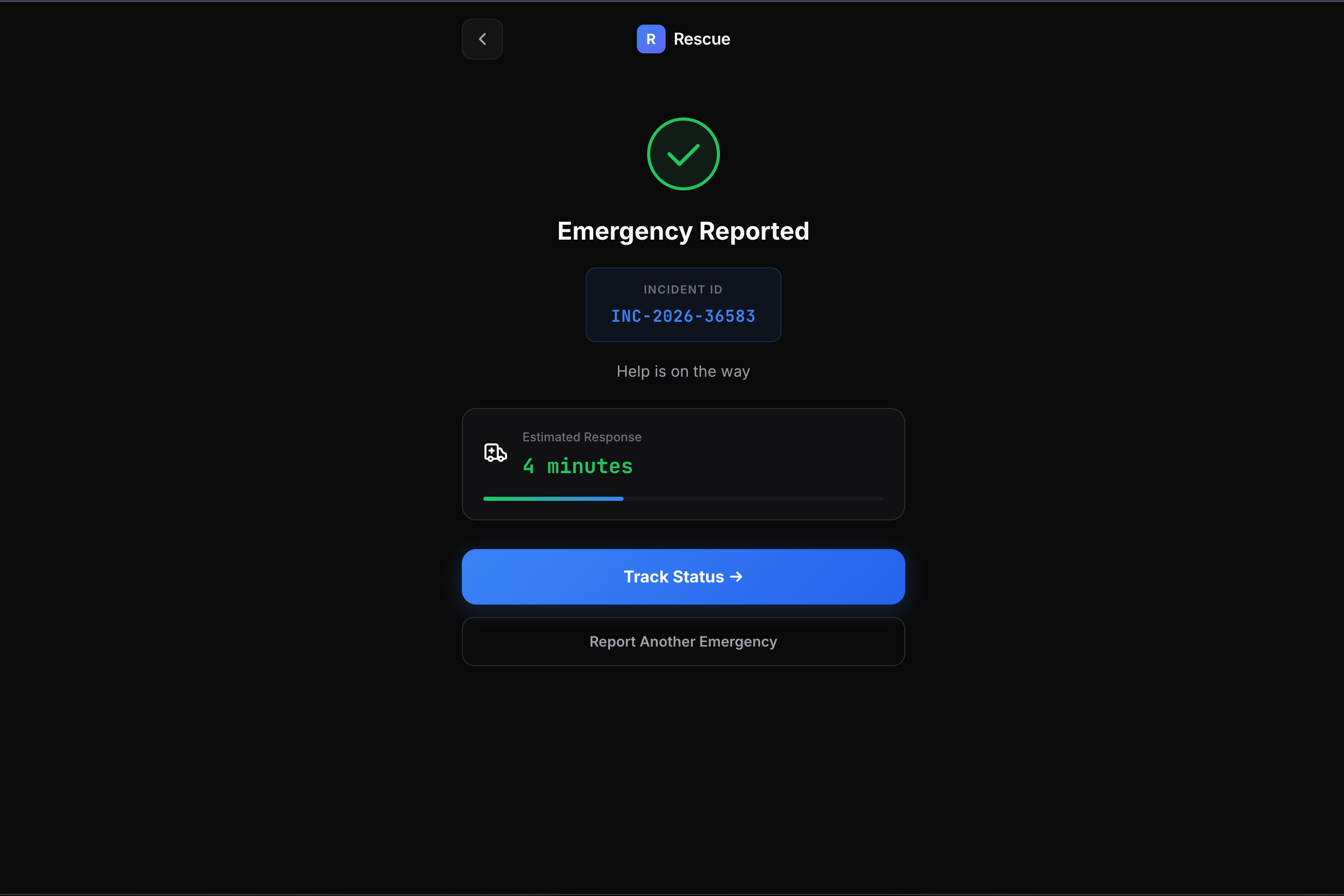
- Report emergencies in real time.
- Share their live location and emergency details.
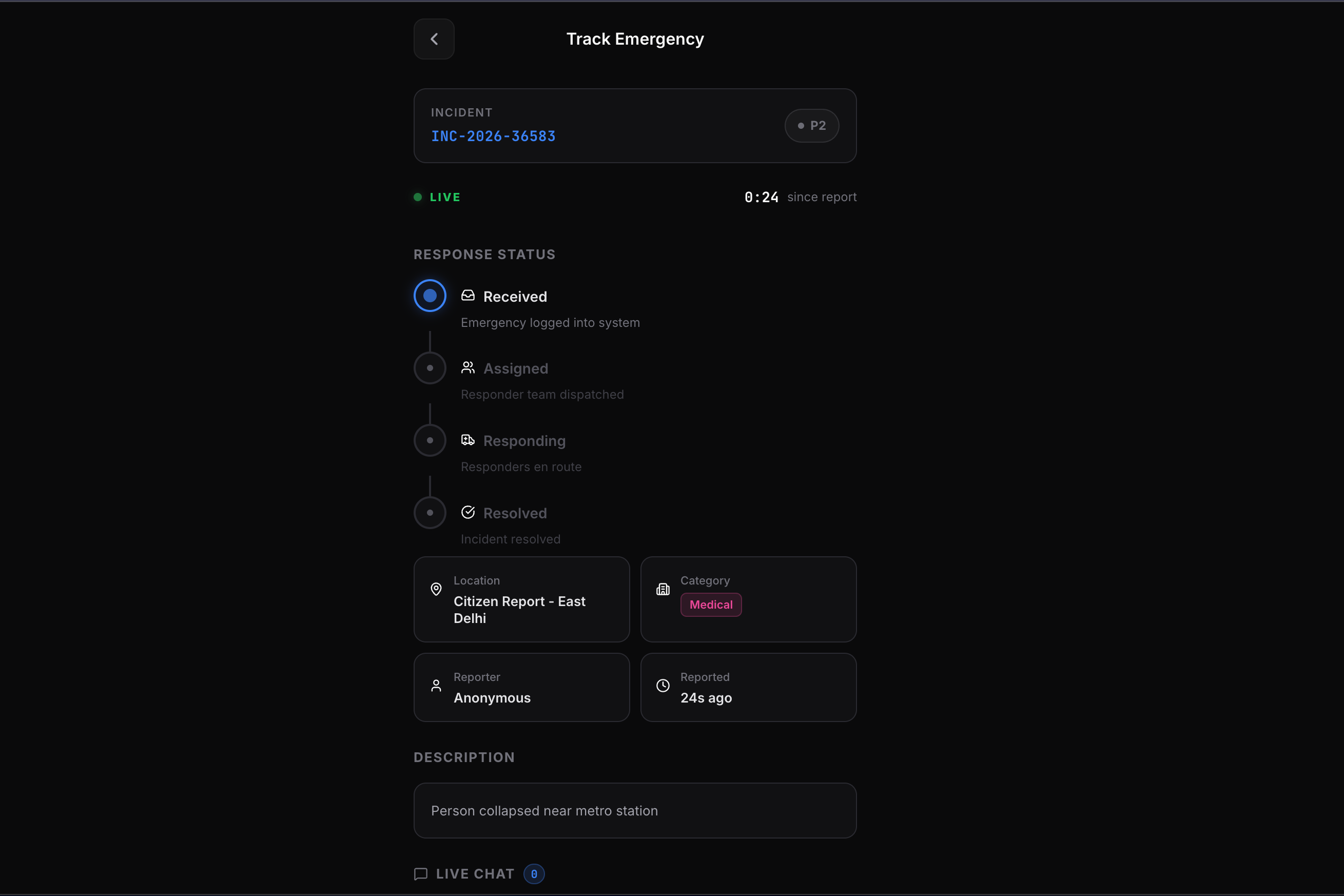
- Track the status of their request.
- Connect with hospitals, police, fire departments, and ambulance services.
- Receive real-time updates as responders manage the incident.
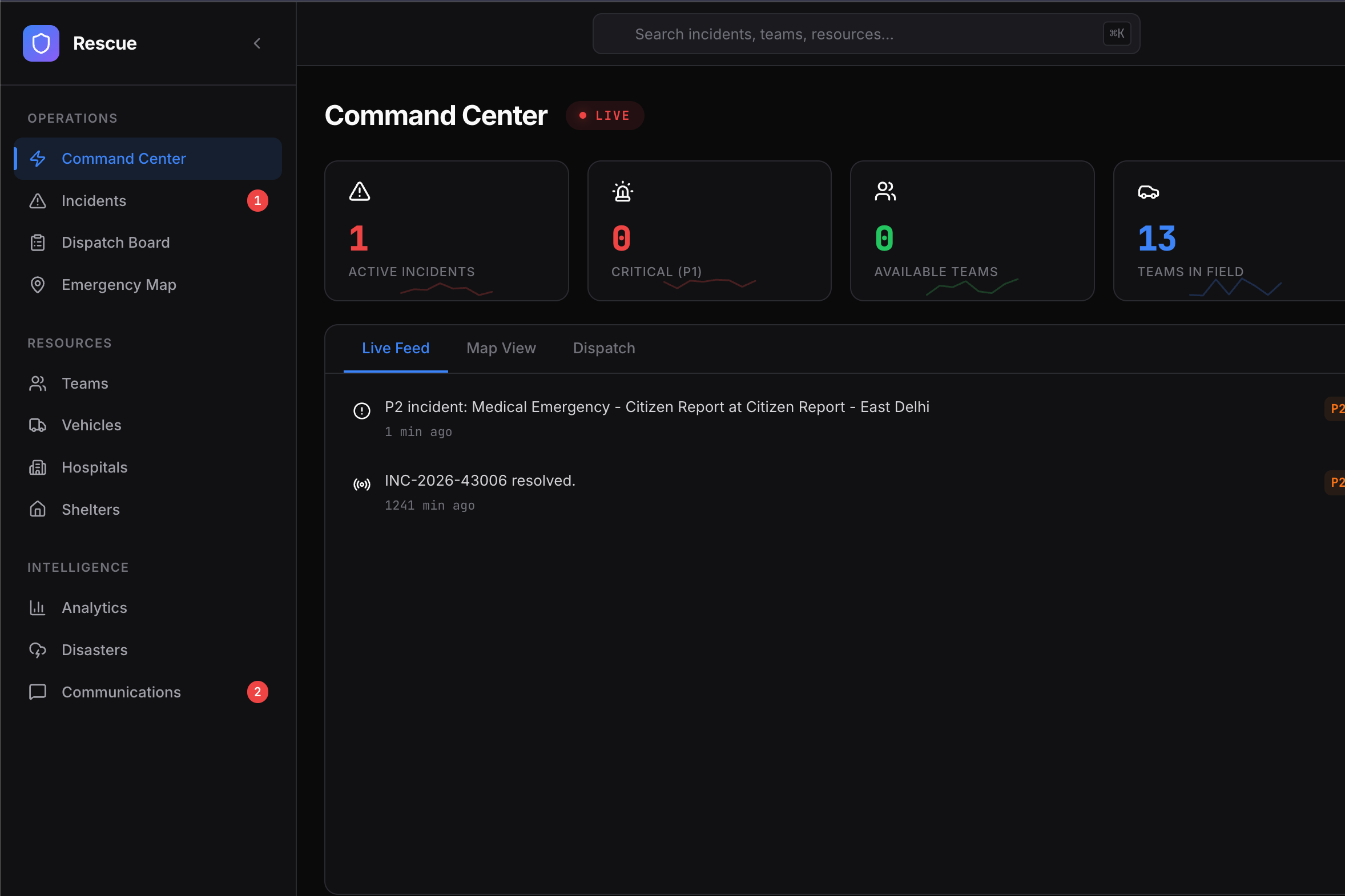
Emergency responders have access to a dedicated dashboard where they can view incoming reports, update incident status, and coordinate responses more effectively.
How we built it
We built Rescue using a modern full-stack architecture designed for speed, reliability, and scalability.
Tech Stack
- Frontend: Next.js
- Backend: Node.js hosted on AWS
- Database: Amazon DynamoDB
- Real-time Communication: WebSockets
- Deployment: Vercel (Frontend) and AWS (Backend)
The frontend was developed with Next.js and deployed on Vercel to provide a fast and responsive user experience. The backend runs on AWS and handles authentication, API requests, incident management, and data storage. We used Amazon DynamoDB to store application data and WebSockets to provide instant communication between users and emergency responders. This allows new reports and status updates to appear in real time without requiring users to refresh the page.
Challenges we ran into
One of our biggest challenges was implementing reliable real-time communication. We needed to ensure that updates reached both users and responders instantly while keeping the system stable.
Another challenge was designing an interface that remains simple and intuitive during stressful situations. We also spent time integrating our backend with AWS, managing deployments, and making sure the application could scale as more users joined the platform.
Accomplishments that we're proud of
We are proud of building a complete end-to-end emergency response platform in a short period of time. We successfully integrated Next.js, AWS, Amazon DynamoDB, WebSockets, and Vercel into a single application that works seamlessly.
We are also proud of creating a responsive dashboard for emergency responders and implementing real-time updates that keep everyone informed throughout an incident. Most importantly, we built a project that addresses a real-world problem and has the potential to improve emergency response in local communities.
What we learned
This project helped us gain practical experience in building full-stack applications with Next.js and Node.js, deploying cloud-based applications on AWS, working with Amazon DynamoDB, and implementing real-time communication using WebSockets.
Beyond the technical skills, we learned the importance of designing applications that are simple, reliable, and easy to use, especially when users may be under pressure during an emergency.
What's next for Rescue
Our next goal is to make Rescue even more useful by adding:
- Live GPS tracking for emergency vehicles.
- Push notifications for users and responders.
- Offline emergency reporting for areas with limited internet connectivity.
- SMS and phone call integration.
- Multilingual support.
- Interactive maps for responders.
- Analytics dashboards for emergency management agencies.
- Better scalability and monitoring using additional AWS services.
We believe Rescue has the potential to become a reliable platform that helps emergency services respond faster and improves coordination during critical situations. As we continue developing the project, we hope to expand its capabilities and make it useful for communities on a larger scale.
Built With
- amazon-dynamodb
- nextjs
- node.js
- websocket

Log in or sign up for Devpost to join the conversation.