-
-
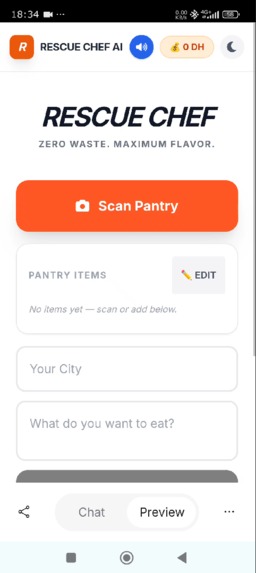
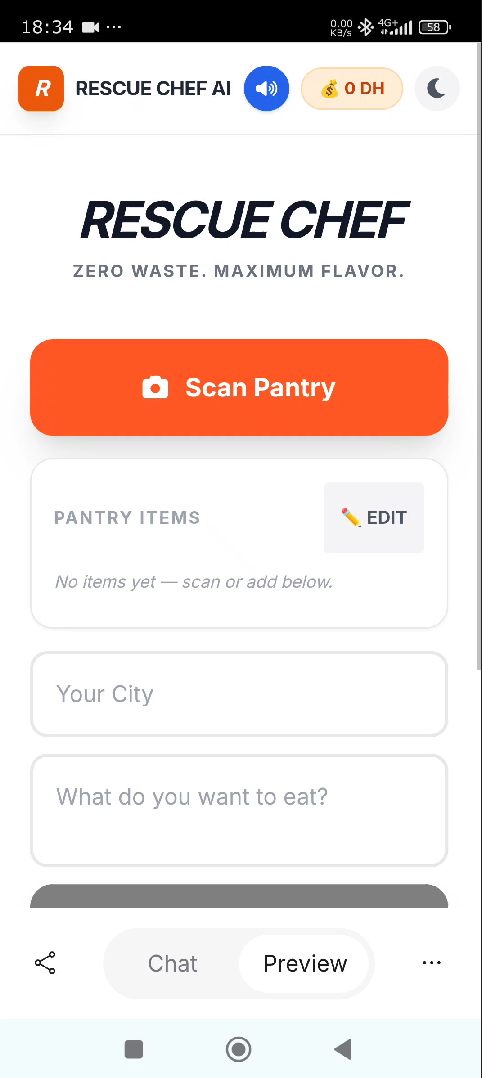
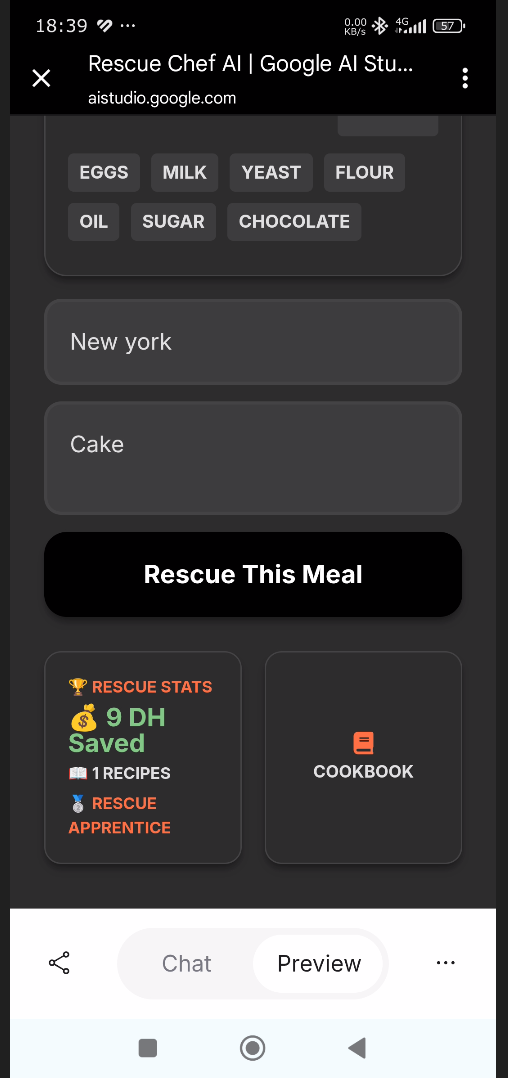
Landing (light mode)
-
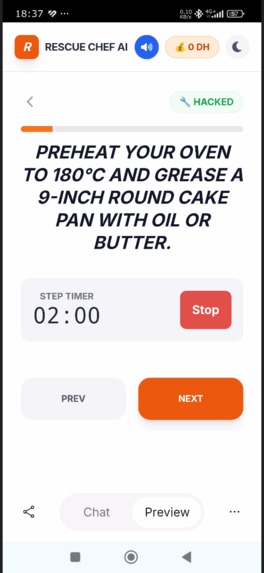
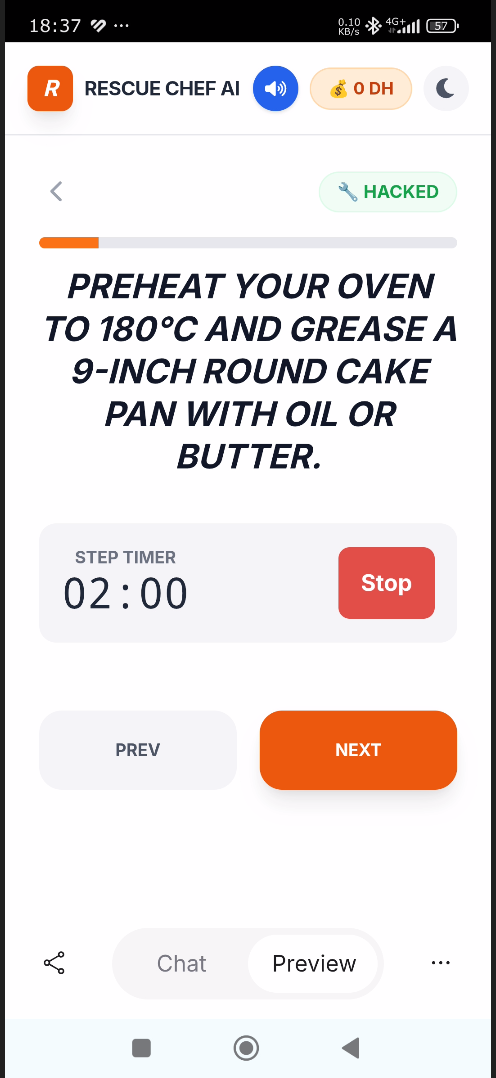
Cooking (step + timer)
-
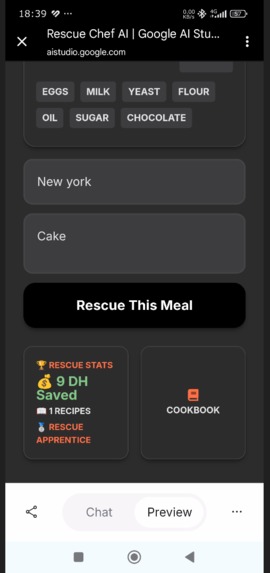
Landing dark mode
-
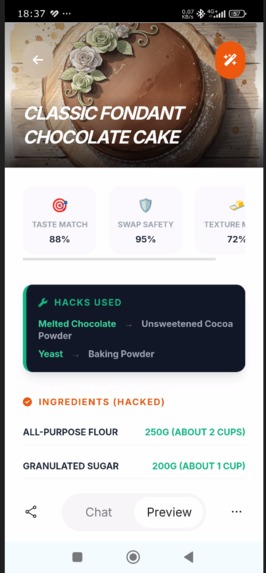
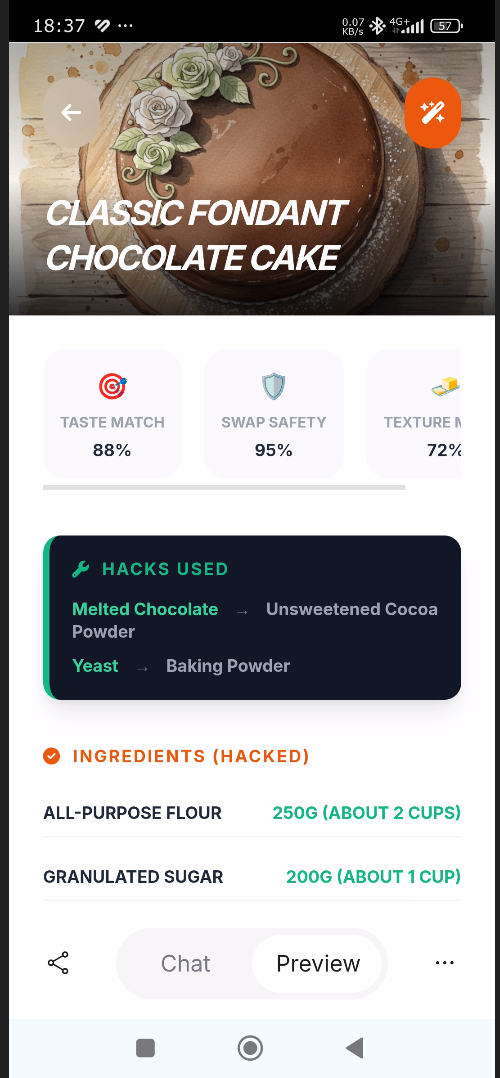
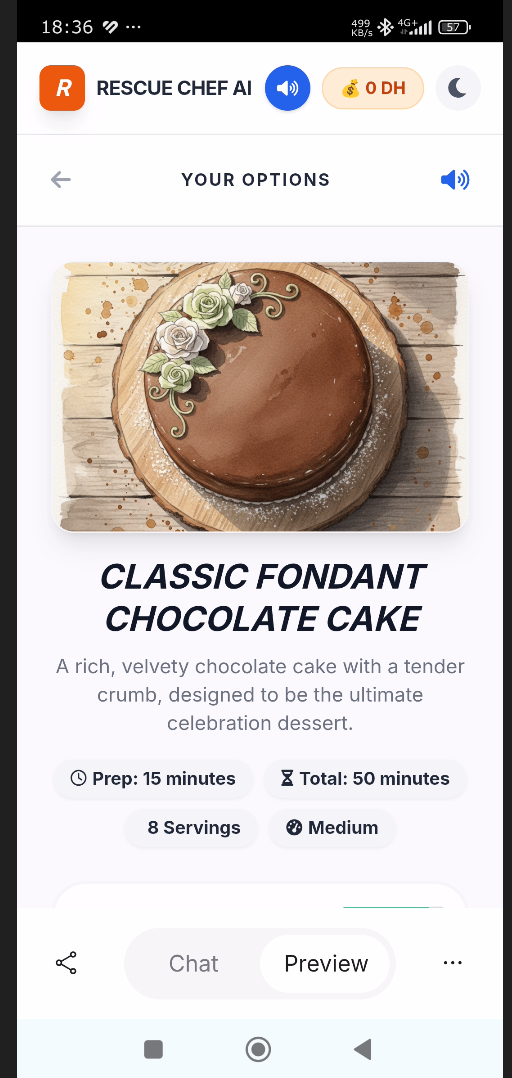
Recipe Detail (image + safety factors)
-
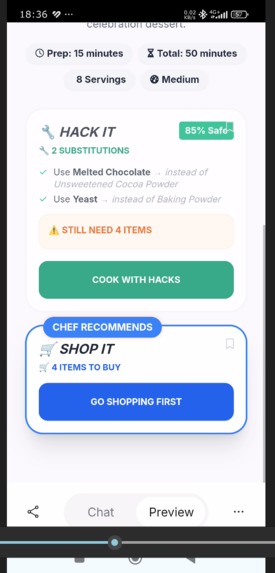
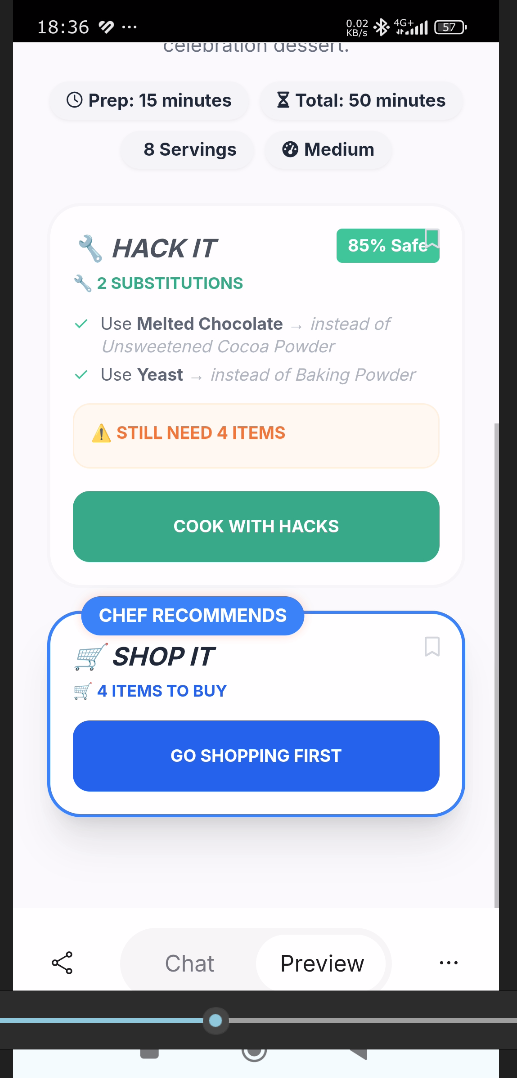
Result (les 2 cartes HACK/SHOP)
-
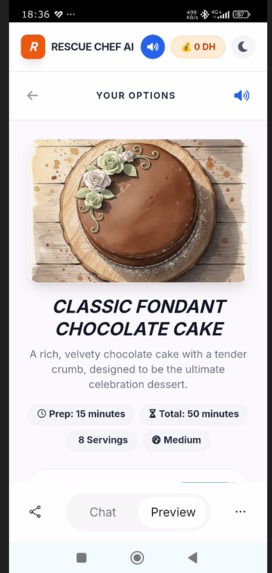
Result (Recipe)
-
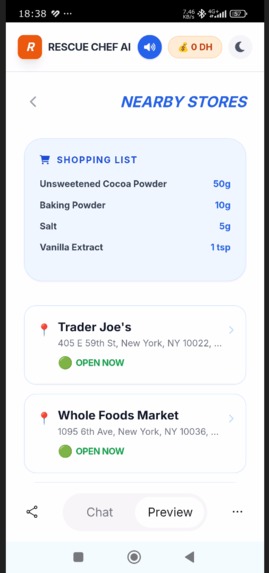
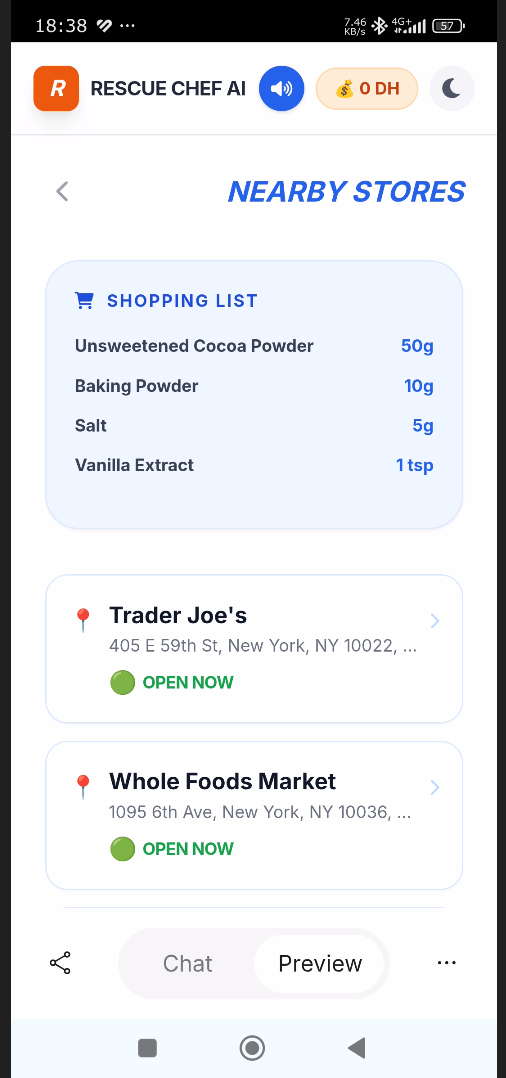
Shopping (liste + stores Maps)
Inspiration
Every year, households throw away a third of the food they buy — not because it's spoiled, but because they don't know what to cook with what's left. Rescue Chef AI was born from a simple question: what if your phone could look inside your fridge and turn forgotten ingredients into a real meal?
What it does
Rescue Chef AI is a kitchen intelligence app that fights food waste through two AI-powered paths: 📸 Scan → Decide → Cook
- Scan your fridge — Gemini 3 Flash with Vision identifies every ingredient from a photo
- Get a rescue plan — The AI generates a full recipe and compares it against what you have
- Choose your path:
- 🔧 HACK IT — AI substitutions scored for taste match, swap safety, and texture (e.g., "Use yogurt instead of cream — 92% safe")
- 🛒 SHOP IT — A precise shopping list with estimated cost and nearby stores via Google Maps
Each recipe includes an AI-generated watercolor illustration you can edit with text prompts, step-by-step cooking with a timer, and text-to-speech for hands-free guidance.
How we built it
Built entirely on Google AI Studio using Vibe Coding (no-code). The app chains five Gemini capabilities in a single flow:
| Capability | Model | Purpose |
|---|---|---|
| Vision | Gemini 3 Flash | Ingredient detection from fridge photos |
| Thinking Mode | Gemini 3 Flash | Recipe generation + substitution scoring via structured JSON |
| Maps Grounding | Gemini 2.5 Flash | Nearby grocery stores with real-time status |
| Nano Banana | Gemini 2.5 Flash | Recipe illustration generation + live text-based editing |
| TTS | Gemini 2.5 Flash | Hands-free cooking step narration |
The decision engine uses structured JSON output with a detailed schema covering ingredients, hacks, safety factors, shopping lists, and environmental impact — all in a single API call with Thinking Mode enabled.
Challenges we ran into
- Emoji rendering — Gemini sometimes returned emoji names ("thermometer") instead of Unicode characters. Solved with a dual approach: prompt constraints + client-side fallback mapping
- localStorage overflow — Base64 recipe images exceeded the 5MB browser limit. Fixed by stripping image data before persistence and regenerating on demand
- Safety score confusion — Early versions used technical food science jargon ("Cross-Contamination", "Acidity Balance") that confused testers. Replaced with user-friendly categories: Taste Match, Swap Safety, Texture Match
- Maps API constraints — Google Maps grounding only works on Gemini 2.5 Flash, not Gemini 3. Required a hybrid model architecture
Accomplishments that we're proud of
- Split Decision Engine — A single AI call generates both cooking paths (hack vs. shop) with safety-scored substitutions
- Five Gemini APIs chained in one user flow with zero external dependencies
- AI image editing in a cooking app — Users can modify recipe illustrations with natural language prompts mid-cooking
- 100% free tier — No paid APIs, no external services
What we learned
- AI Studio's Vibe Coding makes complex multi-API apps accessible to non-coders
- Concise, copy-paste code blocks work better than lengthy descriptive prompts in AI Studio
- User-facing terminology matters more than technical accuracy — "Can I trust this swap?" beats "Cross-contamination risk assessment"
What's next for Rescue Chef AI
- Voice-first cooking — Full conversational flow using Gemini Live API
- Pantry memory — Persistent ingredient tracking across sessions
- Community cookbook — Share and remix rescued recipes
- Waste impact dashboard — Aggregate savings over time with environmental metrics
Built With
- gemini-2.5-flash
- gemini-3-flash
- gemini-thinking-mode
- gemini-tts
- google-ai-studio
- google-maps
- nano-banana
- react
- tailwind-css
- typescript
- vite


Log in or sign up for Devpost to join the conversation.