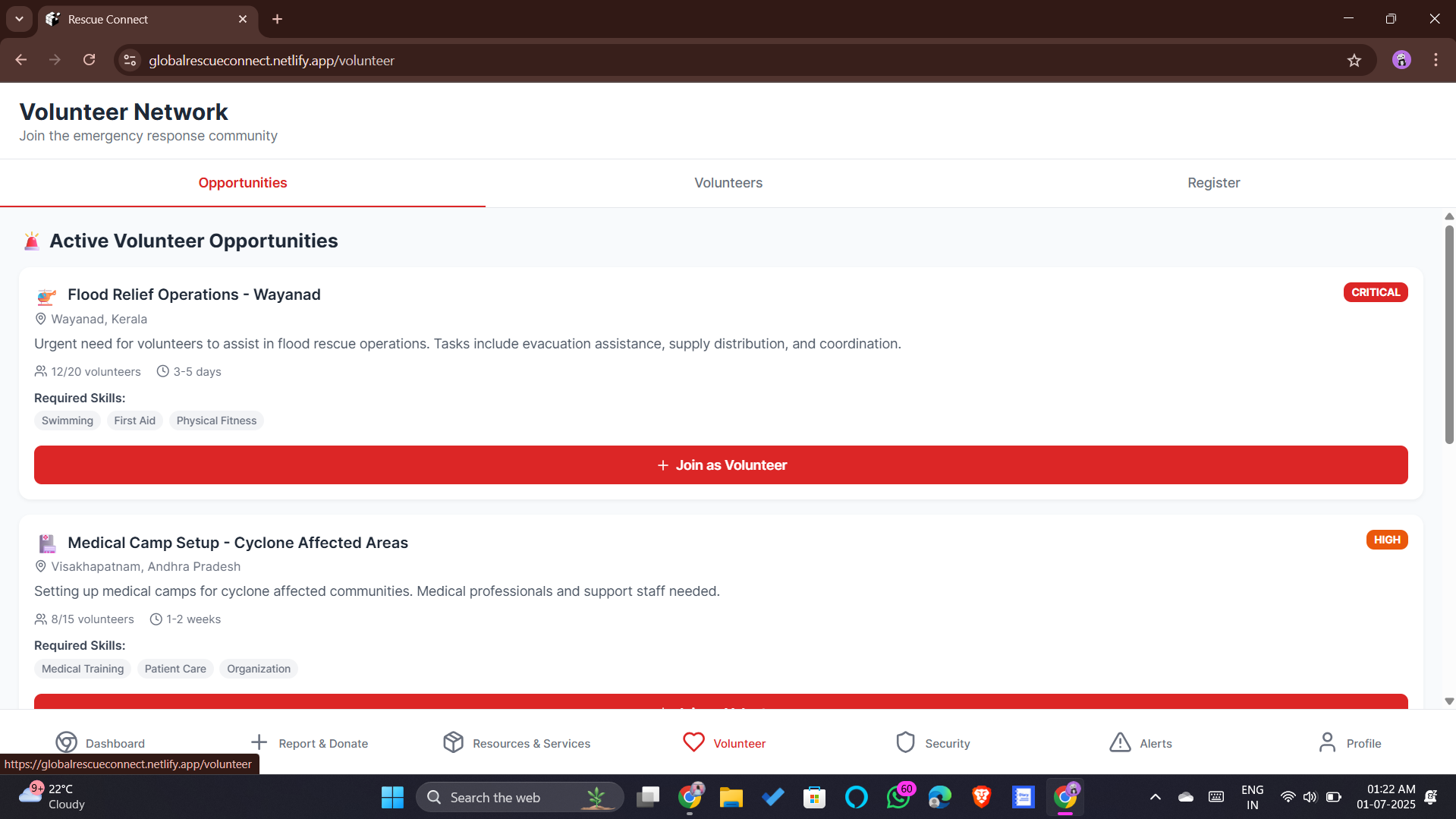
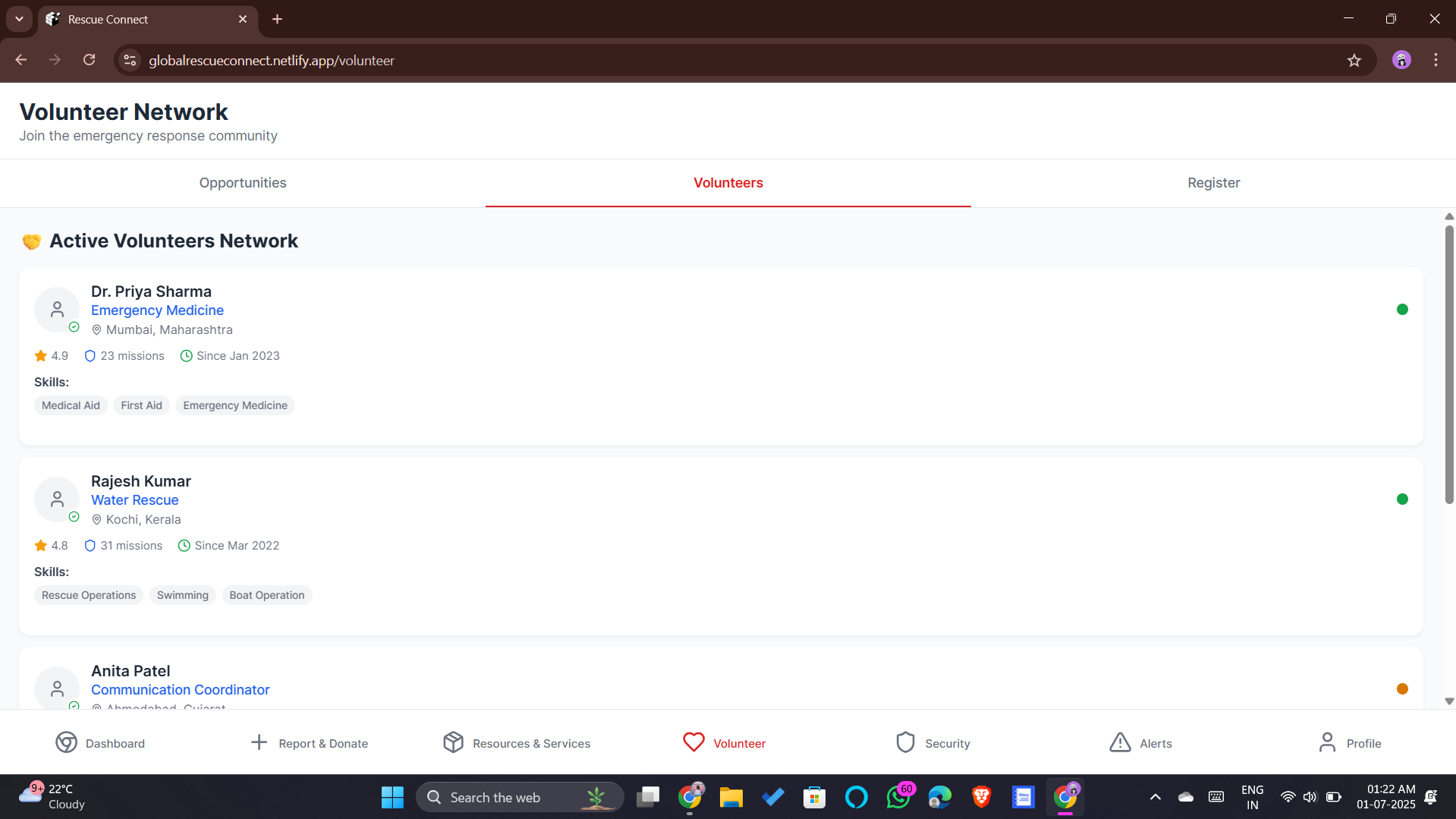
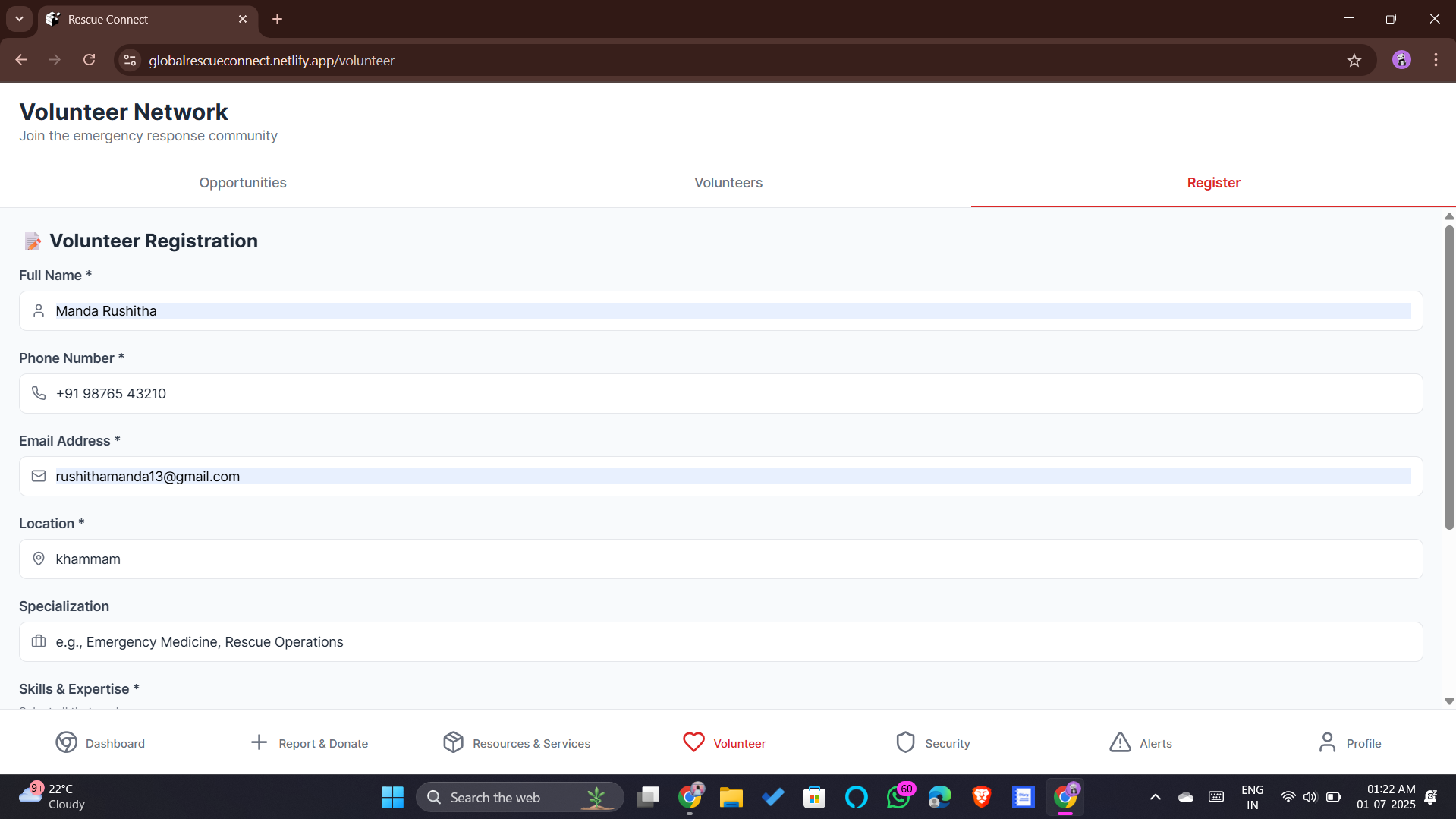
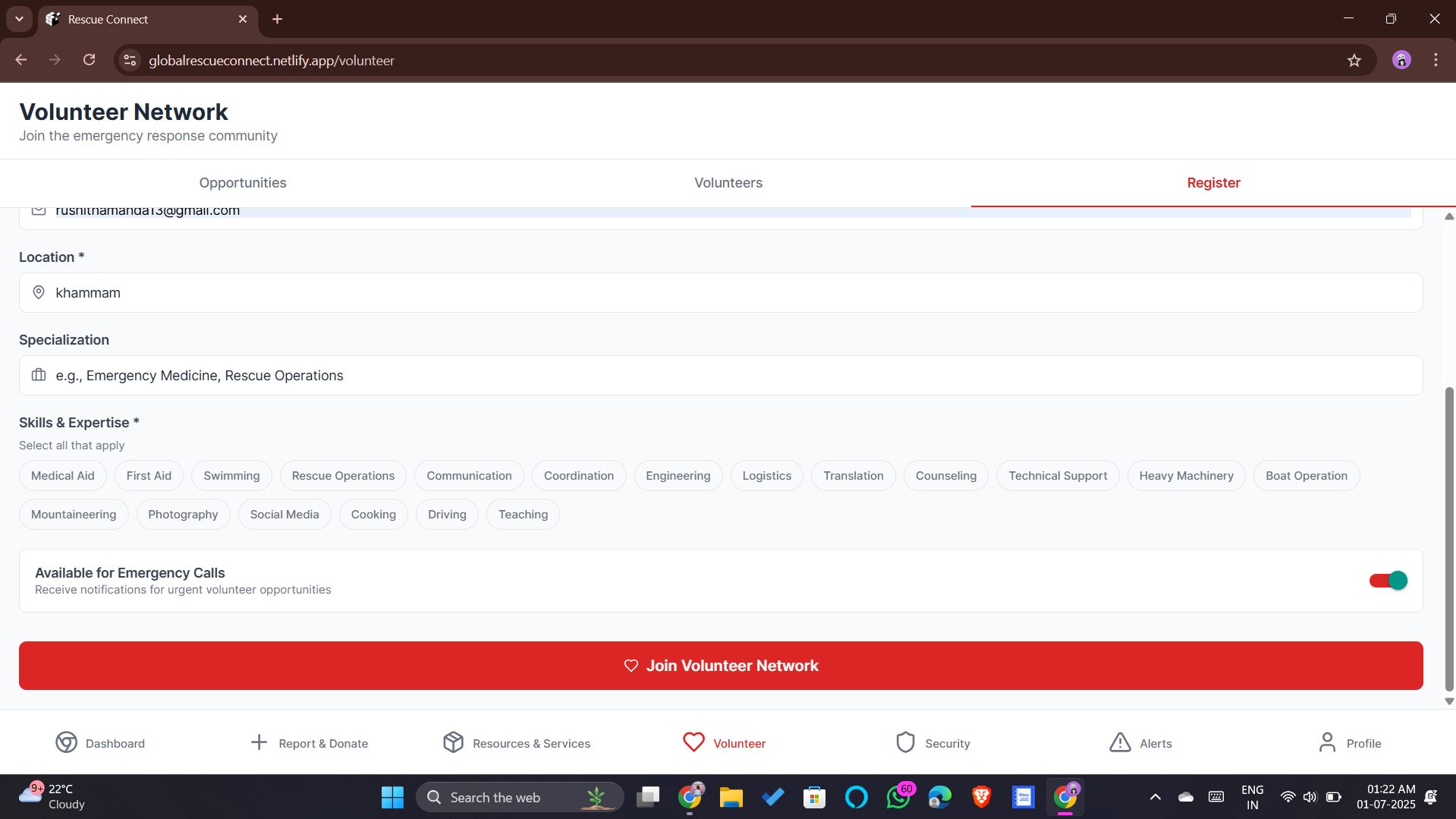
Inspiration
In emergency and disaster situations, communication breakdown is a critical and often fatal problem, especially across diverse linguistic and geographical boundaries. Existing emergency systems are fragmented, limited by national borders, and lack real-time, multilingual capabilities. We were inspired by the urgent global need for a unified, intelligent, and universally accessible platform that can bridge these gaps, ensuring that no one is left unheard or unassisted during a crisis, no matter where they are on Earth or what language they speak.
What it does
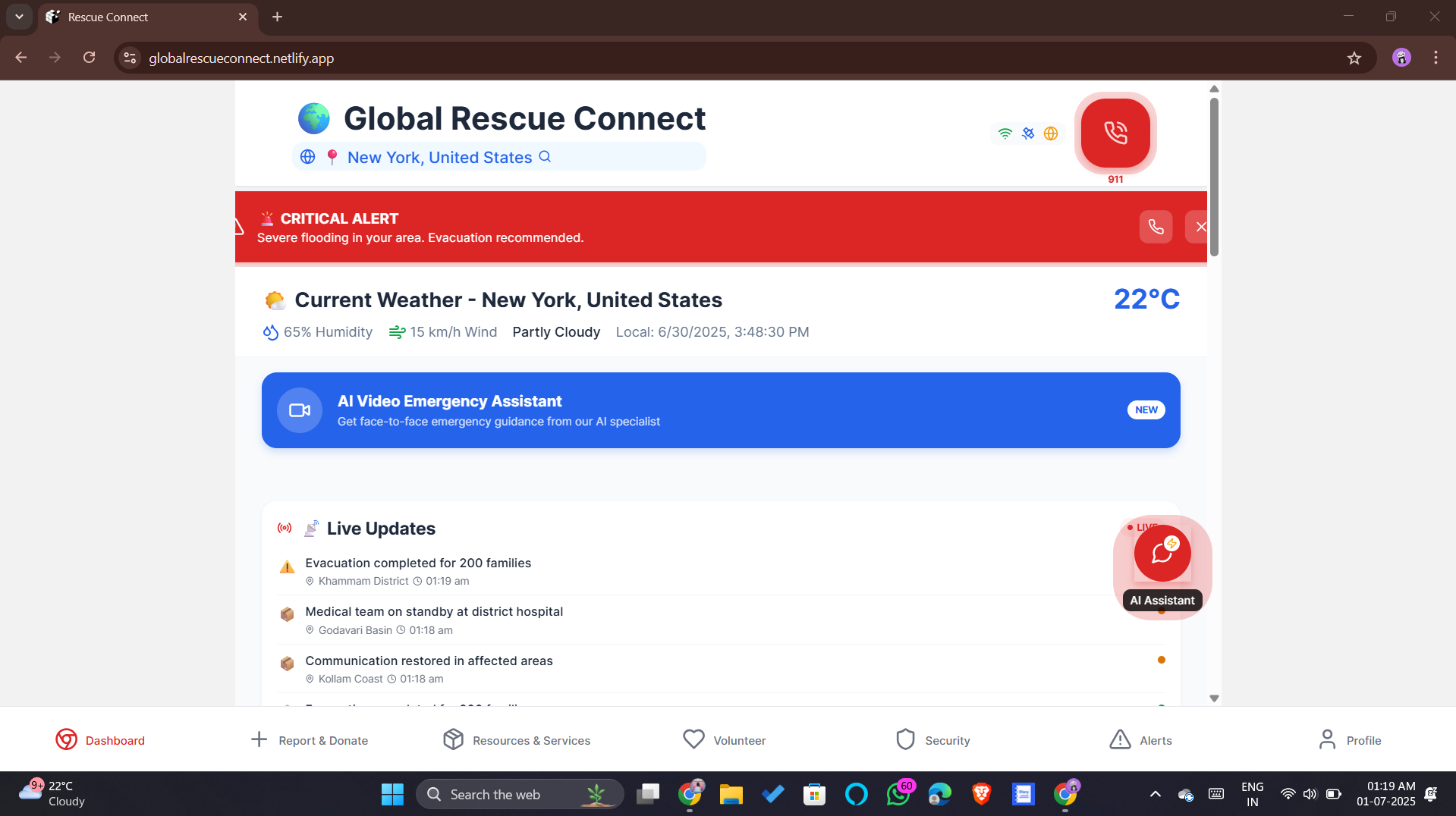
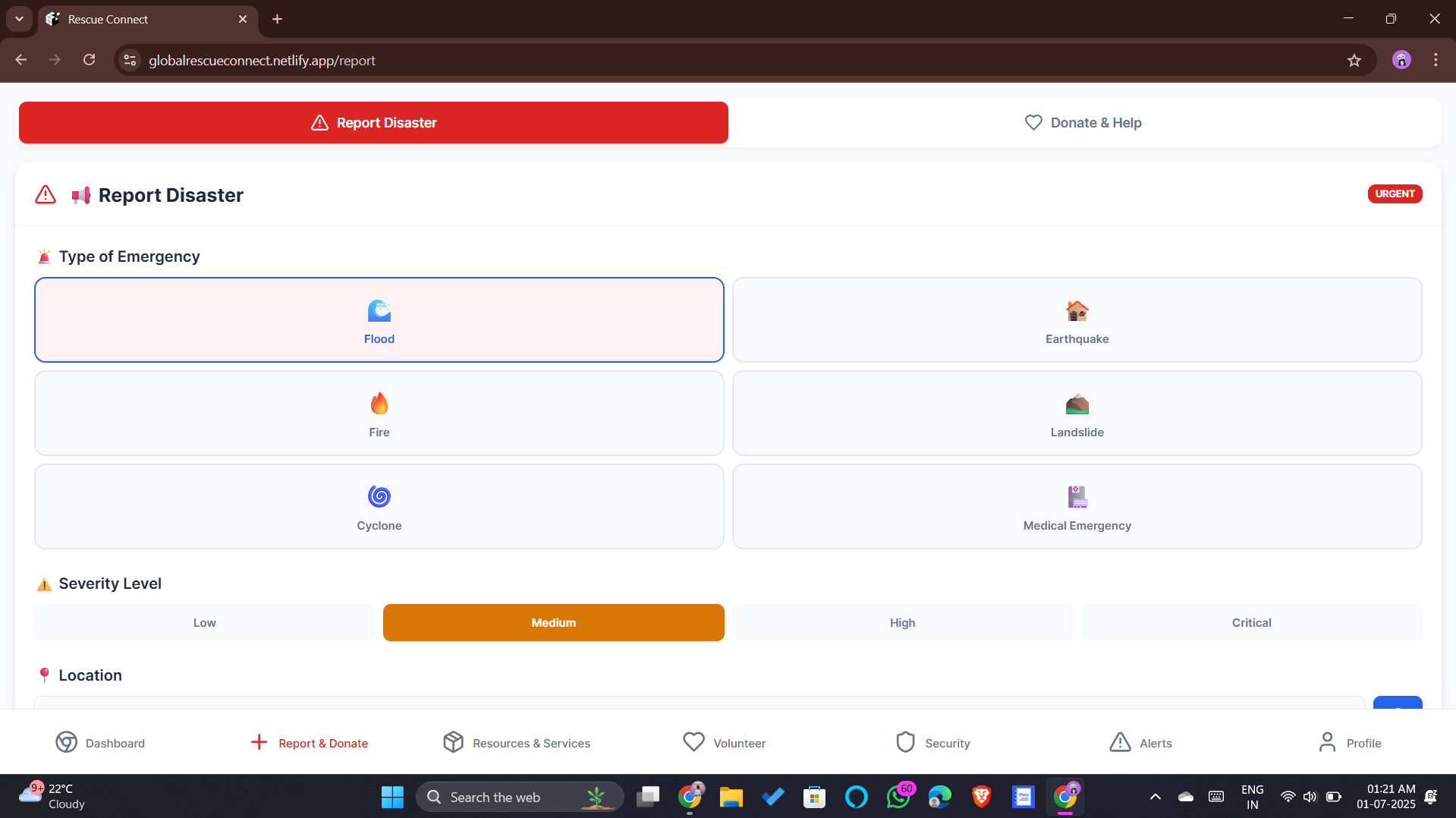
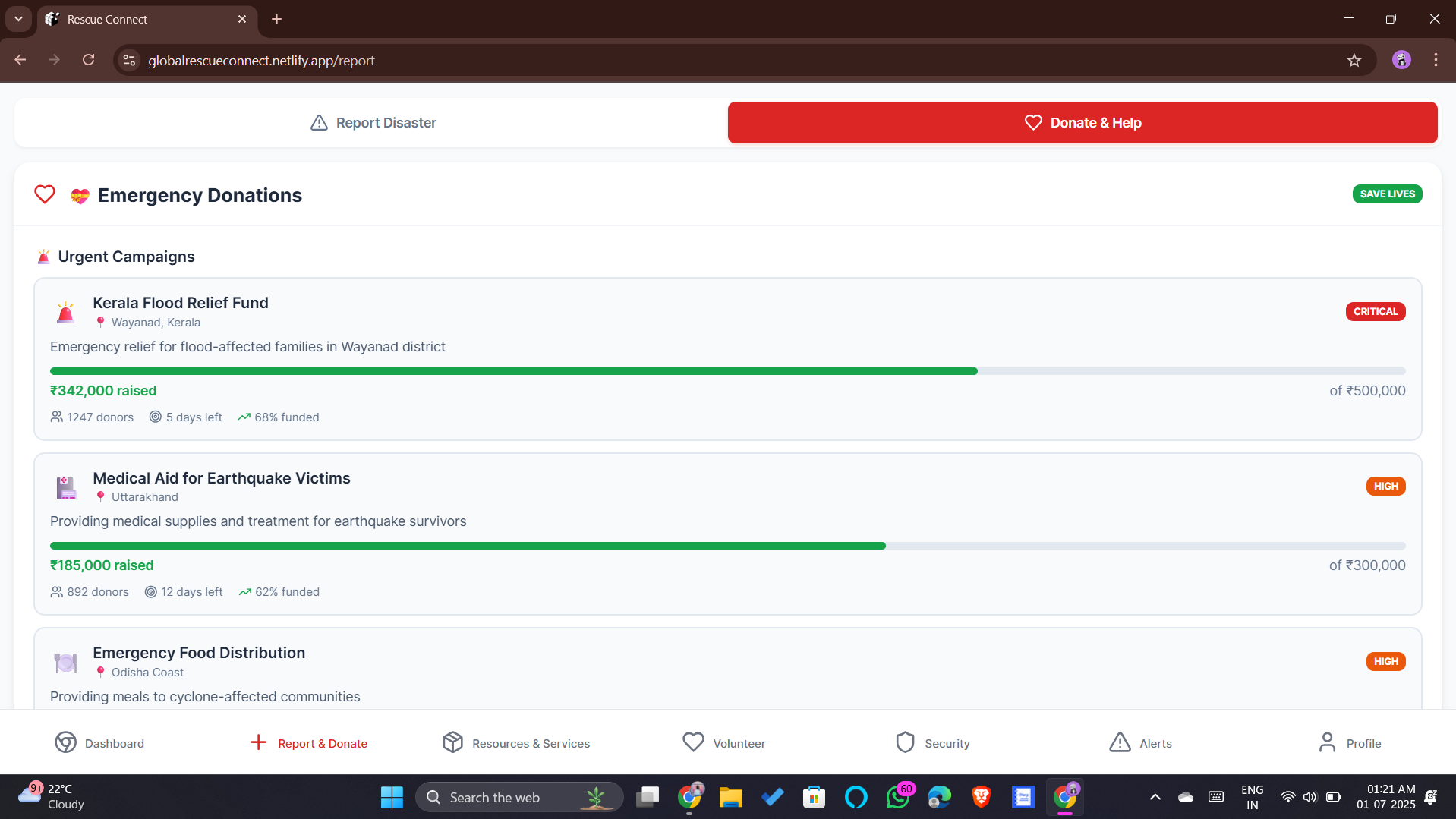
Global Rescue Connect is a groundbreaking, AI-powered emergency response platform designed for worldwide deployment. It empowers individuals in distress to instantly connect with help, leveraging advanced technology to overcome language and connectivity barriers.
Key features include:
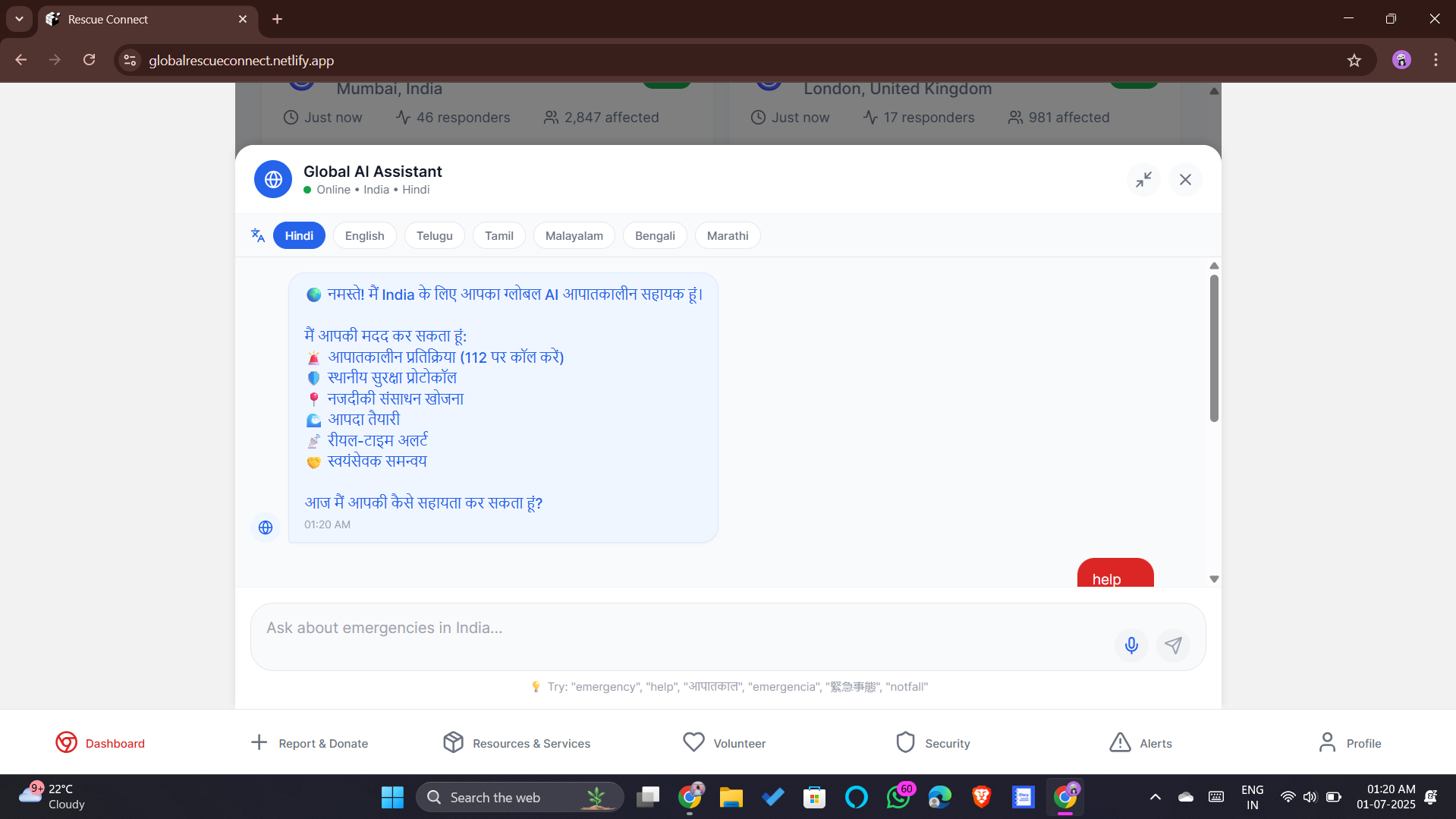
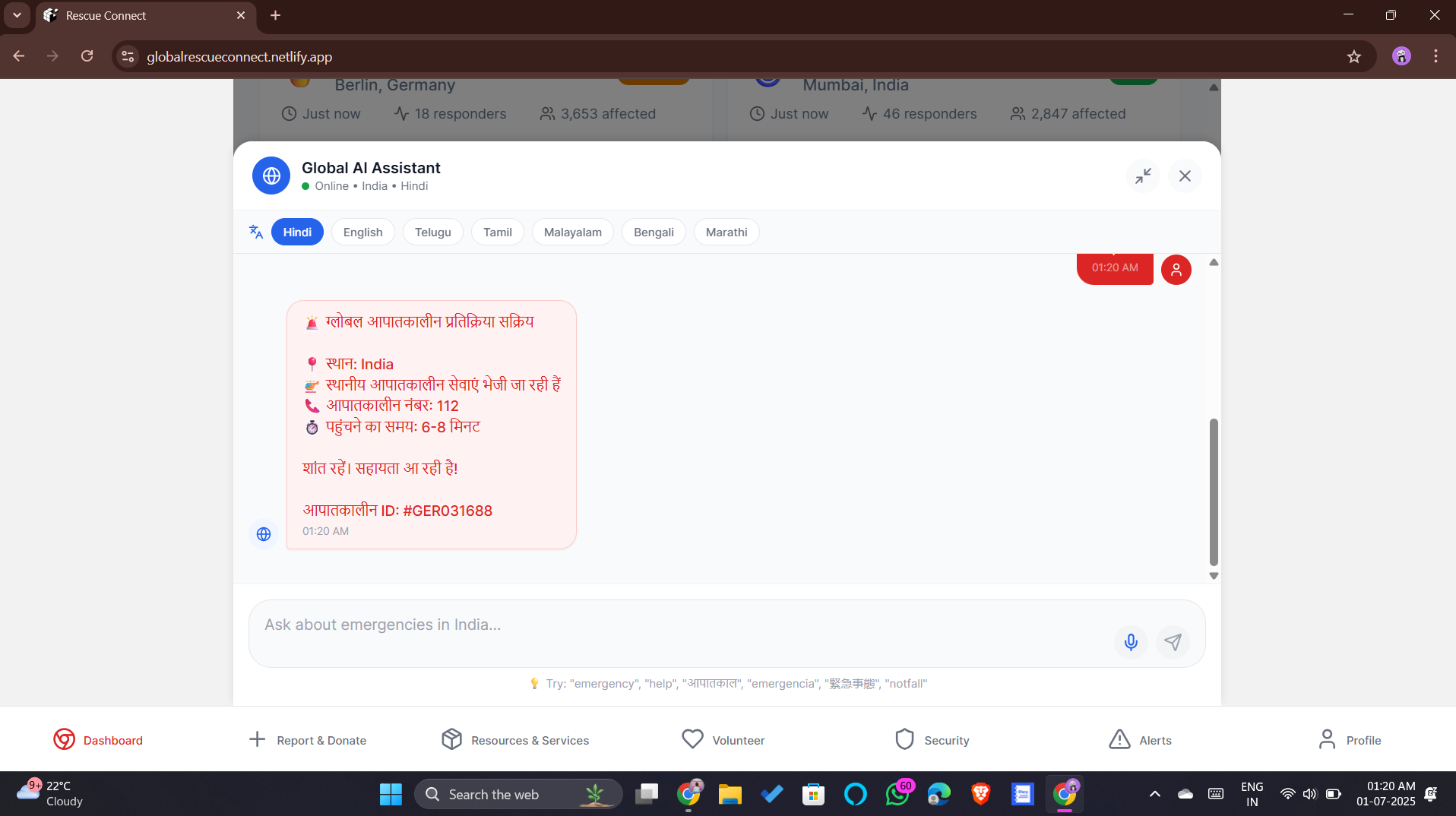
Multi-Language AI Assistant: Powered by ElevenLabs AI, it provides real-time voice-to-voice communication and translation in over 50 languages, ensuring seamless interaction with emergency services or contacts globally.
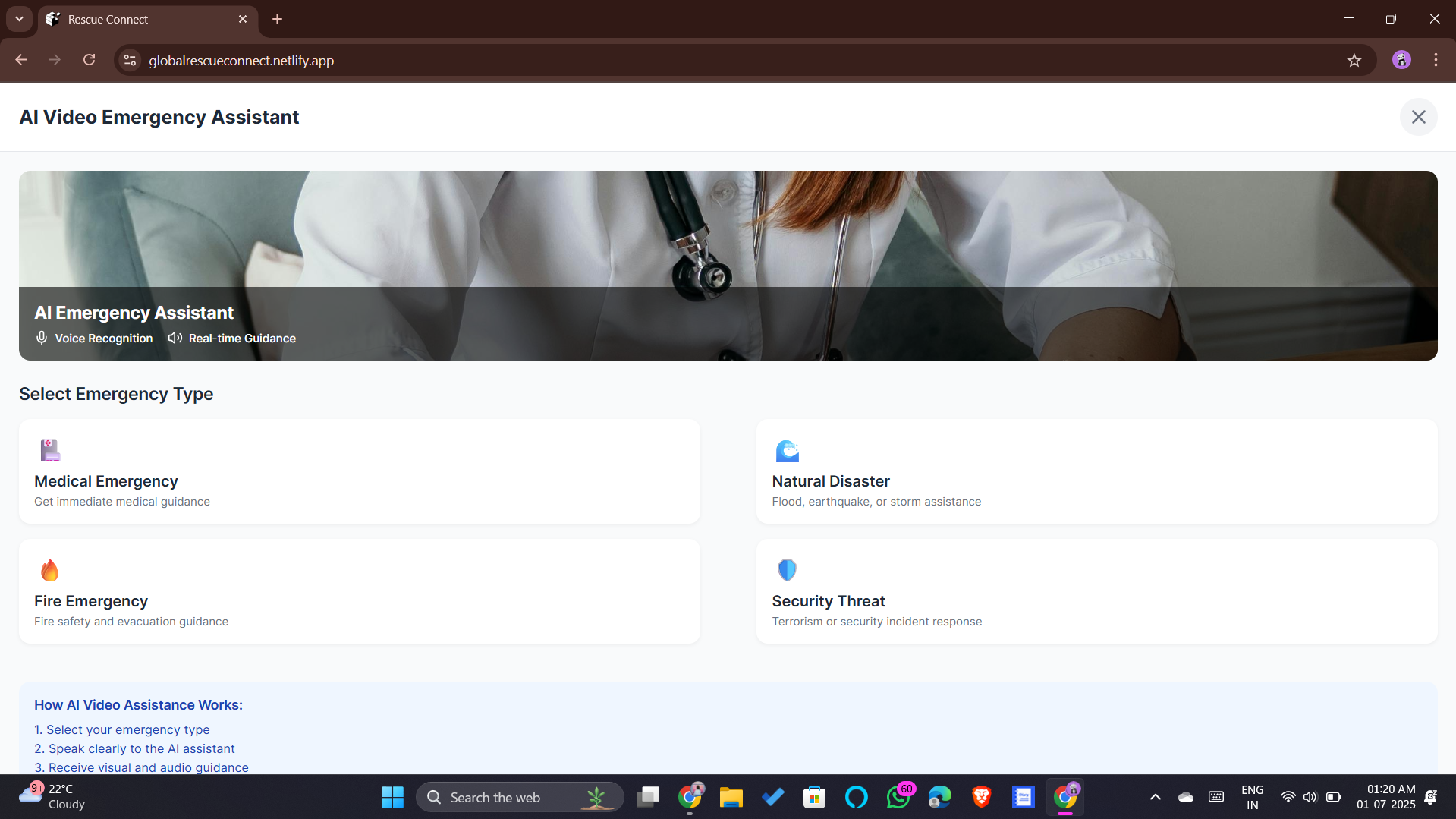
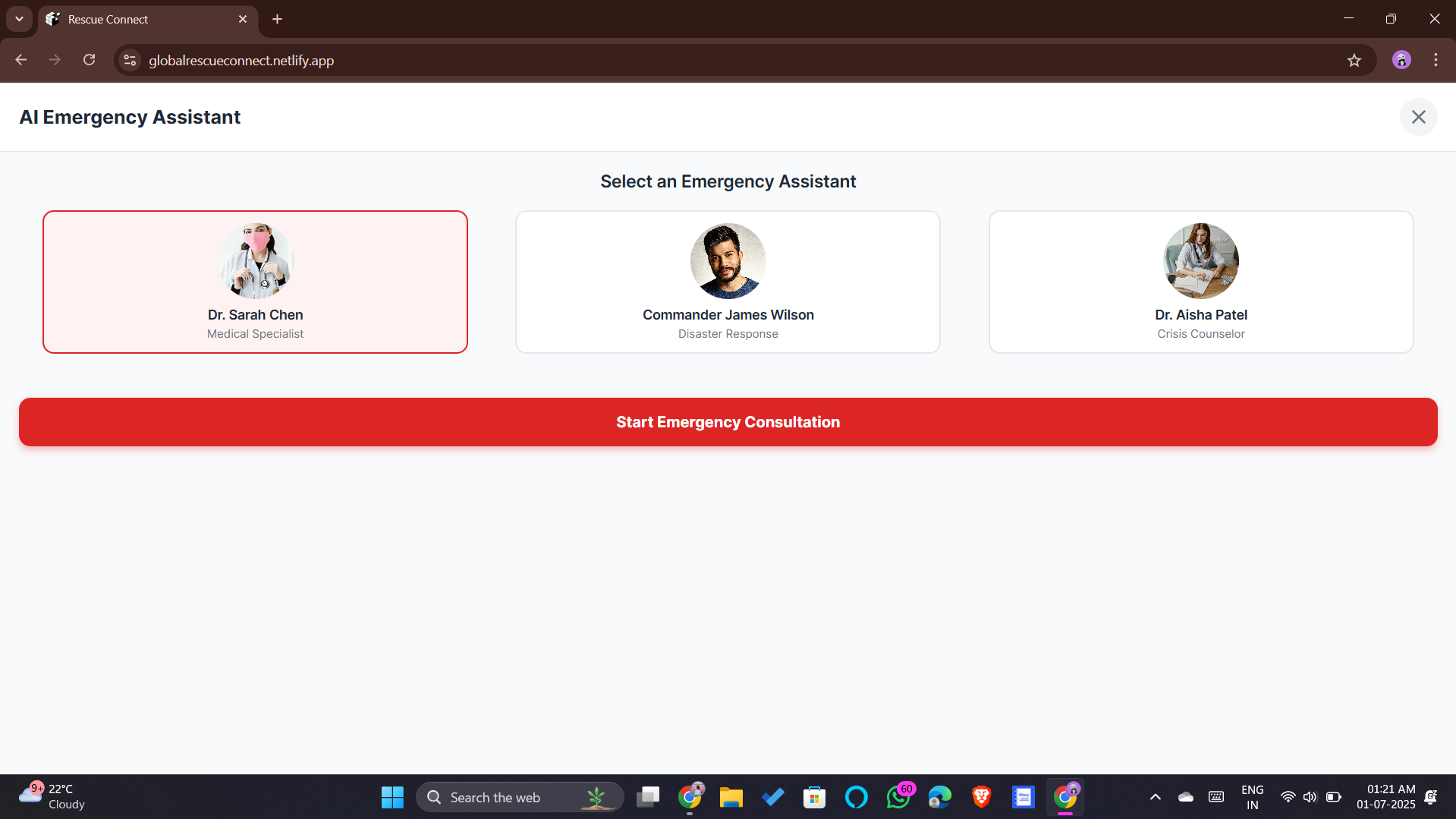
Intelligent Global Video Agents: Integrates Tavus AI to provide visual, interactive AI agents for more intuitive communication and support, especially in complex or sensitive situations.
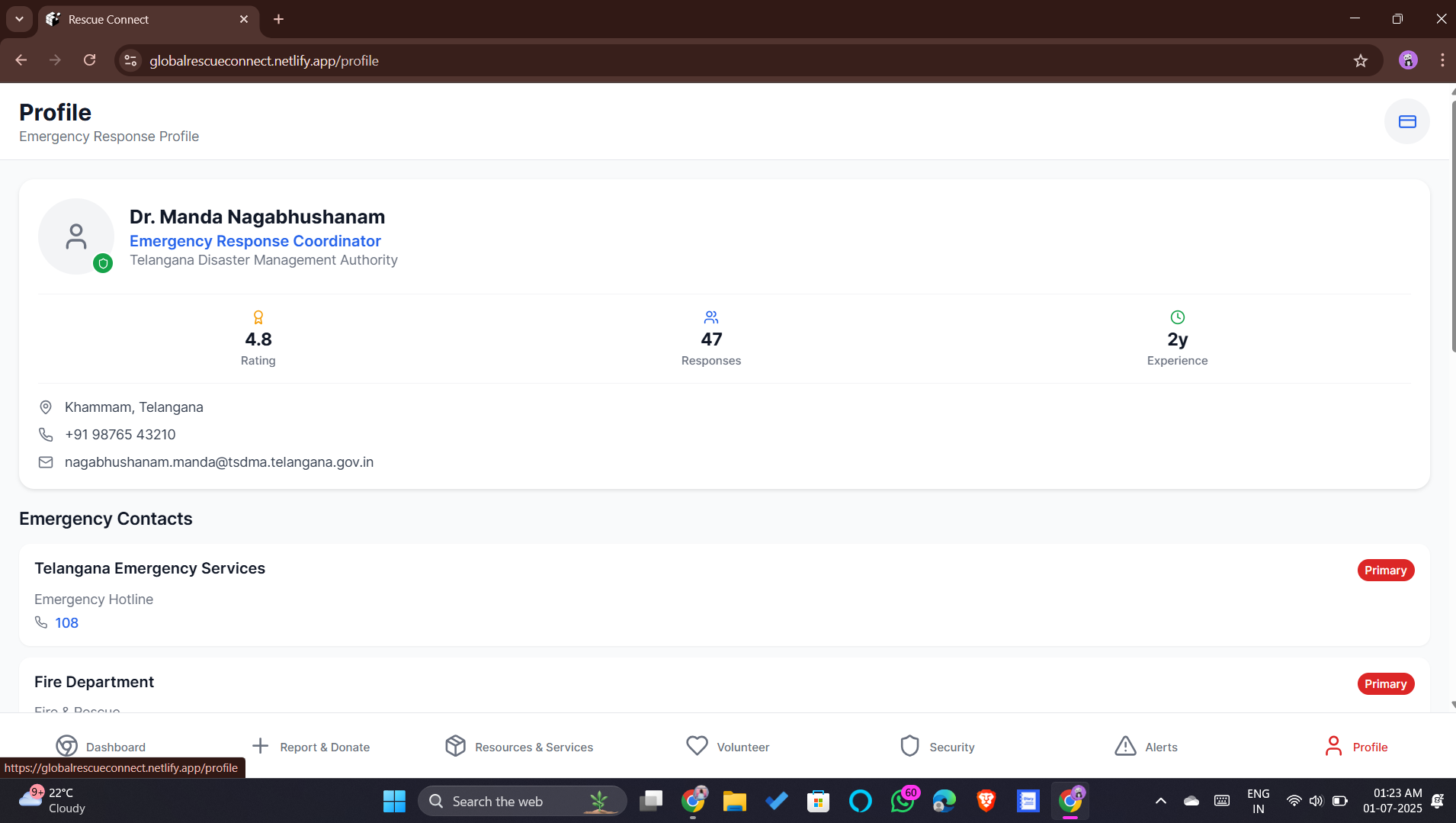
Secure Global Data & Scalability: Utilizes Supabase as a robust, real-time backend for user authentication, emergency profile management, and scalable data synchronization, engineered to support millions of users worldwide.
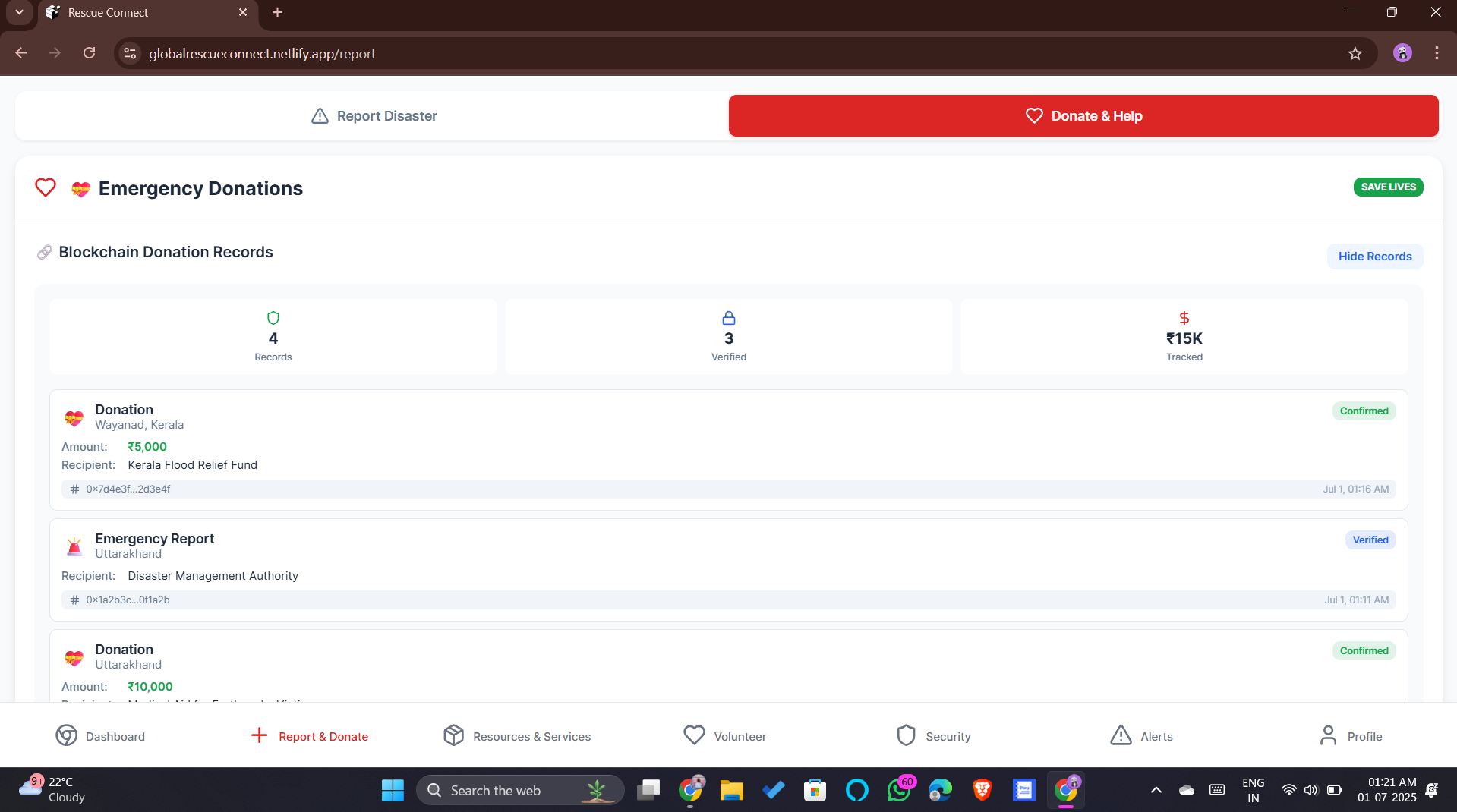
Blockchain-Verified Records: Implements Algorand blockchain to immutably record critical emergency event data, ensuring transparency, tamper-proof logs, and potential for secure identity or resource allocation in a trustless environment.
Worldwide Connectivity: Designed with offline capability and future satellite network integration, ensuring functionality even in remote or devastated areas.
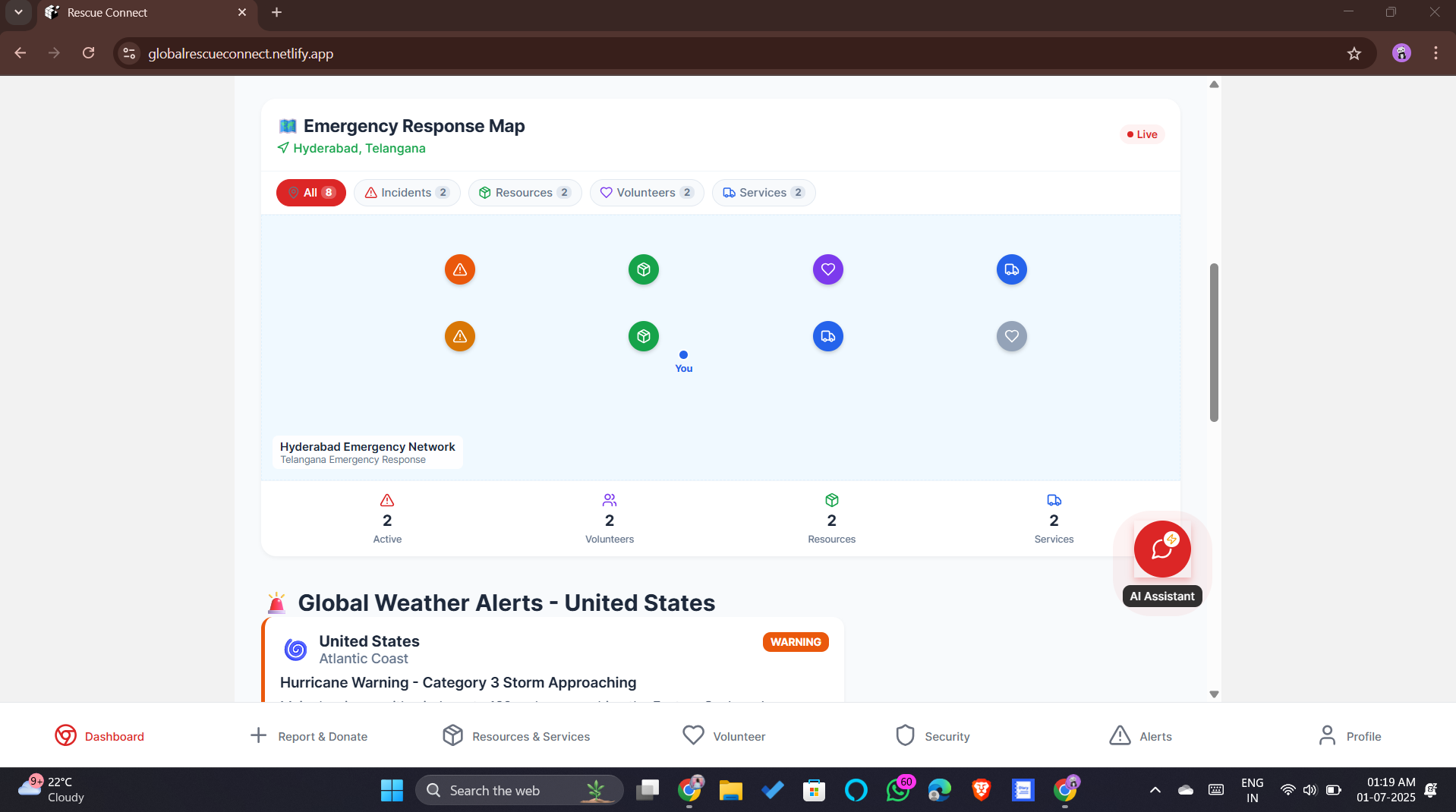
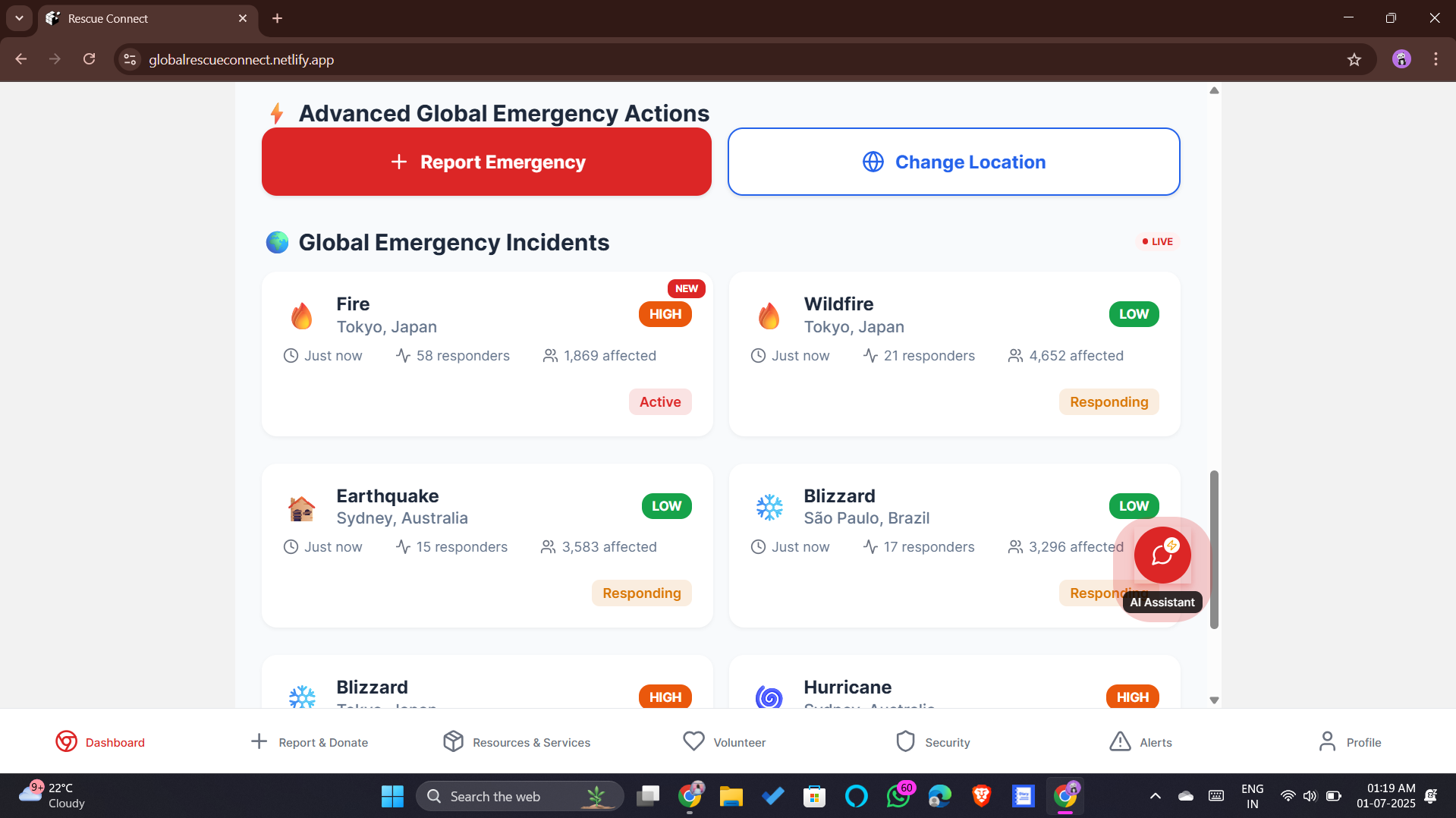
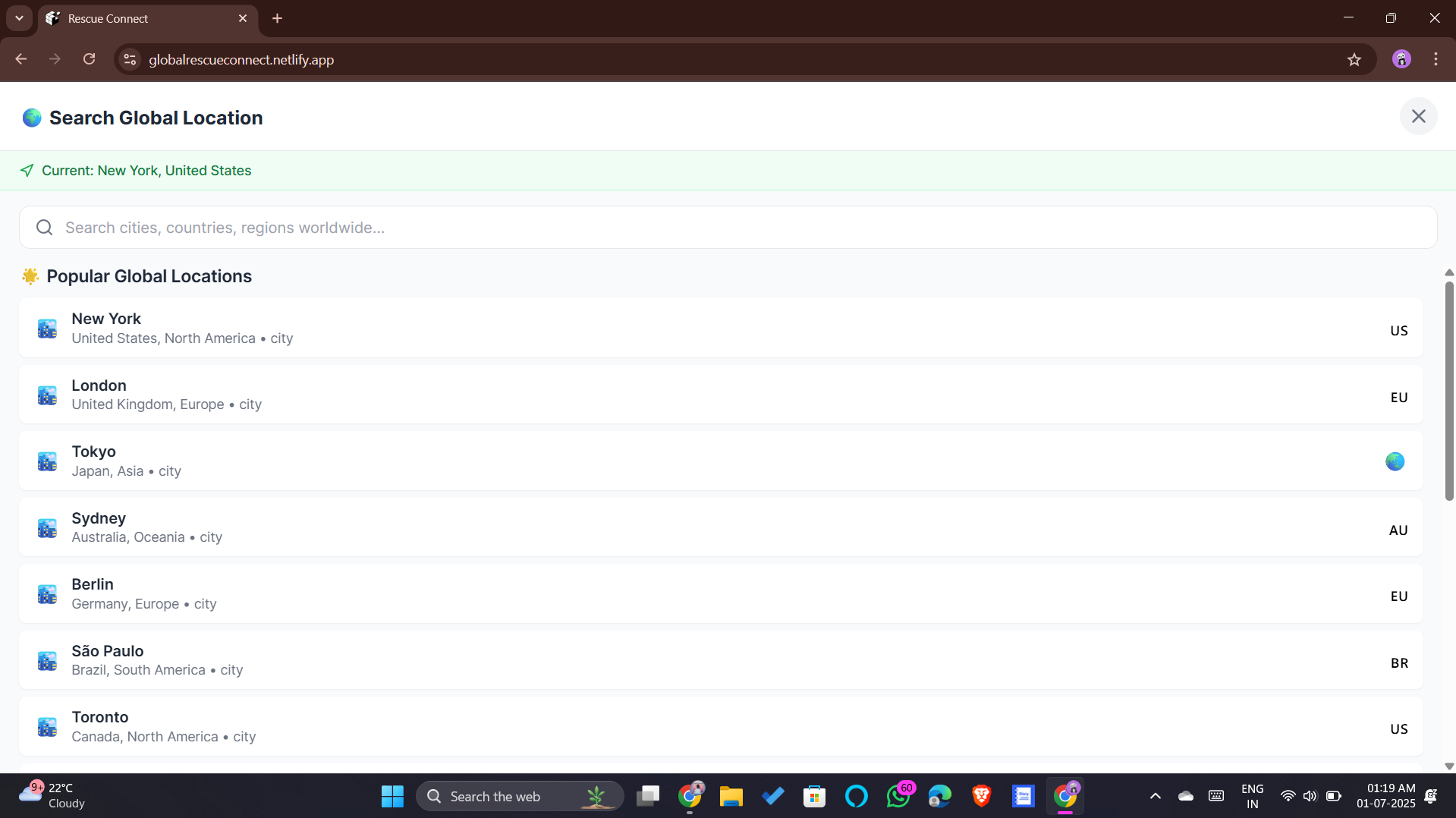
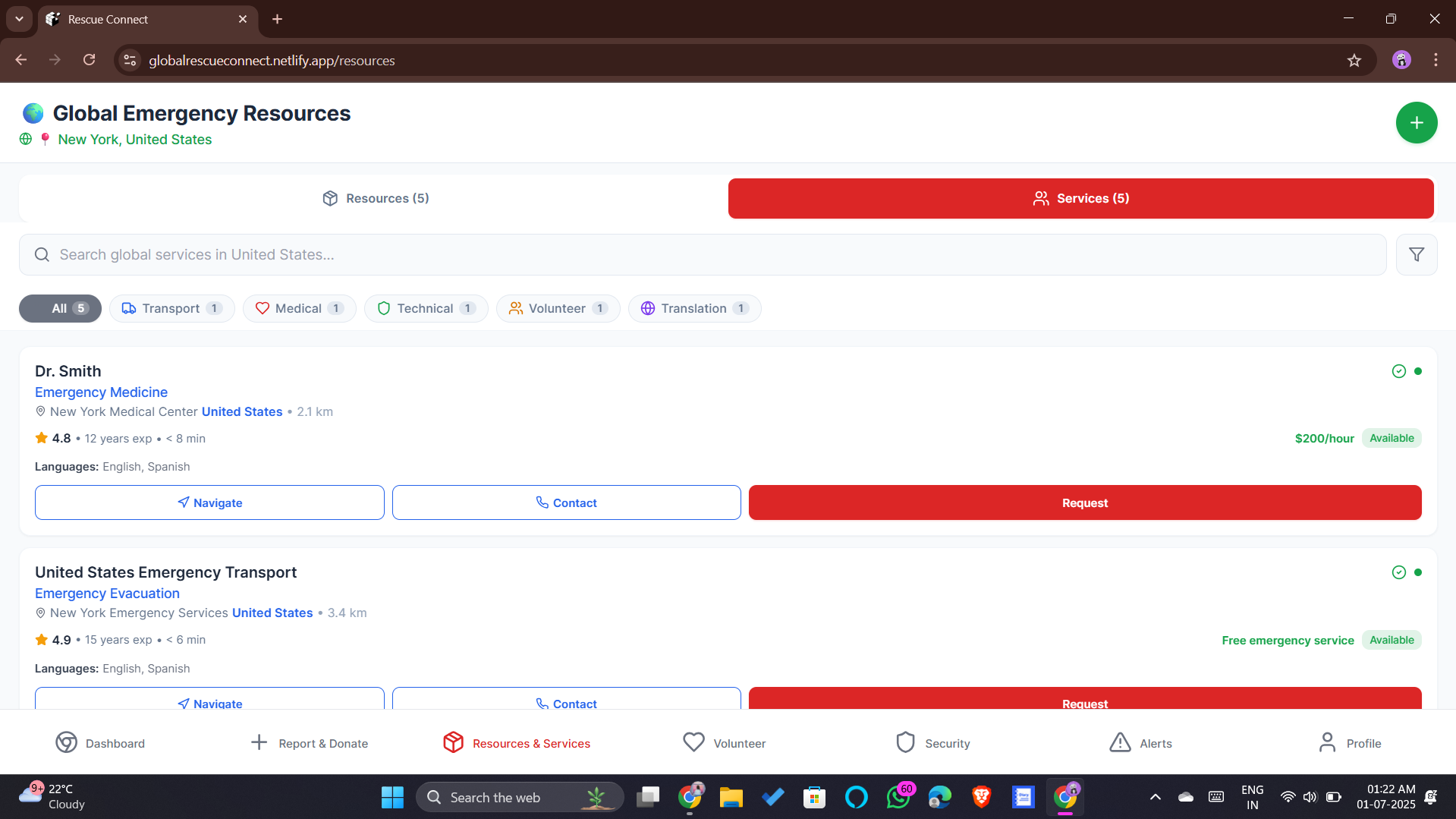
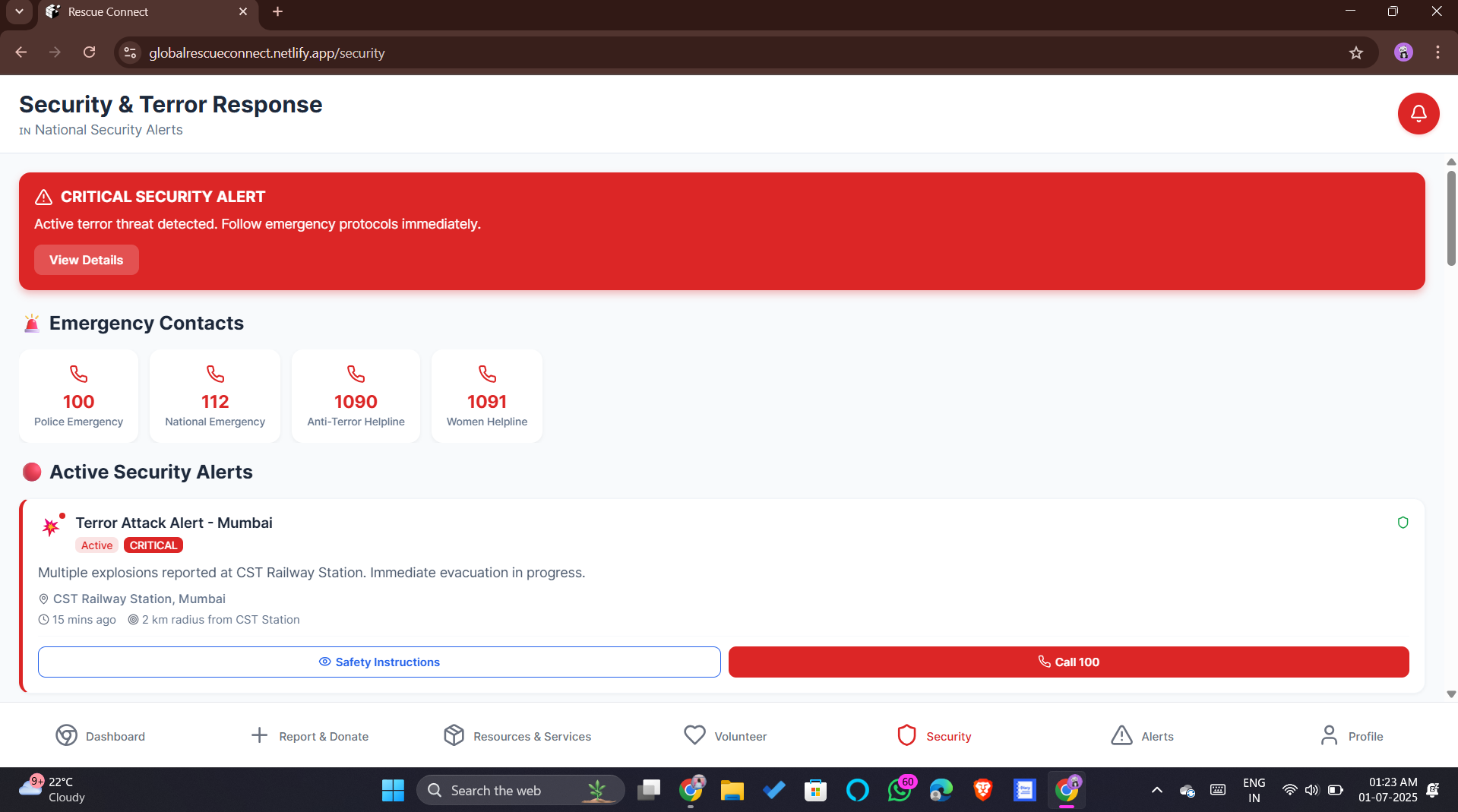
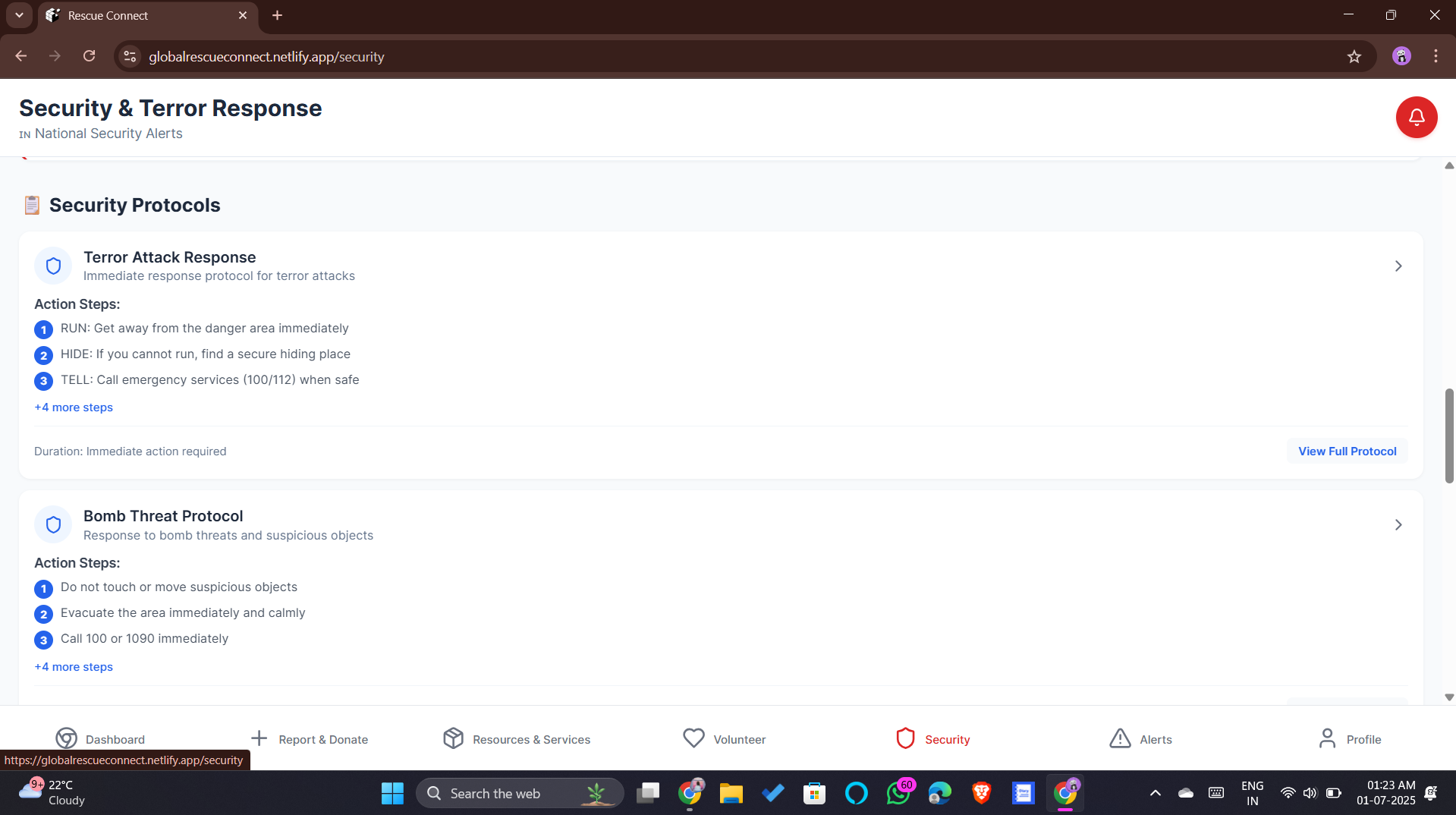
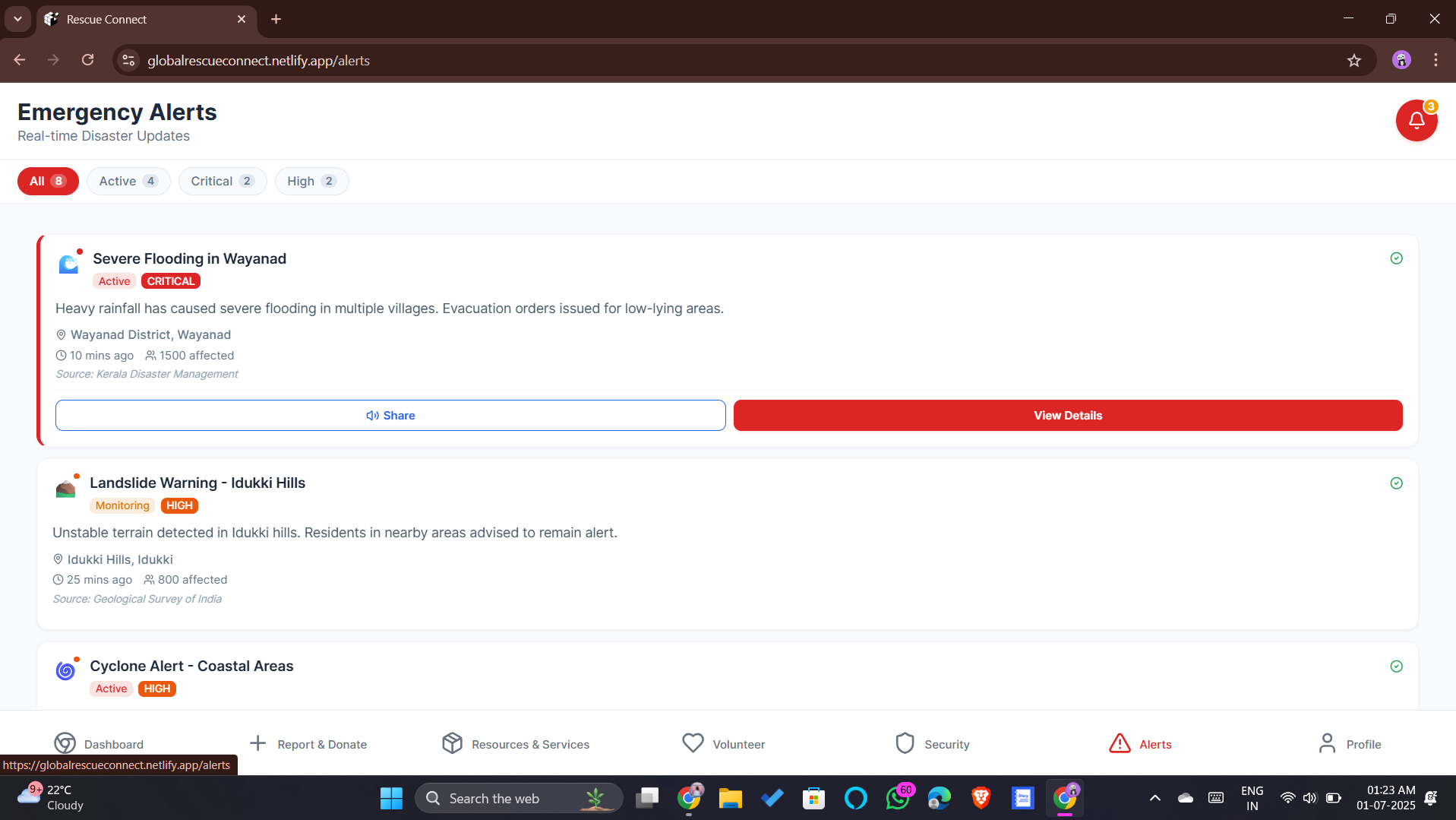
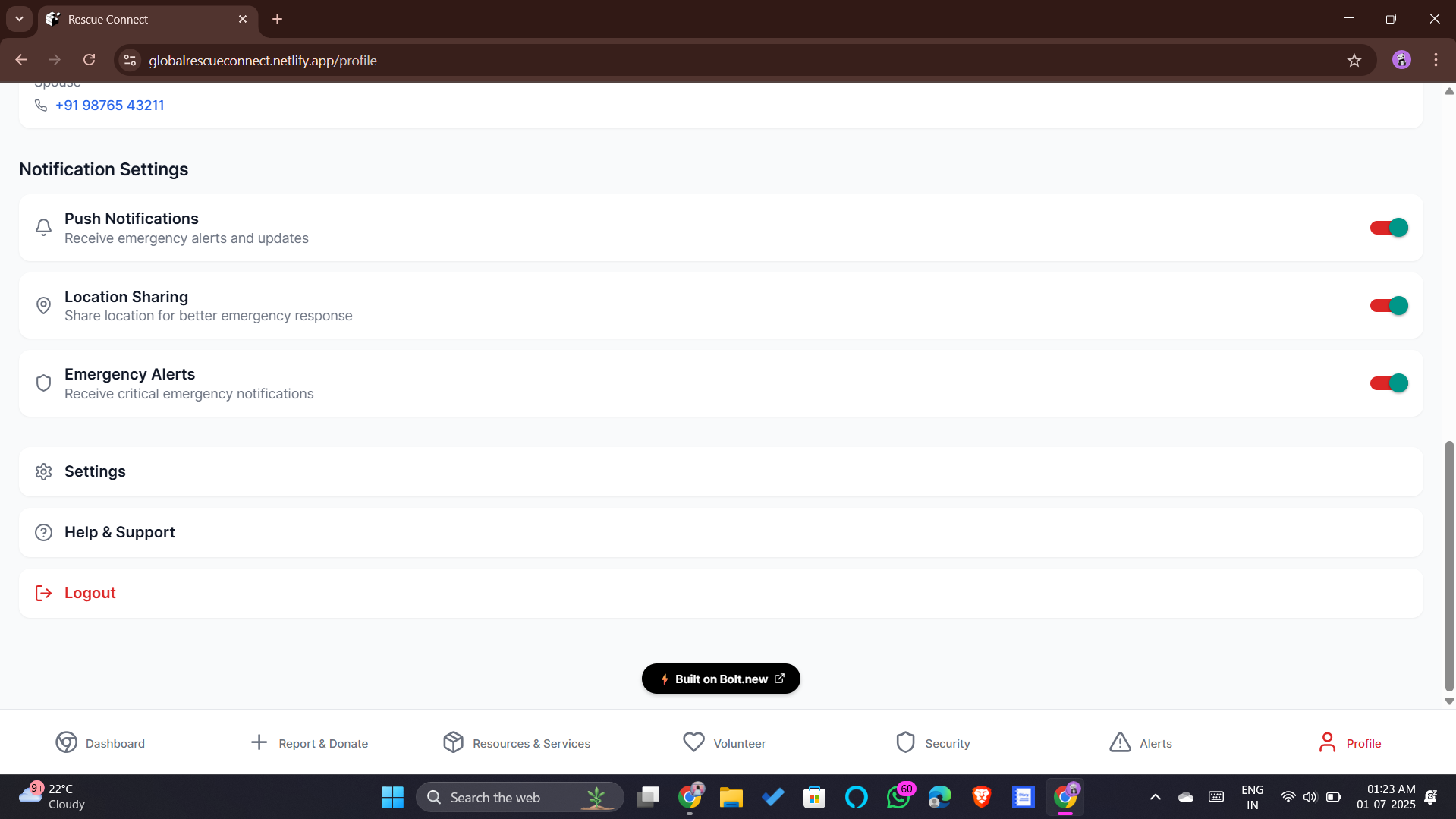
Comprehensive Coverage: Automatically detects local emergency numbers, adapts to cultural protocols, and provides live incident tracking, global resource mapping (hospitals, shelters), and international weather alerts for 195+ countries.
How we built it...
This is an incredibly detailed and ambitious project! The sheer scope of "Global Rescue Connect" with its worldwide coverage, AI, satellite, and blockchain integrations is very impressive.
Now, let's condense this rich content into the specific Devpost submission sections, focusing on impact, the "how," and the unique aspects that make it a hackathon winner.
Inspiration
In emergency and disaster situations, communication breakdown is a critical and often fatal problem, especially across diverse linguistic and geographical boundaries. Existing emergency systems are fragmented, limited by national borders, and lack real-time, multilingual capabilities. We were inspired by the urgent global need for a unified, intelligent, and universally accessible platform that can bridge these gaps, ensuring that no one is left unheard or unassisted during a crisis, no matter where they are on Earth or what language they speak.
What it does
Global Rescue Connect is a groundbreaking, AI-powered emergency response platform designed for worldwide deployment. It empowers individuals in distress to instantly connect with help, leveraging advanced technology to overcome language and connectivity barriers.
Key features include:
Multi-Language AI Assistant: Powered by ElevenLabs AI, it provides real-time voice-to-voice communication and translation in over 50 languages, ensuring seamless interaction with emergency services or contacts globally.
Intelligent Global Video Agents: Integrates Tavus AI to provide visual, interactive AI agents for more intuitive communication and support, especially in complex or sensitive situations.
Secure Global Data & Scalability: Utilizes Supabase as a robust, real-time backend for user authentication, emergency profile management, and scalable data synchronization, engineered to support millions of users worldwide.
Blockchain-Verified Records: Implements Algorand blockchain to immutably record critical emergency event data, ensuring transparency, tamper-proof logs, and potential for secure identity or resource allocation in a trustless environment.
Worldwide Connectivity: Designed with offline capability and future satellite network integration, ensuring functionality even in remote or devastated areas.
Comprehensive Coverage: Automatically detects local emergency numbers, adapts to cultural protocols, and provides live incident tracking, global resource mapping (hospitals, shelters), and international weather alerts for 195+ countries.
How we built it
We rapidly developed Global Rescue Connect on Bolt.new, leveraging its AI-assisted development capabilities and intuitive environment to accelerate our progress significantly within the hackathon timeframe.
Frontend: Built with React Native and Expo SDK 52, utilizing Expo Router for navigation, ensuring a single, maintainable codebase for iOS, Android, and Web platforms.
AI Integration:
ElevenLabs: Integrated for core multilingual voice synthesis and speech-to-text. We used their API to enable real-time translation for emergency reporting and communication.
Tavus AI: Connected via API to generate and deliver dynamic AI video responses, enhancing the interactive support experience.
Backend & Database: Supabase was chosen for its comprehensive suite of services, including PostgreSQL database, authentication, and real-time features. It serves as the scalable backbone for user data, emergency incident logging, and resource management.
Blockchain Layer: The Algorand JavaScript SDK was implemented to interact with the Algorand blockchain. This allows for secure, immutable recording of critical event timestamps, emergency contact verifications, or proofs of resource distribution, demonstrating a scalable, transparent ledger for global crises.
Global Services: Implemented real-time location detection and integrated country-specific data for emergency numbers and protocols, ensuring localized relevance on a global scale.
Development Workflow: Bolt.new's integrated development environment was instrumental, allowing for quick iterations and seamless integration of various APIs. We managed sensitive credentials via .env files and app.config.js for secure deployment.
Challenges we ran into...
Algorand Integration Complexity: Integrating the Algorand SDK to reliably interact with the blockchain for data recording within the short timeframe required rapid learning of blockchain concepts and ensuring transaction integrity for our emergency data.
Global Data Management: Sourcing and integrating country-specific emergency data (numbers, protocols) for 195+ countries, while ensuring the app remained performant and responsive, was a significant data management and architectural challenge.
Accomplishments that we're proud of...
This is an incredibly detailed and ambitious project! The sheer scope of "Global Rescue Connect" with its worldwide coverage, AI, satellite, and blockchain integrations is very impressive.
Now, let's condense this rich content into the specific Devpost submission sections, focusing on impact, the "how," and the unique aspects that make it a hackathon winner.
Inspiration
In emergency and disaster situations, communication breakdown is a critical and often fatal problem, especially across diverse linguistic and geographical boundaries. Existing emergency systems are fragmented, limited by national borders, and lack real-time, multilingual capabilities. We were inspired by the urgent global need for a unified, intelligent, and universally accessible platform that can bridge these gaps, ensuring that no one is left unheard or unassisted during a crisis, no matter where they are on Earth or what language they speak.
What it does
Global Rescue Connect is a groundbreaking, AI-powered emergency response platform designed for worldwide deployment. It empowers individuals in distress to instantly connect with help, leveraging advanced technology to overcome language and connectivity barriers.
Key features include:
Multi-Language AI Assistant: Powered by ElevenLabs AI, it provides real-time voice-to-voice communication and translation in over 50 languages, ensuring seamless interaction with emergency services or contacts globally.
Intelligent Global Video Agents: Integrates Tavus AI to provide visual, interactive AI agents for more intuitive communication and support, especially in complex or sensitive situations.
Secure Global Data & Scalability: Utilizes Supabase as a robust, real-time backend for user authentication, emergency profile management, and scalable data synchronization, engineered to support millions of users worldwide.
Blockchain-Verified Records: Implements Algorand blockchain to immutably record critical emergency event data, ensuring transparency, tamper-proof logs, and potential for secure identity or resource allocation in a trustless environment.
Worldwide Connectivity: Designed with offline capability and future satellite network integration, ensuring functionality even in remote or devastated areas.
Comprehensive Coverage: Automatically detects local emergency numbers, adapts to cultural protocols, and provides live incident tracking, global resource mapping (hospitals, shelters), and international weather alerts for 195+ countries.
How we built it
We rapidly developed Global Rescue Connect on Bolt.new, leveraging its AI-assisted development capabilities and intuitive environment to accelerate our progress significantly within the hackathon timeframe.
Frontend: Built with React Native and Expo SDK 52, utilizing Expo Router for navigation, ensuring a single, maintainable codebase for iOS, Android, and Web platforms.
AI Integration:
ElevenLabs: Integrated for core multilingual voice synthesis and speech-to-text. We used their API to enable real-time translation for emergency reporting and communication.
Tavus AI: Connected via API to generate and deliver dynamic AI video responses, enhancing the interactive support experience.
Backend & Database: Supabase was chosen for its comprehensive suite of services, including PostgreSQL database, authentication, and real-time features. It serves as the scalable backbone for user data, emergency incident logging, and resource management.
Blockchain Layer: The Algorand JavaScript SDK was implemented to interact with the Algorand blockchain. This allows for secure, immutable recording of critical event timestamps, emergency contact verifications, or proofs of resource distribution, demonstrating a scalable, transparent ledger for global crises.
Global Services: Implemented real-time location detection and integrated country-specific data for emergency numbers and protocols, ensuring localized relevance on a global scale.
Development Workflow: Bolt.new's integrated development environment was instrumental, allowing for quick iterations and seamless integration of various APIs. We managed sensitive credentials via .env files and app.config.js for secure deployment.
Challenges we ran into
Integrating multiple advanced AI APIs and a blockchain layer within the tight hackathon deadline presented unique challenges.
API Interoperability & Mock Data: Initially, configuring Bolt.new to handle direct, authenticated API calls to ElevenLabs and Tavus AI was a hurdle, as the environment sometimes intercepted external requests. Overcoming this required deep diving into configuration settings to ensure real-time data flow without interference from development mock data.
Real-time Multilingual Flow: Orchestrating the seamless, real-time voice translation and video AI responses from distinct services (ElevenLabs for voice, Tavus for video) while maintaining a fluid user experience required intricate state management and error handling across the React Native frontend.
Algorand Integration Complexity: Integrating the Algorand SDK to reliably interact with the blockchain for data recording within the short timeframe required rapid learning of blockchain concepts and ensuring transaction integrity for our emergency data.
Global Data Management: Sourcing and integrating country-specific emergency data (numbers, protocols) for 195+ countries, while ensuring the app remained performant and responsive, was a significant data management and architectural challenge.
Accomplishments that we're proud of
We are immensely proud to have successfully built a truly global, AI-powered emergency response platform that integrates four cutting-edge technologies (ElevenLabs, Tavus AI, Supabase, and Algorand) into a functional and impactful prototype within just a few days. Our proudest achievements include:
Real-time Multilingual Communication: Implementing a seamless AI assistant that can translate and communicate emergency reports across 50+ languages, a critical feature for global response.
Scalable & Verifiable Backend: Establishing a robust Supabase backend capable of handling a global user base and integrating Algorand for immutable, transparent emergency data records.
Comprehensive Global Scope: Successfully designing a system with worldwide coverage, including dynamic emergency number detection and culturally adapted protocols, a massive undertaking for a hackathon.
Bolt.new Mastery: Rapidly leveraging Bolt.new's capabilities to build such a complex, feature-rich application, demonstrating the platform's power for ambitious projects.
What we learned...
This is an incredibly detailed and ambitious project! The sheer scope of "Global Rescue Connect" with its worldwide coverage, AI, satellite, and blockchain integrations is very impressive.
Now, let's condense this rich content into the specific Devpost submission sections, focusing on impact, the "how," and the unique aspects that make it a hackathon winner.
Inspiration
In emergency and disaster situations, communication breakdown is a critical and often fatal problem, especially across diverse linguistic and geographical boundaries. Existing emergency systems are fragmented, limited by national borders, and lack real-time, multilingual capabilities. We were inspired by the urgent global need for a unified, intelligent, and universally accessible platform that can bridge these gaps, ensuring that no one is left unheard or unassisted during a crisis, no matter where they are on Earth or what language they speak.
What it does
Global Rescue Connect is a groundbreaking, AI-powered emergency response platform designed for worldwide deployment. It empowers individuals in distress to instantly connect with help, leveraging advanced technology to overcome language and connectivity barriers.
Key features include:
Multi-Language AI Assistant: Powered by ElevenLabs AI, it provides real-time voice-to-voice communication and translation in over 50 languages, ensuring seamless interaction with emergency services or contacts globally.
Intelligent Global Video Agents: Integrates Tavus AI to provide visual, interactive AI agents for more intuitive communication and support, especially in complex or sensitive situations.
Secure Global Data & Scalability: Utilizes Supabase as a robust, real-time backend for user authentication, emergency profile management, and scalable data synchronization, engineered to support millions of users worldwide.
Blockchain-Verified Records: Implements Algorand blockchain to immutably record critical emergency event data, ensuring transparency, tamper-proof logs, and potential for secure identity or resource allocation in a trustless environment.
Worldwide Connectivity: Designed with offline capability and future satellite network integration, ensuring functionality even in remote or devastated areas.
Comprehensive Coverage: Automatically detects local emergency numbers, adapts to cultural protocols, and provides live incident tracking, global resource mapping (hospitals, shelters), and international weather alerts for 195+ countries.
How we built it
We rapidly developed Global Rescue Connect on Bolt.new, leveraging its AI-assisted development capabilities and intuitive environment to accelerate our progress significantly within the hackathon timeframe.
Frontend: Built with React Native and Expo SDK 52, utilizing Expo Router for navigation, ensuring a single, maintainable codebase for iOS, Android, and Web platforms.
AI Integration:
ElevenLabs: Integrated for core multilingual voice synthesis and speech-to-text. We used their API to enable real-time translation for emergency reporting and communication.
Tavus AI: Connected via API to generate and deliver dynamic AI video responses, enhancing the interactive support experience.
Backend & Database: Supabase was chosen for its comprehensive suite of services, including PostgreSQL database, authentication, and real-time features. It serves as the scalable backbone for user data, emergency incident logging, and resource management.
Blockchain Layer: The Algorand JavaScript SDK was implemented to interact with the Algorand blockchain. This allows for secure, immutable recording of critical event timestamps, emergency contact verifications, or proofs of resource distribution, demonstrating a scalable, transparent ledger for global crises.
Global Services: Implemented real-time location detection and integrated country-specific data for emergency numbers and protocols, ensuring localized relevance on a global scale.
Development Workflow: Bolt.new's integrated development environment was instrumental, allowing for quick iterations and seamless integration of various APIs. We managed sensitive credentials via .env files and app.config.js for secure deployment.
Challenges we ran into
Integrating multiple advanced AI APIs and a blockchain layer within the tight hackathon deadline presented unique challenges.
API Interoperability & Mock Data: Initially, configuring Bolt.new to handle direct, authenticated API calls to ElevenLabs and Tavus AI was a hurdle, as the environment sometimes intercepted external requests. Overcoming this required deep diving into configuration settings to ensure real-time data flow without interference from development mock data.
Real-time Multilingual Flow: Orchestrating the seamless, real-time voice translation and video AI responses from distinct services (ElevenLabs for voice, Tavus for video) while maintaining a fluid user experience required intricate state management and error handling across the React Native frontend.
Algorand Integration Complexity: Integrating the Algorand SDK to reliably interact with the blockchain for data recording within the short timeframe required rapid learning of blockchain concepts and ensuring transaction integrity for our emergency data.
Global Data Management: Sourcing and integrating country-specific emergency data (numbers, protocols) for 195+ countries, while ensuring the app remained performant and responsive, was a significant data management and architectural challenge.
Accomplishments that we're proud of
We are immensely proud to have successfully built a truly global, AI-powered emergency response platform that integrates four cutting-edge technologies (ElevenLabs, Tavus AI, Supabase, and Algorand) into a functional and impactful prototype within just a few days. Our proudest achievements include:
Real-time Multilingual Communication: Implementing a seamless AI assistant that can translate and communicate emergency reports across 50+ languages, a critical feature for global response.
Scalable & Verifiable Backend: Establishing a robust Supabase backend capable of handling a global user base and integrating Algorand for immutable, transparent emergency data records.
Comprehensive Global Scope: Successfully designing a system with worldwide coverage, including dynamic emergency number detection and culturally adapted protocols, a massive undertaking for a hackathon.
Bolt.new Mastery: Rapidly leveraging Bolt.new's capabilities to build such a complex, feature-rich application, demonstrating the platform's power for ambitious projects.
What we learned
This hackathon was an intense learning experience that significantly expanded our knowledge in several domains:
Advanced AI Integration: We gained hands-on experience integrating and orchestrating multiple sophisticated AI APIs (ElevenLabs for voice, Tavus for video) to create a cohesive, intelligent conversational experience.
Blockchain for Social Impact: We learned the practical application of Algorand blockchain for creating verifiable, transparent, and immutable records in sensitive contexts like emergency response.
Scalable Backend Development: Deepened our understanding of building highly scalable, real-time backends with Supabase that can support a global user base.
Rapid Prototyping with Bolt.new: We honed our skills in utilizing AI-powered development environments like Bolt.new to rapidly iterate, integrate complex services, and bring ambitious ideas to life under extreme time constraints.
Global Systems Design: Gained insights into the complexities of designing applications for a truly global audience, considering linguistic diversity, regional emergency protocols, and connectivity challenges.
What's next for Rescue connect- Worldwide Emergency Response Platform...
This is an incredibly detailed and ambitious project! The sheer scope of "Global Rescue Connect" with its worldwide coverage, AI, satellite, and blockchain integrations is very impressive.
Now, let's condense this rich content into the specific Devpost submission sections, focusing on impact, the "how," and the unique aspects that make it a hackathon winner.
Inspiration
In emergency and disaster situations, communication breakdown is a critical and often fatal problem, especially across diverse linguistic and geographical boundaries. Existing emergency systems are fragmented, limited by national borders, and lack real-time, multilingual capabilities. We were inspired by the urgent global need for a unified, intelligent, and universally accessible platform that can bridge these gaps, ensuring that no one is left unheard or unassisted during a crisis, no matter where they are on Earth or what language they speak.
What it does
Global Rescue Connect is a groundbreaking, AI-powered emergency response platform designed for worldwide deployment. It empowers individuals in distress to instantly connect with help, leveraging advanced technology to overcome language and connectivity barriers.
Key features include:
Multi-Language AI Assistant: Powered by ElevenLabs AI, it provides real-time voice-to-voice communication and translation in over 50 languages, ensuring seamless interaction with emergency services or contacts globally.
Intelligent Global Video Agents: Integrates Tavus AI to provide visual, interactive AI agents for more intuitive communication and support, especially in complex or sensitive situations.
Secure Global Data & Scalability: Utilizes Supabase as a robust, real-time backend for user authentication, emergency profile management, and scalable data synchronization, engineered to support millions of users worldwide.
Blockchain-Verified Records: Implements Algorand blockchain to immutably record critical emergency event data, ensuring transparency, tamper-proof logs, and potential for secure identity or resource allocation in a trustless environment.
Worldwide Connectivity: Designed with offline capability and future satellite network integration, ensuring functionality even in remote or devastated areas.
Comprehensive Coverage: Automatically detects local emergency numbers, adapts to cultural protocols, and provides live incident tracking, global resource mapping (hospitals, shelters), and international weather alerts for 195+ countries.
How we built it
We rapidly developed Global Rescue Connect on Bolt.new, leveraging its AI-assisted development capabilities and intuitive environment to accelerate our progress significantly within the hackathon timeframe.
Frontend: Built with React Native and Expo SDK 52, utilizing Expo Router for navigation, ensuring a single, maintainable codebase for iOS, Android, and Web platforms.
AI Integration:
ElevenLabs: Integrated for core multilingual voice synthesis and speech-to-text. We used their API to enable real-time translation for emergency reporting and communication.
Tavus AI: Connected via API to generate and deliver dynamic AI video responses, enhancing the interactive support experience.
Backend & Database: Supabase was chosen for its comprehensive suite of services, including PostgreSQL database, authentication, and real-time features. It serves as the scalable backbone for user data, emergency incident logging, and resource management.
Blockchain Layer: The Algorand JavaScript SDK was implemented to interact with the Algorand blockchain. This allows for secure, immutable recording of critical event timestamps, emergency contact verifications, or proofs of resource distribution, demonstrating a scalable, transparent ledger for global crises.
Global Services: Implemented real-time location detection and integrated country-specific data for emergency numbers and protocols, ensuring localized relevance on a global scale.
Development Workflow: Bolt.new's integrated development environment was instrumental, allowing for quick iterations and seamless integration of various APIs. We managed sensitive credentials via .env files and app.config.js for secure deployment.
Challenges we ran into
Integrating multiple advanced AI APIs and a blockchain layer within the tight hackathon deadline presented unique challenges.
API Interoperability & Mock Data: Initially, configuring Bolt.new to handle direct, authenticated API calls to ElevenLabs and Tavus AI was a hurdle, as the environment sometimes intercepted external requests. Overcoming this required deep diving into configuration settings to ensure real-time data flow without interference from development mock data.
Real-time Multilingual Flow: Orchestrating the seamless, real-time voice translation and video AI responses from distinct services (ElevenLabs for voice, Tavus for video) while maintaining a fluid user experience required intricate state management and error handling across the React Native frontend.
Algorand Integration Complexity: Integrating the Algorand SDK to reliably interact with the blockchain for data recording within the short timeframe required rapid learning of blockchain concepts and ensuring transaction integrity for our emergency data.
Global Data Management: Sourcing and integrating country-specific emergency data (numbers, protocols) for 195+ countries, while ensuring the app remained performant and responsive, was a significant data management and architectural challenge.
Accomplishments that we're proud of
We are immensely proud to have successfully built a truly global, AI-powered emergency response platform that integrates four cutting-edge technologies (ElevenLabs, Tavus AI, Supabase, and Algorand) into a functional and impactful prototype within just a few days. Our proudest achievements include:
Real-time Multilingual Communication: Implementing a seamless AI assistant that can translate and communicate emergency reports across 50+ languages, a critical feature for global response.
Scalable & Verifiable Backend: Establishing a robust Supabase backend capable of handling a global user base and integrating Algorand for immutable, transparent emergency data records.
Comprehensive Global Scope: Successfully designing a system with worldwide coverage, including dynamic emergency number detection and culturally adapted protocols, a massive undertaking for a hackathon.
Bolt.new Mastery: Rapidly leveraging Bolt.new's capabilities to build such a complex, feature-rich application, demonstrating the platform's power for ambitious projects.
***## What we learned This hackathon was an intense learning experience that significantly expanded our knowledge in several domains:
Advanced AI Integration: We gained hands-on experience integrating and orchestrating multiple sophisticated AI APIs (ElevenLabs for voice, Tavus for video) to create a cohesive, intelligent conversational experience.
Blockchain for Social Impact: We learned the practical application of Algorand blockchain for creating verifiable, transparent, and immutable records in sensitive contexts like emergency response.
Scalable Backend Development: Deepened our understanding of building highly scalable, real-time backends with Supabase that can support a global user base.
Rapid Prototyping with Bolt.new: We honed our skills in utilizing AI-powered development environments like Bolt.new to rapidly iterate, integrate complex services, and bring ambitious ideas to life under extreme time constraints.
Global Systems Design: Gained insights into the complexities of designing applications for a truly global audience, considering linguistic diversity, regional emergency protocols, and connectivity challenges.
***## What's next for Rescue Connect - Worldwide Emergency Response Platform... Our vision for Global Rescue Connect extends far beyond this hackathon. Our roadmap focuses on transforming this prototype into a life-saving universal tool:
Phase 1 (Post-Hackathon):
Direct API Integration with Global Emergency Services: Establishing live, direct connections with national and international emergency dispatch systems.
Advanced AI Capabilities: Expanding language and dialect support to 100+ languages, and incorporating AI-driven sentiment analysis for call prioritization.
Enhanced Offline Functionality: Implementing global offline map downloads and leveraging emerging satellite communication SDKs for critical features in no-connectivity zones.
Phase 2 (Global Scale-Up):
AI-Powered Disaster Prediction: Developing sophisticated machine learning models for early worldwide disaster forecasting using IoT sensor integration.
Blockchain-Based Resource Allocation: Implementing transparent, verifiable systems for managing international aid and volunteer coordination on Algorand.
Beta Deployment: Launching pilot programs in specific high-risk regions to gather real-world feedback.
Phase 3 (Global Enterprise & Universal Network):
Smart City Integration: Integrating with urban infrastructure for predictive emergency management.
International Partnerships: Collaborating with NGOs, governments, and private sectors to establish a truly universal disaster response network.
Decentralized Identity: Exploring Algorand for self-sovereign identities for users in crisis, ensuring secure access to aid.
We believe Global Rescue Connect has the potential to fundamentally change how the world responds to emergencies, saving countless lives and fostering global resilience.
Built With
- bolt.new
- expo.io
- javascript
- native
- react
- sdk
- supabase
- typescript

Log in or sign up for Devpost to join the conversation.