-
-
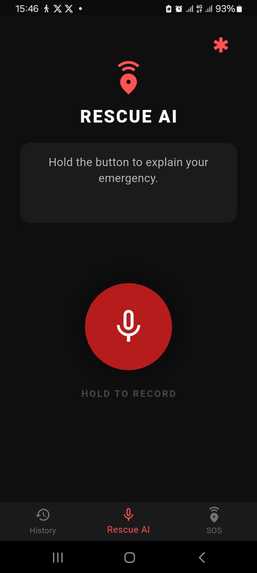
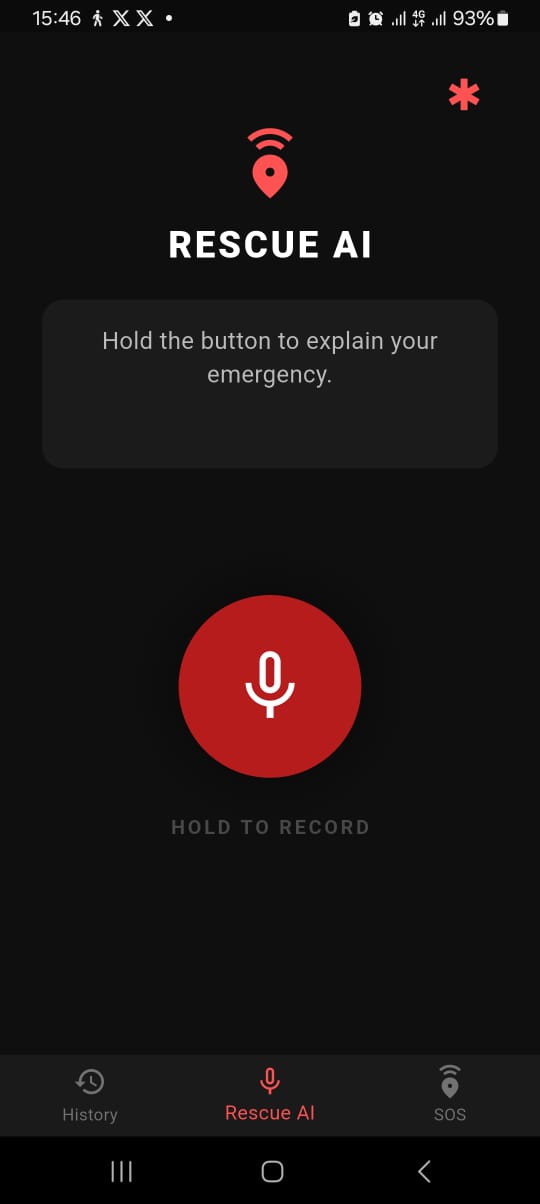
Home_Screen
-
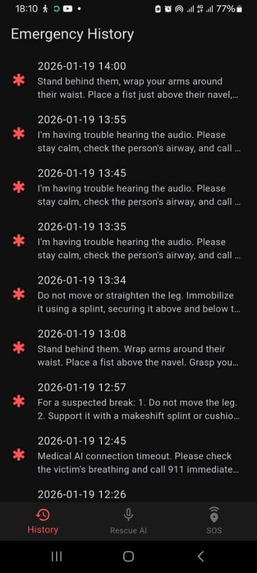
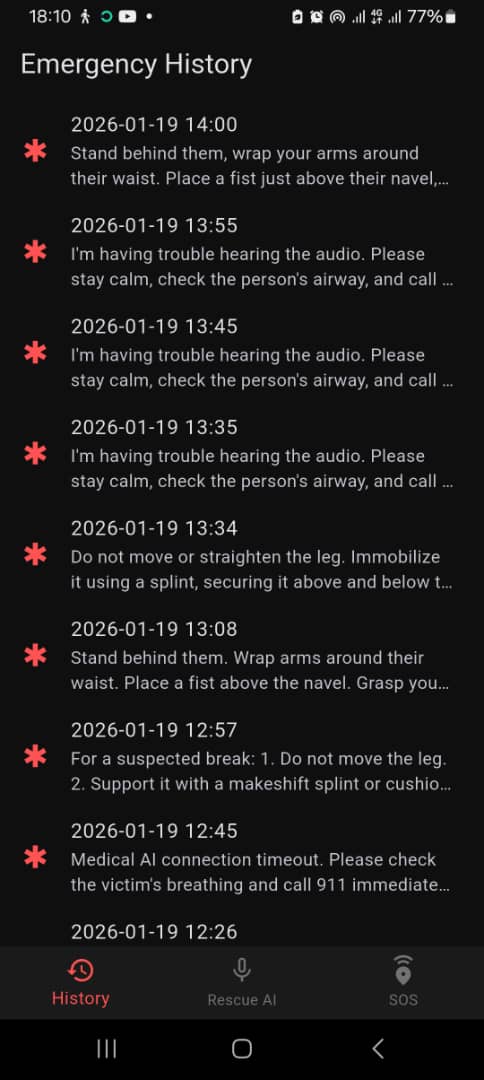
History Tab
-
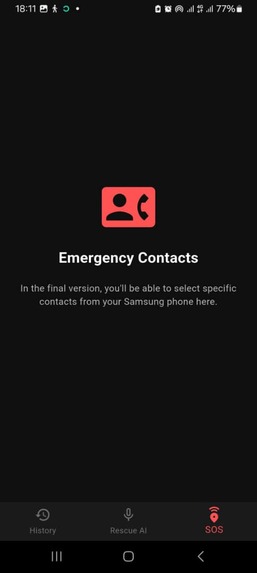
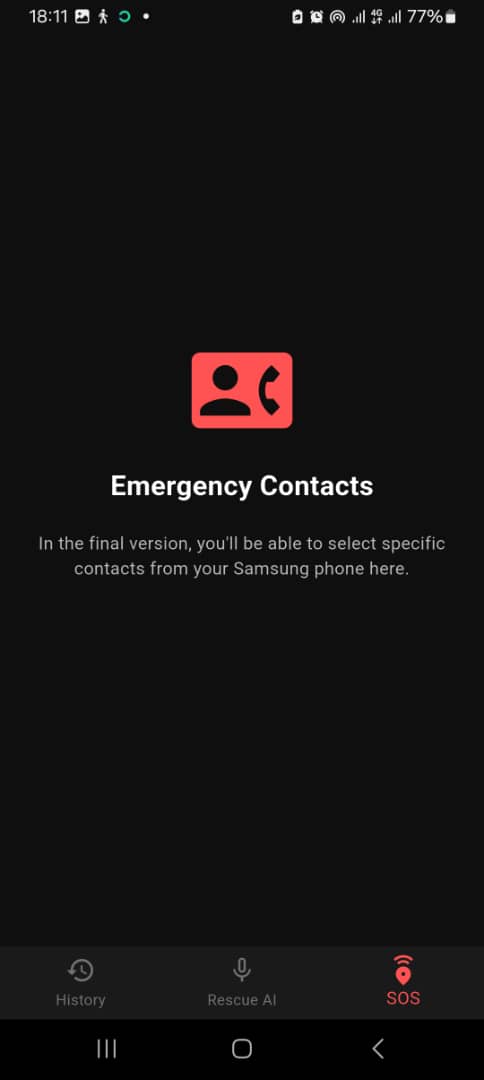
Emergency Contact Screen
-
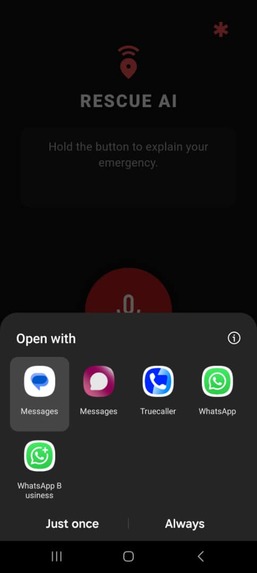
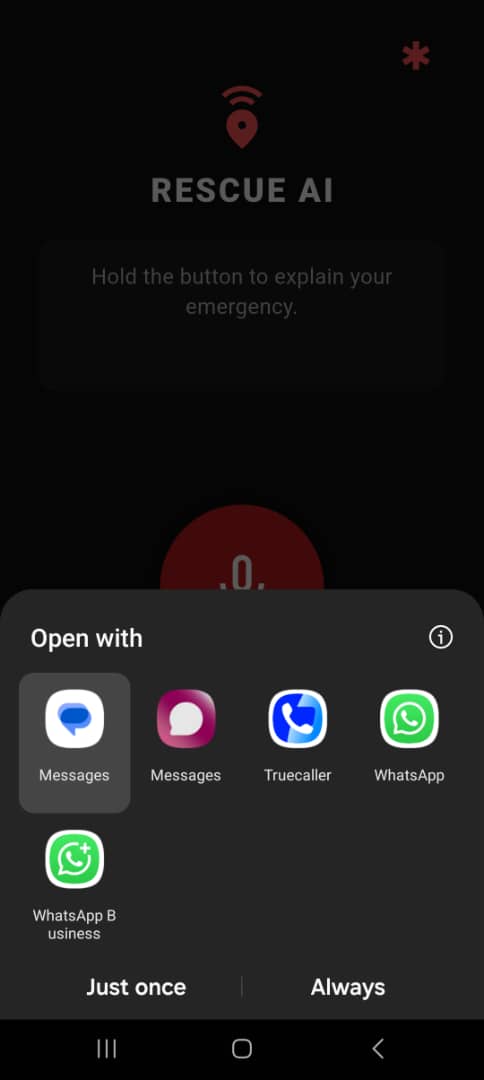
SOS Tab
Inspiration
The idea for Rescue Assistant came from a simple but uncomfortable realization: in an emergency, most apps expect you to think clearly, type accurately, and navigate menus, exactly when you’re least able to do so. We were inspired by real-life situations where people needed help immediately but were overwhelmed, panicked, or physically unable to interact with their phones in conventional ways. We wanted to build something that reduces that friction to the bare minimum: press, speak, and get help.
What it does
Rescue Assistant is a high-performance, voice-first companion built for life’s most critical moments. Leveraging the native multimodal reasoning of Gemini 3 Flash, the app analyzes live emergency audio in near real-time to provide expert first-aid guidance. These instructions are delivered through a calm, authoritative ElevenLabs voice interface, allowing users to keep their hands free and eyes on the victim
How we built it
Built with Flutter for cross-platform stability, Rescue Assistant transforms a mobile device into a proactive first-aid responder. We leveraged the lightning-fast reasoning of Gemini 3 Flash to turn raw audio into actionable guidance, delivered through the authoritative and soothing AI voices of ElevenLabs. To ensure the app is usable when every second counts, we adopted a familiar 'WhatsApp-style' voice interface. With Hive for secure local storage, the app keeps vital emergency contacts and history accessible even without a persistent cloud connection.
Challenges we ran into
One of the biggest challenges was ensuring the voice pipeline was fully real and not simulated. This required careful handling of audio codecs, permissions, and cloud authentication. Integrating multiple services under time pressure also exposed SDK and compatibility issues that had to be resolved quickly. Balancing technical correctness with a clean, understandable user experience for emergency scenarios was another constant challenge.
Accomplishments that we're proud of
We are proud that Rescue Assistant goes beyond a conceptual demo. It uses real speech recognition, real AI reasoning, and real local persistence, no stubs or placeholders. The app can be picked up by a judge, spoken to naturally, and produce meaningful results. Achieving an end-to-end, production-aligned pipeline within a hackathon timeframe is a major accomplishment.
What we learned
This project reinforced how critical simplicity and reliability are when building for emergencies. We learned a lot about mobile audio processing, cloud-based AI integration, and the importance of designing for users under stress rather than ideal conditions. Most importantly, it highlighted how AI can be most impactful when it quietly supports humans instead of overwhelming them.
What's next for Rescue Assistant
Future plans include improving offline resilience, adding multilingual support, expanding SOS options beyond phone calls, and tailoring responses to specific regions and emergency types. The long-term goal is to evolve Rescue Assistant into a dependable companion that people can trust when they need help the most.
Built With
- android
- api
- dart
- elevenlabs
- flutter
- fluttersound
- gemini
- geminiapi
- google-cloud
- hive
- restapi
- speech-to-text
- vertexai


Log in or sign up for Devpost to join the conversation.