-
-
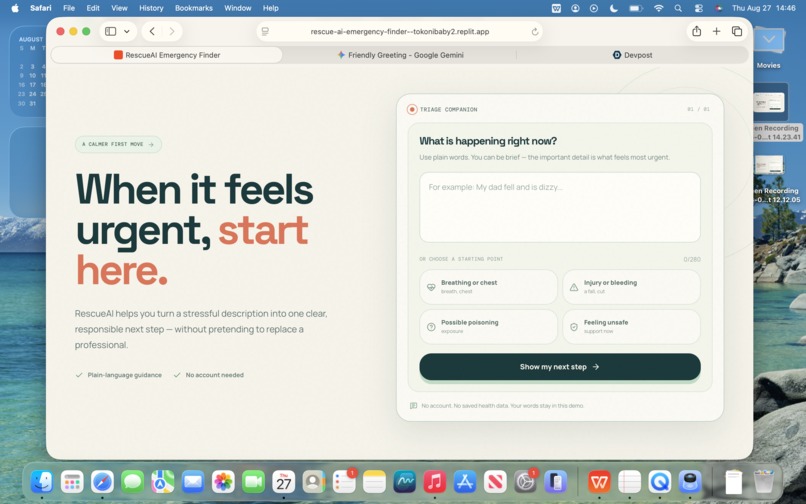
Help interface
-
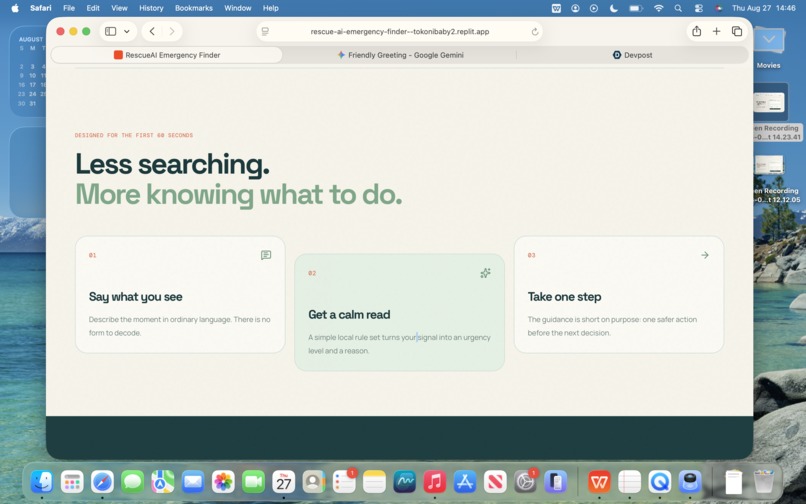
Steps on how it works
-
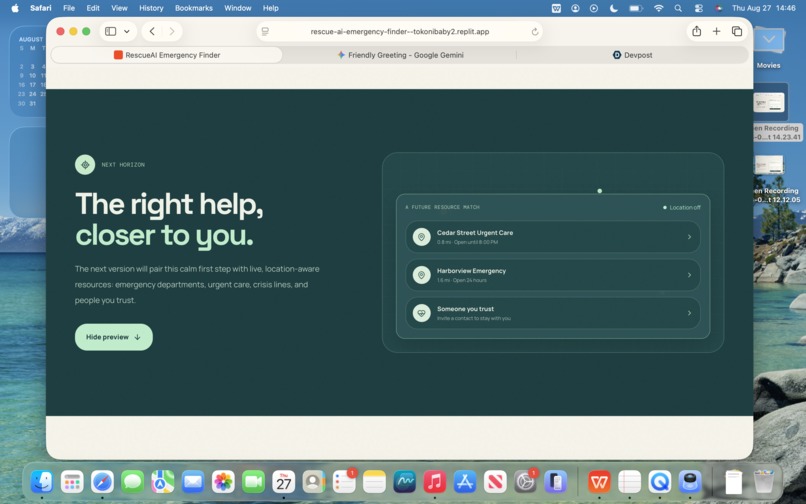
Our promise
Inspiration
In emergency and disaster situations, finding immediate, clear guidance is critical. Existing relief portals are often bloated, slow, or difficult to navigate during high-stress moments. I wanted to build Rescue AI to provide a fast, lightweight emergency triage assistant that gives users instant priority assessments and actionable steps when every second counts.
What it does
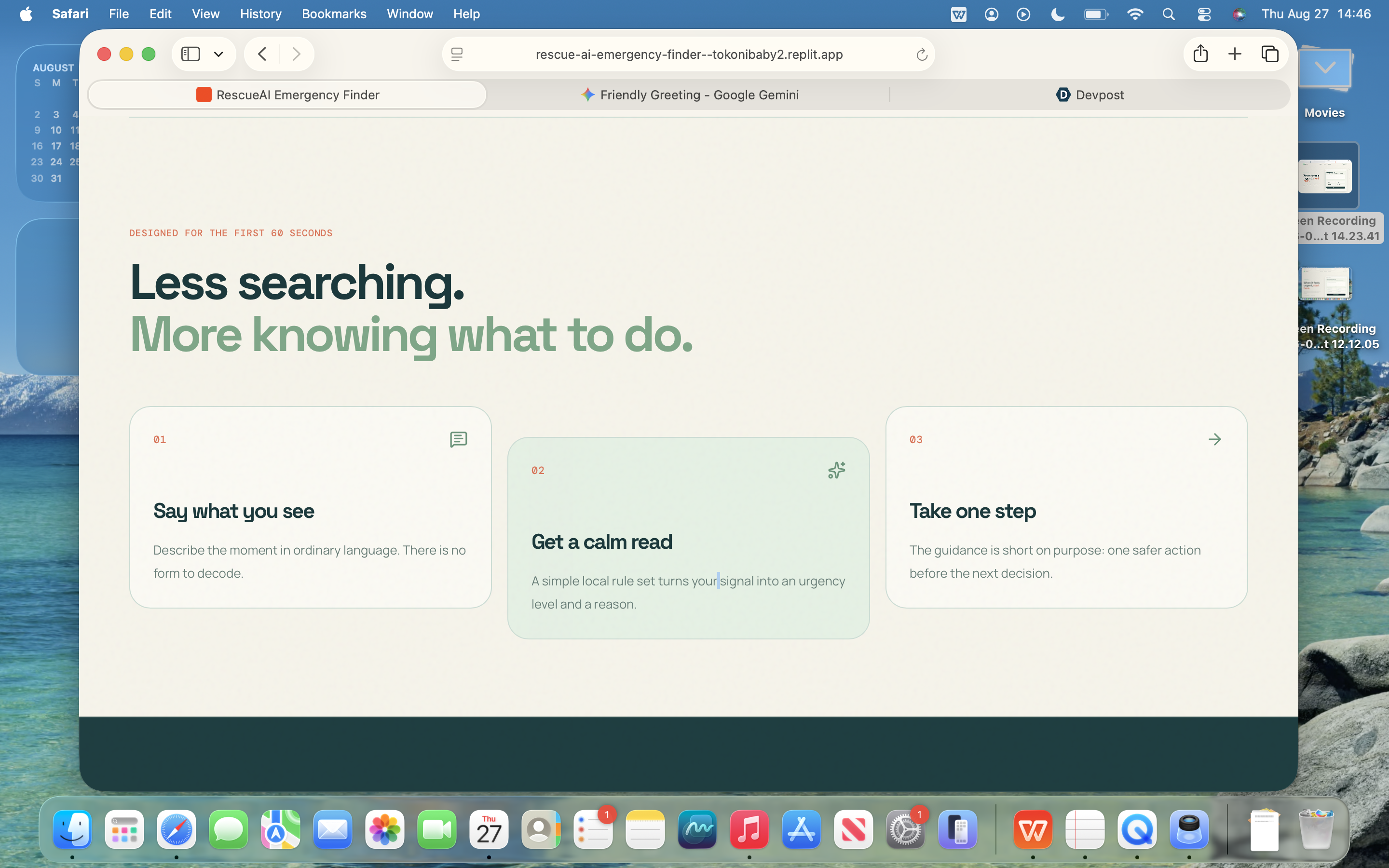
Rescue AI is an accessible web-based emergency triage assistant. Users can type their crisis situation in plain language (e.g., "heavy bleeding," "need shelter," or "no clean water"). The system analyzes key phrases in real time to assign a priority level—Critical, High, or Moderate—and immediately displays tailored medical, evacuation, or supply guidance.
How I built it
I built Rescue AI using HTML5, CSS3, and JavaScript. The application processes user input client-side using string parsing to evaluate urgency.
To evaluate emergency priorities, the underlying logic weighs emergency keywords by severity $w_i$ to determine a Priority Index $P$:
$$P = \sum_{i=1}^{n} w_i$$
Where:
- $w_{critical} = 3$ (e.g., bleeding, medical, injury)
- $w_{high} = 2$ (e.g., shelter, flood, fire)
- $w_{moderate} = 1$ (e.g., water, food, supplies)
Keeping the execution client-side minimizes network dependency, ensuring the app loads instantly even on weak cellular networks in affected areas.
Challenges I ran into
As a solo developer working across the hackathon week (August 22–29), my biggest challenge was managing my scope and time effectively while learning how to build and deploy everything independently. Balancing front-end design, interactive search logic, and deployment required maintaining a strict focus on delivering a functional Minimum Viable Product (MVP).
Accomplishments that I am proud of
- Designing and launching a fully functional emergency triage web application completely on my own.
- Structuring clean, intuitive logic that processes search queries instantly.
- Successfully deploying the project online for public testing.
What I learned
- How to plan, build, and publish a web project independently from start to finish.
- Implementing JavaScript string matching methods to classify real-time user inputs.
- Designing high-contrast, simple interfaces tailored for crisis management scenarios.
What's next for Rescue AI
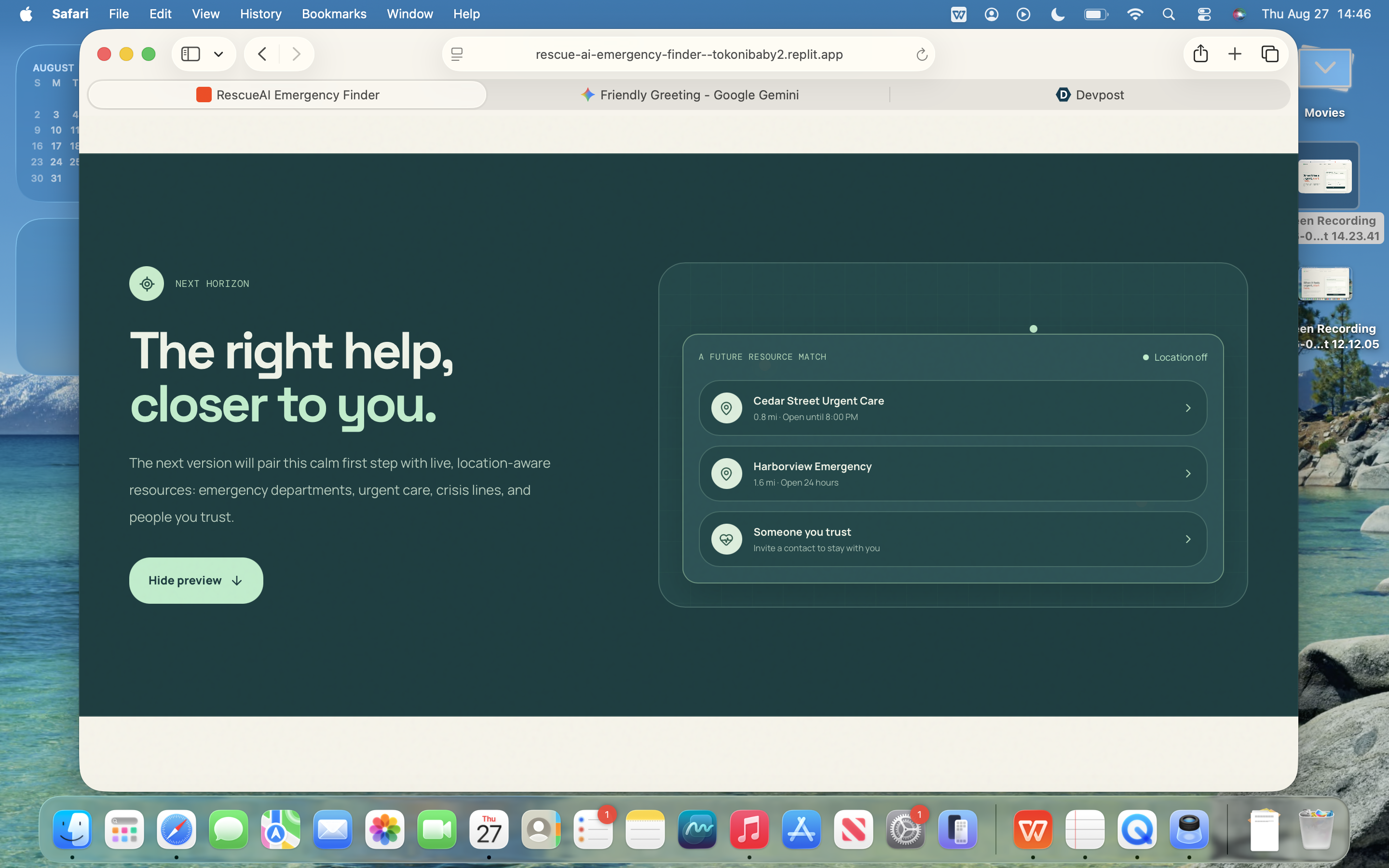
- Integrating browser GPS location APIs to automatically pinpoint nearest shelters.
- Connecting to official emergency dispatch systems.
- Adding multi-language support for international crisis relief.
Built With
- css3
- html5
- javascript
- replit

Log in or sign up for Devpost to join the conversation.