Inspiration
Applying for jobs today is frustrating. Candidates often spend hours tailoring resumes just to get past ATS filters and even when they do, interview preparation feels disconnected from the actual role and resume. We noticed that most tools solve only one part of the problem either resume building or interview practice but not both together and not properly. We wanted to build something that prepares candidates the way real hiring processes work: resume first, interview next, all using the same context.
What it does
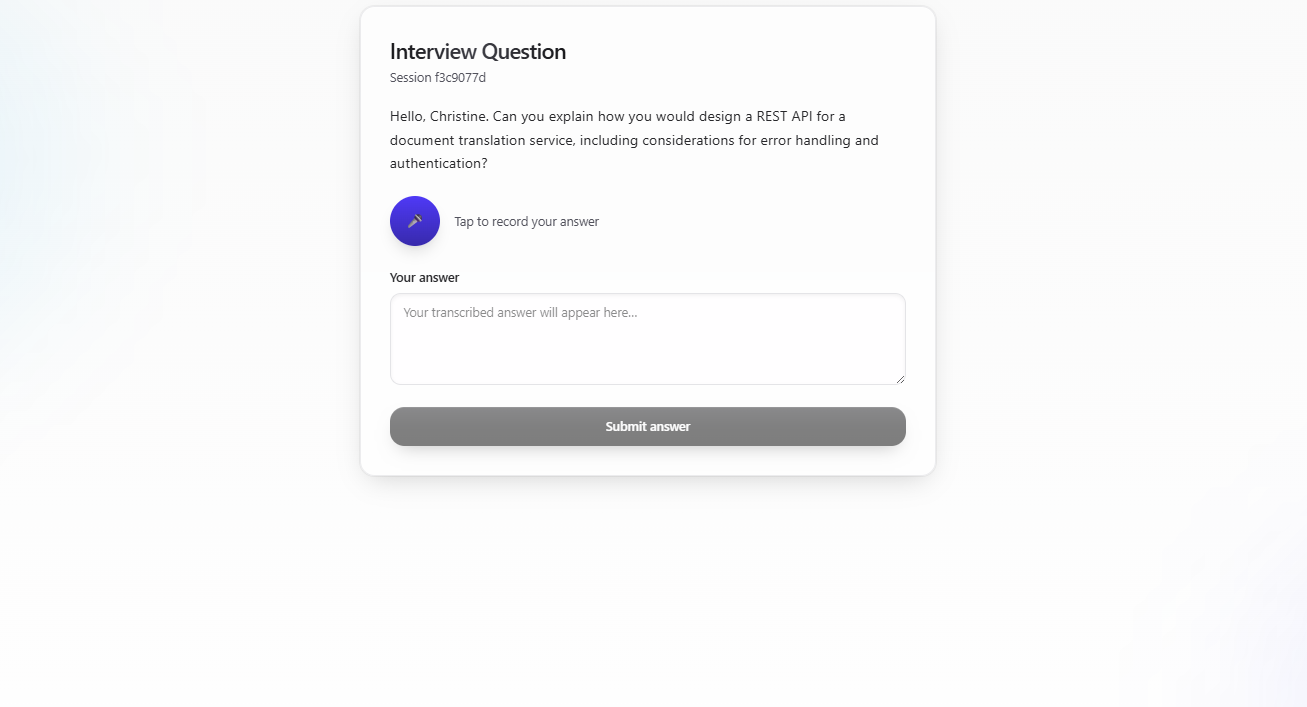
ResAI is an end-to-end AI hiring preparation platform. It helps users generate ATS-optimized resumes based on a target job description and then simulates realistic technical and behavioral interviews. The interview engine supports spoken answers, evaluates responses in real time, and adapts follow-up questions based on previous answers, interview history, and candidate details. The result is an interview experience that feels structured, contextual, and closer to how real interviews actually unfold.
How we built it
We built ResAI as two tightly integrated components. The resume builder analyzes the job description and candidate background to generate an ATS-friendly resume. That same context is then passed into a stateful AI interview engine, which manages interview flow, question generation, evaluation, and adaptive follow-ups. We focused on maintaining context across the entire session so the interviewer “remembers” earlier answers and adjusts difficulty and direction accordingly. LLMs tend to hallucinate a lot when not provided with good structure, blindly providing context and letting the LLM figure it out never works out, so we went with a state first approach and fed in exactly what the LLM needs to do, from previous interview answer to topics left to cover based on JD.
Challenges we ran into
One of the biggest challenges was maintaining state throughout the interview without losing context or reinitializing the session. Designing adaptive questioning logic that felt natural, rather than scripted and also does this across multiple iterations was our biggest challenge while minimizing hallucinations was a real challenge. We also had to carefully balance realism with token usage and performance, especially while handling spoken responses and real-time evaluations.
Accomplishments that we're proud of
We’re proud of building a system that connects resume optimization and interview preparation into one cohesive flow. The adaptive interview behavior, real-time feedback and contextual awareness across questions were major milestones for us. Most importantly, the final experience feels practical and realistic, not just like a demo or a chatbot.
What we learned
We learned how important context management is when building stateful AI systems. Small design decisions around memory, evaluation timing, and question routing make a huge difference in user experience. We also gained a deeper understanding of how the best way to build automation technology is not by letting AI handle all the details but by providing it with a structure and telling it exactly what to do and what comes next.
What's next for ResAI
Next, we want to expand evaluation depth with more structured scoring and detailed feedback, add support for multiple interview formats(not just tech) and improve speech analysis for spoken answers. Long-term, we see ResAI evolving into a full hiring preparation suite that continuously adapts to different roles, industries and interview styles.

Log in or sign up for Devpost to join the conversation.