-
-

I built RERUN for the Nebius x NVIDIA hackathon: it actually runs the code and tells you what happened.
-

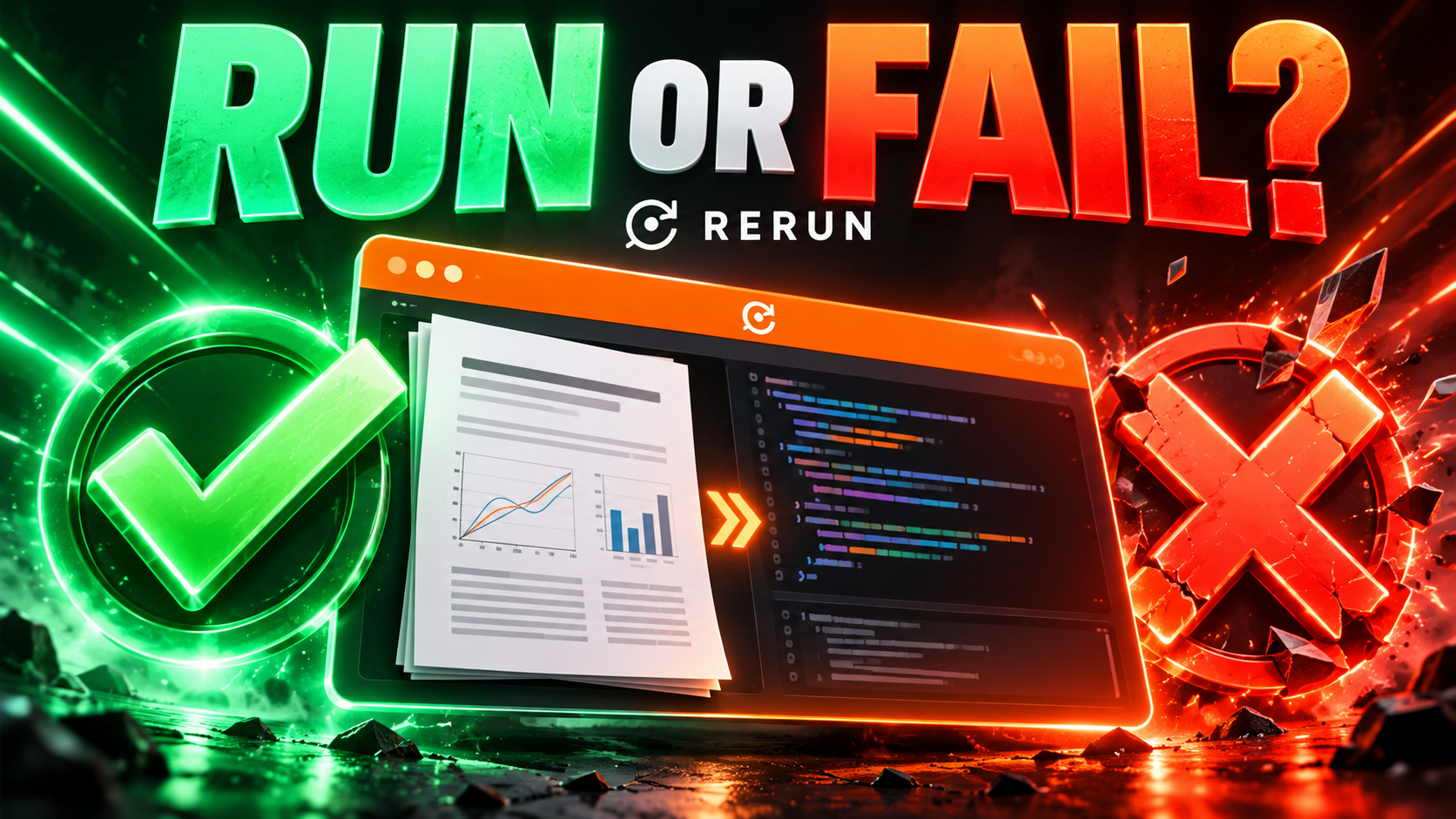
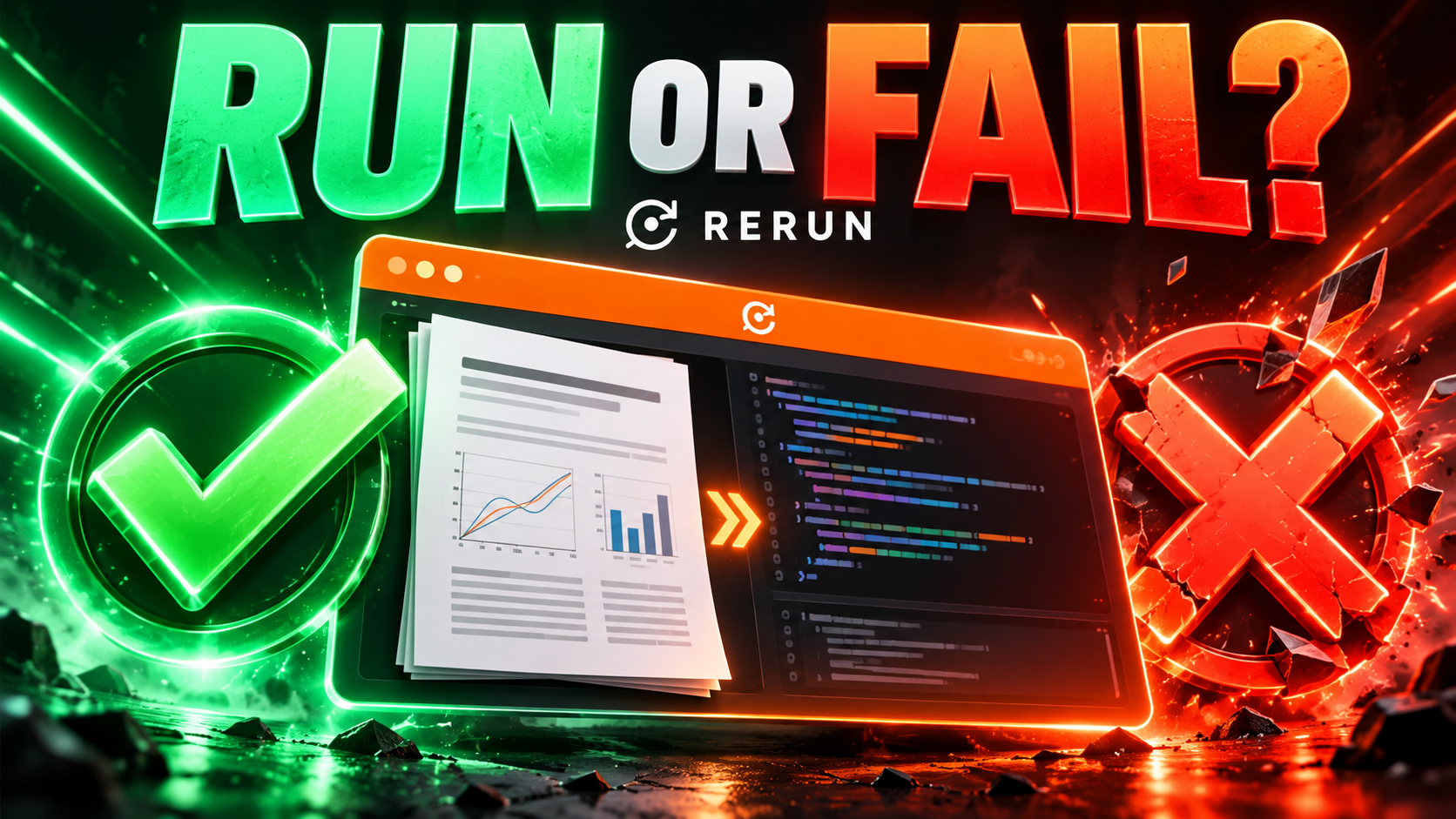
Does this paper's code still run? RERUN finds out by running it.
Inspiration
Research code rots. The tempting fix is to let an LLM patch it until it runs. A patched run that "works" may have swallowed the error, faked the data or changed the computation, and nobody measures how often the repair is real. I wanted a tool that runs the code for real, says what stops it, and never claims a success it cannot prove.
What it does
You paste a paper's repository. RERUN pins it to an exact commit, rebuilds the environment of the paper's era deterministically, and runs the documented command in a Nebius Token Factory sandbox. When the run fails, fixed rules classify what stopped it and say who can remove it. NVIDIA Nemotron models work in narrow roles: Nano finds the entrypoint or abstains, Super proposes repairs, Ultra chooses between candidates and may only downgrade a verdict. A deterministic tamper gate vets every proposal, a cost guard stops what it cannot fund, and each run becomes a hashed Reproduction Passport anyone can verify offline. Tavily is called at runtime before each repair attempt; the references offered and the sources cited are stored on the attempt.
How I built it
- Backend in Python (FastAPI), frontend in React and TypeScript.
- Execution: every baseline run and re-execution happens in a Token Factory sandbox; the three Nemotron models are called through Token Factory's OpenAI-compatible endpoint, with per-call token usage stored in each record.
- Method: every held-out set was registered before its draw and run once, never used to tune the system. A harness version is sealed only after a live verification of every sandbox-touching code path.
- Every figure in the README and on this page is generated from committed records (
reports/v1.9/figures.json); no number is typed by hand.
What I measured
Three held-out sets: 3 of 26 repositories ran their documented command (TEST 1 of 8, TEST-B 1 of 8, TEST-C 1 of 10); "ran", never "reproduced". On TEST-C, 7 of 9 non-running entries got an actionable diagnosis (6 judged strictly).
The benchmark: two cheat sets ship in benchmark/ with hashes and a scorer that reproduces every published table: 337 planted patches, and 166 cheats with 42 honest controls written by a separate agent that had not seen the checks (144 cheats measured). On the planted held-out half the full pipeline adopted 0 cheats but refused all 31 honest controls that passed the run, so that table has no summary sentence.
Challenges and limits, said plainly
- Repair's yield is small: 2 of 24 exploratory gate entry-runs reached a RUNS_* verdict.
- Anti-cheat is not a headline claim: the shipped harness adopted 14 of the 50 independent cheats aimed at repositories whose run really fails (28%).
- Behavioural checks that refuse such patches also refused 16 of 27 honest controls, so they ship as REVIEW_REQUIRED: a signal that a human should look, not cheat detection. It also marks 5 of the 9 honest repairs harness-v1.9.0 adopted.
- Tavily is offered and sometimes cited (24 of the 88 live runs that were offered references cite one); whether a citation shapes a decision is not measured.
- The sandbox is CPU-only with no documented memory figure; GPU-only papers end as GPU_REQUIRED.
Accomplishments
203 live sandbox runs, 326 commits, a sealed harness, a published benchmark with the project's own losses in it, and a certificate format that verifies without trusting RERUN's own UI.
What's next
GPU sandboxes (a Nebius AI Cloud compute backend is already scaffolded), more failure classes, a new independent cheat set, and a mode that journals and artifact reviewers can plug into their own process.
Try it
- Hosted keyless demo, a replay of recorded runs (free instance, the first load can take about a minute): https://rerun-demo.onrender.com
- One command from a clone, no key:
python demo.py - Code, Apache 2.0: https://github.com/TOUMO45/rerun
Built With
- docker
- fastapi
- nebius-token-factory
- nvidia-nemotron
- python
- react
- render
- tavily
- typescript

Log in or sign up for Devpost to join the conversation.