Inspiration
By 2036, the question won't be "how do we prevent ecosystem collapse?" — it will be "what do we do now that it's already happened?" Extreme weather events are destroying ecosystems faster than nature can recover. When disaster strikes, conservation teams make ad hoc decisions with no consistent framework, species get reintroduced in the wrong order, and biodiversity is lost permanently. We built ReRoot for the world where the disaster has already happened.
What It Does
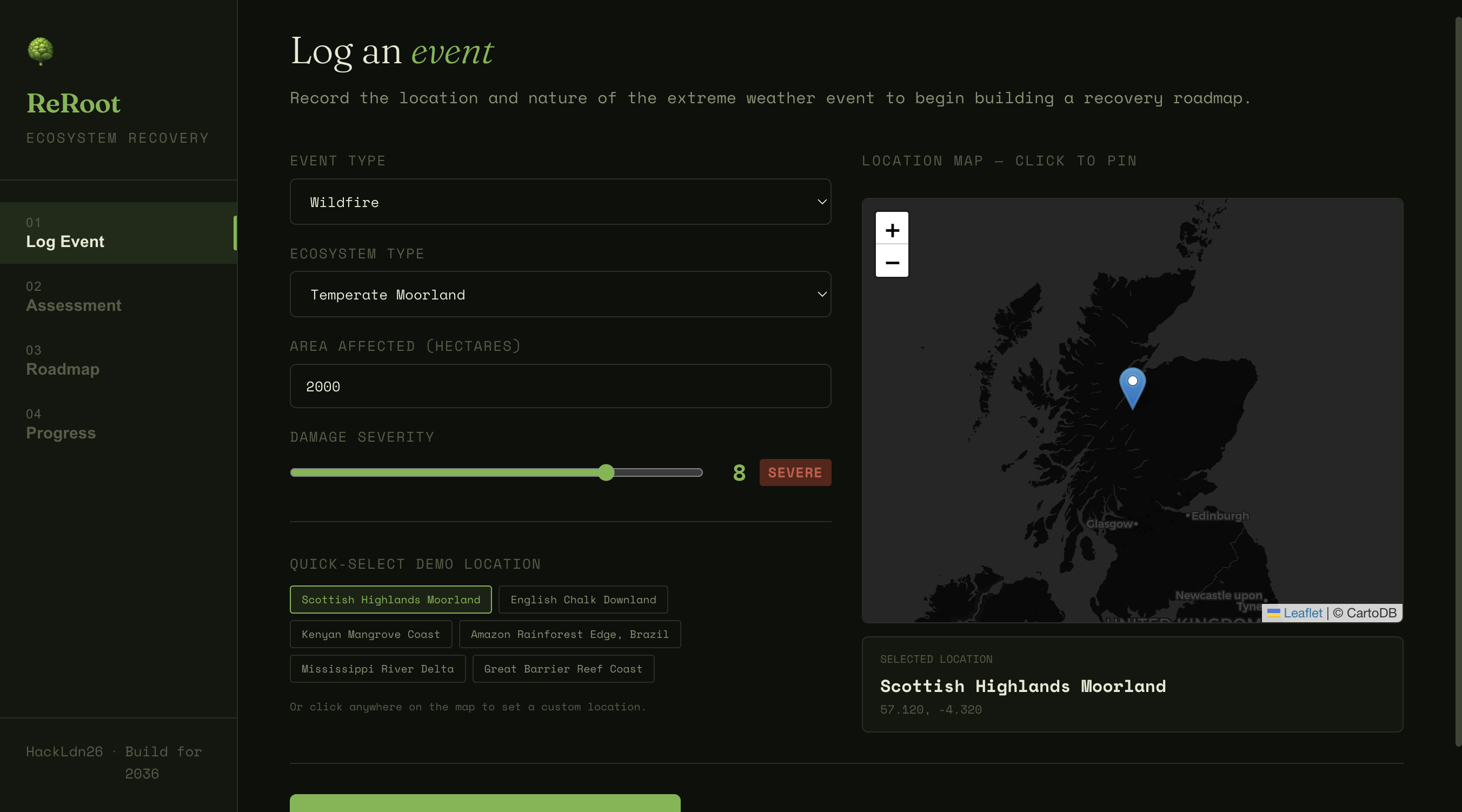
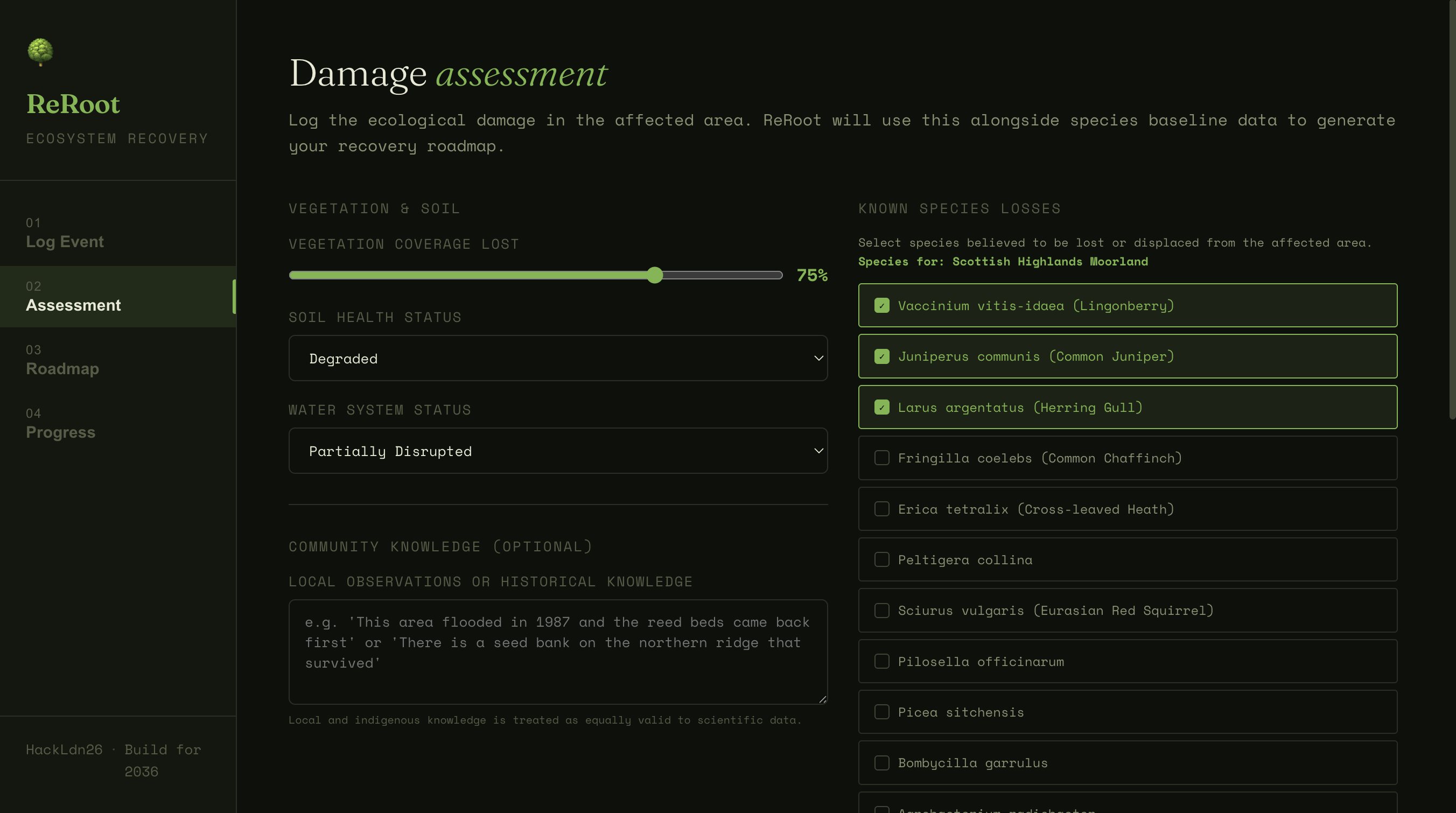
ReRoot generates a sequenced ecosystem recovery roadmap after extreme weather events — telling conservation teams what to bring back, in what order, adjusted for 2036 climate conditions. You log the disaster, assess the damage, and ReRoot produces a phased recovery plan grounded in real ecological dependency chains. You cannot reintroduce a Golden Eagle before its prey exists. ReRoot enforces the correct sequence, flags species that won't survive 2036 conditions, and tracks recovery progress over time with early warnings when phases fall behind.
Here is a link to the deployed frontend. Due to time constraints, the functioning backend is not deployed, it is only available directly via GitHub. But, it features in the demonstration.
How We Built It
- FastAPI backend with a custom ecological sequencing engine built in Python
- React + Leaflet frontend with interactive mapping and a phased roadmap interface
- GBIF (Global Biodiversity Information Facility) for real species occurrence data
- IUCN Red List API for conservation status and habitat requirements
Challenges We Ran Into
We found it difficult to generalise ecosystems as each one is different and unique and dependent on the species. However, we solved it by going location-first, pulling real species data for specific coordinates rather than applying generic templates.
We also found it difficult to split up the work between 4 people and combine it effectively.
Accomplishments That We're Proud Of
We're proud that we identified and solved the generalisation problem that most conservation tools ignore.
What We Learned
As this was one of our member's first ever hackathon and the rest of ours' second one, we learnt firsthand the sort of problems we will face as a developer.
What's Next for ReRoot
- Live GBIF and IUCN querying for any location globally, not just pre-loaded demos
- Satellite imagery integration for automated post-disaster damage assessment
- A global knowledge base that learns from every recovery ReRoot supports
- Mobile-first field interface for low-connectivity environments
- Biodiversity net gain compliance reporting for corporations and governments with legal obligations
Built for 2036. Because by then, we'll need it.
Built With
- css
- fastapi
- javascript
- python
- react

Log in or sign up for Devpost to join the conversation.