Inspiration
Traditional roguelikes rely on randomness and strategy to stay replayable, but VR has very few games that combine that depth with physical interaction. ReRoll was inspired by that gap. I wanted a VR experience that feels immersive and consistently replayable, where dice rolls, drafted upgrades, and the physical act of throwing create a new rhythm each run. Dice were an ideal fit: tactile, unpredictable, and intuitive in VR. Many VR titles are impressive but short lived; my goal was to build something with long term potential, where a simple physical mechanic supports a full roguelike structure with scoring strategies, upgrades, and seeded runs that grow with the player.
What it does
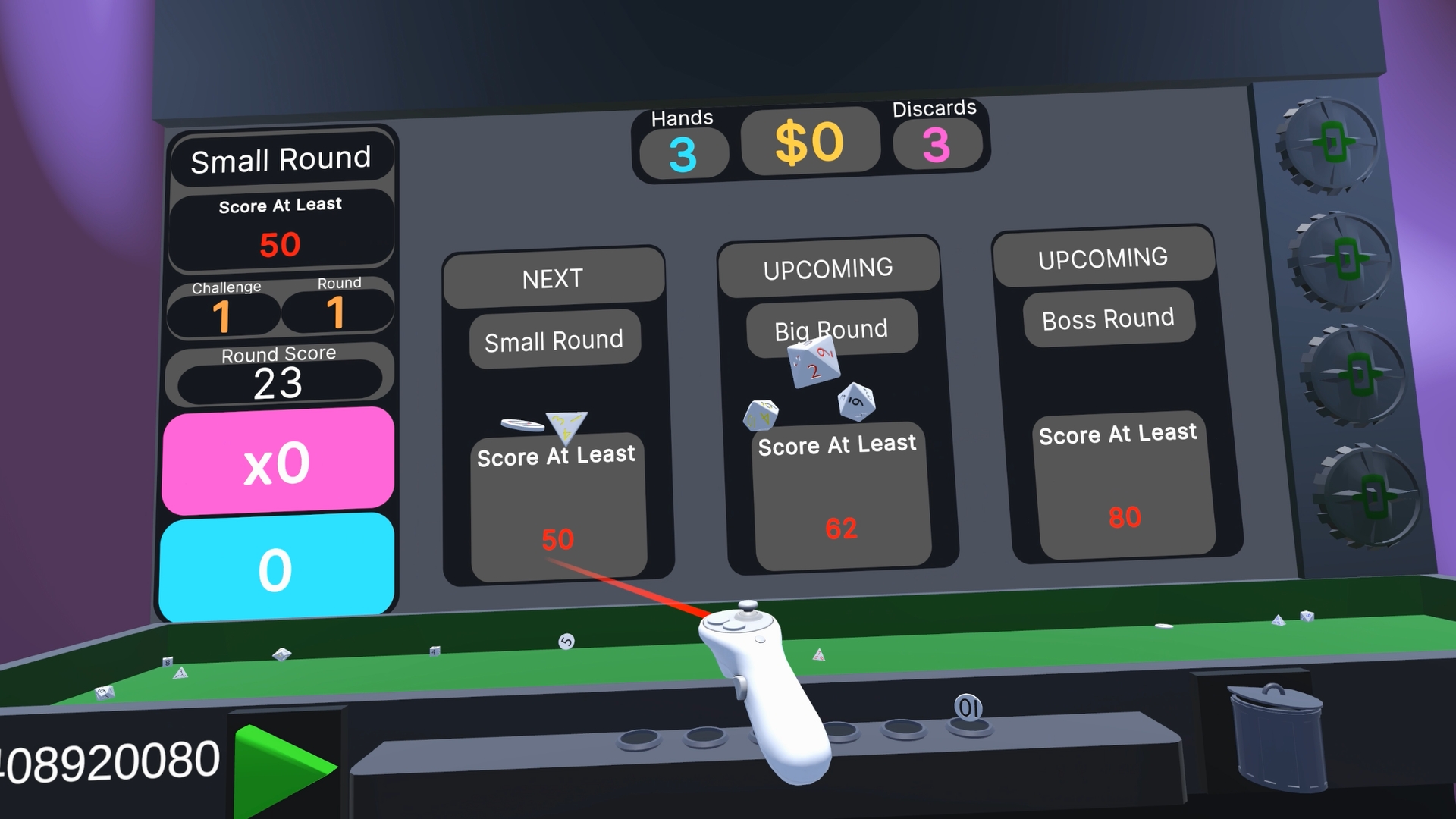
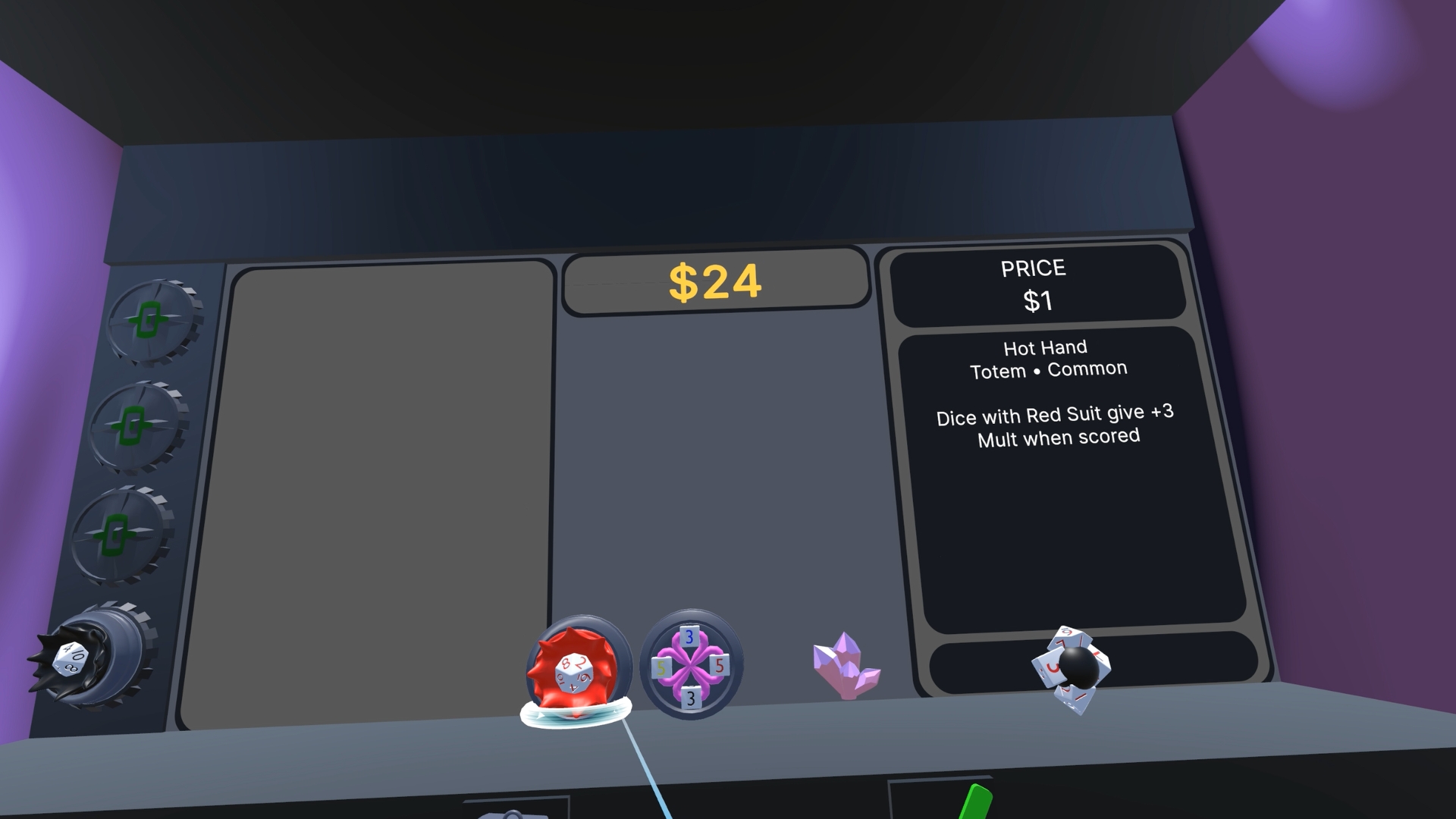
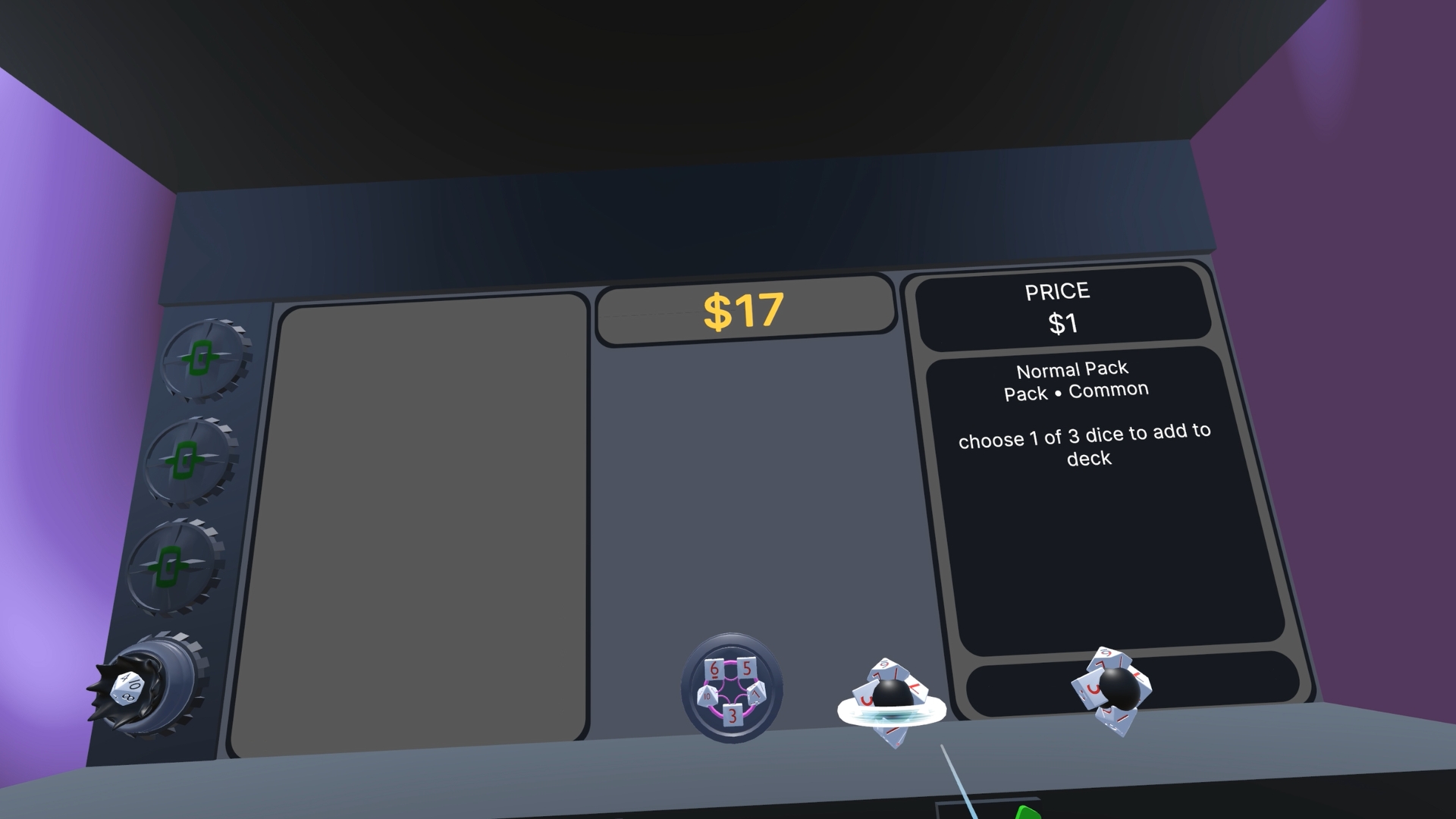
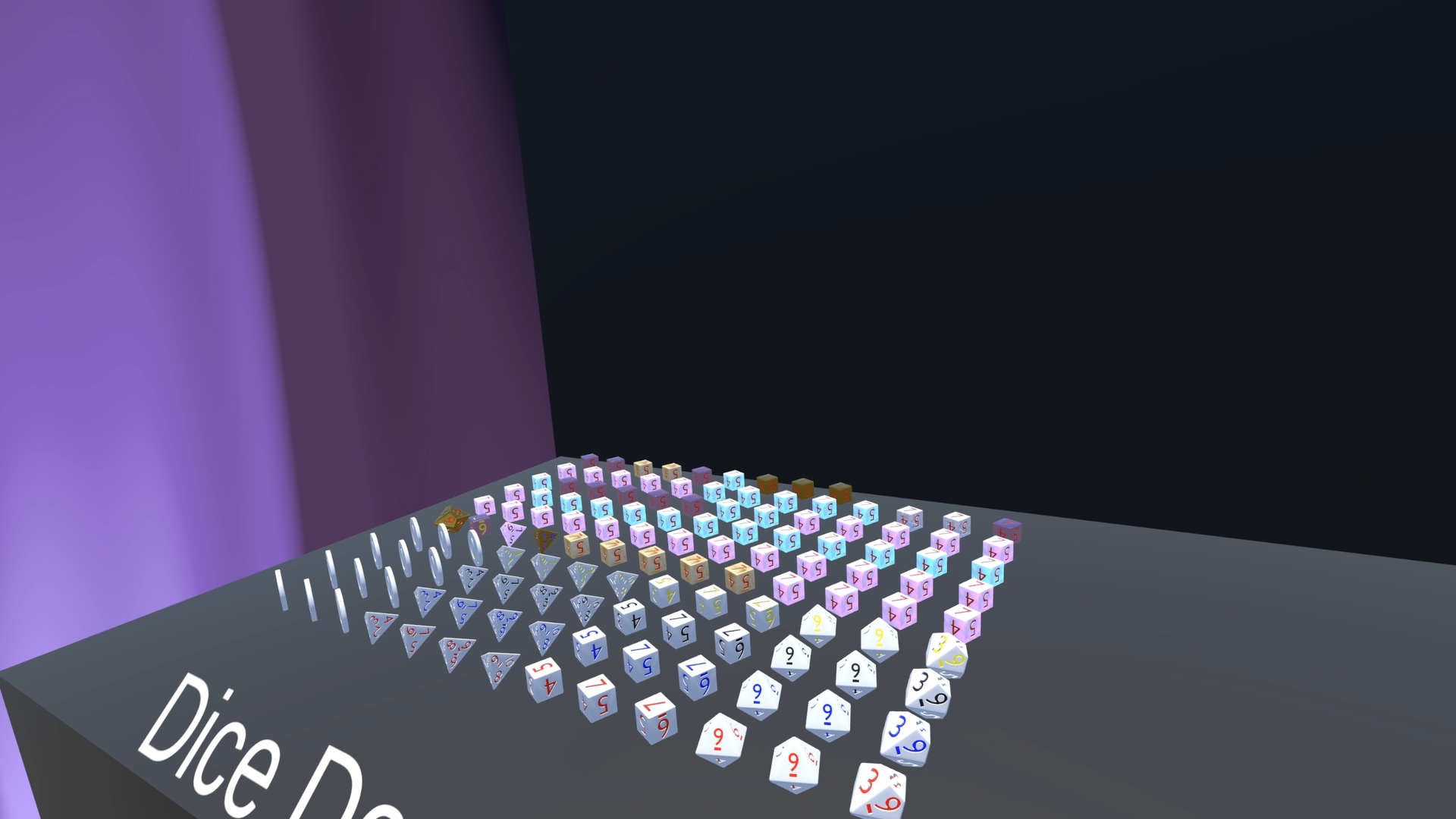
ReRoll blends physics driven dice throwing with roguelike progression. Players choose dice, throw them, score combinations, earn money, pick upgrades, and advance through increasingly difficult rounds. Runs use deterministic seeds so attempts are unique yet fair. A world space shop, hologram scoring, stage progression, and an adaptive tutorial create a complete, intuitive loop.
How we built it
ReRoll was developed in Unity using URP and the XR Interaction Toolkit. I created a custom dice system with physics tuned for VR, deterministic seeds, world space UI, a drafting style shop, a hologram scoring display for clarity, and a round system that increases targets and payouts. A large portion of development focused on Quest optimization, including more than a hundred test builds adjusting GPU load, physics behavior, and visual effects, as well as transitions that keep the experience smooth. I also built a guided tutorial that reacts to the player’s actions. The priority was a polished, stable foundation that clearly shows the game’s long term potential.
Challenges we ran into
Optimizing physics and visuals for standalone VR was a major challenge. Maintaining stable framerate, readable UI, comfortable transitions, and reliable throwing required constant iteration. Creating a scoring system that felt deep yet easy to understand in VR also took refinement.
Accomplishments that we're proud of
ReRoll reached a complete gameplay loop: seeded runs, dice throwing, scoring, stage progression, upgrade drafting, a functional shop, polished UI, an adaptive tutorial, and strong Quest performance. Even with features cut for the deadline, the core experience is fun, stable, and representative of the project’s long term vision.
What we learned
Building for standalone VR requires planning around performance from the start. I learned how to optimize physics, structure VR friendly UI, design comfort focused transitions, and manage scope while keeping the experience polished.
What's next for ReRoll
My roadmap includes over a hundred new upgrade effects, new dice enhancements, more item types, and a voucher system for long term unlocks. I plan to add weekly seeded runs with global leaderboards, new dice decks with unique playstyles, boss debuffs, new environments, expanded art direction, more VFX, and a larger soundtrack. My goal is to release ReRoll on the Meta Store with ongoing updates and long term support. This version is only the foundation.
Built With
- blender
- c#
- flstudio
- krita
- unity
- visual-studio
- xrinteractiontoolkit


Log in or sign up for Devpost to join the conversation.