-
Rerite Logo
-
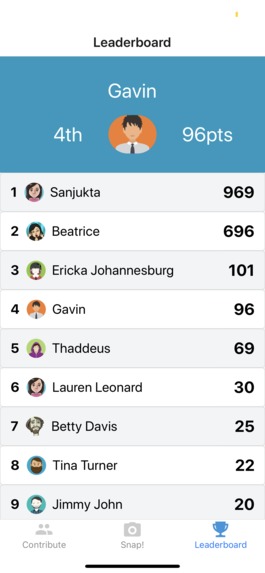
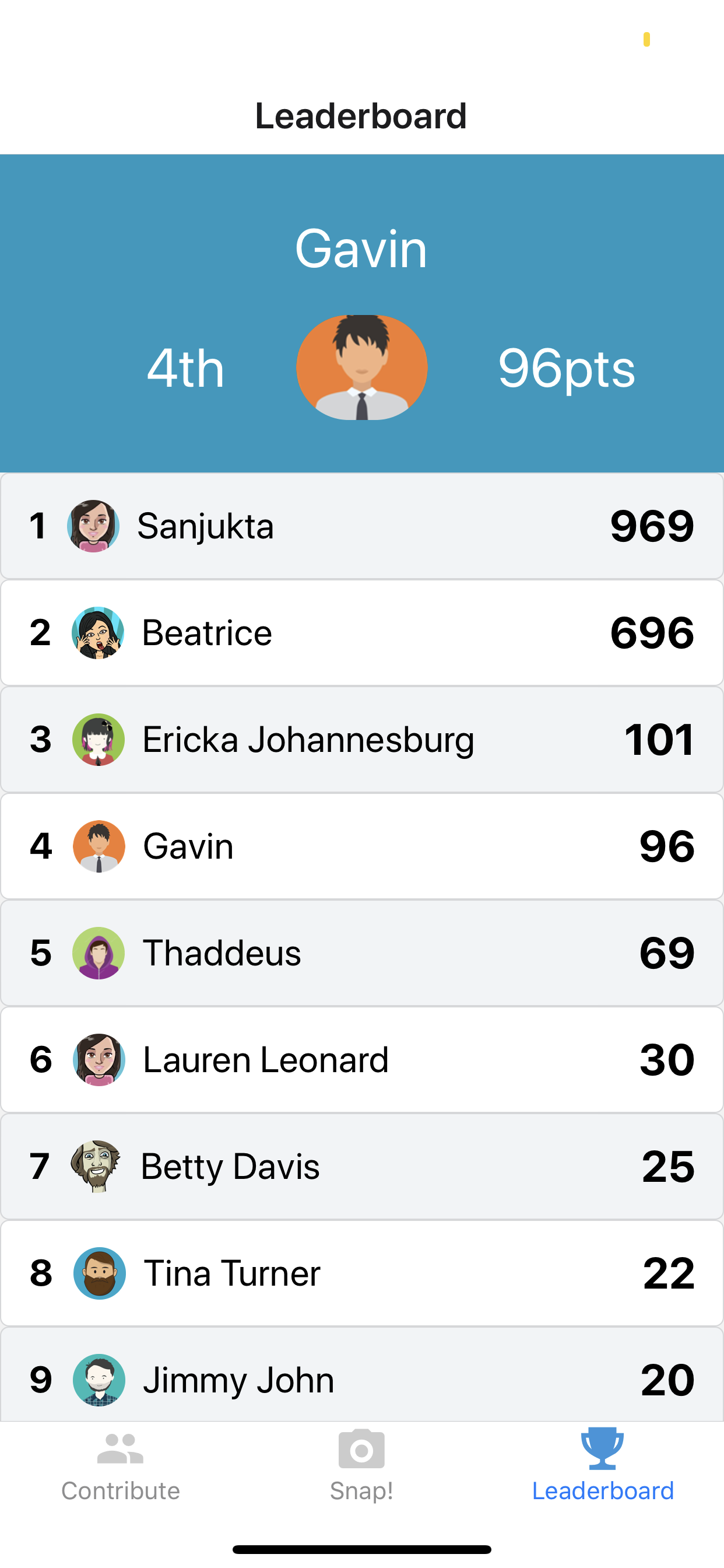
Rerite App - Leaderboard Tab
-
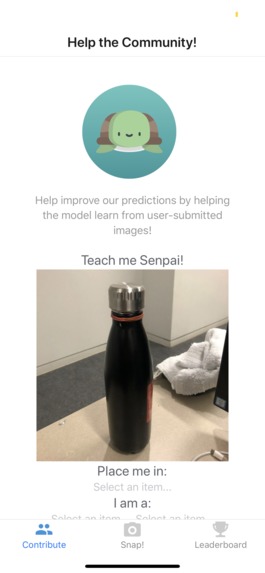
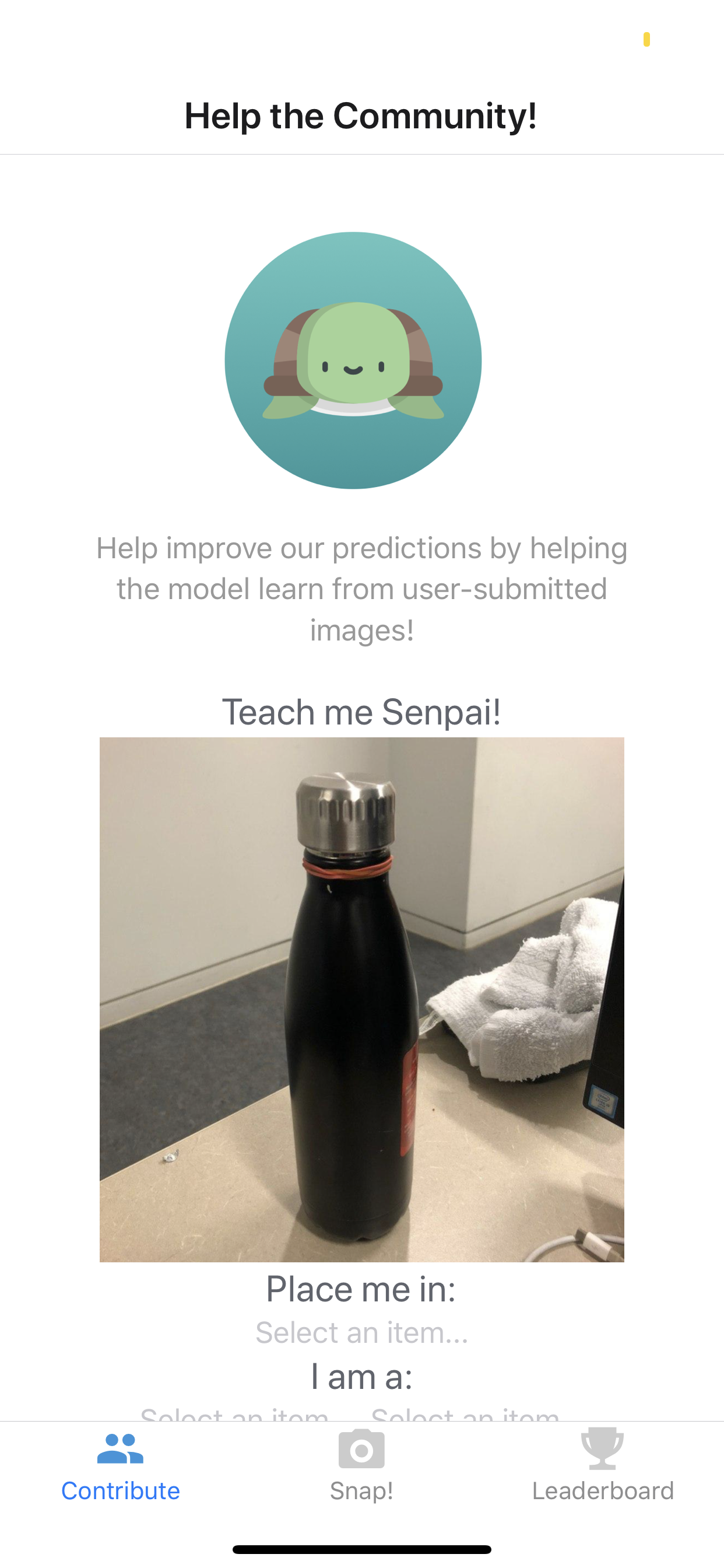
Rerite App - Contribute Tab
-
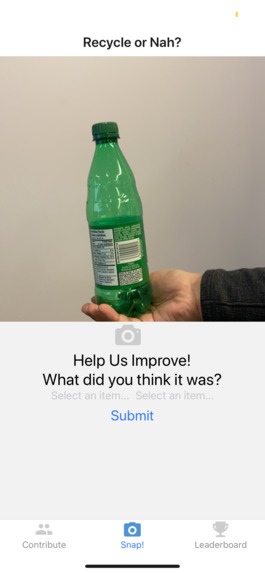
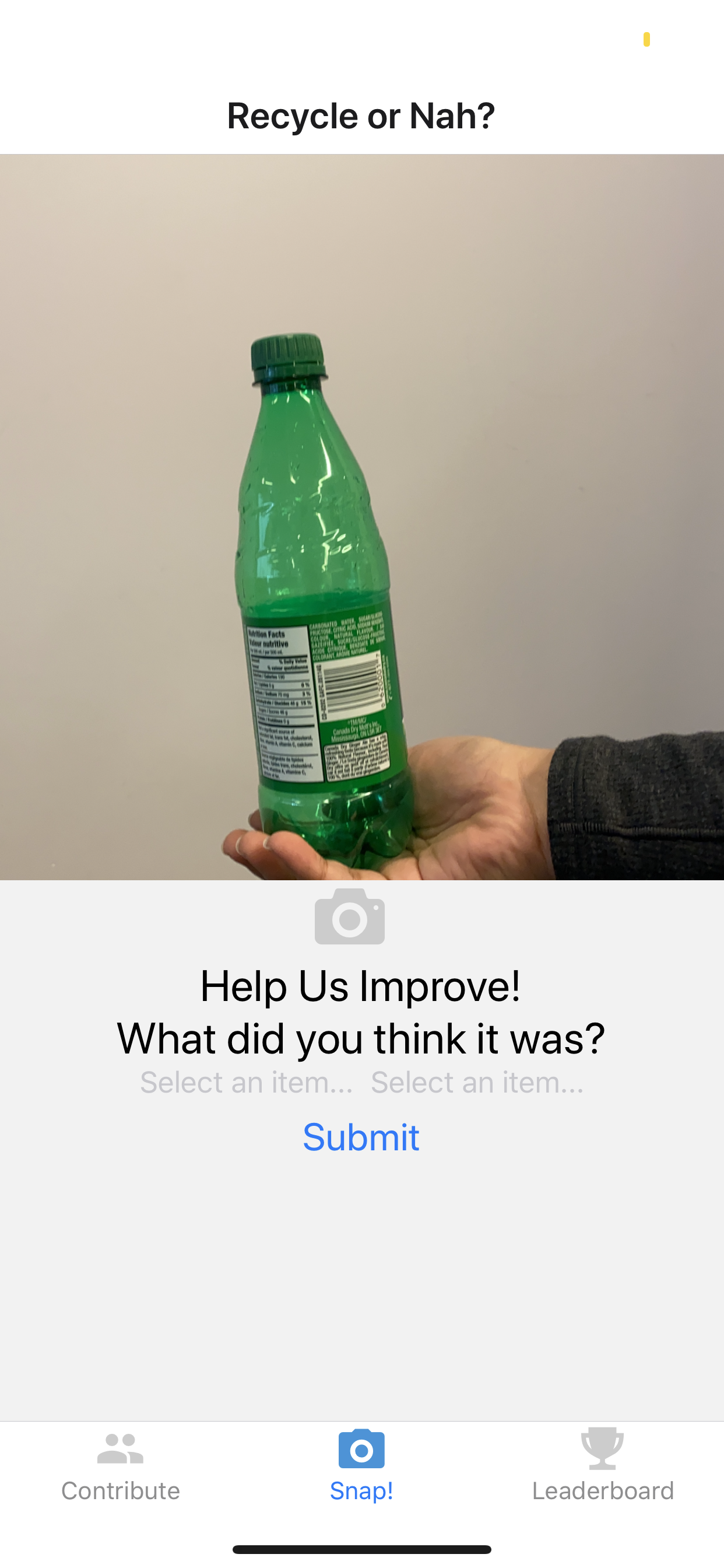
Rerite App - Snap Tab
Inspiration
As exchange students who arrived from Singapore shortly over a month ago, one of the things that really caught our attention was how deeply entrenched the practice of recycling is in Toronto.
The habit of recycling quickly rubbed off on us but a problem eventually presented itself. Oftentimes we would be unsure whether a particular item could be recycled and what sort of handling it required before we binned it. Digging deeper into the problem we found out that waste contamination is a big issue that the City of Toronto is dealing with. When the wrong items are placed in the wrong bin -
"it can damage equipment, cause workplace injuries at the recycling facility and ruin otherwise perfectly good recyclables. Contaminated recycling is currently costing the City millions annually. - City of Toronto website
Our team hopes to create an effective solution to make recycling an easy and effective process and in doing so, maximize the value that recycling brings to the community and environment.
The Problem
Before we dived into problem solving, we wanted to be sure that the problem actually needed solving. We scoured the internet for findings to validate our problem statement and sure enough, the problem surfaced.
Our research revealed that people recycle wrongly on a daily basis – throwing garbage into the blue bins when it does not belong there and, throwing recyclables into the bin before processing them properly, i.e. without cleaning them.
Our Solution...
Rerite, is a mobile application that empowers users to make a more informed recycling decision by harnessing the power of machine learning. The user simply has to click a photo of the items that they would like to recycle. Rerite identifies the item in the image using Google Cloud's Vision API, and returns details on its recyclability, along with helpful instructions on how to prepare the item for recycling.
The ML model wasn't able to identify the item in the image? That's all right! We allow our users to verify and label the items themselves too. Similar to our team members, our Machine Learning model also hopes to learn from its mistakes. In the future, we hope to create a database of the new labels created by users and use them to make our ML model better!
We at team Rerite believe that most people want to do their part for the environment, it's just that sometimes we all need a little push. So we have integrated a leader board to our app to make it a more enjoyable and competitive experience for users (because who doesn't like to be first?). Every time a user submits new photo entries, updates information of a submitted photo or provides labels for an incorrectly labelled image, we reward them with points that will update their ranking in the leader board.
How we built it
We built it through rigorous discussions, iterations, screening through different tutorials, countless hours of coding and debugging. Fortunately, the process was coupled with newfound knowledge and most importantly, we had lots of fun along the way.
Gavin made the mockups for our UI on Figma using his skills as a product developer. Sanjukta wrote data engineering scripts using Python and trained and deployed the ML model using Google Cloud. Thaddeus applied his front-end development skills to build his first mobile app using React Native. Beatrice built her first server-side application using Node.js. We built our own API in order to connect the React app with the Node.js backend.
Challenges we ran into
3 out of 4 of us had zero experience with hackathons. There were multiple times when we nearly went out of scope because we forgot to factor in the consideration that we were in a hackathon – a competition within a time constrained environment. Moreover, all of us had zero experience creating a mobile application and we had to spent time building up that knowledge from scratch. Moreover, we decided to pivot our idea on Saturday evening. This meant we had to find a new ML model and change up a lot of the logic on our back-end.
Accomplishments that we're proud of
We managed to get the prototype up and running so that it is definitely a huge accomplishment, considering that it is the first hackathon for most of us. We also managed to work together well which is plus point for a new team.
What we learned
We learned the importance of strategising and making sure that ideas and perspectives are properly understood by all participants at all points in time.
What's next for Rerite
We intend to further develop the app while allowing the model to further train itself to detect objects on a more granular level. We hope to present our solution to the City of Toronto's Waste Disposal Departments to expand on the potential that the app can bring to the recycling industry.
Built With
- figma
- google-automl
- google-cloud
- google-vision
- node.js
- react-native


Log in or sign up for Devpost to join the conversation.