-
-
Customer request
-
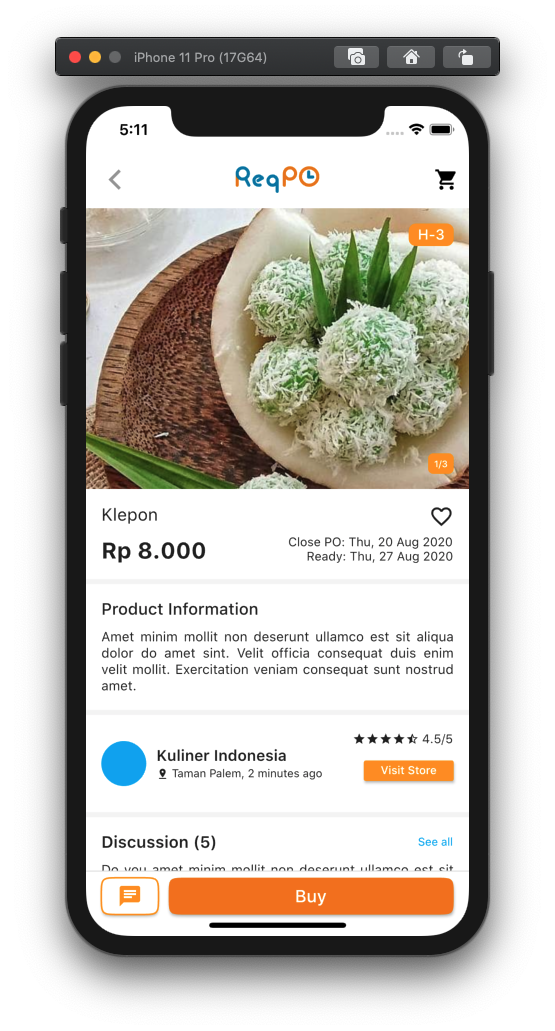
Product detail
-
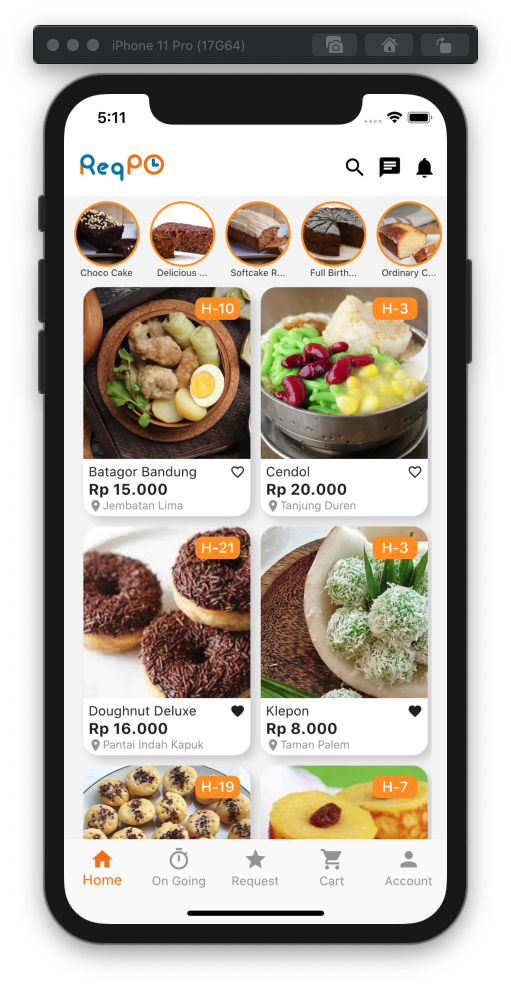
Home screen
Inspiration
Current pandemic changes the face of the business sector, particularly for the micro, small, medium-sized enterprises (MSME), which are considered the backbone with significant contributions in Indonesia. Some of them are home-based F&B businesses selling their products online through social media and messaging apps, such as Instagram, Facebook, and WhatsApp, though still limited by the capabilities of such apps. For example, the orders and payments have to be managed manually (not supported by the apps) and, consequently, prone to mistakes.
As they switched to online, currently most of them use a pre-order system to sell their products. The pre-order system has a lower risk for the merchants as they provide their products according to the number of orders. It minimizes their loss caused by excess material and maximizes their production control. Despite that, it doesn’t mean that such a system is risk-free. We learn from the experience of our team’s family members who are in the pre-order business and frequently encounter a sudden cancelation from customers, difficulties in finding the delivery location, and unable to contact the customers, etc.
From the customer’s perspective, ordering a pre-order product online can also be risky. They have to pay before they can get a hold of their product, but they don’t know how trustworthy the merchants are when the reviews for small or beginning sellers are scarce. Sometimes, they find the product came out differently from their expectation.
Thus, we have the idea to create an app targeted specifically for the merchants who sell their products in a pre-order system where the flow of the business is quite different in some areas to conventional merchants.
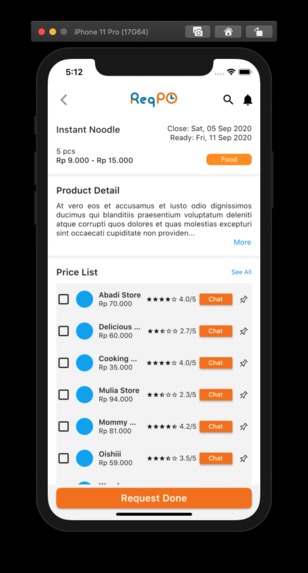
In addition to that, there are also times when the customers want to find custom products, e.g. traditional snacks, but it is hard to find the merchants who sell it. If a customer requests some custom products to a merchant, it is usually handled in a pre-order system. Our idea is that such requests can also be handled by the app where the customer can create a new product request, and available sellers can bid for the request.
What it does
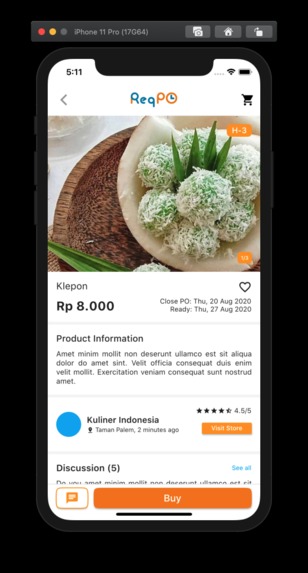
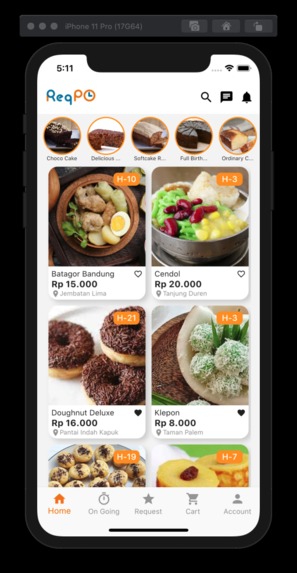
The app works for sellers and customers. The sellers can post their pre-order products and promote via video stories which can be viewed by nearby customers. Sellers can also view the interests of their products, prepare the logistical details of making the products, and also analyze their business opportunities. From the customer side, they can browse products from the merchants and join the pre-orders. Customers can also create a new product request and find sellers who can fulfill the request by joining the bidding. They can then choose the sellers based on their criteria, e.g. sellers with the best offering price, reviews, or nearest location.
How we built it
From the development side, we use the Flutter framework to build the app. To design the logo and prototyping some screens, we use Figma.
Challenges we ran into
With the time constraints, we only managed to develop the front-end side of the app. The plan to develop the back-end using Google Cloud Platform is dropped because we run into problems that some libraries, e.g. image carousel, sliding panel, etc., have not been updated to the most current version of Flutter. We managed to solve it, but ultimately, we have to focus only on building the front-end.
Accomplishments that we're proud of
This is our first hackathon both as an individual and a team, and we learned a lot from it. Particularly on how to plan and develop apps in a short time, how to divide the works among us, and choose a technology that each of us understands and/or able to learn quickly. Although we have not been able to successfully implement all features we envisioned in the final app yet, we are proud of our teamwork and what we accomplish in such short hacking time.
What we learned
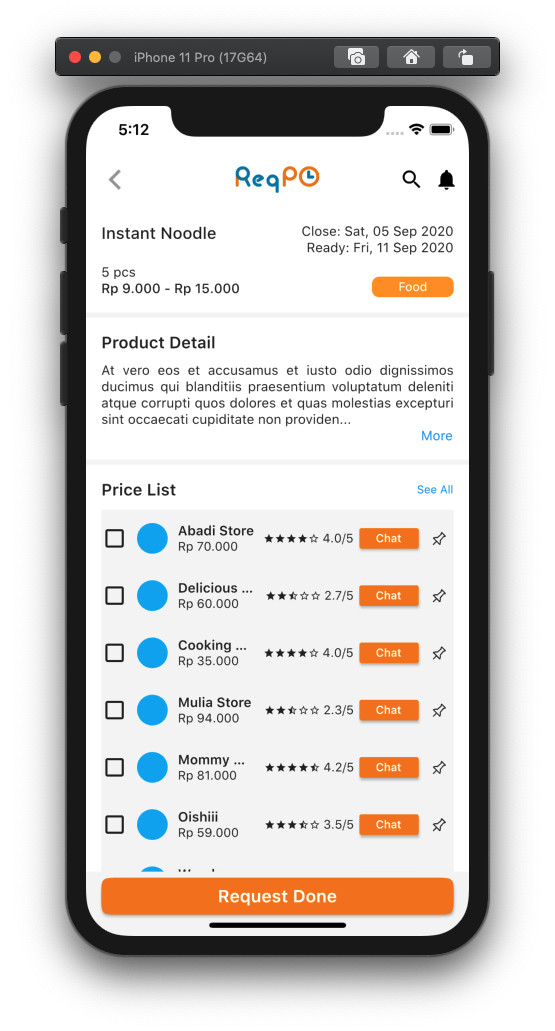
From the development side, we learn how to develop a mobile app using the Flutter framework. One of our team members proposed Flutter as our development framework because he had recently studied it and want to deepen his knowledge. The rest of the team have had experience developing native Android and iOS apps and agreed to try a new framework and learn it for the hackathon. From the designer side, we learned how to use various plugins to make a better design and prototypes. Additionally, the time constraint is especially challenging from the designer's point of view and we managed to do the quick brainstorming session and even find inspiration to make a logo for the app using Figma.
What's next for ReqPO
- Backend backend backend
- Transaction flow
- Improve the idea of customer requests and seller's bidding
- Implement video stories
Built With
- dart
- figma
- flutter

Log in or sign up for Devpost to join the conversation.