-
-
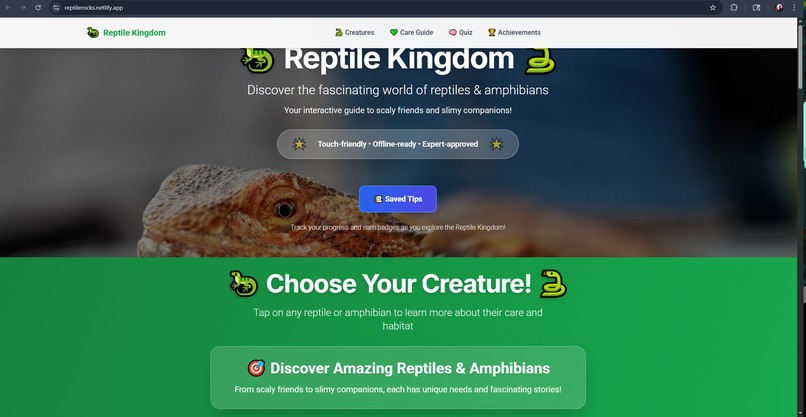
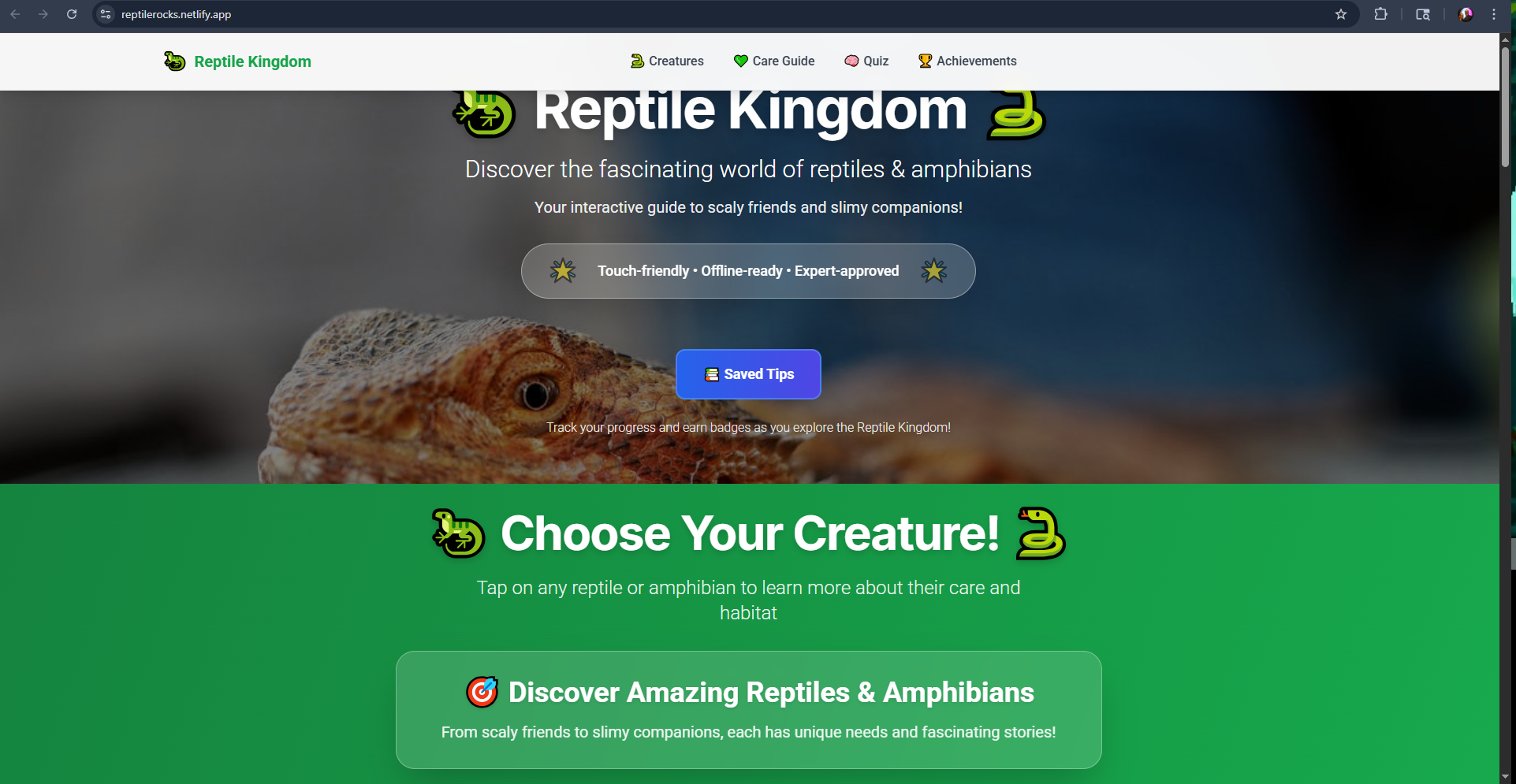
ReptileRocks welcome screen with a beautiful bearded dragon image and clear navigation for pet store visitors.
-
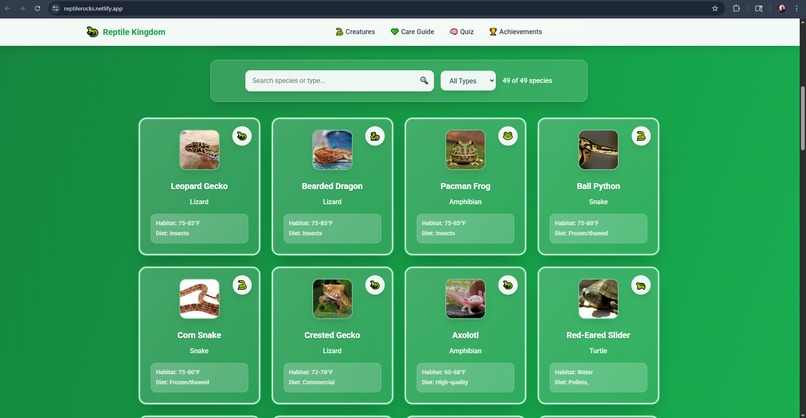
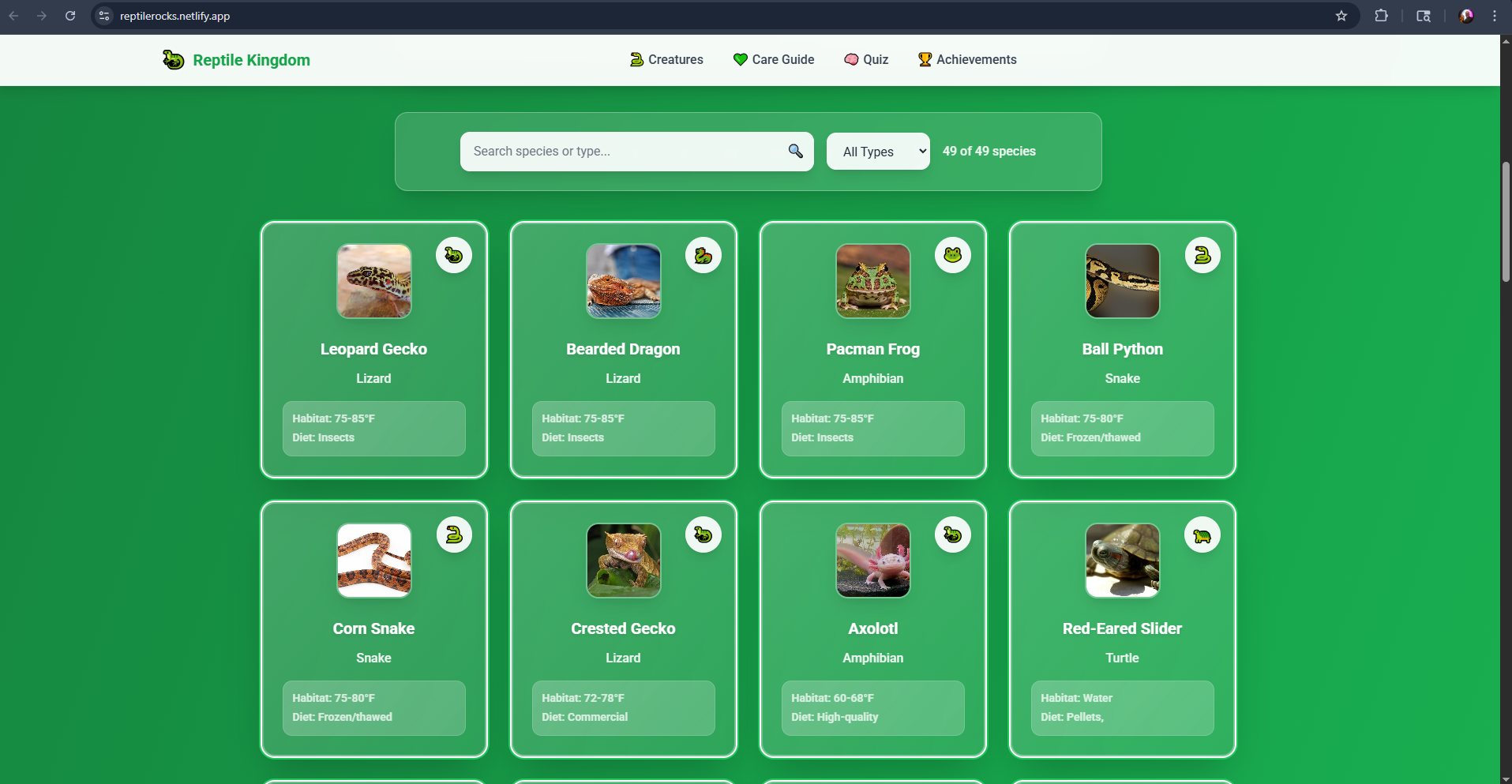
Main grid showing reptiles and amphibians, each with real images and quick identifiers.
-
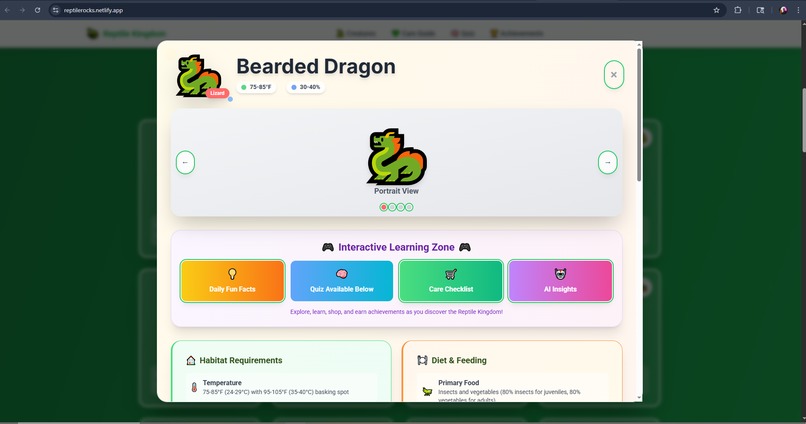
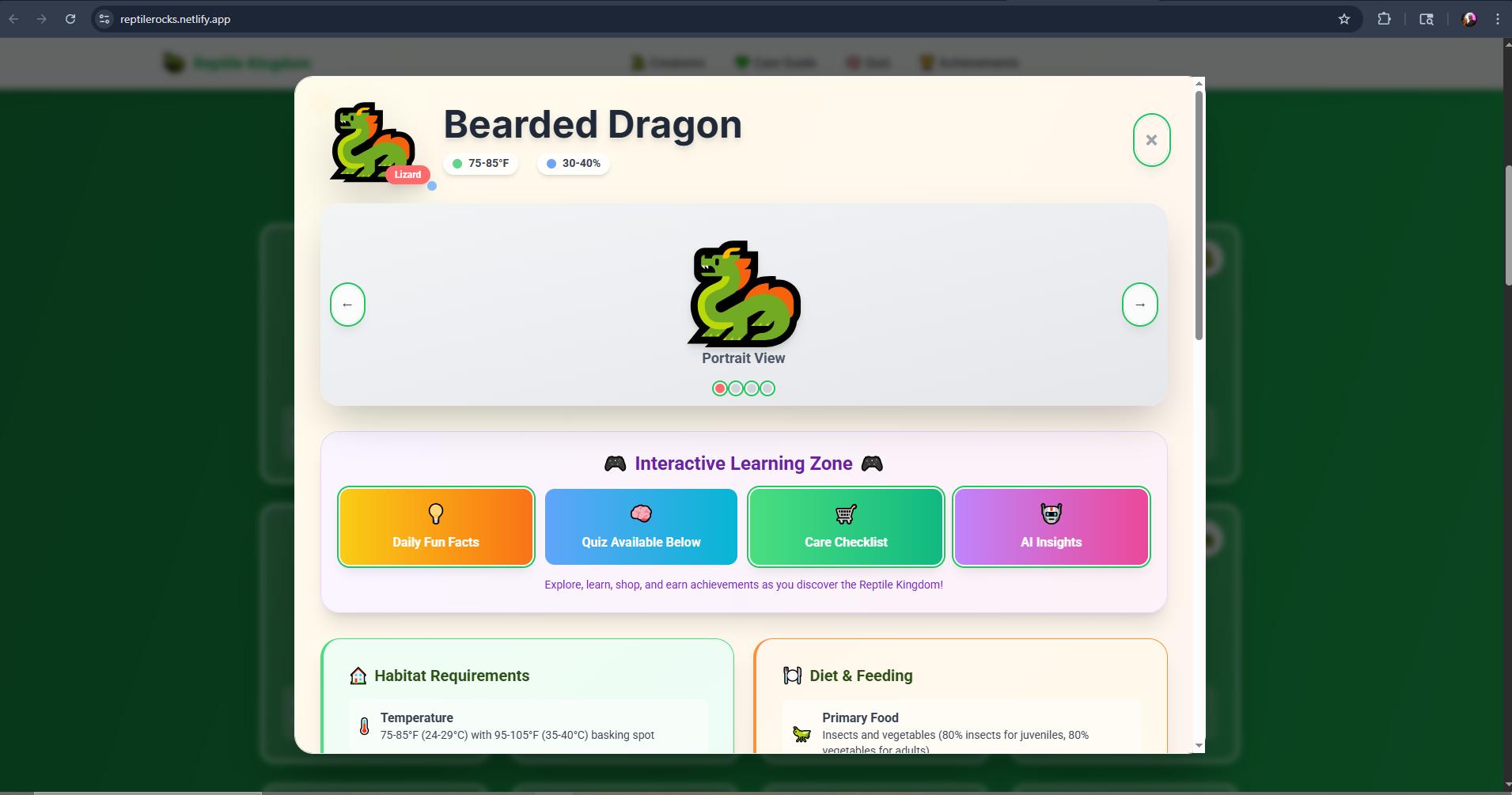
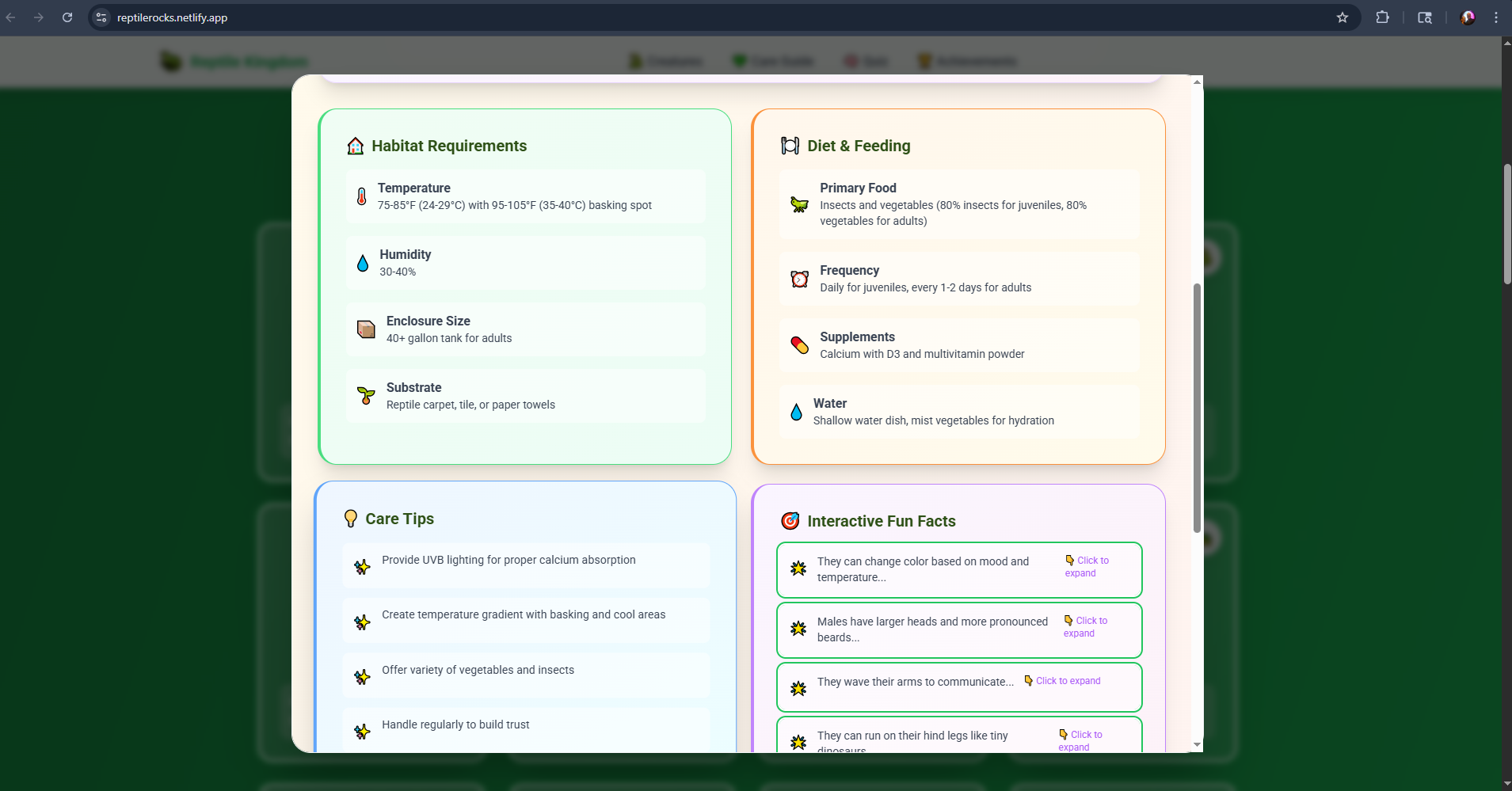
Detailed modal with photos, care notes, and fun facts for each species.
-
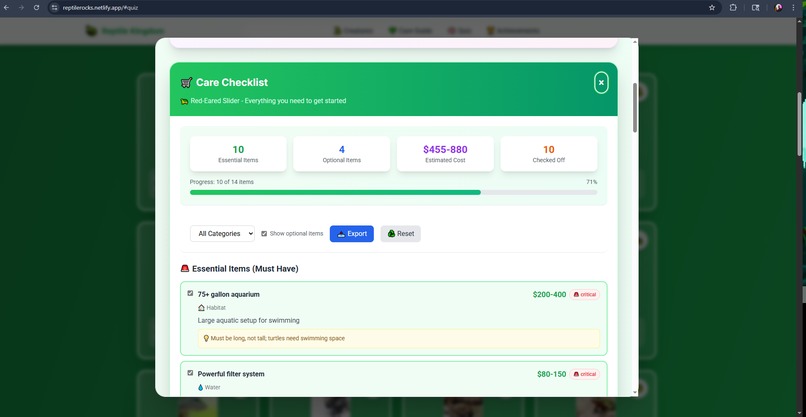
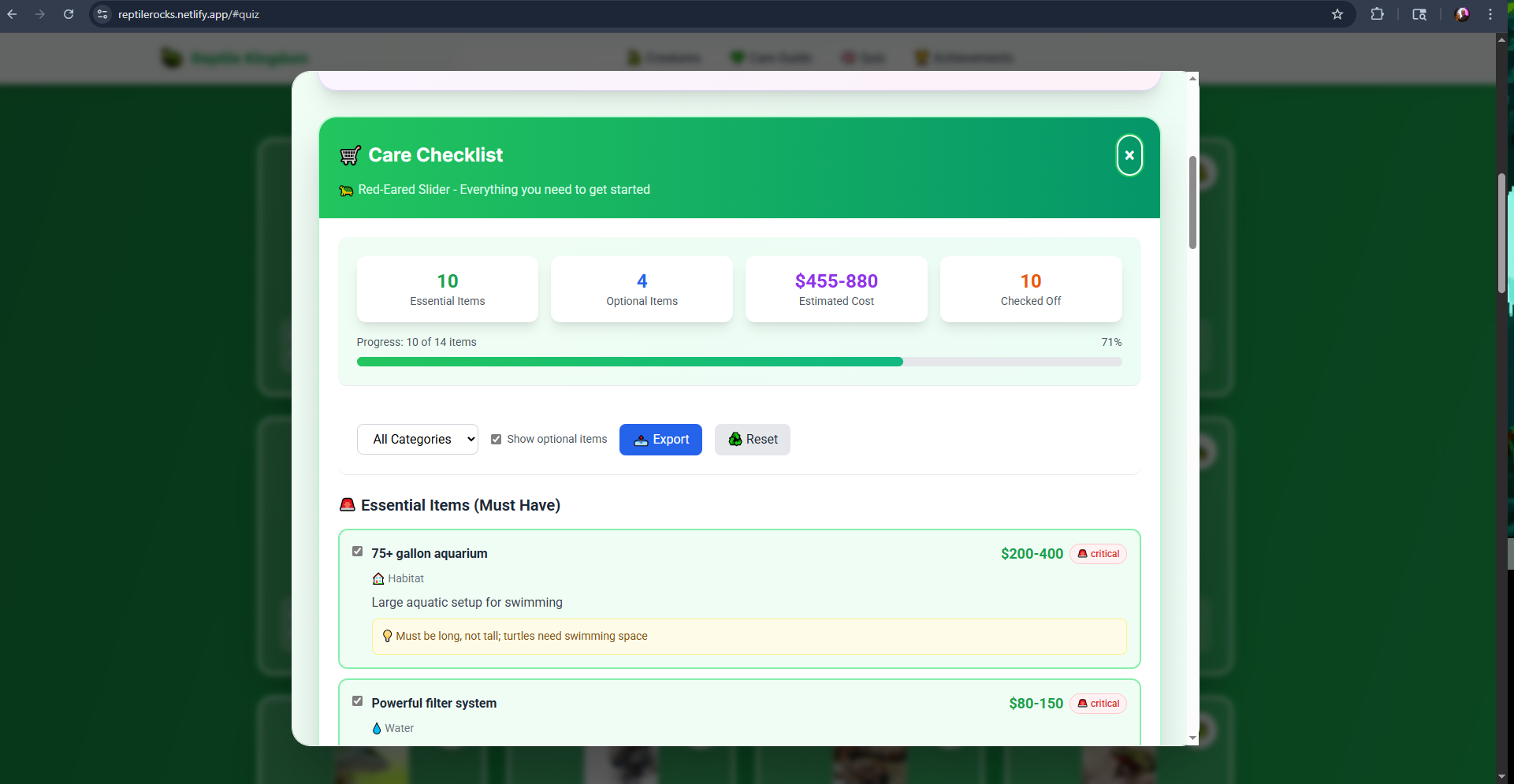
Embedded care checklist with setup cost and monthly cost pill for practical guidance.
-
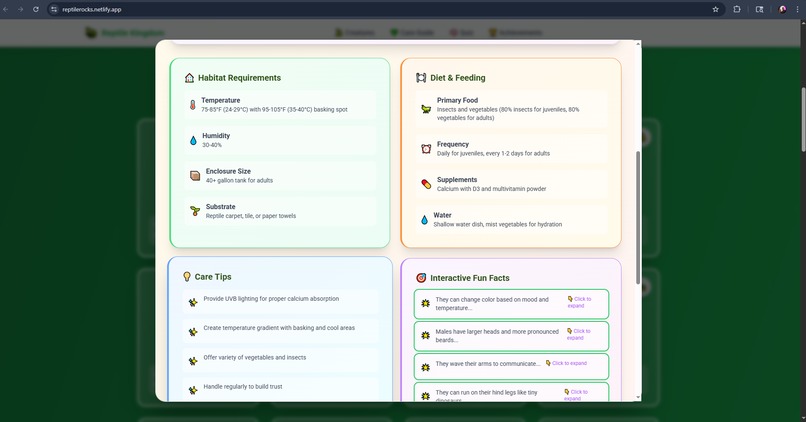
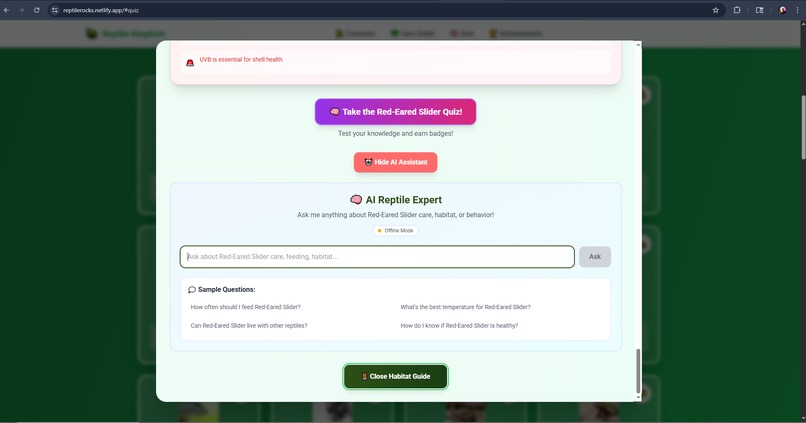
Interactive carousel displaying species portraits, habitats, behaviors, and care tips.
-
Log where customers can save tips and Q&A, complete with a live counter in the header.
-
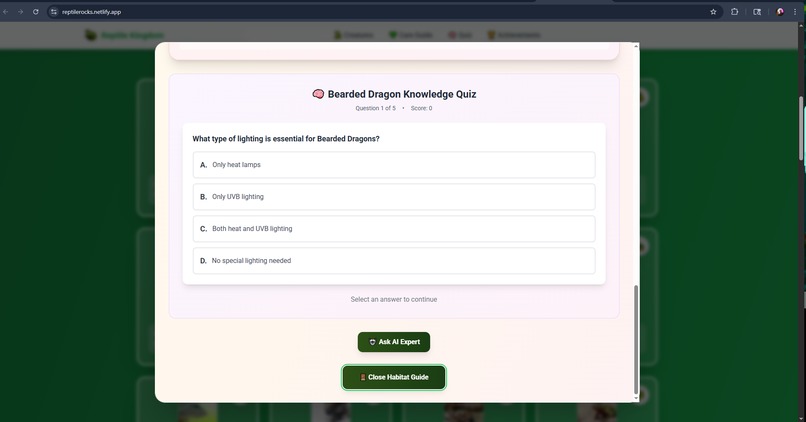
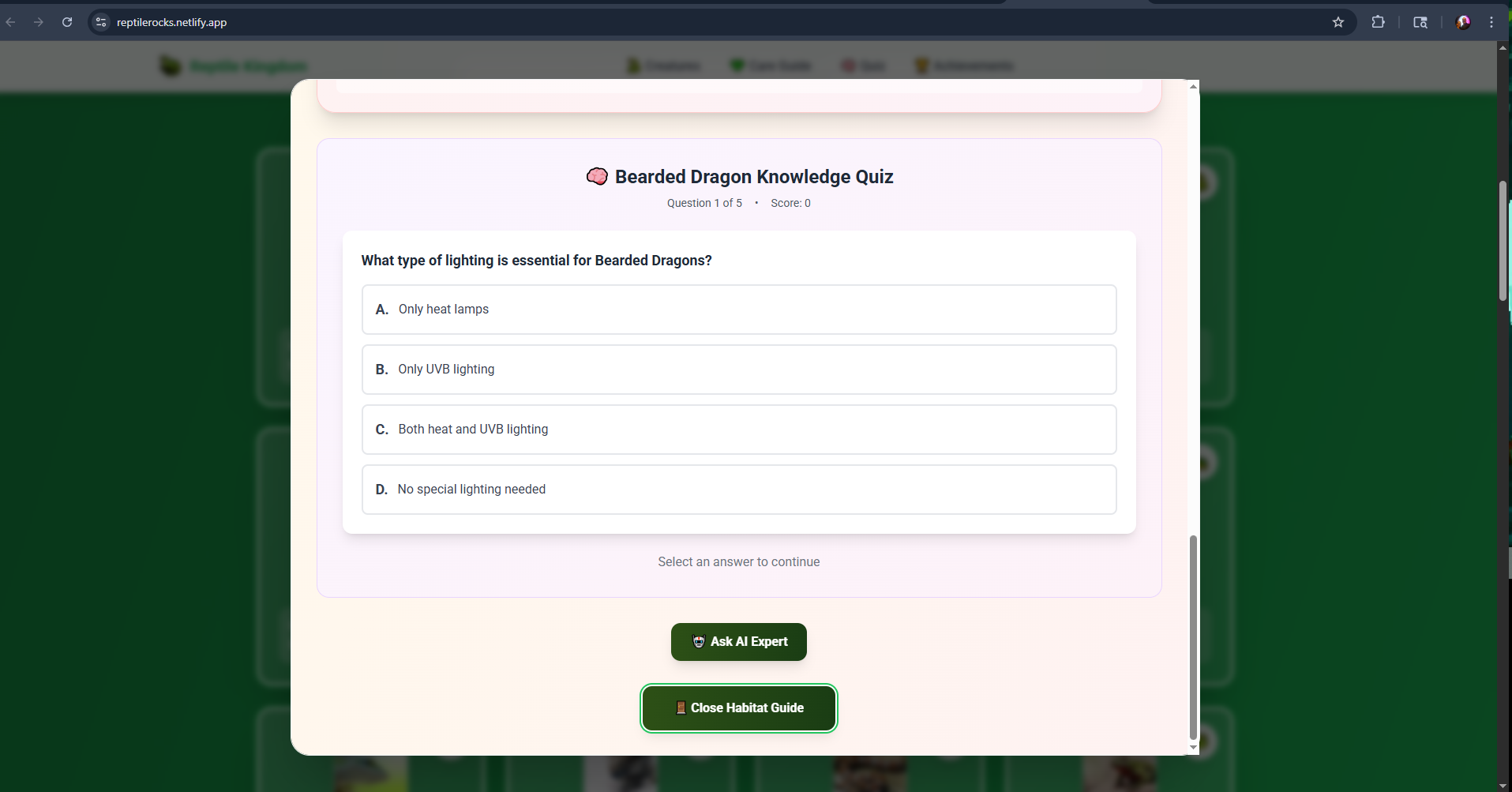
Gamified badges that reward learning as customers explore reptile care topics.
Inspiration
Working in a pet store, I have seen too many reptiles and amphibians neglected. Often it is not cruelty, but misunderstanding. Animals are returned sick, underweight, or even dead because owners did not know the basics of care. That pain became my motivation. I want to use AI to bridge the gap between human ignorance and animal welfare. If humans can harm nature by mistake, technology can help heal that harm. ReptileRocks was born from this vision: AI as a tool of empathy, education, and healing.
What it does
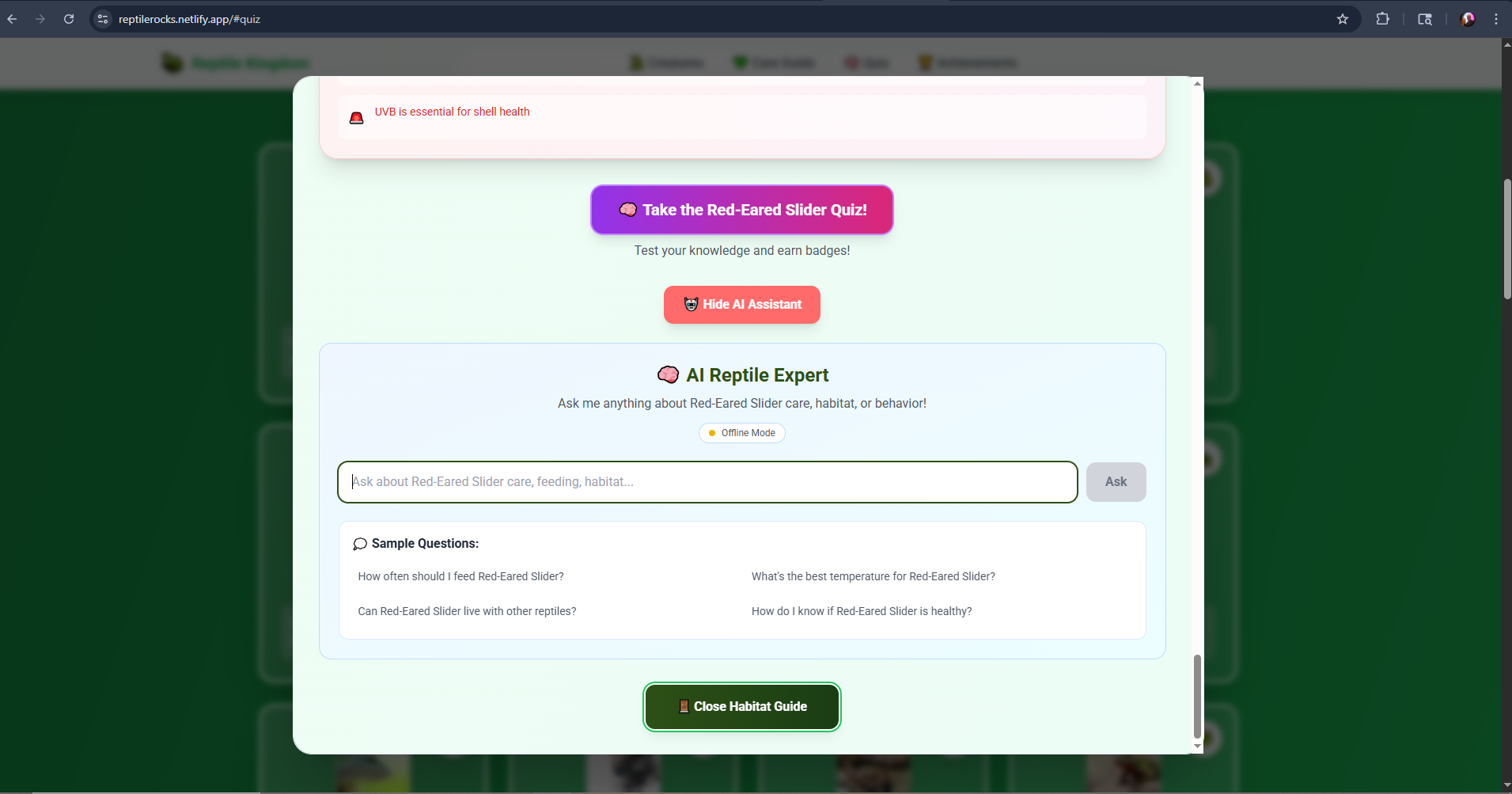
ReptileRocks is a mobile friendly web app that teaches people how to care for reptiles and amphibians. It provides accurate care guides with clear costs and requirements, checklists for setup and ongoing care, interactive features like quizzes and badges, and an AI powered Q&A that answers natural language questions with expert level accuracy. It turns curiosity into responsibility and helps prevent unnecessary suffering.
How we built it
I built ReptileRocks with React and Tailwind CSS for a clean and responsive UI. AI is integrated through a flexible service layer that defaults to GPT OSS via Ollama for local use and can switch to OpenAI APIs for cloud intelligence. Deployment is handled through Netlify so the app works on phones, tablets, and desktops. The system includes testing dashboards, growth monitoring, and a living roadmap that adapts to user feedback.
Challenges we ran into
The biggest challenge was sourcing real, high quality, stock images for each species. Another challenge was balancing education and simplicity without overwhelming the user. I also had to make sure AI answers were trustworthy and beginner friendly. Finally, polishing the interface for mobile while meeting hackathon deadlines required focus and iteration.
Accomplishments that we are proud of
I successfully embedded a care checklist with both setup and monthly cost breakdowns. I built a quest system that evolves with user feedback. I shipped a professional UI with onboarding tooltips, counters, and visual polish. Most importantly, I designed it to be accessible, scalable, and engaging for all ages.
What we learned
I learned that clear language is critical when teaching reptile care. I saw that AI can be more than a chatbot; it can act as a teacher and a guide. I discovered that small UX details like badges and counters create trust and enjoyment. Most of all, I learned that nature and technology can work together for good!
What's next for ReptileRocks
Next, I want to expand ReptileRocks beyond reptiles and amphibians into a full spectrum of species care, including fish, farm animals, small mammals, and even insects. Each category will feature curated care data, real stock images, and clear guides designed to prevent suffering caused by misinformation.
The interface will continue to evolve into a playful, intuitive experience where navigation is easy and engaging, and where every user can save their pet to a personal profile. Owners will be able to track setup costs, ongoing expenses, health notes, and care achievements that make learning feel both fun and rewarding.
I also want to see my own pet store employer adopt this platform across every location! I have already tested it in-store, and customers were so excited that they asked me to write down the demo link. Some even returned later to tell me how helpful it was. The vision is to install ReptileRocks on giant touch tablets right next to the enclosures, so both staff and guests can interact with it for education and sales support.
From there, I plan to add voice interaction for hands-free use, multi-language support to make it accessible worldwide, and image recognition to quickly flag health concerns. I also hope to collaborate with schools, community programs, and pet stores to reduce neglect across all species.
The ultimate goal is to grow ReptileRocks into a movement where AI actively helps heal what humans sometimes harm. By blending education with technology, we can empower people to care for animals with confidence, reduce preventable suffering, and create a better future for nature.

Log in or sign up for Devpost to join the conversation.