-
-
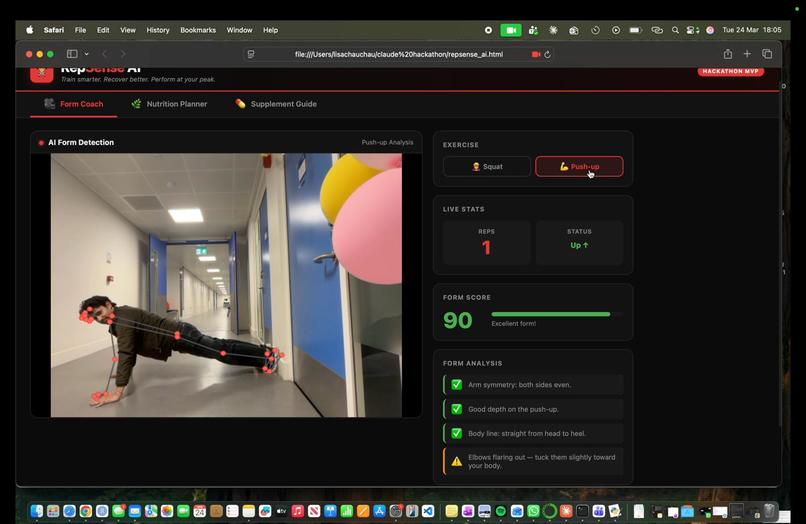
push up monitoring 4
-
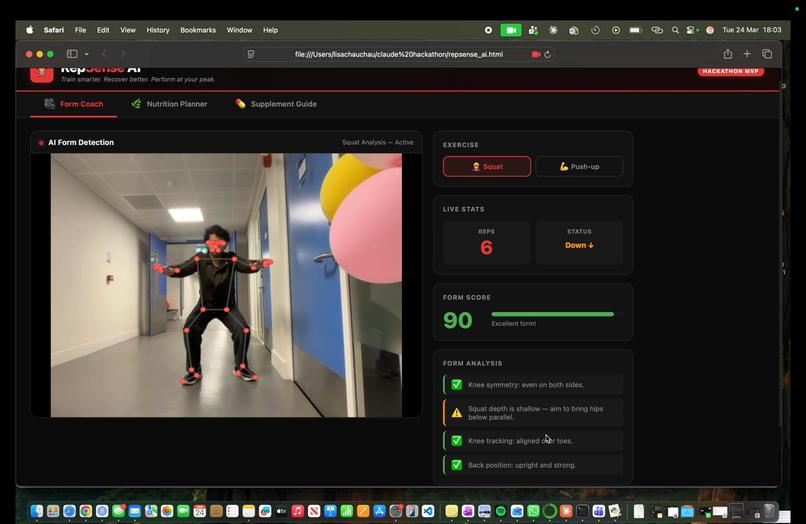
Squat monitoring 1
-
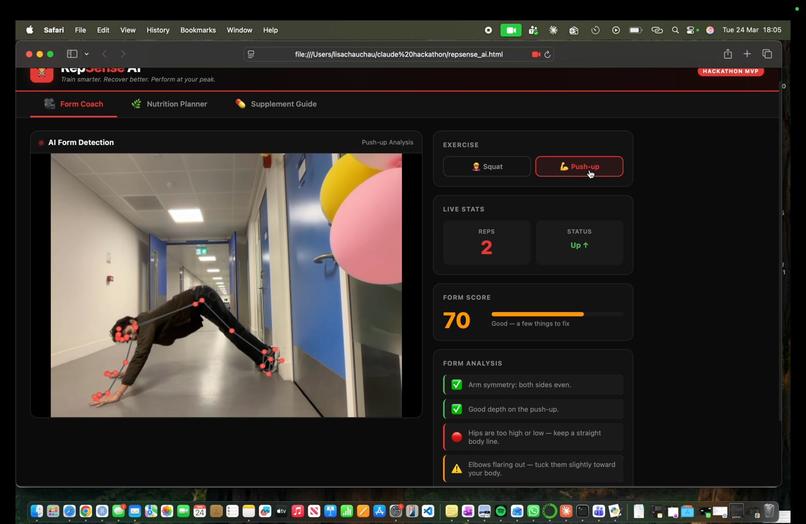
push up monitoring 3
-
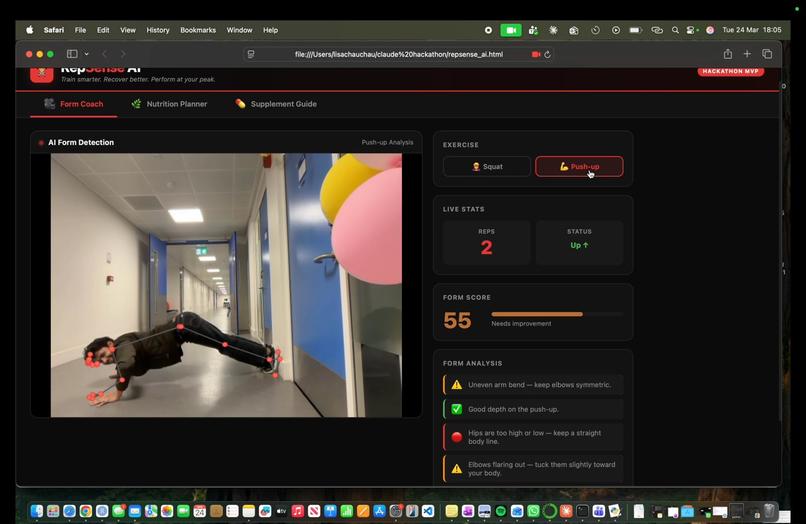
push up monitoring 2
-
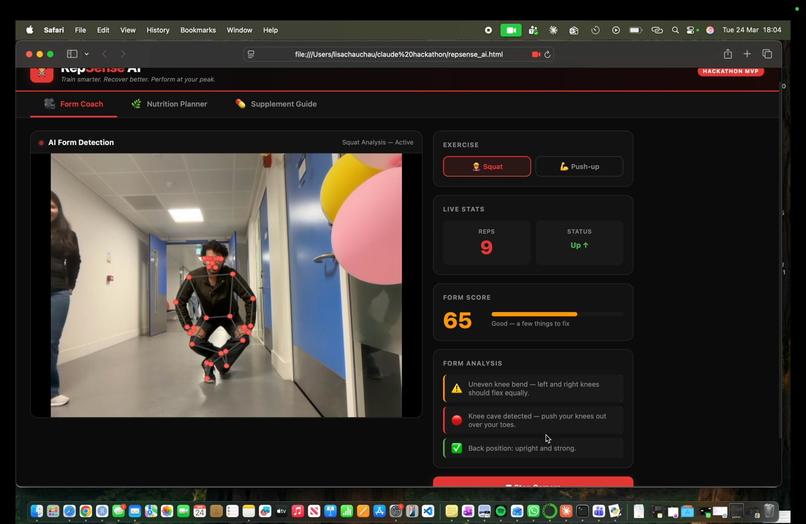
push up monitoring 6
-
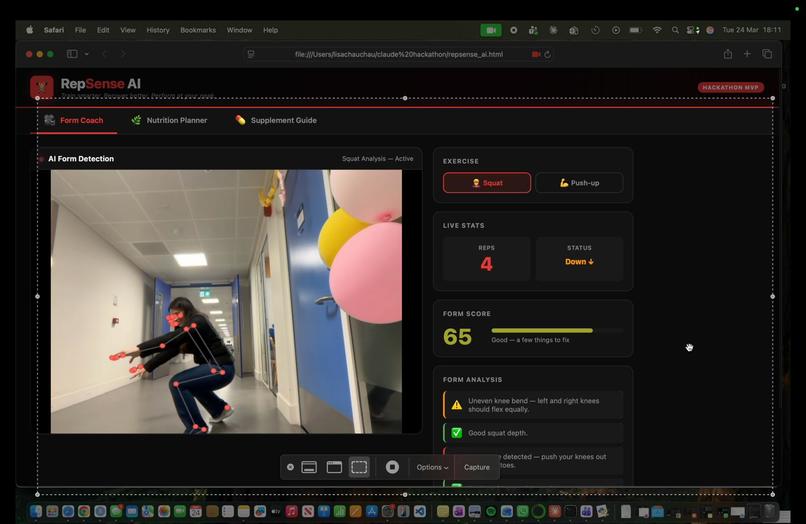
Squat monitoring
-
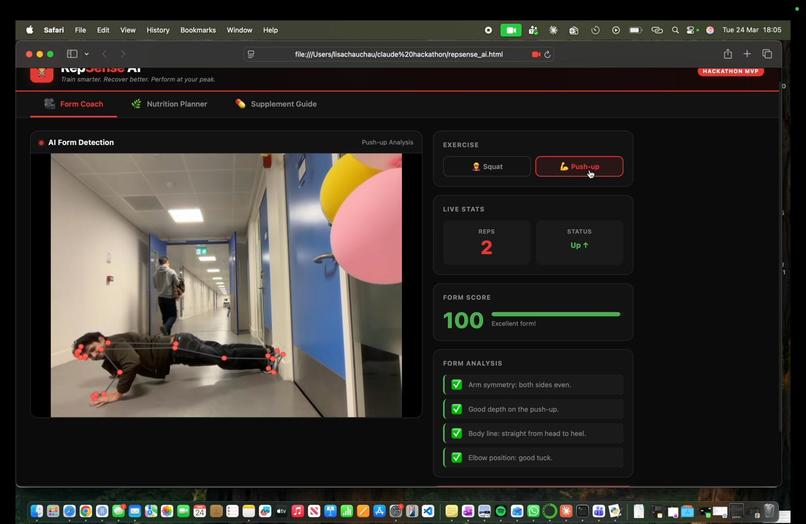
push up monitoring 1
-
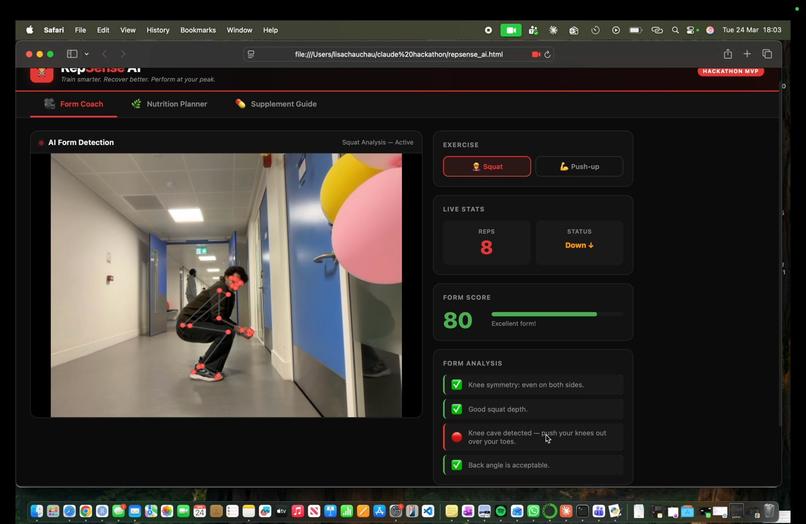
push up monitoring 5
Inspiration
Millions of people train regularly but without access to proper guidance. Most beginners perform exercises with incorrect form, follow diets that don't reflect their cultural background, and take supplements without understanding whether they need them. Professional personal trainers are expensive and unavailable during most workouts. We wanted to democratise access to intelligent, personalised fitness coaching — making expert-level guidance affordable and available to anyone, anywhere.
What it does
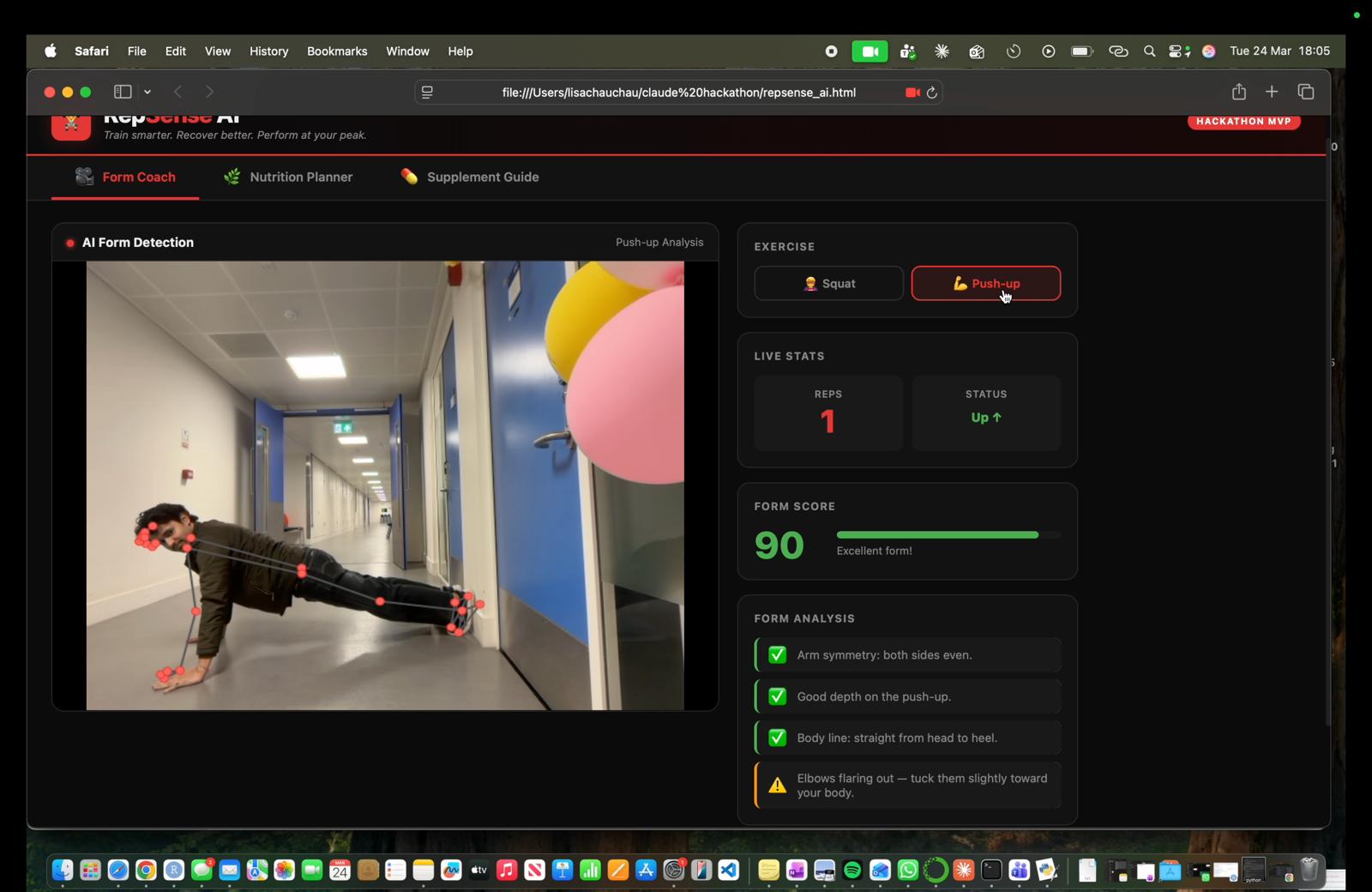
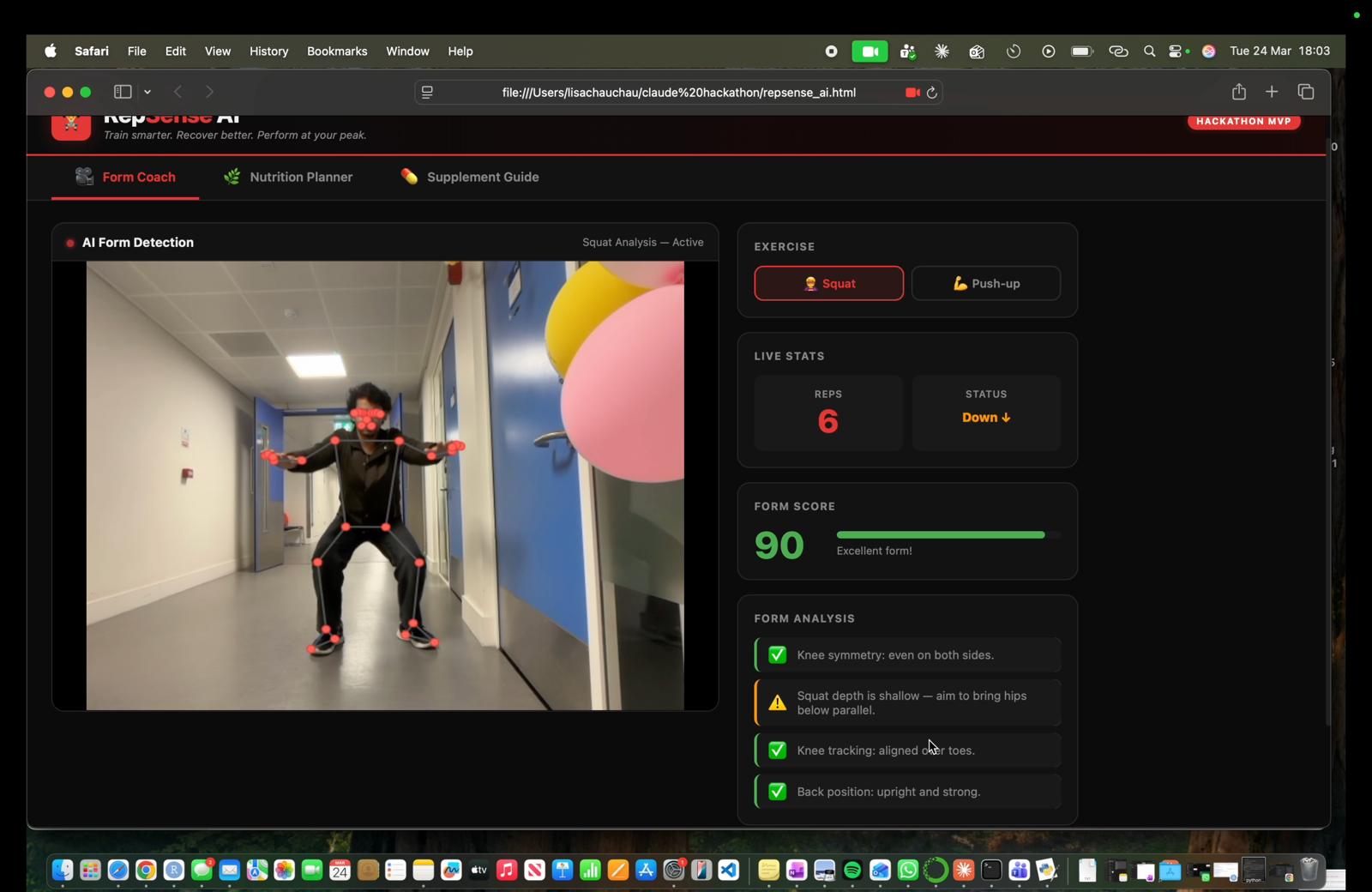
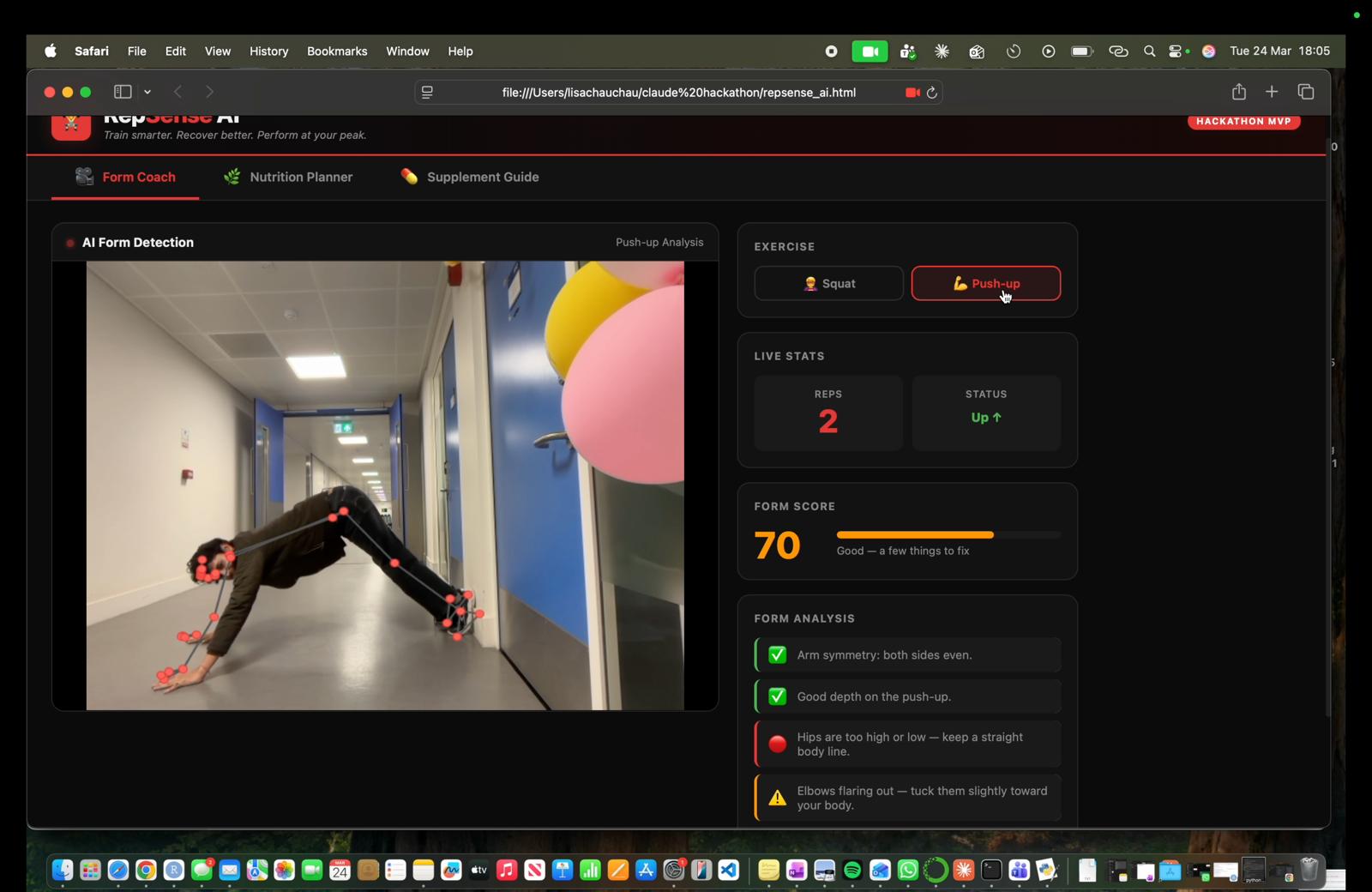
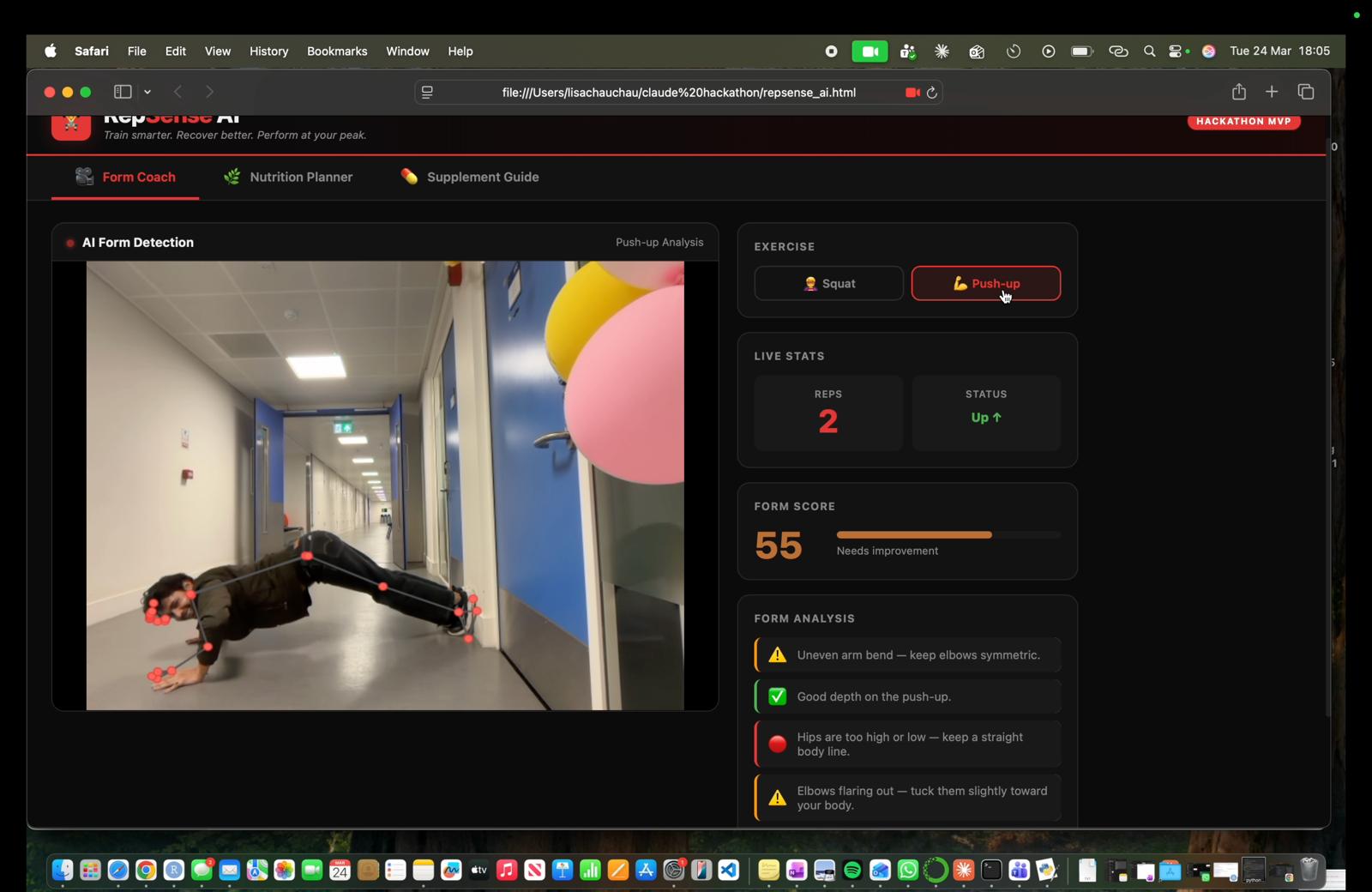
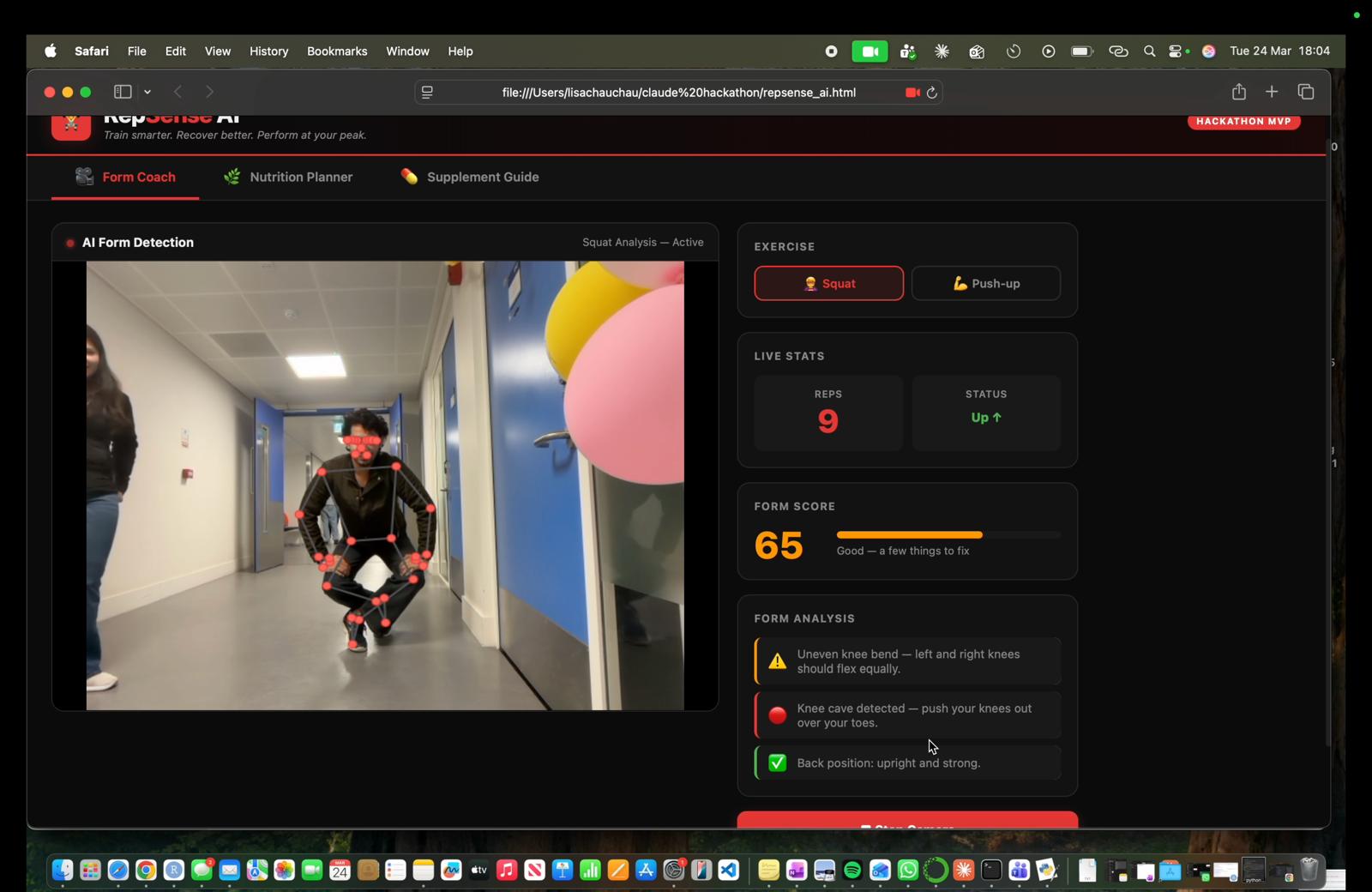
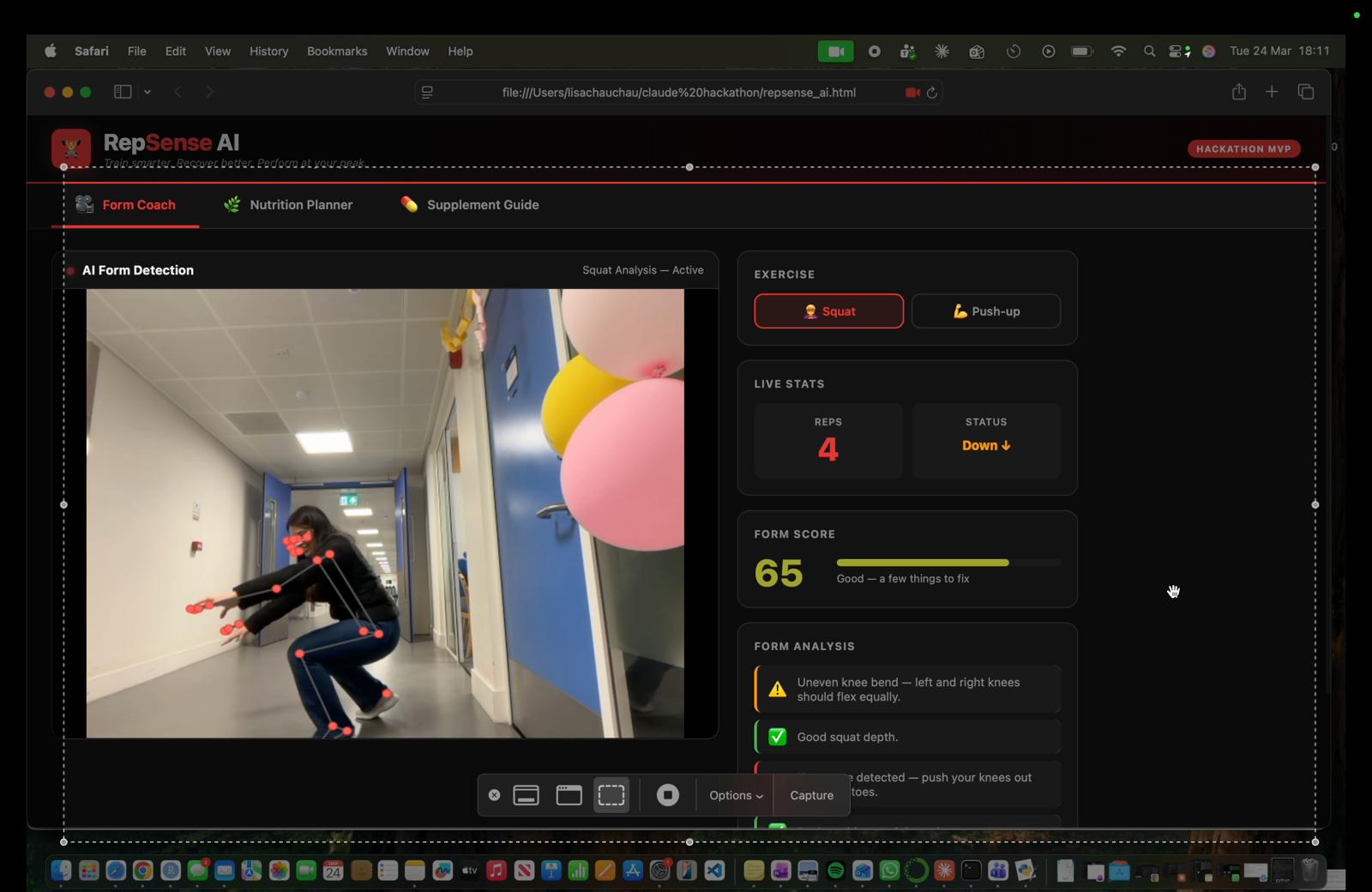
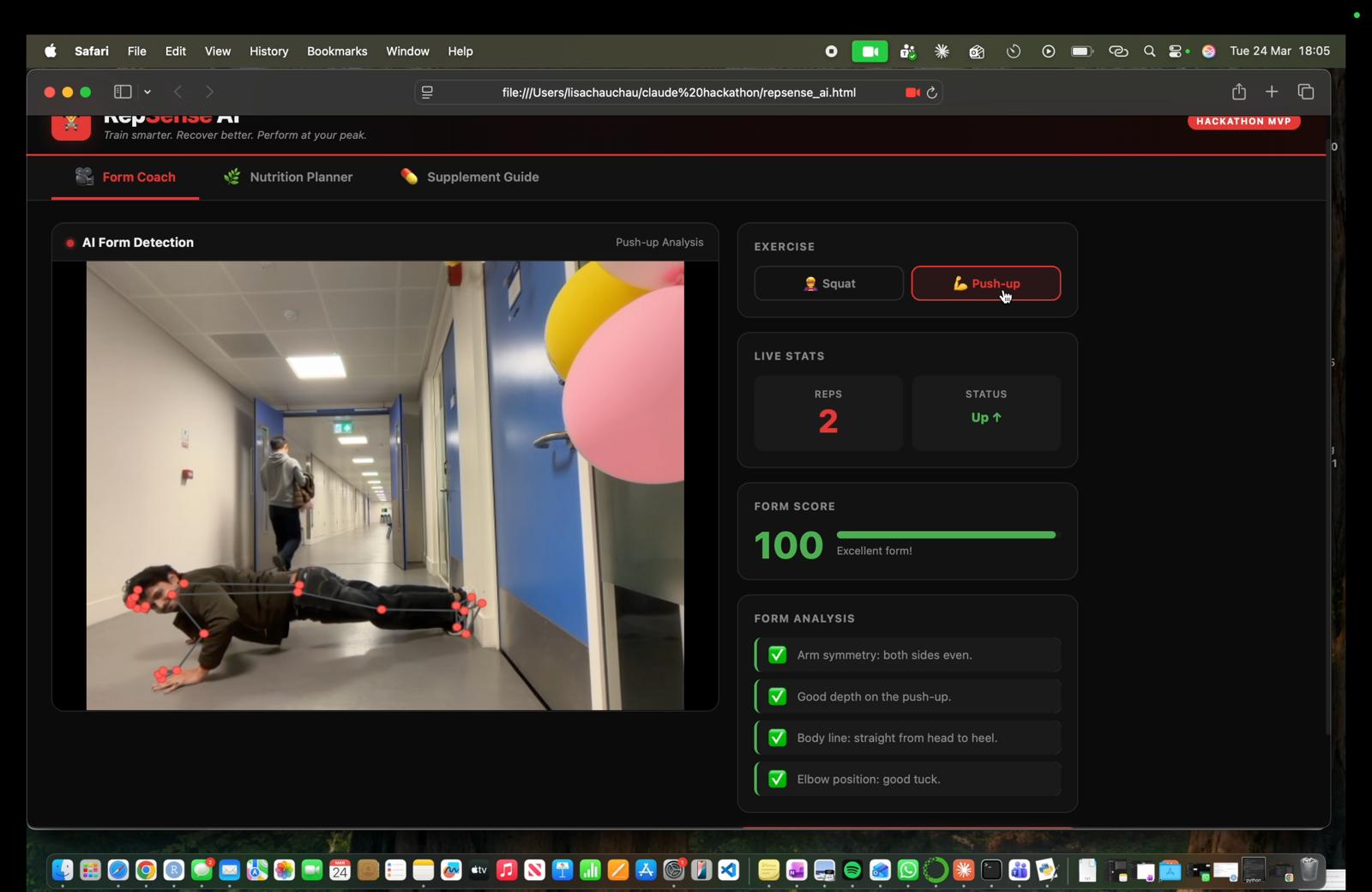
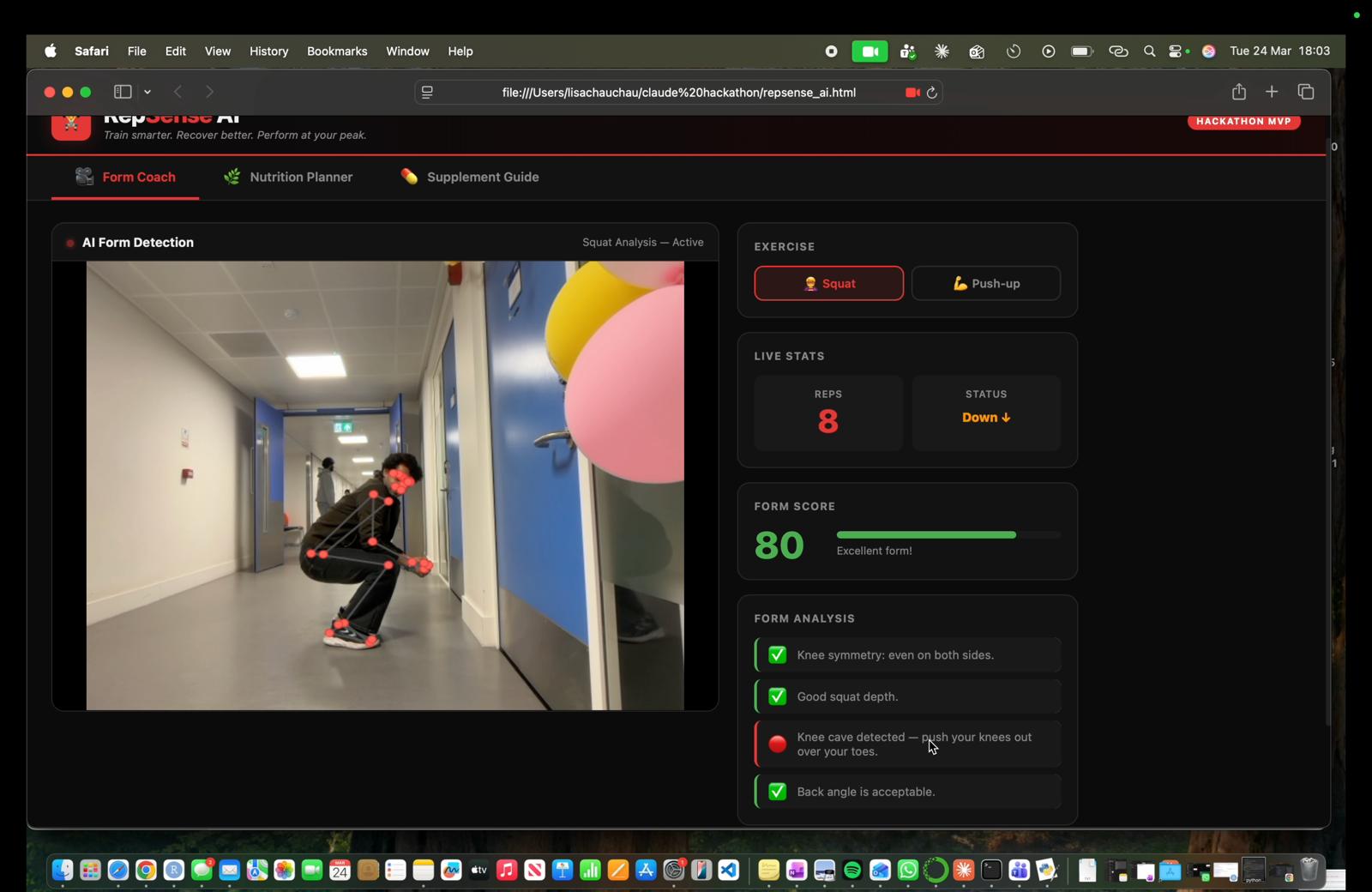
RepSense AI is an intelligent fitness agent that combines three powerful capabilities in one system: 1) AI Movement Intelligence — uses computer vision to analyse exercise form in real time, detecting issues like knee collapse during squats, counting reps, scoring technique, and flagging injury risk patterns 2) AI Nutrition Planner — generates personalised, culturally compatible meal plans based on body weight, training goals, and dietary preferences including halal, vegan, Hindu vegetarian, and high-protein diets 3) Supplement Guidance — provides evidence-based recommendations on protein, creatine, electrolytes, and vitamins aligned with the user's specific training goals Together, these features deliver a smarter, safer, and more personalised way to train and recover.
How we built it
RepSense AI is built on four core components: 1) Computer Vision Engine — pose estimation models detect body posture, joint alignment, and movement patterns during exercises 2) AI Performance Agent — processes workout, nutrition, and recovery data to generate real-time coaching insights and performance explanations 3) Nutrition & Supplement Intelligence Module — calculates daily protein targets, generates meal plans, and delivers supplement guidance based on user inputs 4) Mobile Application Interface — allows users to record exercises, input dietary preferences, and interact with the AI coach in real time
Challenges we ran into
1) Achieving accurate real-time pose detection across varied body types, clothing, and lighting conditions 2) Building a nutrition engine that genuinely supports cultural and dietary diversity rather than defaulting to Western diet assumptions 3) Balancing the depth of AI reasoning with response speed to ensure coaching feels real-time and natural 4) Scoping the MVP tightly enough to be buildable within the hackathon timeline while still demonstrating meaningful real-world value.
Accomplishments that we're proud of
1) Delivering a working MVP that covers movement analysis, nutrition planning, and supplement guidance in a single integrated system 2) Building cultural diet compatibility that supports halal, vegan, Hindu vegetarian, and other underrepresented dietary preferences , something most fitness platforms still ignore 3) Generating actionable, personalised AI insights that explain why performance changes occur, not just tracking numbers 4) Creating a demo that clearly shows the end-to-end user journey from squat analysis to meal plan in one seamless flow
What we learned
1) Computer vision for fitness is technically demanding but incredibly impactful , small form corrections can meaningfully reduce injury risk over time 2) Cultural inclusivity in nutrition is not a nice-to-have; it's a significant gap in the market that users genuinely care about 3) The most valuable AI coaching goes beyond tracking , users want the AI to explain their progress, not just display it 4) Scoping an MVP well is as important as building it , prioritising the three highest-impact features allowed us to ship something coherent and demonstrable.
What's next for RepSense AI
RepSense AI aims to evolve into a complete AI operating system for human performance. The post-hackathon roadmap includes:
AI Digital Twin : a personalised model of the user's body predicting fatigue, injury risk, and recovery needs before they become problems Workout Replay Analysis : annotated video breakdowns highlighting posture improvements over time Voice-Based AI Coaching : real-time audio prompts during workouts ("Keep your chest upright") Habit & Recovery Tracking : monitoring sleep, hydration, and training load to optimise recovery Wearable Integration : connecting with Apple Watch, Fitbit, and Whoop to enrich performance insights.


Log in or sign up for Devpost to join the conversation.