Inspiration
Last week, I tried to go deep into the open-source codebase of a framework I wanted to master. While trying to understand the large, unfamiliar codebase, I realized that the hardest part wasn’t the syntax: it was forming a mental model of how everything fit together.
Files referenced other files, functions jumped across directories and documentation explained what existed (and it was not very beginner-friendly, mind you) but not how it actually worked together.
I understood this problem is even worse for absolute beginners. Most learning resources rely on toy projects, while real-world codebases are large, interconnected and absolutely intimidating. That gap between learning programming and understanding real code is where many developers get stuck.
RepoTutor was born from the idea that any codebase should be teachable, regardless of its size or complexity.
What it does
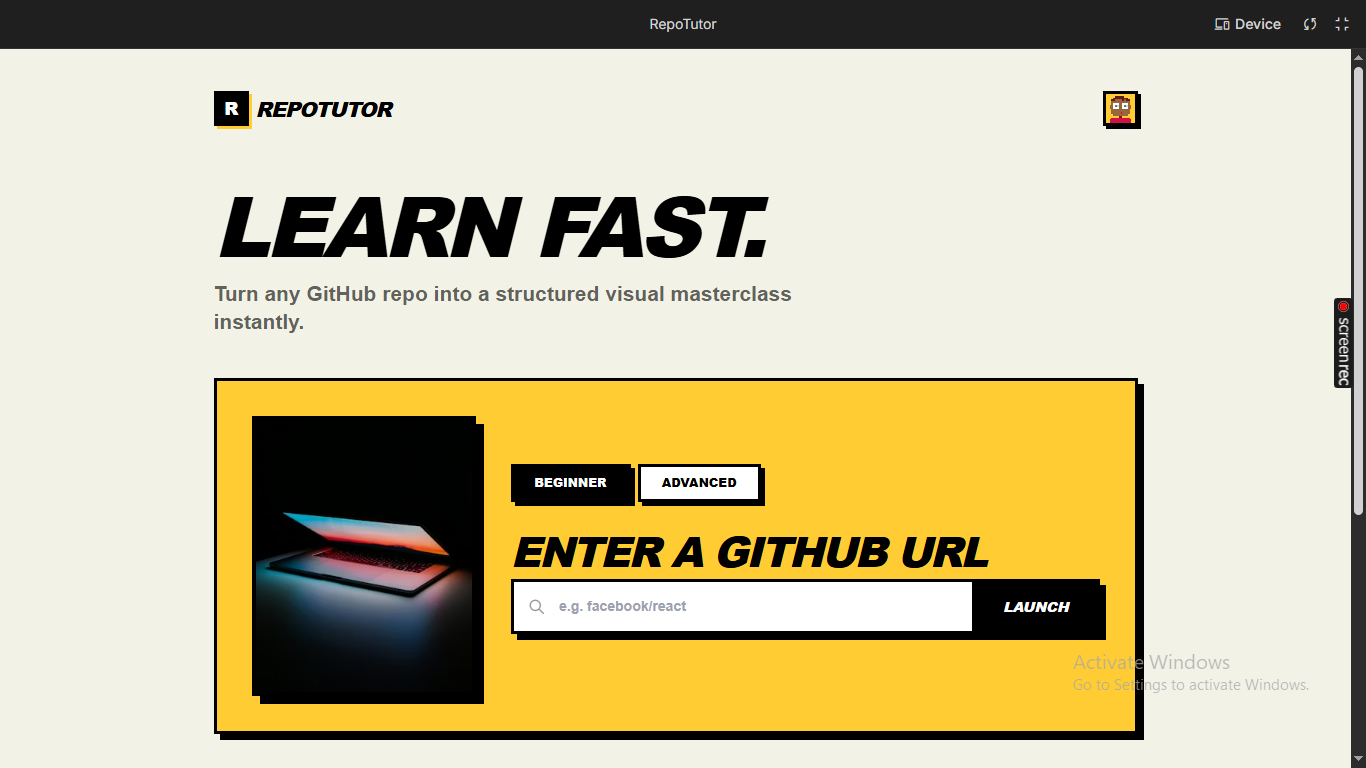
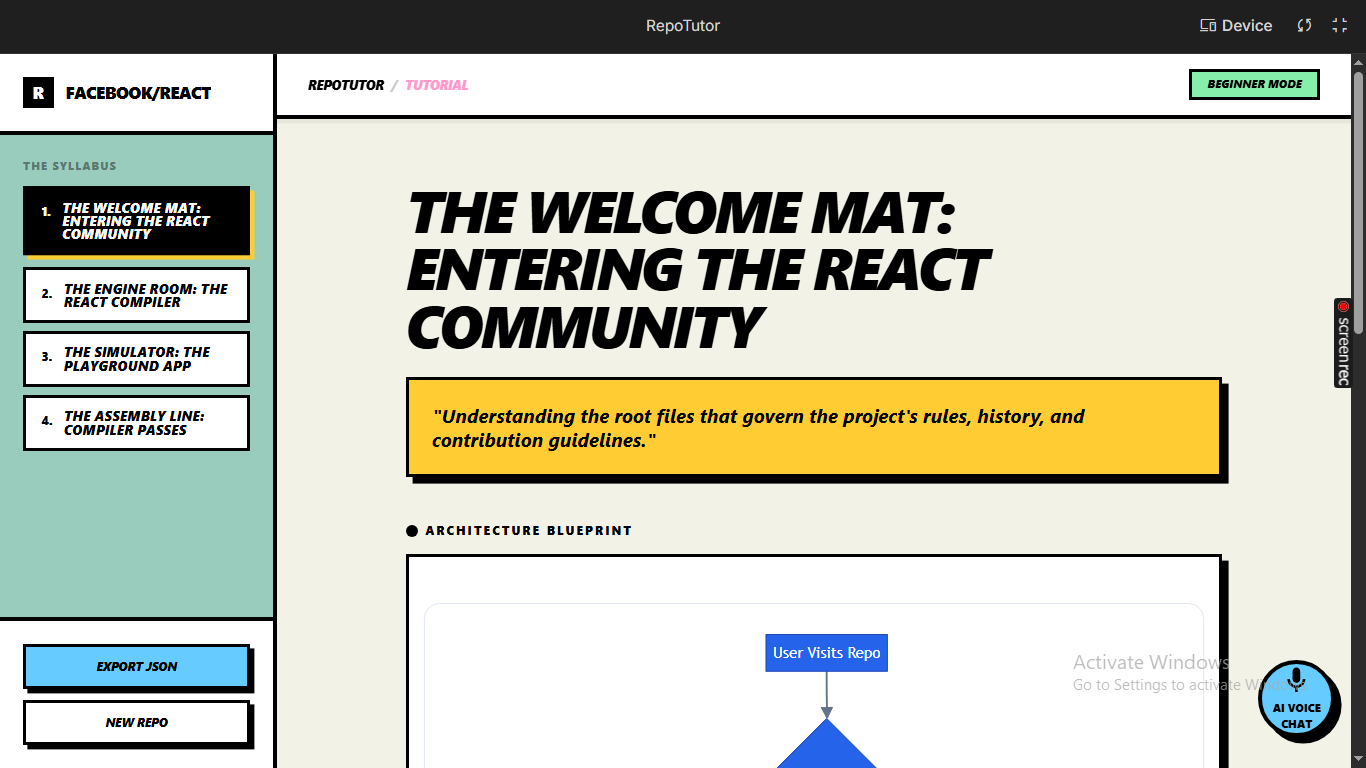
RepoTutor turns any public GitHub repository into a step-by-step personalised tutorial they can interact with through voice.
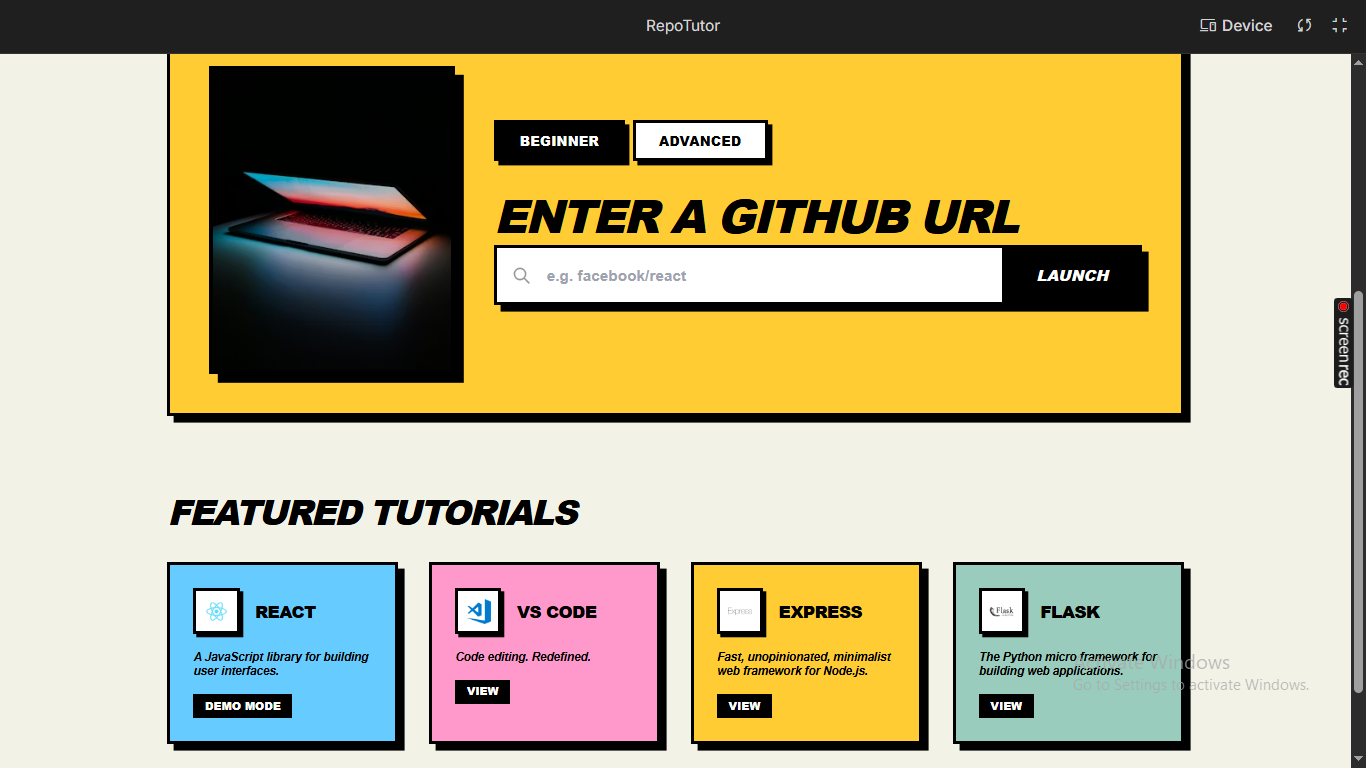
Users paste a repository link, and RepoTutor:
- Allows user to choose between Beginner and Advanced explanations
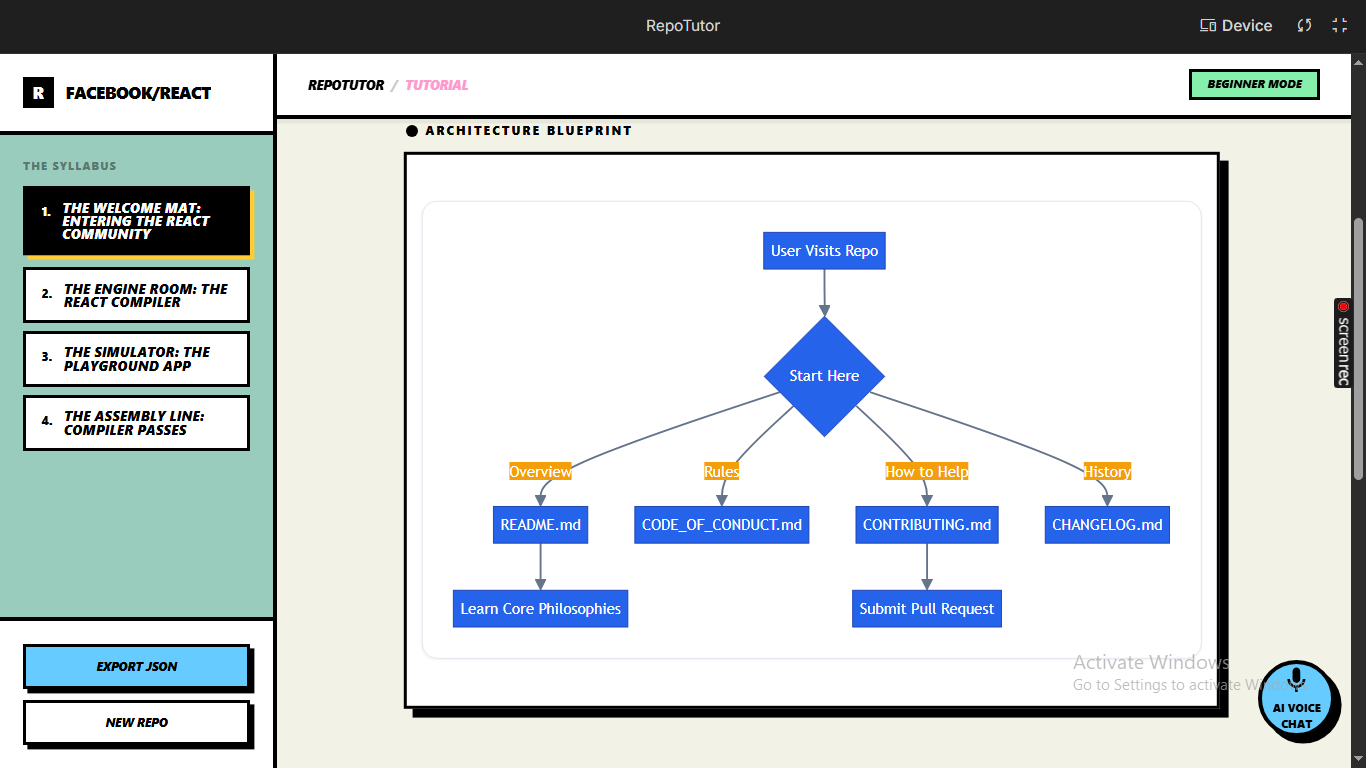
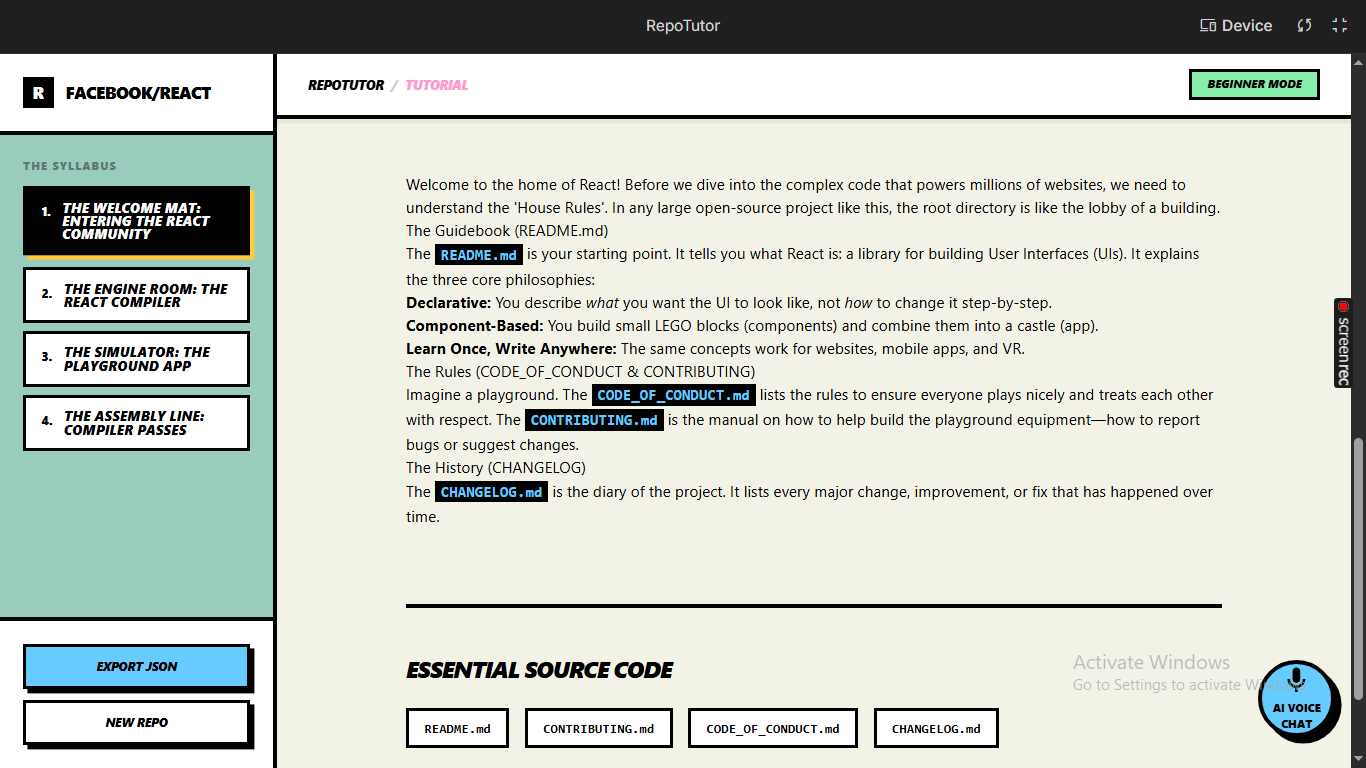
- Breaks the project into logical chapters
- Generates architecture and flow diagrams
- Explains each component in clear, structured language
- Lets users interact with the codebase using voice
Instead of reading files in isolation, users learn how the system works as a whole.
Who can use it
- Beginner developers trying to understand real-world projects
- Students learning from open-source repositories
- Hackathon teams onboarding quickly
- Developers joining a new codebase
- Educators teaching software architecture using real examples
How we built it
RepoTutor is powered by Gemini 3’s multimodal reasoning.
- GitHub repositories (which may be LARGE in size) are analyzed to understand structure, dependencies, and execution flow
Gemini 3 generates:
- Multi-chapter explanations
- Beginner and advanced learning paths
- Code-aware diagrams (architecture, data flow, execution)
Voice-based interactions allow users to ask the codebase questions naturally
Diagrams and text explanations stay synchronized, helping users visually and conceptually
This approach allows RepoTutor to translate code across text, visuals, and speech, not just summarize it.
Why Gemini-3?
Advanced Multimodality: Processes and synthesizes information across text, images and code with high precision, allowing us to get information through the codebase.
Deep Reasoning & Thinking: Offers unprecedented depth in analysis, with specialized "Deep Think" modes for complex problem-solving. This helps us piece together the entire codebase's functions/directories/api calls,etc.
1M+ Context Window: Supports large context windows, such as 1,048,576 tokens in Gemini 3 Flash, allowing for analysis of long documents or codebases.
Challenges we ran into
- Breaking large, unstructured repositories into clean, teachable chapters
- Ensuring explanations were accurate while remaining beginner-friendly or tech-heavy based on the user's preference
- Keeping diagrams and explanations contextually aligned
- Passing off more information to the Voice AI assistant
- Avoiding information overload while still explaining complex systems
Accomplishments that we're proud of
- Successfully turning complex repositories into coherent learning journeys
- Building a Beginner / Advanced toggle that adapts explanations instantly
- Integrating voice-based “Ask the Codebase” interactions
- Generating diagrams that reflect actual code relationships
- Creating an experience that feels like a personal tutor for any repo
What we learned
- Beginners don’t struggle with code: they struggle with context
- Multimodal explanations dramatically improve understanding
- Teaching software requires structure, pacing, and visualization (not just text)
- AI is most powerful when it connects ideas across formats, not when it replaces reading
What’s next for RepoTutor
- Interactive execution tracing (“What happens when this function runs?”)
- Quizzes and knowledge checks per chapter
- Support for private repositories
- Exportable tutorials (slides, PDFs, documentation)
- Team collaboration for onboarding and learning
Our long-term vision is to make every codebase learnable, no matter how complex.
Built With
- gemini
- gemini3api
- githubapi
- google-cloud
- googleaistudio
- mermaidsvg
- react
- typescript

Log in or sign up for Devpost to join the conversation.