-
-
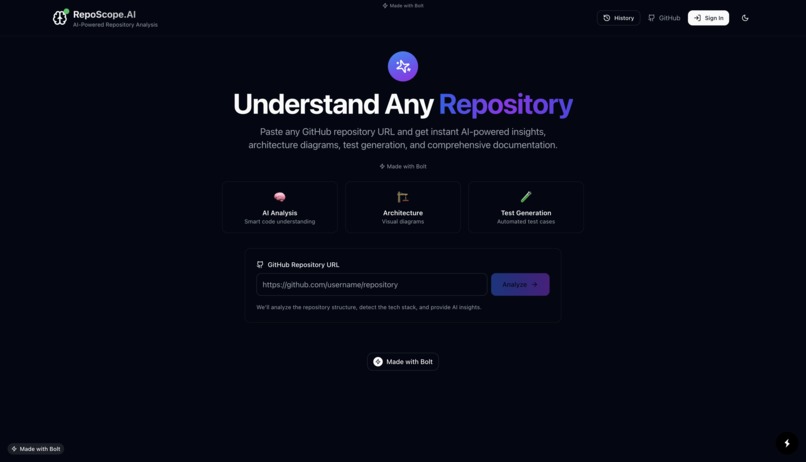
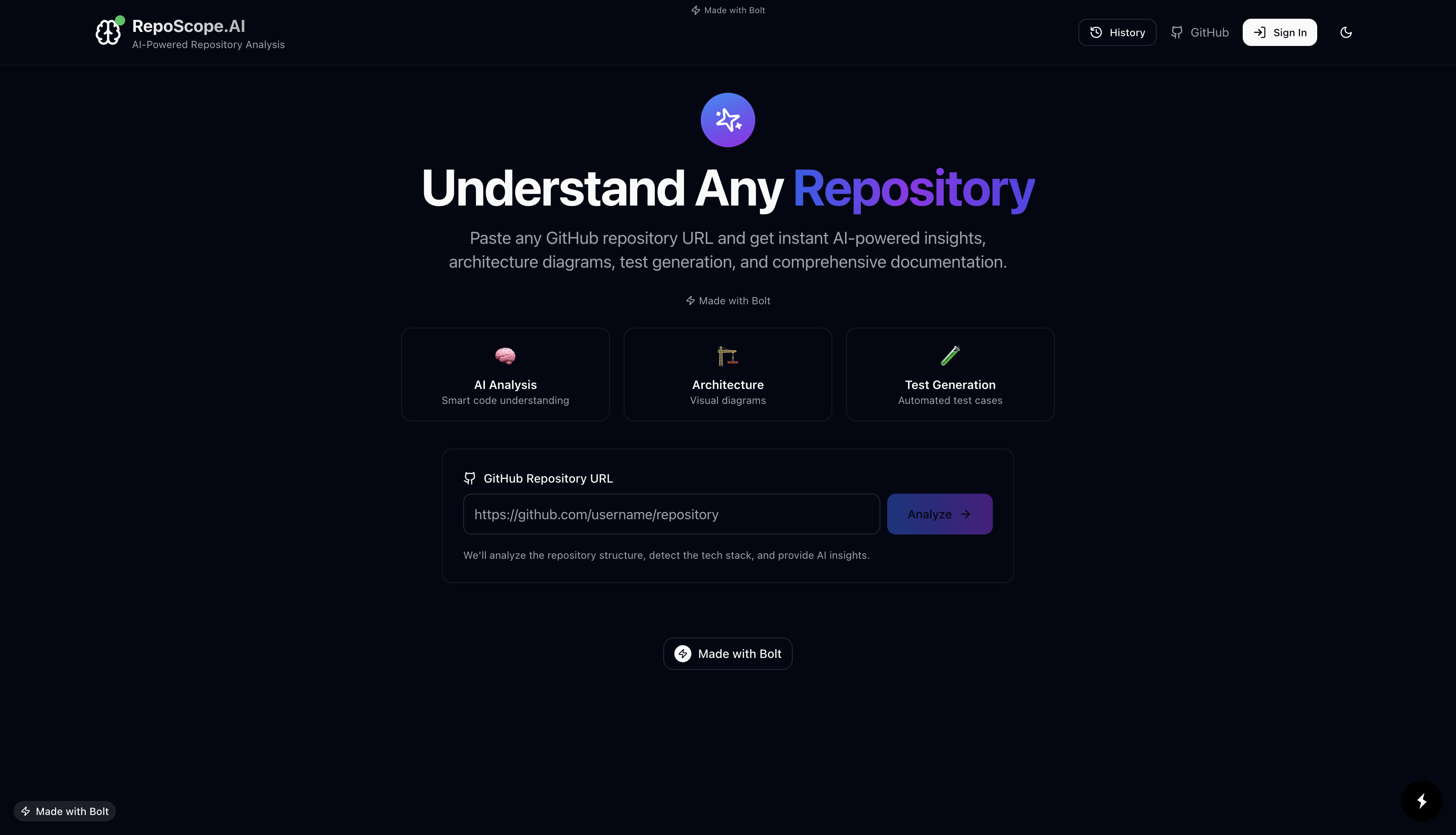
Understand any codebase instantly with AI-powered insights, documentation, and test generation.
-
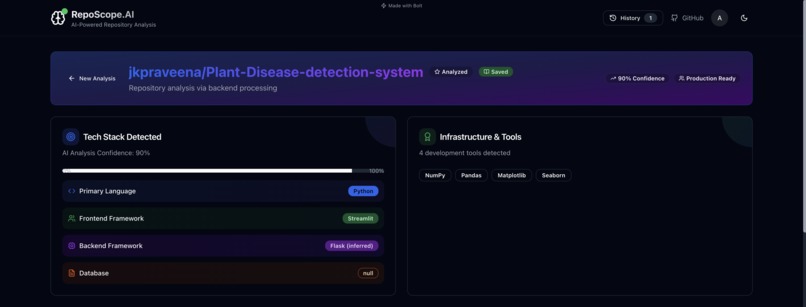
Powering Reposcope AI with modern, scalable technologies.
-
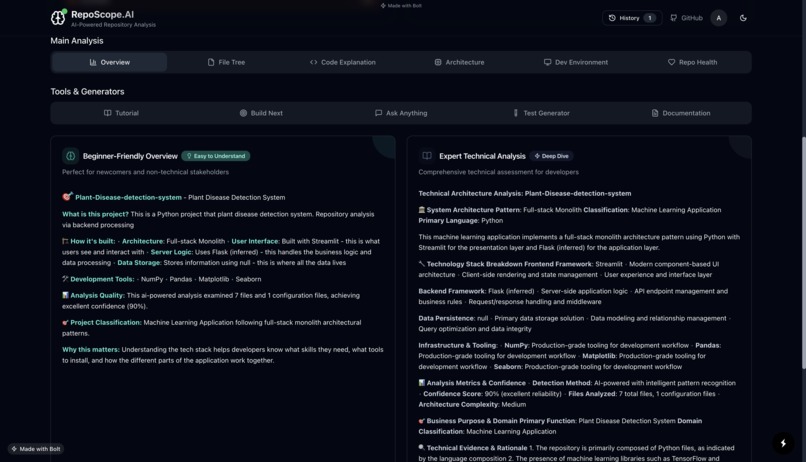
Advanced insights for advanced minds
-
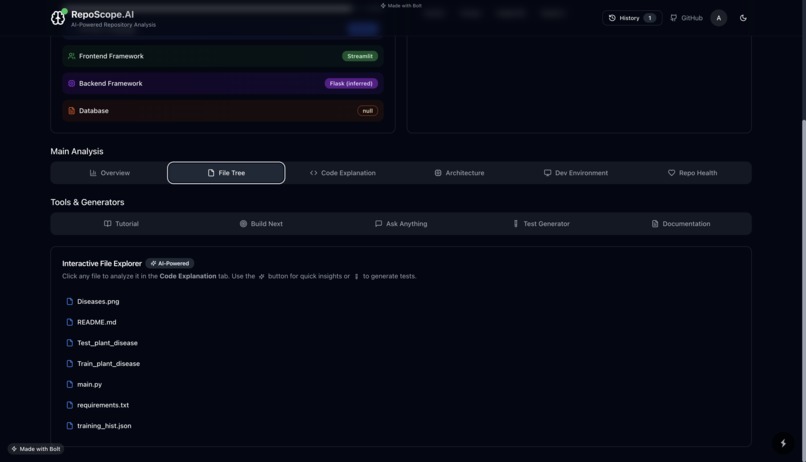
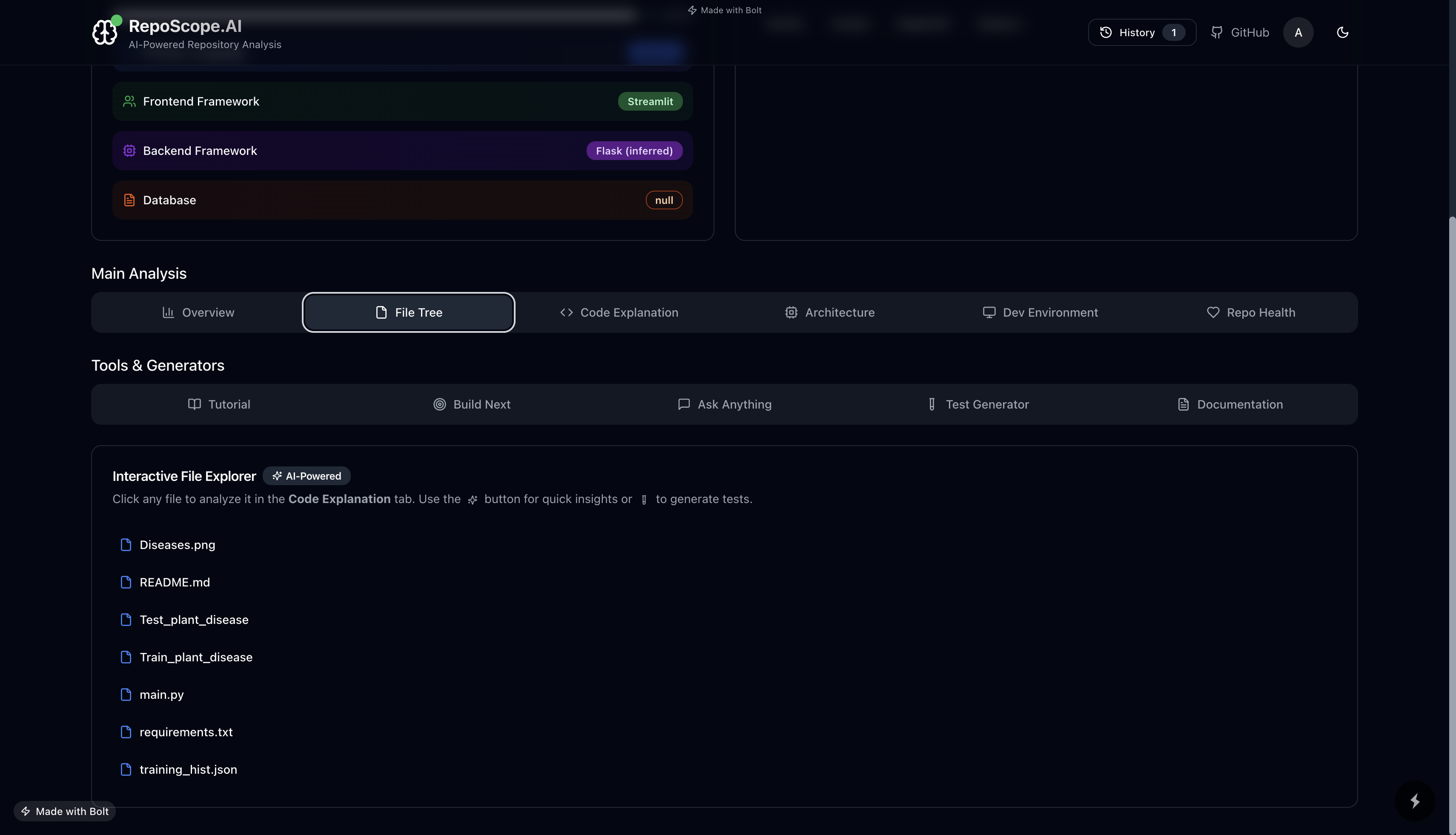
Visualize your repo’s hierarchy in seconds
-
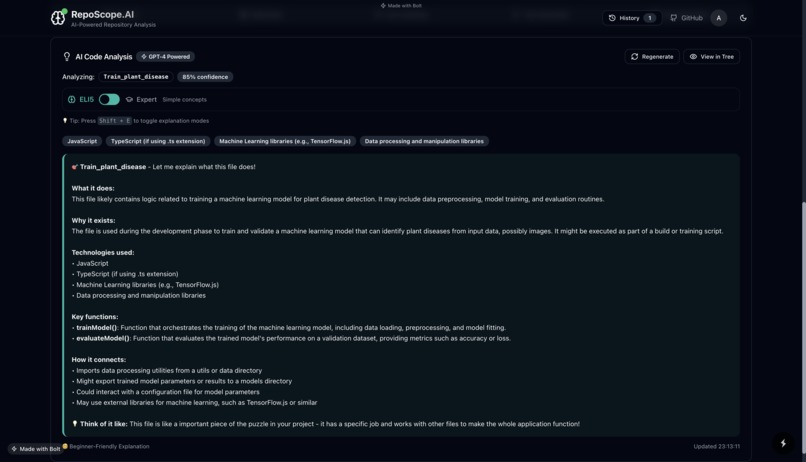
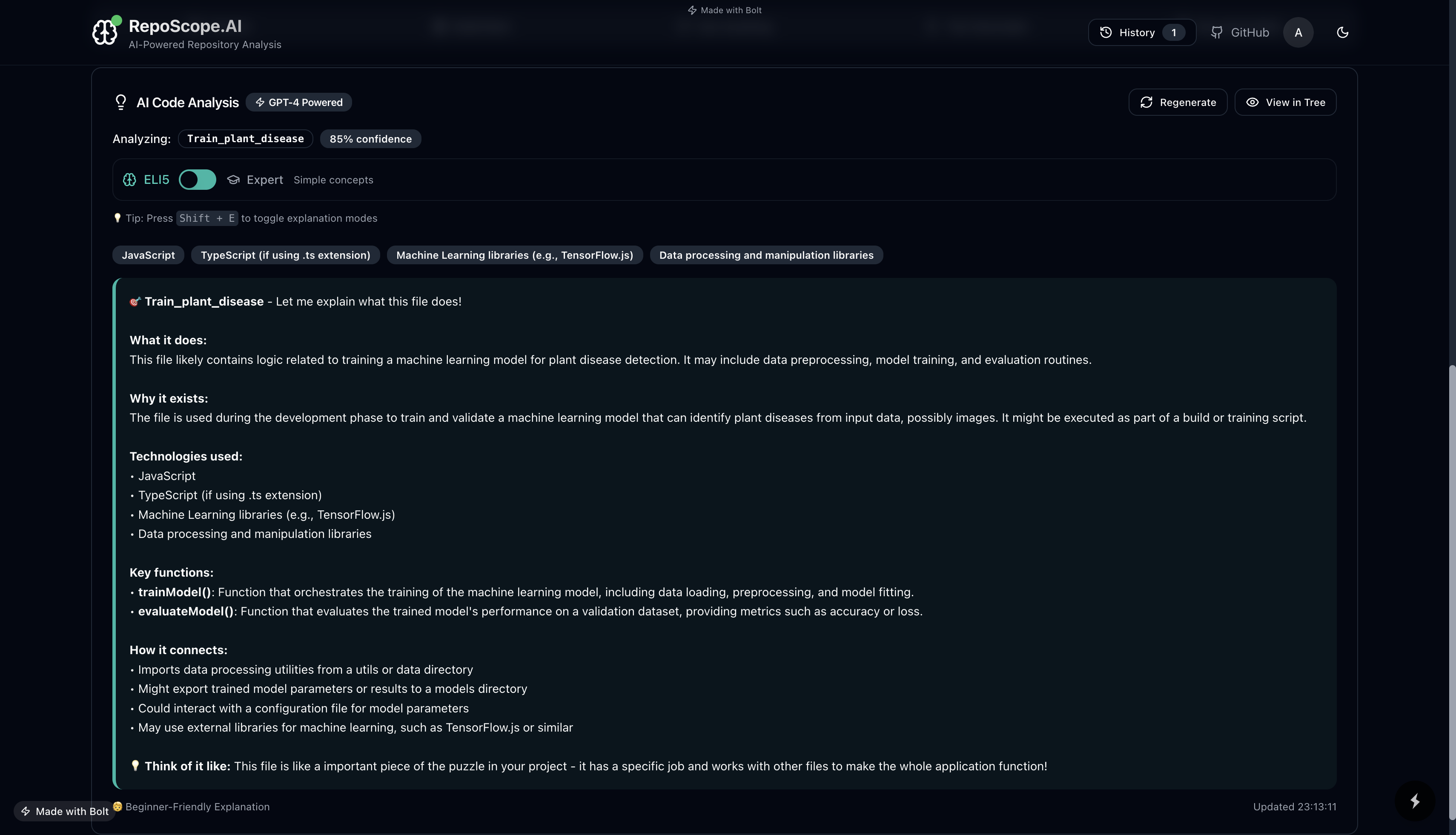
Understand code logic at a glance
-
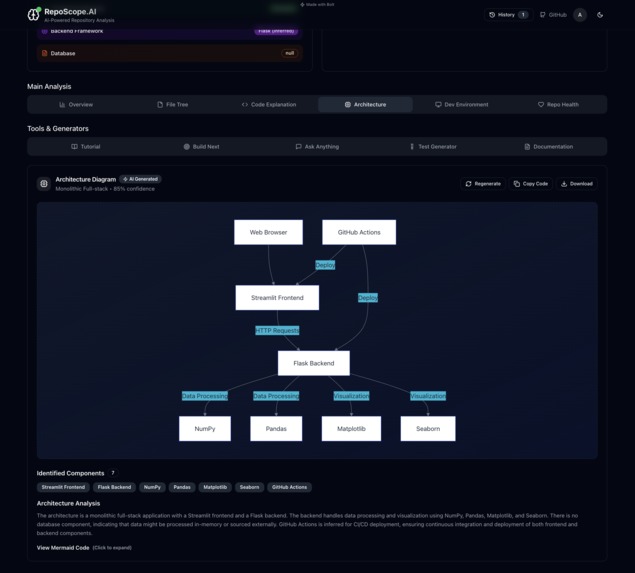
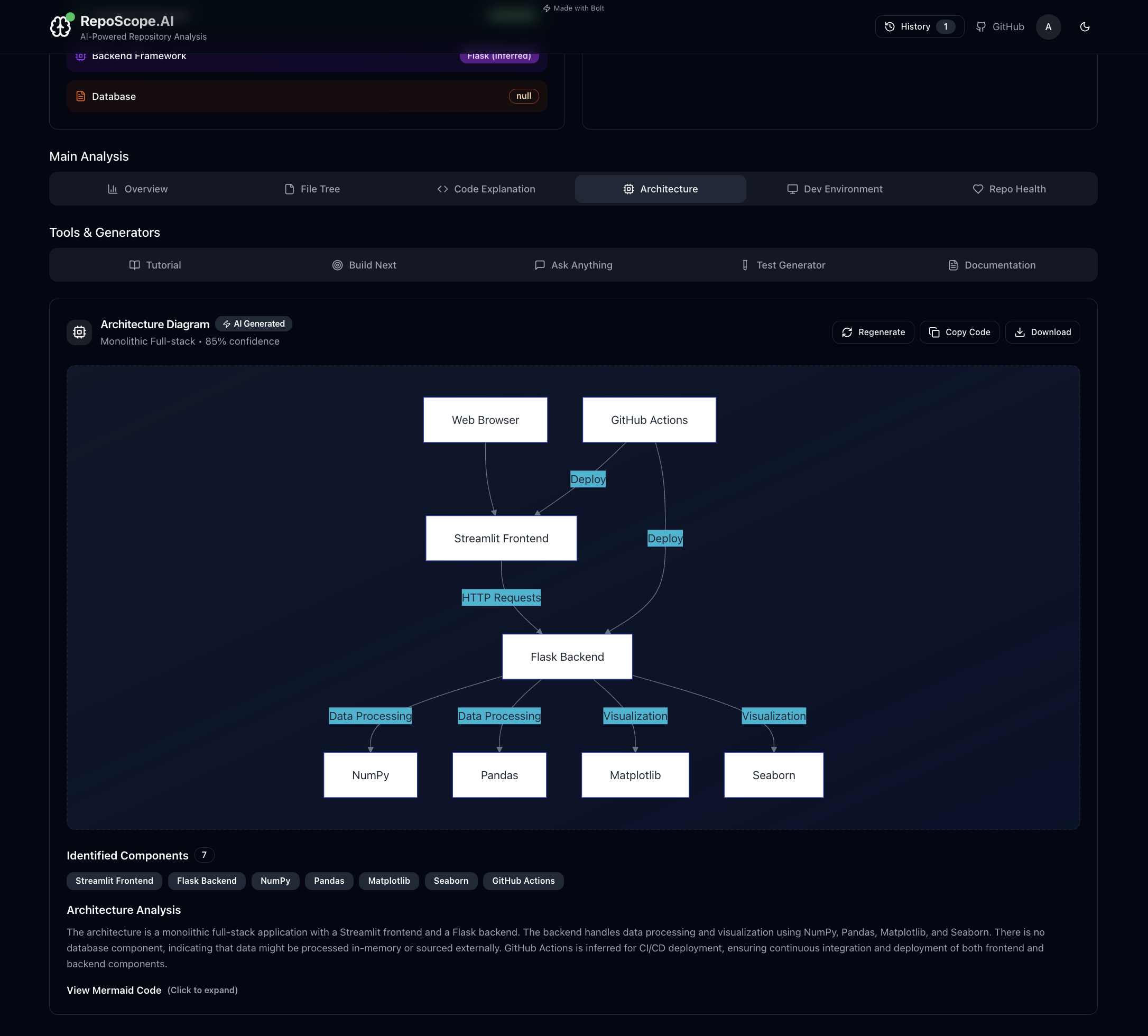
Understand how components connect—instantly
-
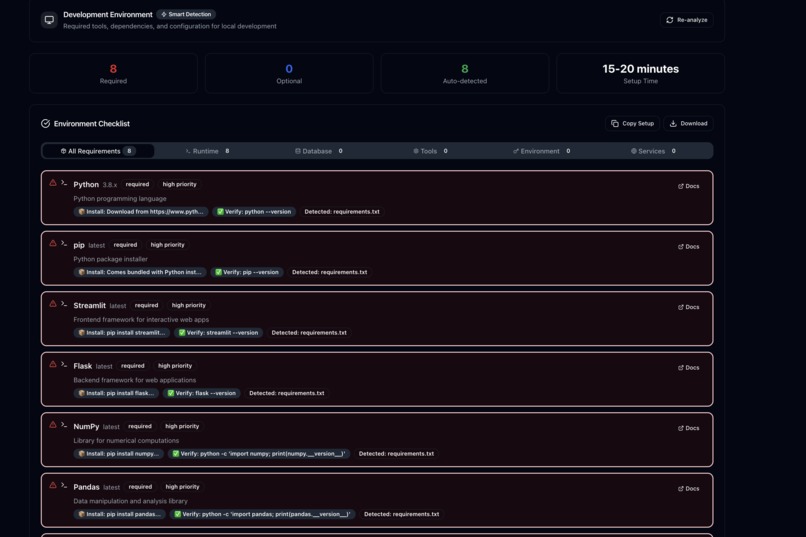
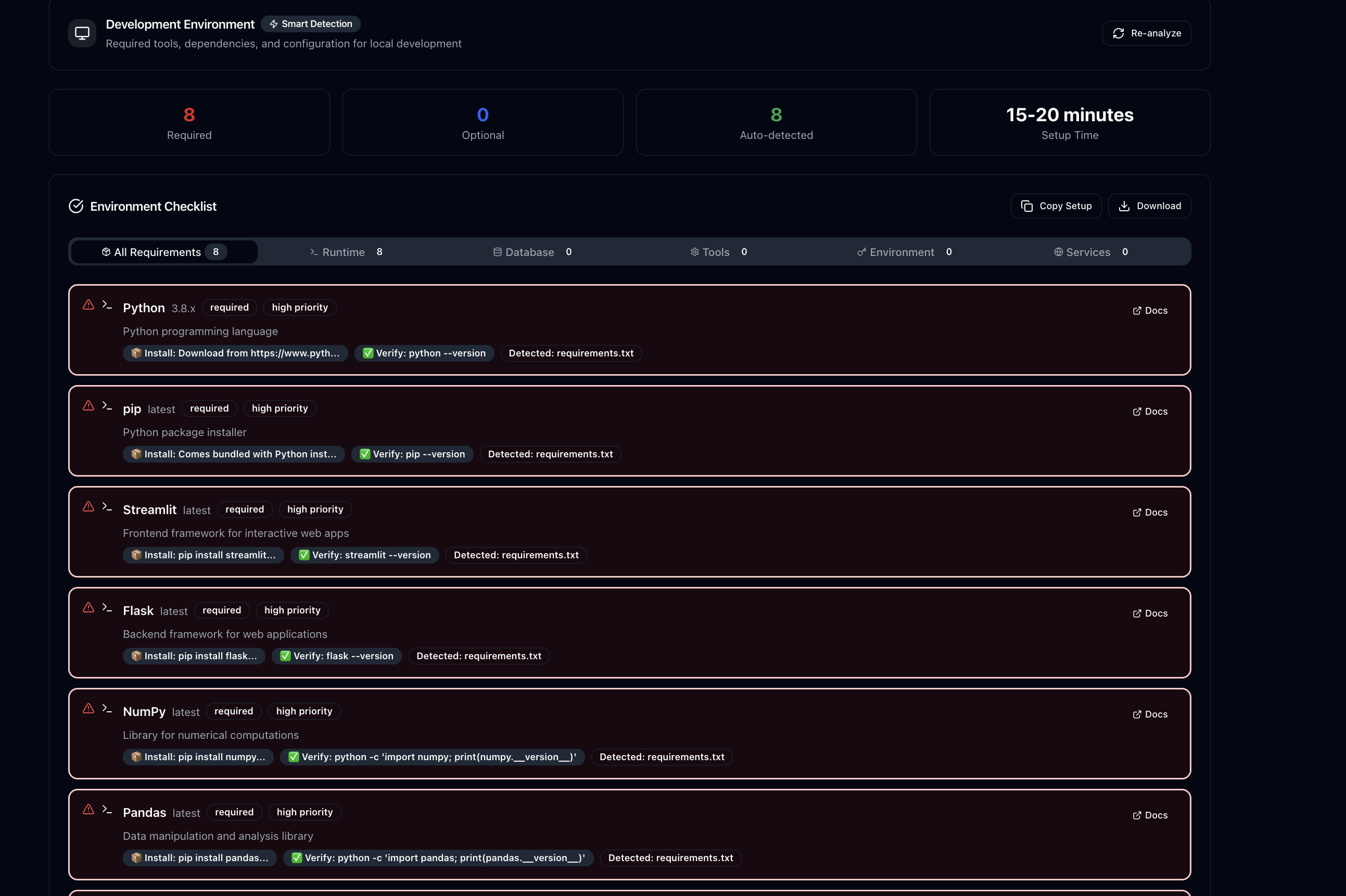
Detect and set up your ideal dev environment in seconds
-
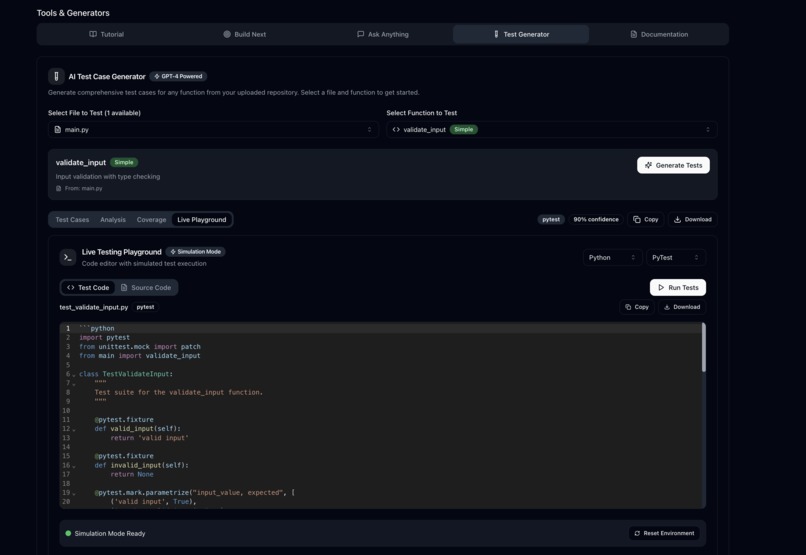
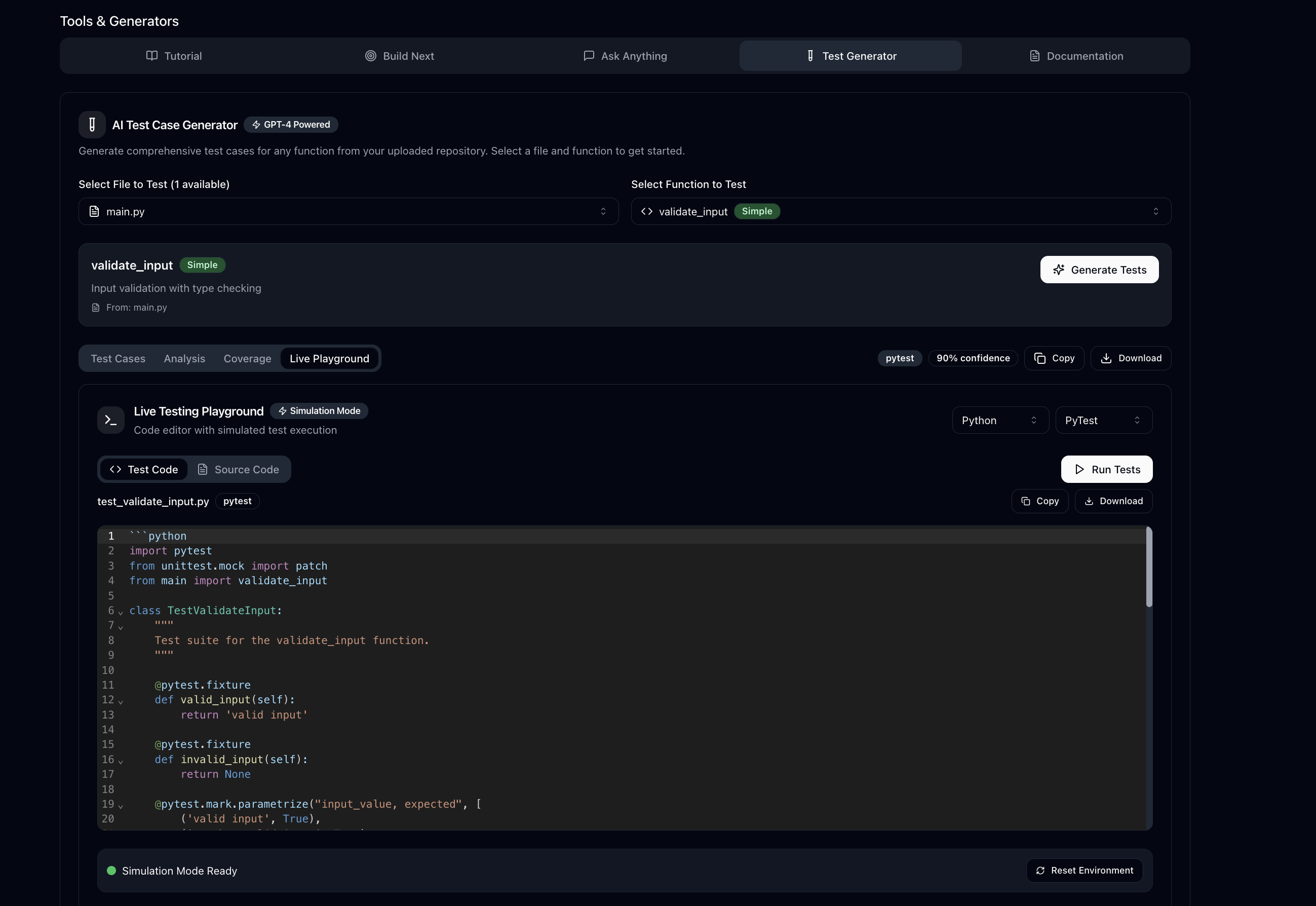
Turn code into confidence—automated testing made simple
-
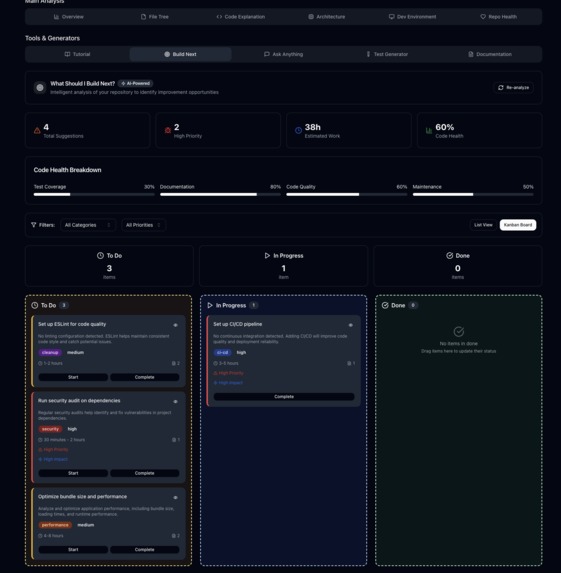
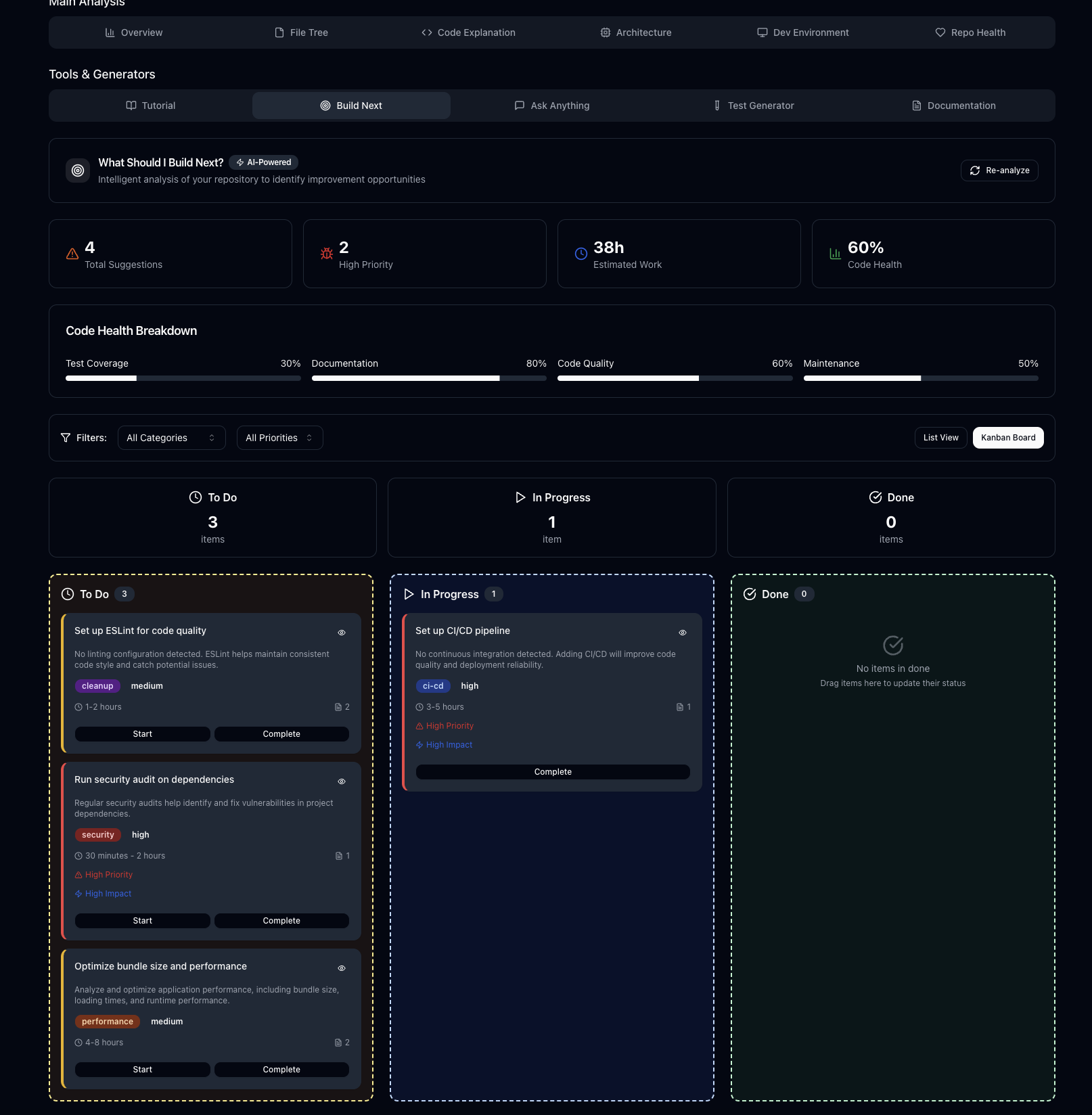
Visualize tasks, streamline progress
🚀 About the Project: Reposcope AI
We are two close friends — school girls with a shared passion for technology, creativity, and making a difference through code. Reposcope AI is more than just a hackathon project for us — it’s a reflection of our journey, our challenges, and our dream to make software development more inclusive and beginner-friendly.
🌟 Inspiration
As students learning to code, one of the biggest hurdles we faced was understanding unfamiliar codebases — whether it was for internships, open-source contributions, or project collaborations. It often felt like being dropped into a forest with no map.
We imagined a tool that could act like a personal guide — one that could read a repository, understand its structure, and explain it in simple terms. We wanted something that could give us confidence instead of confusion. That spark of an idea became Reposcope AI — a developer companion powered by AI that helps anyone, especially beginners, understand and navigate complex repositories with ease.
💡 The Big Idea
Reposcope AI is an intelligent codebase analyzer. Given a GitHub repo, it automatically:
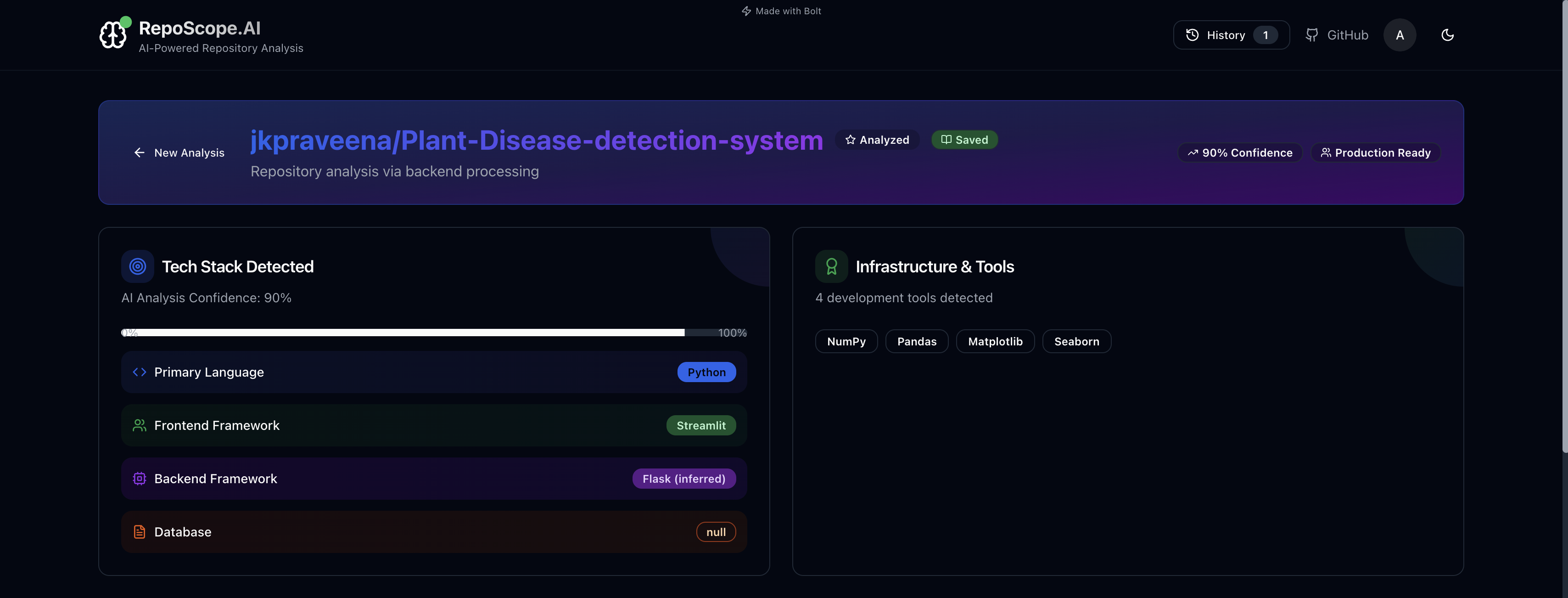
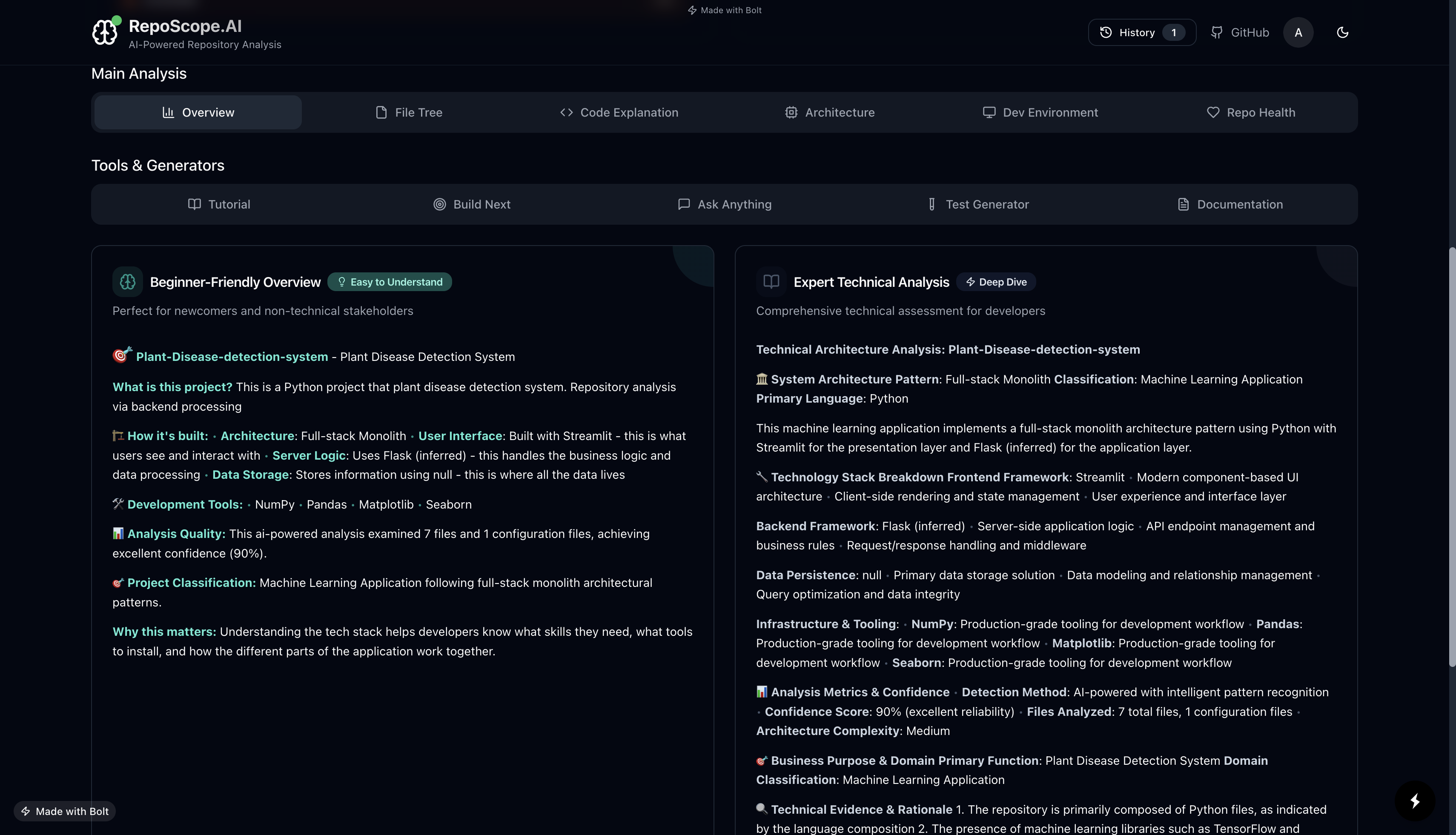
- Generates project summaries in beginner and expert formats.
- Explains code file by file, line by line.
- Draws architecture diagrams.
- Suggests code improvements and generates unit tests.
- Provides a chatbot-like interface to ask questions about the repo.
- Stores and displays past analyses, like a knowledge hub.
It’s like having a senior developer by your side — available 24/7.
🛠️ Tech Stack & How We Built It
- 🧠 AI Integration: We used OpenAI’s language models for summarizing code, generating explanations, diagrams, and tests.
- 🖥️ Frontend: Built with React and TypeScript for a clean, responsive, and intuitive UI.
- 🔐 Authentication: Managed by Supabase, enabling secure and seamless user access.
- ☁️ Backend & Storage: Supabase and custom logic handle saving memory states of analyses.
- 🌐 GitHub API: Used for fetching code from public repositories and structuring the file tree.
We designed a modular architecture where each feature (like code explanation, test generation, architecture diagramming, etc.) functions as a plugin component that takes memory from the repo and displays results.
📚 What We Learned
- How to work with and optimize prompts for AI models effectively.
- How to fetch, parse, and render code dynamically from GitHub.
- The power of teamwork, especially when navigating unknown territories.
- UI/UX principles to simplify complex features for new developers.
- Balancing feature-richness with performance under tight deadlines.
🧗♀️ Challenges We Faced
- Handling large repositories and token limits in LLMs.
- Mapping complex directory structures into user-friendly UIs.
- Designing architecture diagrams without standard visualization tools.
- Time management between school work and intense hackathon deadlines.
- Learning new tools (Supabase, Vite, Netlify) on the fly.
Despite all of this, we kept each other motivated, divided tasks smartly, and pushed through each blocker — together.
👯♀️ Our Journey
We met in school, connected over a shared love of tech, and have been building things ever since — from small games to automations to now, Reposcope AI. We’re self-taught, always curious, and passionate about using code to make learning easier for others. This hackathon has been a turning point — it showed us that with the right idea, even students can build impactful tools.
💖 Final Thoughts
Reposcope AI is our contribution to making codebases more accessible. We hope this helps students, interns, junior developers — or anyone new to a repo — feel a little more confident and a lot more excited to explore code.
This is just the beginning for us. We’re already brainstorming how we can take this further — maybe even make it open-source, collaborate with educators, and bring this tool to classrooms and bootcamps.
“We built Reposcope AI because we needed it. Now, we hope others can benefit from it too.”
Let’s keep learning, building, and supporting each other 💪
— Made with love by two best friends 💻👭


Log in or sign up for Devpost to join the conversation.