-
-

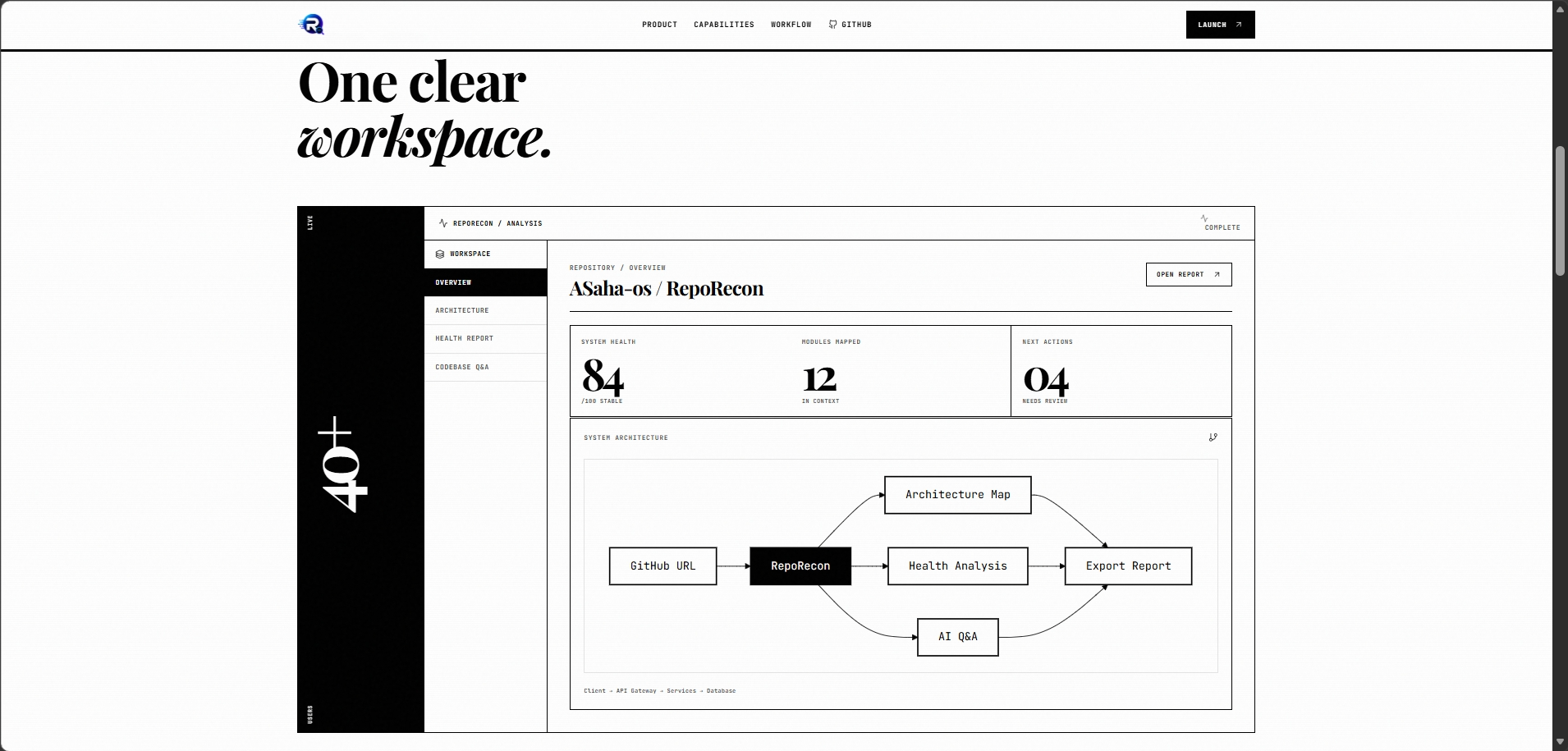
Home Page
-
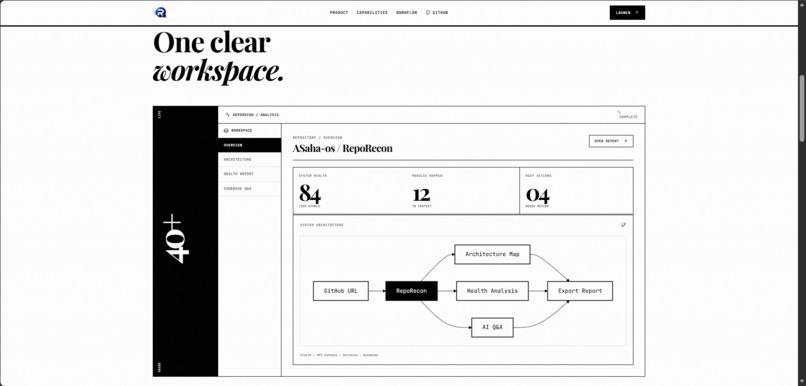
Abstract Design
-

FootNote
-
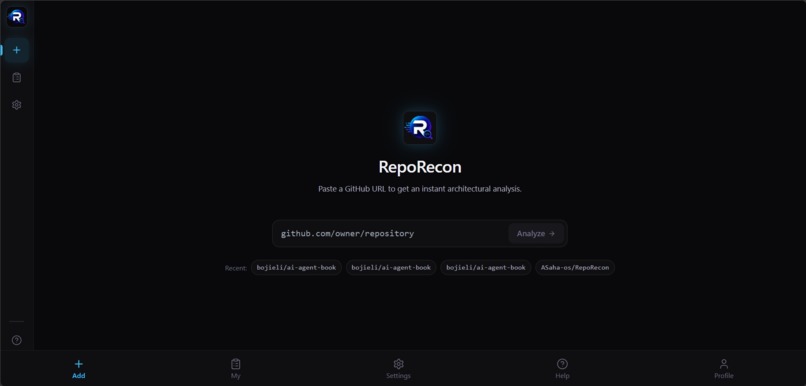
WebApp Home
-
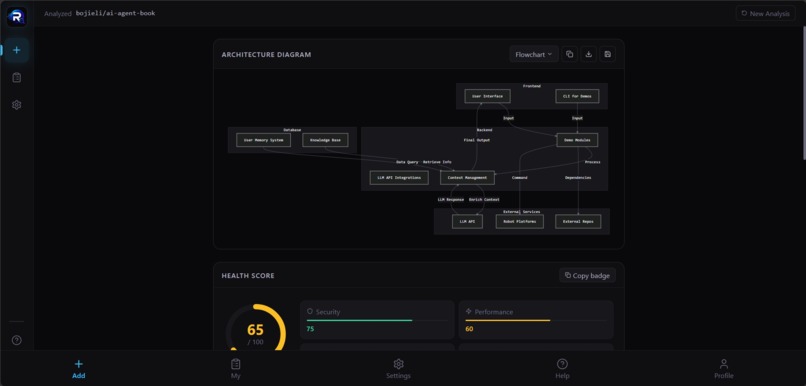
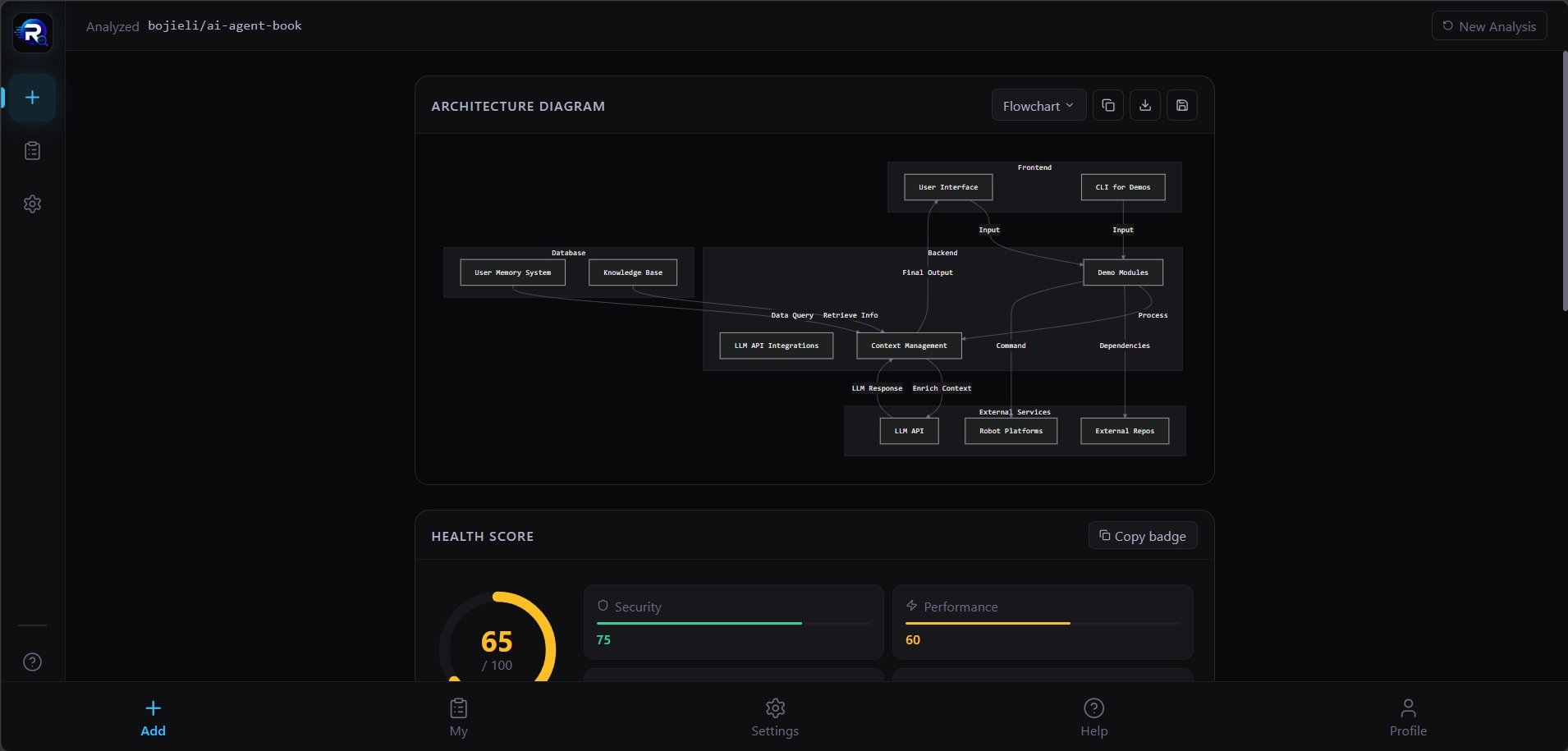
Analysis
-
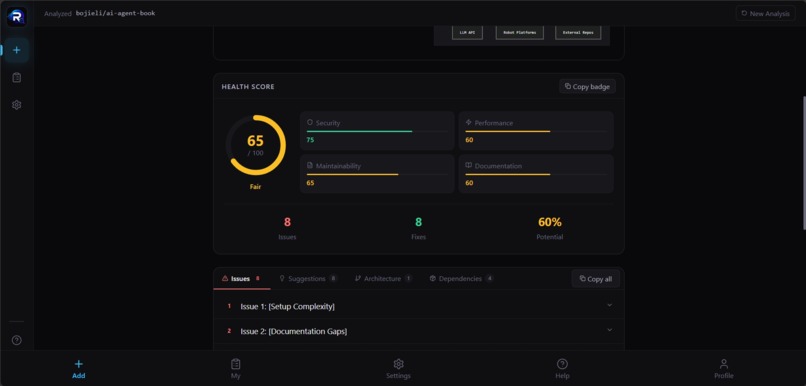
Full Scorecard
-
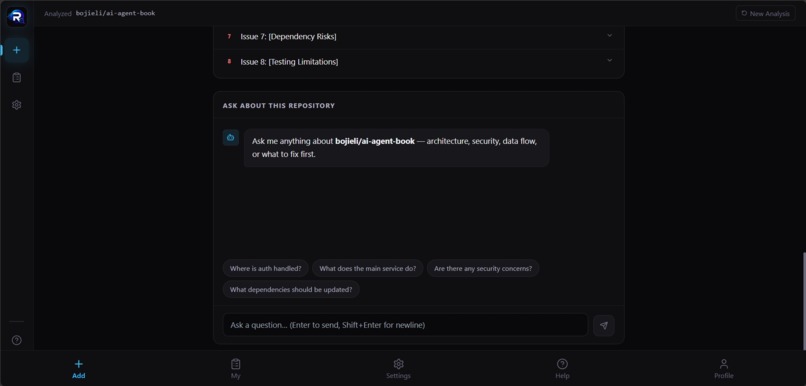
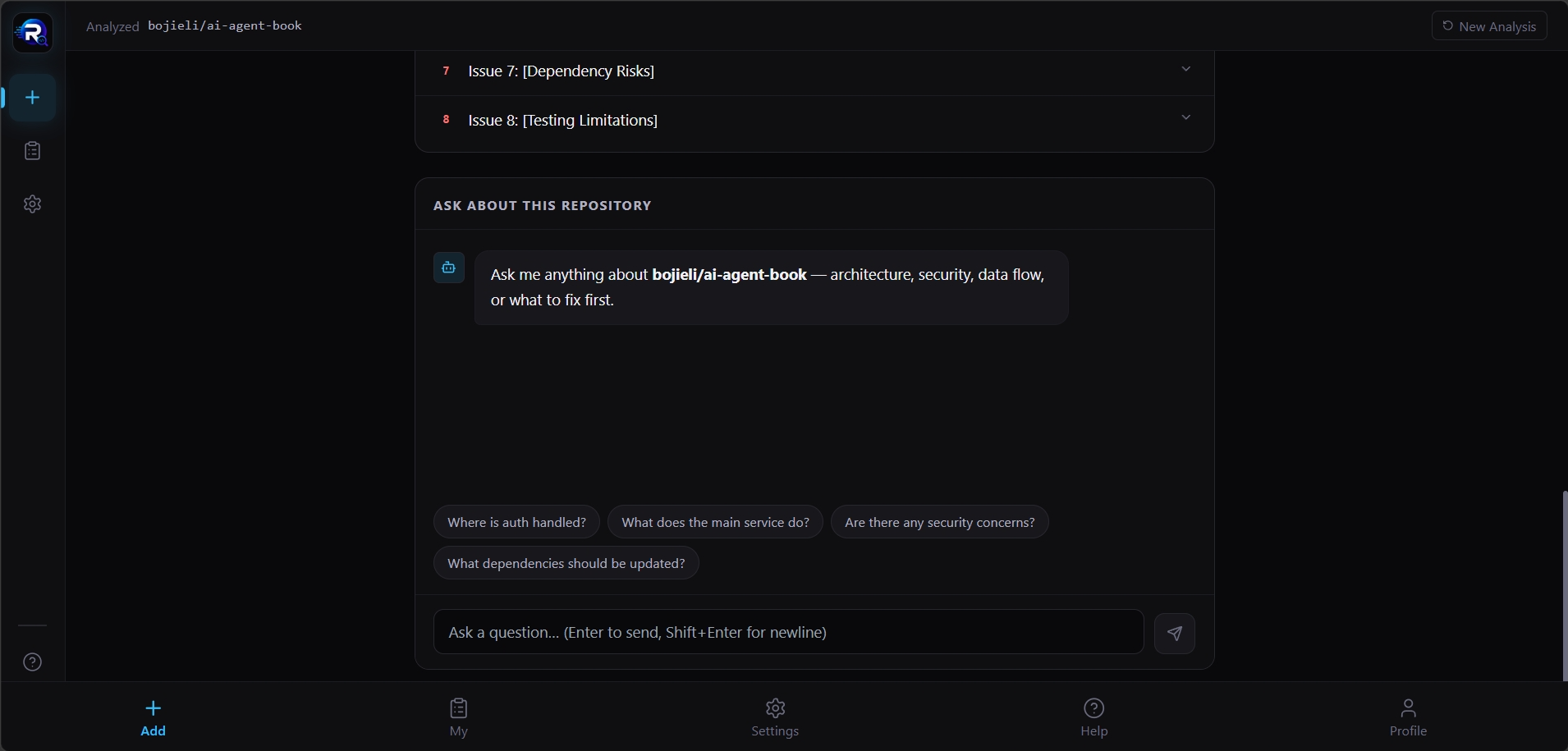
AI Based QnA Support
-
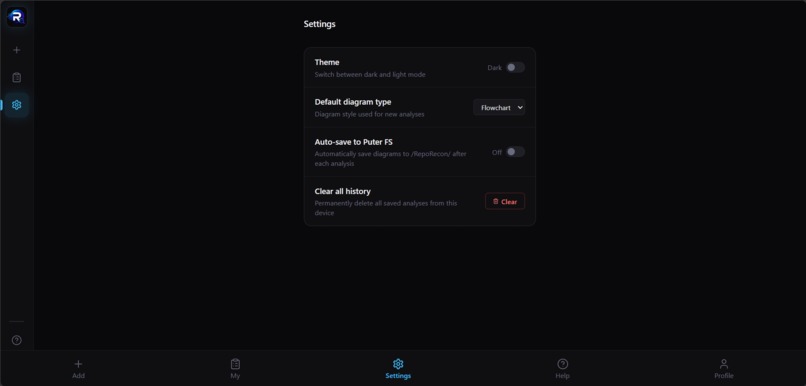
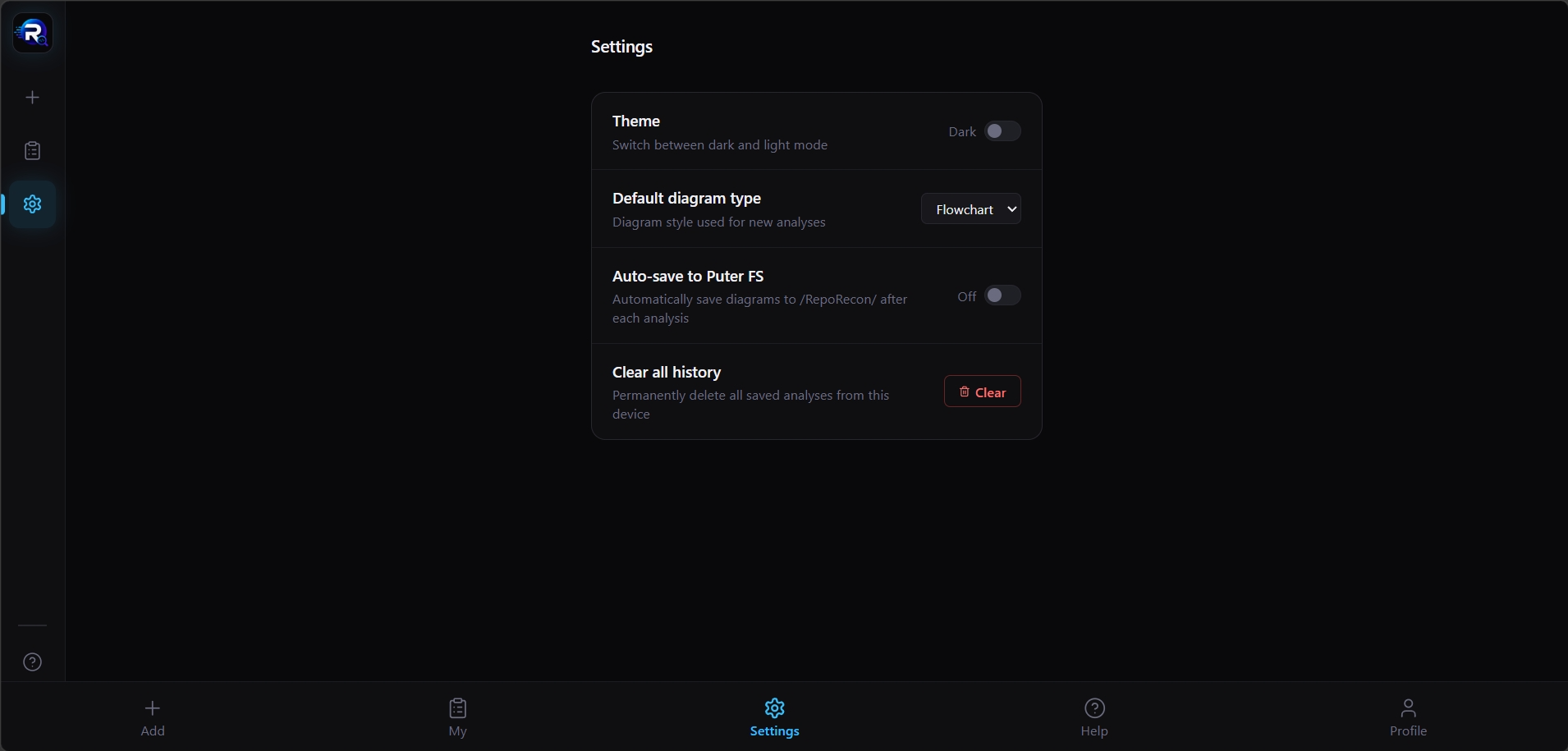
Settings
-
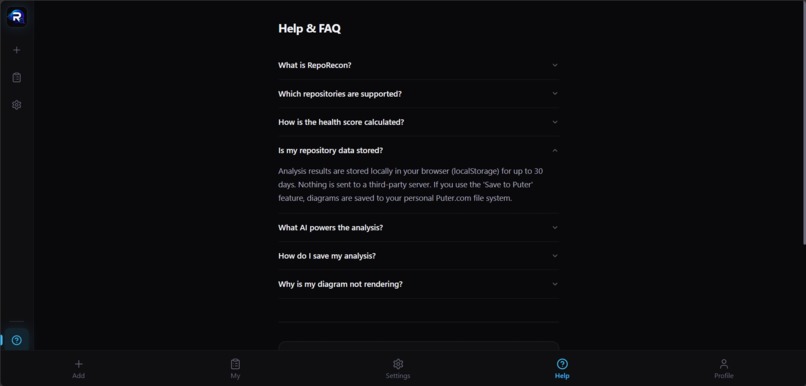
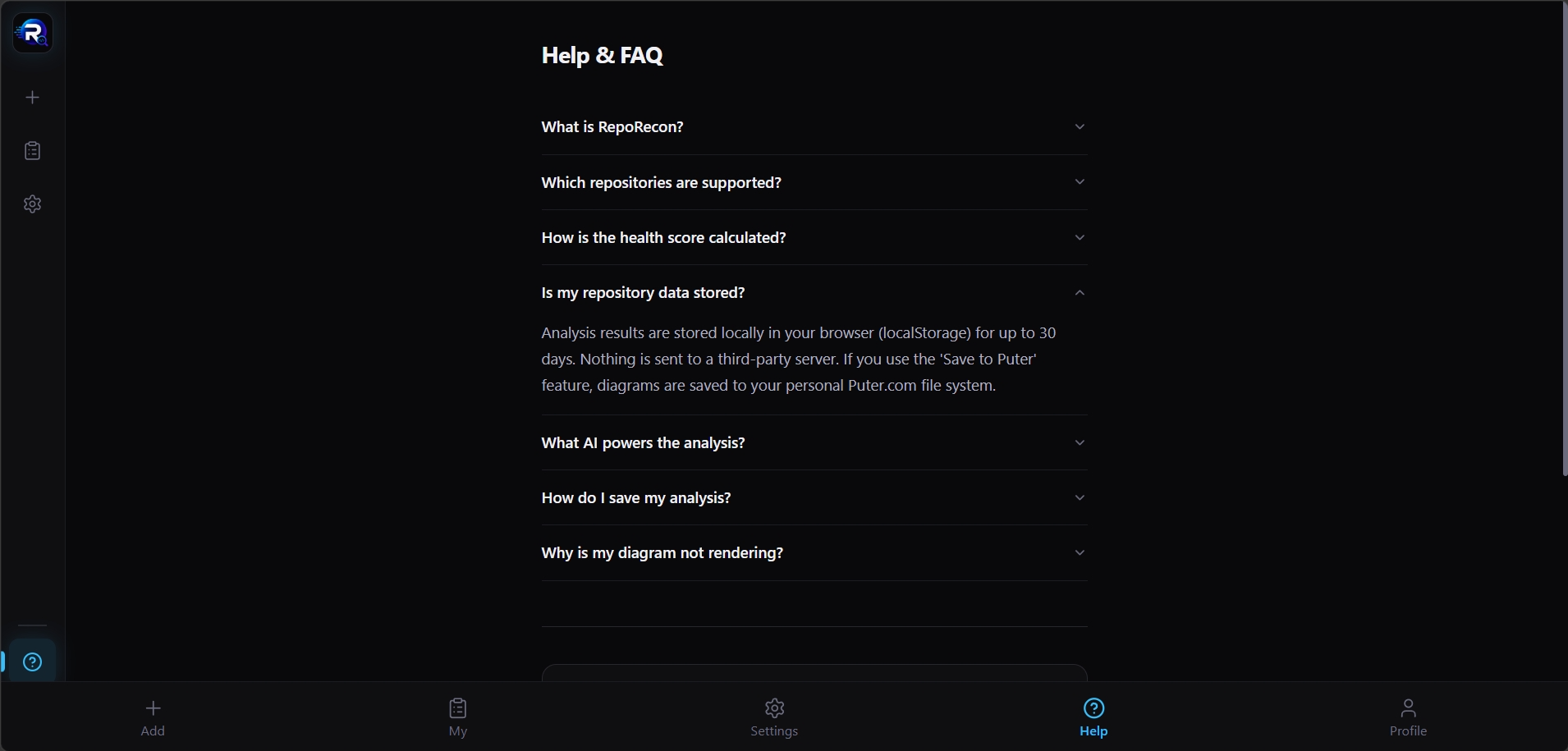
Help & FAQ

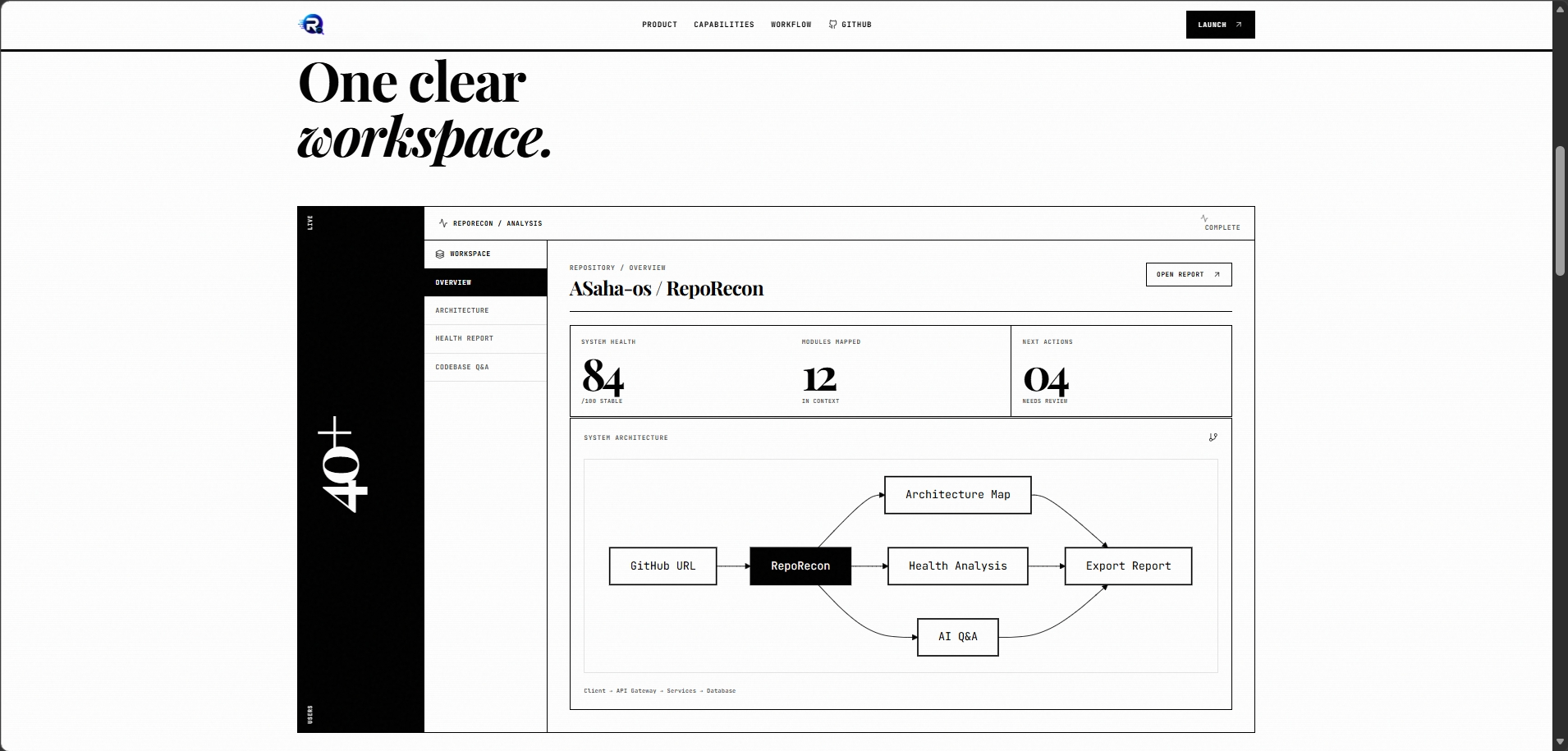

RepoRecon
Turning Codebase Confusion Into Instant Clarity
Every developer knows the feeling: a new repository arrives, the deadline is already close, and the first hour is lost to archaeology. You open folder after folder, try to reconstruct architecture from scattered files, and still end up with a mental model that is only half-right.
RepoRecon was built to change that.
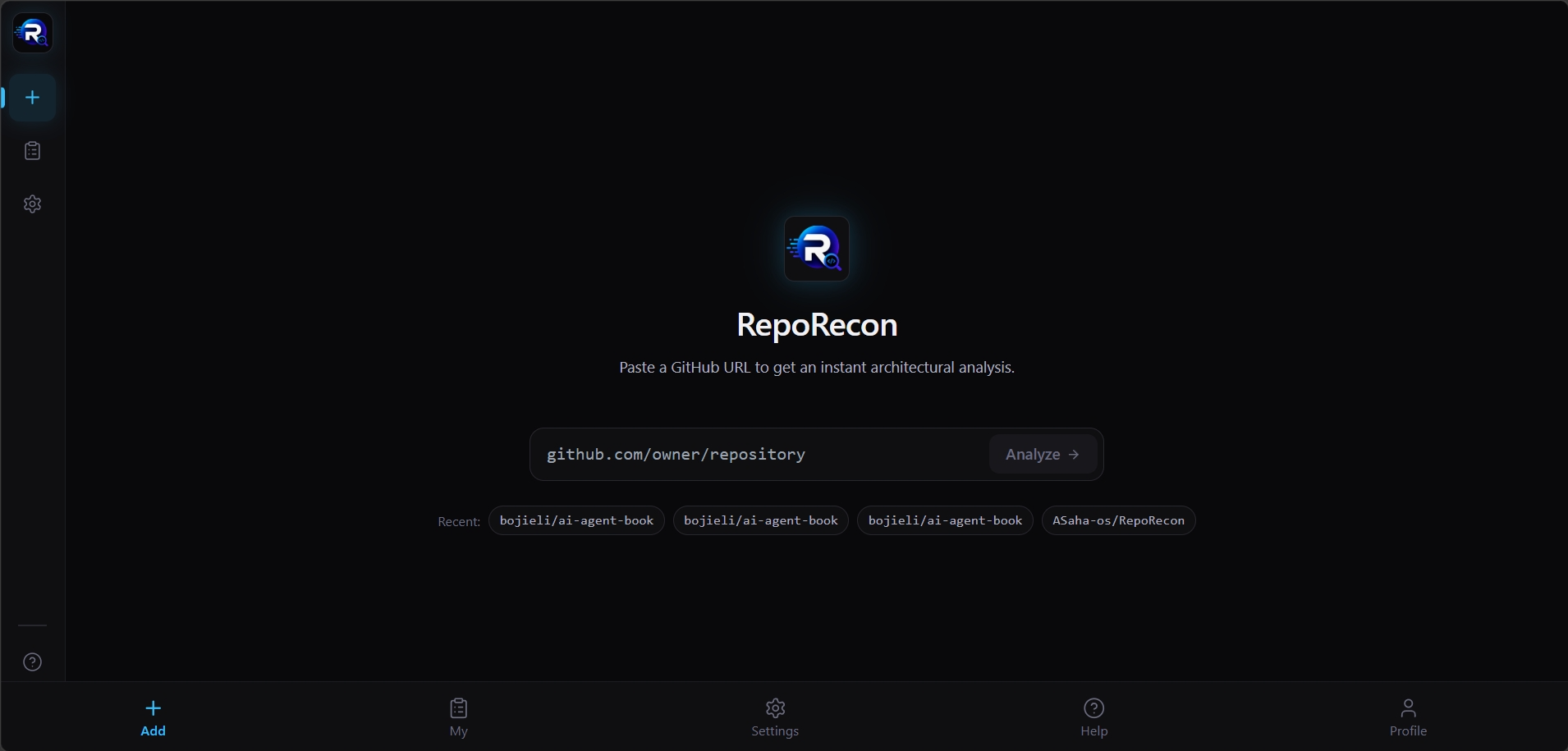
It turns a public GitHub repository URL into a fast, structured, human-readable analysis of the system: architecture, health, risks, priorities, and answers to natural-language questions. The goal is simple — make codebase understanding feel immediate, not painful.
The Problem We Solved
Modern software teams move fast, but onboarding and review still remain slow.
Developers often spend days or weeks trying to answer basic questions such as:
- What does this system actually do?
- Where is the core logic located?
- What are the biggest risks or maintainability issues?
- What should be fixed first?
Traditional repository inspection is fragmented, manual, and inefficient. RepoRecon compresses that discovery process into a single, intelligent workflow.
What RepoRecon Does
RepoRecon ingests any public GitHub repository URL and generates an actionable intelligence brief in seconds.
Core capabilities
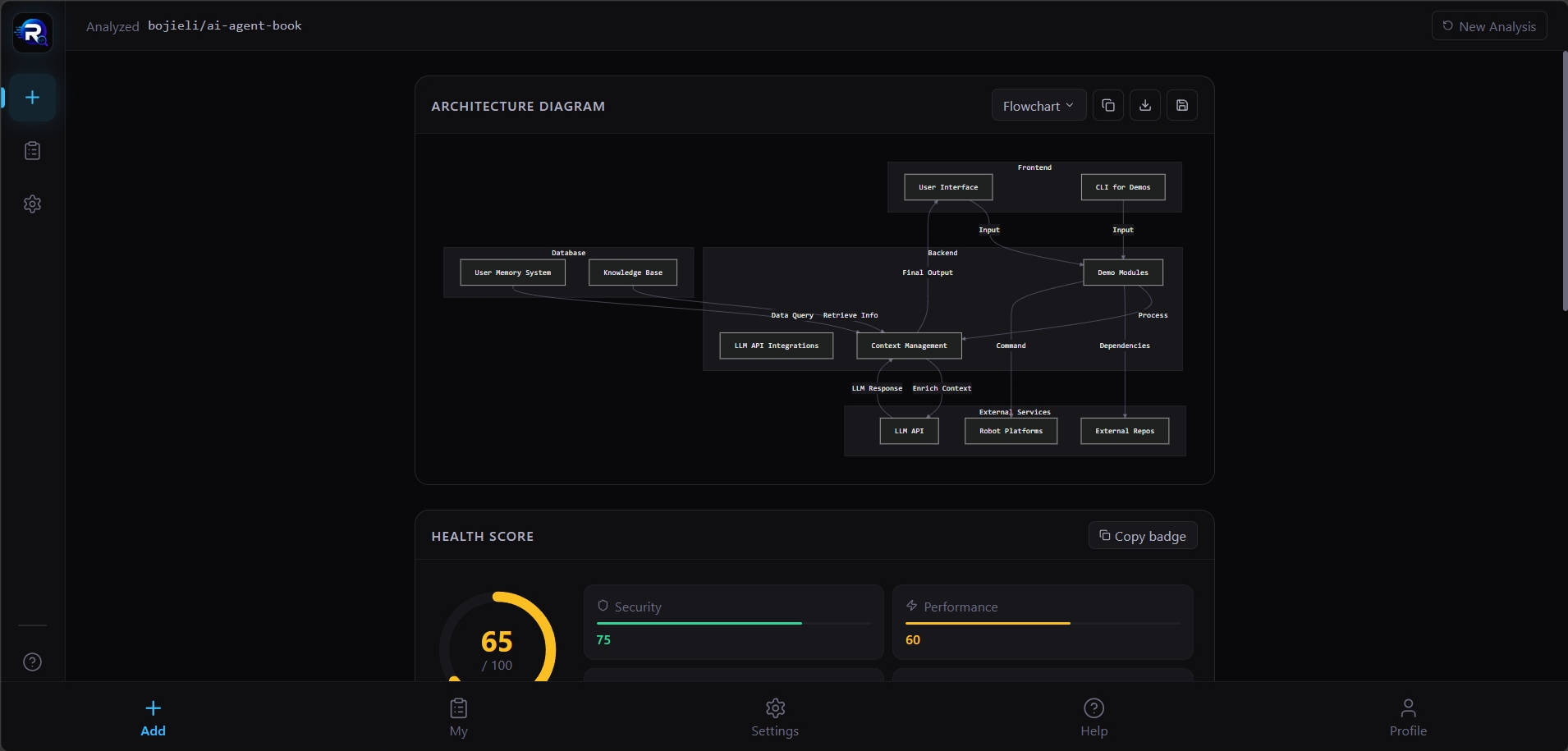
- Architecture Mapping — Produces Mermaid-based visual flows that reflect the repository’s structure and interactions.
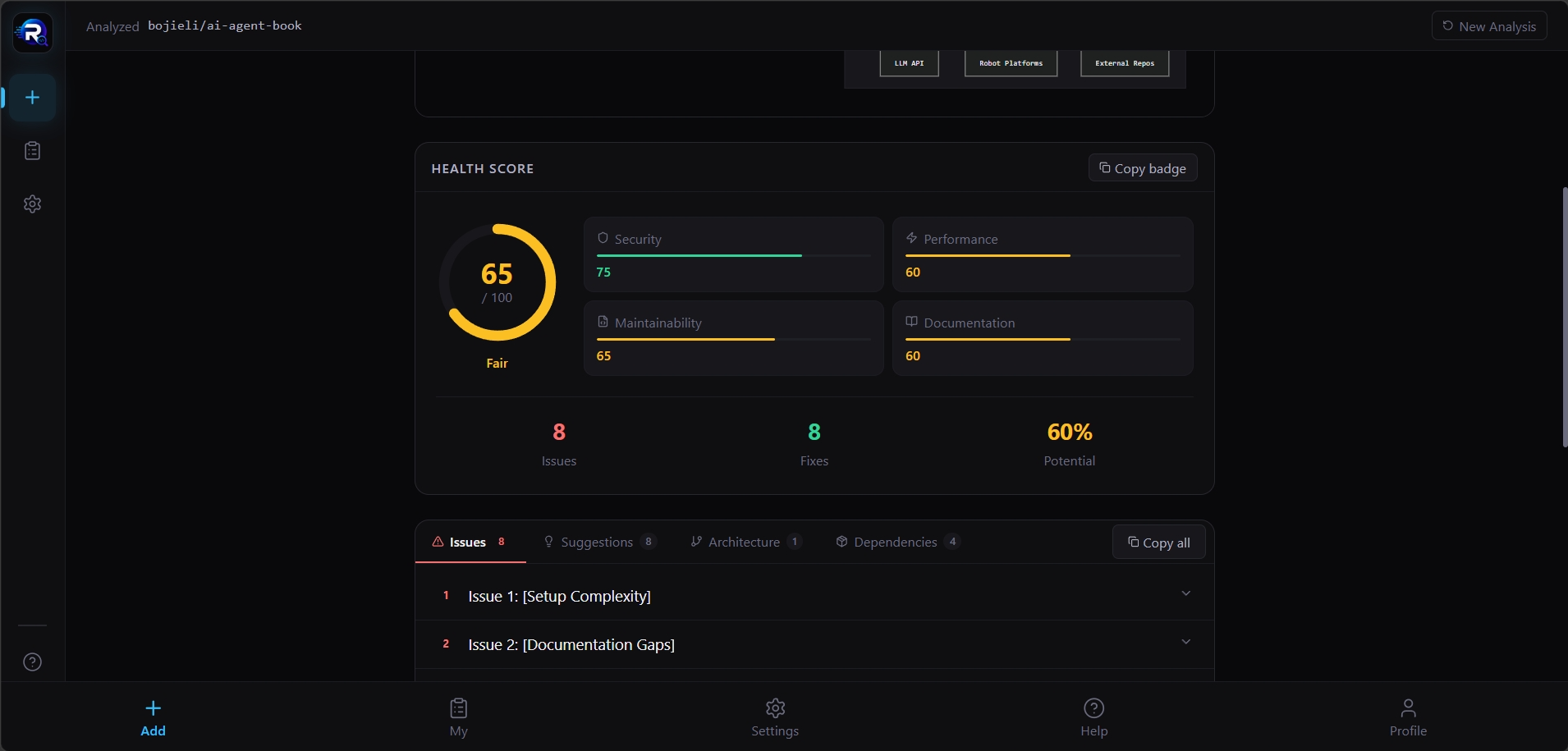
- Health Scorecard — Evaluates security, performance, maintainability, and documentation with measurable scores.
- Prioritised Issue Detection — Surfaces critical problems with concrete remediation guidance.
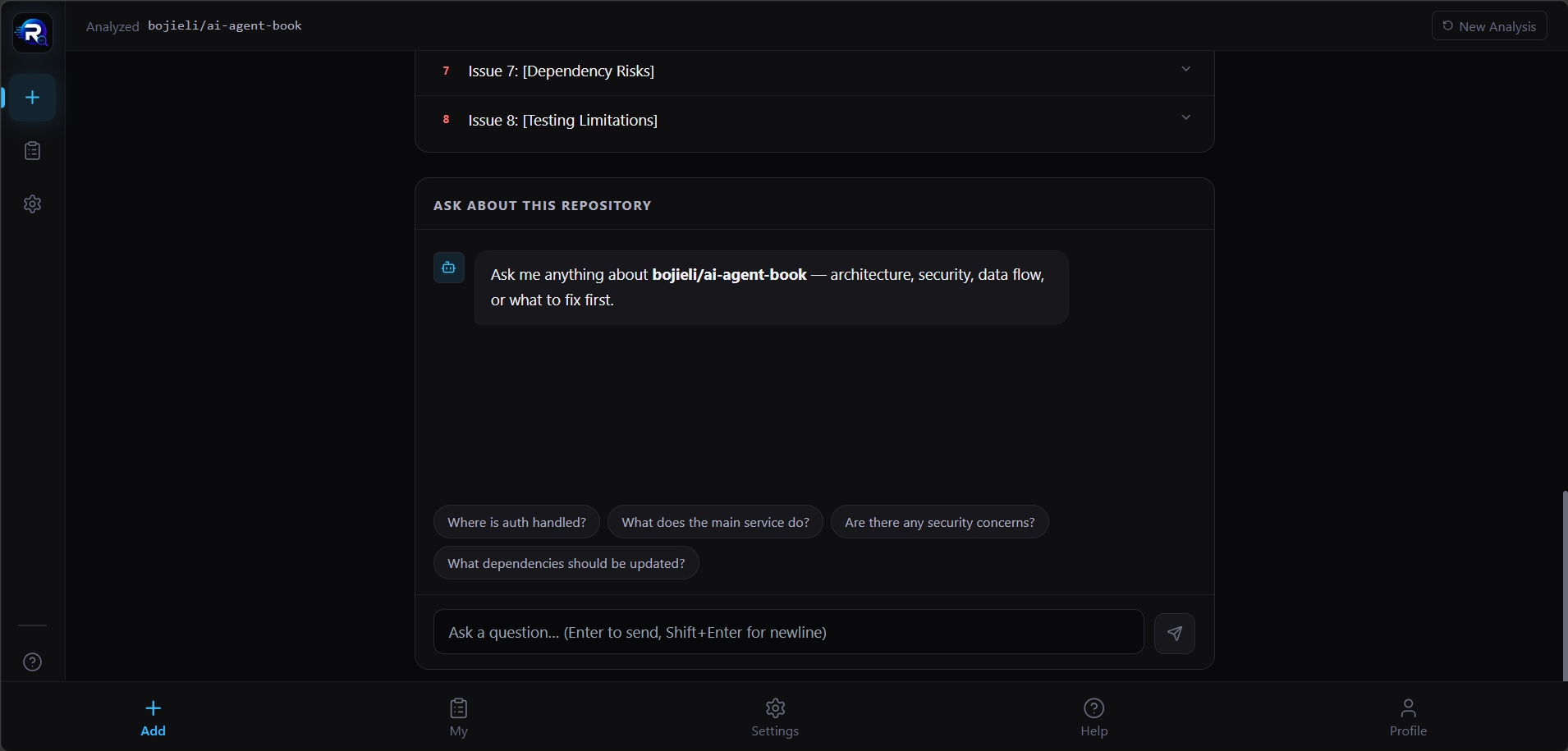
- Natural Language Q&A — Lets users ask questions about the codebase in plain English and receive context-aware answers.
- Export-Ready Reports — Supports PDF and PNG exports for onboarding, review, or stakeholder communication.
No setup. Paste a URL. Get answers.
Why This Matters
RepoRecon is not just another AI demo. It is designed to remove friction from real engineering workflows.
It helps with:
- New engineer onboarding
- Architecture reviews
- Refactor planning
- Technical debt triage
- Stakeholder-friendly summaries
The experience is deliberately lightweight: fast, conversational, and useful even for developers who are not deeply familiar with the repository being analysed.
How It Works
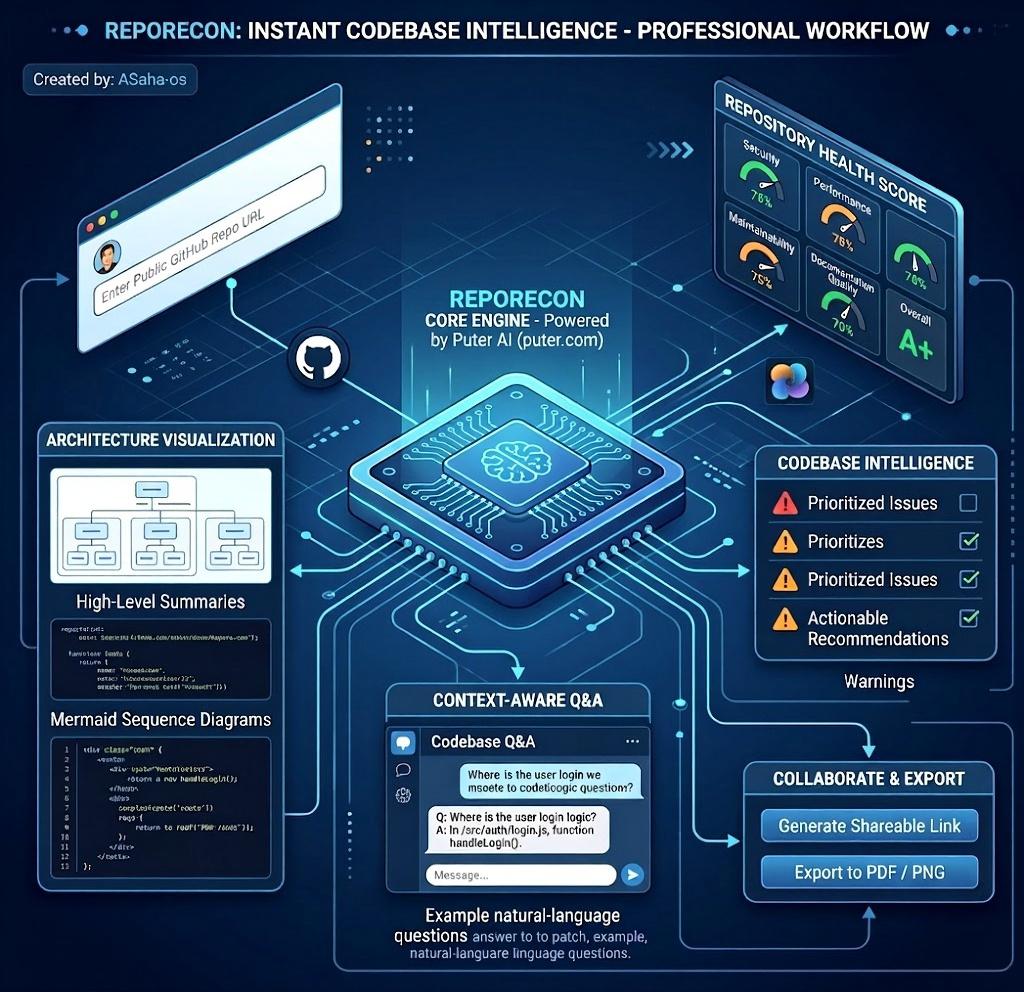
- The user submits a GitHub repository URL.
- RepoRecon gathers repository context, structure, and documentation signals.
- The system generates a rich analysis dashboard with health metrics, architecture views, prioritized issues, and Q&A support.
- The results can be shared, exported, or used directly in a code review or onboarding session.
This flow is designed to feel immediate and useful from the first interaction.
Built With AI, Designed For Real Engineering Work
RepoRecon was developed during OpenAI Build Week 2026 with a strong emphasis on practical impact.
AI model role
- GPT-4o via Puter AI powers the real-time repository intelligence layer.
- GPT-5.6 Luna helped shape the frontend experience, UX structure, and responsive product design.
- ChatGPT Codex supported debugging, integration, and deployment refinement.
ChatGPT Codex and GPT-5.6 Luna played pivotal roles throughout the development process. Codex was instrumental in resolving integration challenges, streamlining the authentication workflow, and addressing multiple diagram and UI issues that could have otherwise hindered progress. Meanwhile, Luna enhanced the overall experience by ensuring it was polished, cohesive, and user-friendly from beginning to end.
The product is a strong example of AI being used not just to generate text, but to reason, structure, and accelerate software understanding.
What Makes It Stand Out
RepoRecon combines three things that are often missing from AI tools:
- Speed — Analysis feels immediate rather than delayed.
- Depth — The outputs go beyond generic summaries and aim to be genuinely useful.
- Usability — The interface is simple enough for anyone to use without setup or configuration.
That combination makes it especially valuable in fast-moving teams where time-to-understanding matters.
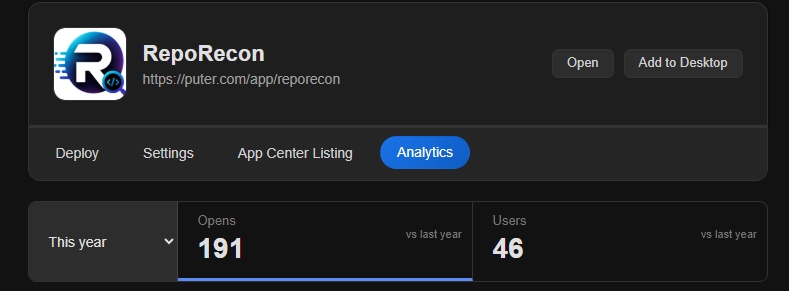
In early real-world usage, RepoRecon has shown promising traction with approximately 50–200 opens, reflecting meaningful interest from developers exploring it for everyday workflows. Codex helped accelerate the product from an early concept into a more polished, scalable experience, making it feel ready for real-world adoption by developers across the ecosystem.
Product Experience
A glimpse of the current experience:

Challenges We Overcame
Building a tool that works across wildly different repositories was one of the biggest challenges.
Some of the key engineering problems included:
- Handling inconsistent repository structures without hallucinating architecture
- Producing reliable Mermaid diagrams across diverse codebases
- Balancing thorough analysis with speed under larger repository loads
- Designing prompts and processing logic that could convert raw repository content into trustworthy outputs
These challenges pushed the project beyond a simple prototype and into a more robust product experience.
What We Learned
The journey reinforced an important lesson: prompt engineering is not a side detail — it is infrastructure.
The quality of the output depends heavily on how repository information is prepared before it reaches the model. The difference between a useful architecture summary and a misleading one often comes down to structure, framing, and validation.
We also learned that fast models can still deliver strong quality when the task is well-scoped and the experience is designed around real user needs.
What’s Next
RepoRecon is already a strong foundation, and the next phase is focused on making it even more valuable for teams.
Planned next steps include:
- Private repository support through authenticated GitHub access
- Deeper analysis tiers for security and architectural review
- CI/CD integration for automated repository health checks
- Collaboration features for shared team review and onboarding
- Broader language support for more complex codebases
Closing Vision
RepoRecon exists to give developers their time back.
Instead of spending the first week of a new project deciphering undocumented systems, teams can move faster with a clear starting point. The vision is simple: make codebase understanding as natural as opening a document, and as useful as a senior engineer’s first review.
RepoRecon is not just a tool for analysis. It is a tool for momentum.

Log in or sign up for Devpost to join the conversation.