-
-
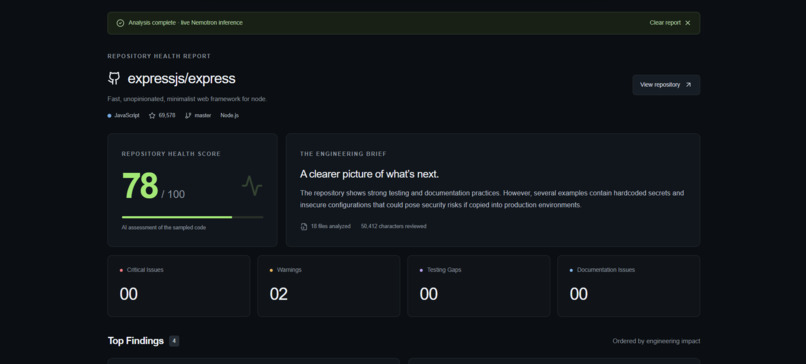
Main Dashboard
-
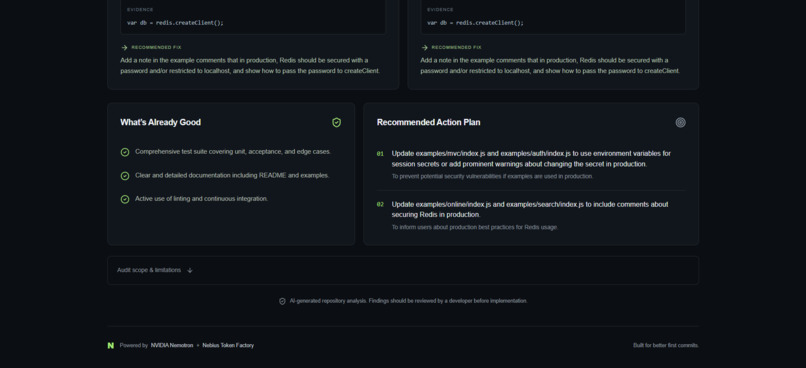
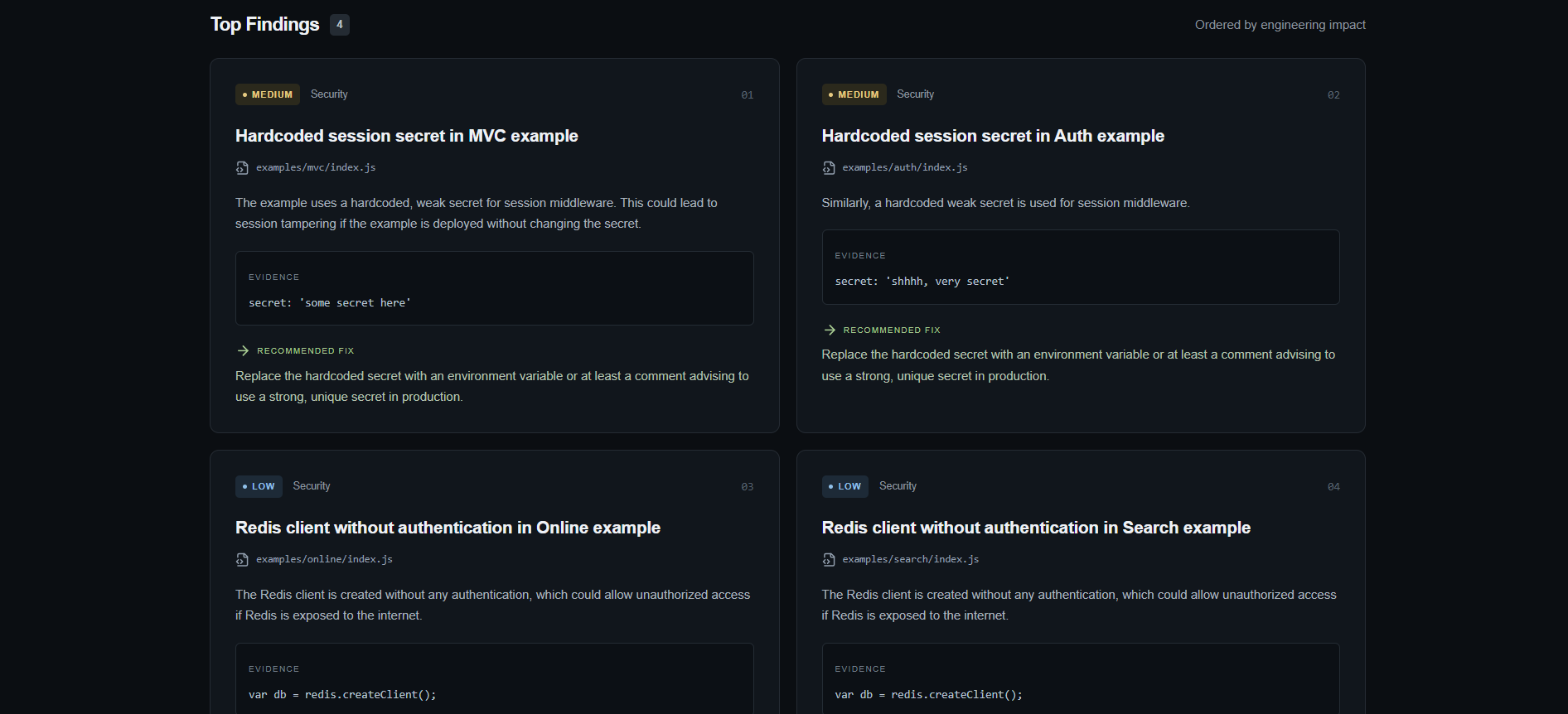
Top Findings Section
-
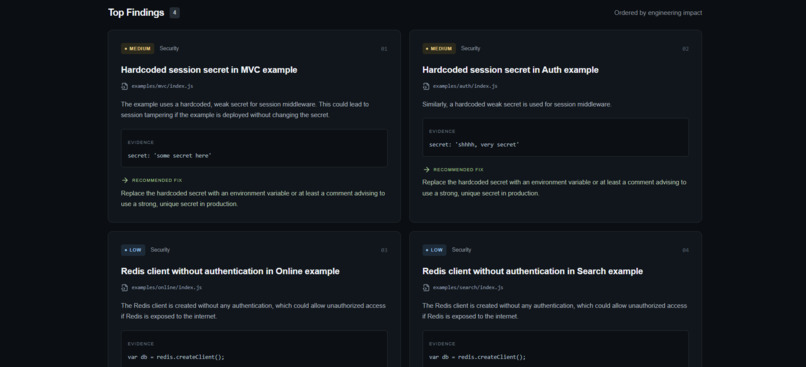
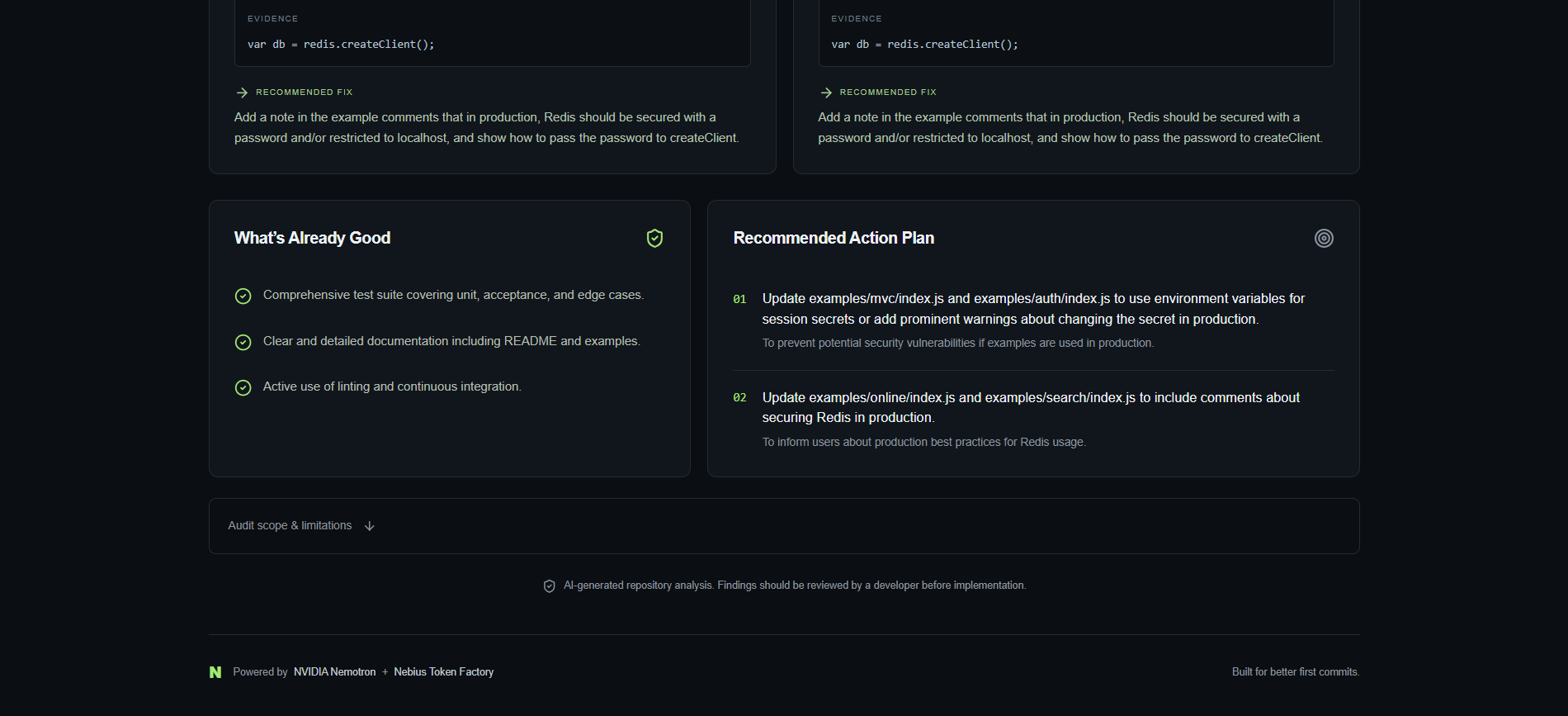
Recommended Action Plan Section
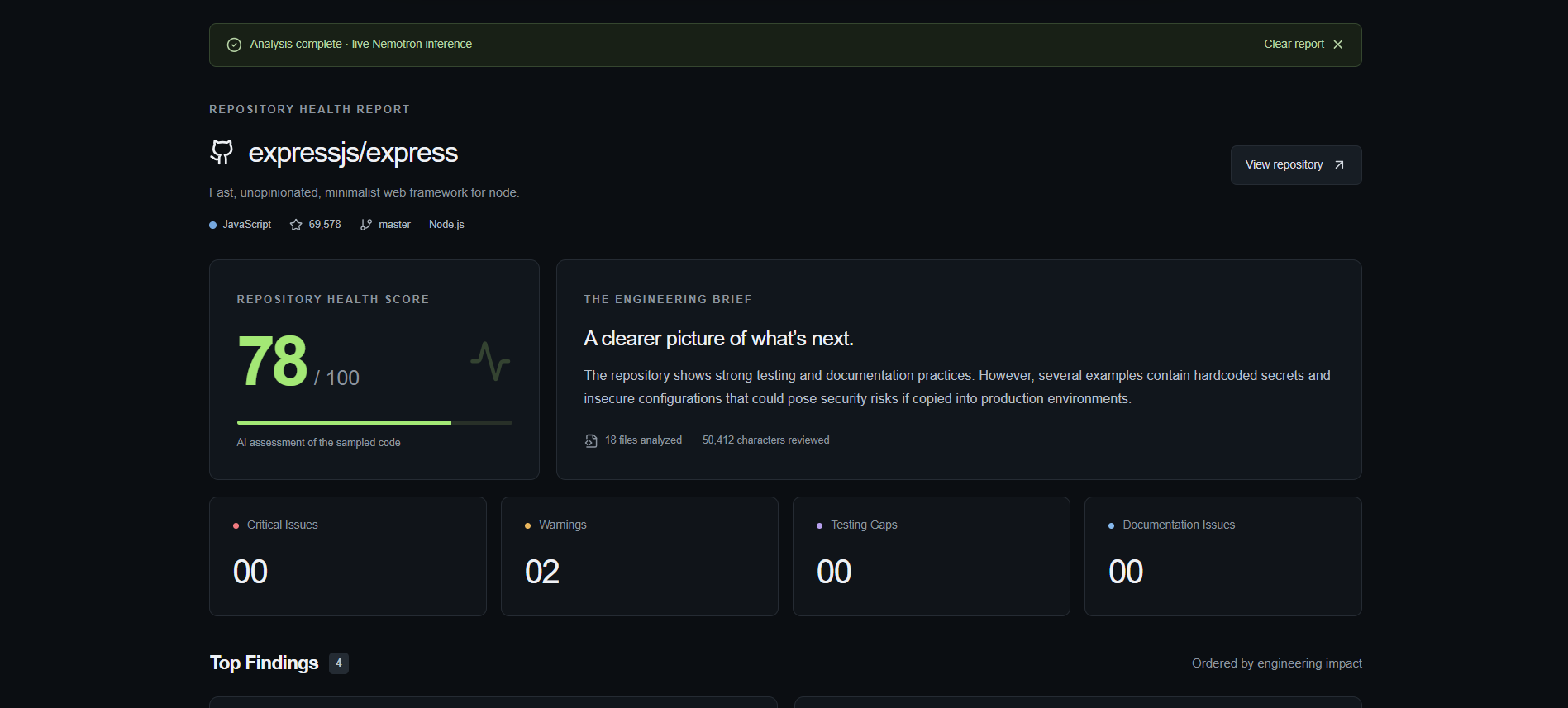
Inspiration
Developers often need to understand unfamiliar codebases quickly, whether they are joining a new project, reviewing an open-source repository, or inheriting legacy code. The first few hours are usually spent figuring out the structure, identifying risky areas, understanding testing coverage, and deciding what should be fixed first.
I wanted to build something that could turn that initial exploration into a much faster and more structured process.
What it does
RepoMedic is an AI-powered repository auditing agent for public GitHub repositories.
A user pastes a GitHub repository URL, and RepoMedic:
- retrieves repository metadata and relevant files
- maps the codebase and selects important source and configuration files
- analyzes the selected context using NVIDIA Nemotron through Nebius Token Factory
- identifies potential bugs, security concerns, testing gaps, maintainability issues, and documentation problems
- generates a repository health score and engineering summary
- provides evidence, explanations, and recommended fixes for each finding
- creates a prioritized engineering action plan
RepoMedic performs static analysis only and never executes repository code.
How we built it
RepoMedic is built with Next.js, TypeScript, and Tailwind CSS.
The backend retrieves public repository data from GitHub and filters the repository so that only useful files are included in the model context. Generated files, binaries, large files, and unnecessary dependencies are excluded.
The selected repository context is then sent to NVIDIA Nemotron through Nebius Token Factory for live inference.
Nemotron is prompted to behave like a senior software engineer performing a repository audit. It returns structured findings that are validated and displayed in the RepoMedic dashboard.
The overall workflow is:
GitHub Repository
→ Repository Ingestion
→ Critical File Selection
→ NVIDIA Nemotron via Nebius Token Factory
→ Structured Engineering Findings
→ Prioritized Action Plan
The application is deployed publicly using Vercel.
Challenges we ran into
One challenge was handling large repositories without sending excessive amounts of code to the model. To solve this, RepoMedic prioritizes useful files such as source code, configuration files, tests, documentation, and dependency manifests while enforcing limits on file size and total context.
Another challenge was GitHub API rate limiting. We added authenticated GitHub API requests while keeping the token entirely server-side.
We also had to make the AI output reliable enough for the interface. The model is asked to return structured JSON, which is validated and handled gracefully if the response is malformed.
Finally, repository content itself is untrusted input, so the system prompt explicitly prevents instructions inside repository files from overriding the audit workflow.
Accomplishments that we're proud of
We built a working end-to-end agent that can analyze real public GitHub repositories using live NVIDIA Nemotron inference through Nebius Token Factory.
RepoMedic does more than summarize code. It converts repository context into concrete engineering decisions, including:
- prioritized findings
- severity levels
- file-level evidence
- recommended fixes
- repository strengths
- a ranked action plan
We are also proud that the application is fully deployed and can analyze real repositories directly from a public URL.
What we learned
This project showed us how important context selection is when building AI agents for software engineering. Sending more code is not always better; selecting the right files produces a much more focused analysis.
We also learned how to design structured model outputs that can be reliably transformed into a usable product interface.
Using NVIDIA Nemotron with Nebius Token Factory made it possible to integrate live model reasoning into a multi-step developer workflow instead of building a simple chatbot experience.
What's next for RepoMedic
The next step is to make RepoMedic useful throughout the software development lifecycle.
Future improvements could include:
- authenticated analysis of private repositories
- pull request and commit analysis
- repository-wide dependency vulnerability checks
- automatic issue generation from findings
- GitHub Actions integration for continuous repository health monitoring
- historical health-score tracking
- deeper multi-agent analysis for security, testing, architecture, and performance
- suggested code patches for identified issues
The long-term goal is for RepoMedic to become an AI engineering assistant that continuously understands a codebase and helps development teams decide what to improve next.
Built With
- githubapi
- nebiustokenfactory
- next.js
- nvidianemotron
- tailwindcss
- typescript
- vercel

Log in or sign up for Devpost to join the conversation.