-
-
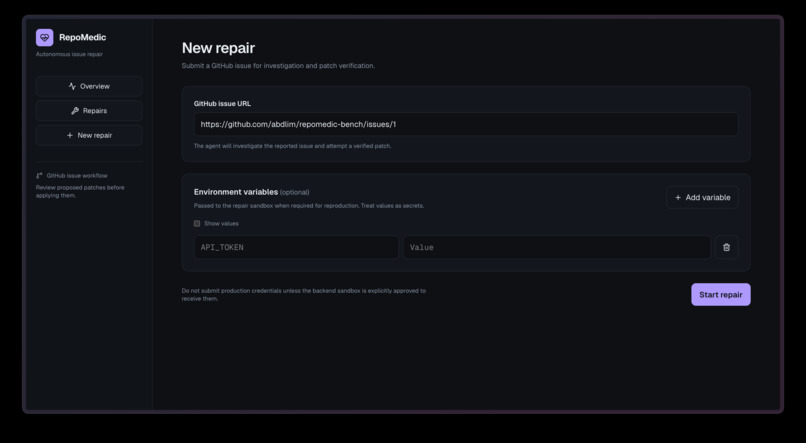
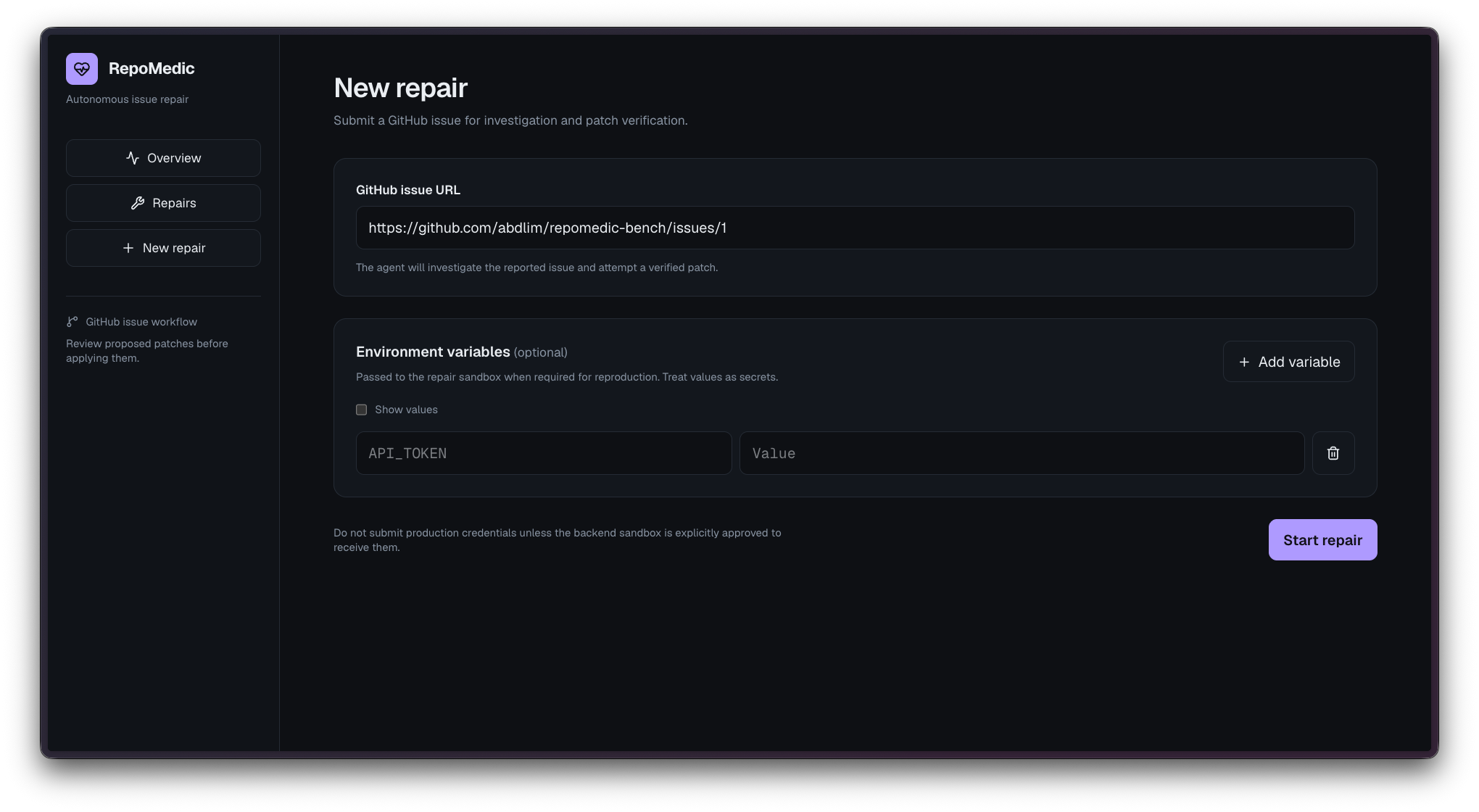
New Repair Form
-
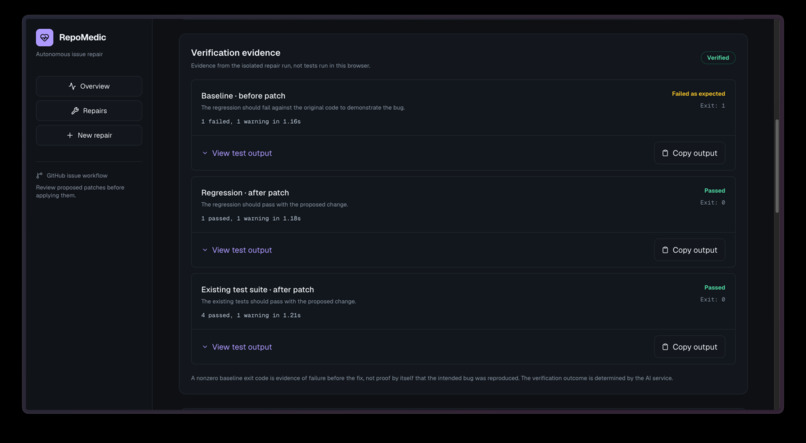
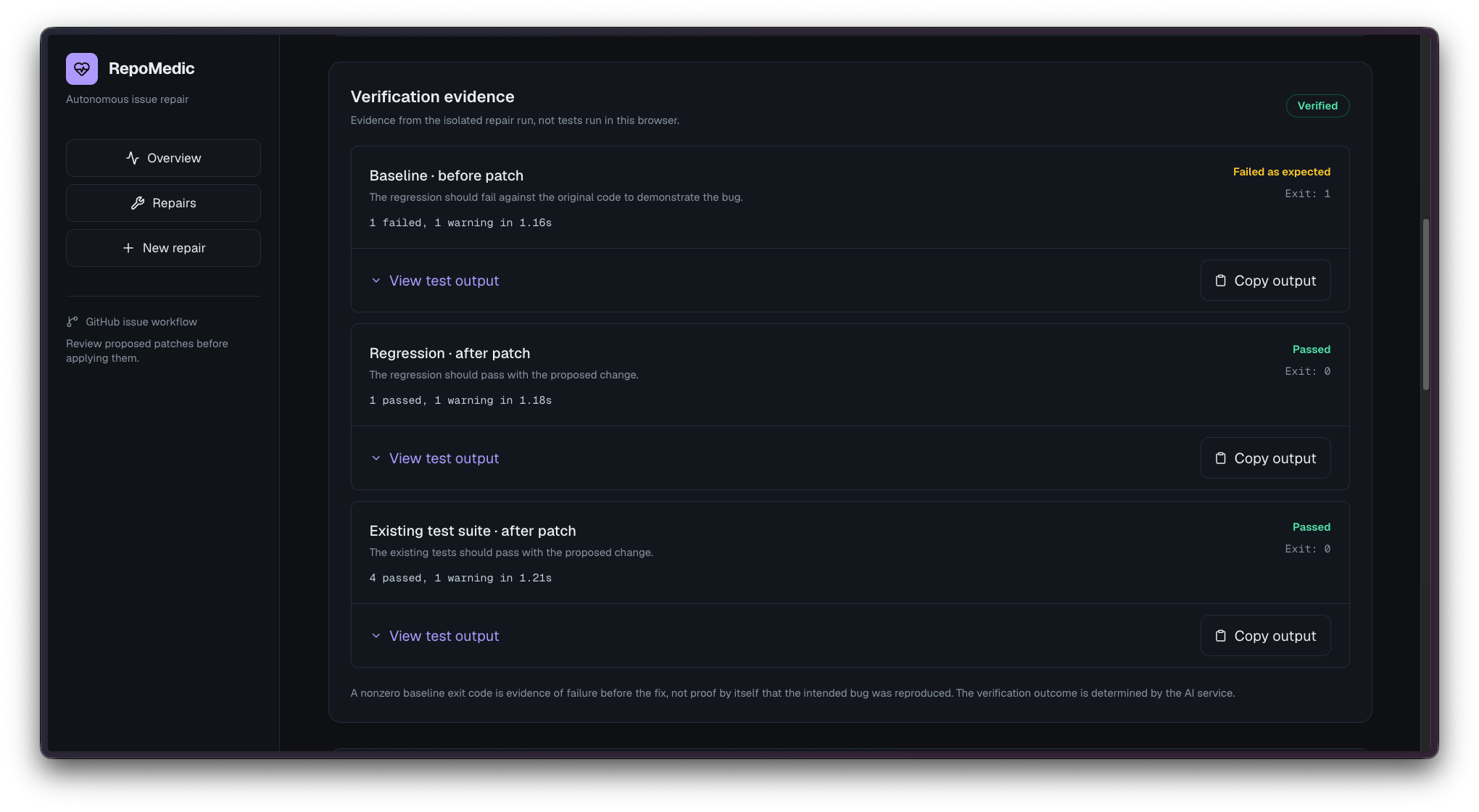
Verification Evidence
-
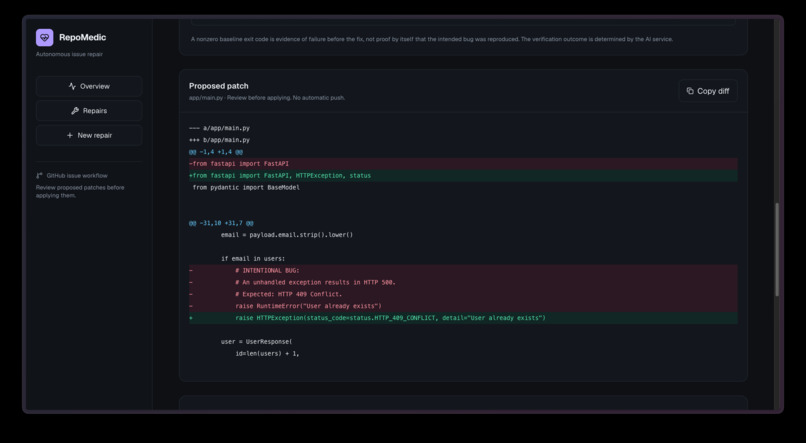
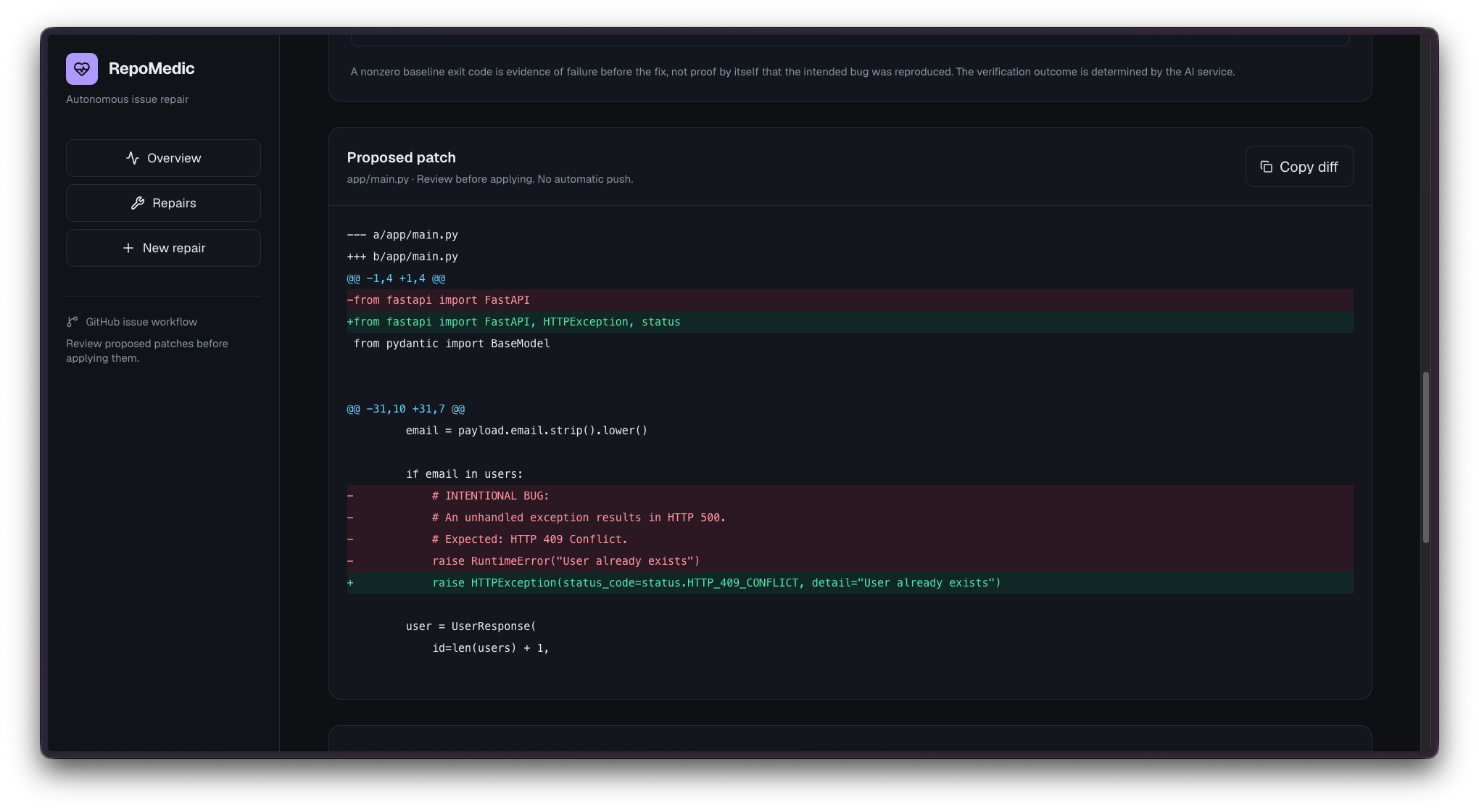
Proposed Code Patch
-
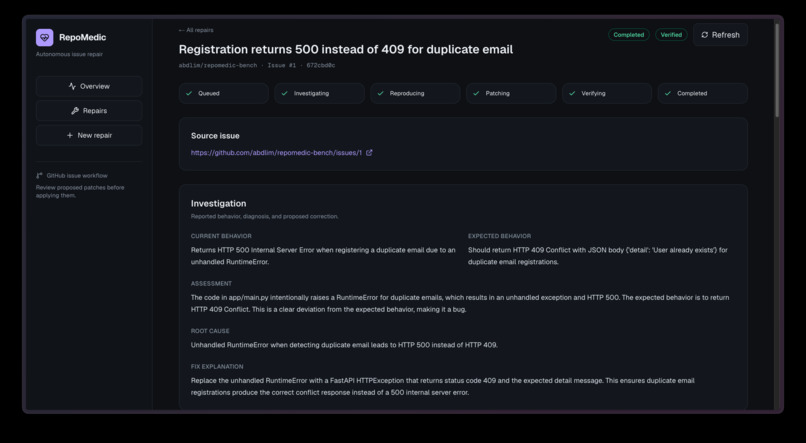
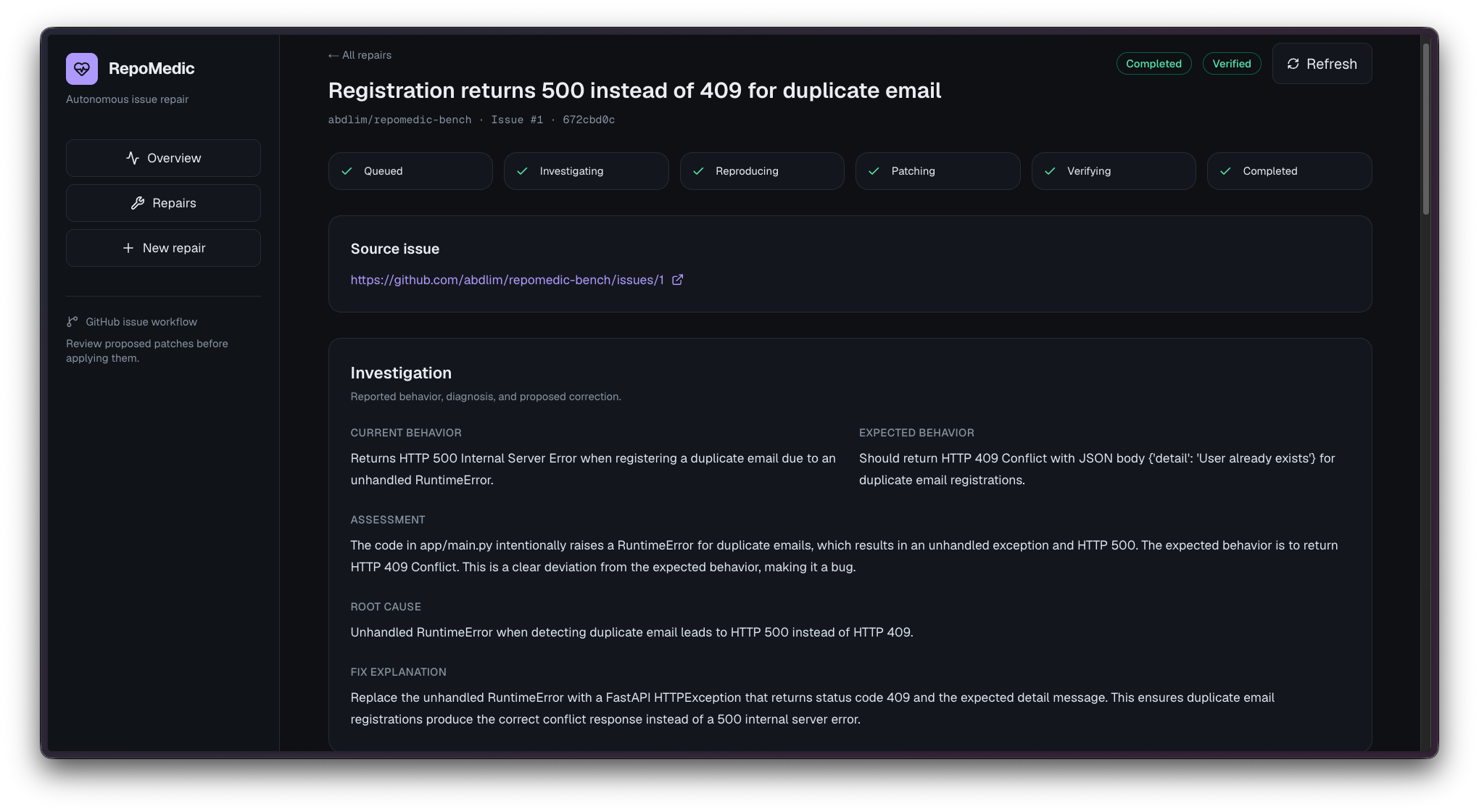
Verified Repair Report
Inspiration
As a developer, I've realized that not every GitHub issue is actually a bug. Sometimes it's a missing feature, a misunderstanding, or simply an unclear report.
I've also used AI coding tools enough to know that generating a fix is one thing, but proving it actually works is another.
That inspired me to build RepoMedic, an AI agent that doesn't just suggest fixes but investigates issues and backs up its solutions with real test results.
What It Does
RepoMedic takes a public GitHub issue URL and analyzes the repository to determine whether it's a bug, feature request, or usage mismatch.
For actual bugs, it generates a regression test, reproduces the failure, proposes a patch, and runs tests in an isolated sandbox to verify the fix.
For other issues, it provides explanations and actionable suggestions instead.
How I Built It
RepoMedic uses NVIDIA Nemotron 3 Super 120B through Nebius Token Factory for issue analysis, test generation, and patch creation.
The system consists of three services:
- Next.js: Frontend dashboard and repair reports.
- Express + PostgreSQL: Job management, persistence, and API.
- FastAPI: AI orchestration and sandbox execution.
It's deployed using Vercel and Railway, with Railway Sandboxes handling isolated test execution.
Challenges
The hardest part wasn't generating code. It was making that code reliably executable.
I ran into issues with missing dependencies, environment variables, pytest plugins, malformed model responses, and AI-generated tests that didn't actually reproduce the reported bug.
Solving these problems led me to implement environment preparation, structured output validation, test retries, and issue classification before repair.
Accomplishments
I validated RepoMedic using two real GitHub issues:
- Splitz API: Correctly identified an unsupported login method as a usage mismatch and suggested an appropriate feature enhancement.
- RepoMedic Bench: Reproduced a duplicate-registration bug, generated a patch, and verified it with a passing regression test and all four tests passing.
What's Next
I plan to expand support beyond Python, improve multi-file repairs, support more complex test environments, and eventually introduce optional GitHub pull-request creation.
My goal is to make RepoMedic a developer tool that doesn't just generate code, but provides evidence that its proposed changes actually work.
Built With
- api
- css
- docker
- drizzle
- express.js
- factory
- fastapi
- github
- nebius
- nemotron
- next.js
- node.js
- nvidia
- orm
- postgresql
- pytest
- python
- railway
- react
- sandboxes
- tailwind
- token
- typescript
- uv
- vercel

Log in or sign up for Devpost to join the conversation.