-
-
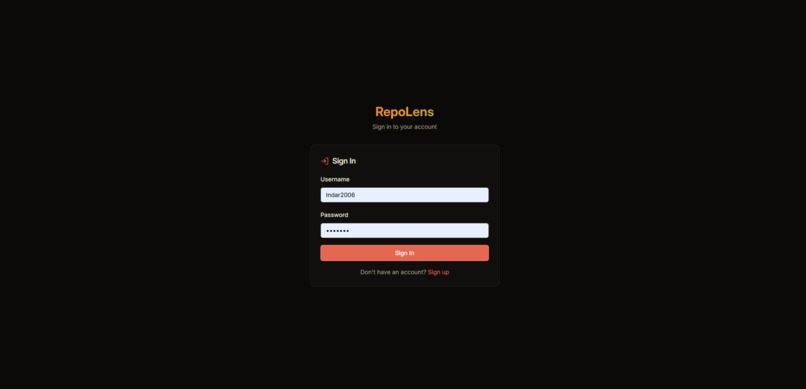
Login Page
-
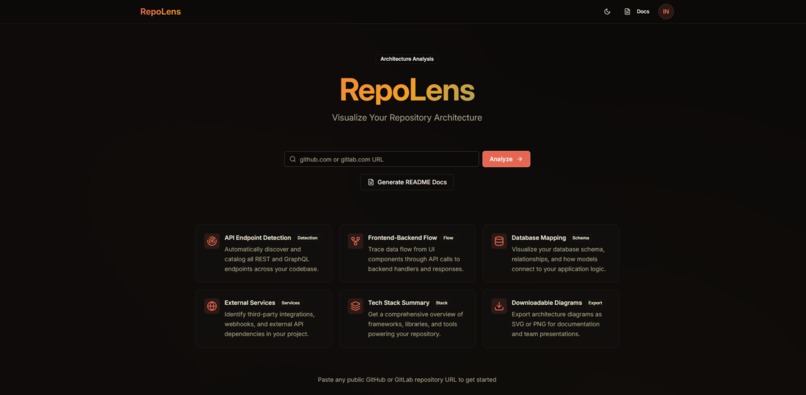
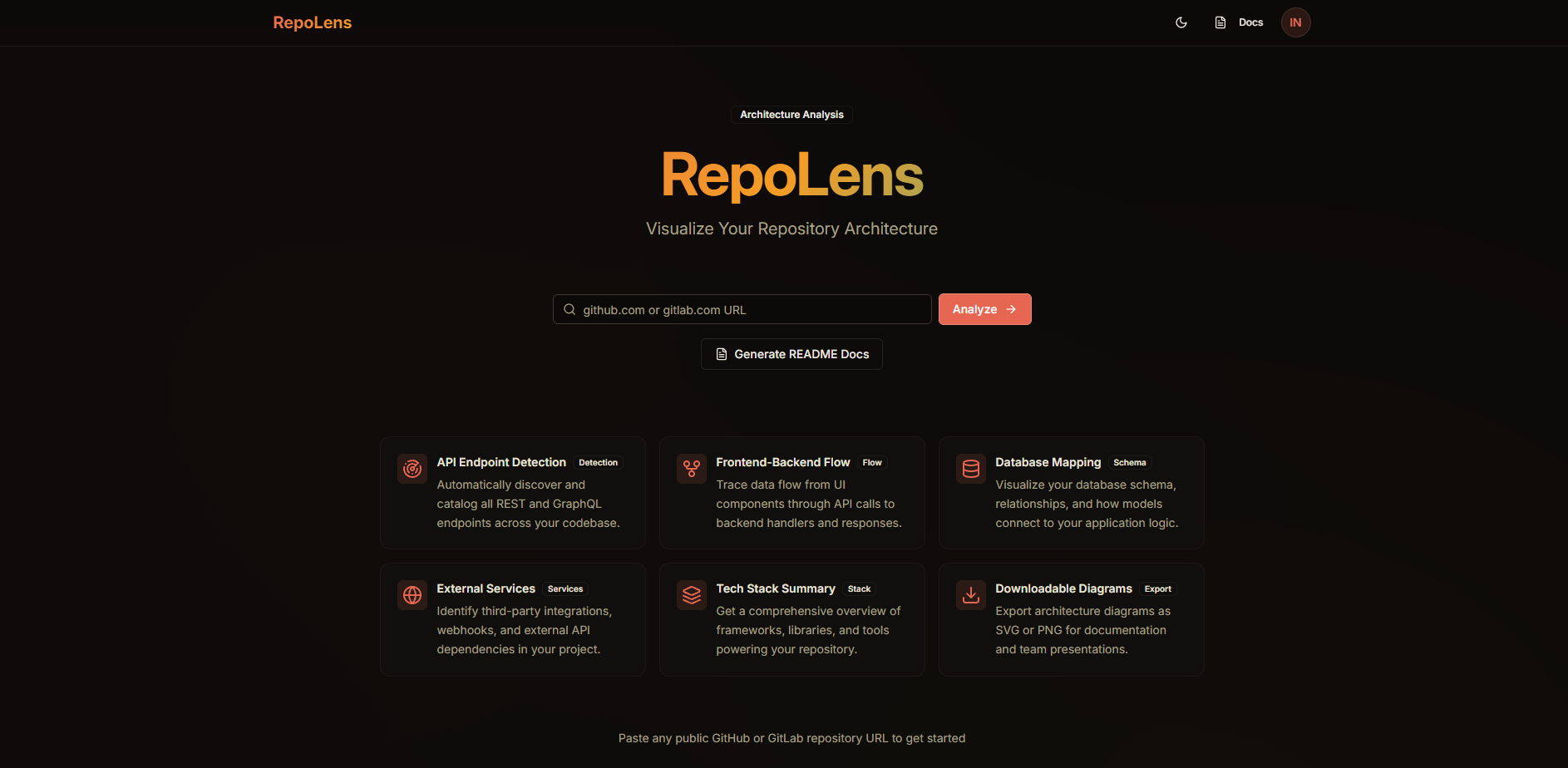
Home page
-
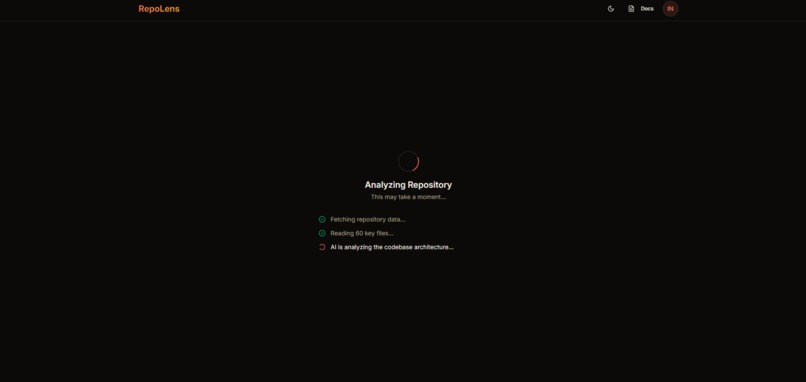
AI analyzing
-
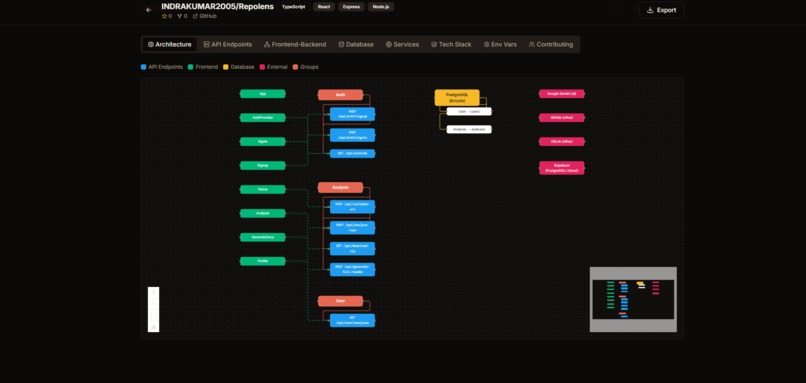
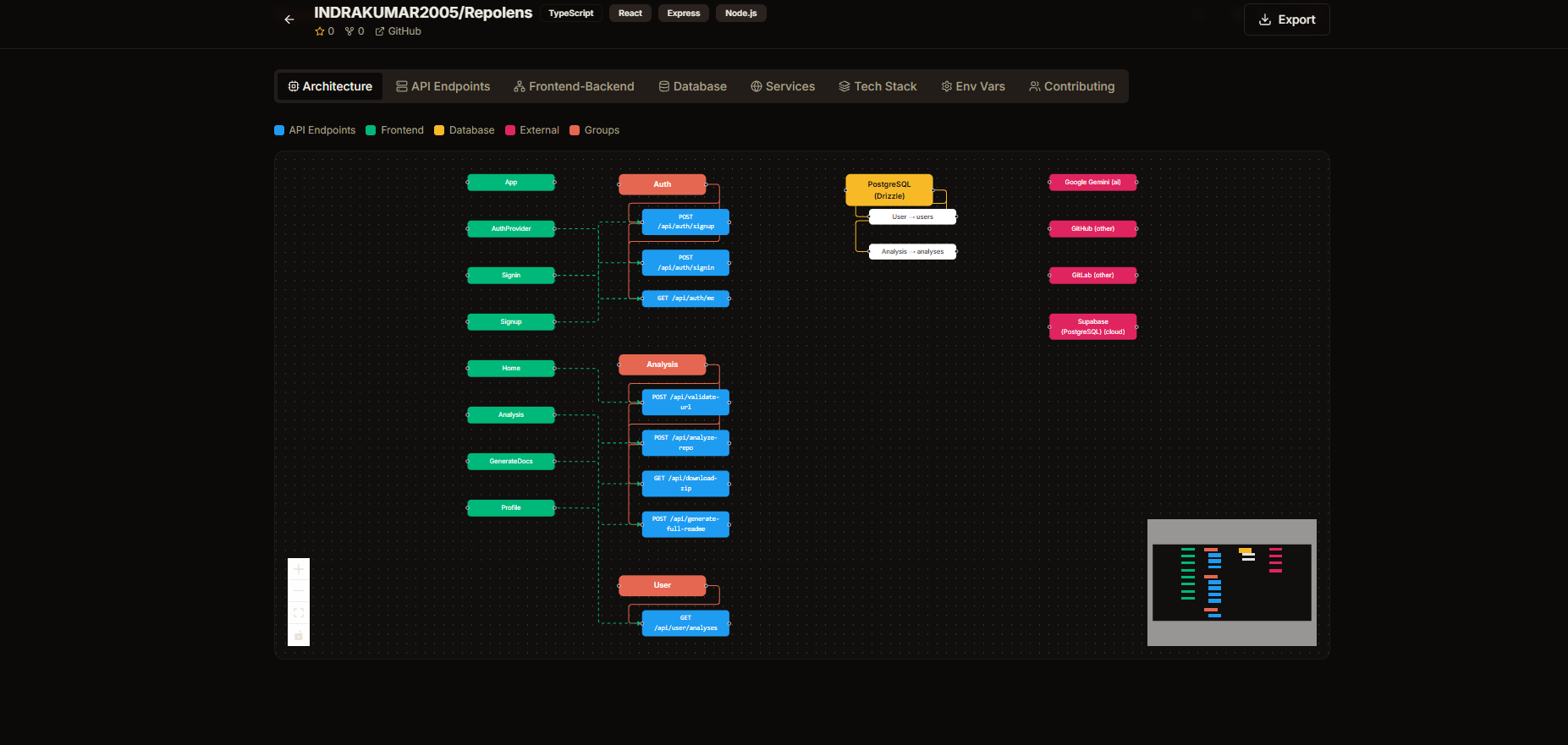
Project architectrue
-
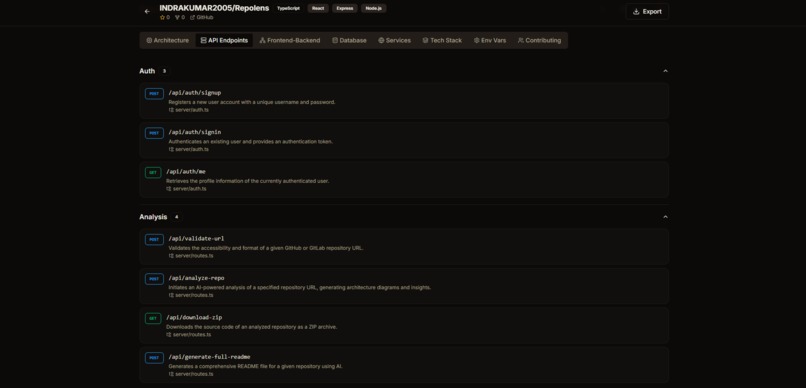
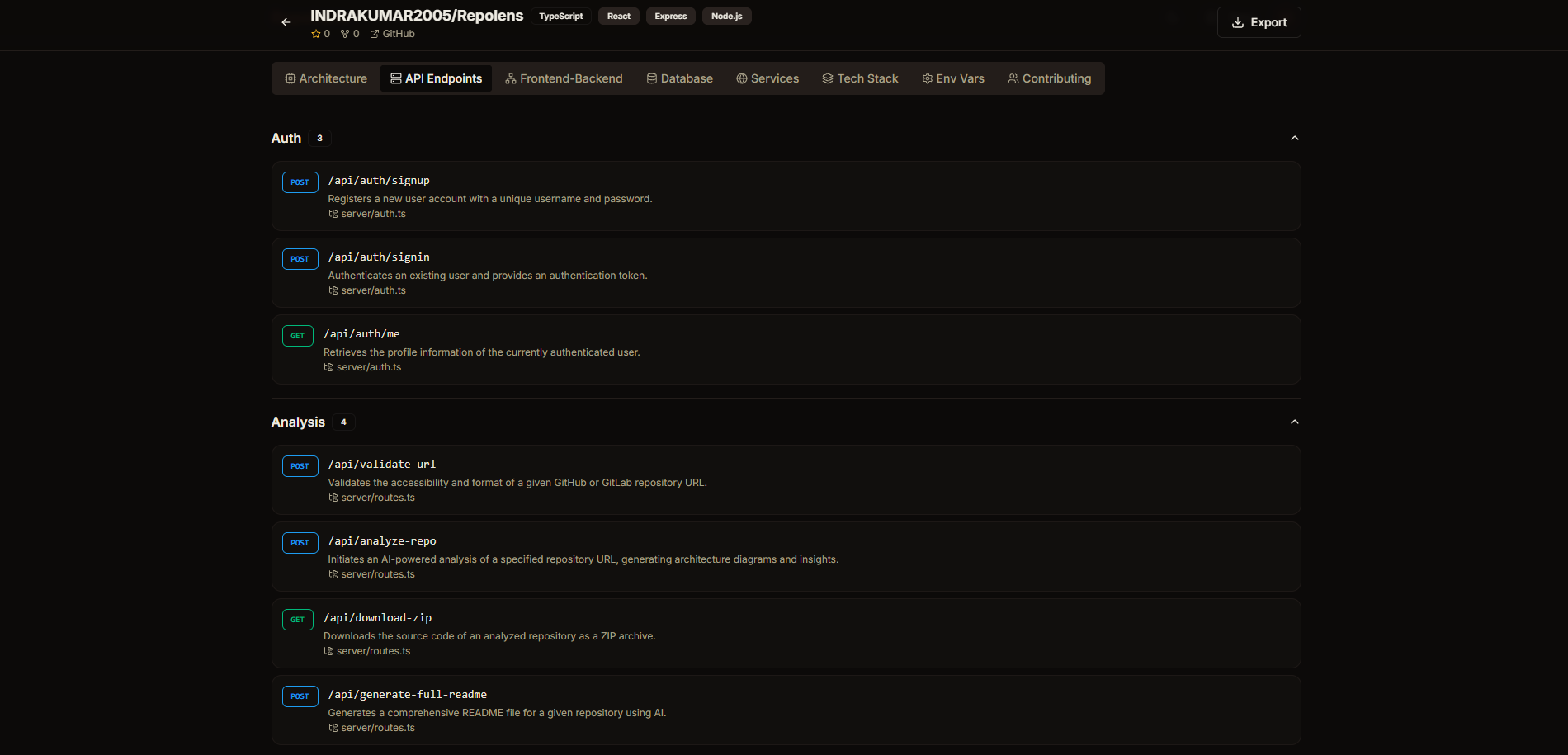
API Endpoints


Inspiration
Understanding a large or unfamiliar codebase can be difficult, especially for developers joining an existing project. I wanted to build a tool that could quickly explain a repository in a developer-friendly way instead of requiring someone to manually go through every folder and file.
This led me to build RepoLens AI, an AI-powered repository analysis platform that helps developers understand codebases, identify the technologies being used, and visualize how different parts of an application are connected.
What It Does
RepoLens AI analyzes a software repository and uses Google Gemini API to generate useful insights about the project, including:
- Technology and framework identification
- Environment variable detection
- Design pattern insights
- Repository structure analysis
- Frontend, backend, and database relationships
- Interactive system architecture visualization
The goal is to turn a complex repository into an understandable overview that developers can explore visually.
How I Built It
I built RepoLens AI by combining a modern web interface with AI-powered repository analysis.
The application uses React for the frontend and React Flow to create interactive architecture diagrams. The Google Gemini API is used to analyze repository information and extract meaningful technical insights.
The project follows a flow where repository information is collected, processed, sent for AI analysis, and then transformed into structured insights that can be displayed through the UI.
Challenges
One of the biggest challenges was figuring out how to represent a complex software repository in a simple and useful way. Different repositories can have completely different structures, technologies, and relationships between components.
Another challenge was designing prompts and processing the Gemini responses so that the generated information could be converted into consistent, useful data for the application.
Building the interactive architecture visualization was also challenging because the relationships between frontend, backend, databases, and other components needed to be presented clearly without overwhelming the user.
What I Learned
Through this project, I learned how to integrate an LLM API into a real application, design AI-powered workflows, handle structured AI responses, and build interactive visualizations with React Flow.
More importantly, I learned that building an AI application is not only about connecting an API to a frontend. The quality of the prompts, data processing, UI design, and handling of unpredictable AI output all play an important role in creating a useful product.
RepoLens AI gave me practical experience combining AI, software development, and developer tooling to solve a real problem.
Built With
- drizzleorm
- express.js
- geminiapi
- node.js
- postgresql
- radixui
- react
- reactflow
- tailwind
- vite
- xyflow


Log in or sign up for Devpost to join the conversation.