-
-
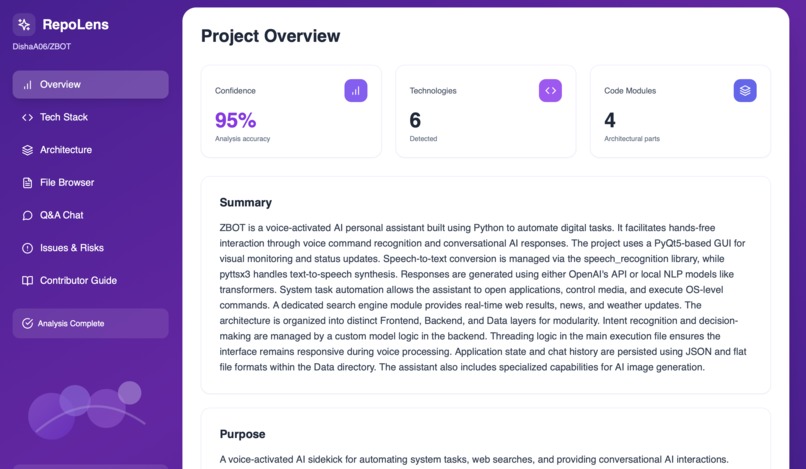
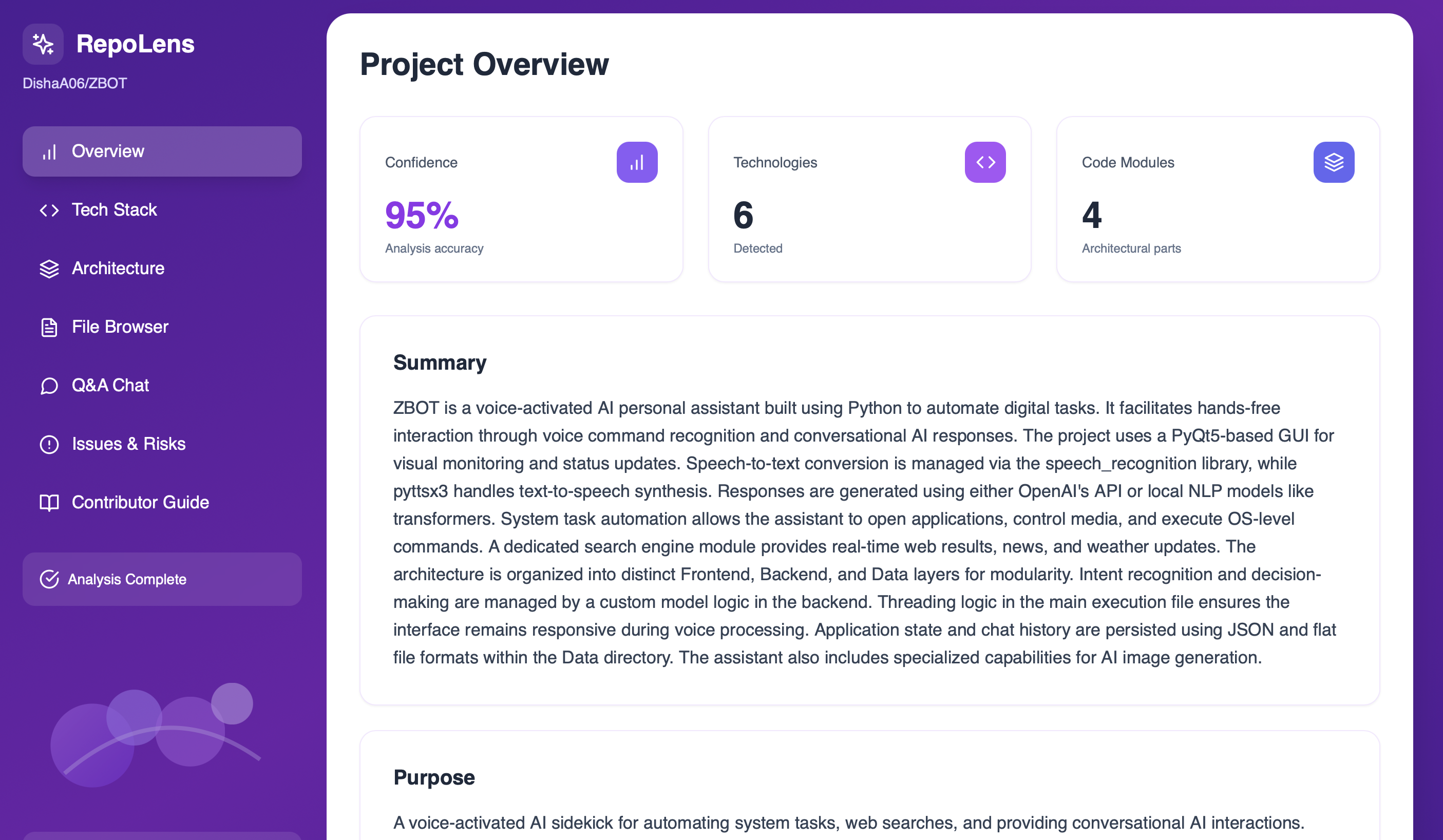
Dashboard
-
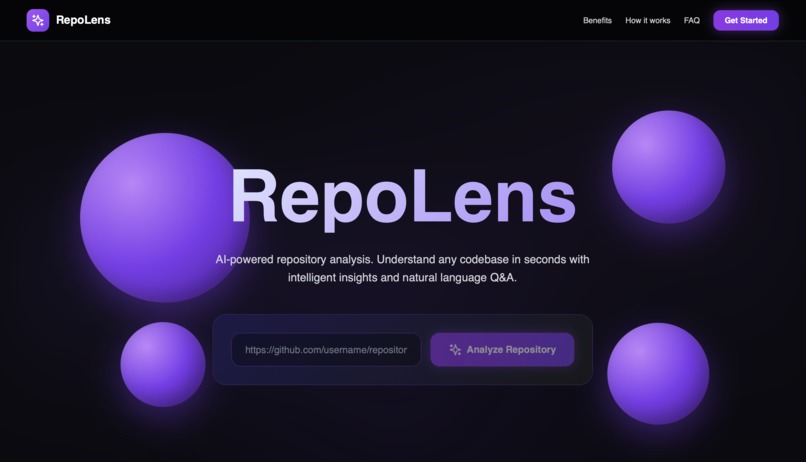
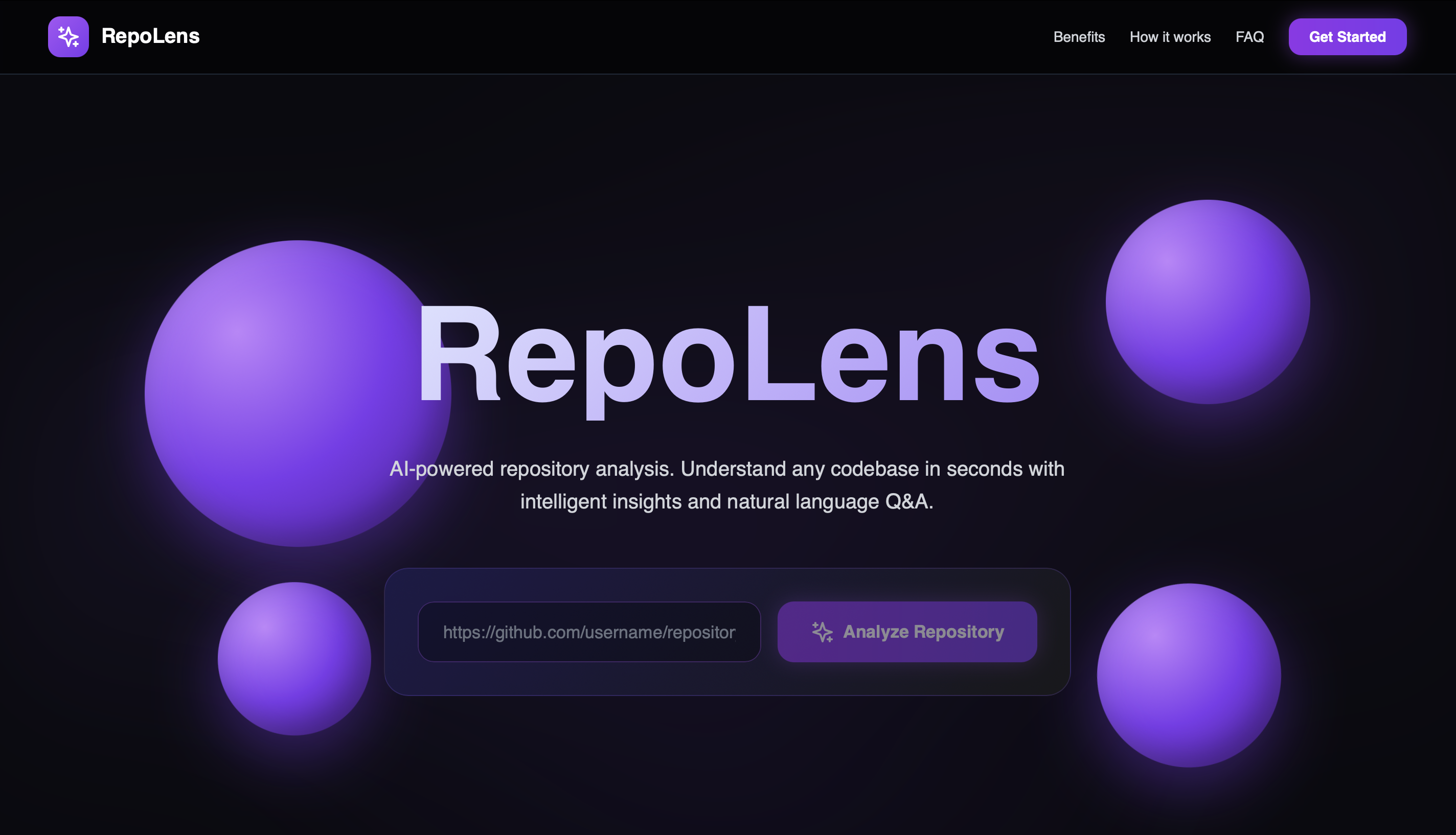
Landing Page
-
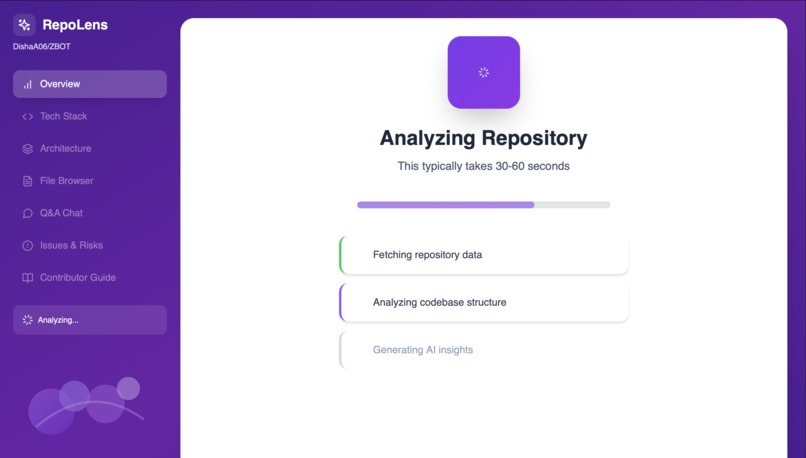
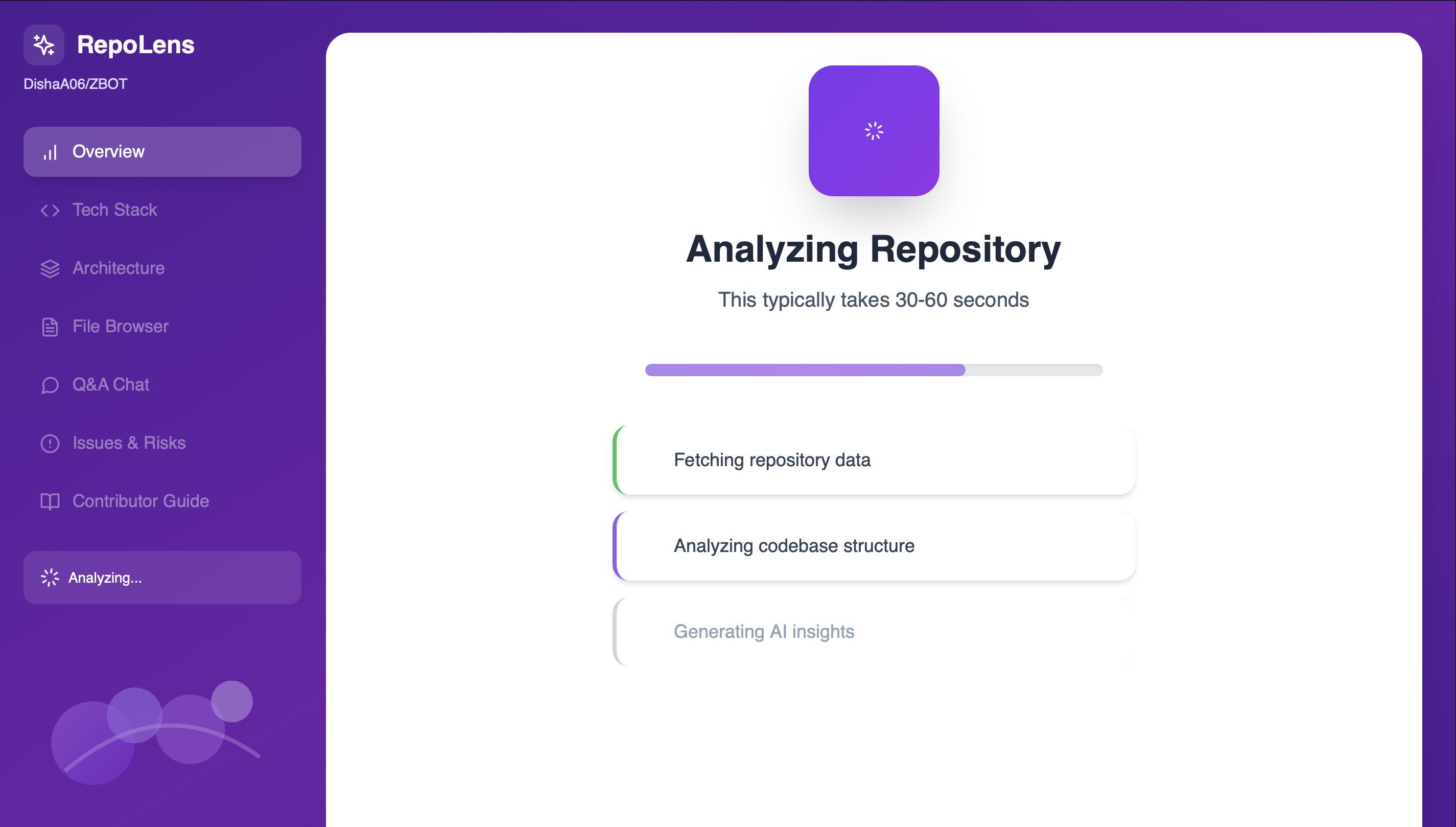
Analysis Page
Inspiration
Understanding a new GitHub repository is time-consuming — especially when documentation is missing or outdated. We wanted to build an AI system that could instantly decode repositories, explain architecture, and answer reasoning-based questions — making codebases accessible to everyone.
What it does
RepoLens analyzes any GitHub repository and converts it into structured intelligence. It identifies tech stack, architecture, workflows, risks, and code quality insights, while enabling conversational Q&A powered by Gemini 3 for deep reasoning.
How we built it
We built RepoLens using a FastAPI backend, integrated Gemini 3 for repository reasoning and summarization, leveraged GitHub APIs for code ingestion, and designed a modular analysis pipeline with visualization dashboards on the frontend.
Challenges we ran into
We faced Gemini API rate limits, large-repo processing constraints, dependency conflicts, and CI/CD failures. Optimizing prompt engineering for accurate architecture reasoning with Gemini 3 was also a key challenge.
Accomplishments that we're proud of
We faced GitHub API rate limits, large-repo processing constraints, dependency conflicts, and CI/CD failures. Optimizing prompt engineering for accurate architecture reasoning with Gemini 3 was also a key challenge.
What we learned
We gained hands-on experience with LLM orchestration, prompt engineering, repository parsing, CI/CD workflows, and scalable deployment — along with optimizing AI outputs for real developer use cases.
What's next for RepoLens
Upcoming features include auto-generated architecture diagrams to visualize system design, and AI-suggested test generation to improve code reliability and coverage. We’re also expanding into security risk detection, refactoring recommendations, and technical debt analysis — giving teams a real-time health view of their codebases.


Log in or sign up for Devpost to join the conversation.