-
-
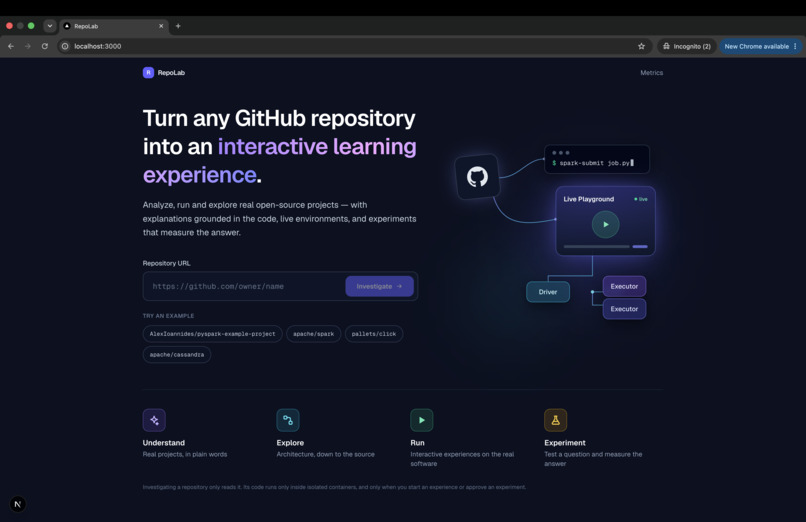
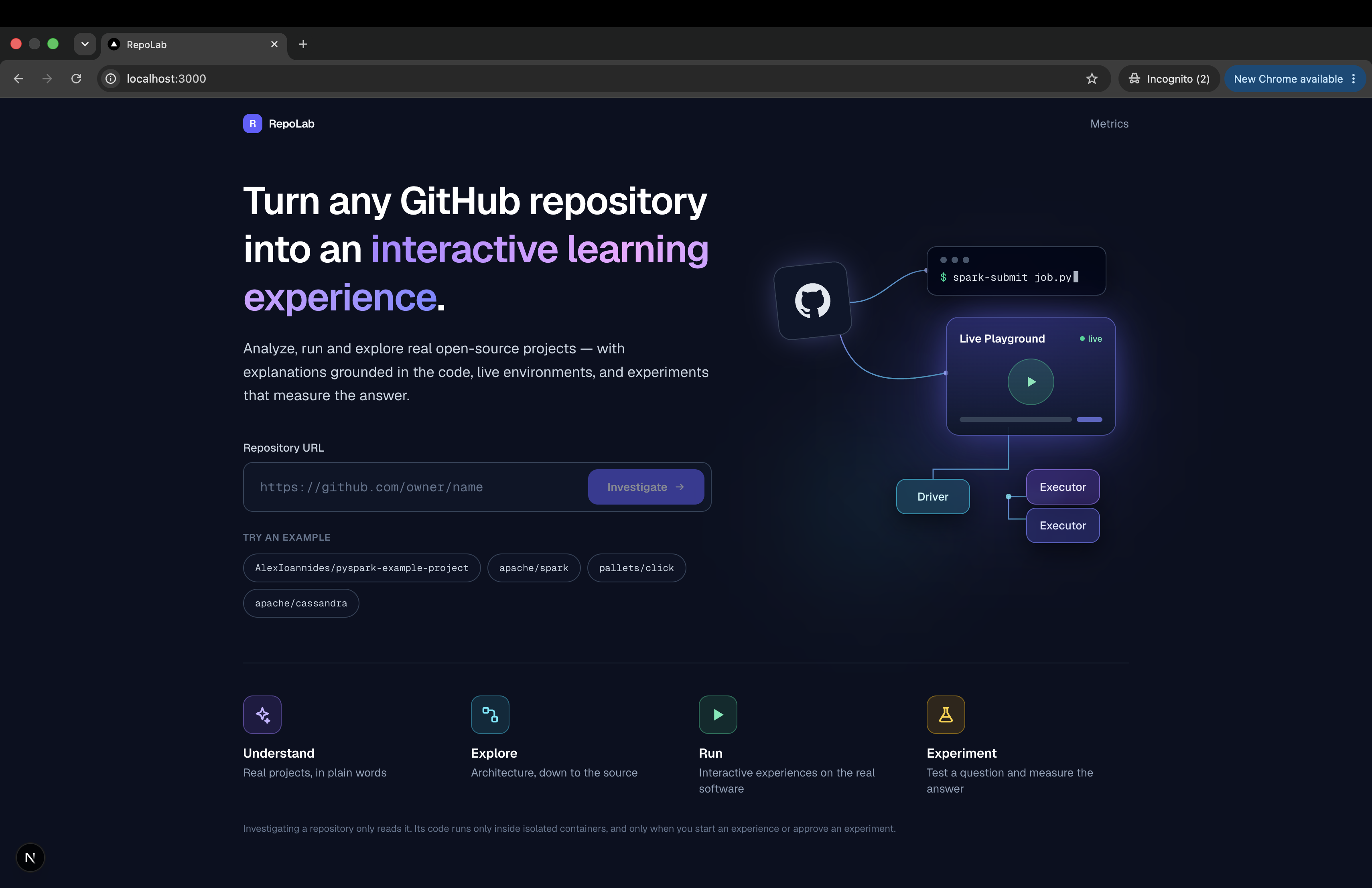
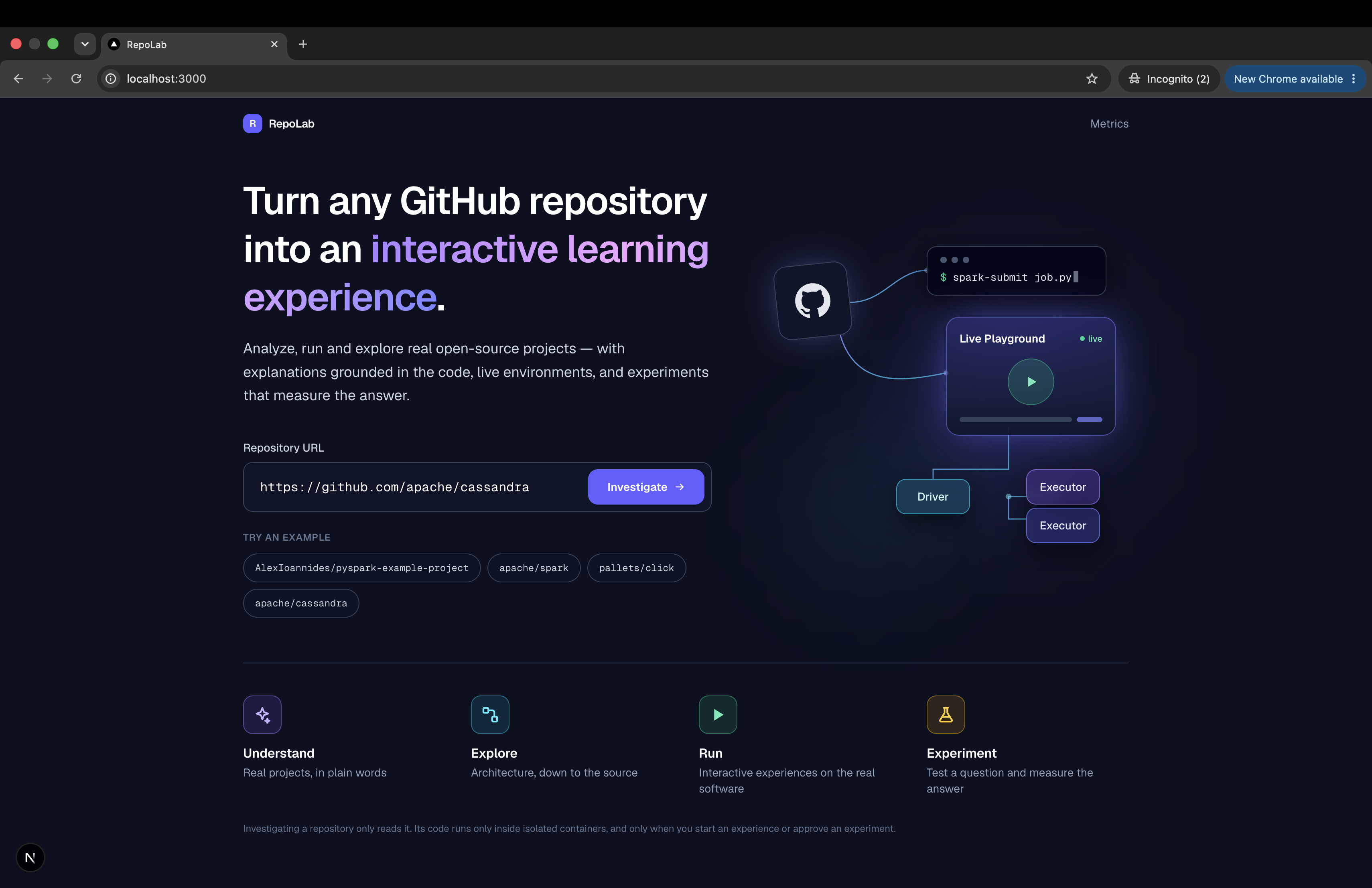
Home page
-
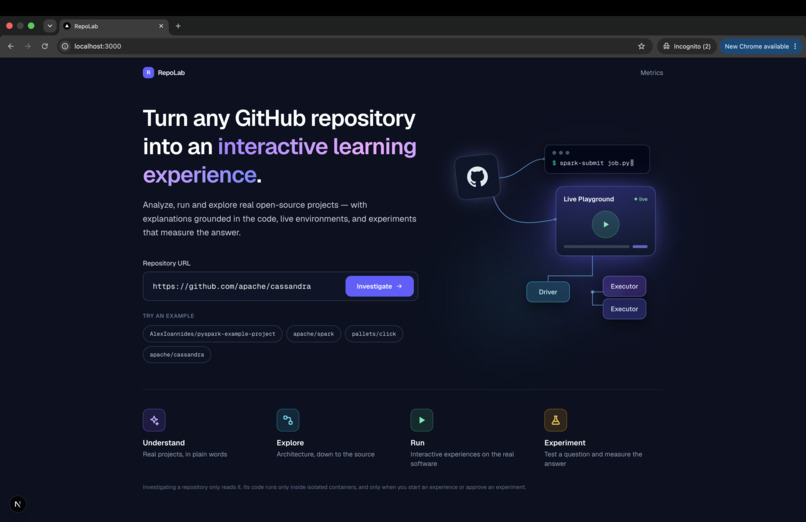
Add github link you want to explore
-
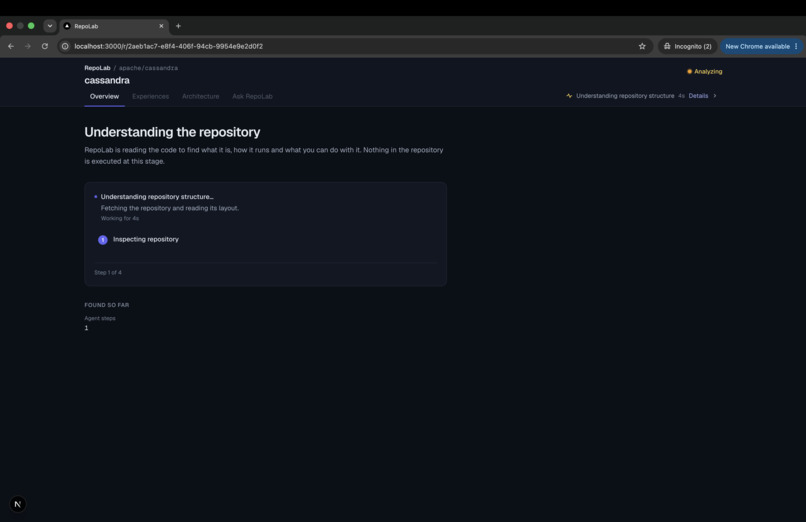
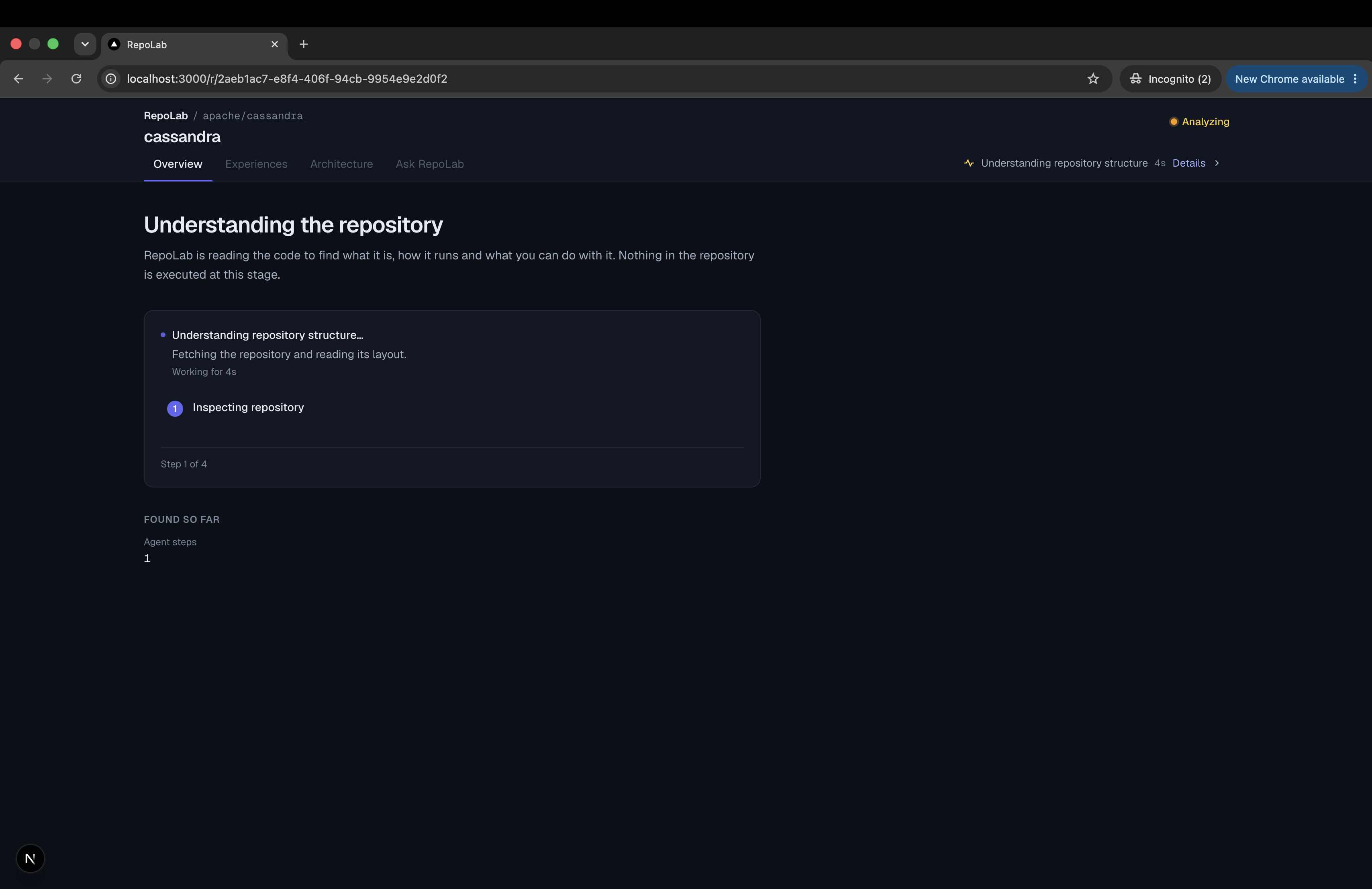
Overview page loading
-
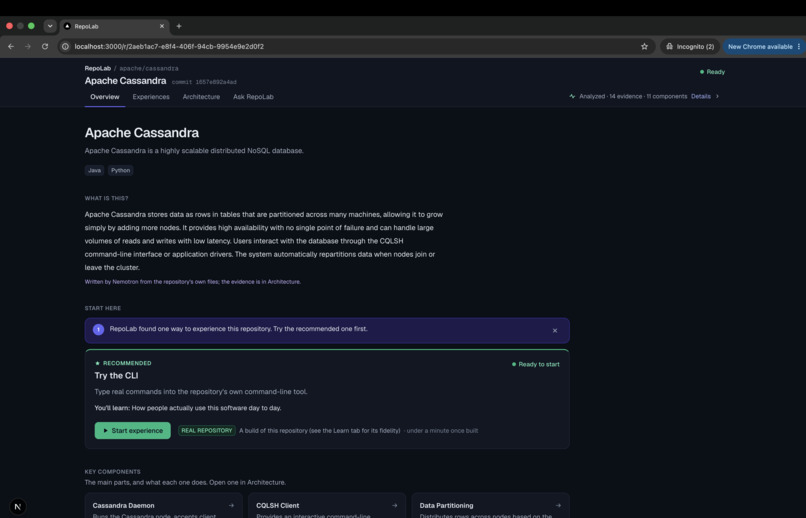
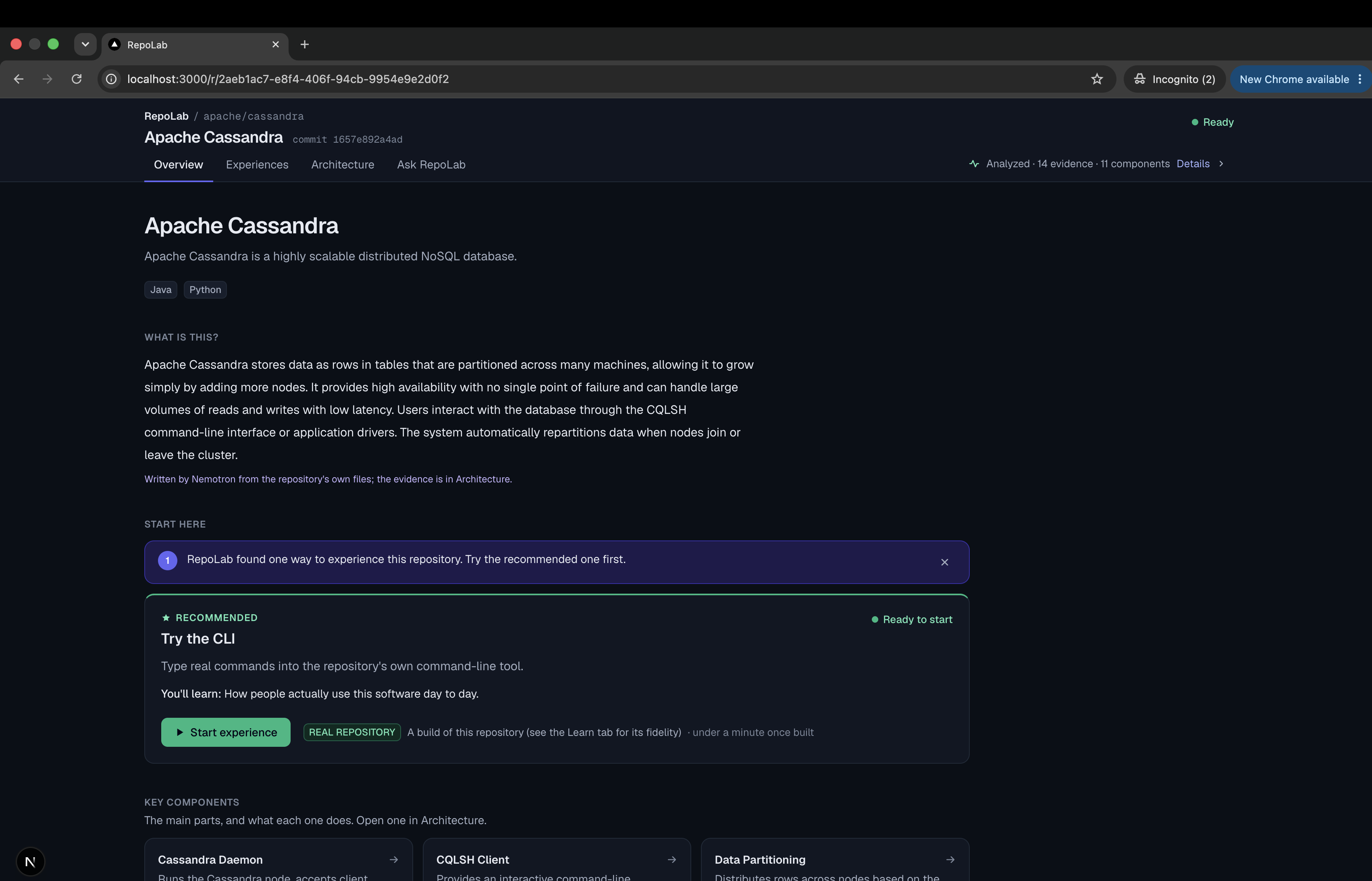
Overview page loaded
-
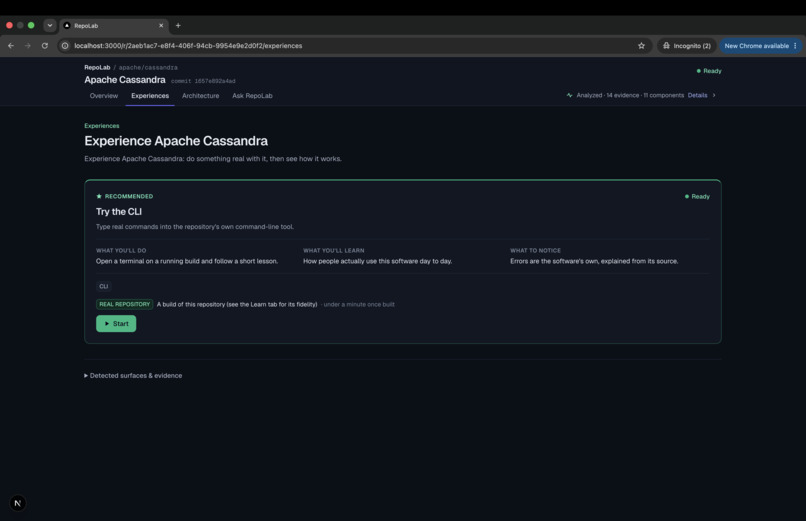
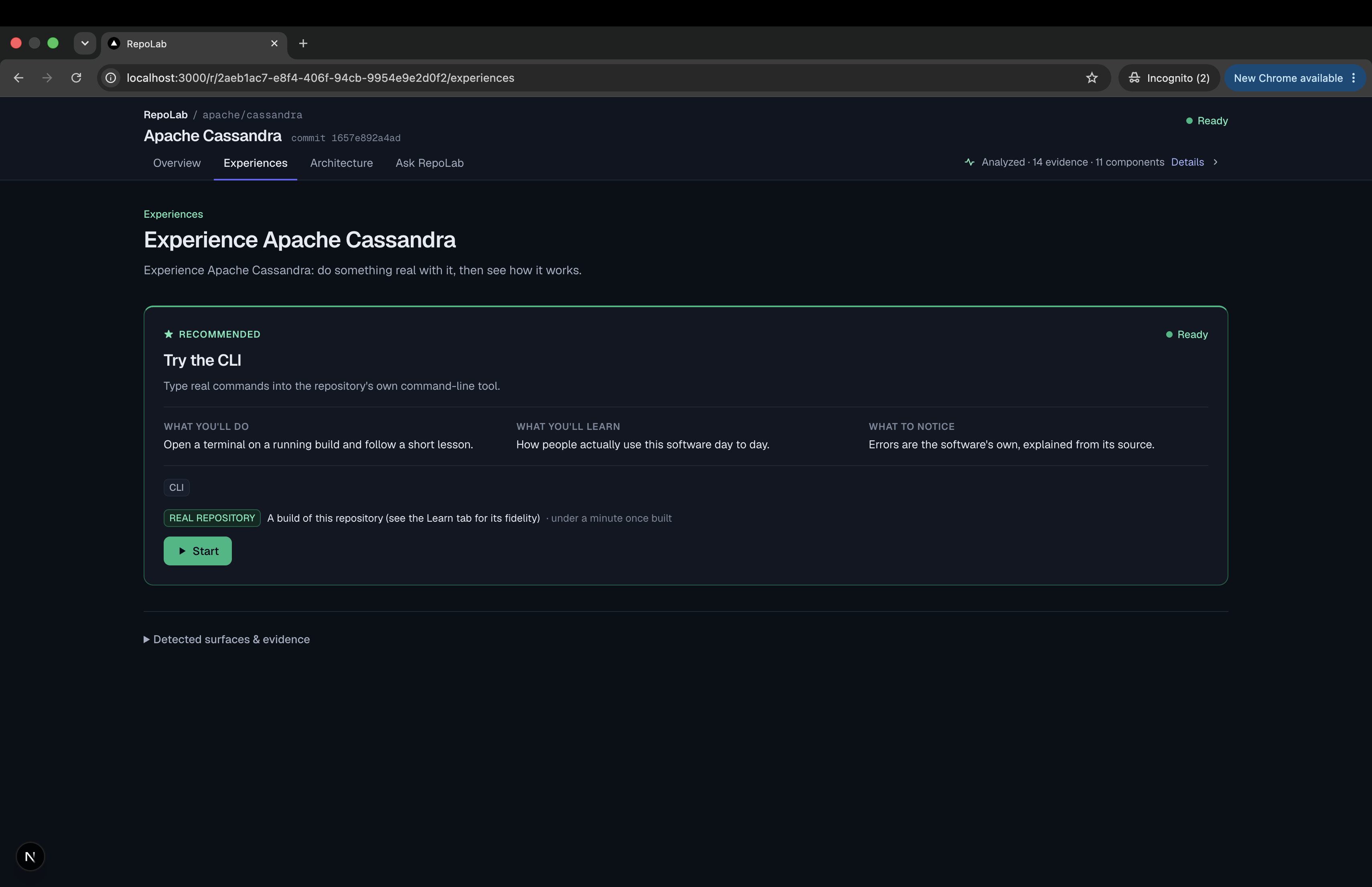
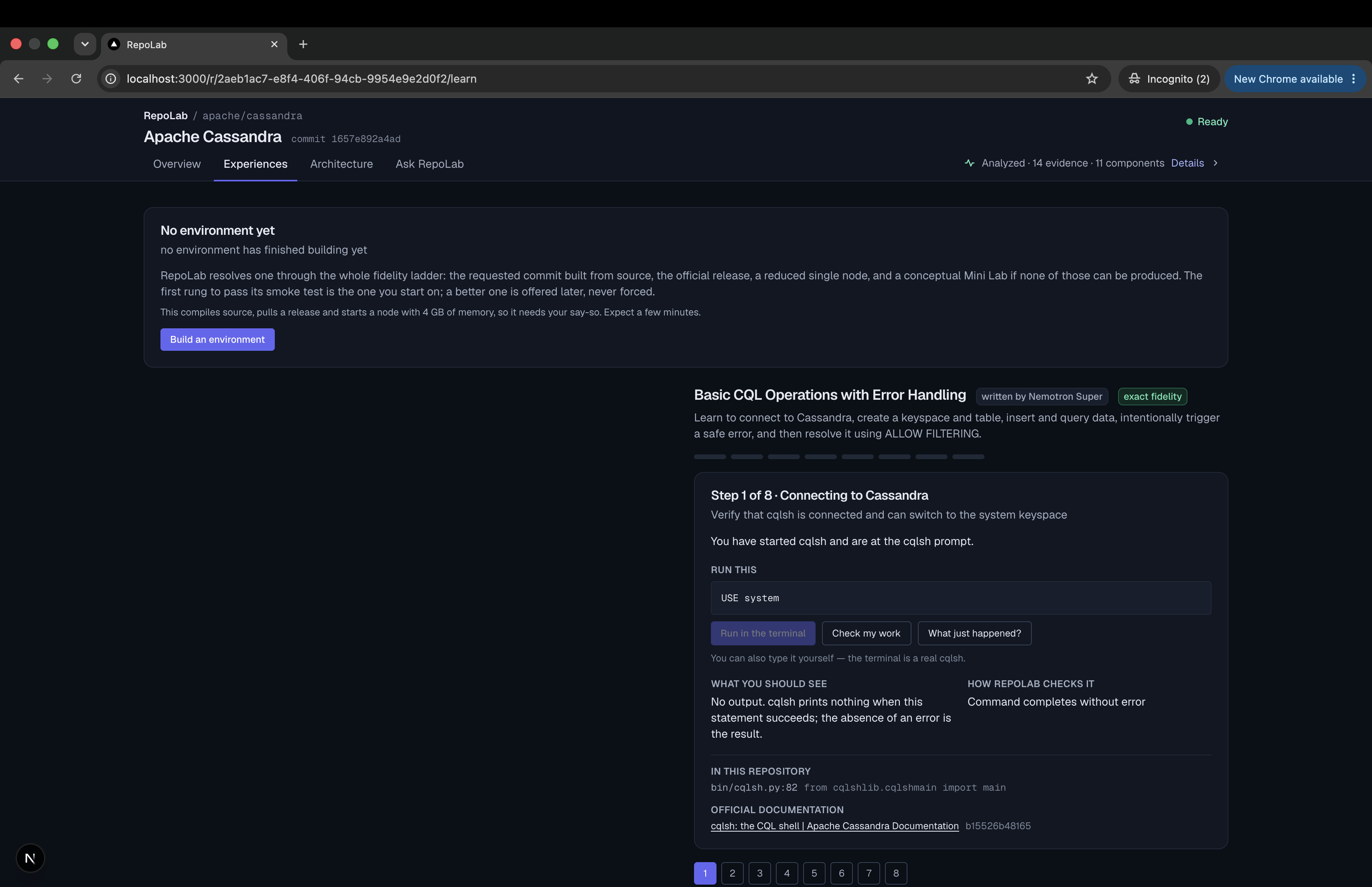
Experience page
-
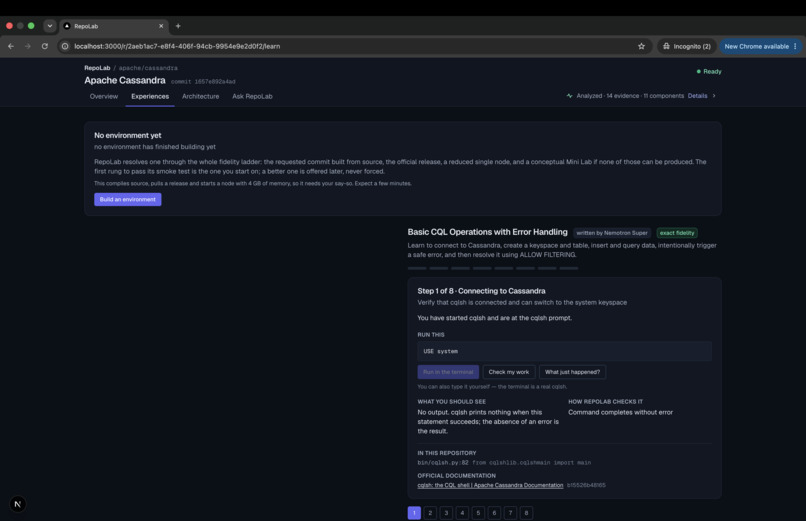
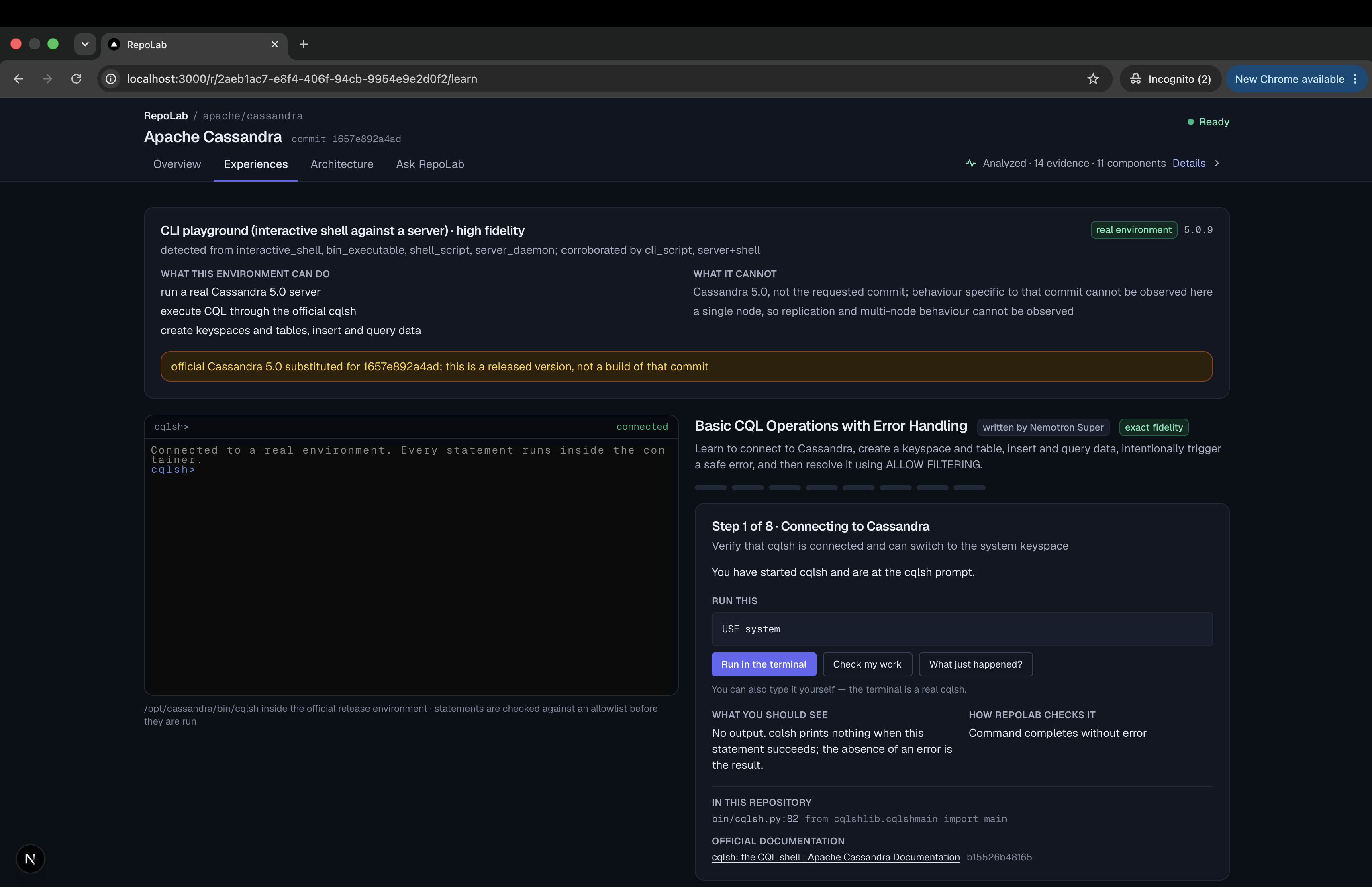
Click start on Experience page, Setting environment
-
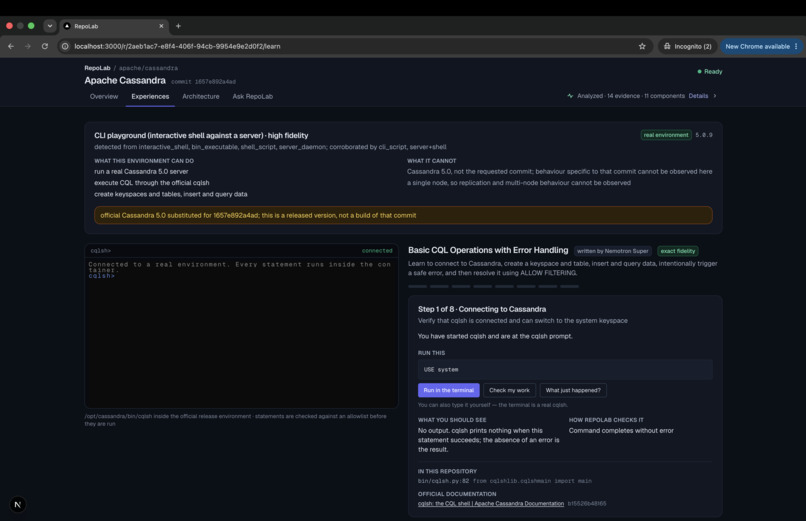
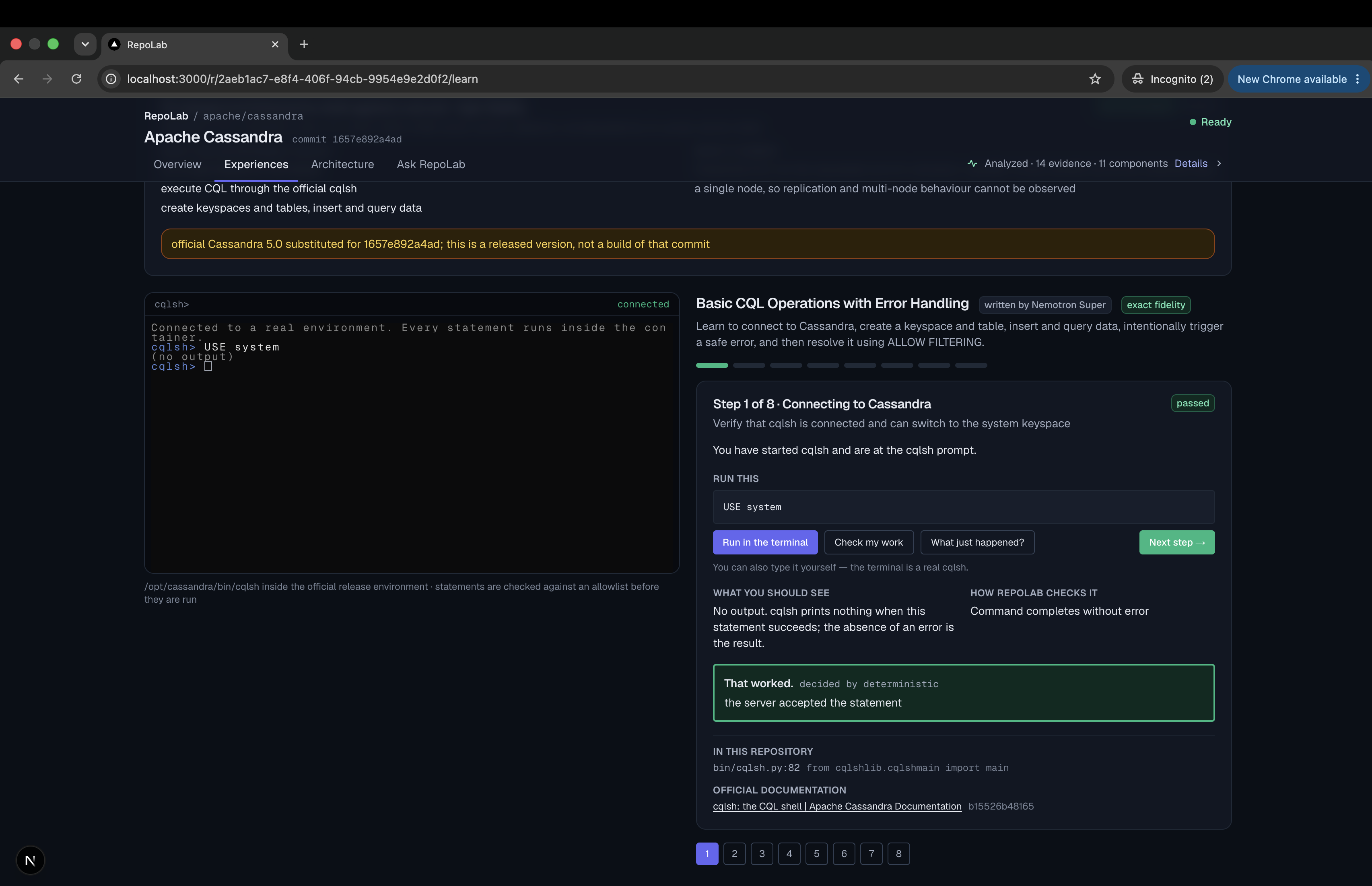
Experience page
-
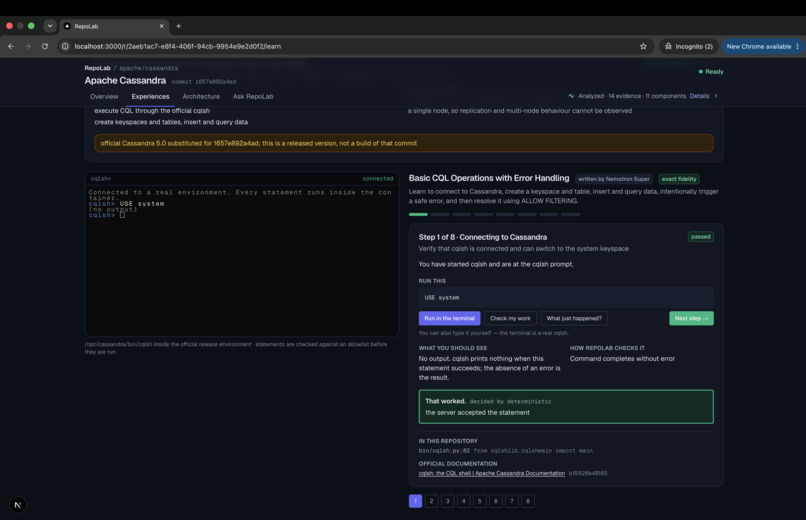
Experience page
-
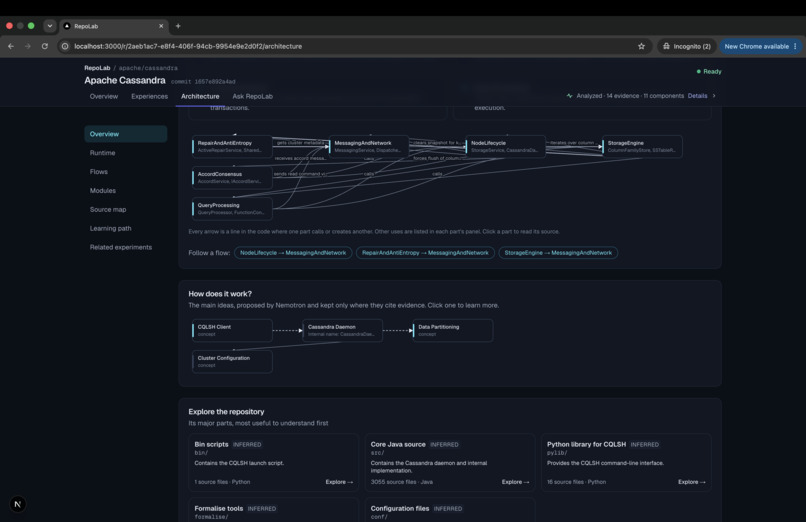
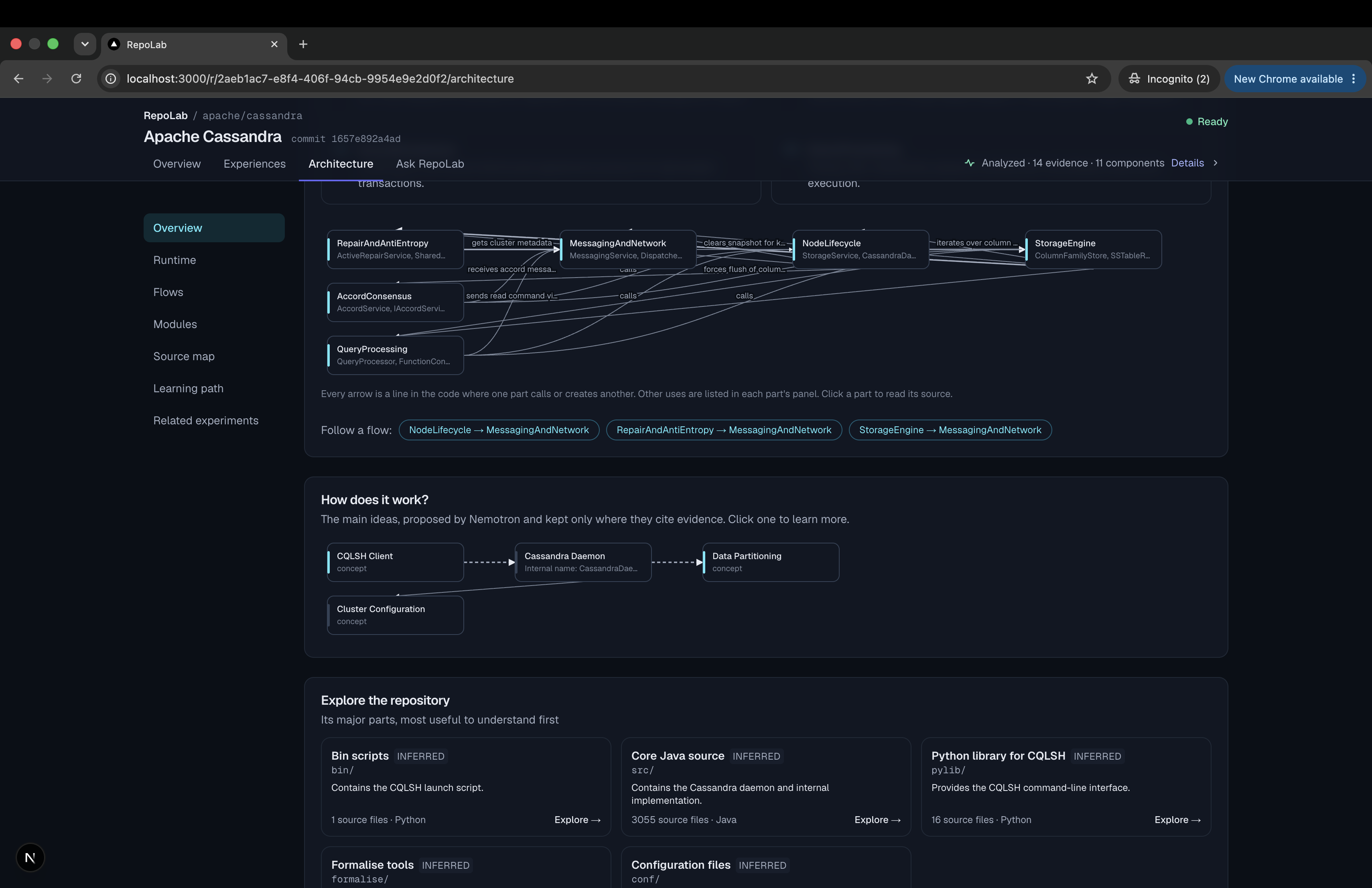
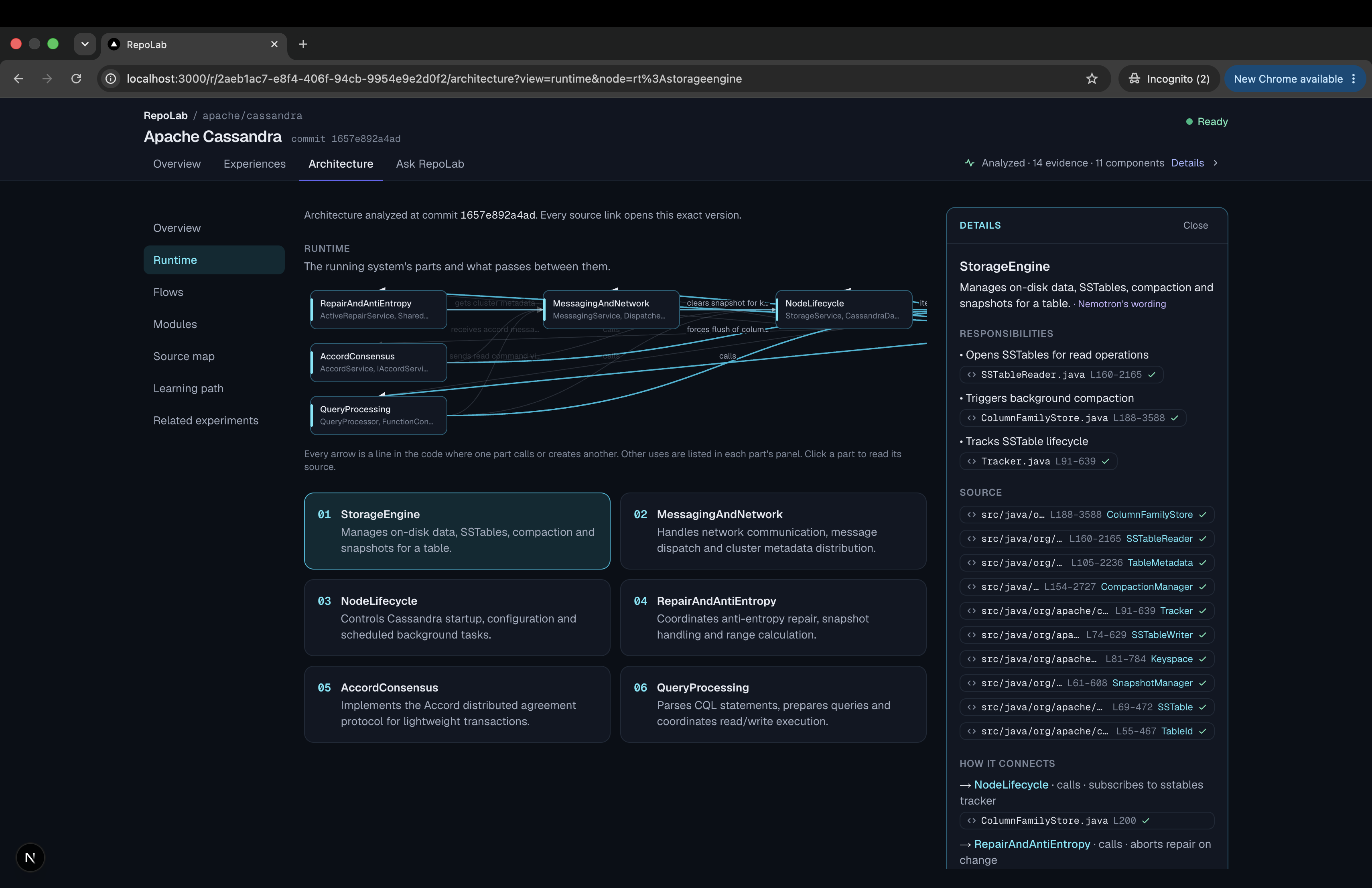
Architecture Page
-
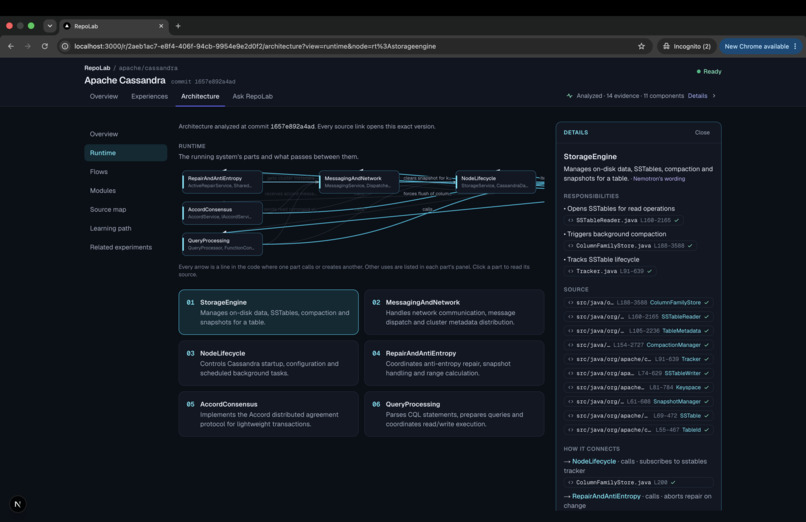
Architecture Page
-
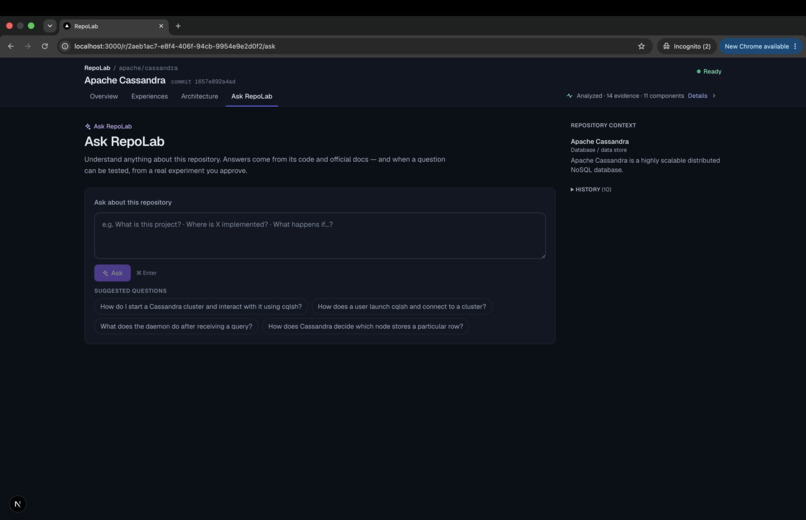
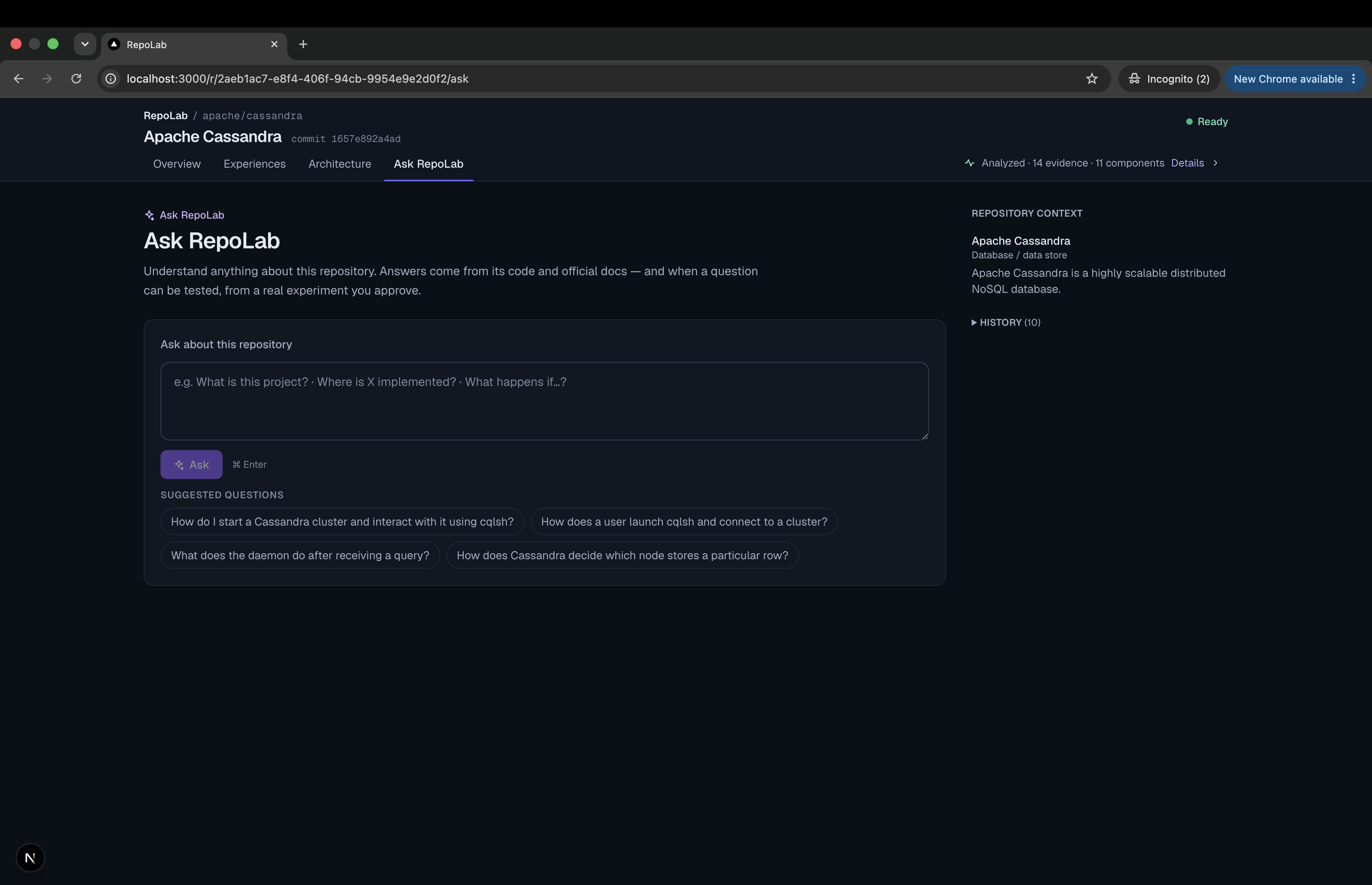
Ask Repo lab , where you can ask anything about the repository
Inspiration
With the advancement of AI, the pace of contributions to the repository is increasing. Size of Readme.md file is increasing, making new contributors intimidating to make their first contribution. Consider repositories like spark, cassandra, its so huge, you can only make a meaningful contribution if you know the struncture of the repository from first principles.
When we join a company, understanding huge repository, setting up locally experiencing it may take weeks of time, developer might not get proper information that he/ she is looking for if there is not proper documentation and doesn't understand the code.
What it does
RepoLab helps reducing the time taken for the first meaning commit to a repository. Creates an enviroment where you can discuss with the repo, understand the repo, get the exact code lines that is reposible for what you have asked. Help more contributers involve in development. More contributors, means more ideas , more ideas means the better is the quality of product.
How we built it
RepoLab is four parts that work together. Here's how it's built and how it runs.
The four parts
| Part | Tech | Job |
|---|---|---|
web/ |
Next.js, TypeScript, Tailwind, xterm.js | The browser UI: import a repo, watch progress, playground, Ask RepoLab, approve experiments, terminal |
api/ |
Python 3.11, FastAPI | Creates jobs, serves results, streams live progress, hosts the terminal WebSocket |
worker/ |
RQ + Redis | Does the slow work: cloning, investigation, builds, runs, experiments, lessons |
repolab/ |
Shared Python package | The logic: agents, the model router, ingestion, classification, sandbox, experiments, evidence |
Postgres holds everything durable: jobs, events, manifests, experiments and measurements. Redis holds only the queues and worker heartbeats.
How one request flows
- You submit a GitHub URL. The web app calls
POST /jobson the API. - The API queues it. It never does slow work itself. The job goes onto Redis.
- A worker picks it up:
- It clones the repo with a hardened
gitcommand. - Agents investigate the code. They ask for tools (read file, search code…) and deterministic code runs them.
- The result is a RepoManifest: languages, entry points, and interaction surfaces such as data playground, CLI, web or API.
- It clones the repo with a hardened
- The worker emits events as it goes. They're stored in Postgres, and the API streams them to the browser over SSE. That's why the screens fill in progressively, and why a browser refresh replays the history.
- The worker builds and runs the software in Docker containers. For example: Spark jobs, Cassandra nodes, live web apps.
- "Why?" questions become experiments:
- Nemotron Ultra designs a plan, and nothing runs until you approve it.
- The worker runs the variants for real and measures.
- Deterministic Python computes the statistics.
- Nemotron explains the measured results, with evidence attached.
The AI side
All model calls go through one router in repolab/llm/, using Nebius Token Factory's OpenAI-compatible API.
| Model tier | Used for |
|---|---|
| Nano | Cheap, quick tasks |
| Super | Investigation, architecture, lessons |
| Ultra | Experiment design and interpretation |
Model IDs come from environment variables, and outputs are validated against Pydantic schemas.
Building it locally
make install                  # uv sync (Python) + npm install (web)
make up && make db-upgrade    # Postgres + Redis in Docker, then migrations
make dev                      # api :8000, two workers, web :3000
Challenges we ran into
Analyzing large repositories took time, and waiting for model responses made the website feel unresponsive. We addressed this by delivering an initial response that felt complete on its own, allowing users to start exploring while the remaining analysis continued in the background.
Accomplishments that we're proud of
We built an agent-powered learning experience that helps users explore repositories and understand how the code fits together. With Tavily, we connected relevant code to clear explanations, making unfamiliar concepts easier to understand in context.
What we learned
There is no one-size-fits-all approach to explaining a repository. Each codebase has its own architecture, patterns, and complexity. Generating an effective learning website requires adapting both the content and its structure to the repository.
What's next for RepoLab
- Build a community where developers can learn and explore code at the same time.
- Scale the app to support more users and larger repositories.
- Improve the learning experience and navigation.
- Personalize explanations to each user’s knowledge level, including foundational concepts for beginners.
- Add a Slack connector to bring repository insights into team conversations.
Built With
- ai
- docker
- factory
- fastapi
- nebius
- nemotron
- next.js
- nvidia
- postgresql
- python
- redis
- tavily
- token