-
-
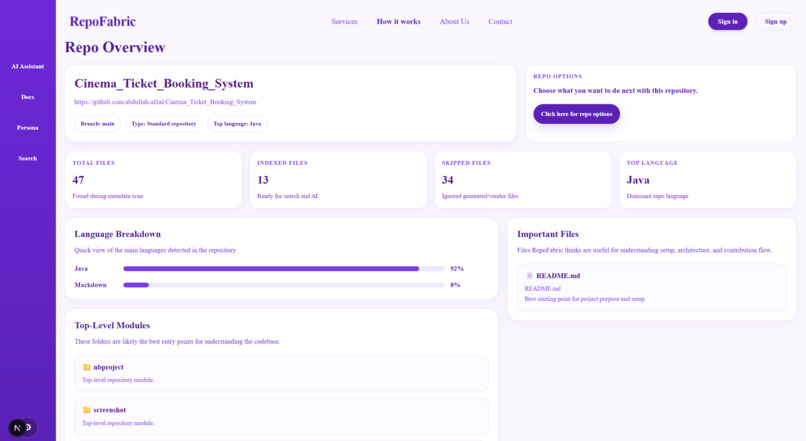
static analysis
-

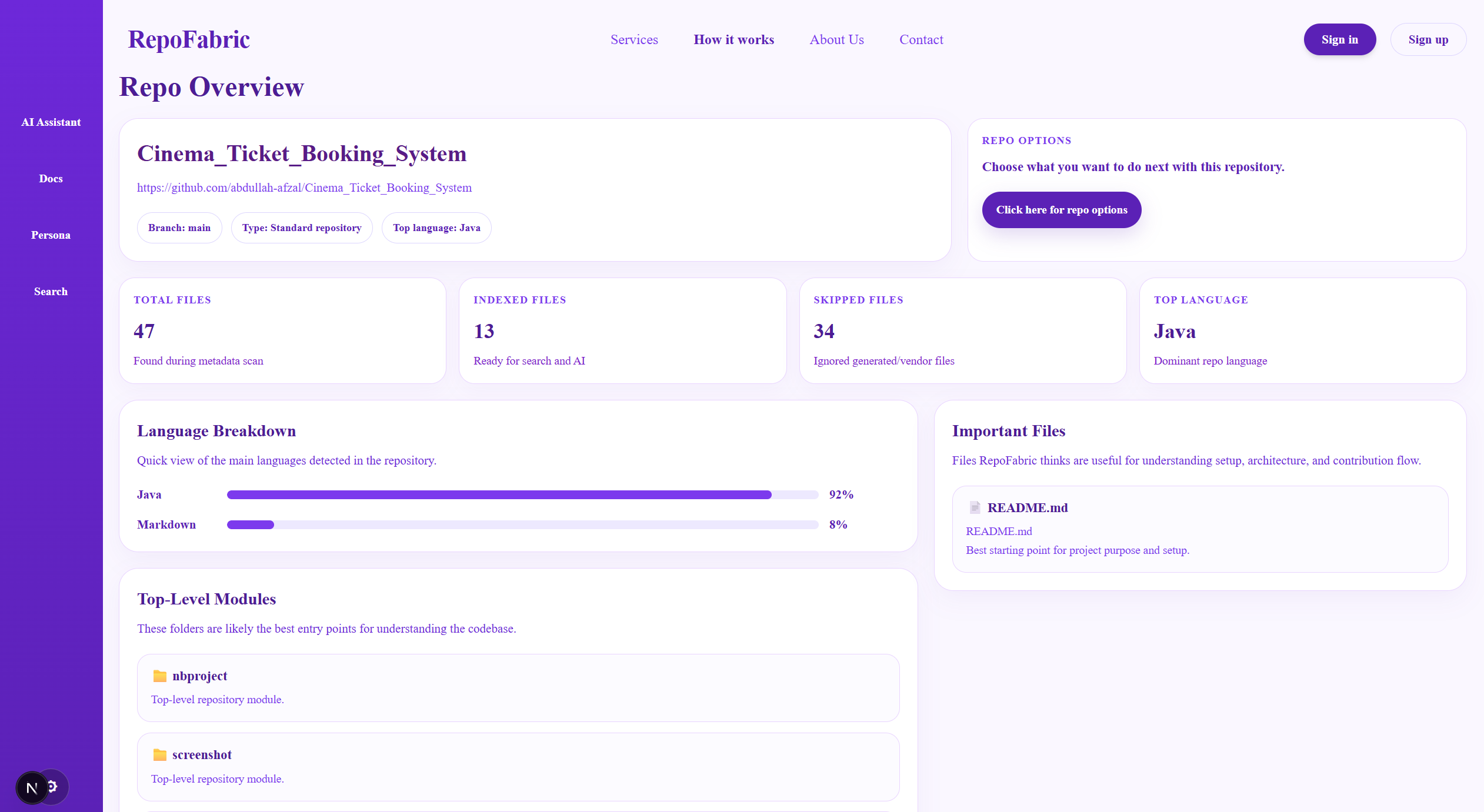
Dashboard
-

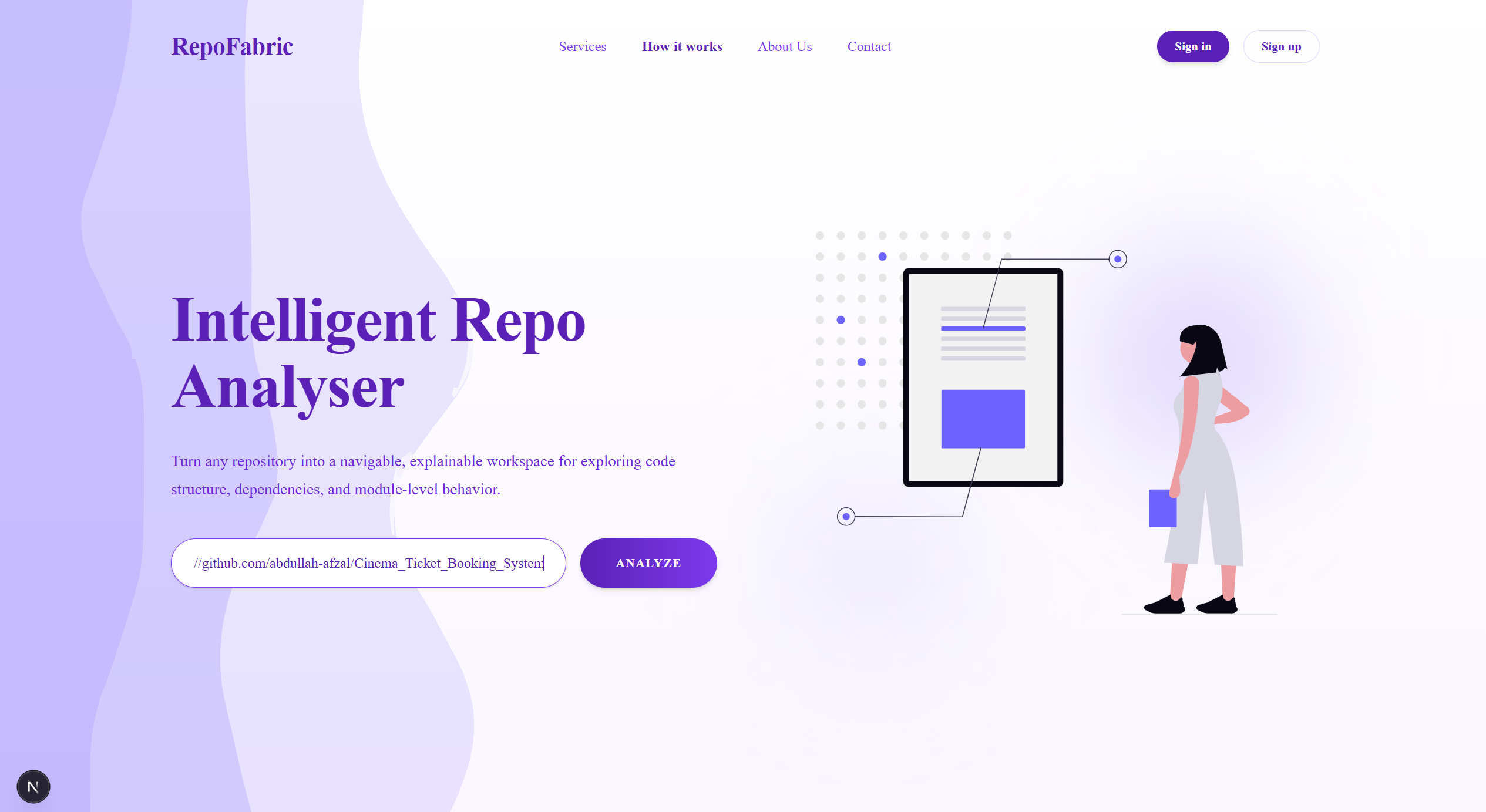
Front page
-
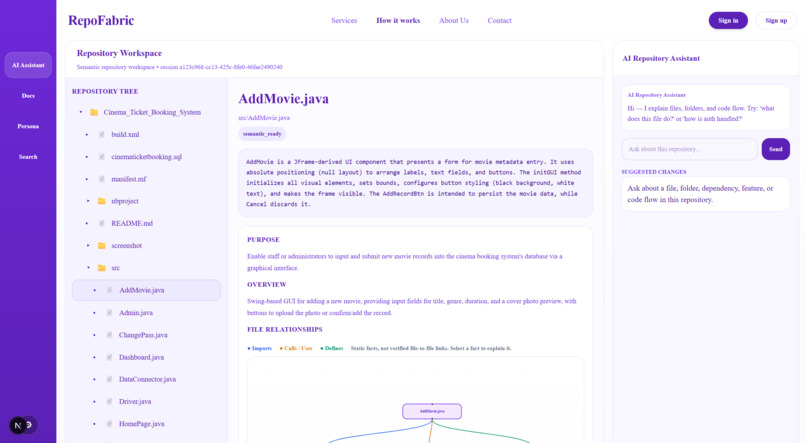
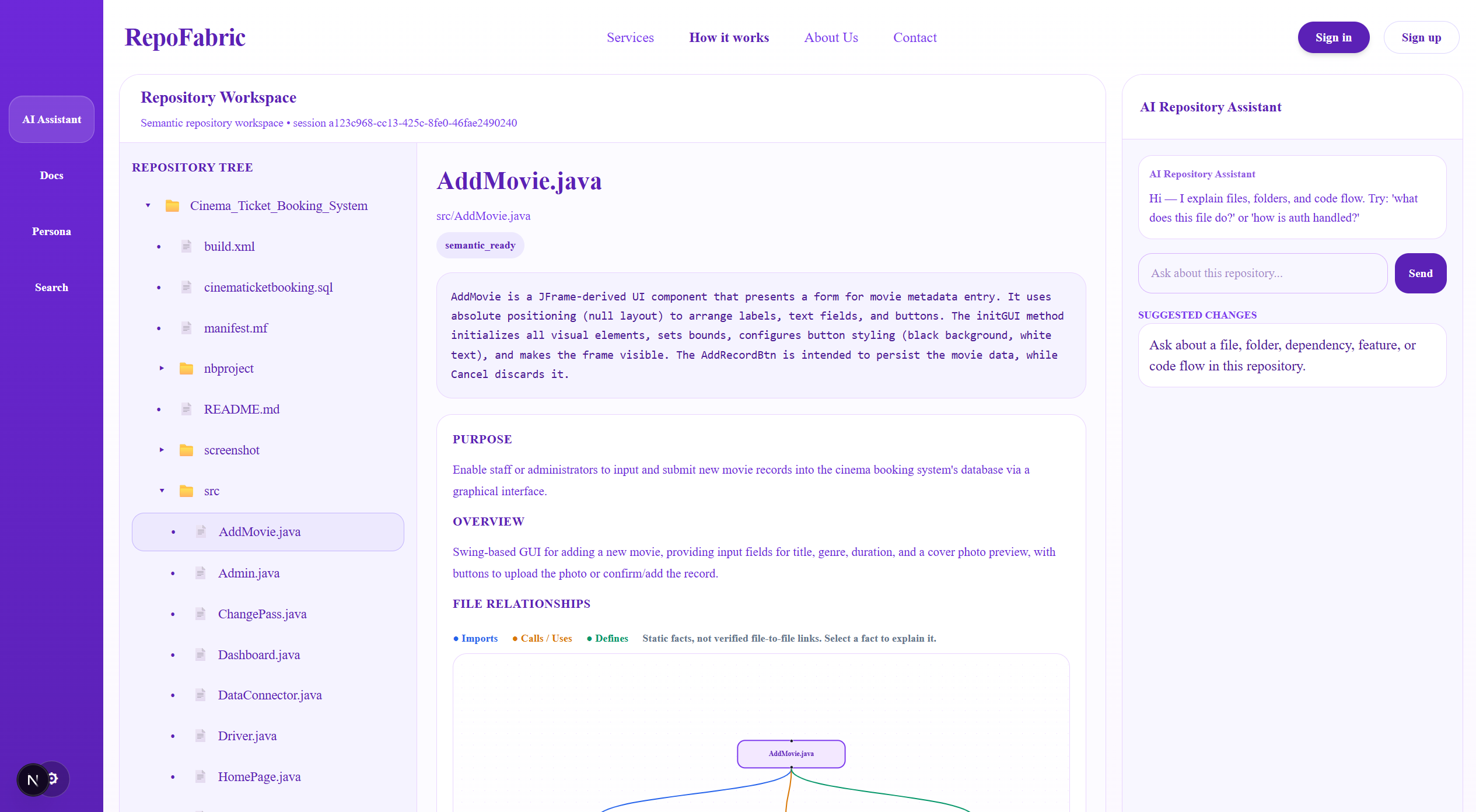
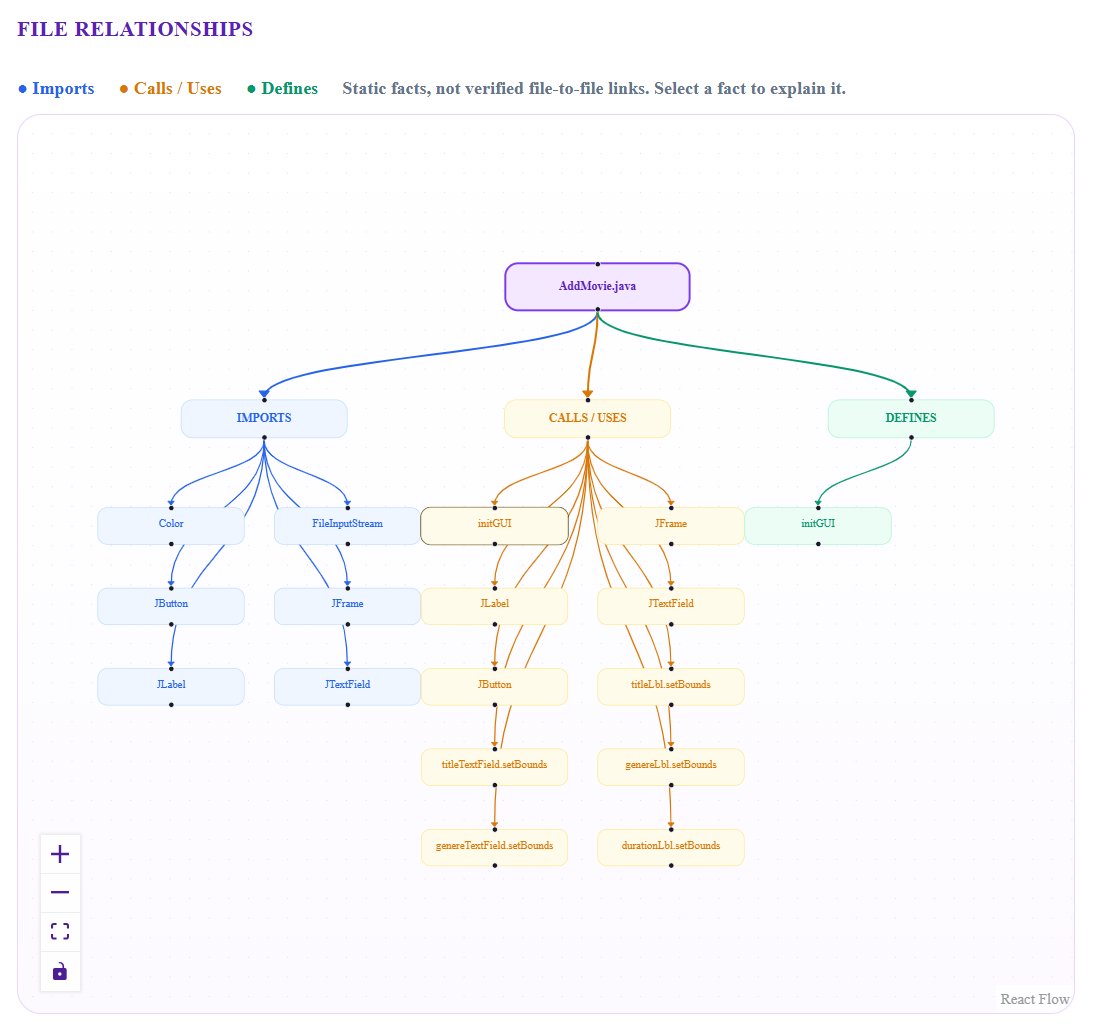
Individual file analysis
-
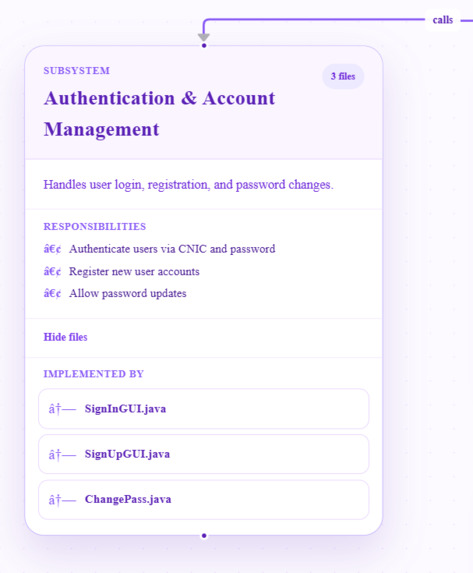
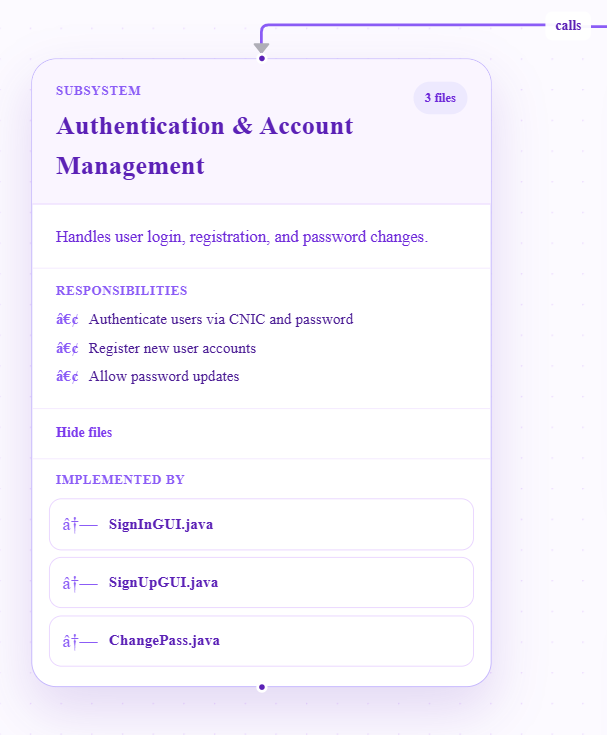
What each component of the architecture represents
-
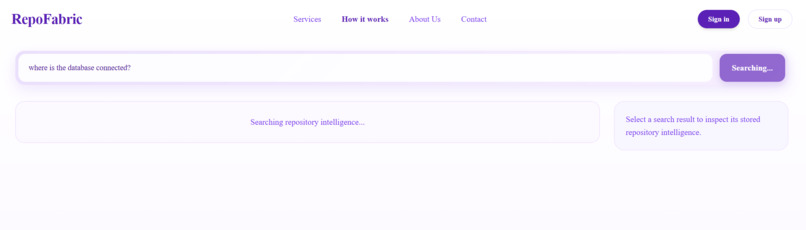
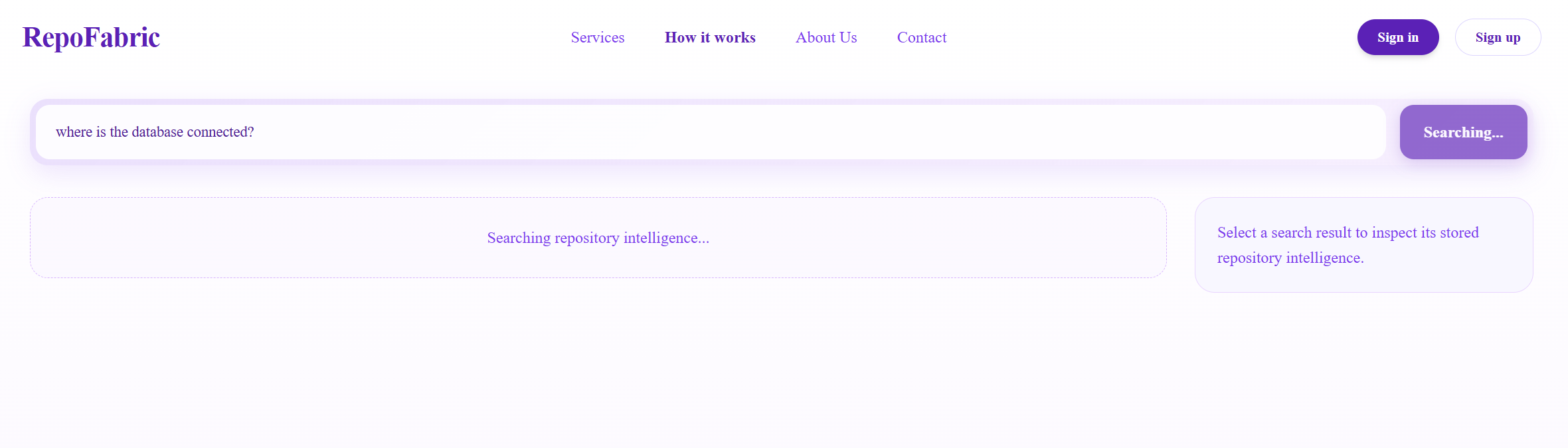
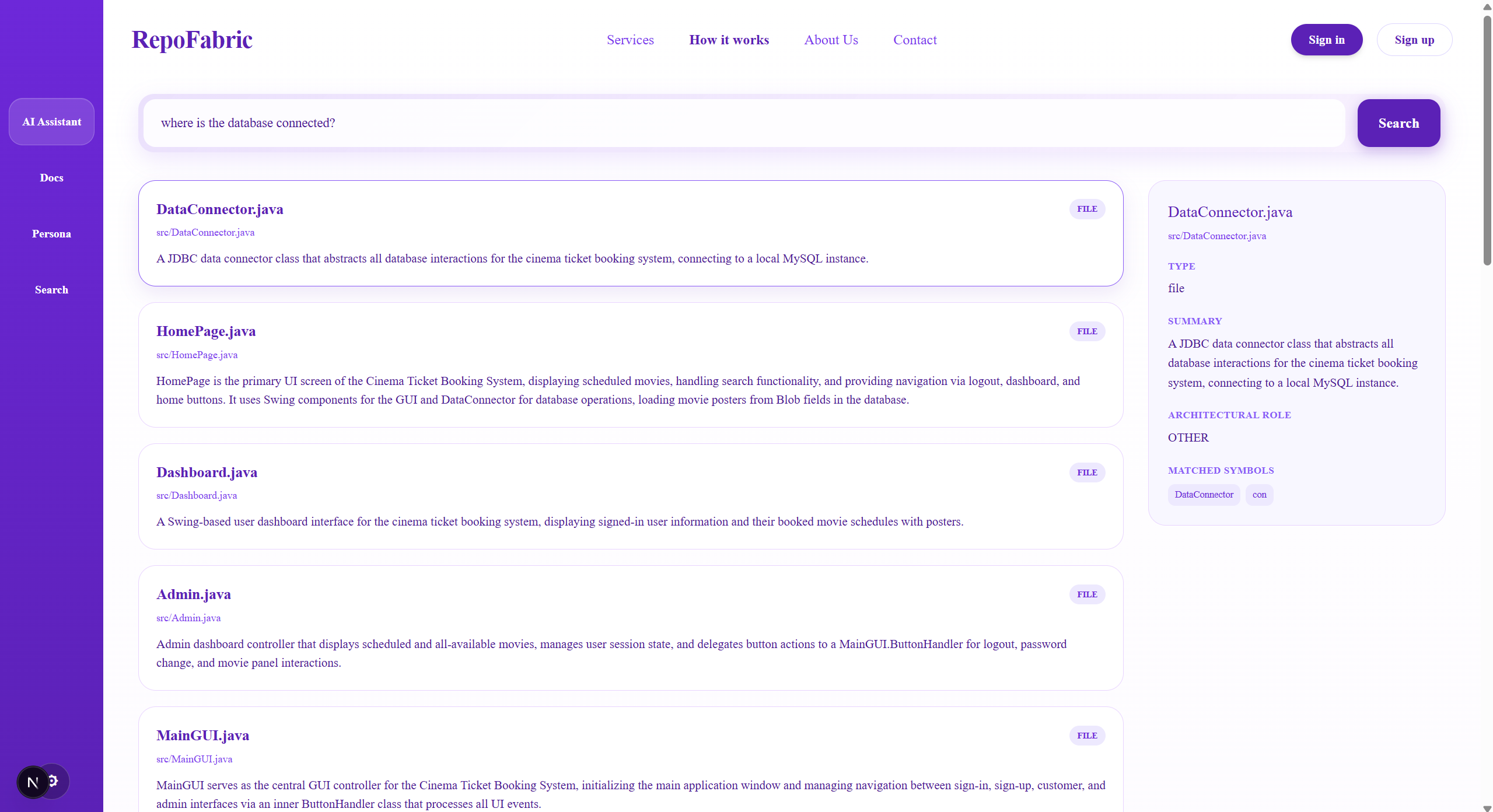
Search any meaningful question about the repository
-
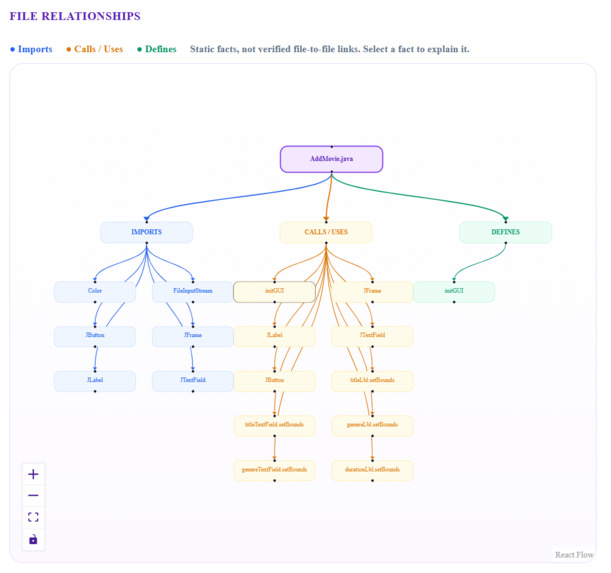
Mind map for each file
-
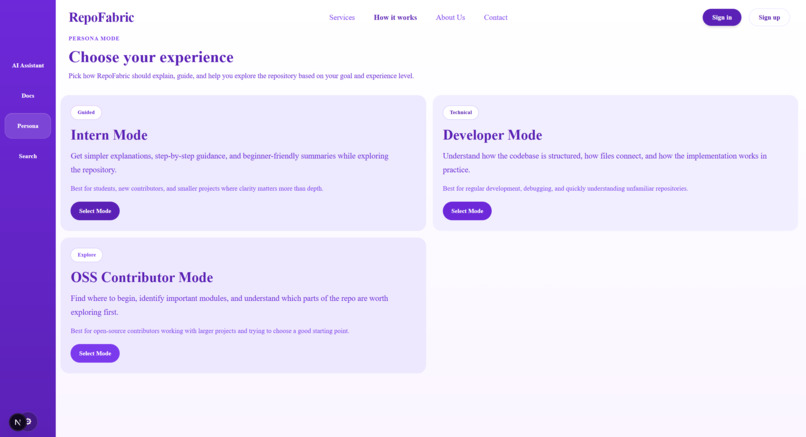
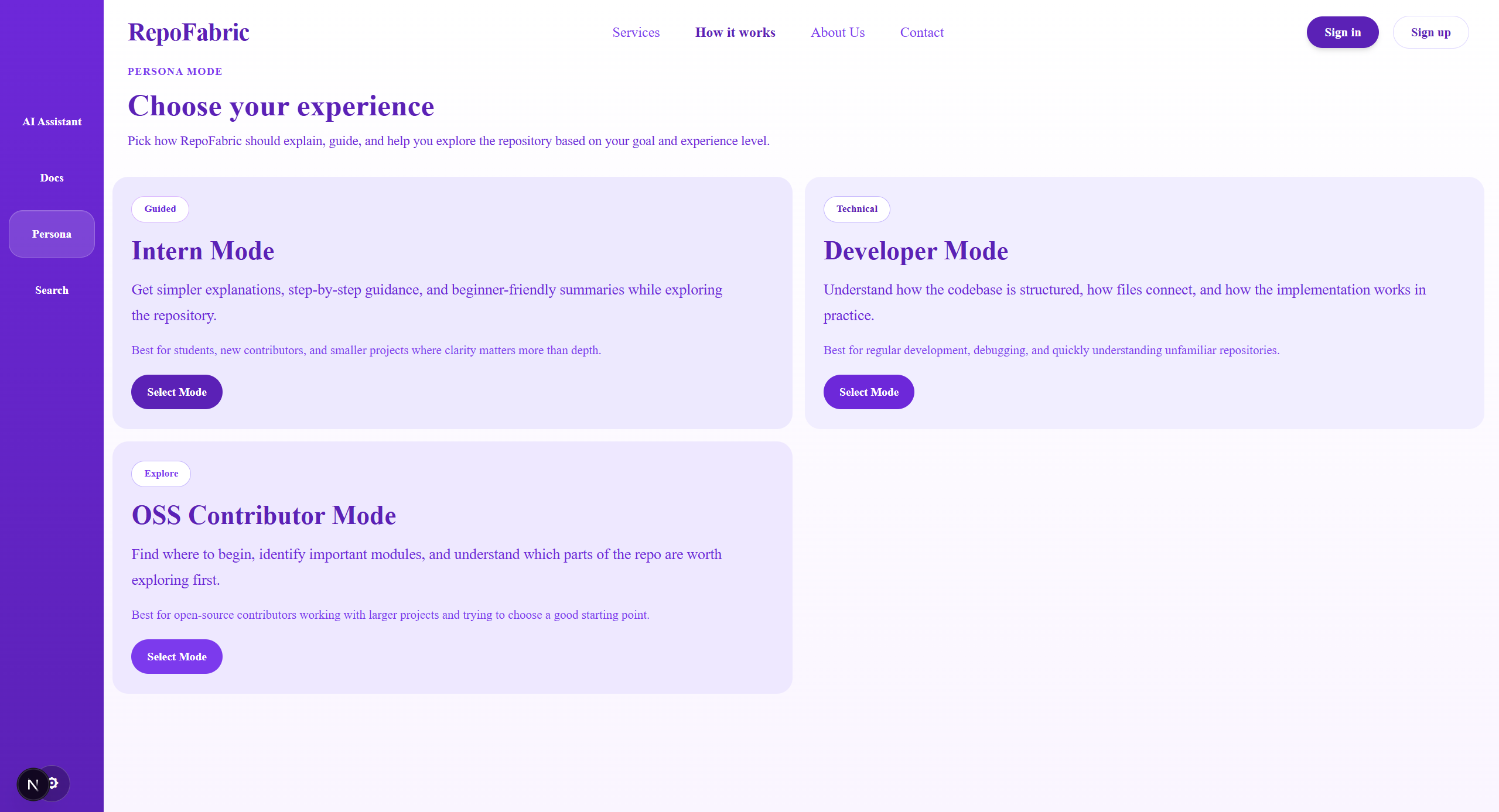
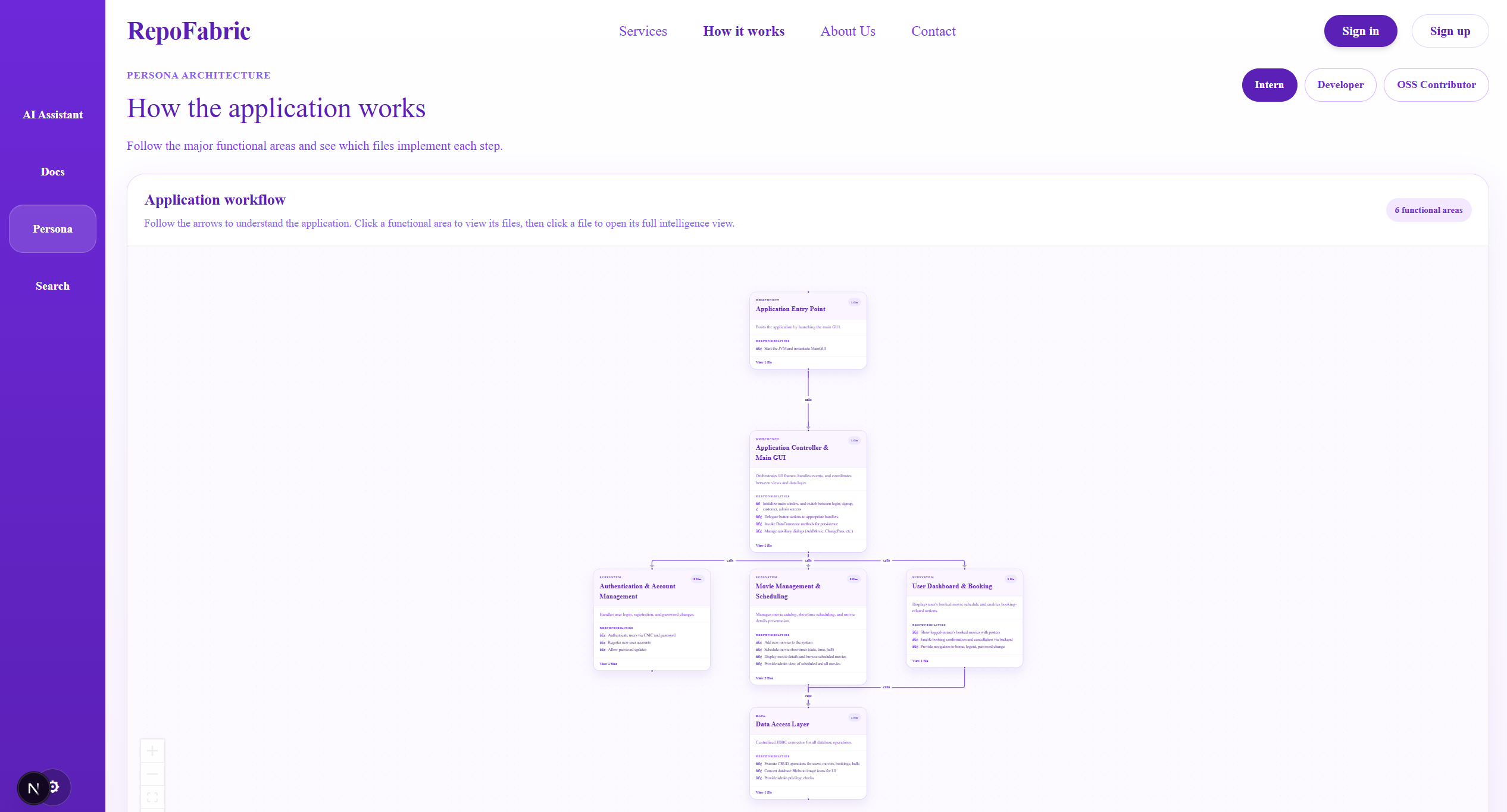
Persona explained to different levels of understanding
-
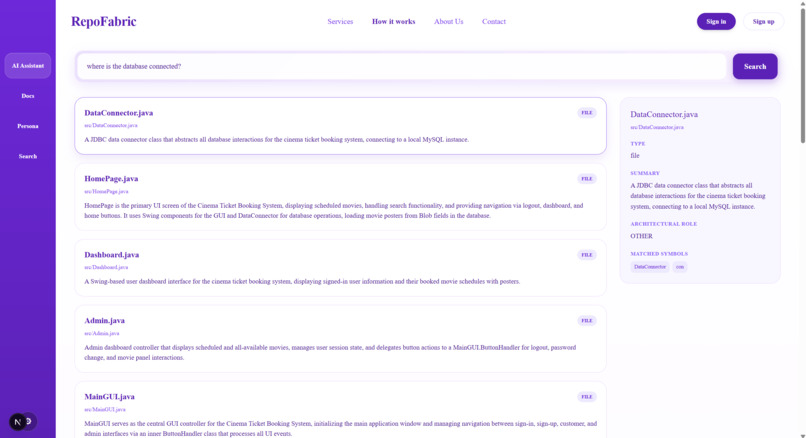
Relevant files after search function
-
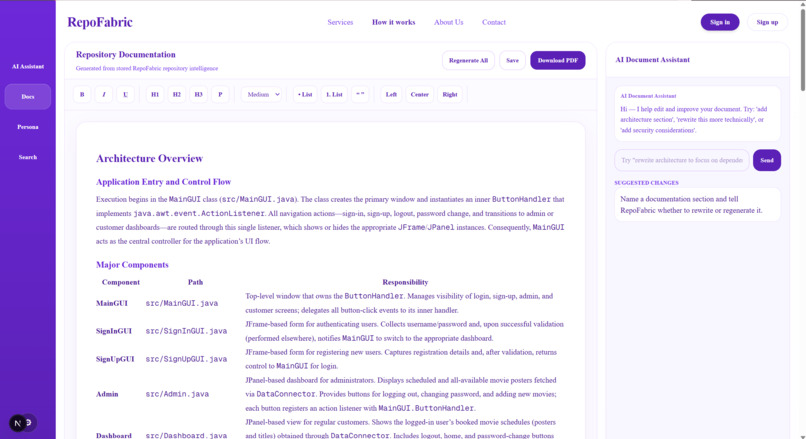
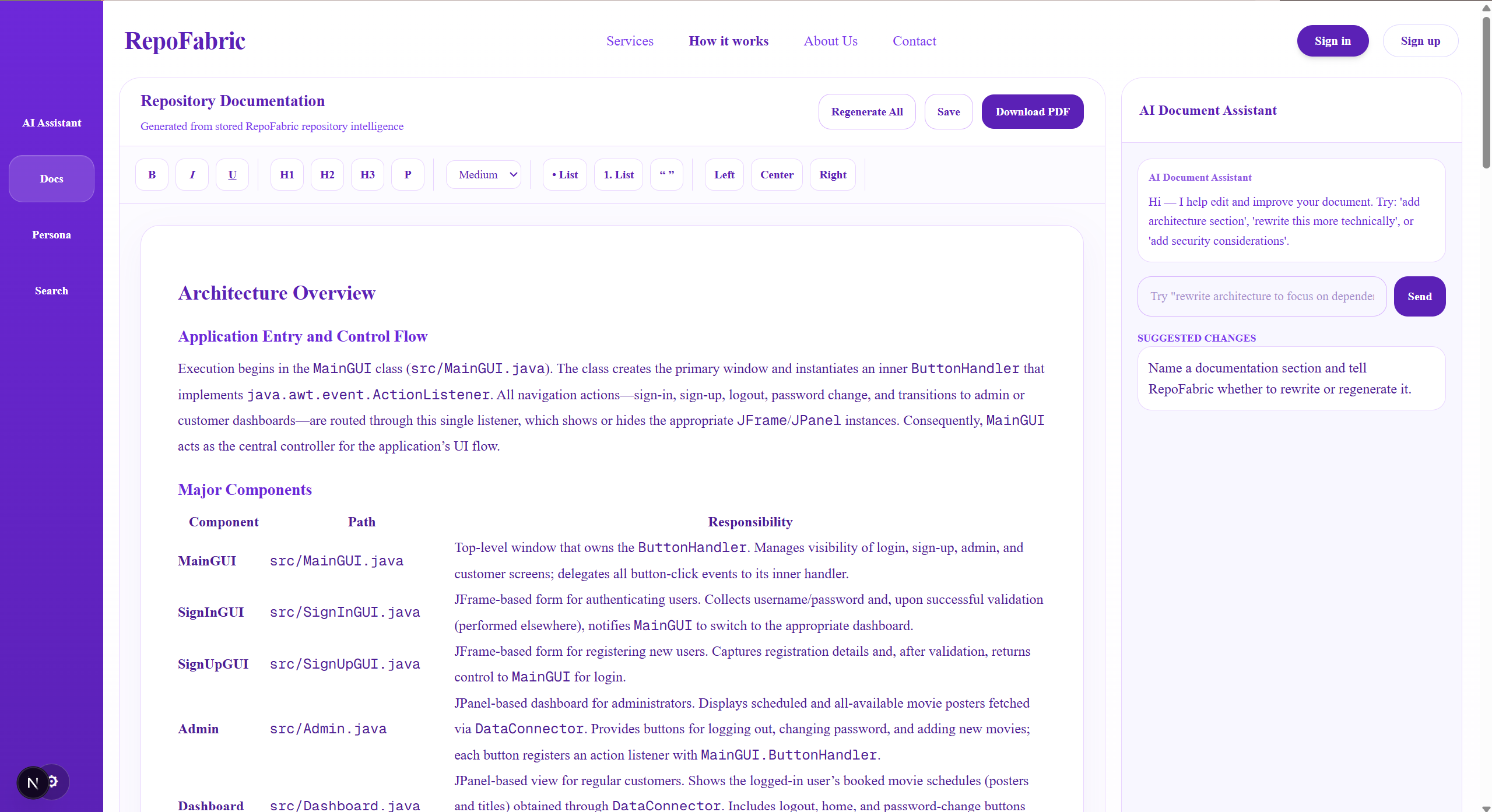
Documentation generator for the entire repository
-
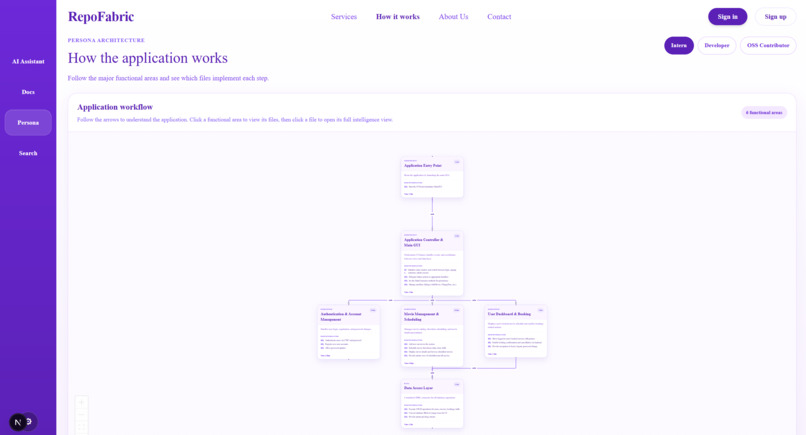
Architecture of repository for different levels of understanding

RepoFabric: AI-Powered Repository Intelligence
Inspiration
Understanding an unfamiliar codebase can be overwhelming. Whether you're joining a new team, exploring an open-source project, or preparing your first contribution, the biggest question is often: Where do I start?
Traditional repository browsers show you files and folders, but rarely explain how everything fits together.
We built RepoFabric to change that. It transforms GitHub repositories into interactive, AI-powered representations that help developers understand a codebase, explore its architecture, and find their way around faster.
What It Does
RepoFabric makes exploring unfamiliar repositories easier through five core features:
1. GitHub Repository Ingestion
Simply provide a GitHub repository URL. RepoFabric retrieves its metadata, identifies programming languages and important files, builds the repository tree, and clones the source code for analysis.
2. Semantic Repository Intelligence
Go beyond filenames and folder structures. RepoFabric uses AI to explain what different components do and how they contribute to the overall project.
3. Persona-Based Architecture Visualization
Explore the same repository from three perspectives:
- Intern: A simplified overview of the system and its major components.
- Developer: A deeper look at implementation details and architectural relationships.
- Contributor: Helps identify relevant parts of the codebase when exploring or preparing contributions.
Interactive graphs let users select components, read explanations, and discover their associated source files.
4. AI-Generated Documentation
Automatically generate repository overviews, architecture explanations, and onboarding documentation. Generated sections are stored in PostgreSQL, making them available for future requests without repeatedly calling the AI model.
5. Repository Search
Find relevant parts of a repository using a combination of structured repository information and semantic search.
How We Built It
RepoFabric brings together a frontend, backend, semantic processing service, database, and external AI inference.
- Next.js, React, and TypeScript: Frontend and interactive repository exploration.
- React Flow: Architecture graph visualization.
- Java 17 and Spring Boot: Repository ingestion, processing, APIs, and backend orchestration.
- PostgreSQL: Storage for repository metadata, intelligence, and generated documentation.
- JGit and GitHub API: Repository cloning and source retrieval.
- Python and FastAPI: Semantic processing and search integration.
- Nebius Token Factory: AI inference for explanations and documentation.
Each component works together to turn repository data into something developers can actually understand and explore.
Challenges We Faced
Extracting Meaning from Repository Structure
A folder structure tells you where code lives, but not what it does. We combined repository metadata with AI-generated explanations to provide more meaningful context.
Building Explainable Architecture Graphs
Creating a graph was only the beginning. We wanted users to understand what each component represents, how it relates to others, and where its source code lives.
Integrating External AI Inference
Connecting external inference services with Spring Boot required careful handling of API configuration, latency, and responses.
Reducing Redundant Inference
Repeated documentation requests can increase latency and inference costs. We addressed this by storing generated sections in PostgreSQL and reusing them when available.
Deployment Constraints
RepoFabric currently runs locally. Supporting repository cloning and multiple backend services also introduced infrastructure and filesystem challenges. For the hackathon, we focused on delivering the core functionality and demonstrating the working application.
What We Learned
Building RepoFabric showed us that repository intelligence is about much more than generating code summaries.
We learned how important it is to ground AI explanations in actual repository structure, design architecture visualizations around different developer needs, and make persistence and inference efficiency part of the overall experience.
We also gained hands-on experience integrating Java, Python, PostgreSQL, frontend visualization, GitHub services, and external AI inference into a single application.
What's Next
We plan to take RepoFabric further by:
- Improving semantic analysis and architecture relationships.
- Making repository search more accurate and context-aware.
- Generating richer, more useful documentation.
- Improving repository processing efficiency.
- Preparing the application for reliable cloud deployment.
Our long-term goal is to make understanding unfamiliar codebases faster, simpler, and more accessible to developers at every experience level.
RepoFabric: Turning repositories into understanding.

Log in or sign up for Devpost to join the conversation.