-
-
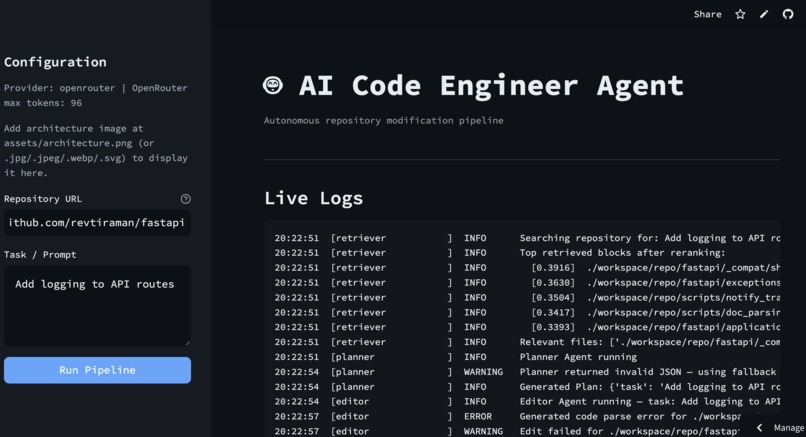
ui of the ai agent
-
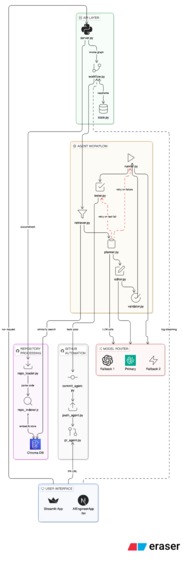
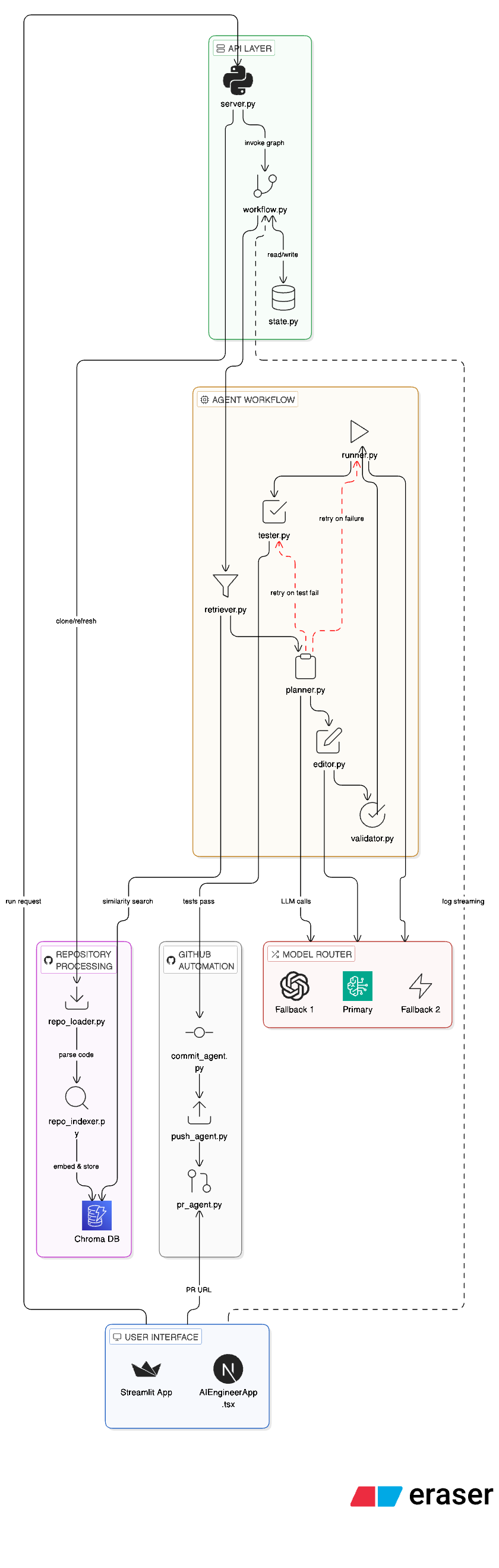
architecture
-
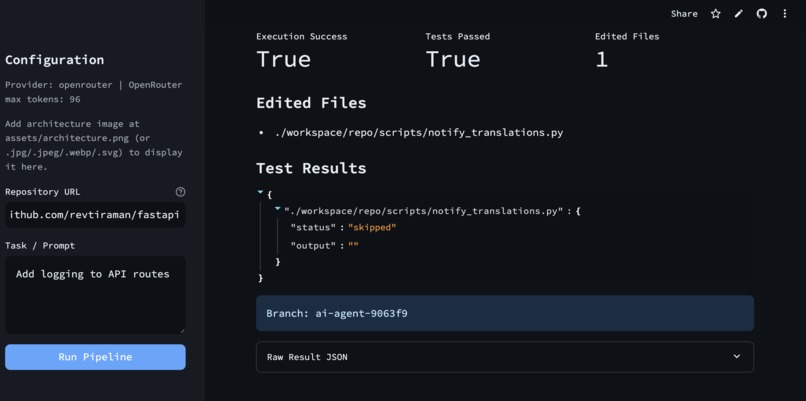
task completion and pull request


Inspiration
Building production software with AI still feels fragmented: one tool plans, another edits, another tests, and humans manually glue everything together. RepoAgent was inspired by a simple idea: what if one autonomous system could understand a repository, plan changes, apply them, validate results, and surface everything in a live interface suitable for demos and real development workflows.
What it does
RepoAgent is an autonomous AI code engineer that accepts a repository URL and a natural language task, then runs an end-to-end software change pipeline:
Clones or updates the target repository Indexes source code and retrieves relevant code blocks with RAG Creates a structured change plan Applies edits Validates and executes checks Streams live logs and returns a final result summary It supports explain-only workflows, multi-step retries, and provider-aware model routing with fallback behavior for reliability.
How we built it
We designed RepoAgent as a modular multi-agent system:
Orchestration graph for task state transitions and retries Specialized agents for retrieval, planning, editing, validation, execution, testing, and GitHub operations Vector indexing pipeline for repository-aware context retrieval Model router with provider controls and fallback logic FastAPI backend for run lifecycle and websocket log streaming Streamlit frontend for interactive runs, live observability, and result inspection We also added deployment-oriented safeguards, including stricter provider checks and token-budget controls for hosted environments.
Challenges we ran into
API provider instability across different keys and credit states Token budget failures in hosted runs due to prompt size limits Dependency mismatches in fallback providers Ensuring deterministic behavior between local and cloud deployments Balancing rich retrieval context with prompt-size constraints Keeping autonomous edits safe while still useful on large real repositories
Accomplishments that we're proud of
Built a full autonomous code-change pipeline, not just a chat wrapper Added robust retrieval + planning + editing + validation flow Implemented explain-only mode for safer non-edit use cases Delivered live streaming logs for transparent debugging Improved deployment resilience with OpenRouter-focused hardening and prompt compaction retries Shipped documentation and architecture support to make onboarding and demoing easier
What we learned
Reliability matters more than raw model quality in autonomous systems Prompt size and token economics are first-class production concerns Observability is essential for trust in agent behavior Provider routing needs explicit policy controls, not implicit fallback only Small UX improvements in logs and status panels dramatically improve debugging speed Real-world repos demand repo-scoped retrieval and careful context curation
What's next for RepoAgent: Autonomous AI Code Engineer
Dynamic key health scoring and automatic exclusion of failing credentials Smarter prompt compression and context prioritization by task type Stronger test generation and patch safety checks before commit Better multi-language support and richer static analysis integrations First-class CI/CD integration for automated validation gates Team collaboration features, including run history, diff review, and approval workflows Benchmark suite for measuring success rate, latency, and code quality over time


Log in or sign up for Devpost to join the conversation.