-
-

Logo
-
-
-
-
-
-
-

Inspiration
We’ve all had moments where we know what we want to say, but figuring out how to say it is the hard part.
A difficult email from a coworker, an awkward text message, a customer complaint, a request you need to turn down, or a conversation where the wrong tone could make things worse. Traditional AI writing tools can generate a response, but they often leave you wondering: Is this too direct? Too soft? Too formal? Does this actually sound like me?
That problem inspired ReplyRight.
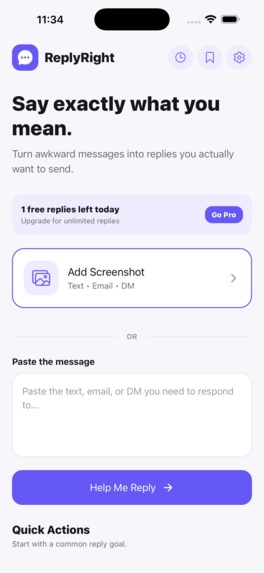
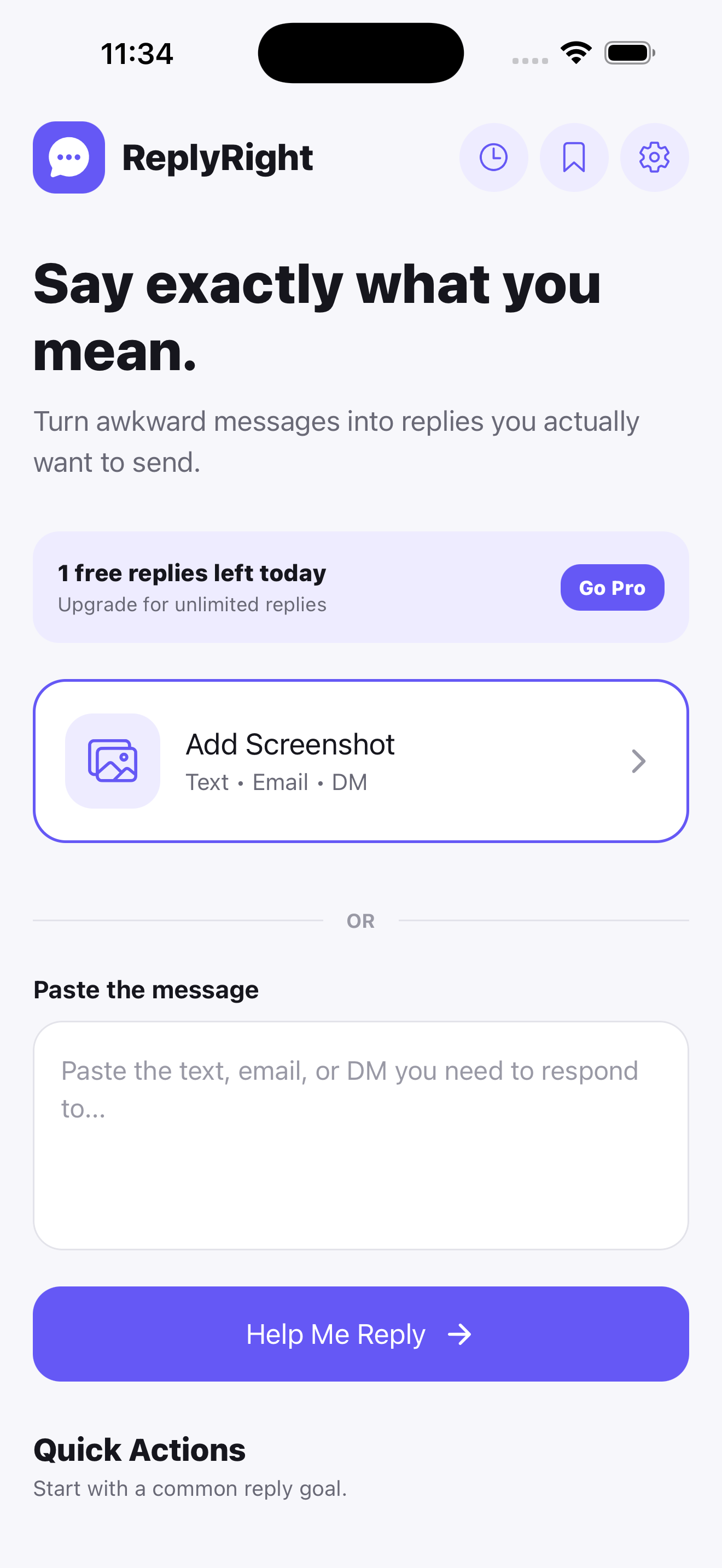
ReplyRight is an AI-powered reply assistant designed to help people quickly create responses that match the situation, their intent, and their personal communication style. Instead of simply generating generic AI text, ReplyRight helps users explore different ways to communicate the same message and choose the response that feels right.
What it does
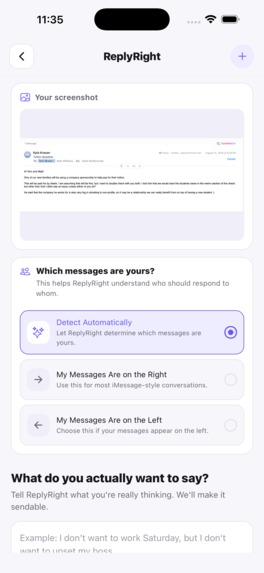
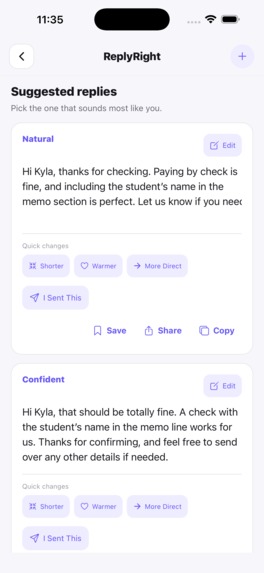
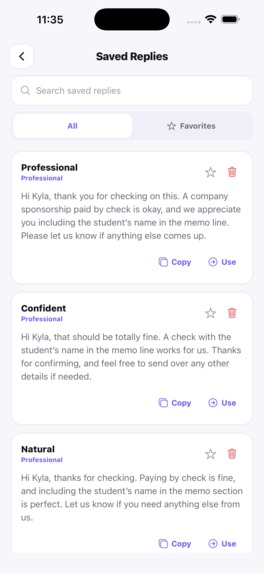
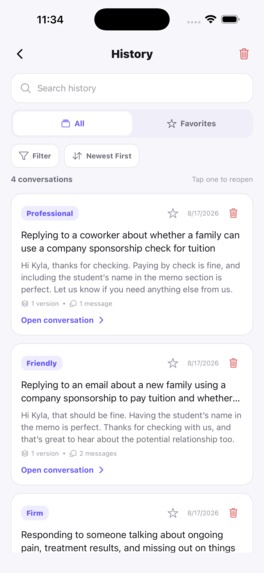
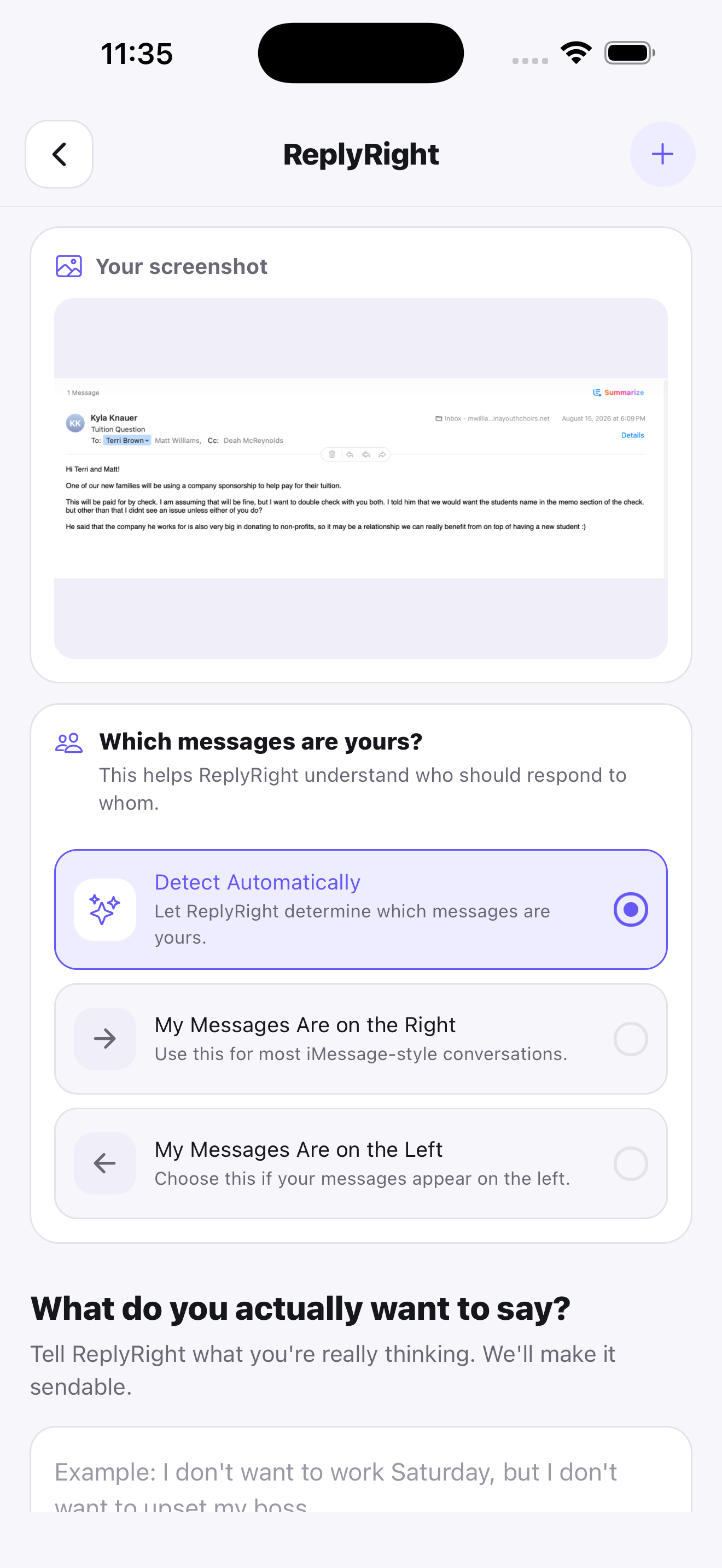
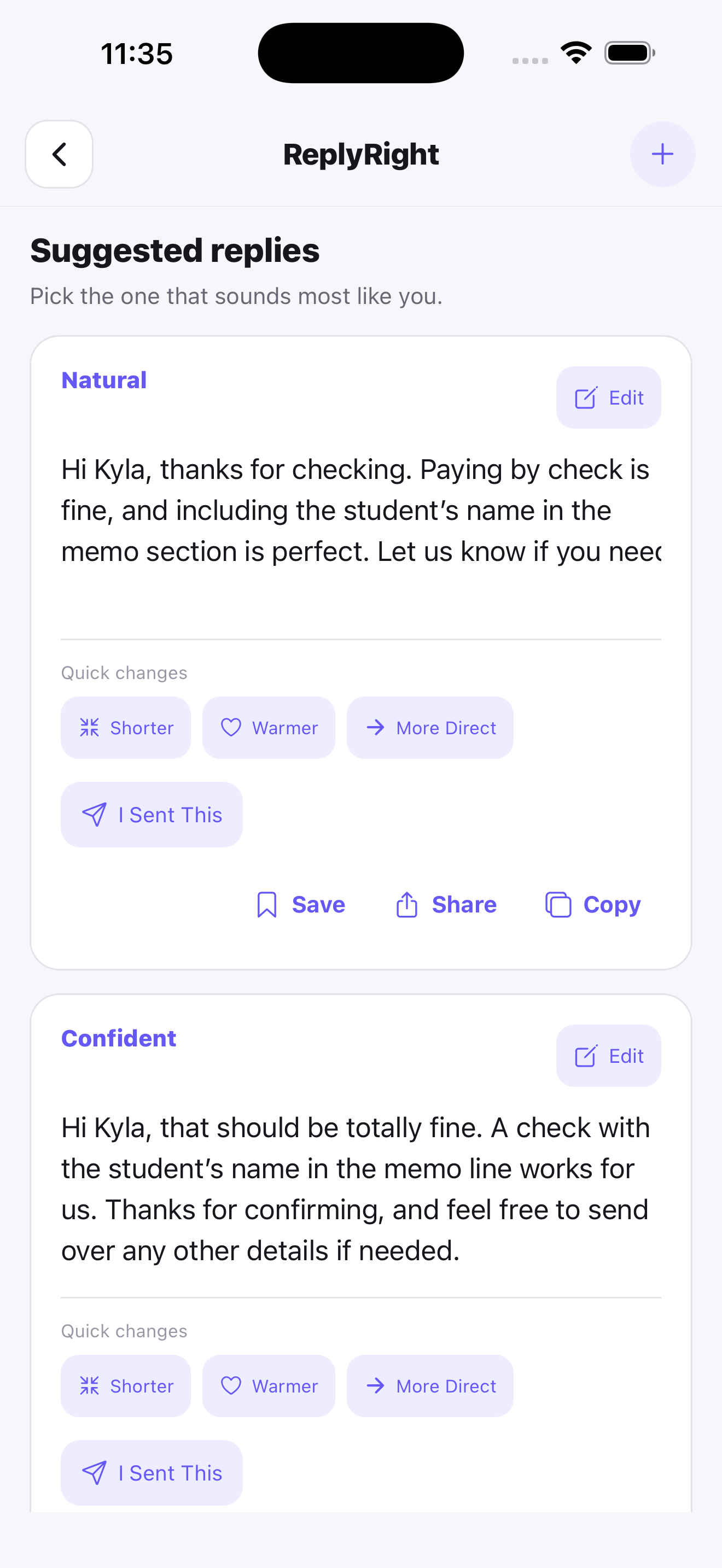
Users provide the message or situation they need to respond to, and ReplyRight generates a polished response they can use or customize.
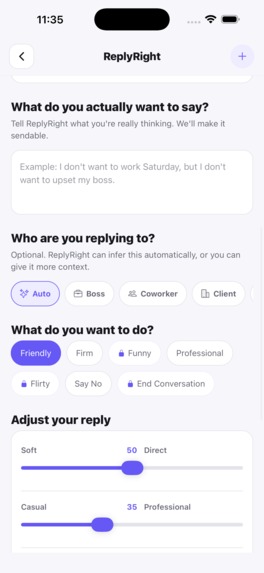
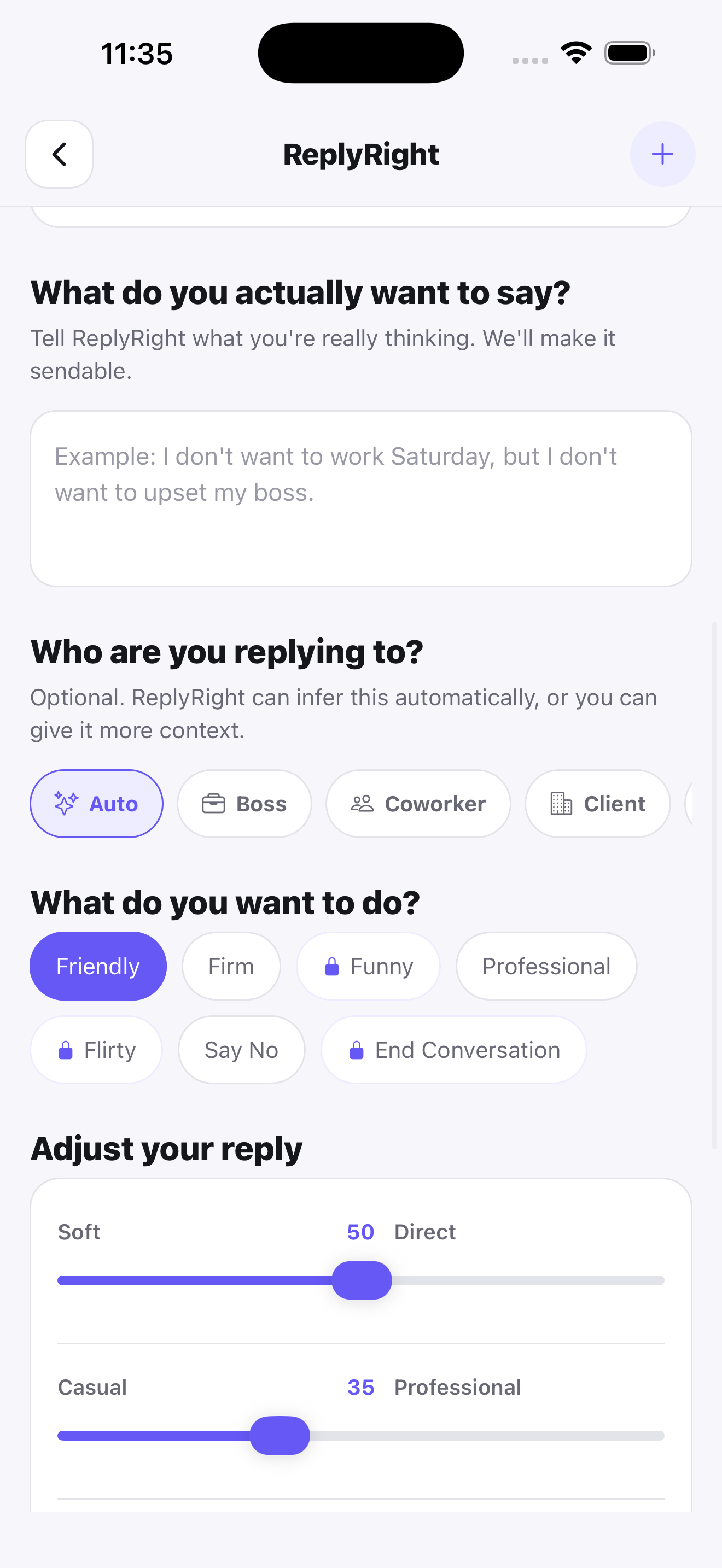
The app goes further by allowing users to compare responses across several communication dimensions, including:
- Soft / Balanced / Direct — change how assertive the response is.
- Casual / Balanced / Professional — adjust the level of formality.
- Short / Balanced / Detailed — compare different levels of detail.
This comparison experience is one of the core ideas behind ReplyRight. There isn't always one objectively "correct" response. Communication depends on the person, situation, relationship, and desired outcome.
ReplyRight helps users see those differences instead of forcing them to accept a single AI-generated answer.
How I built it
ReplyRight was built as a cross-platform mobile application using React Native, allowing the same core application to run on both iOS and Android.
The app combines a mobile interface with AI-powered response generation and cloud services.
The core stack includes:
- React Native for the mobile application
- OpenAI for AI-powered reply generation and comparison
- Supabase for backend services, authentication, and data storage
- RevenueCat for managing premium access and in-app subscriptions
A major part of the development process was designing the AI prompts and application logic so ReplyRight doesn't simply rewrite text. The model needs to understand the user's intent while making meaningful changes to tone, directness, professionalism, and detail.
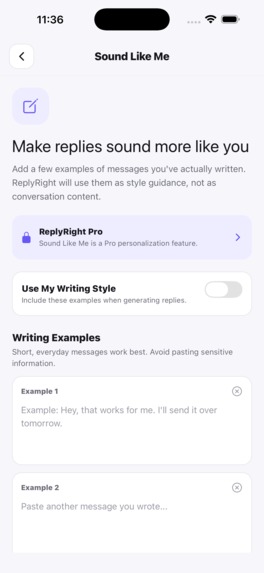
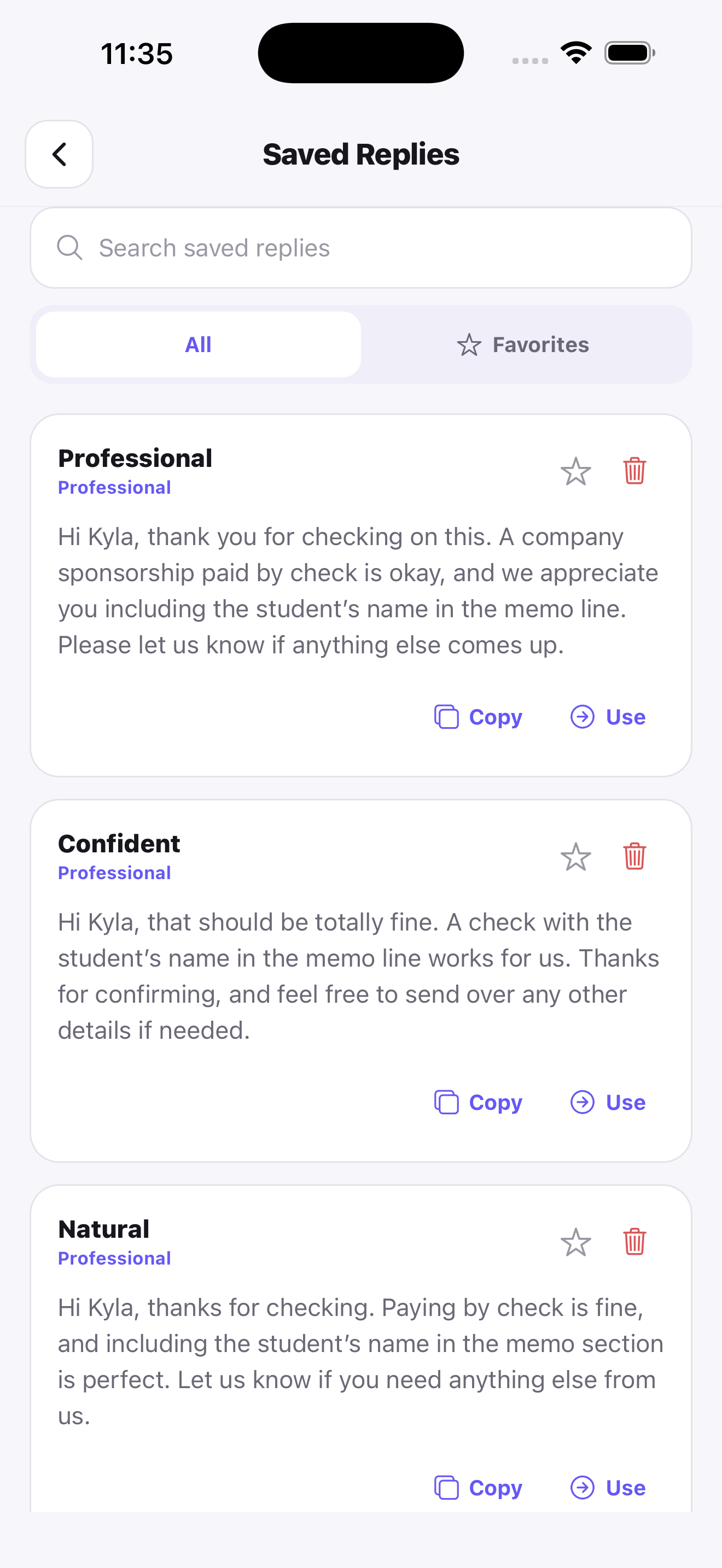
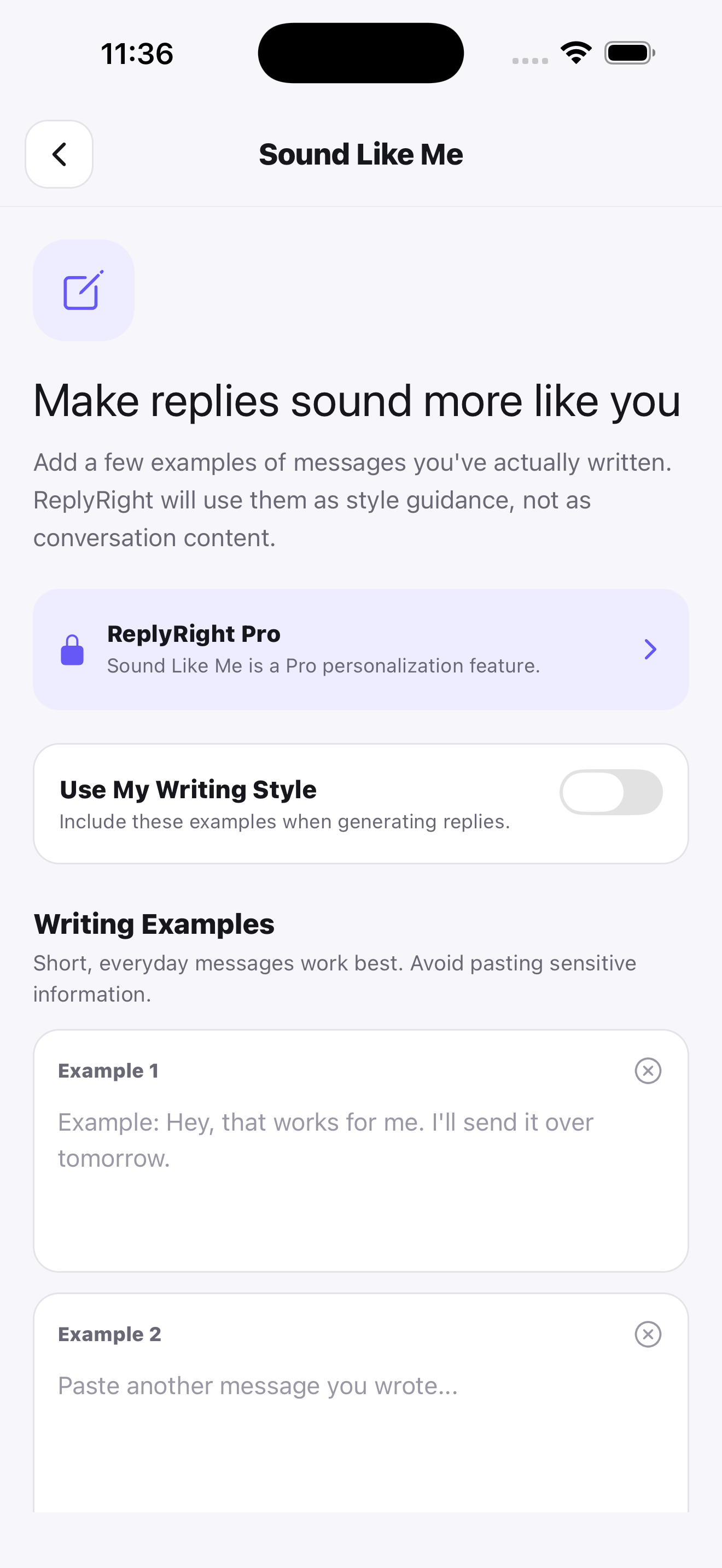
I also built a writing-style system so the experience can become more personalized instead of producing the same generic AI voice for every user.
Challenges
One of the biggest challenges was creating AI responses that were meaningfully different without changing the underlying message.
For example, making a response more direct shouldn't automatically make it rude. Making it softer shouldn't make it vague. A professional response shouldn't sound robotic, and a short response still needs to communicate the important information.
The comparison feature made this particularly challenging because three responses need to clearly demonstrate different communication styles while remaining appropriate for the exact same situation.
Another challenge was designing the app so AI feels like an assistant rather than an extra step. ReplyRight needed to be fast enough that someone could receive an uncomfortable message, open the app, generate a response, and get back to their conversation without navigating through a complicated workflow.
Integrating authentication, AI generation, usage limits, subscriptions, and premium access into a single reliable mobile experience also required solving many of the less-visible challenges involved in taking an idea from prototype to a production application.
What I learned
Building ReplyRight reinforced that AI output quality depends on much more than choosing a model.
Prompt structure, context, constraints, user preferences, and interface design all have a significant impact on whether an AI-generated response is actually useful.
I also learned that giving users multiple carefully designed choices can sometimes be more valuable than trying to generate one supposedly perfect answer.
Most importantly, the project changed how I thought about AI writing tools. The goal shouldn't necessarily be for AI to decide what someone should say. A better approach is to help people understand their options and communicate what they want to say more effectively.
What's next
There are many opportunities to expand ReplyRight beyond its initial release.
Future versions could provide deeper personalization, additional communication styles, improved context awareness, more advanced response comparisons, and additional tools for understanding how a message may be perceived before sending it.
The long-term goal is simple:
Help people spend less time worrying about how to respond and more time communicating clearly and confidently.
Built With
- openai
- react-native
- revenuecat
- supabase
