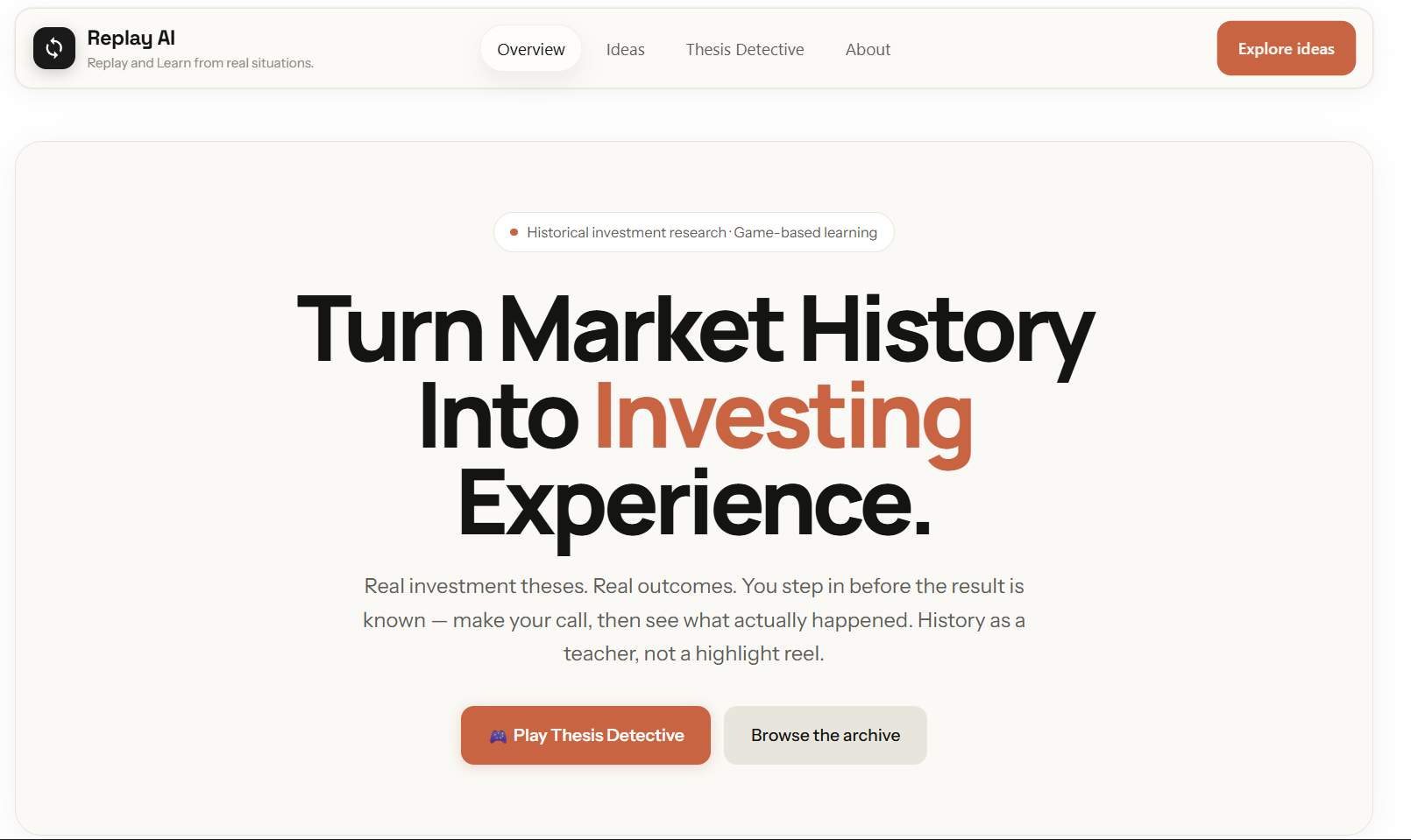
An AI-powered investing decision game that lets beginner investors practice through real historical market moments before risking real money.
A lot of new young people are getting into investing, but most of them don’t actually know how to invest. There’s a lot of content out there, but reading doesn’t really translate into knowing what to do. The real issue is that investing is learned through experience. You have to make decisions and then wait to see what happens. But in real life, that process is slow and costly. If you make a mistake, you lose money. If you’re right, it might take years to know.
We wanted to find a way to shorten that cycle.
So we built a game around historical moments.
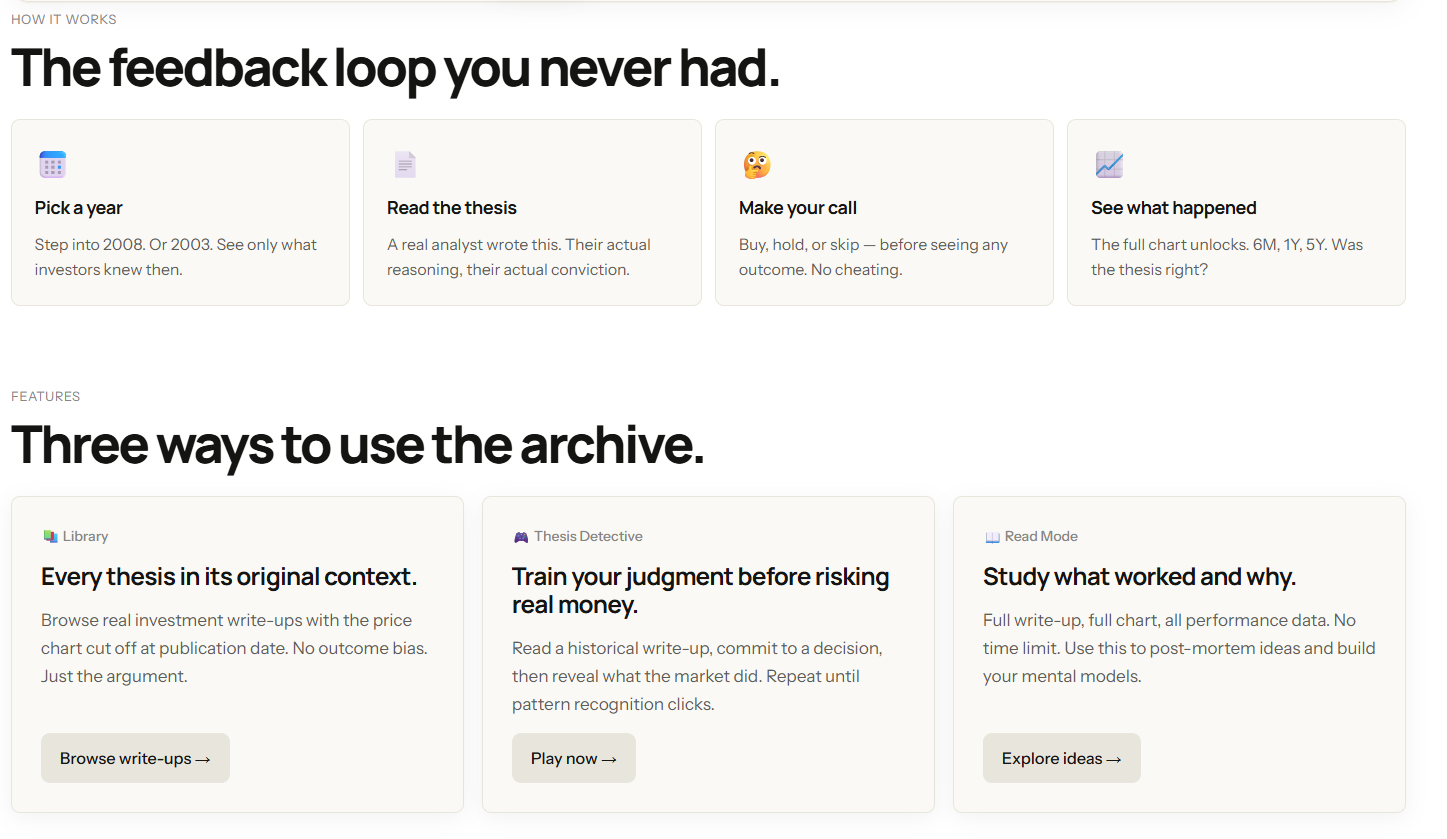
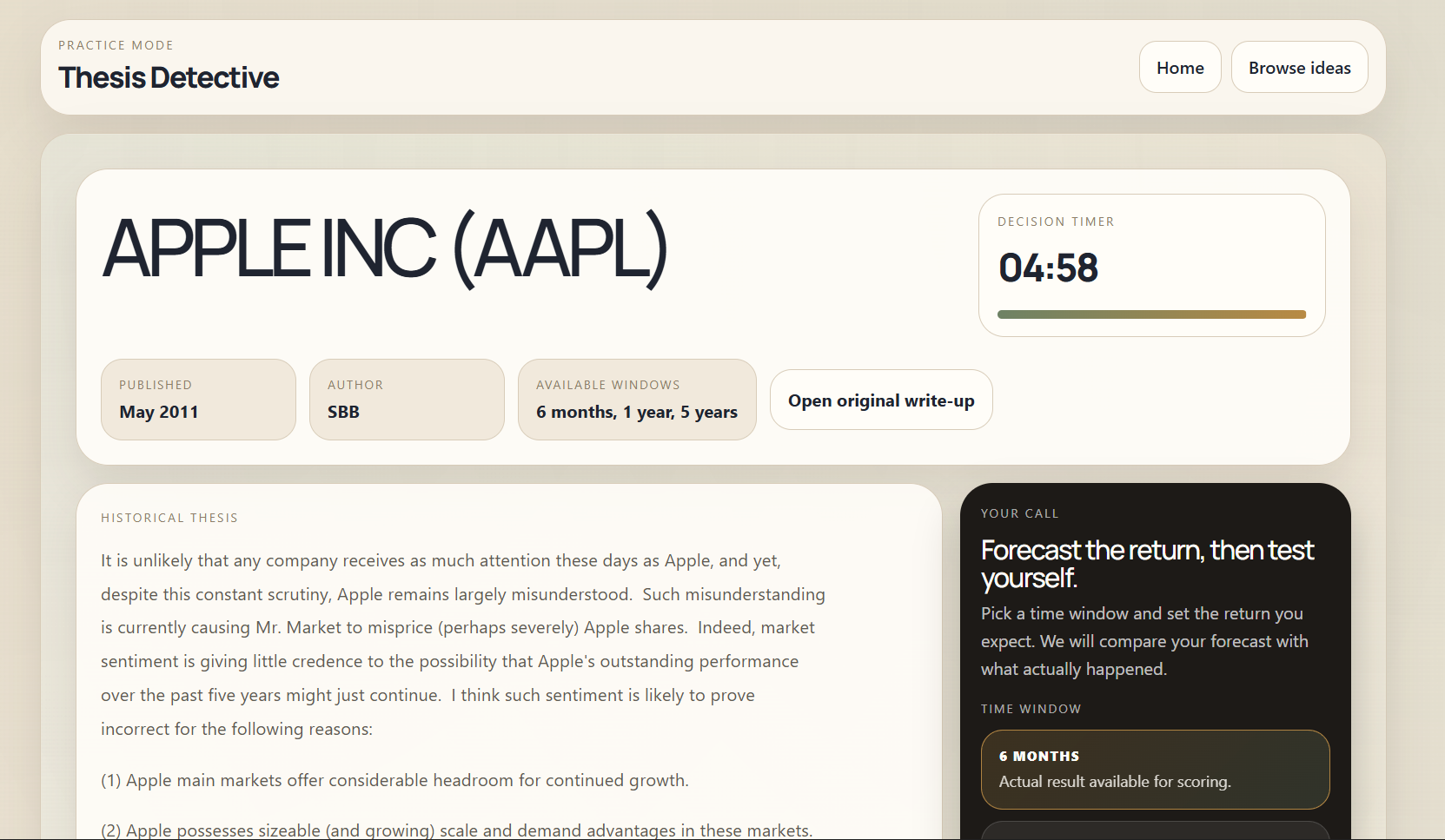
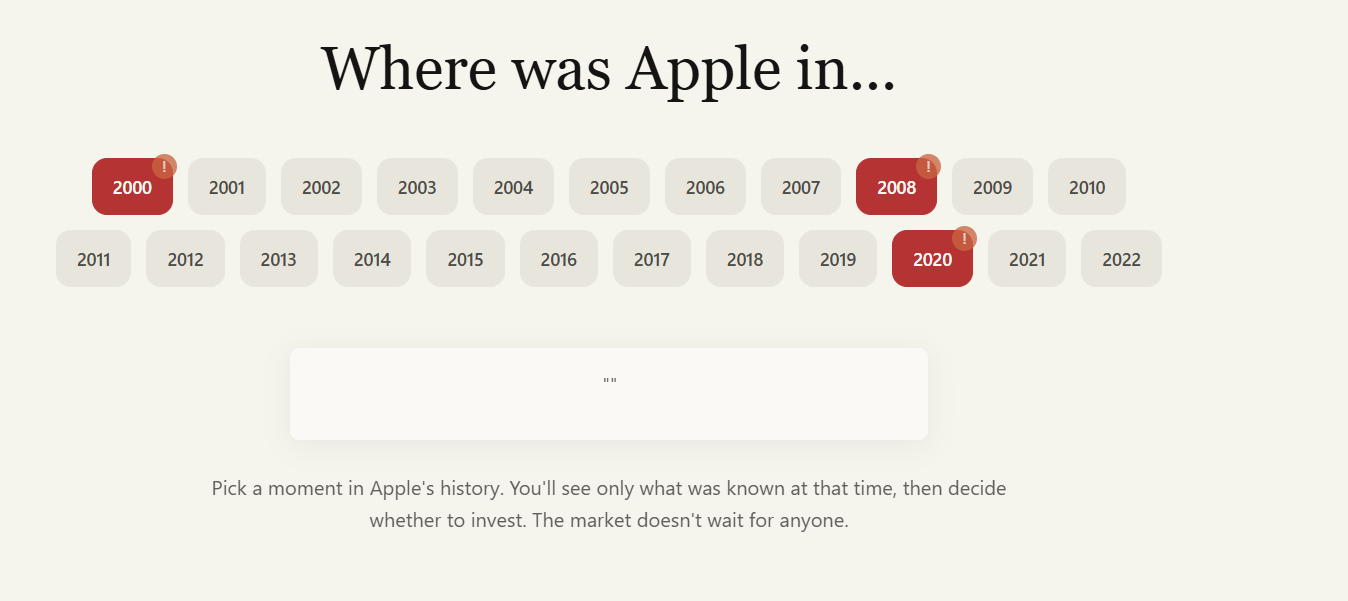
The idea is straightforward. The user is placed at a specific point in time and looks at a company using only the information that was available then. No future data is shown. From there, the user makes a decision: buy, hold, or skip. After the decision, the system reveals what actually happened over time. The price moves forward, and the outcome becomes clear. What matters is not whether the user was right or wrong, but how they made the decision. Seeing the difference between their thinking and the actual outcome helps build a better sense of judgment.
Over multiple cases, users start to understand how uncertainty feels, how easy it is to misread situations, and how hindsight can be misleading.The goal is not to simulate the market perfectly, but to create a simple environment where people can practice thinking without real consequences.
One part of the product focuses on learning directly from real investment theses.Each case includes an actual write-up explaining why someone believed a company was a good (or bad) investment at that point in time. The user can read through the reasoning, assumptions, and key arguments, instead of just looking at price charts. This helps them understand how investors think, not just what happened.
On top of that, we will add an AI coach to help users engage with the thesis more deeply.
The coach can also take on different investor perspectives. For example, a Buffett-style approach focuses more on business quality, durability, and long-term economics, while a Pabrai-style approach looks more at asymmetry, downside protection, and mispricing.
This allows users to see how different experienced investors might interpret the same situation differently, and helps them develop their own way of thinking over time.
Built With
- javascript
- next.js
- python

Log in or sign up for Devpost to join the conversation.