Inspiration
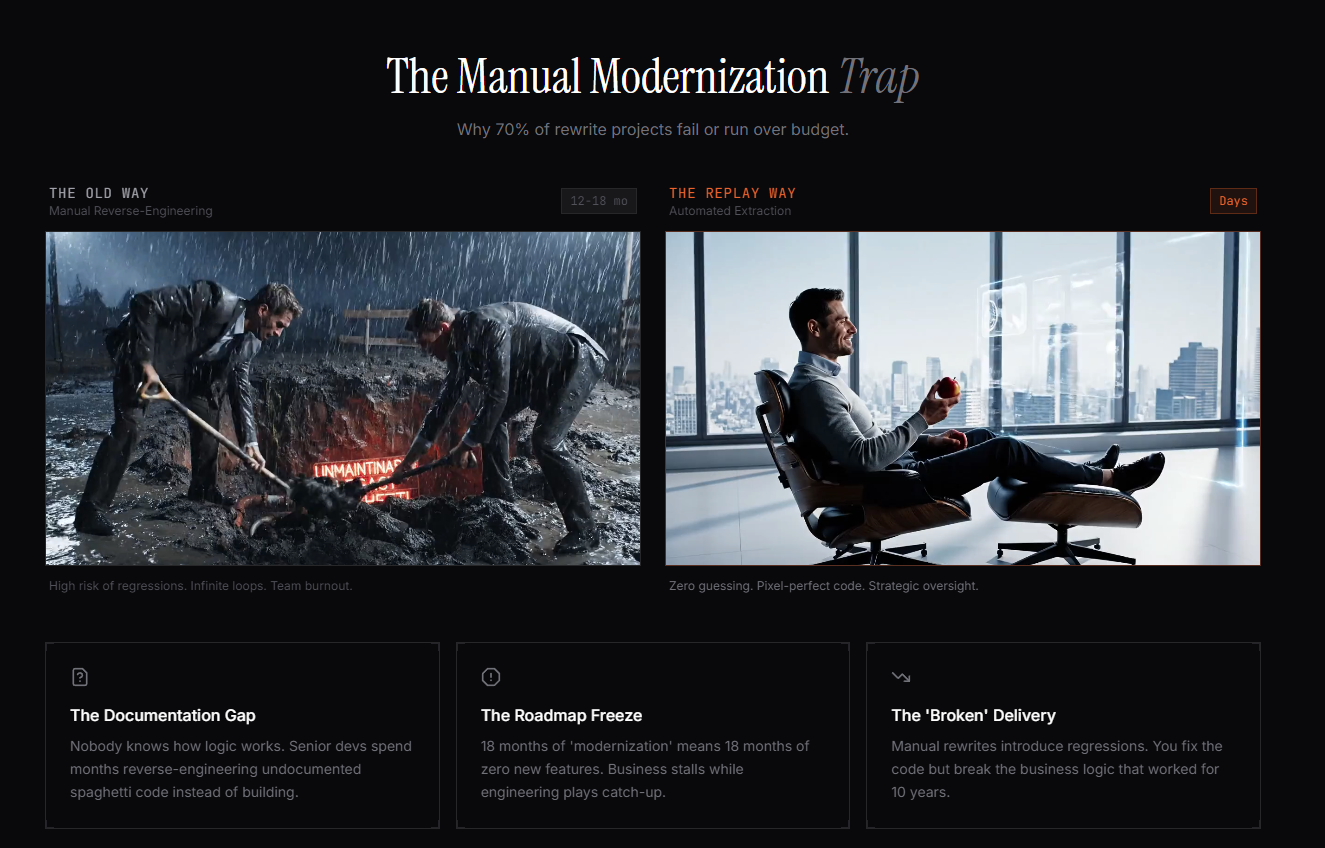
I experienced the "Legacy Trap" firsthand at a 23,000-employee corporation. The reality wasn't just old code; it was pure chaos. We had 100 different internal tools built by different developers over different decades. Tool A looked like Windows 95, Tool B was broken, and Tool C was on a completely different stack.
We were paralyzed by the fear of breaking these undocumented backends. I realized that for legacy software, the code is often useless or dangerous to touch. The only source of truth is the running application.
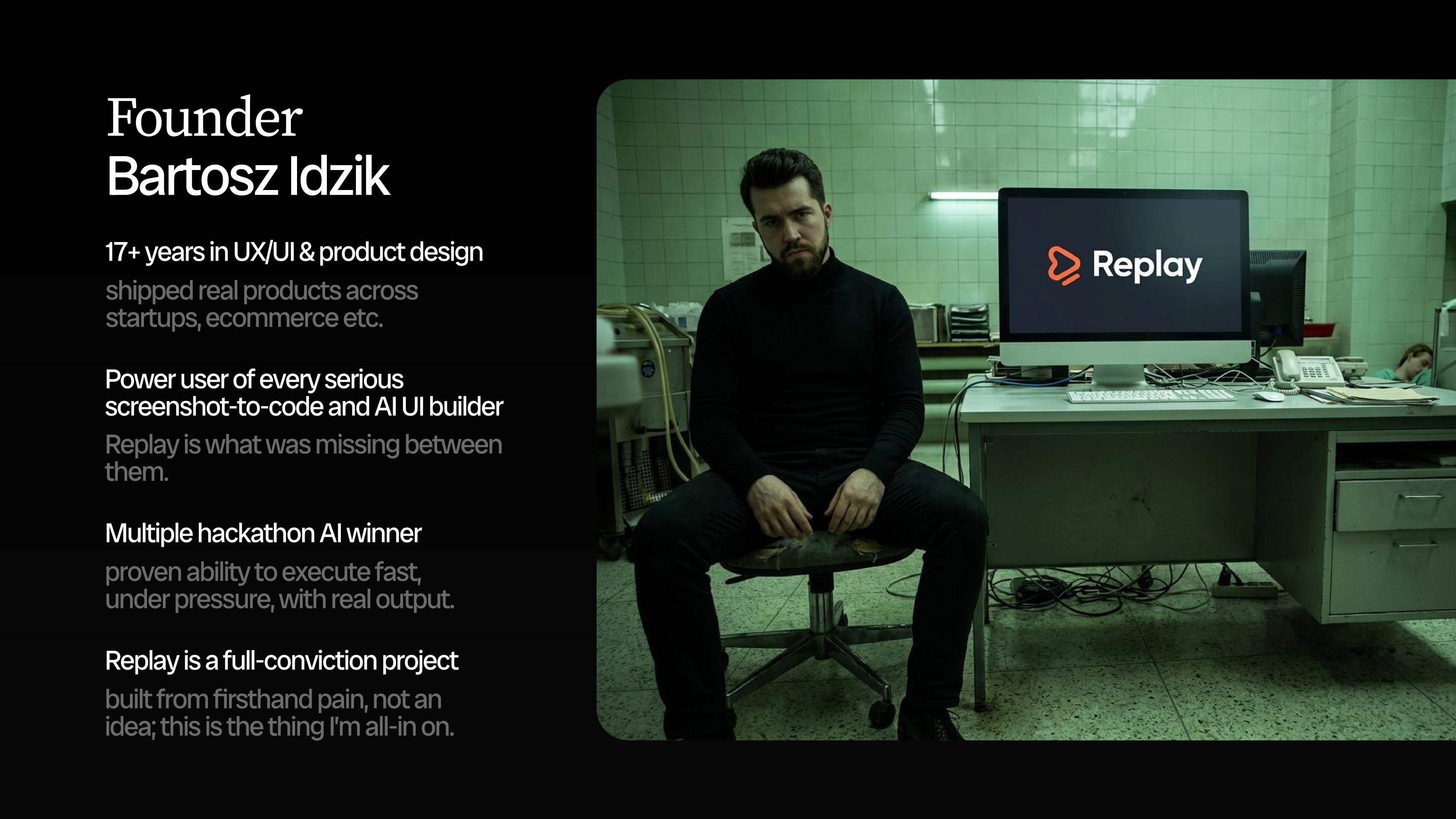
Most CTOs think fixing this fragmentation requires a multi-year rewrite. I built Replay to prove you can unify it all in days by using video as the single source of truth.
What it does
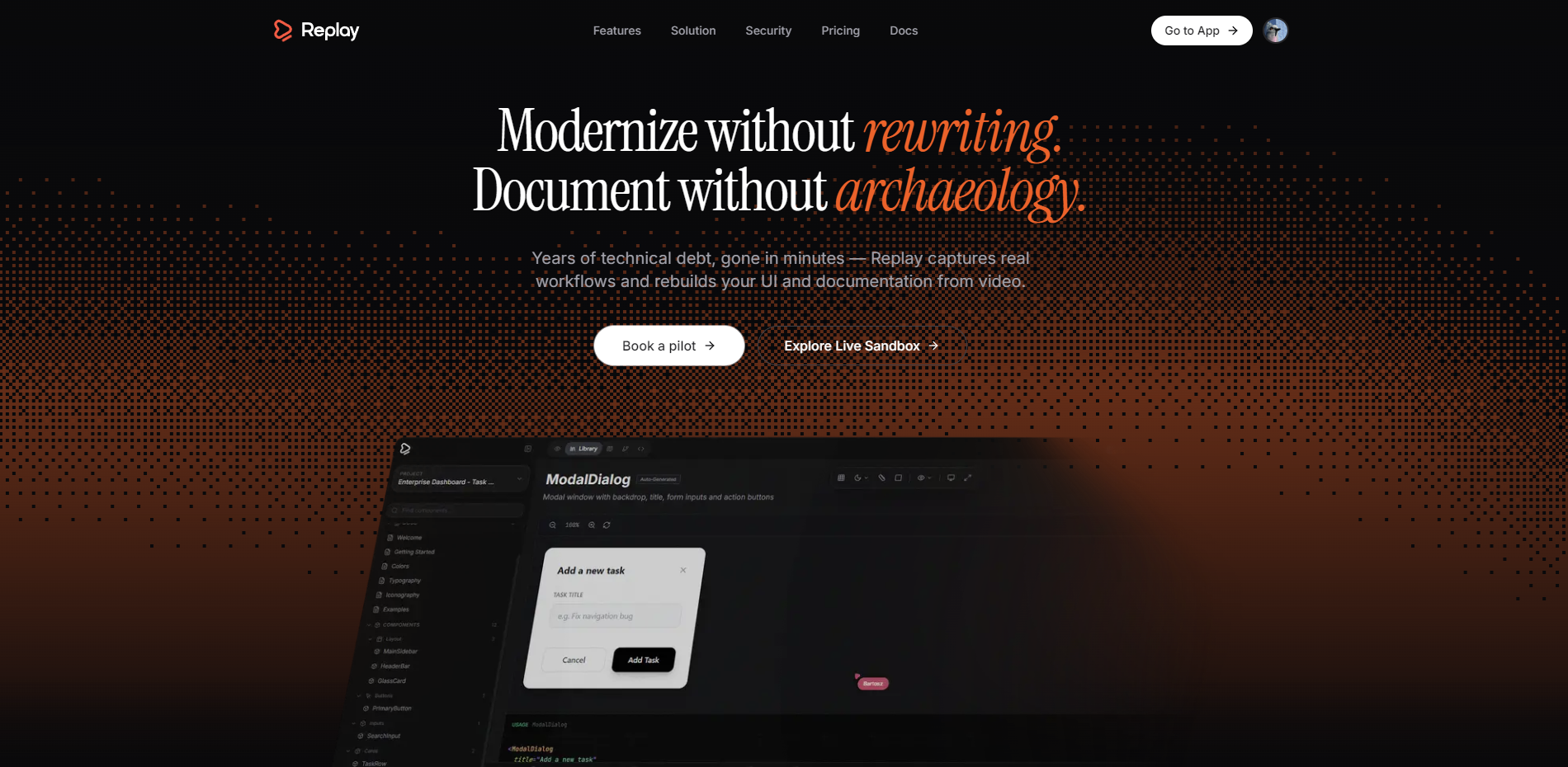
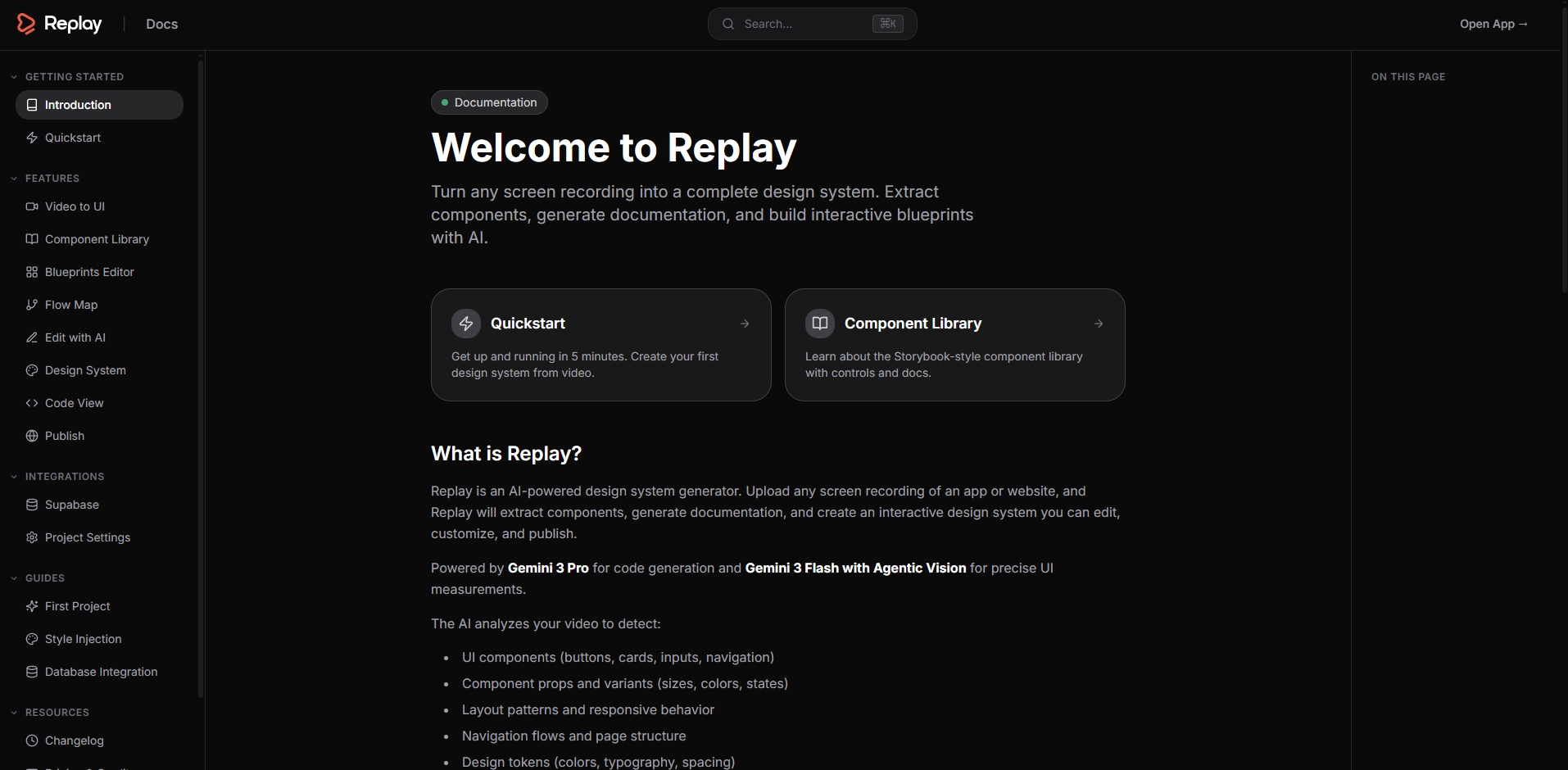
Replay modernizes legacy apps from video (already serving 200+ active users with 2 enterprise pilots in progress: Healthcare & Agency) It extracts:
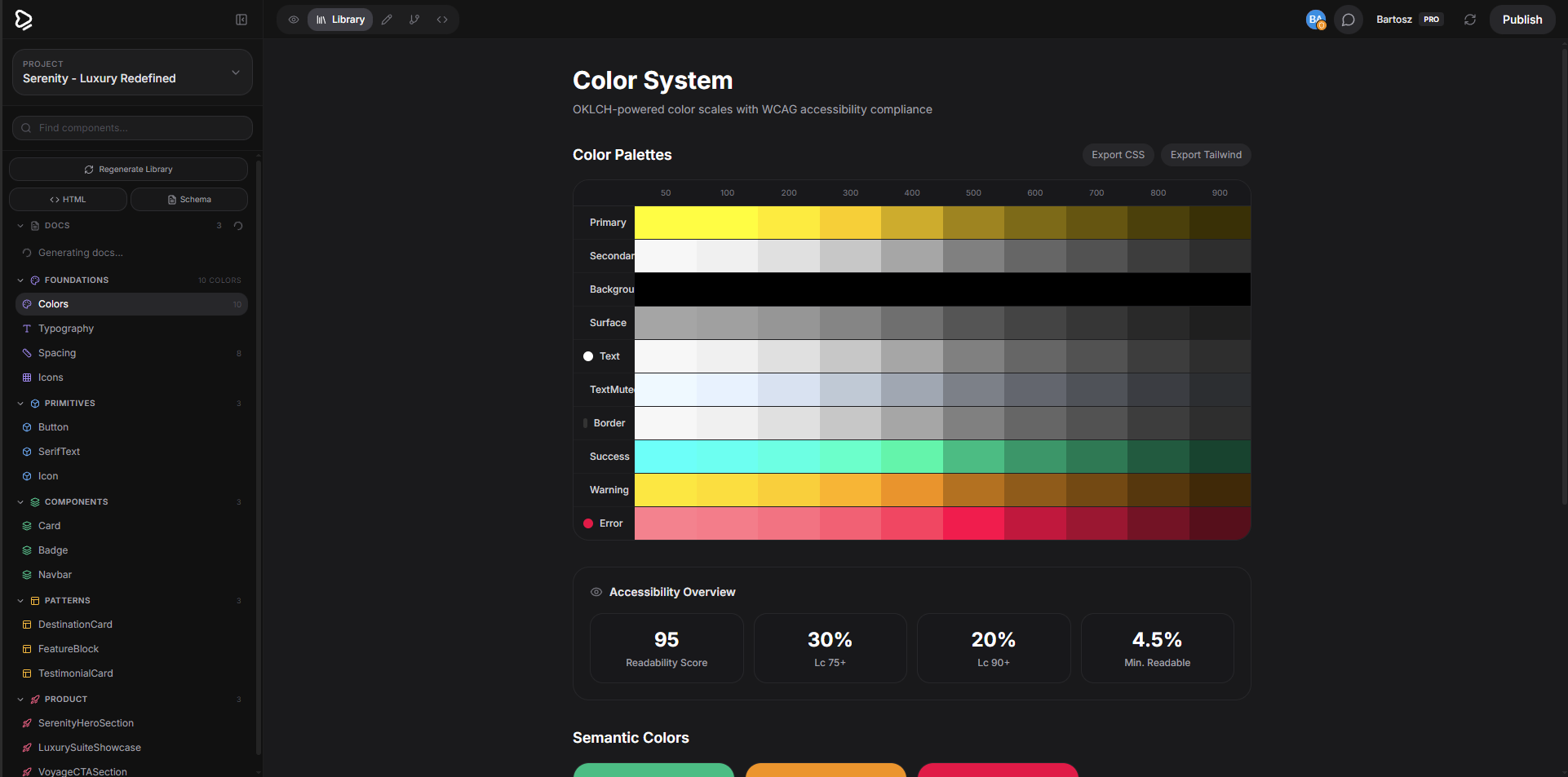
- Visual Structure: Layouts, components, and typography.
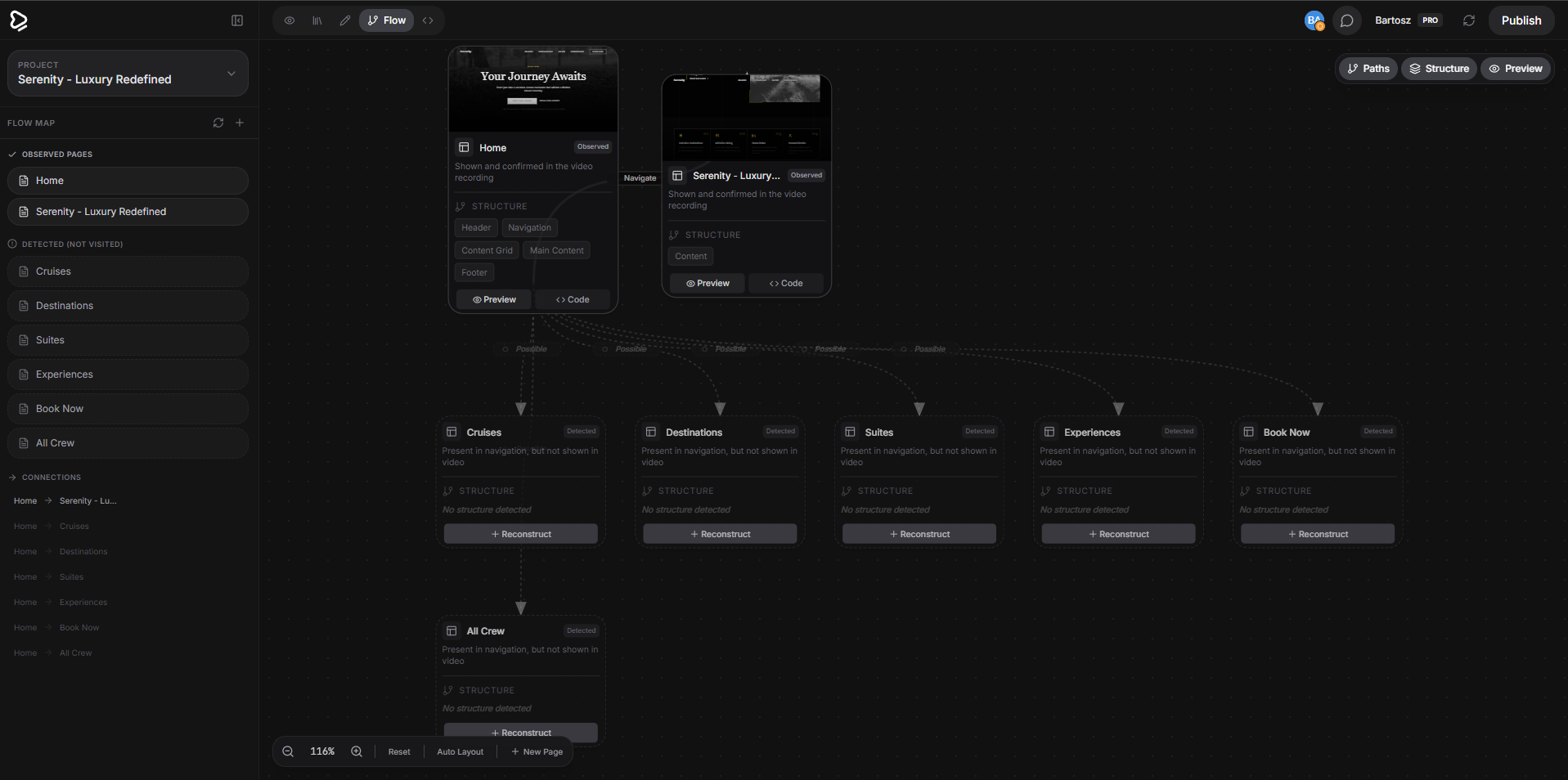
- Behavior: Click paths, hover states, and user flows.
- Logic: Input validation, error states, and loading sequences.
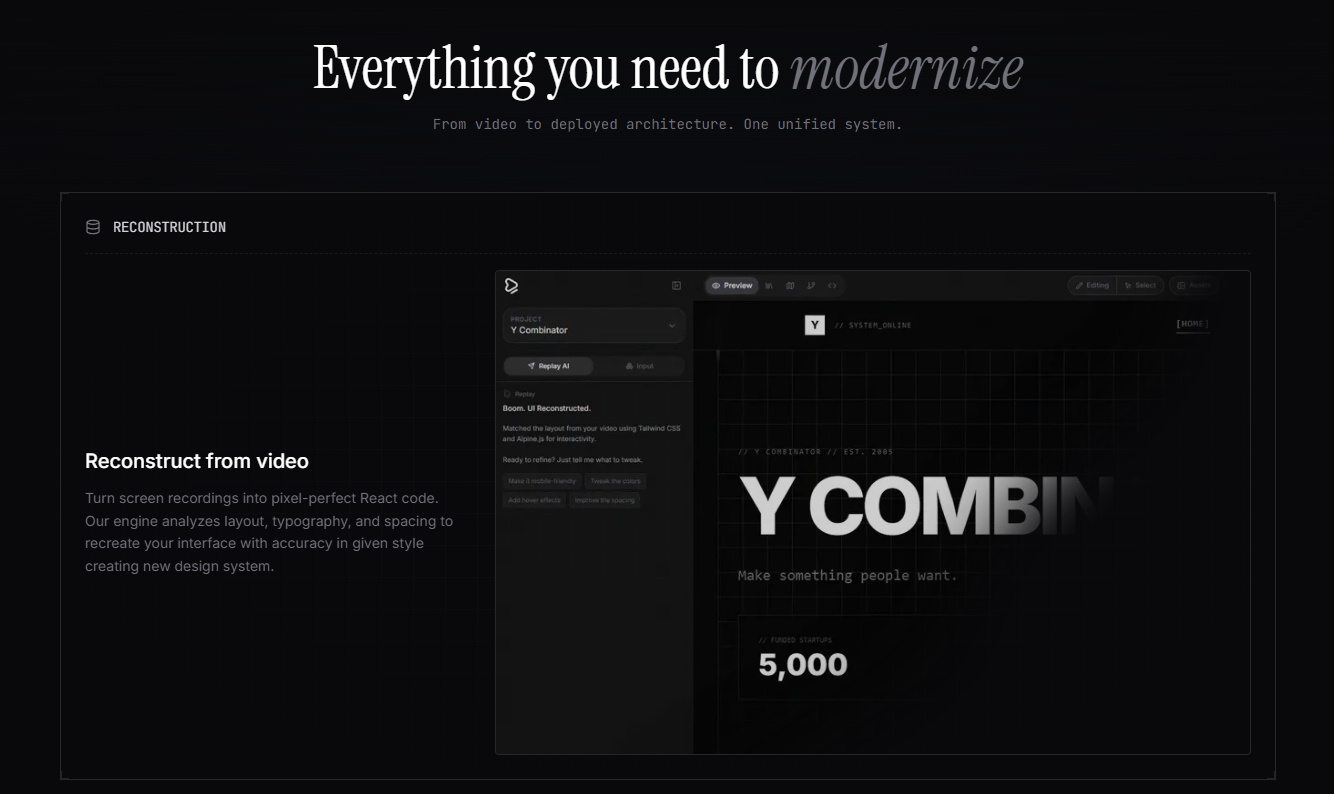
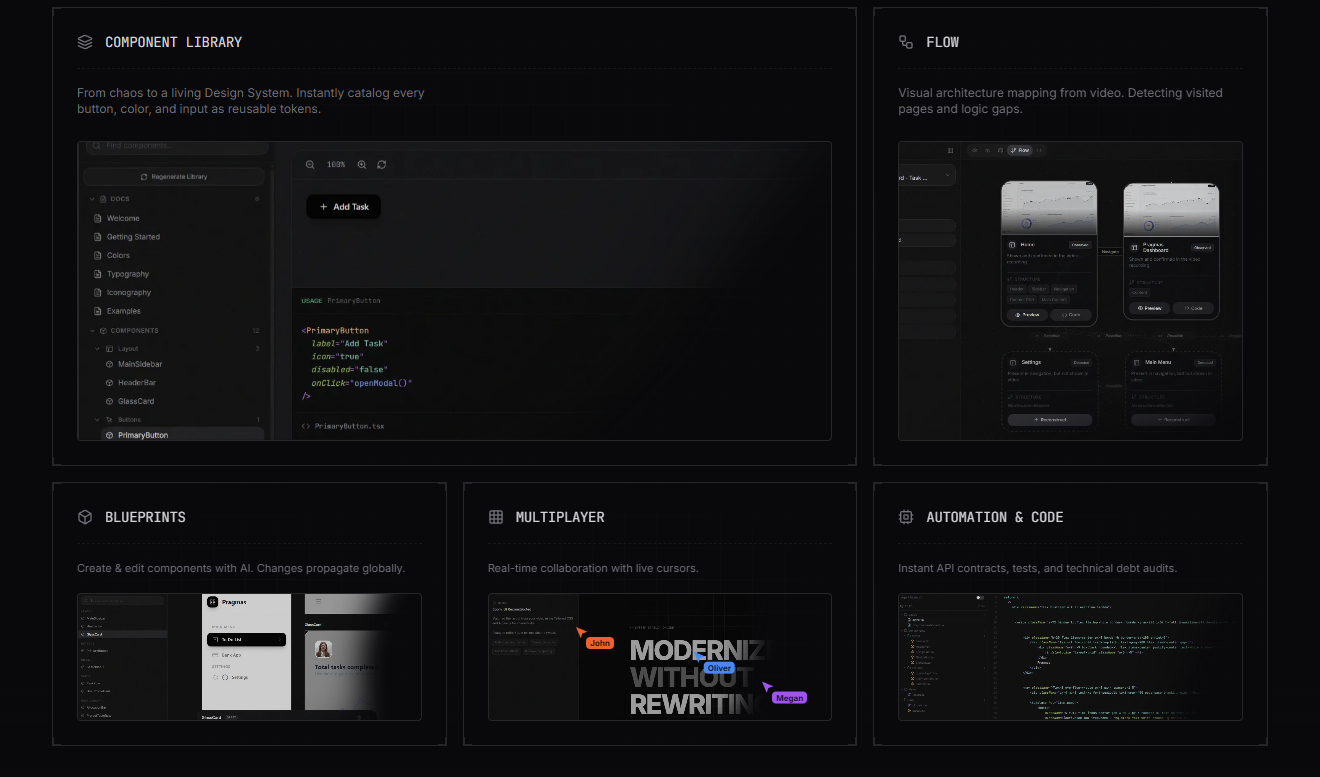
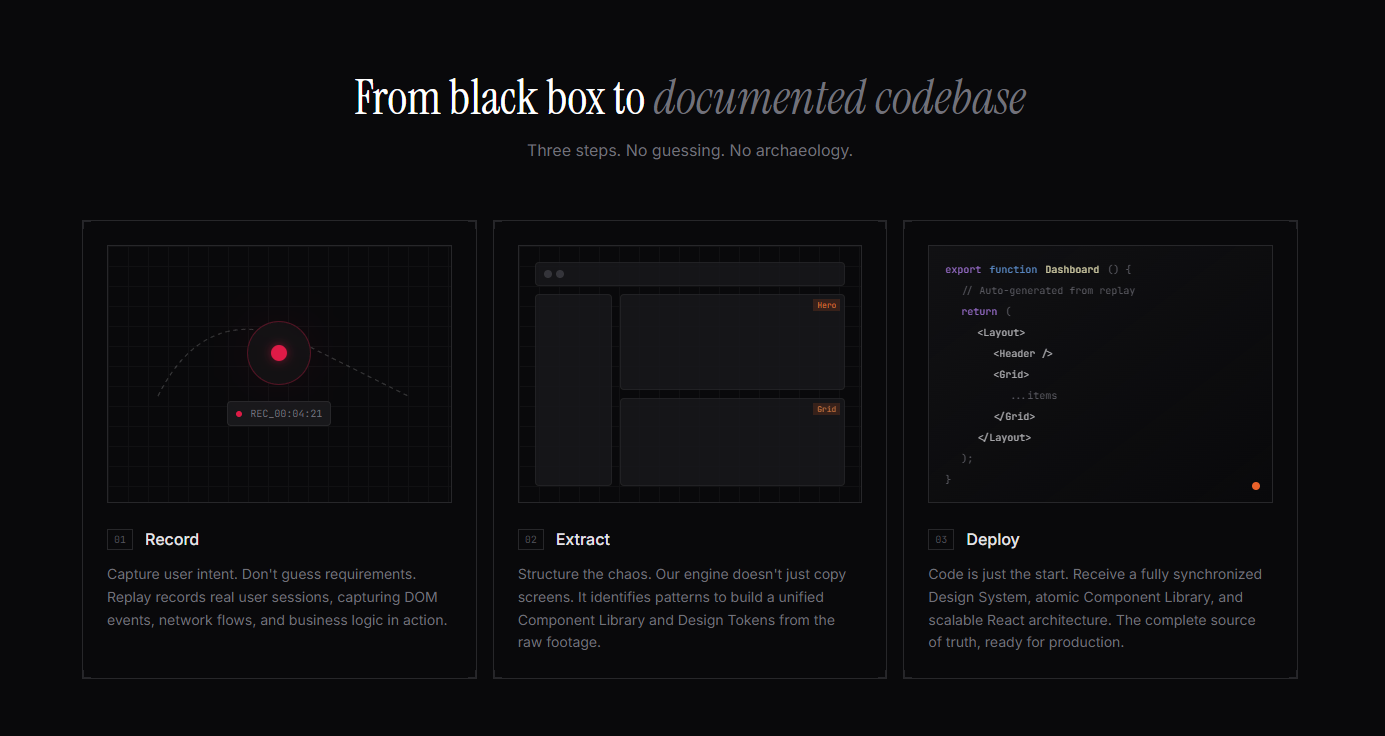
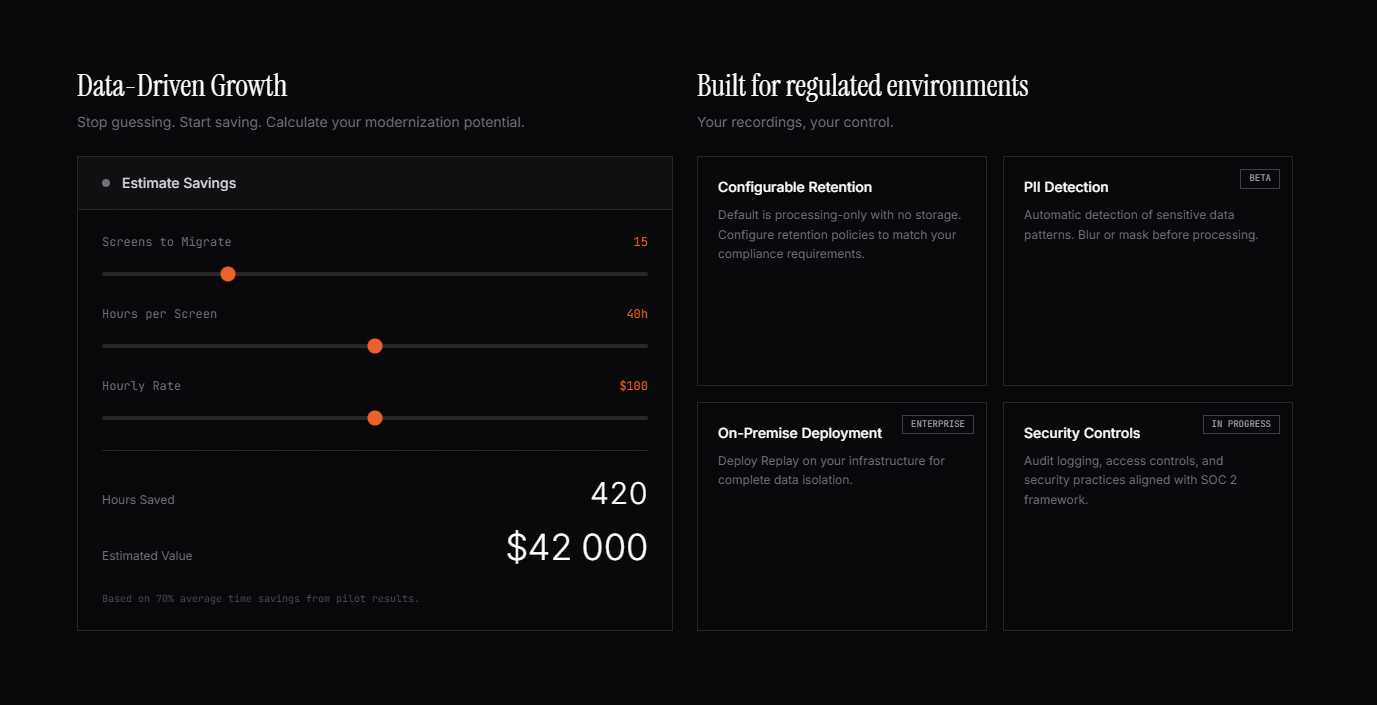
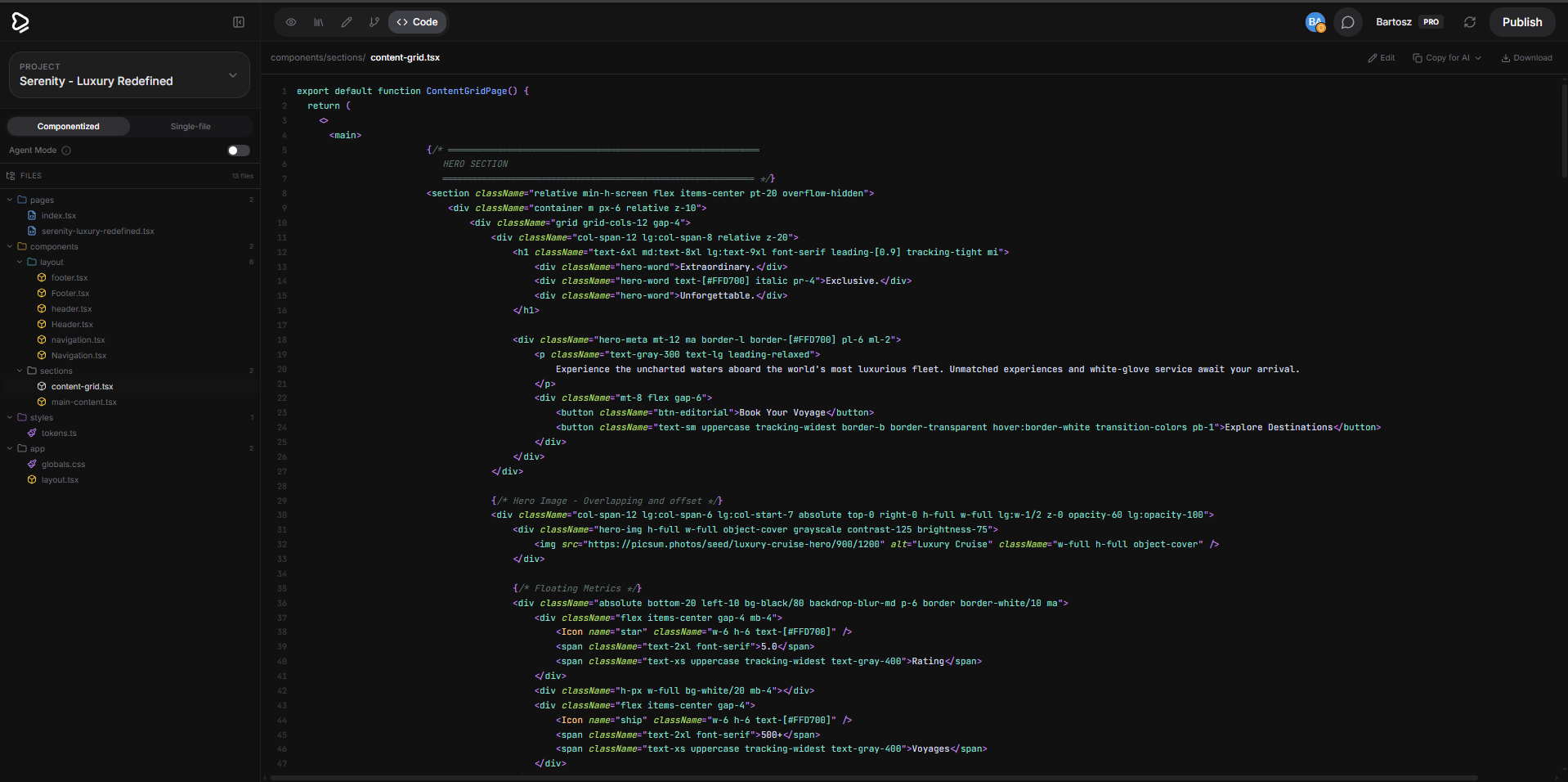
Replay watches your 100 different tools work and rebuilds them into a componentized codebase (React + Tailwind) with a shared Design System. We turn a fragmented nightmare into a unified standard, reducing migration time from months to days.
How I built it
Replay was built entirely by a solo founder using a cutting-edge AI-native workflow. The core engine relies on a complex multimodal pipeline powered by Google Gemini models, orchestrated alongside a Next.js full-stack architecture:
Gemini 3 Pro as "The Eyes": We utilize the massive context window and multimodal capabilities of Gemini 3 Pro to process the raw video stream. It acts as the system's "eyes," perceiving not just static pixels, but the continuity of elements (e.g., understanding that a button press at 0:05 causes the modal at 0:07).
Agentic Vision with Gemini 3 Flash: To ensure enterprise-grade accuracy, we implemented a parallel Agentic Vision layer using Gemini 3 Flash. We call this "Sandwich Logic." While Pro generates the complex structure, Flash acts as a high-speed agent that verifies every step against the original video frames, hallucination-checking the output.
Logic Inference: We prompt the models to infer business logic from visual cues (e.g., recognizing a red border as a "Validation Error" and generating the corresponding Zod schema).
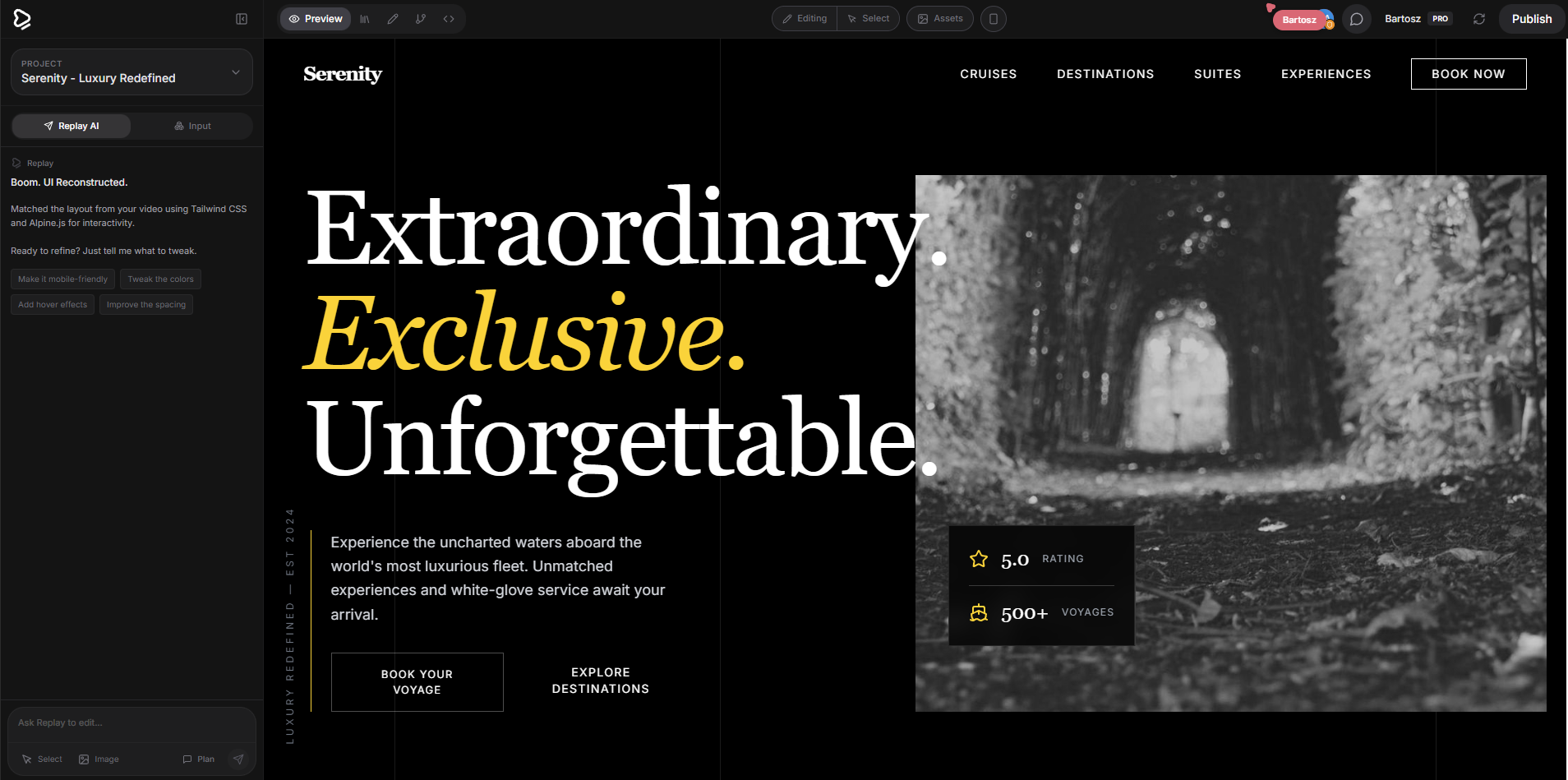
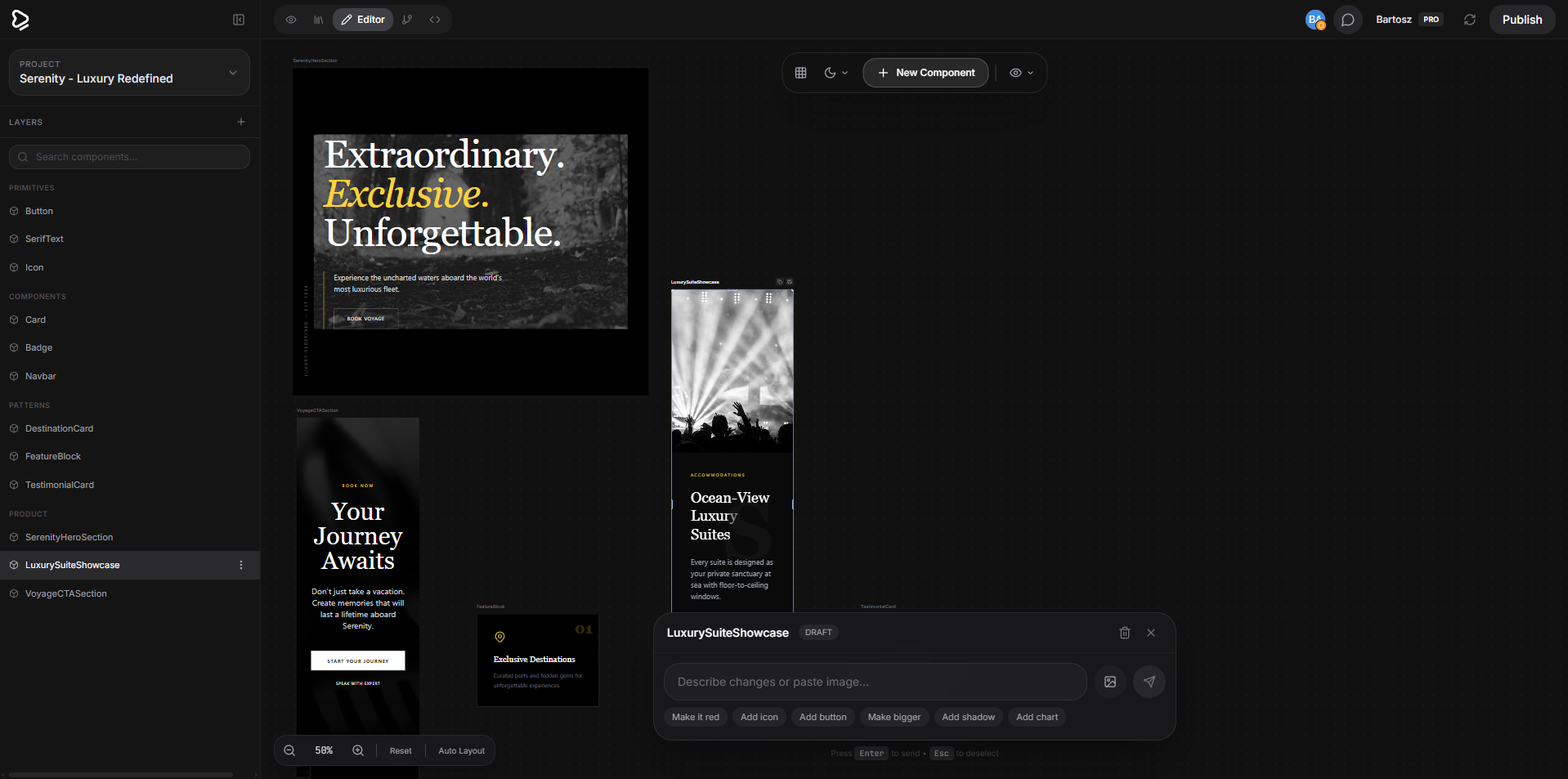
Live Component Creator & Editor (Gemini 3 Flash): We didn't just stop at static generation. We built a real-time modification engine powered by the extreme speed of Gemini 3 Flash. This allows developers to "talk to the UI"—instantly refactoring components or creating new ones from scratch with sub-second latency, creating a seamless "Chat-to-UI" experience.
Challenges we faced
- The "Static Trap": Early iterations treated video as a series of screenshots, resulting in disjointed code. We had to engineer a pipeline that maintains state consistency across frames.
- Legacy Inconsistency: Old software is visually messy. We used Gemini 3 Pro to normalize these inputs into a clean, modern Tailwind-based Design System automatically.
Accomplishments that we're proud of
- From Zero to Enterprise in 6 Weeks: We went from 0 lines of code (Dec 20th) to a fully functional engine with 200+ active users and monetization today.
- Enterprise Validation: We secured 2 Enterprise Pilots (Healthcare and Software Agency), proving Replay works on complex, messy, real-world legacy data.
- Technical Breakthrough: Successfully orchestrating Gemini 3 Pro and Flash to solve a problem previously considered "impossible to automate" by a solo founder.
What's next for Replay
We are scaling the engine to handle multi-hour recording sessions and adding a more advanced "Agent Mode" that will allow developers to deploy the modernized code directly into their existing repositories. We aim to become the standard for safe, automated legacy migration.

Log in or sign up for Devpost to join the conversation.