-
-
-
-
-
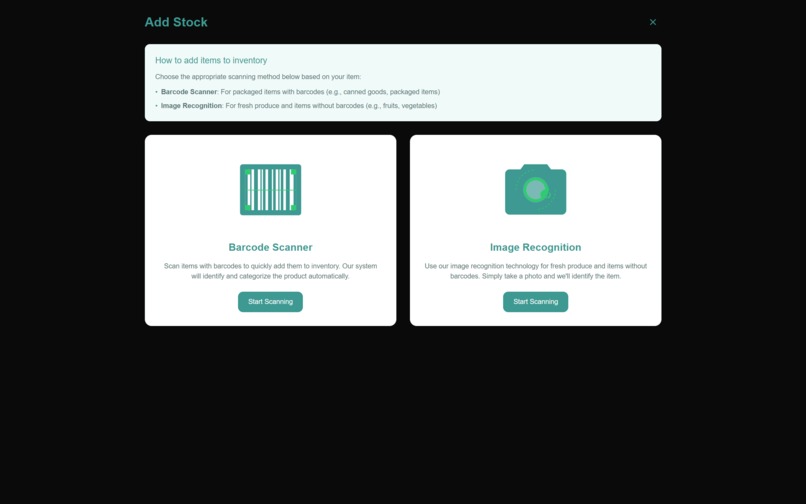
Product additional automation
-
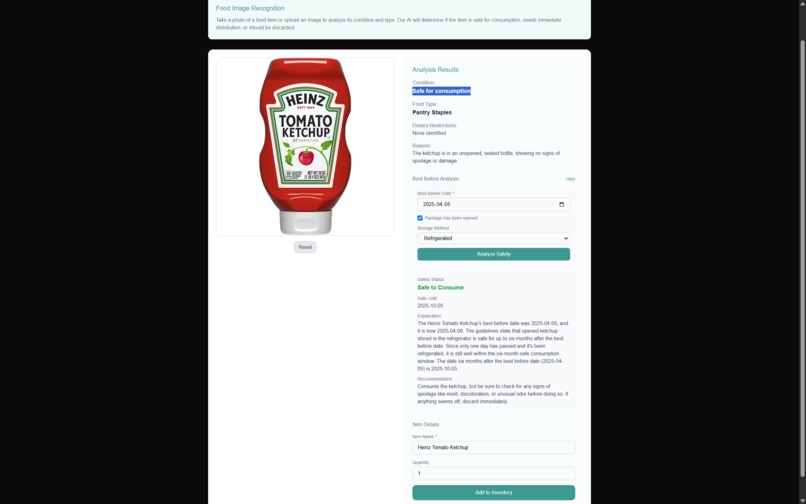
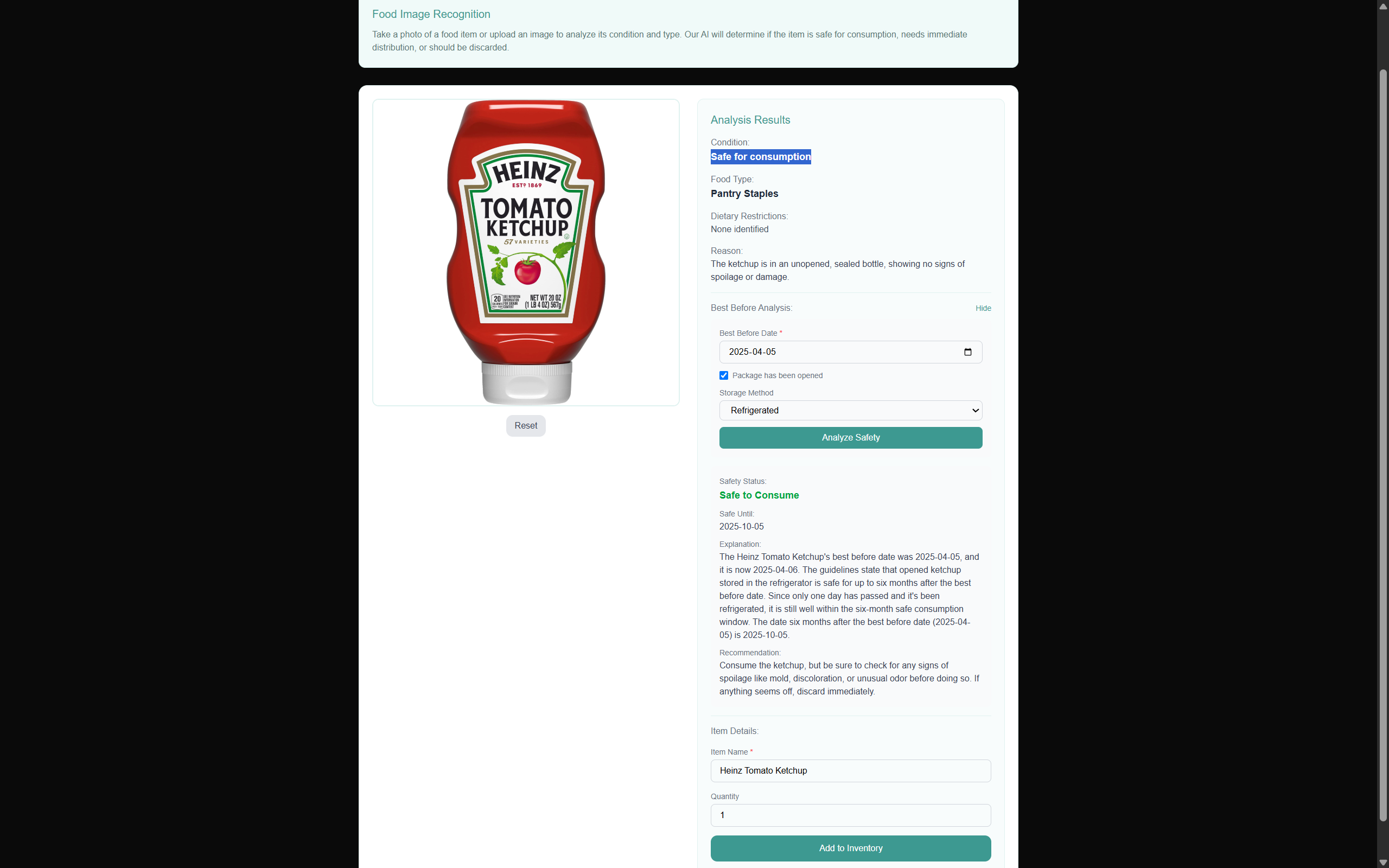
AI image Analyzer
-
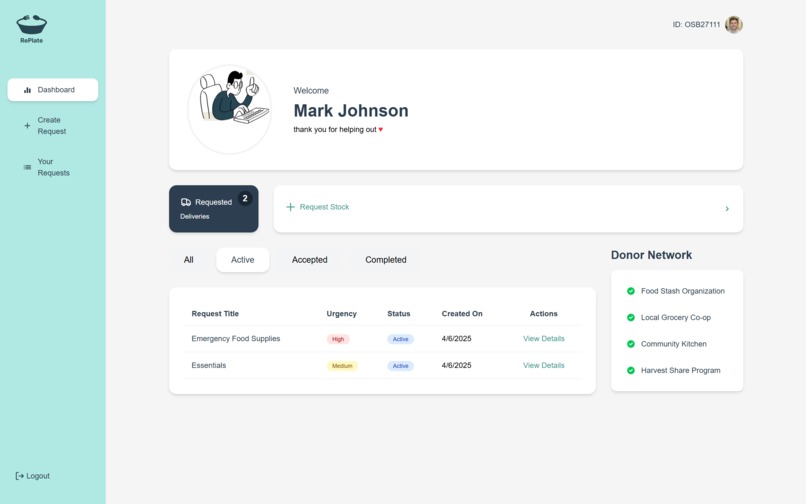
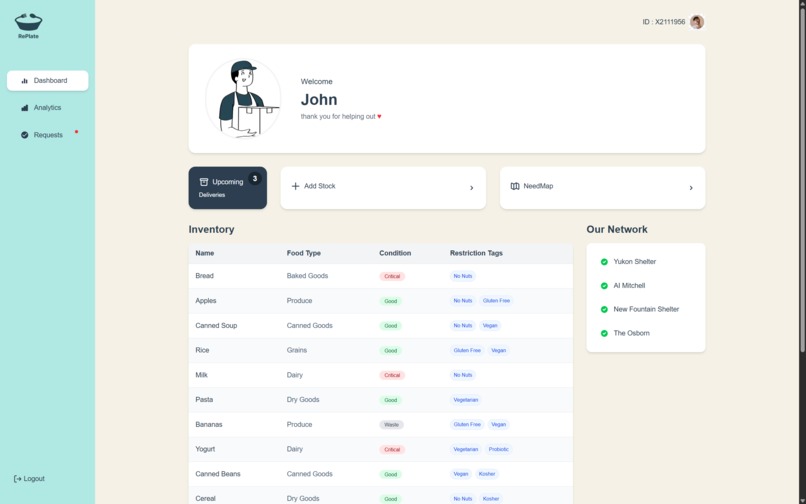
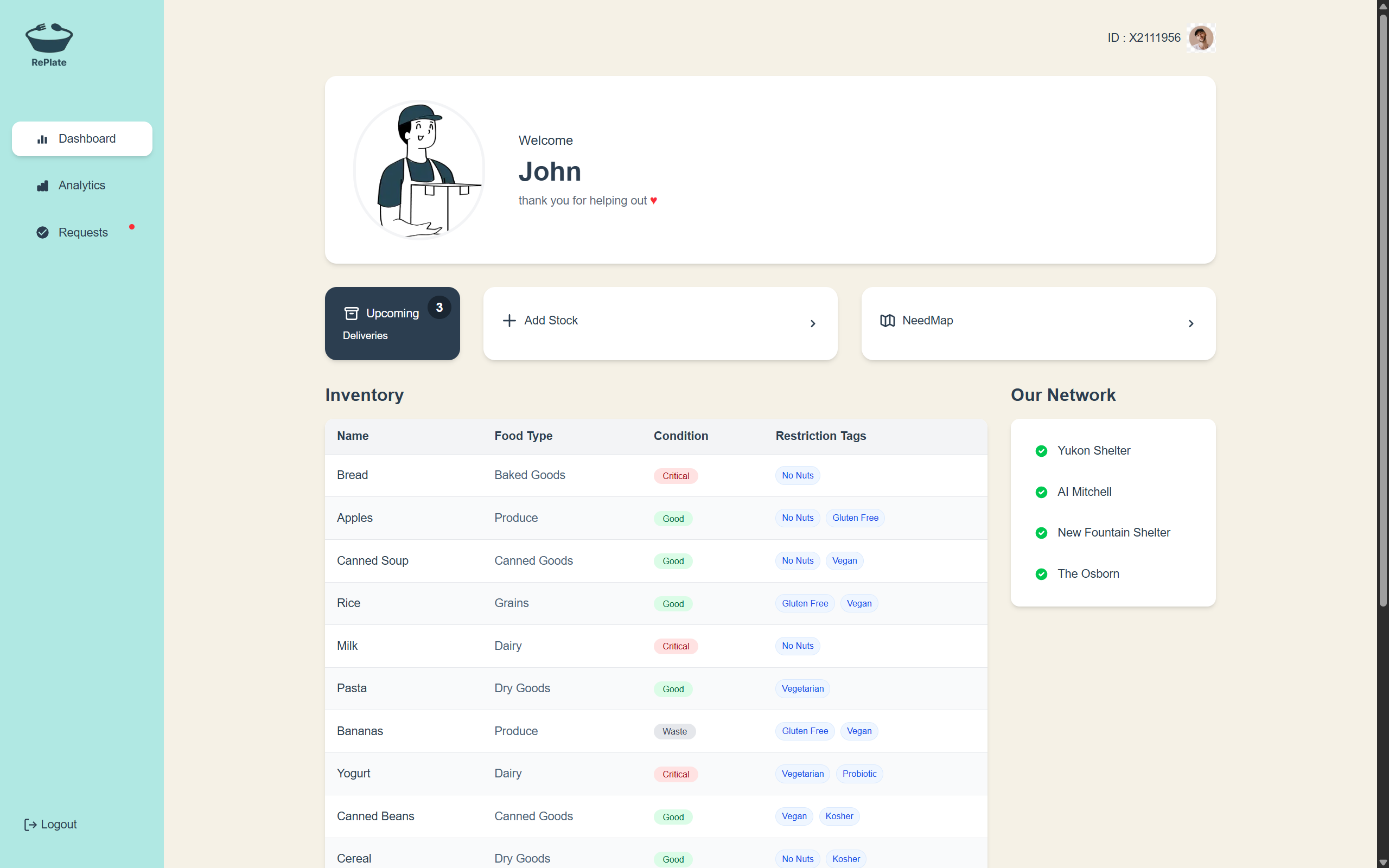
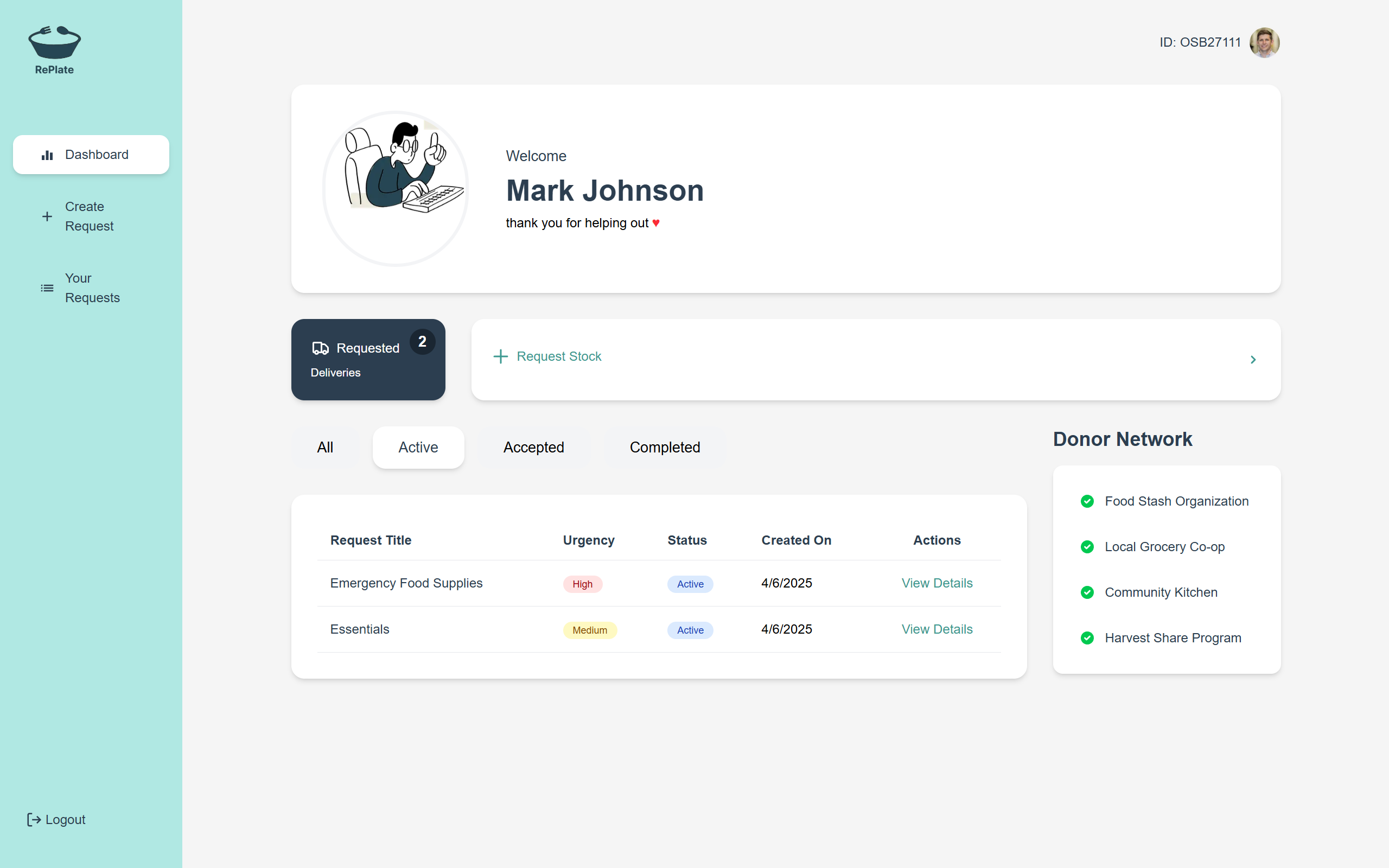
Food Shelter side Dashboard
-
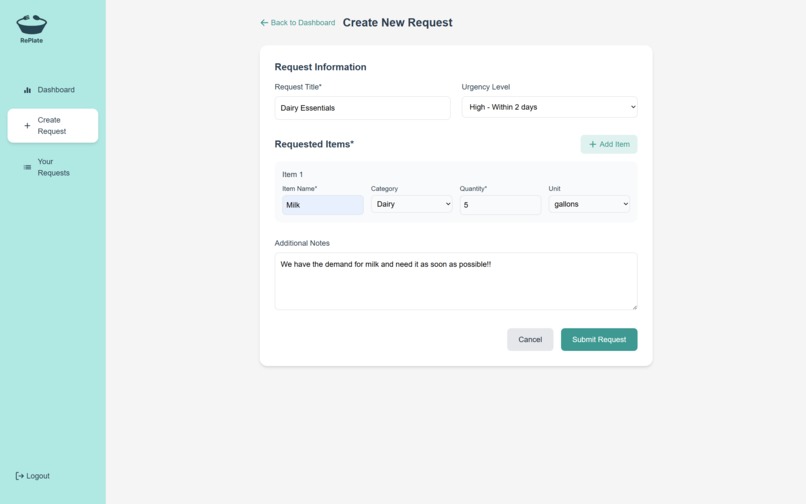
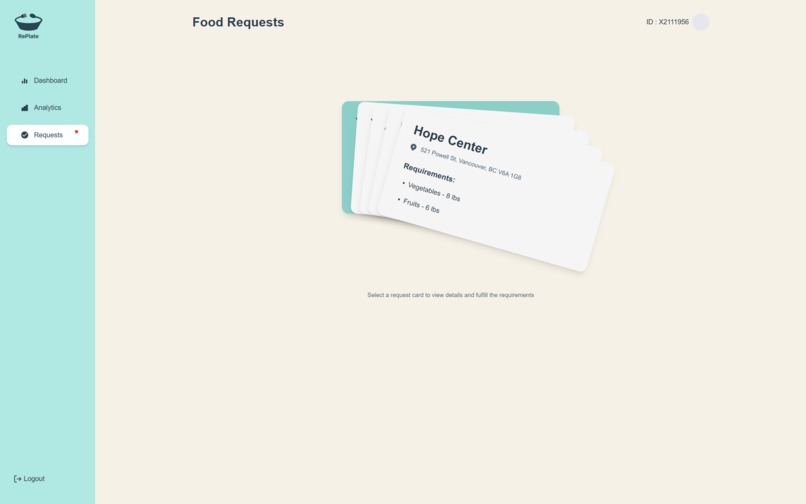
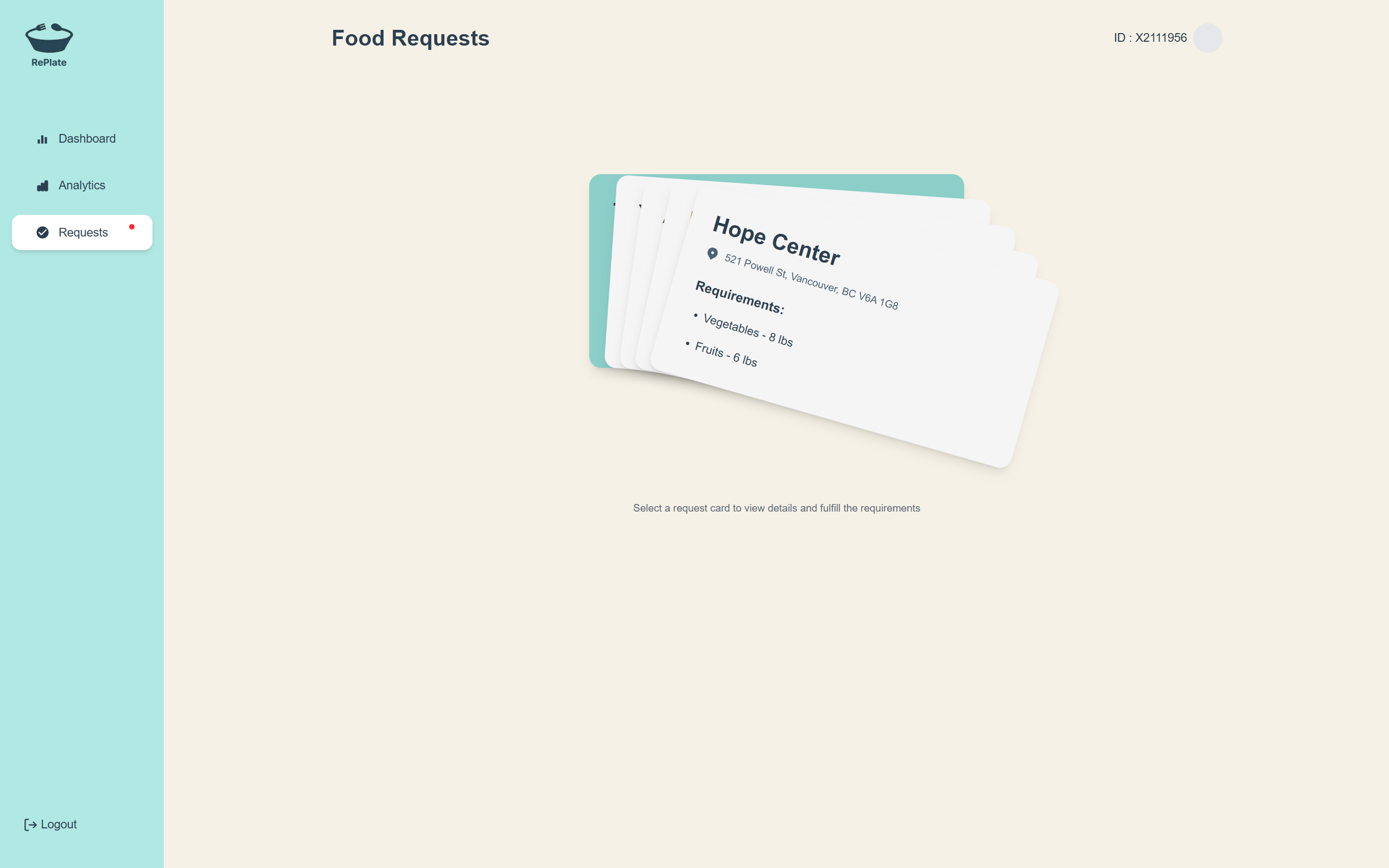
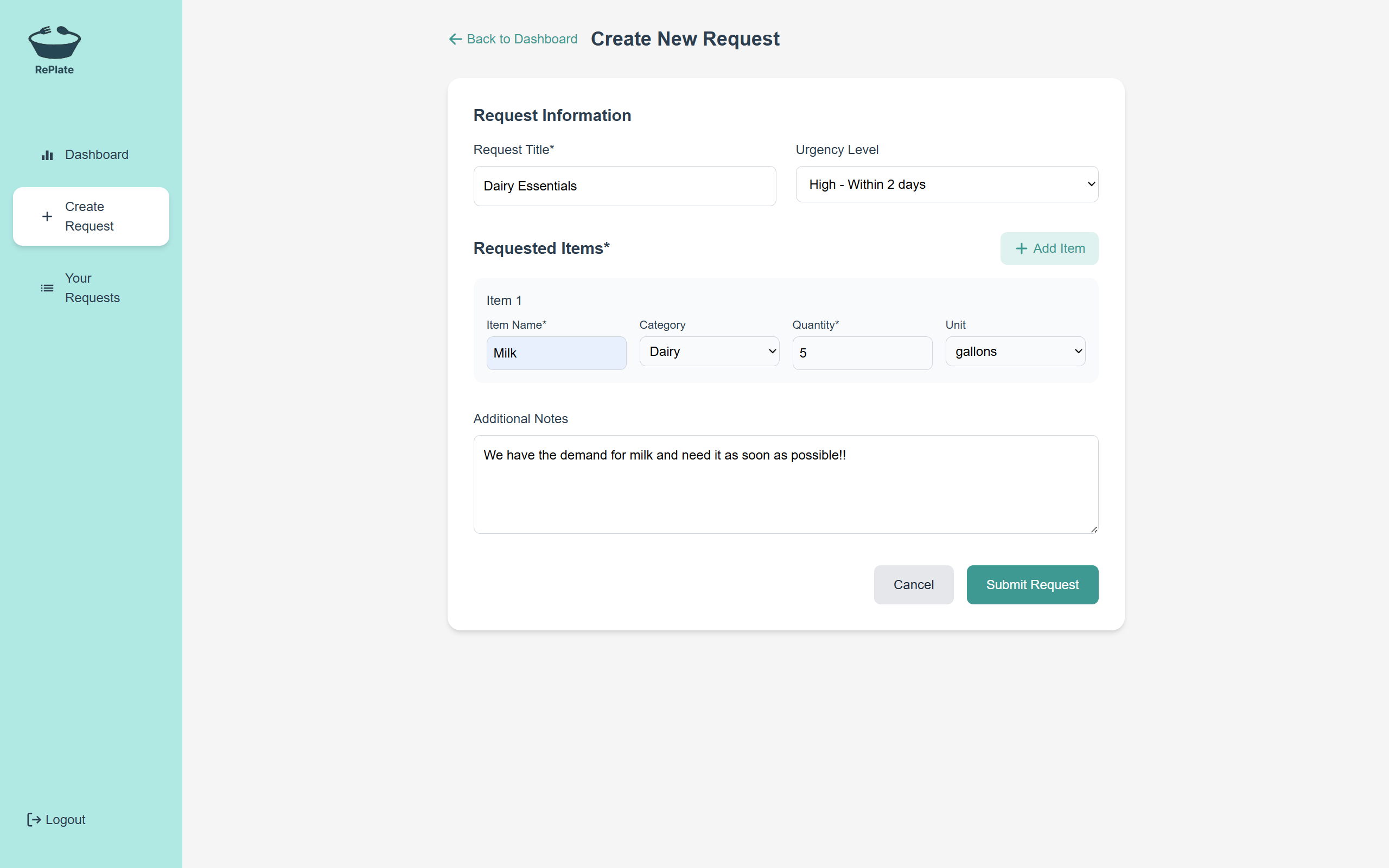
Food Shelter Request form for Food
-
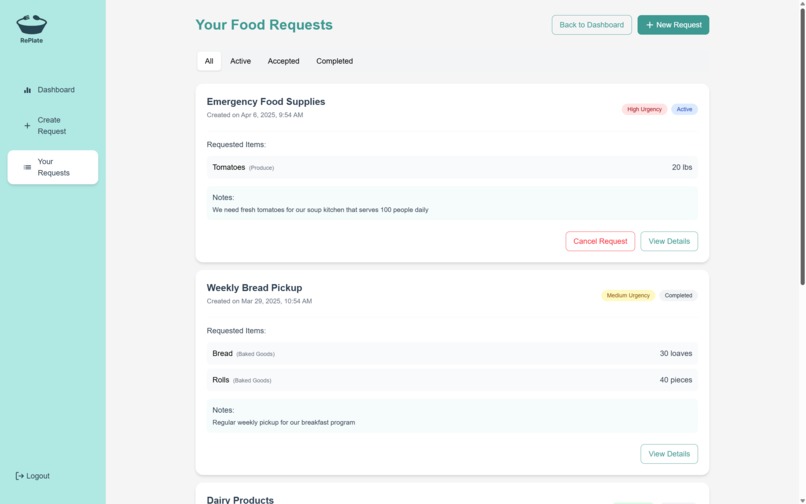
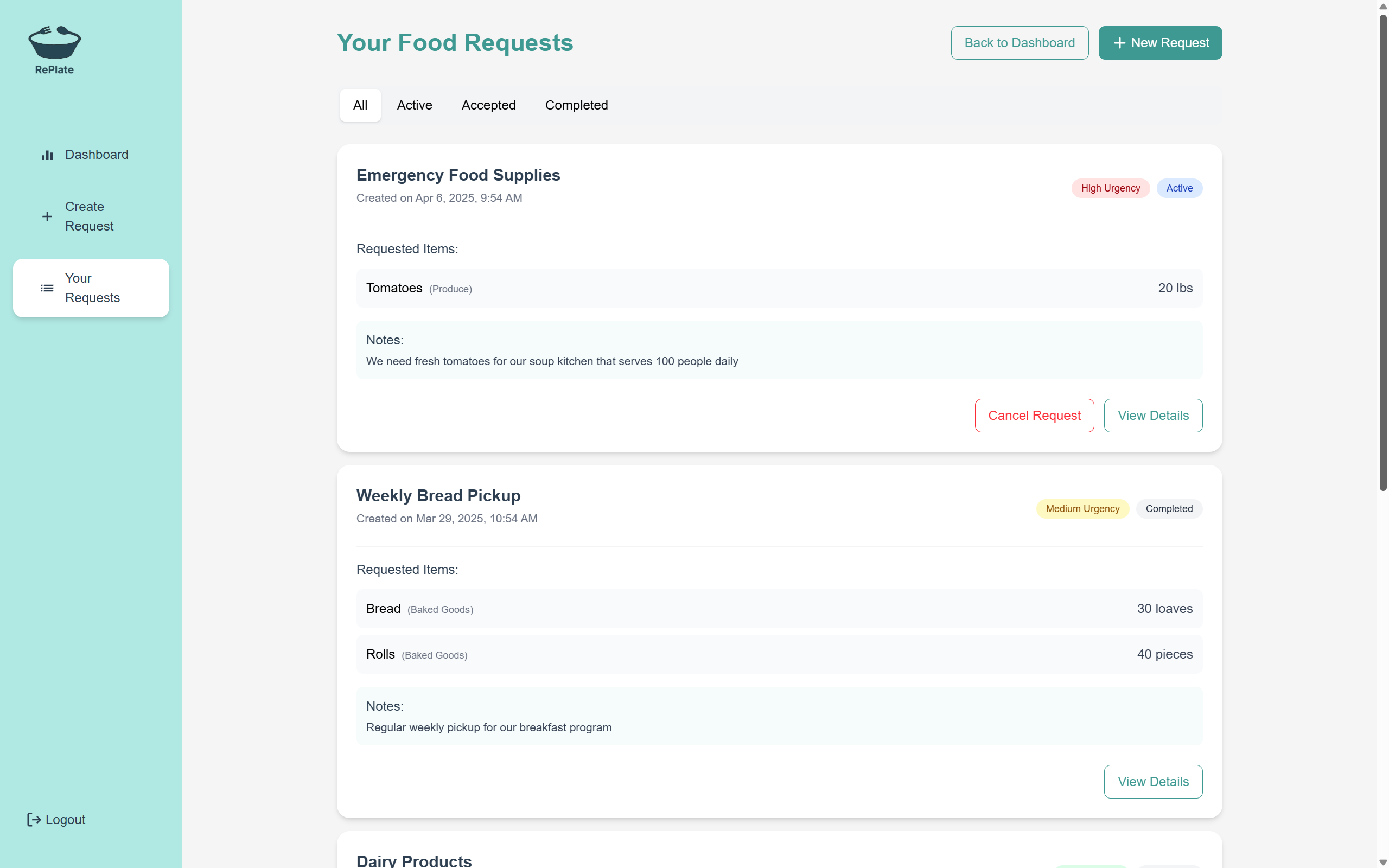
Food Shelter past form for food requests
-
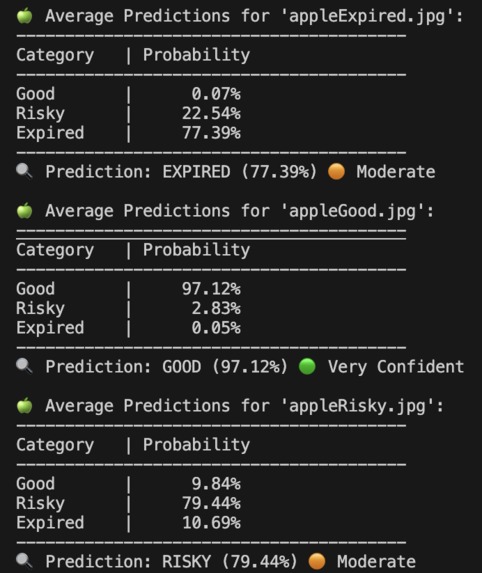
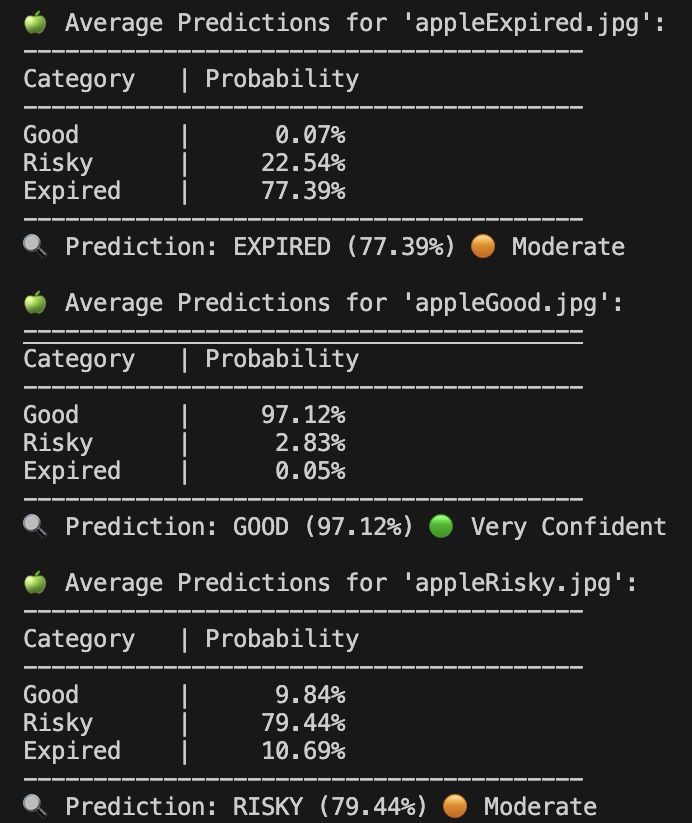
Our own optimised ML Classification Model we incorporated
Re-Plate: Reducing Food Waste, through optimization and AI🍲
Inspiration 💡
Every year, approximately 1.3 billion tons of food are wasted globally, while nearly 828 million people go hungry. In developed countries, 40% of food waste occurs at the retail and consumer levels.
This isn't just a statistic: it's a solvable crisis affecting both our communities and our planet. Food waste in landfills produces methane, a greenhouse gas 25 times more potent than carbon dioxide. Meanwhile, local shelters and food banks struggle to maintain a consistent supply of nutritious food for those in need.
We believe that technology can bridge this gap between excess food and hunger. How could we connect those with surplus food to organizations that can distribute it effectively before it goes to waste?
That's why we created Re-Plate - an intelligent food donation platform that connects food donors with local shelters, leveraging AI to ensure food safety and maximize impact.
What it does 🥗
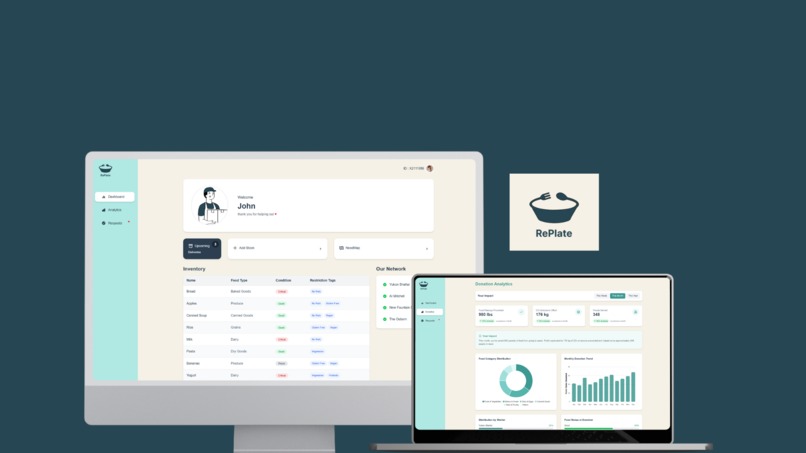
Introducing Re-Plate: Turning potential waste into nourishment. Re-Plate redefines food donation by combining smart food classification, analytics, and seamless connection between donors and shelters.
Re-Plate integrates cutting-edge technology with a user-friendly interface to transform how we approach food waste and donation.
Users can:
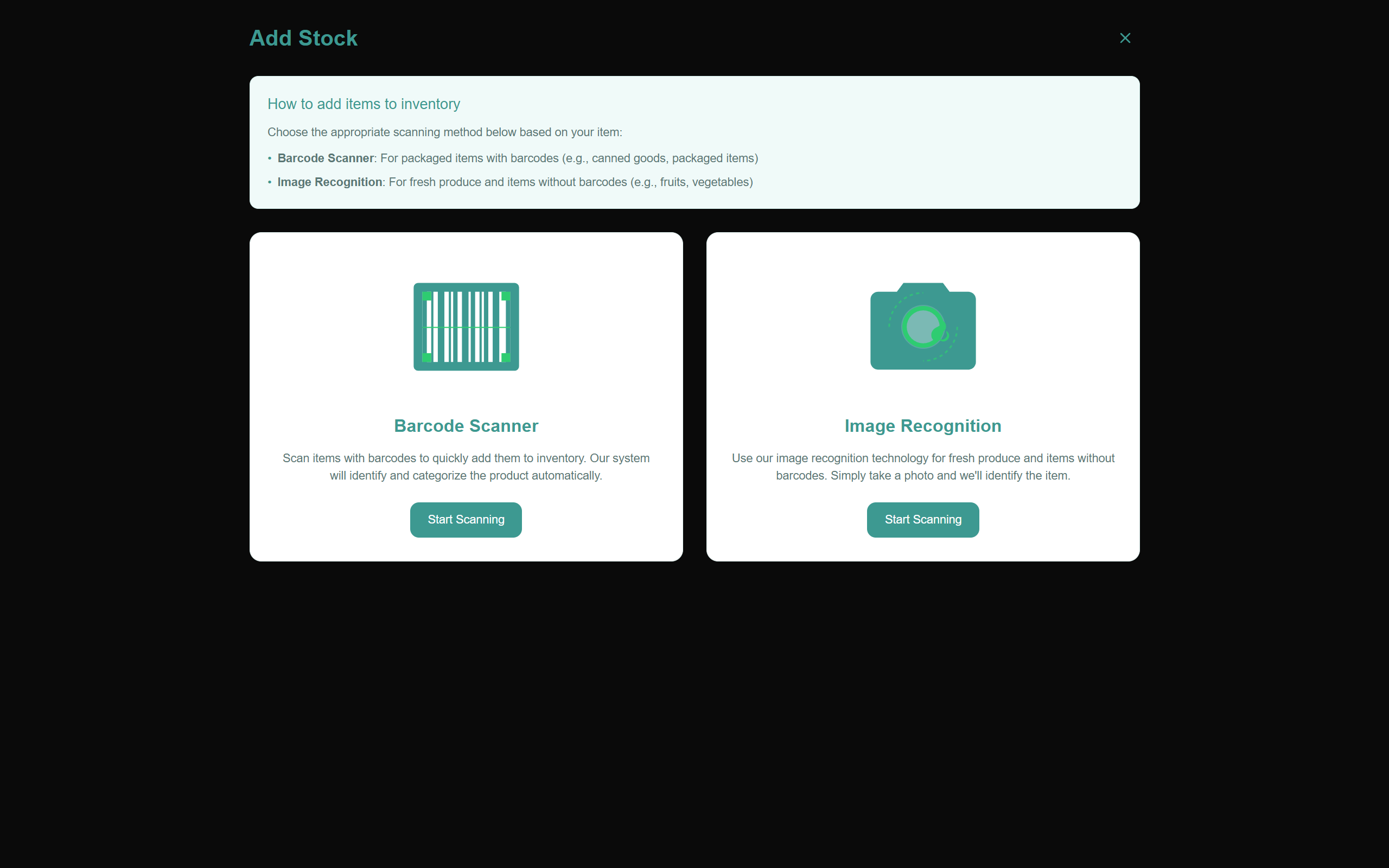
🍎 Donate surplus food easily – Businesses and individuals can quickly catalog their surplus food items through our intuitive interface, with AI assistance to classify food types and assess food safety.
🔍 Analyze food safety instantly – Our intelligent system examines best-before dates and food conditions to ensure all donations are safe for consumption, protecting both donors and recipients.
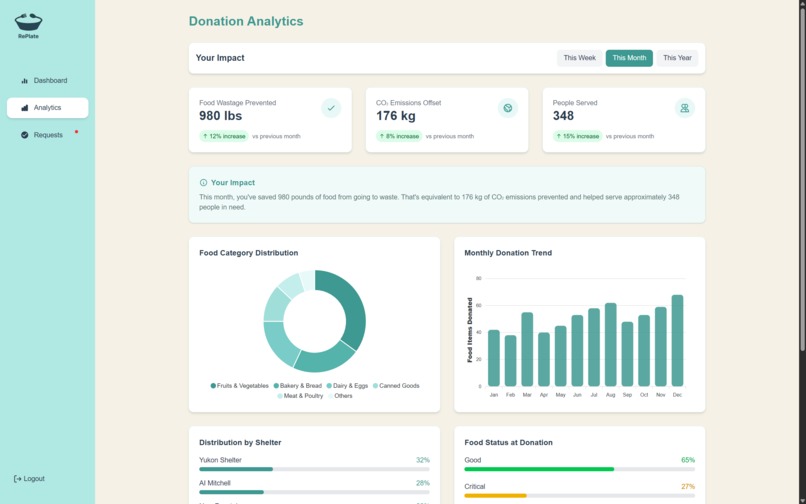
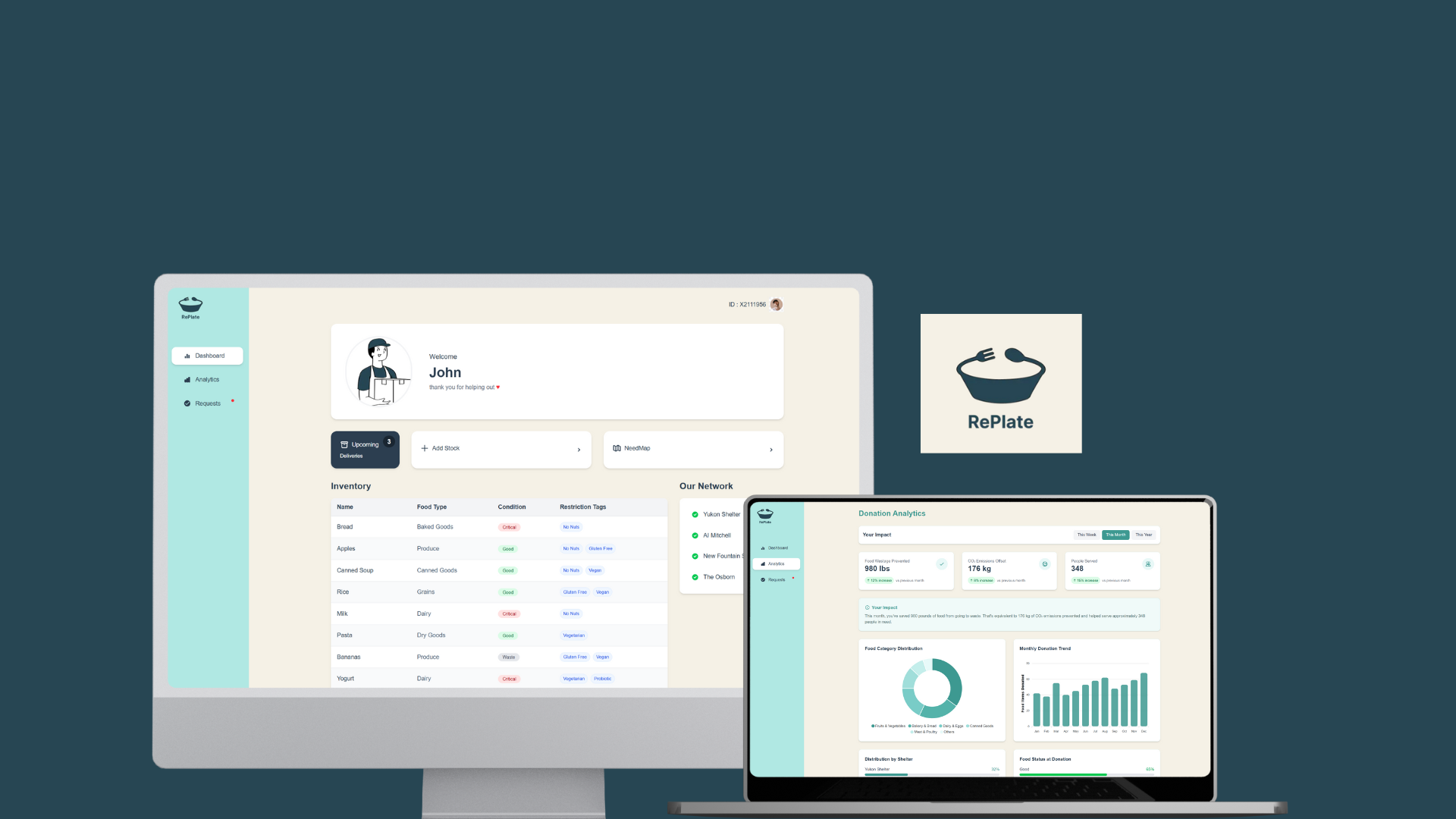
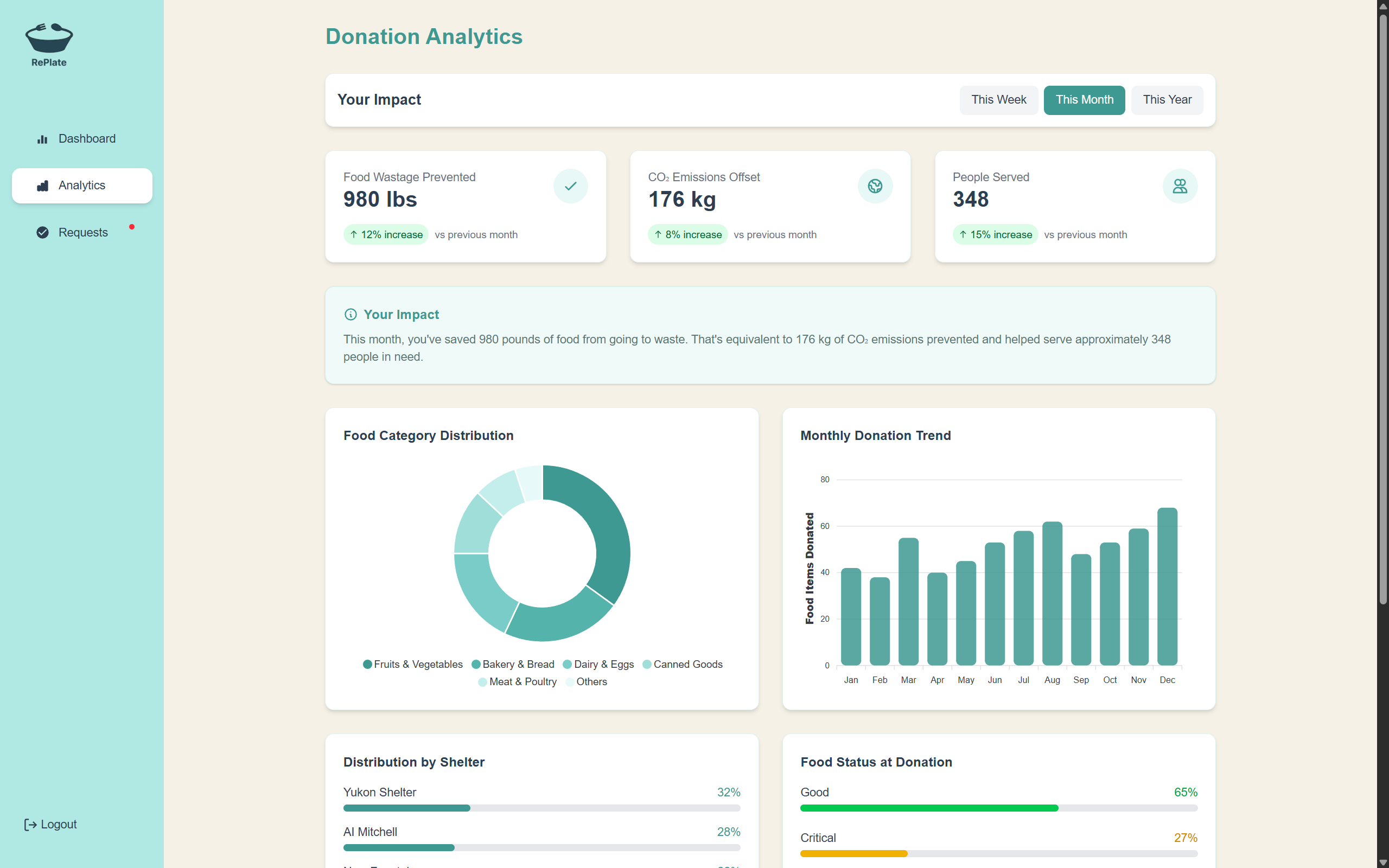
📊 Track donation impact – Donors can visualize their contribution through comprehensive analytics, seeing metrics on wastage prevented, CO₂ emissions offset, and people served.
🏠 Connect with local shelters – Shelters can create specific food requests and get matched with available donations in their area.
Re-Plate isn't just about moving food from point A to point B – it's about creating an efficient ecosystem that makes food donation simple, safe, and impactful.
How we built it 🛠️
Re-Plate is built with modern web technologies and AI & ML integration to create an efficient, responsive, and intelligent donation platform.
Frontend Development
We developed a responsive and intuitive user interface using Next.js and Tailwind CSS, focusing on a clean, accessible design that works seamlessly across devices:
🎨 Component-Based Architecture – We built reusable React components for consistency and maintainability.
📱 Responsive Design – The application adapts perfectly to mobile, tablet, and desktop views, ensuring all users have a great experience.
⚡ Dynamic Routing – Leveraging Next.js features for efficient page transitions and optimized loading.
🧩 Sidebar Navigation – Implemented a clean sidebar for easy navigation between the dashboard, analytics, and requests.
We paid special attention to creating engaging data visualizations for the analytics page, using ApexCharts to display donation metrics in an intuitive and visually appealing way.
AI & ML Integration with Gemini & Python (TensorFlow/PyTorch)
The heart of our food classification system is powered by Google's Gemini and Python's TensorFlow & PyTorch ML models:
🤖 Image Recognition – We integrated Gemini's and Python's TensorFlow & Pytorch ML models' vision capabilities to analyze food items from uploaded photos, automatically classifying food types.
📅 Best-Before Analysis – A custom endpoint combines Gemini's text and image recognition with 3 optimized Machine Learning image classifier models to extract and interpret best-before dates from packaging.
🚦 Food Safety Assessment – Our combined analysis system evaluates food safety by considering both the visual condition and expiration information.
Backend Systems
Our backend was carefully designed for reliability and performance:
⚙️ Python FastAPI – Powers our backend services with efficient request handling and API endpoints.
🔄 RESTful Architecture – Clean API design ensures smooth communication between the frontend and the backend.
🔐 Authentication – Secure user authentication and role-based access control for donors and shelters.
Challenges we ran into 🧗♀️
The most significant technical challenge we faced was accurately analyzing best-before dates from diverse food packaging. Food labels vary tremendously in format, position, and clarity, making extraction and interpretation difficult. We overcame this by developing a combined endpoint that leverages both the image analysis of Python's TensorFlow/PyTorch models and the text recognition capabilities of Gemini, significantly improving accuracy.
On the UI/UX side, we needed to design interfaces that worked for two very different user groups – food donors and shelter administrators – while maintaining a cohesive experience. This required careful consideration of user flows and permission systems.
Accomplishments that we're proud of 🏆
We're particularly proud of our combined food analysis system that seamlessly integrates visual food classification with best-before date extraction. This dual approach dramatically increases the accuracy of food safety assessments, which is critical for both donor confidence and recipient safety.
We're also proud of creating a platform that addresses a real-world problem with immediate practical applications. Re-Plate isn't just a technical showcase – it's a viable solution to connect food surpluses with those in need, reducing waste and fighting hunger simultaneously.
What we learned 📚
Developing Re-Plate taught us valuable lessons about integrating AI and ML services into practical applications. We learned that while AI and ML can provide powerful analysis capabilities, careful error handling and fallback systems are essential for a reliable user experience.
We also gained insights into designing for different user groups with distinct needs but common goals. Finding the balance between specialized interfaces and a unified experience proved challenging but rewarding.
On the technical side, we improved our skills in Next.js application structure, state management in complex applications, and best practices for API design.
What's next for Re-Plate 🚀
Our immediate focus is expanding Re-Plate's reach by onboarding local businesses and shelters in pilot communities. We plan to gather real-world feedback to refine the platform further.
We're excited about implementing several new features:
📱 Mobile App Development – Creating native mobile applications for even easier on-the-go donations.
🗺️ Logistics Integration – Adding volunteer driver coordination and optimized routing for food pickup and delivery.
📍 Geolocation Features – Implementing precise location-based matching between donors and nearby shelters.
💬 In-App Messaging – Facilitating direct communication between donors and recipients to coordinate donations.
🌐 Community Impact Visualization – Expanding analytics to show community-wide impact and progress toward hunger reduction goals.
With these enhancements, Re-Plate will become an even more powerful tool in the fight against food waste and hunger, creating a more sustainable and equitable food system for everyone.


Log in or sign up for Devpost to join the conversation.