-
-

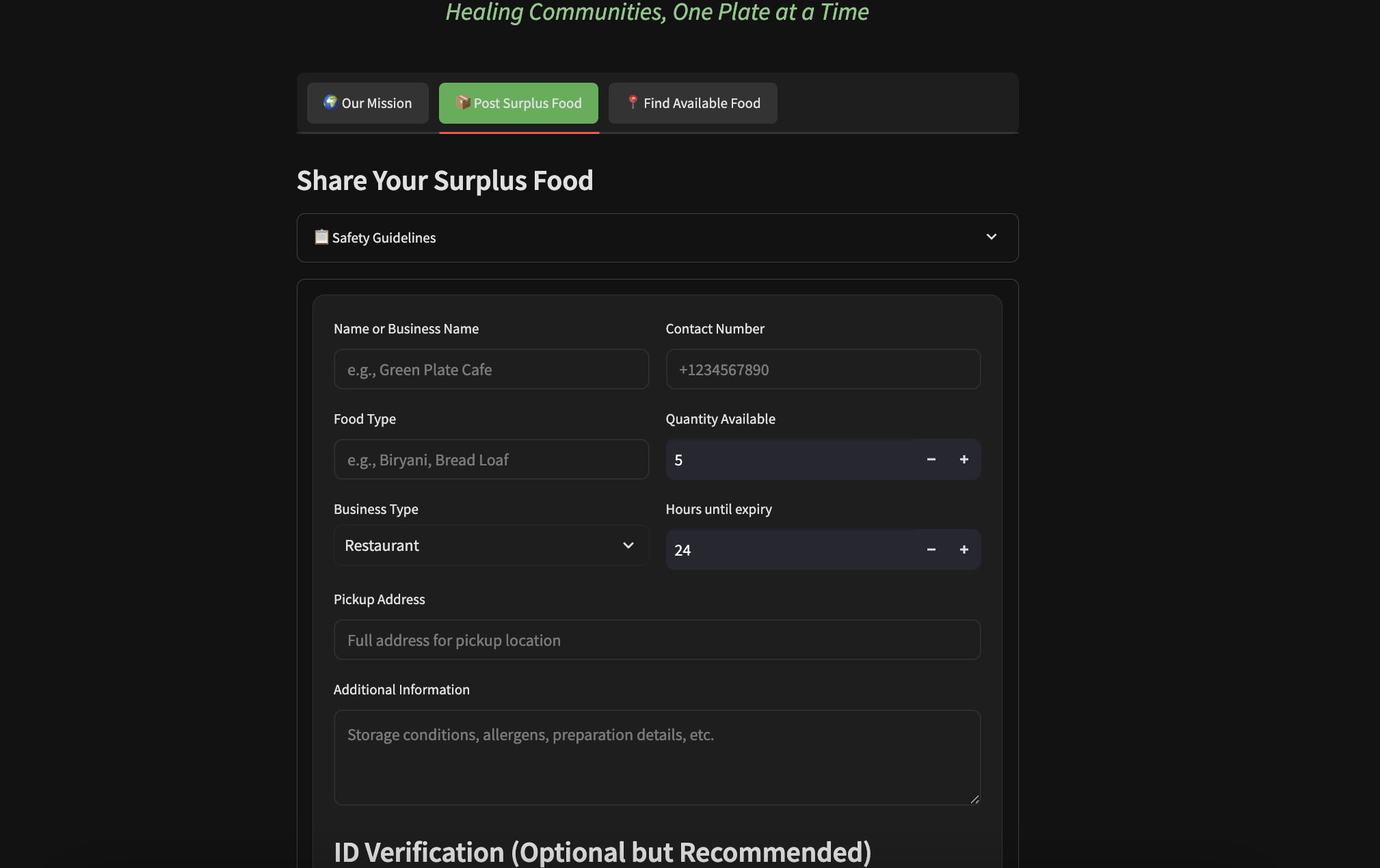
Tab 2 - Posting of surplus food
-

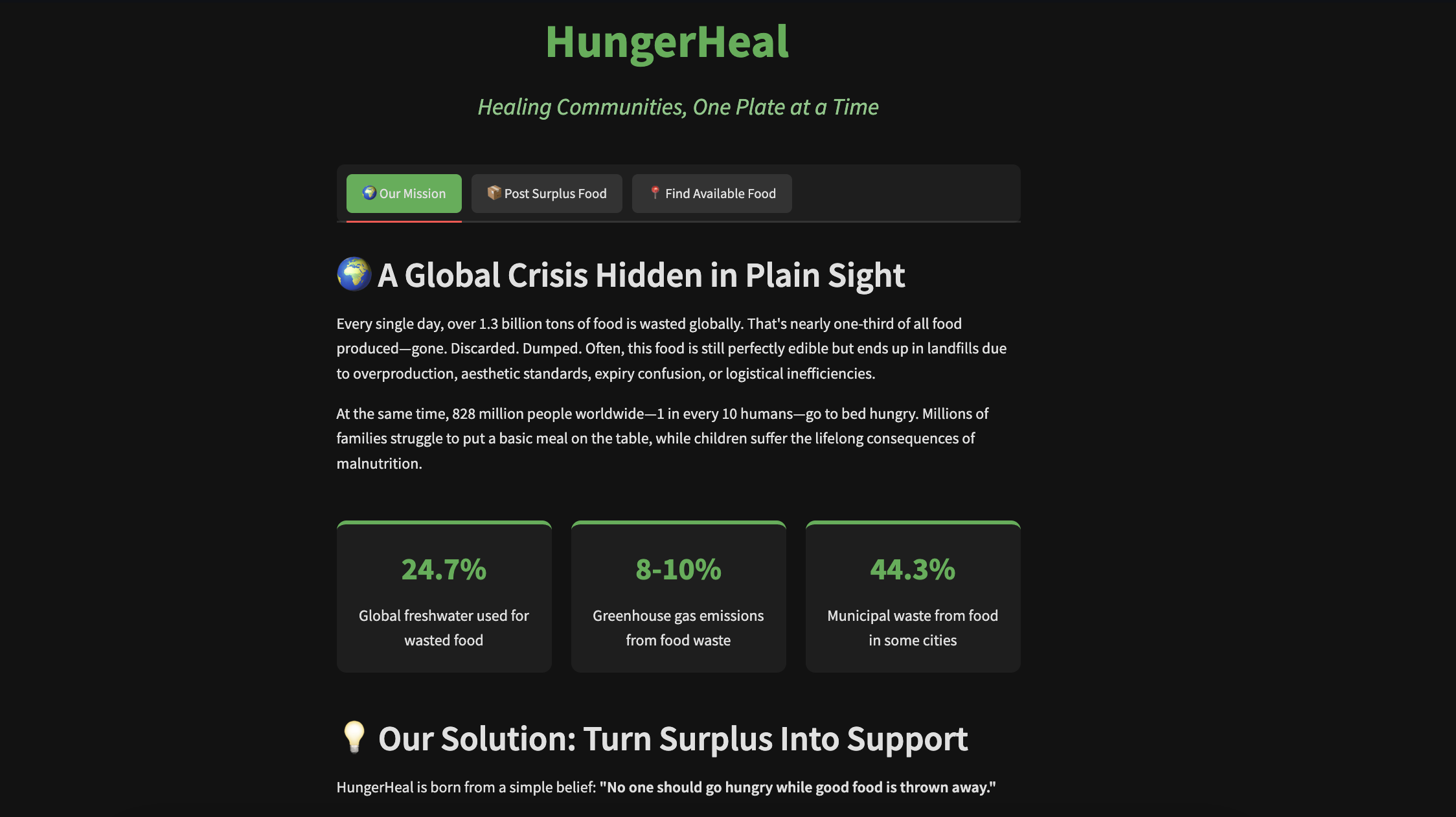
Tab 1 - Mission
-

Tab 3 - Map UI to check food avalibility

The Story Behind HungerHeal
The inspiration for HungerHeal came unexpectedly during a routine visit to my local Kroger. As I walked past the aisles, a poster caught my eye: “1 in 9 people go to bed hungry.”
Beneath it was a QR code to donate money. That moment stopped me in my tracks. I found myself wondering—is donating money truly the best way to tackle hunger? Or is the deeper issue one of distribution and coordination? Around the same time, I had been hearing more about how grocery stores, restaurants, and food outlets routinely dispose of unsold but perfectly edible food. Each night, tons of food ends up in dumpsters—not because it’s inedible, but because it’s unsold. That contradiction struck a nerve. What if we could bridge the gap between surplus and need, not with money, but with better logistics? That’s when the idea for RePlate was born.
What is HungerHeal?
HungerHeal is a real-time, location-based platform designed to redistribute surplus food. It connects:
- Restaurants, grocery stores, and outlets with leftover food
- Individuals, NGOs, and volunteers looking to receive it Using a Map UI, users can post or view available food listings, complete with:
- Pickup location
- Quantity and description
- Real-time status updates The result? A streamlined, actionable way to reduce food waste and fight hunger simultaneously.
What I Learned?
Creating HungerHeal has been a deeply educational experience. It’s one thing to write code, but another entirely to solve a human problem with compassion and usability at the forefront. I gained hands-on experience in:
- Building map-based user interfaces
- Designing an intuitive app for users on both sides of the food exchange
- Working with real-time data syncing and geolocation services
- Thinking through ethical concerns around food safety and accessibility Above all, I learned that technology can amplify empathy when done thoughtfully.
Challenges Faced
- Ensuring a simple yet robust UX for two very different user groups
- Designing for real-time food availability without overwhelming users
- Handling data consistency and avoiding redundant or outdated listings
- Balancing the MVP scope while envisioning long-term scalability
- Anticipating trust and safety issues, particularly for perishable goods
What’s Next for HungerHeal?
HungerHeal is just the beginning. Moving forward, I plan to:
- Partner with local food businesses and NGOs to pilot the platform in real communities
- Add verification layers for donors and recipients to build trust
- Introduce pickup scheduling, notification alerts, and impact tracking (e.g., meals saved, waste reduced)
- Incorporate AI-driven predictions to suggest pickup zones based on demand and availability patterns
- Launch a mobile-first version for easier access in underserved areas The long-term vision is to evolve RePlate into a scalable, community-driven network that not only saves food but restores dignity and hope, one plate at a time.
HungerHeal is more than an app. It’s a small but powerful step toward rethinking how we treat abundance in a world where scarcity still exists. This is for humans, by humans for Humanity.


Log in or sign up for Devpost to join the conversation.