-
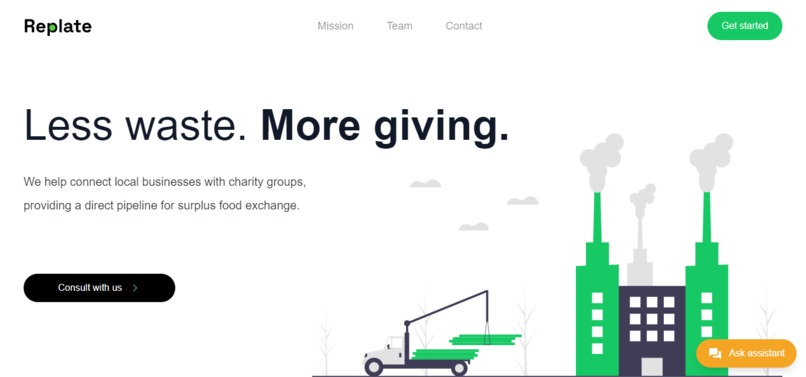
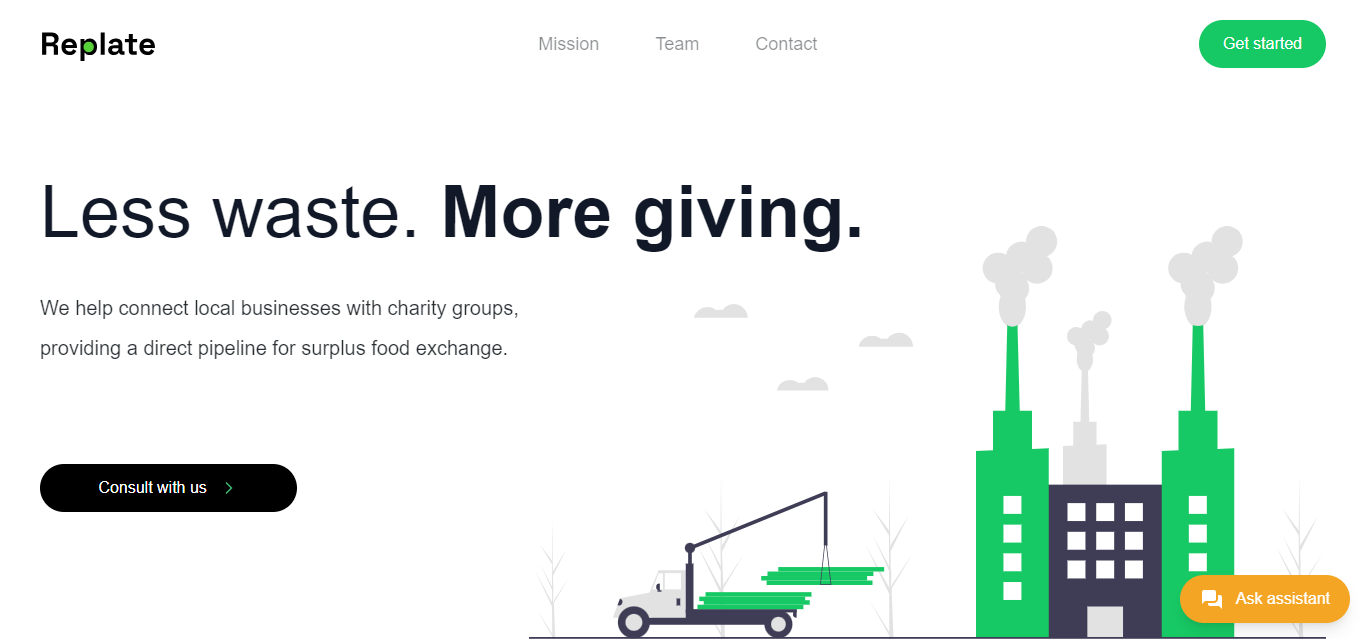
Landing page
-
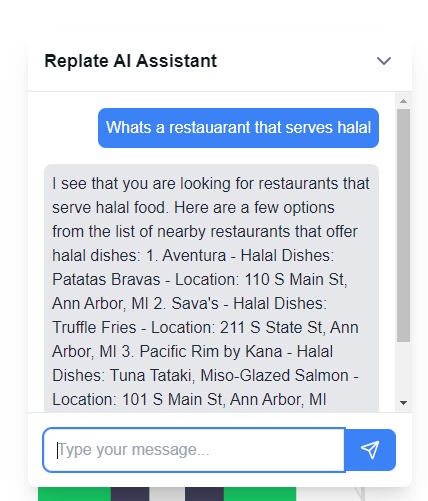
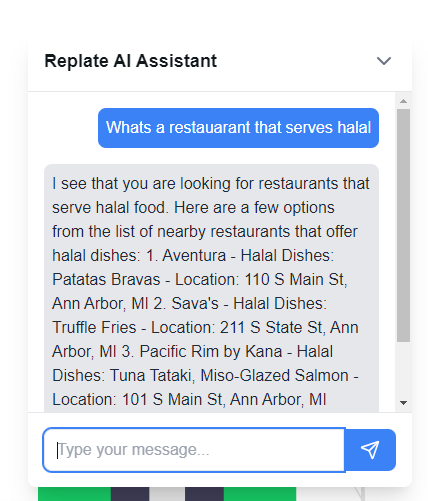
AI assistant
-
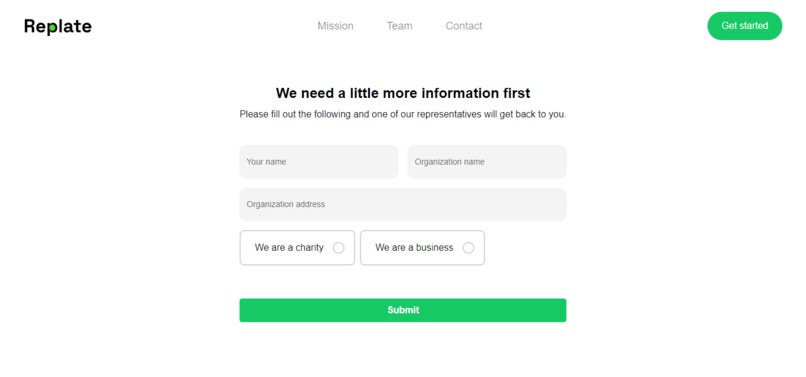
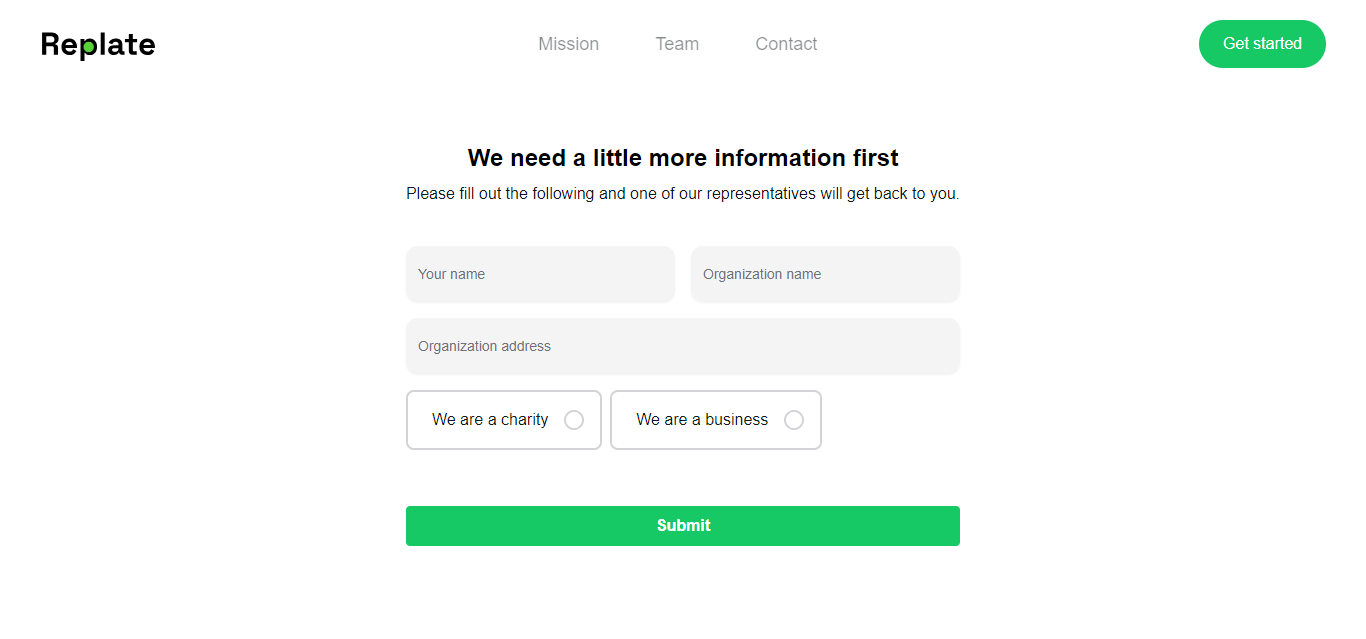
Onboarding page
-
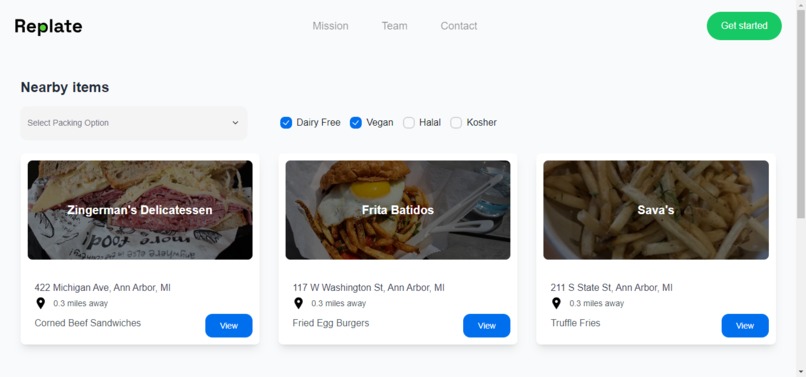
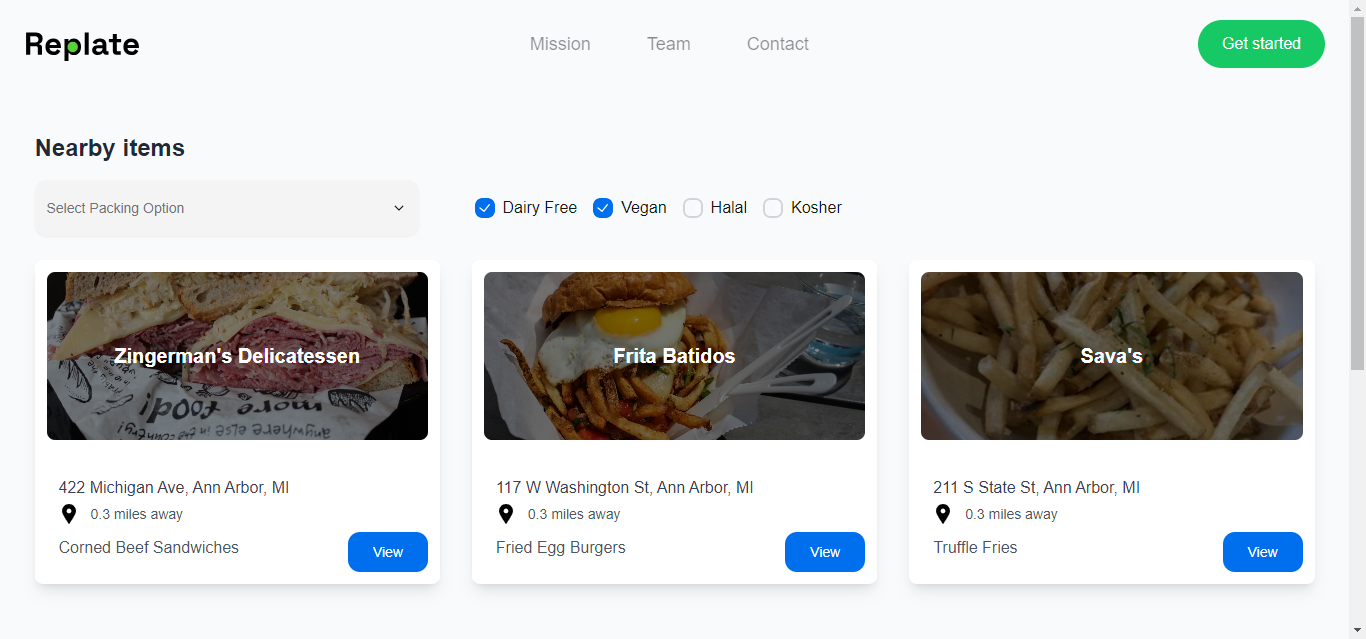
Dashboard view (for shelters/charities)
-
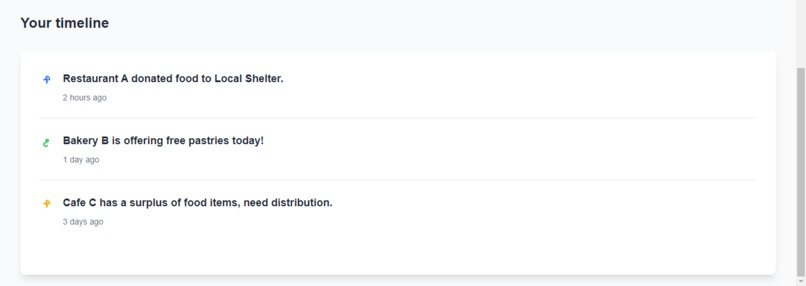
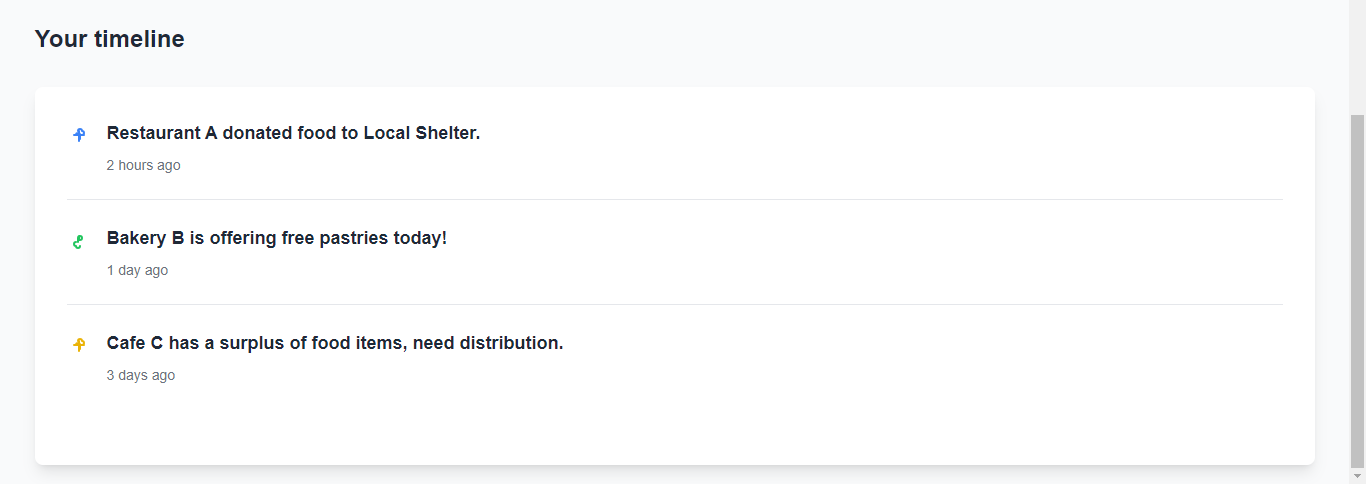
Timeline of events/posts from businesses
-
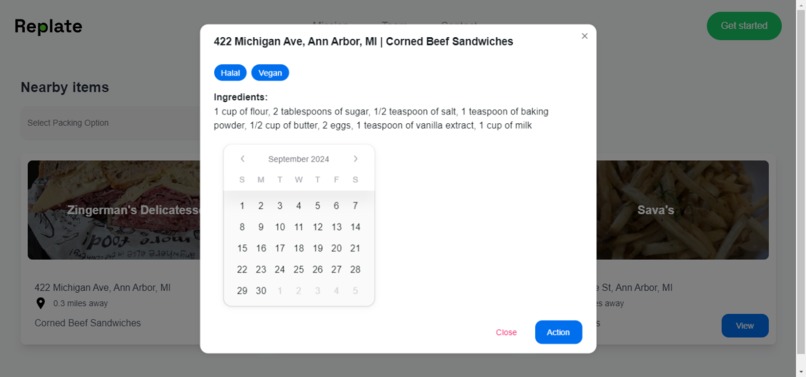
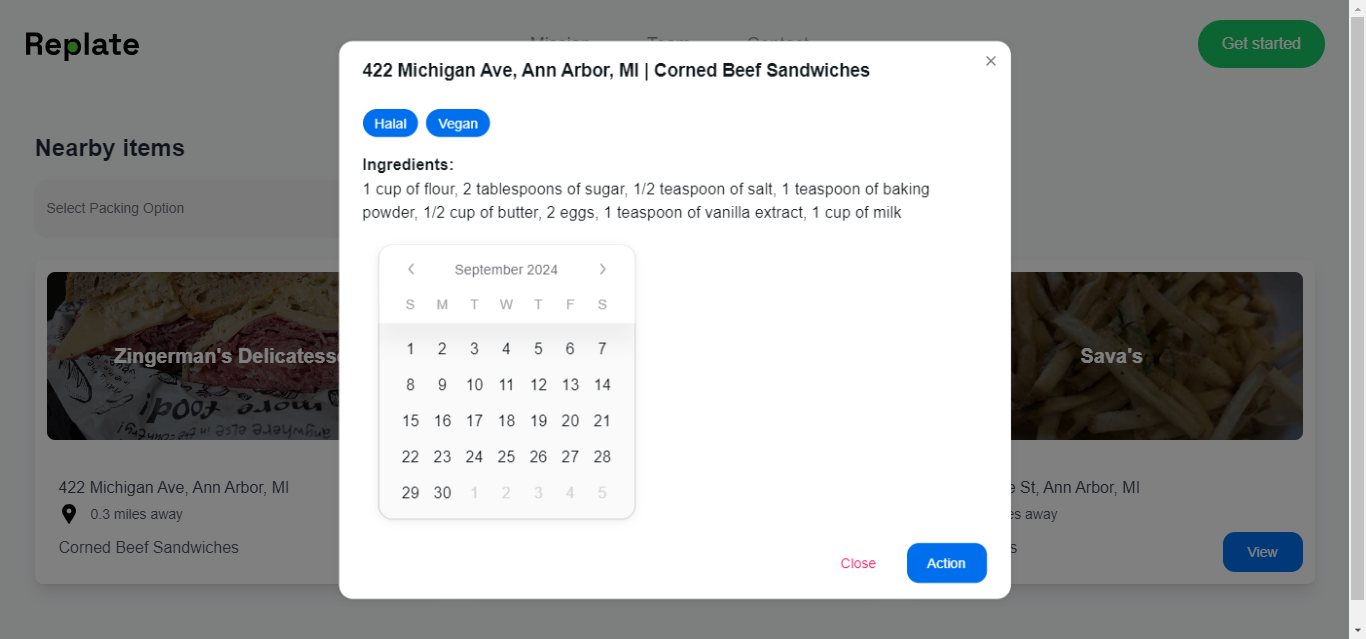
Scheduling a pickup for a food item
Inspiration
Working as part-time employees at a restaurant made us aware of the amount of food restaurants waste everyday. We thought, if these high quality and somewhat nutritious food is being thrown out, why can't they be used for people in need? This problem statement is what led us to think of communities that can benefit of such food, such as homeless shelters. Based on our research, there is no national standard for foods served in shelters and soup kitchens which means restaurants can donate excess food of various quality and packaging.
The problem is - restaurant managers are often too busy with day-to-day operation of their business to be cold calling and making arrangements for this excess food. We figured, if we created a business-to-business (B2B) service that streamlined this process and provided a direct pipeline for local businesses to exchange surplus foods with local charities and support groups, businesses would be more willing to get involved.
What it does
Replate serves both the shelters, soup kitchens, restaurants of various sizes. Whenever a new shelter wants to register to use our service they will go to our website and register with their information. After registration, they would have to receive verification and approval from our team to validate that they are who they claim they are. This verification process is required for both types of organizations: charities and businesses.
Whenever the restaurants have excess food available to be donated they will make a post on the website. In this post, they will provide various details about the food such as: ingredients, allergy warnings, dietary restrictions, quality of the food, packaging conditions, along with a photo.
When charity organizations visit our dashboard, they will be able to view nearby restaurants that have made posts of surplus food items they are willing to donate. They have the ability to see various attributes of the food as mentioned before and then they can submit a request form to schedule a pickup of the surplus food.
How we built it
For the website and dashboard, we utilized the Next.js framework to create a simple-to-use and intuitive user interface. Additionally, we used frameworks such as Tailwind CSS for styling and NextUI as our component-library of choice.
For the AI chatbot which responds with restaurant recommendations based on user parameters, we utilized OpenAI's API. We created an API for the backend of the chatbot using Python. In this program there are necessary imports to make sure we can interact with the OpenAI API, parse JSON files, and create our Flask application.
Challenges we ran into
Project Conflicts: It took us hours to finalize on an idea that we would push to fruition. Our current idea was our initial idea and then we had a different idea that had the same impact and wow-factor as the original idea. After hours of working on the other idea, we realized that our original idea was more interesting and less challenging in a way we can have a product that can be demoed in time. This led us to shift our project to our original idea ,which wasn't for nothing as we utilized some of the front-end from it for our finalized project idea.
Skill Utilization: A challenge we encountered early was the separation of tasks based on each persons skillset. This ended up decreasing our efficiency as we couldn't utilized each persons skillset better.
Accomplishments that we're proud of
We are proud that we have a working front end system that is interactive and the look of the website follows the theme of our idea and is simple yet intuitive which is ideal for any UI. We are also proud of the idea that we managed to spend hours to plan and develop. We think the problem statement of our idea is a real issue and there isn't a huge market (if at all) for shelter/soup-kitchens to restaurant interactions.
What we learned
Throughout our development process, we picked up on many skills not just relative to programming. We had to consider business practices, logistics, FDA regulations, and other aspects that were indeed necessary to form a usable product. One of the members of the didn't know how program in javascript, CSS, and HTML, where this project provided an enormous learning opportunity to gain usable and needed skills. The biggest thing we learned it to NEVER GIVE UP. There are so many environmental, emotional, and physical constraints while participating in a hackathon which attenuates motivation. Learning to never give up led us to have finished product.
What's next for Replate
We are ambitious about our project and will continue to brush up on our user journey to ensure the smoothest onboarding processes for charities and businesses alike. Some of things we would like to implement for Replate if it were to become a public website includes: getting survey from users to improve our UI, have more backend systems to add more functionalities and complexities to our design, and speak with restaurants and homeless shelters if they are willing to participate.


Log in or sign up for Devpost to join the conversation.