-
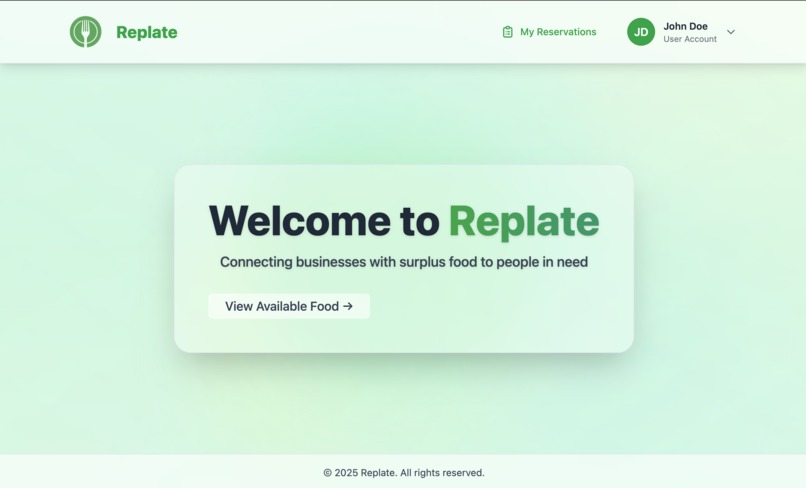
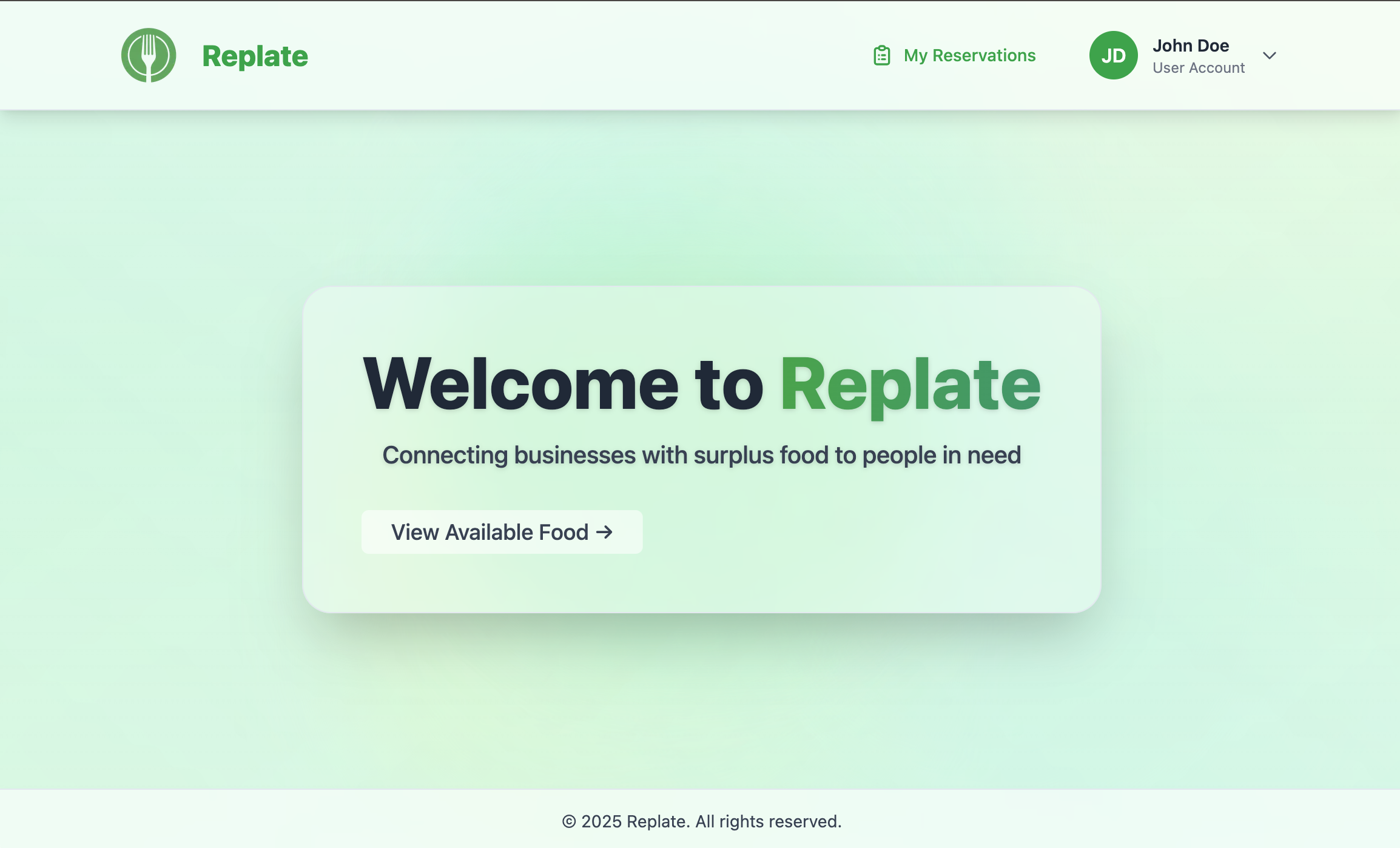
home page for user
-
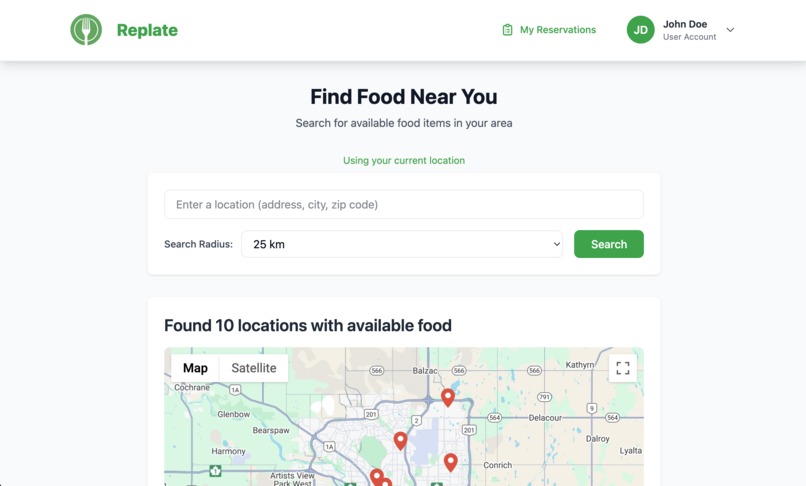
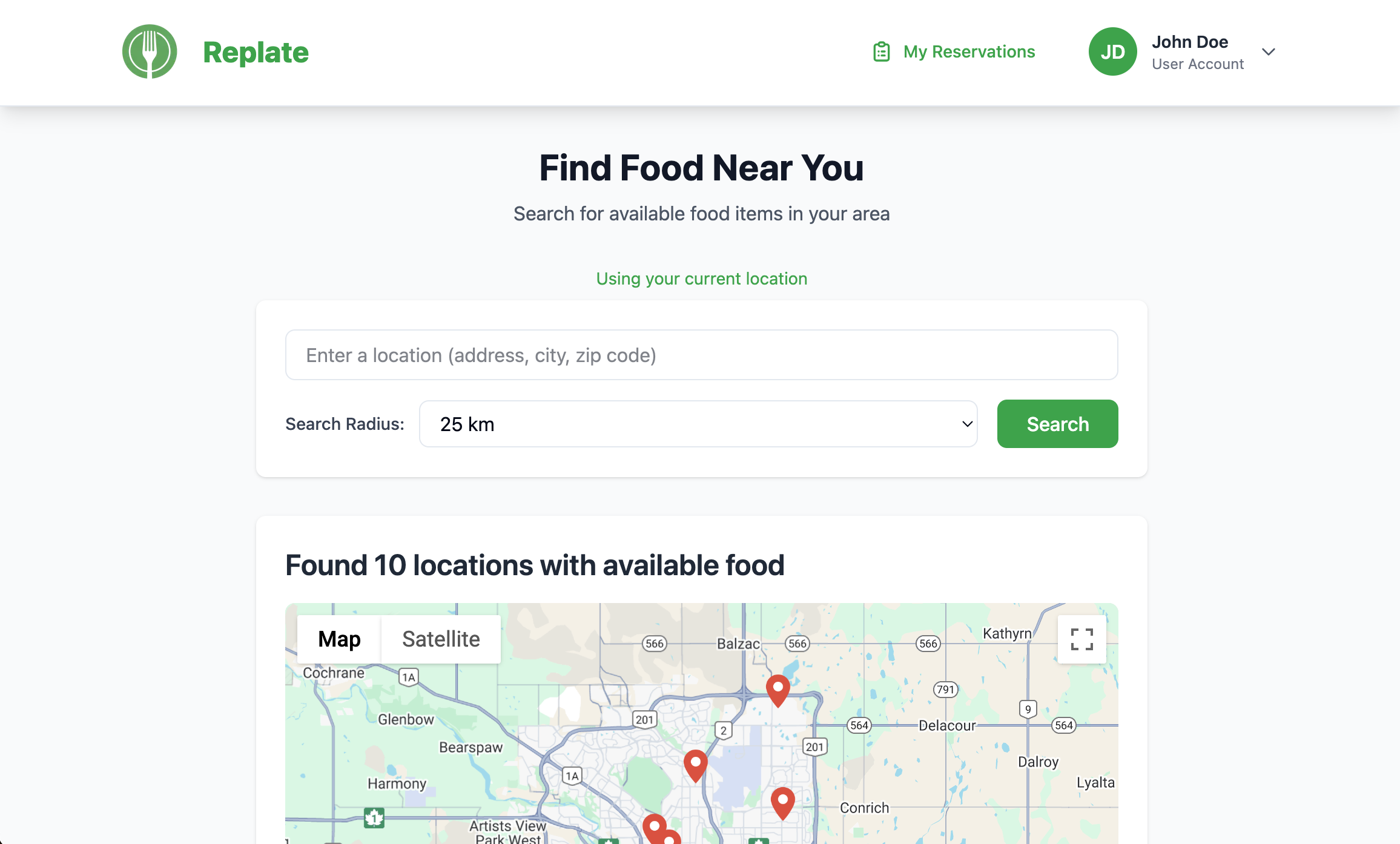
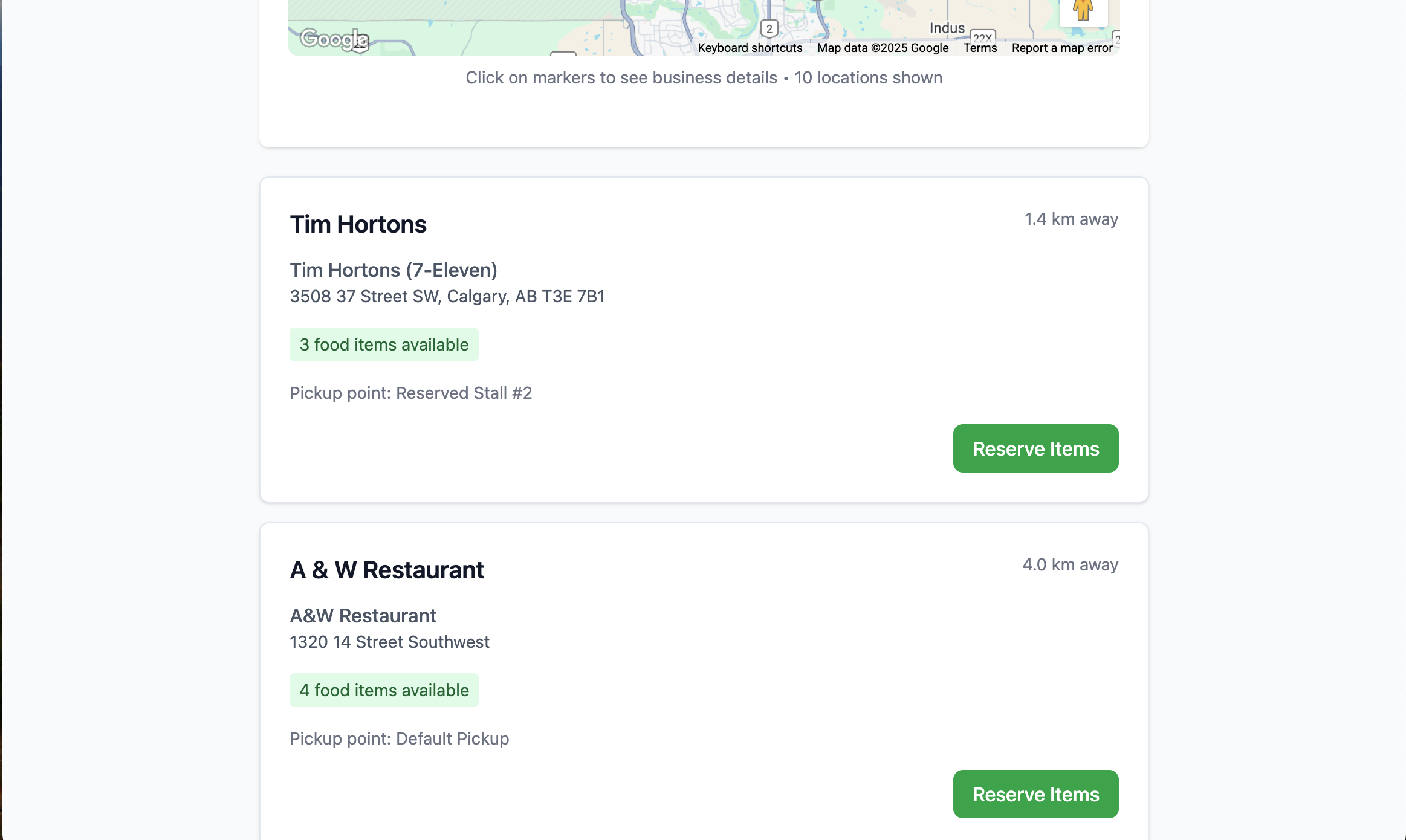
user search 1
-
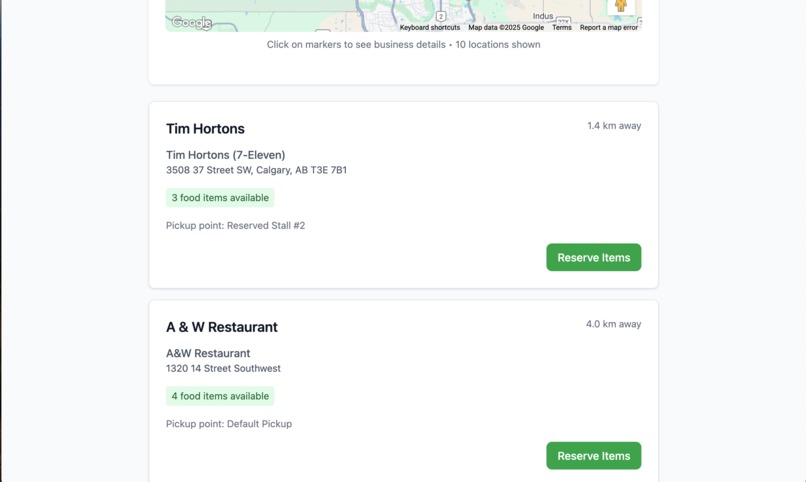
user search 2
-
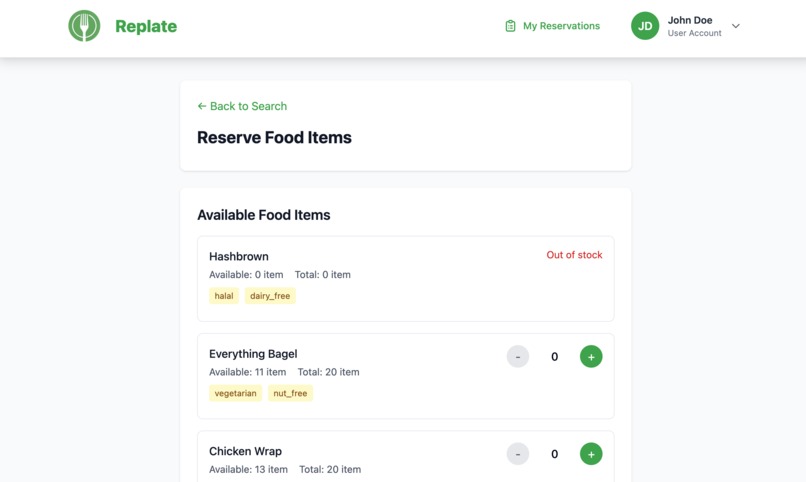
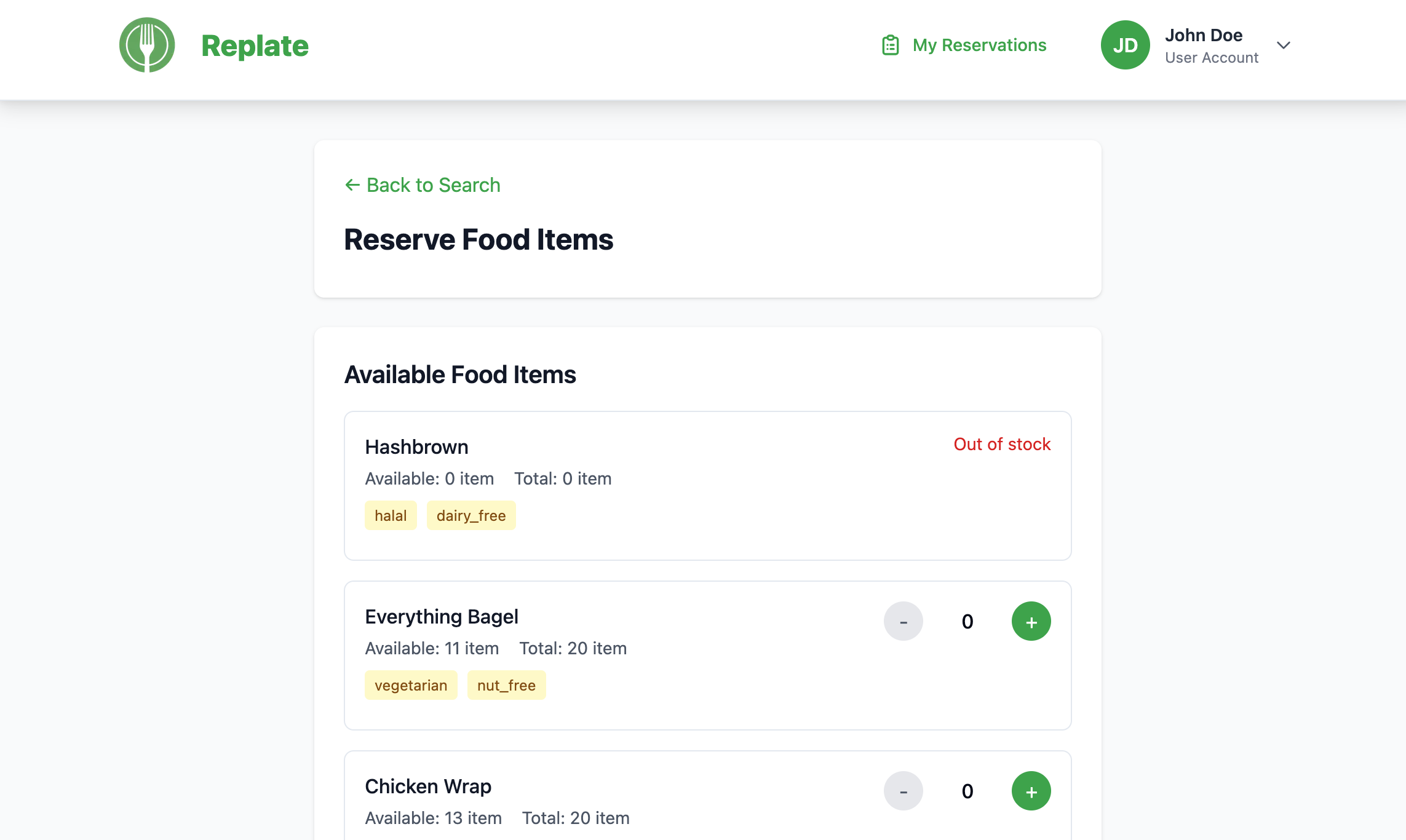
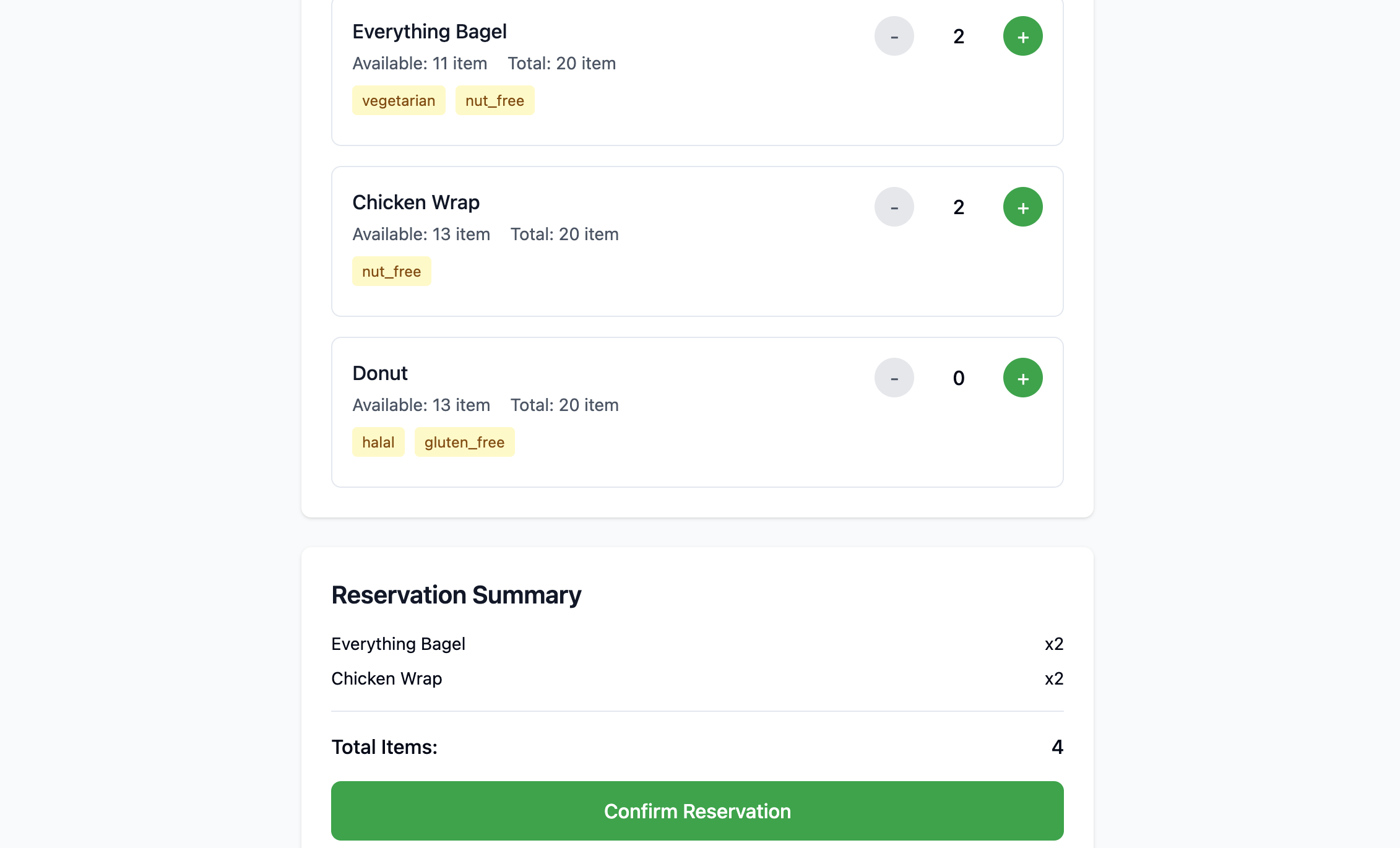
item reservation 1
-
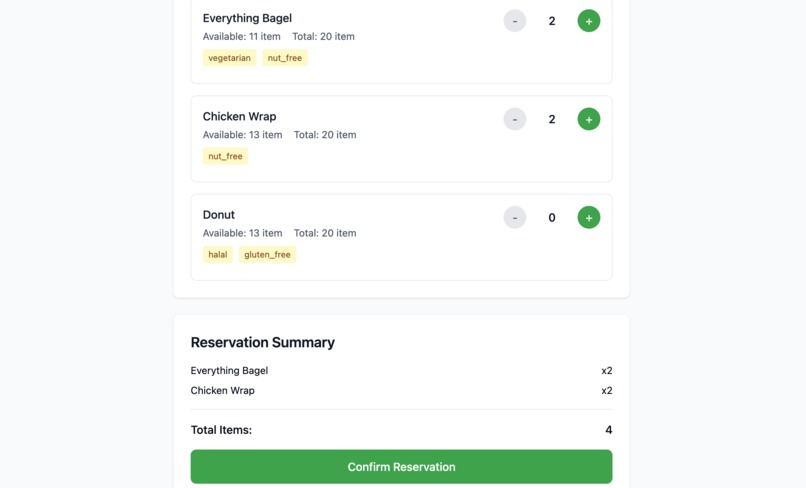
item reservation 2
-
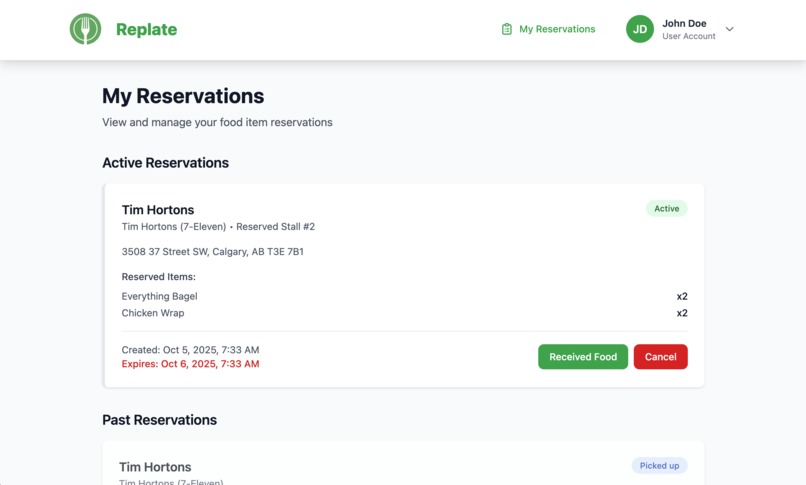
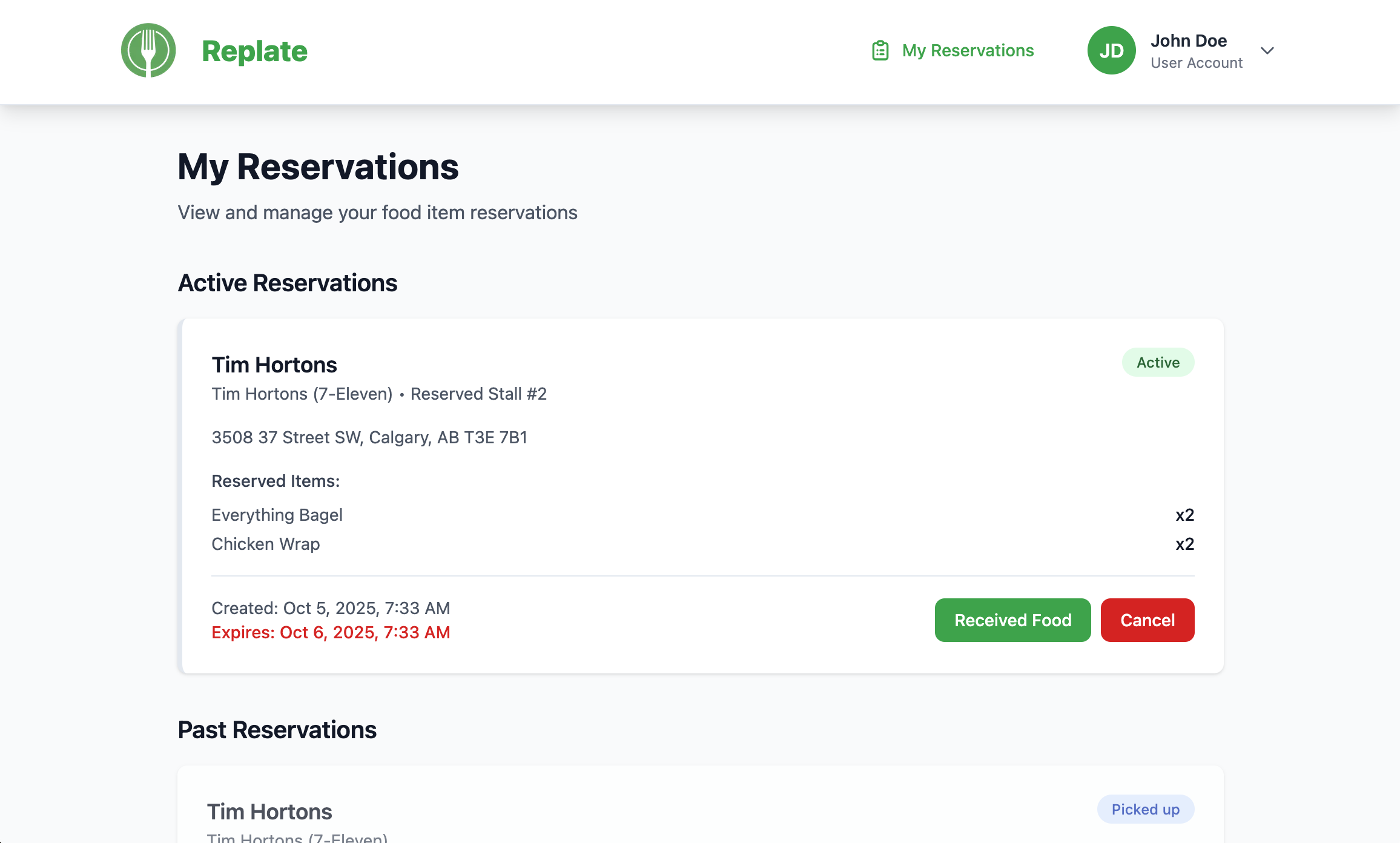
user reservation view
-
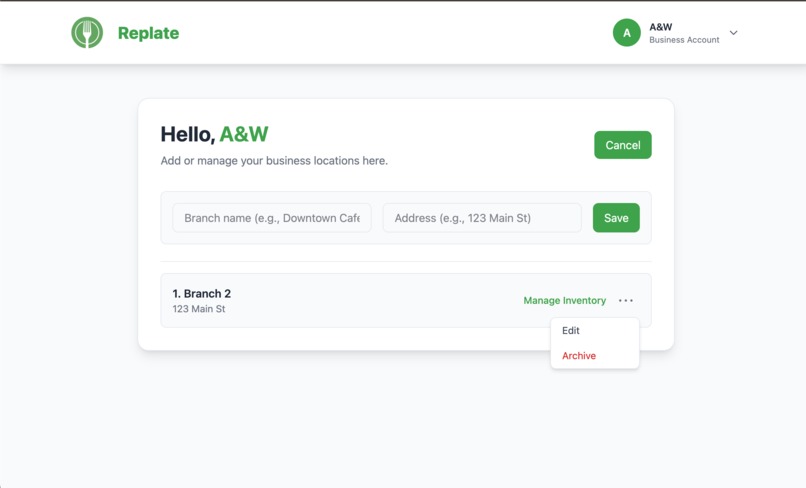
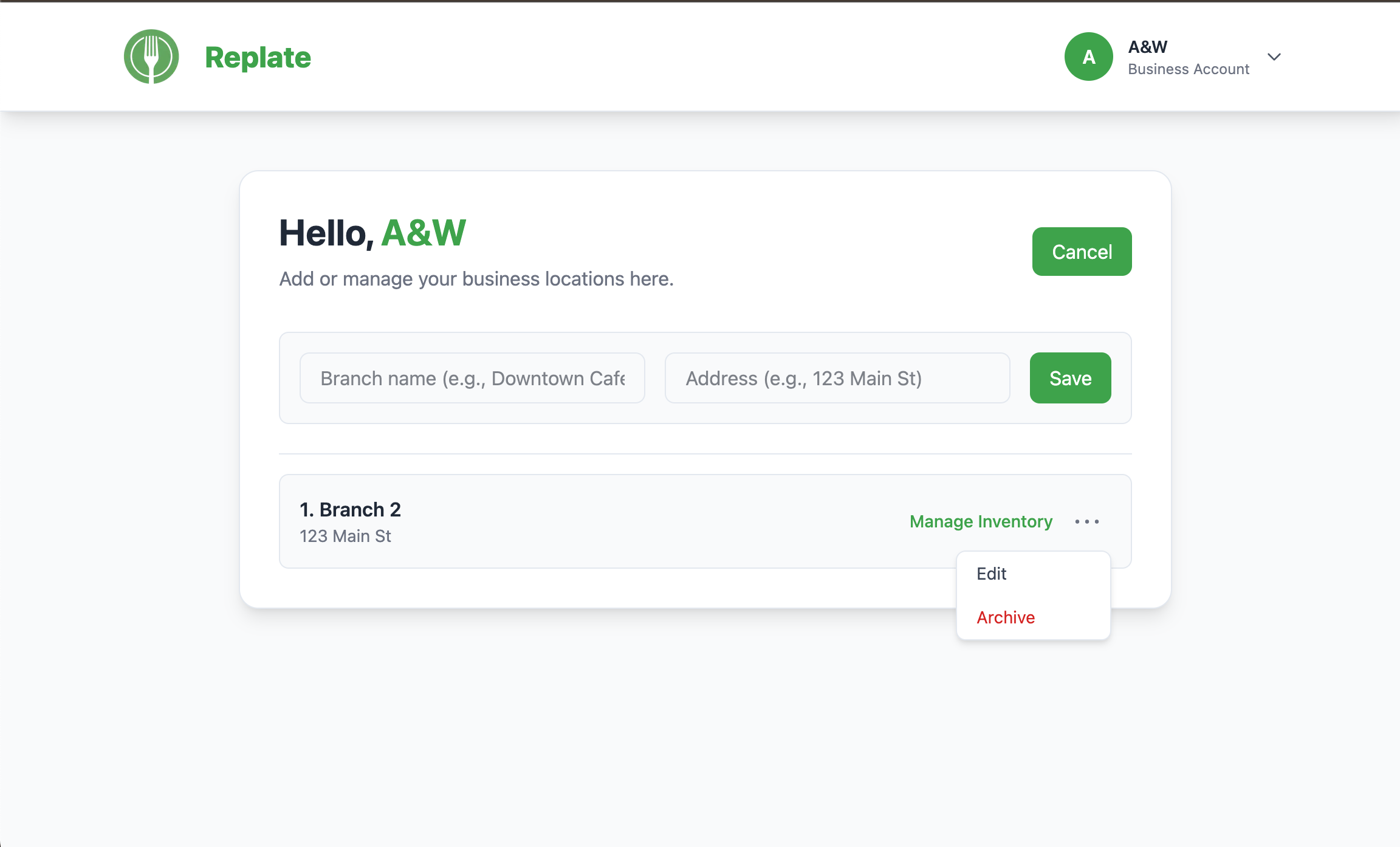
business dashboard
-
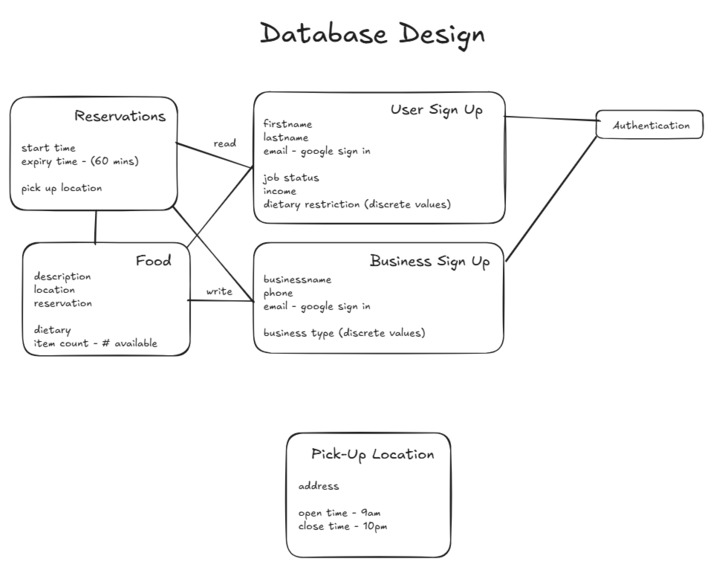
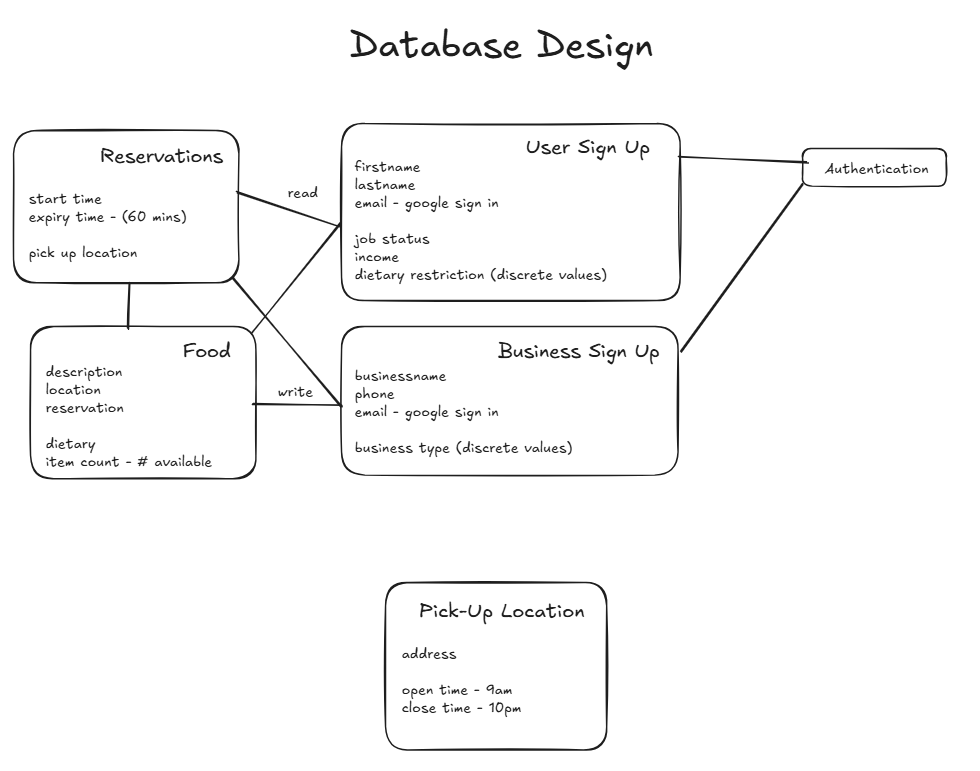
Starter Database Schema
Inspiration
Many people around the world struggle with food insecurity, from people in lower middle-class to extreme poverty. (Unfortunately since technology is a prerequisite to use our web app, this doesn't benefit people in extreme poverty)
Regardless, food waste is very common, and restaurants with surplus ressources contribute heavily to this waste. Often times, they throw away food nearing their expiration date or just to simply make room for newer produce.
What it does
We saw the potential to use technology to turn the food, that would otherwise be thrown away by these businesses, to a source of food to people in need.
Replate brings this to life by providing a platform for businesses/restaurants to open free food listings. Replate's dashboard funtionality allows the coordinator from the business to include details such as, expiration date, quantity and description of the food listing.
All of which a user who signs up can view in our map search, based on their location.
Why would Businesses/Restaurants Register?:
- Many businesses set up a process of managing garbage collection for unused food (a system that can often times be both inefficient and financially wasteful).
- Businesses can earn social impact reputation "points".
How we built it
- Next.js 15 (App Router + Turbopack)
- Supabase (Database & Authentication)
- Tailwind CSS + ShadCN (UI styling + component library)
- TypeScript
- Vercel (Deployment)
Challenges we ran into
- Implementing the distance-based sorting using postGIS in our food database using the user’s current location was complex and required significant debugging and testing.
- Most of the team was unfamiliar with the stack Next.js, Supabase, and Vercel going into this hackathon.
- Configuring and managing Google Authentication came with challenges related to authorization flows and maintaining secure user sessions.
Accomplishments that we're proud of
We are proud of:
- our idea.
- our choice in architecture(like the stack we used), and how we adapted to it.
- our use of git.
- our UI.
- our time and project management.
- and work ethic of each ind.
What we learned
We learned:
- importance of collaboration and planning together (making sure everyone is on the same page)
- how to work under time constraints by dividing work and comprimising some ambtiion.
- We alla gained valuable experience in full-stack development, API integration, and deploying a MVP application.
What's next for Replate
- we want to add a proper method for businesses and users to confirm that a user got there food.
- we want to look into improving security and authenticating users and business accounts so no one exploits our app
- we also want to add some limits to how much a user can reserve, and potentially add a priority system which takes the user info as inputs and returns the users ordered from highest priority to lowest priority of need.
- finally we need to make it scalable
- then advertise so we can get real users and providers
Built With
- github
- google-cloud
- javascript
- next.js
- supabase


Log in or sign up for Devpost to join the conversation.