-
-
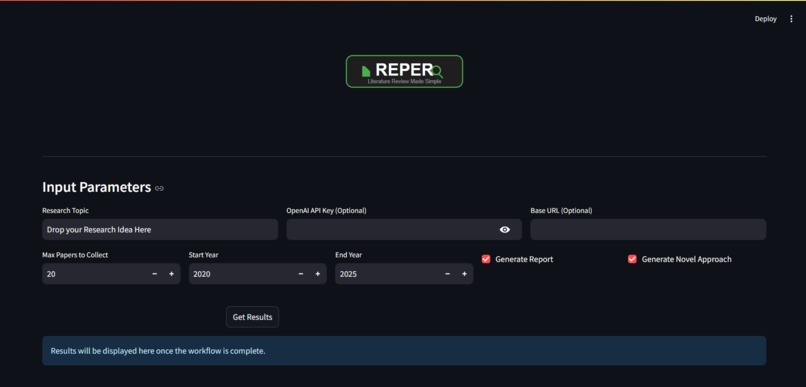
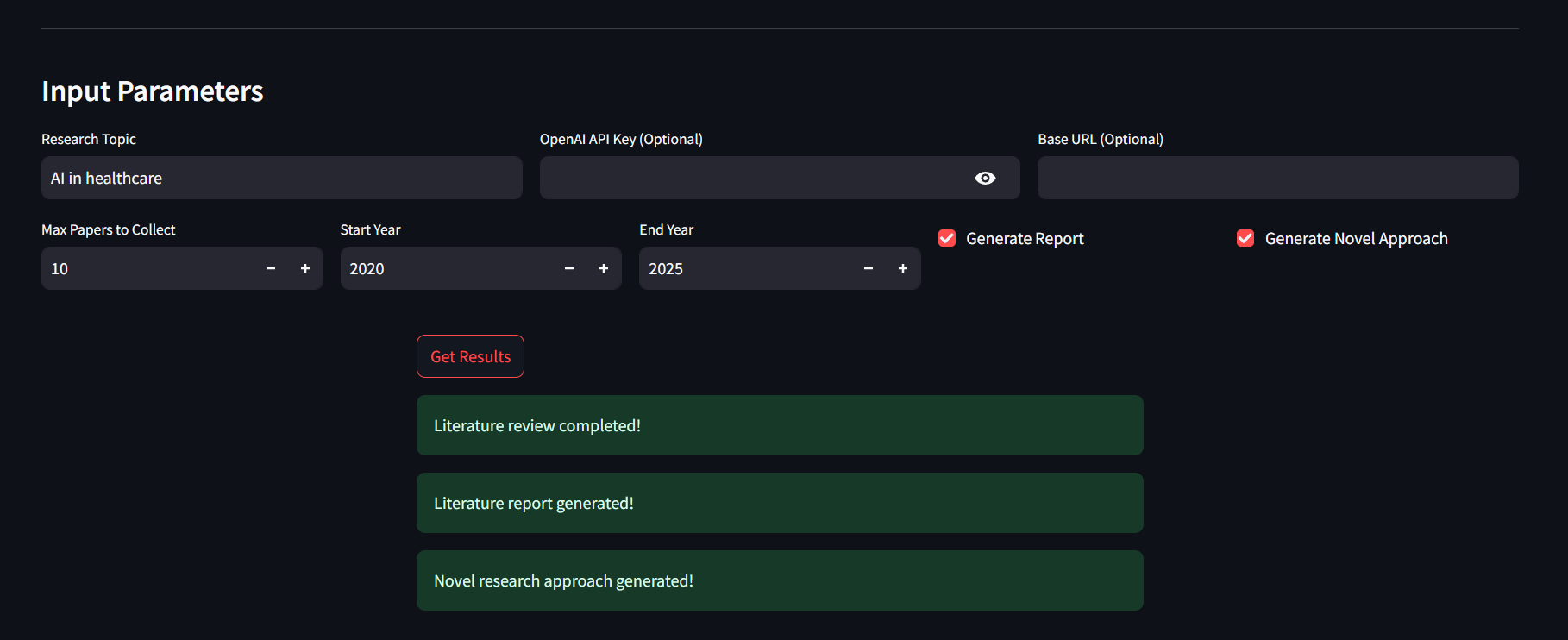
Frontend Input
-
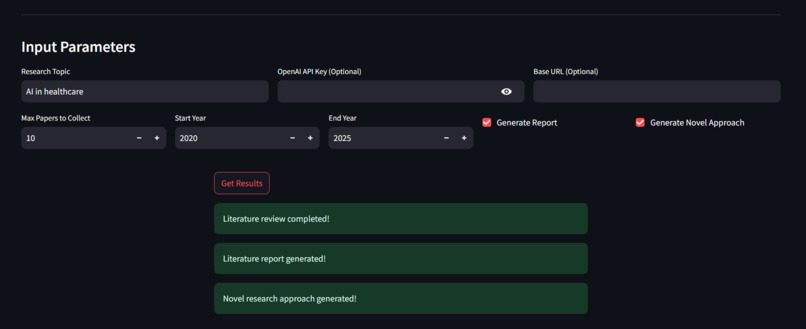
Frontend Result Generation
-
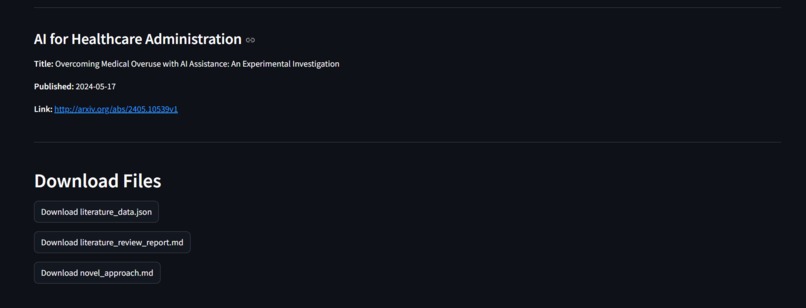
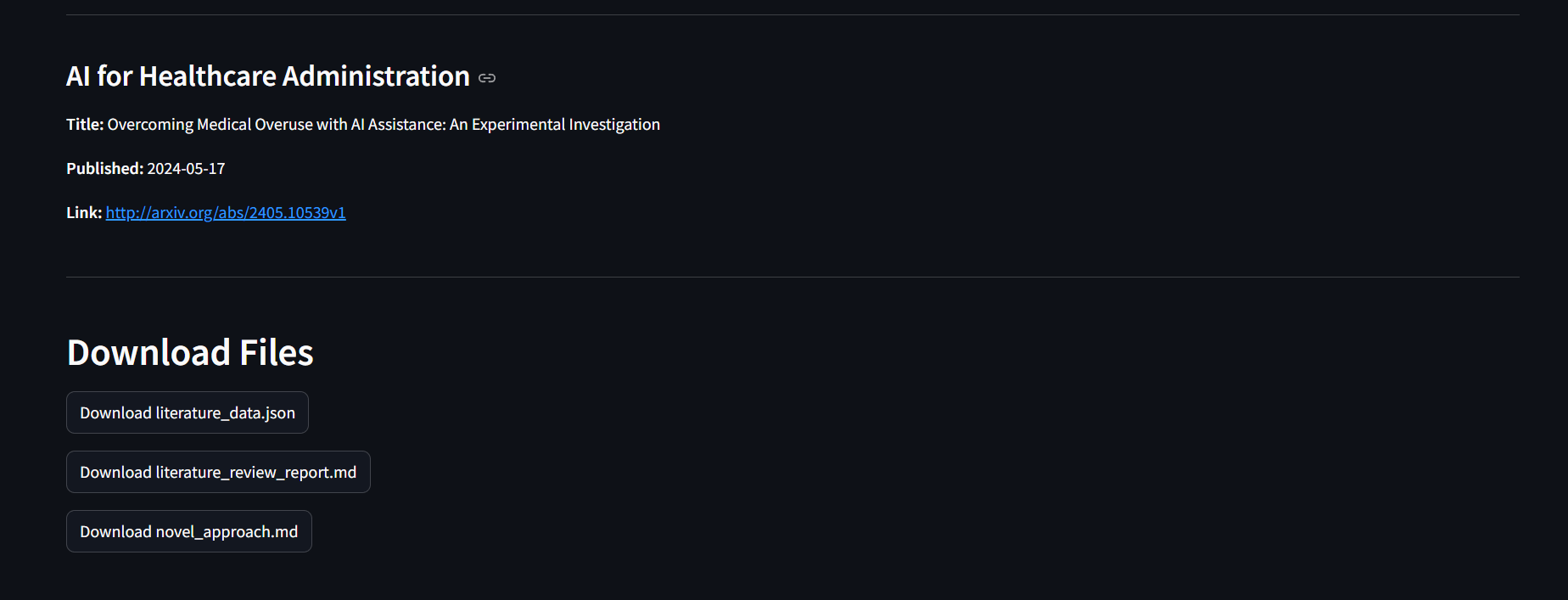
Results
Inspiration
Reper was born out of the challenges I faced last semester when conducting comprehensive literature reviews. I noticed that gathering, parsing, and synthesizing academic papers can be a tedious and time-consuming process. My goal was to streamline this workflow with automation and AI, empowering researchers to focus more on insights rather than data collection.
What it does
Reper is a literature review assistant that automates the process of collecting, analyzing, and synthesizing academic research. This provides an end-to-end solution by reducing the manual workload and helps researchers quickly identify research direction and gaps for improvement. This employs:
- Fetch relevant papers: Automatically retrieve academic papers from various sources.
- Generate Sub-topics (directions): Use AI to identify key research directions.
- Make a cohesive report: Consolidate findings into a unified, formal literature review report.
- Propose novel research approach: Offer innovative ideas to address research gaps.
How we built it
We built Reper using a modular Python-based architecture:
- Literature Review Module: Utilizes APIs and web searching to collect academic papers and extract key metadata.
- AI-Powered Analysis: Custom Multi-AI agents generate sub-topics and synthesize the collected data into an integrated literature review report, leveraging advanced language models.
- Report Generation: A dedicated module compiles the analysis into a formal, comprehensive report.
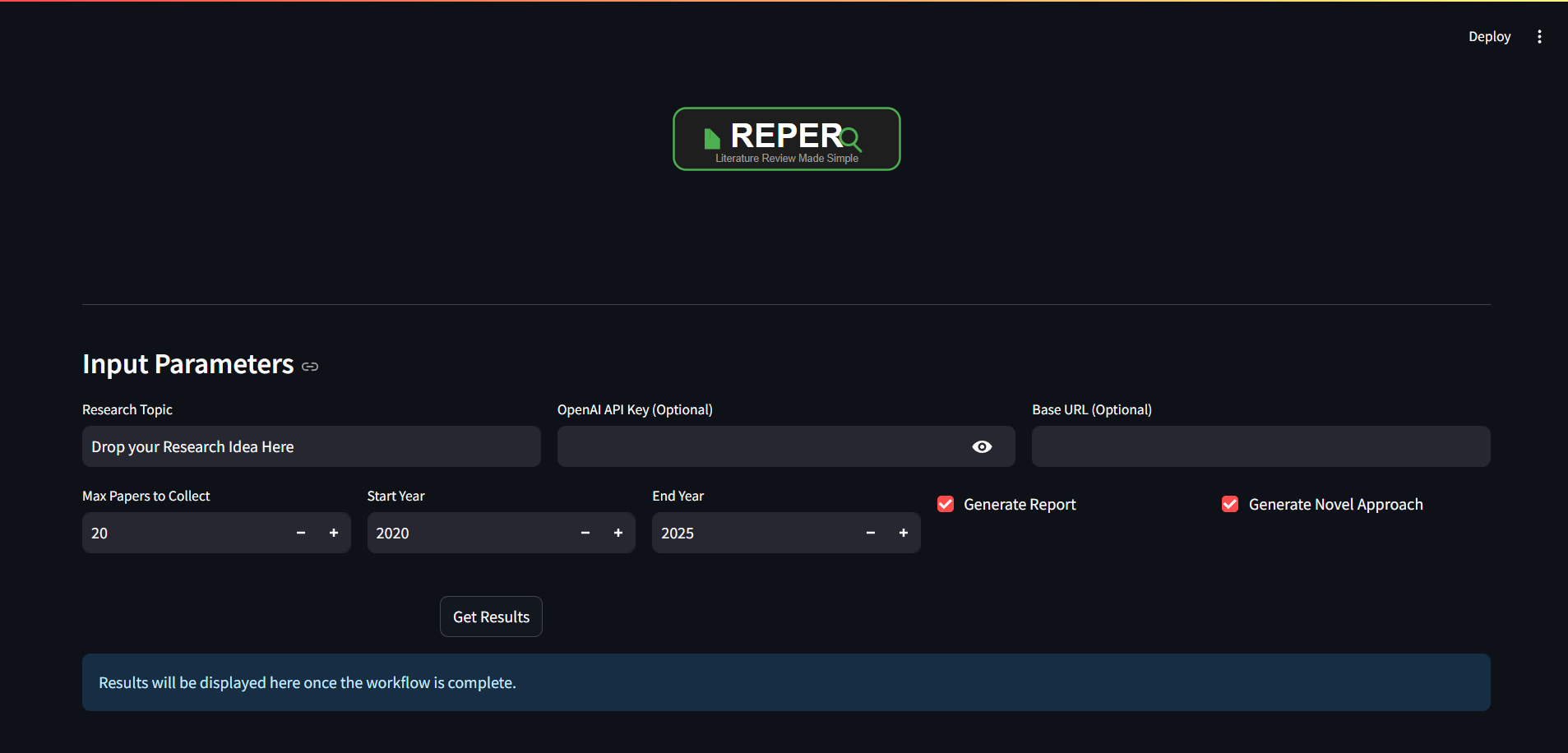
- User Interface: A Streamlit-based frontend collects user inputs, runs the workflow, and provides downloadable outputs. This modular design allowed us to tackle each component individually while ensuring seamless integration across the entire workflow.
Challenges we ran into
- API Integration: Managing rate limits and inconsistencies when interfacing with external data sources.
- Encoding Issues: Resolving file encoding problems during report generation and downloads.
- User Experience: Designing a persistent and intuitive frontend that retains generated results across interactions.
- AI Output Quality: Perform prompt engineering of the AI agents to deliver coherent and academically rigorous analysis required extensive iteration.
Accomplishments that we're proud of
We are proud to have built an end-to-end solution that automates a traditionally labor-intensive process. Reper’s ability to perform a literature review in minutes, and provide potential in a single tool is a significant milestone. This project demonstrates the potential of leveraging AI to streamline complex research workflows and deliver actionable insights to the academic community.
What we learned
This project has been an invaluable learning experience:
- The importance of modular design and robust error handling for scalable solutions.
- Effective prompt engineering strategies for integrating AI with real-world data sources.
- Techniques for overcoming challenges related to data variability and encoding.
- How to create a user-centric interface that facilitates seamless interactions and maintains persistent results.
What's next for Reper
- Expanding Data Sources: Investigate various kinds of research paper databases to create a central database that aggregates literature reviews for our ideas—one that is interactive and easily accessible.
- Adding More Agents: Develop and integrate additional AI agents to extend Reper’s capabilities into other research areas such as: Data Collection: Automate further data retrieval and curation. Experimentation Building: Assist in designing and planning experiments. Plan Formulation: Support the creation of detailed research and project plans. Paper Generation: Enhance the ability to generate complete academic papers or proposals.

Log in or sign up for Devpost to join the conversation.