Inspiration
Moderating a busy subreddit means reviewing hundreds of posts and comments daily. When a mod encounters a flagged user, there's no quick way to check if they're a first-time offender or a serial rule-breaker. Mods end up manually searching mod logs, checking profiles, and asking other mods wasting valuable time. I wanted to automate this entirely.
What it does
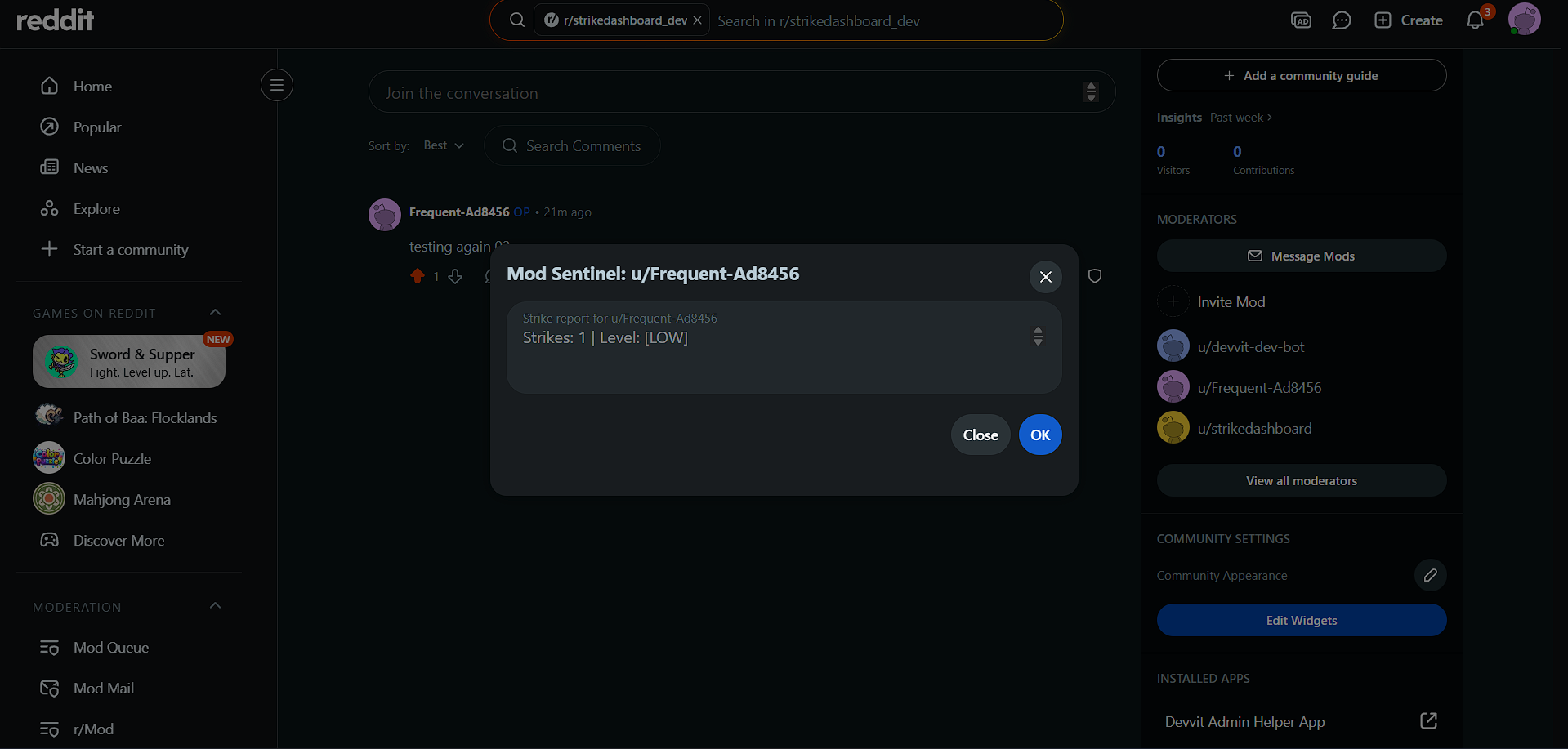
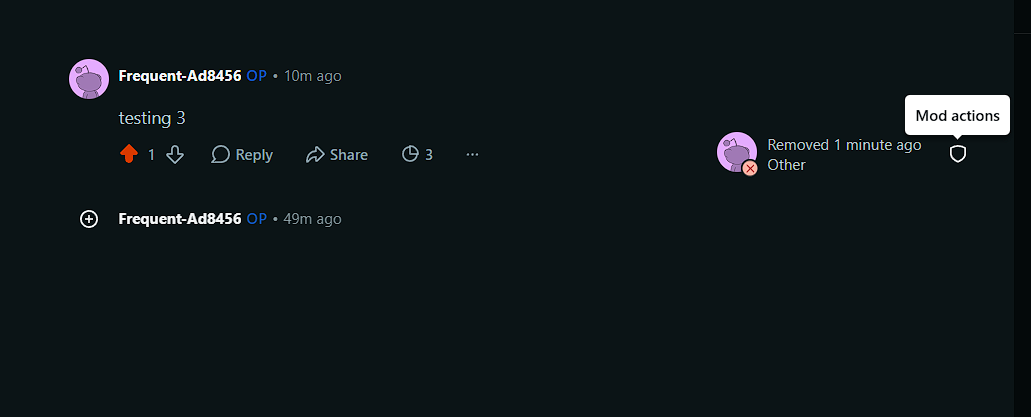
Repeat Offender Tracker listens for every content removal across your subreddit and automatically records a "strike" against that user. It maintains a per-user history with timestamps and details, classifies users into threat levels (Low, Warning, High, Critical), and makes this data accessible through right-click context menus on any post or comment.
Key features: Auto-tracking - Zero-config removal logging for posts and comments Threat classification - Color-coded levels with recommended actions Right-click access - Check any user's history from the post/comment menu Modmail alerts - Automatic notifications when users hit warning thresholds Top offenders leaderboard - See who's causing the most issues Manual strikes & resets - Full control for edge cases
How I built it
Built entirely on Reddit's Devvit platform using TypeScript. User data is stored in Devvit's Redis backend using sorted sets for strike history (scored by timestamp) and key-value pairs for counts. The app hooks into the ModAction trigger to capture removals in real-time and exposes functionality through Devvit's menu item and form APIs.
Challenges I faced
Designing the data model to be efficient at scale was the main challenge ,a subreddit with thousands of daily removals needs fast lookups. Using Redis sorted sets for history (enabling time-range queries) and a separate leaderboard sorted set solved this cleanly.
What I learned
The Devvit platform is more capable than I expected. The trigger system, Redis integration, and context menu APIs made it possible to build a production-quality tool with a single TypeScript file.
Built With
- devvit
- typescript


Log in or sign up for Devpost to join the conversation.