







rePave’s Executive Summary
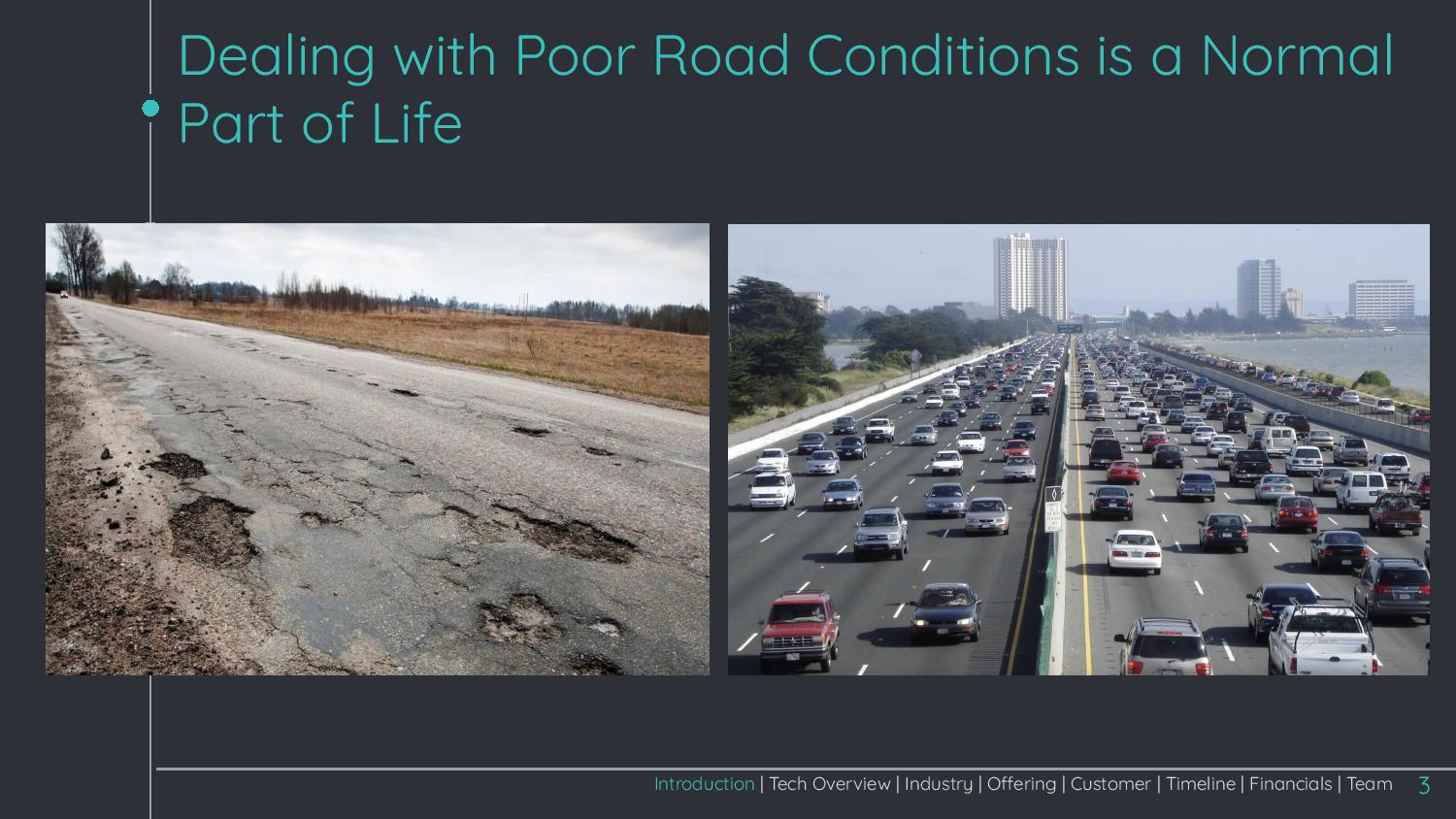
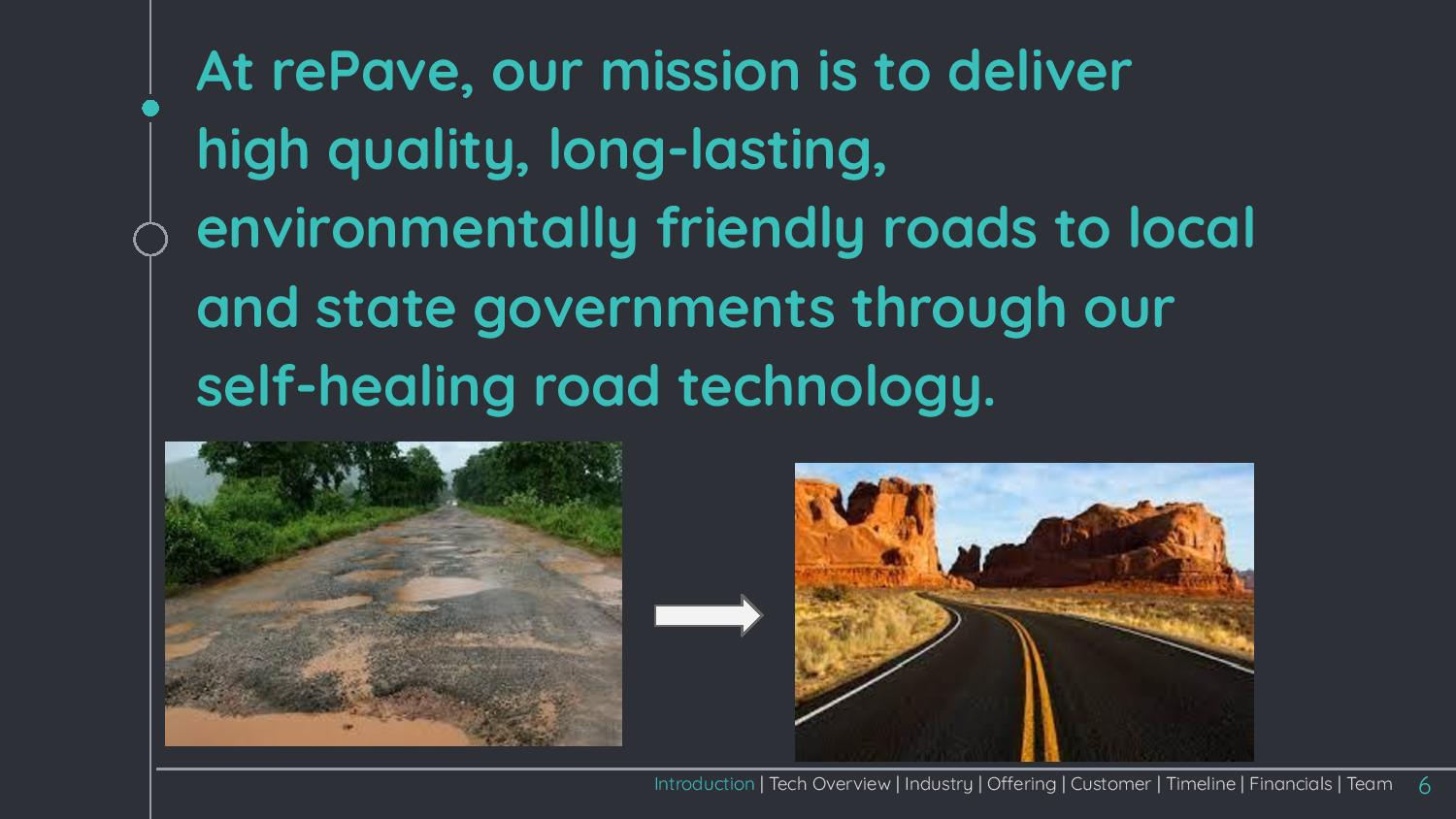
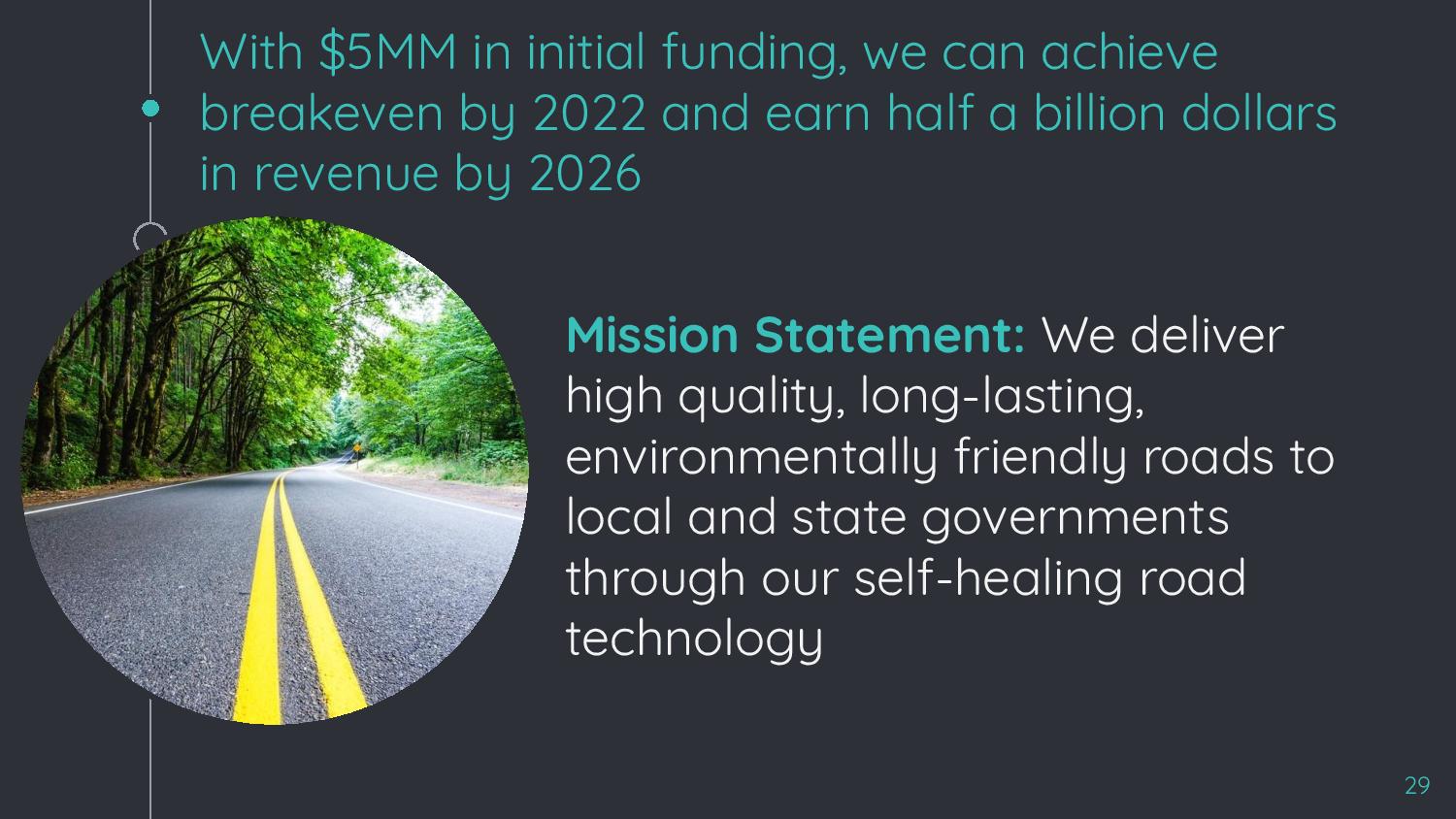
Road infrastructure is one of the most important foundations of the economy, connecting workers to jobs and enabling the movement of goods. Current roads only have a life expectancy of 20-40 years, and with millions of miles of roads, repair and maintenance is an ongoing, costly effort, with almost $30 billion a year spent on repairs and $70 billion to construct new roads each year (U.S. Government Spending, 2020). rePave envisions a new future for road development, utilizing newly developed self-healing asphalt technology to build roads that last twice as long as normal roads at less than twice the cost (Wiley Online Library, 2018). Our mission statement is to deliver high quality, long-lasting, and environmentally friendly roads to local and state governments with this self-healing road technology.
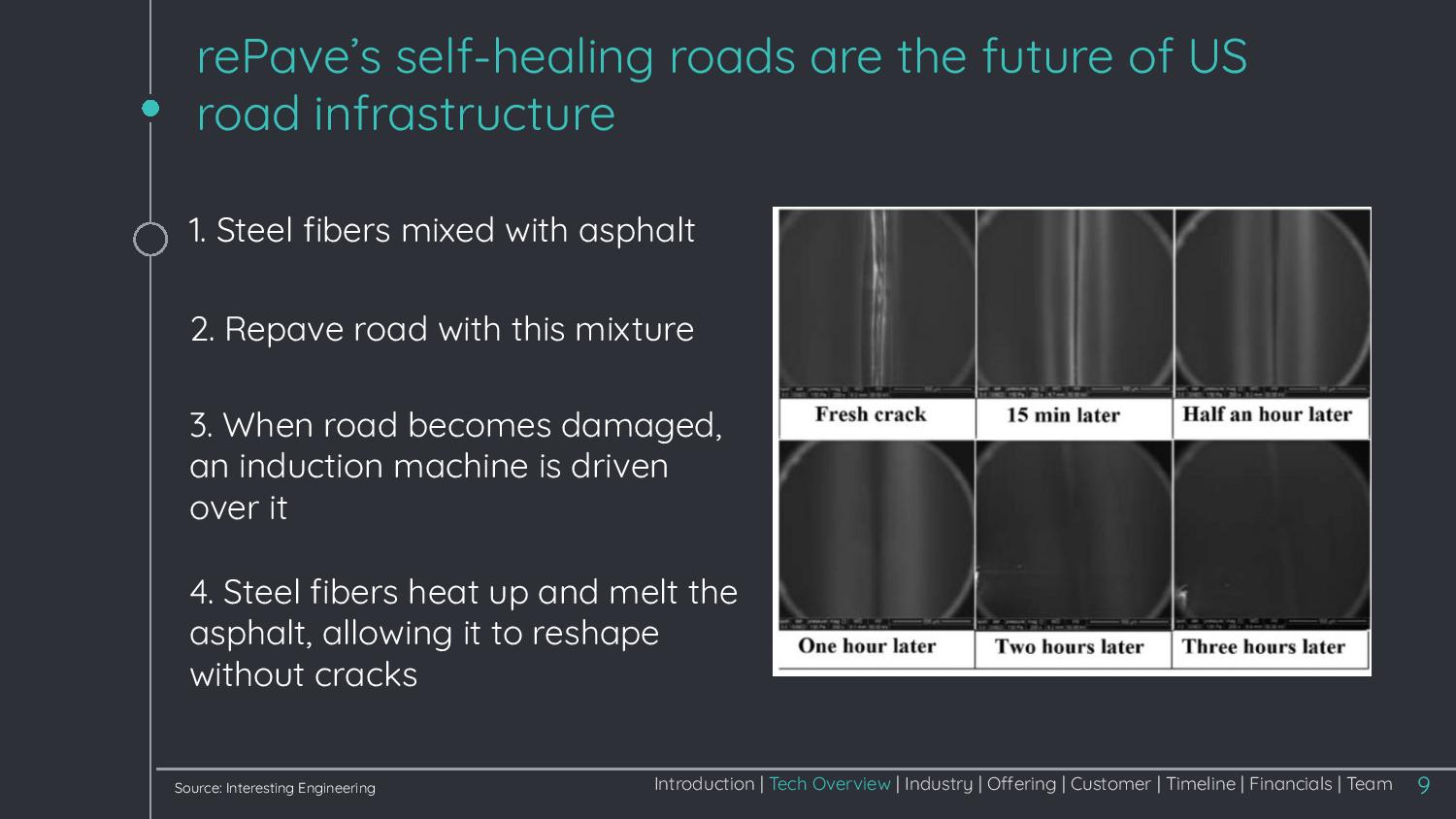
Asphalt starts to deteriorate 3-5 years after initial paving due to road usage and weathering from natural elements. This causes cracks and leads to potholes and other road damages. Currently, roads are repaired by using sealants for cracks, cold-mix asphalt for potholes, and other methods for different damages. Once roads are no longer repairable, they are repaved with a new layer of asphalt (Revive 25, 2015). Our technology takes the advantage that asphalt, the main compound used to build roads, contains some self-restoring properties. When exposed to high heat from the sun, asphalt will soften and reshape to repair minor cracks. Taking this concept further, an even more resistant and easy to repair road can be created by adding steel fibers to the asphalt. Then, all that is needed to repair the road is to drive an induction machine (which is a device that uses magnetic induction technology mounted on a vehicle) over the damaged area to heat up the steel fibers and soften the asphalt. Asphalt heated in this manner will then become nearly liquid and naturally reshape itself to eradicate potholes, cracks, and other irregularities caused by traffic or weather (Interesting Engineering, 2017). This process of keeping the road smooth can be done by running this induction machine over the road once every 4 years after the initial paving, to eliminate damage as well as prevent developing cracks. Using this self-healing asphalt technology with the induction machine prevents cracks and potholes from forming and makes roads last twice as long as traditional roads (up to 80 years). Professor Erik Schlangen from the University of Delft is the inventor and holds a patent to this technology. Upon consultation with our PEEPL, since this patent is specific to the Netherlands, this means that we are free to use and operate this technology in the US, provided that we give royalty or other type of payment to the patent holder.
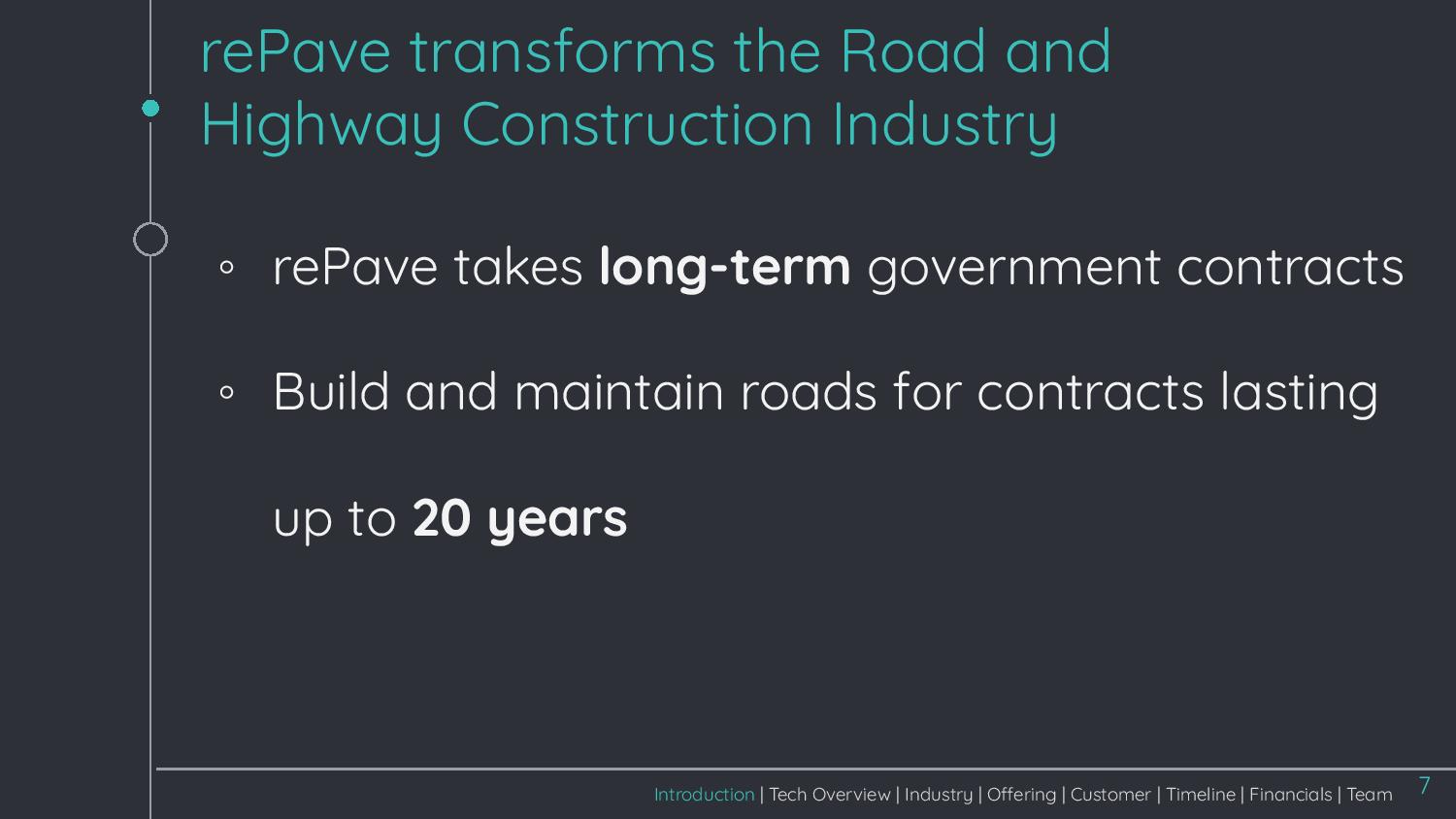
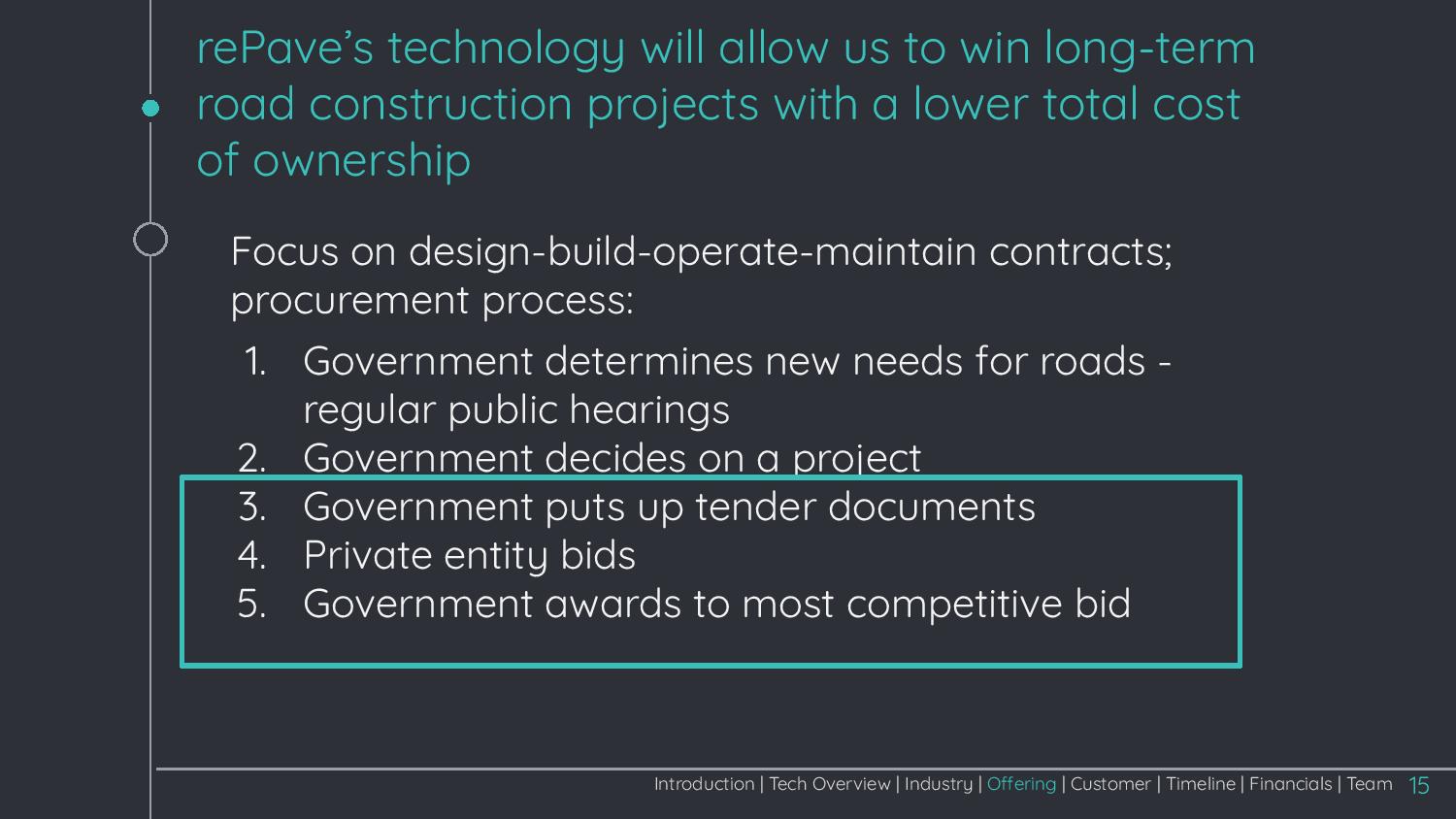
Most government road contracts are “design-build-operate” contracts; this means that when the government decides a road needs to be built, fixed, or repaved, they will put up a project for private contractors to bid on. The government then awards the project to the most competitive bid. This private contractor will then be responsible for building or fixing the road, and operate it for a period of time (to ensure that the road works properly). Once completed, the responsibility is then handed back to the government. This method is problematic for several reasons. First, contractors are incentivized to submit a bid with the lowest cost so that they can win the bid. This encourages contractors to use cheap materials over high-quality, long lasting materials. Second, when potholes or other damages arise, the government will have to initiate this lengthy process all over again. Thus, it can take a long time for potholes and other road damages to get fixed. (Designing Buildings Wiki, 2020) Recently, there is a trend towards “design-build-operate-maintain” contracts; here, not only does the contractor make or repair the road, they also maintain the road for a set amount of time (around 20 years). This eliminates the issues that occur with “design-build-operate” contracts. (US DOT, 2021).
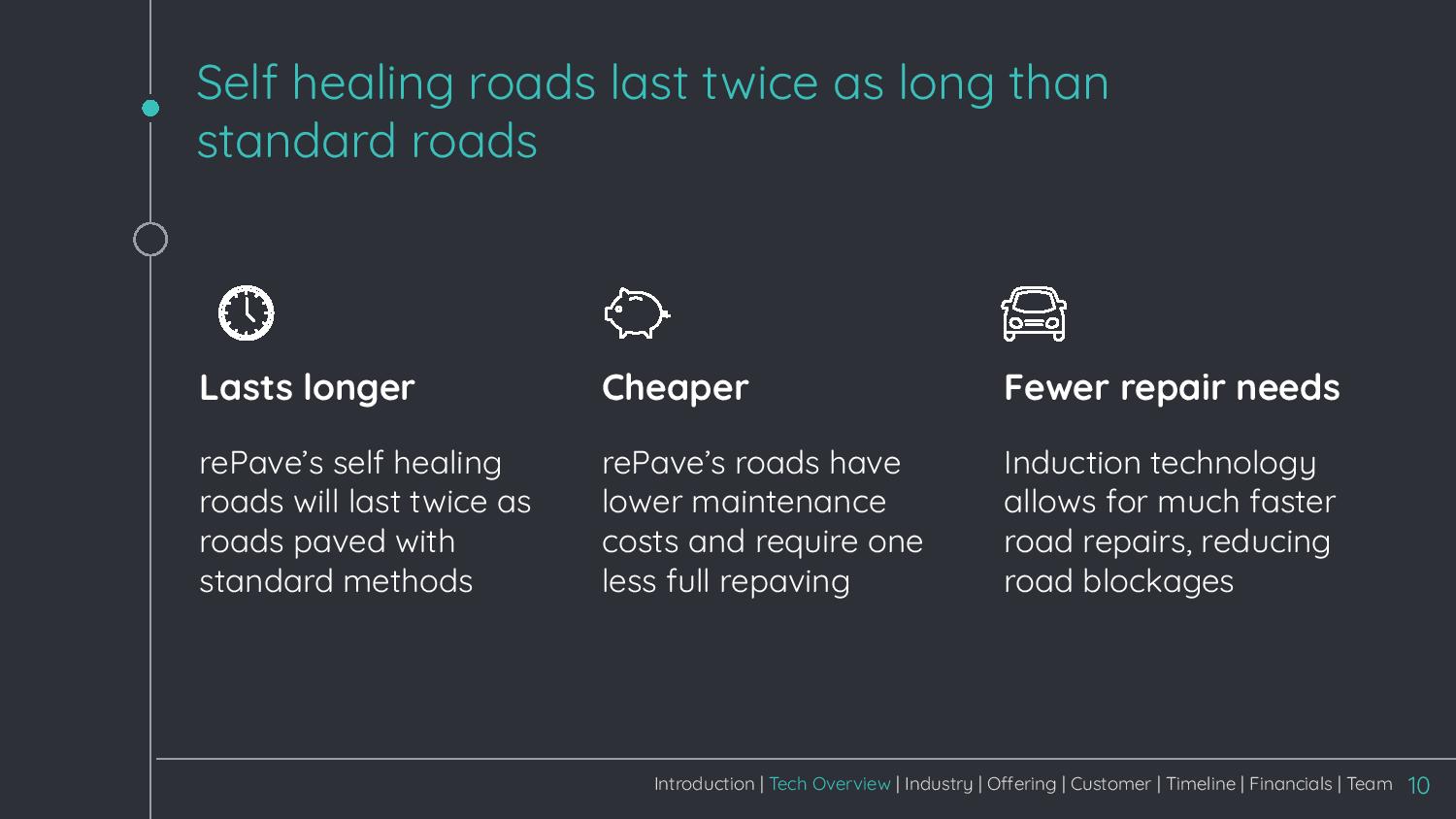
rePave plans to be a road paving contractor that will pave roads with the steel-fiber asphalt mixture, and then maintain them for 20 years using the induction technology for these periodic repairs. To do this, we will offer local and state governments long term road repaving and maintenance contracts (design-build-operate-maintain contracts), which will allow us to offset slightly higher materials costs with much lower road repair costs so that we can offer our repaving services at a lower overall cost than our competitors. Our repair costs are lower because our roads last over the lifespan of two traditional roads, meaning we eliminate one entire repaving operation during our road’s lifetime.
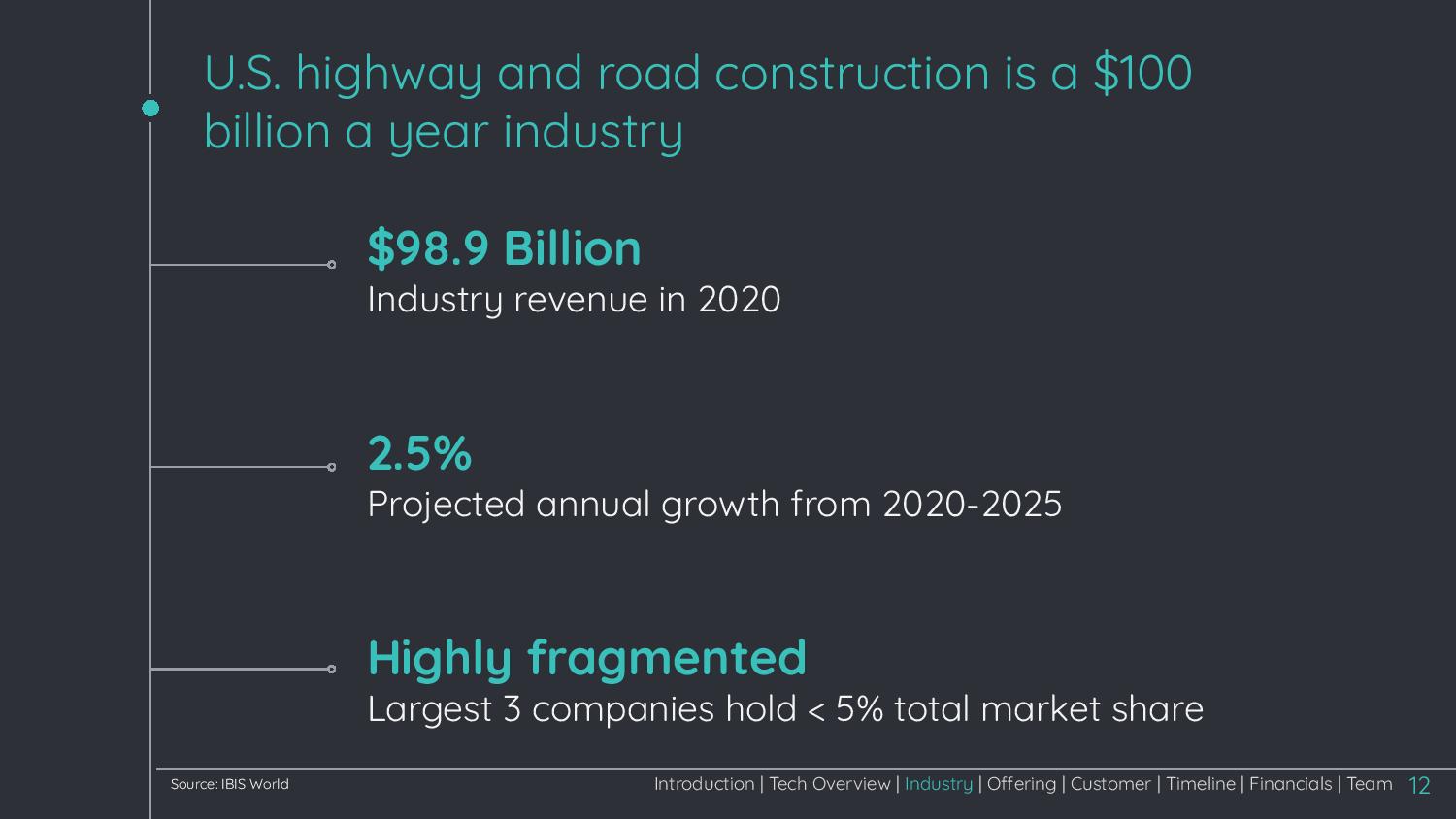
There is a strong market opportunity for rePave, as the current market is both large and predicted to grow even larger in the coming years as the road infrastructure continues to deteriorate. In 2020, the revenue for the Road & Highway Construction industry in the US was about $99 billion. From 2020-2025, the industry has a projected annual growth rate of 2.5% a year (IBISWorld, 2020). As of 2017, there were a total of 38,779 general-purpose governments in the US and 51,296 special districts, which spend on average about 6% of their budgets on road infrastructure. Additionally, the current Highway and Road Construction Industry is highly fragmented, with the top three companies holding less than 5% of the total market share and many smaller companies (IBISWorld, 2020). This means there is minimal barrier to entry for a new company such as rePave.
To obtain contracts from government streets and highways departments, rePave will utilize a direct marketing strategy. rePave’s marketing will begin with our CMO, Caroline Kavanagh, and as the venture reaches more cities and municipalities, we will begin hiring a marketing team. After speaking extensively with subject matter experts, our team has decided to start in the state of Utah, since the state government has announced plans to lead the way for infrastructure innovation in the United States (Salt Lake Tribune, 2020). Within Utah, however, there are several different municipalities based on location that may be good to target. In order to market to different municipalities, rePave will be directly reaching out to streets and highway departments for target customers. In order to market to these municipalities, rePave CMO Caroline Kavanagh will directly reach out to targeted municipalities by email, phone, seminars, and conferences to explain our offering and how it fits a specific municipality’s needs. By speaking directly with targeted customers, we can find the most suitable contracts to bid on and can proceed by filing our bidding documentation. As operations expand, we will add on another market research expert to help identify where to grow within the US.
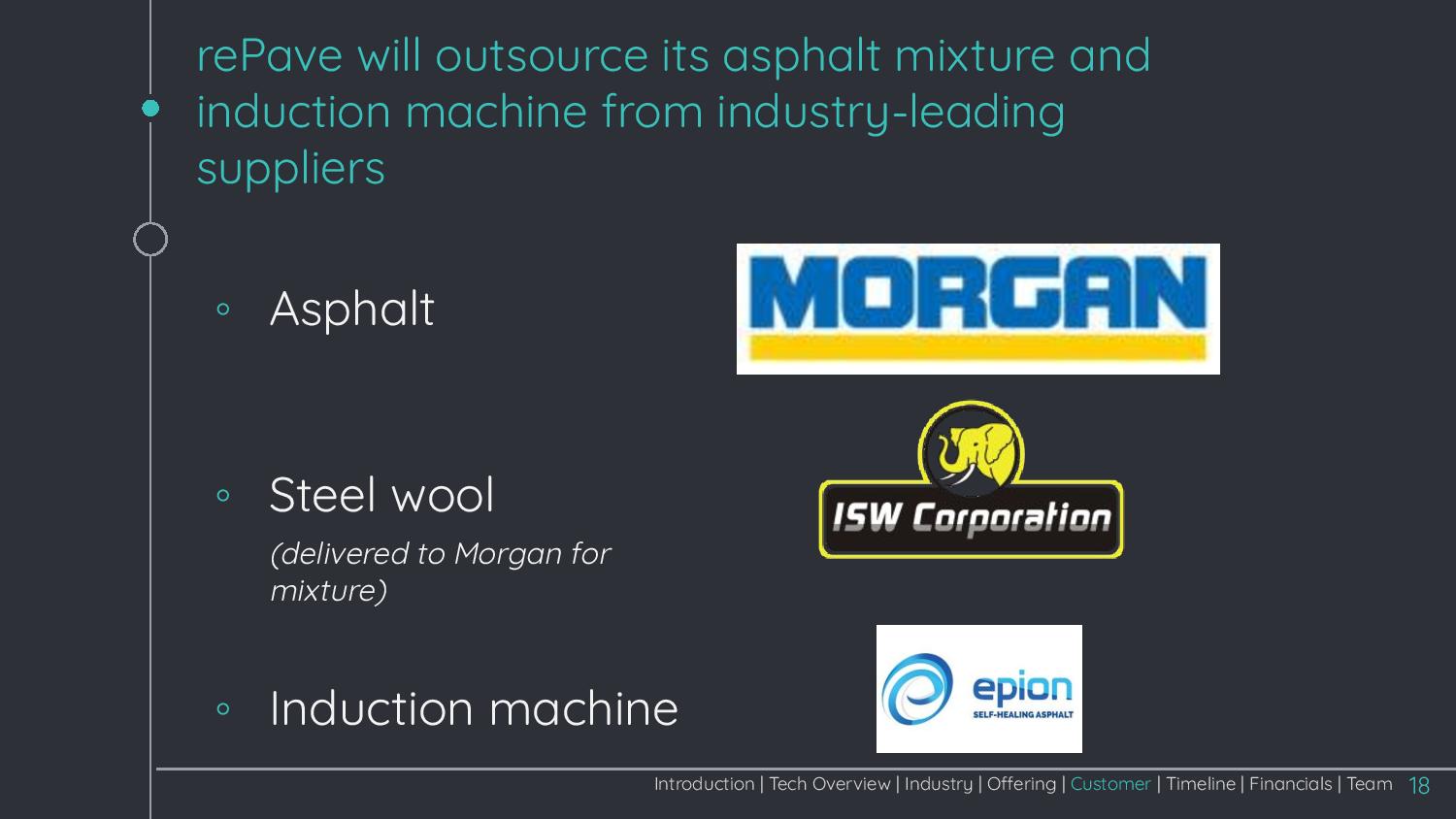
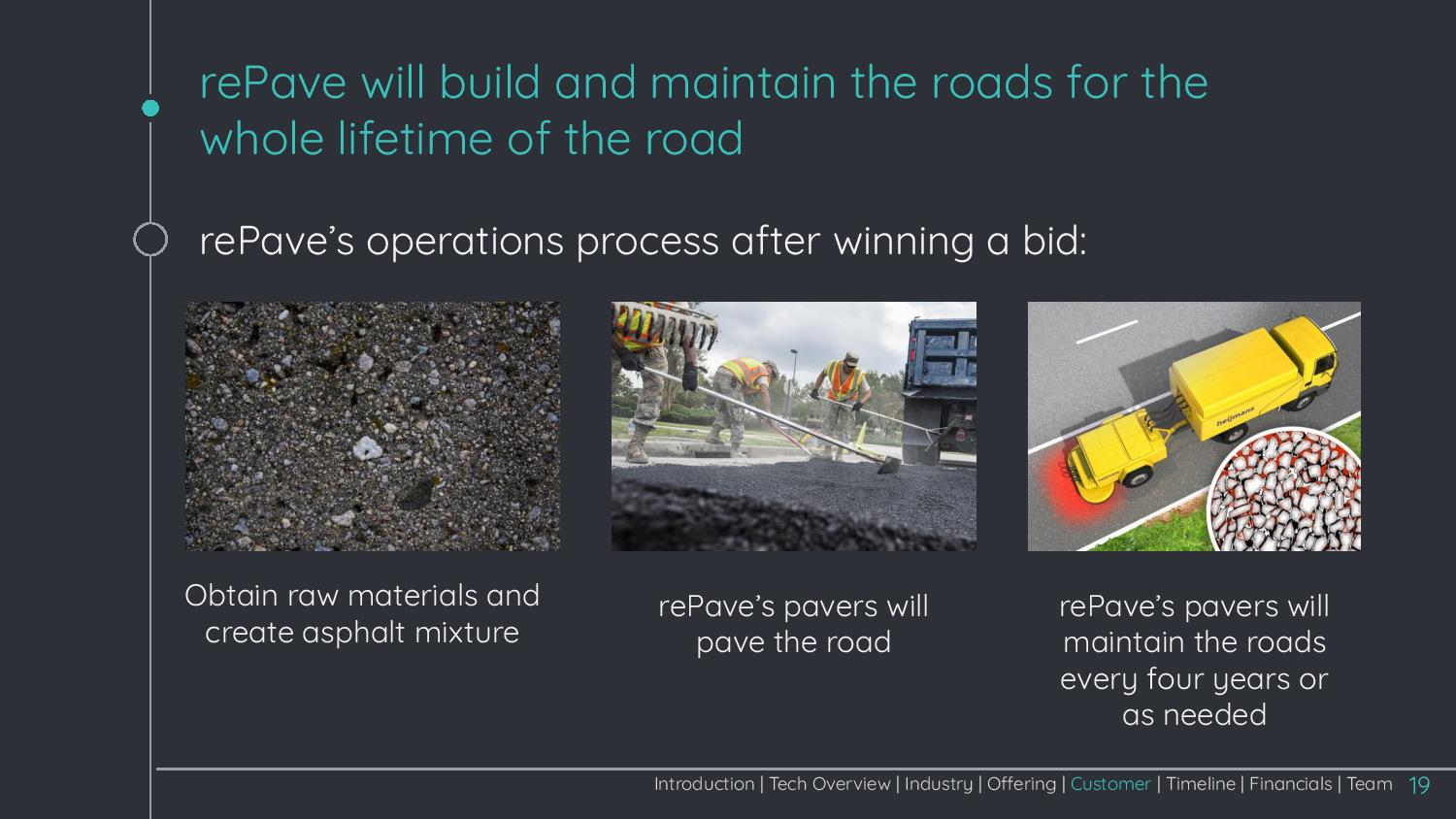
rePave will operate by bidding for and obtaining long-term government contracts for road paving and will maintain roads for upwards of 20 years depending on the contract. rePave plans on leasing induction machines from Epion and buying steel-wool mixed asphalt from the leading Utah asphalt manufacturer Morgan Asphalt, with the steel wool from International Steel Wool Corporation. The asphalt mixture will be laid down as normal and every four years the induction machine will be run over it to correct the microcracks developing on the surface. Currently, the asphalt mixture is ready for commercialization and the induction machine from Epion will be ready by August 2021. Contracts usually take about 3 weeks for bid processing and approval and the initial paving will take 3 to 8 weeks. In 2021, we plan to hire a project construction manager who will oversee training and provide insight about areas of the construction and bidding process that our current employees lack. This hire will be in charge of overseeing each project along with our COO, Eugene Enclona. Once rePave obtains a bid, we will completely repave the road by stripping the road of its current asphalt mixture and repaving it with our steel-wool asphalt. Every four years, the induction machine, which is retrofitted to a truck, will be run over the surface of the asphalt to prevent microcracks from forming. The induction machine process will only take a few hours to complete every four years, and will be done by labor hires. In the event of any road damage, rePave will also be responsible for fixing any potholes.
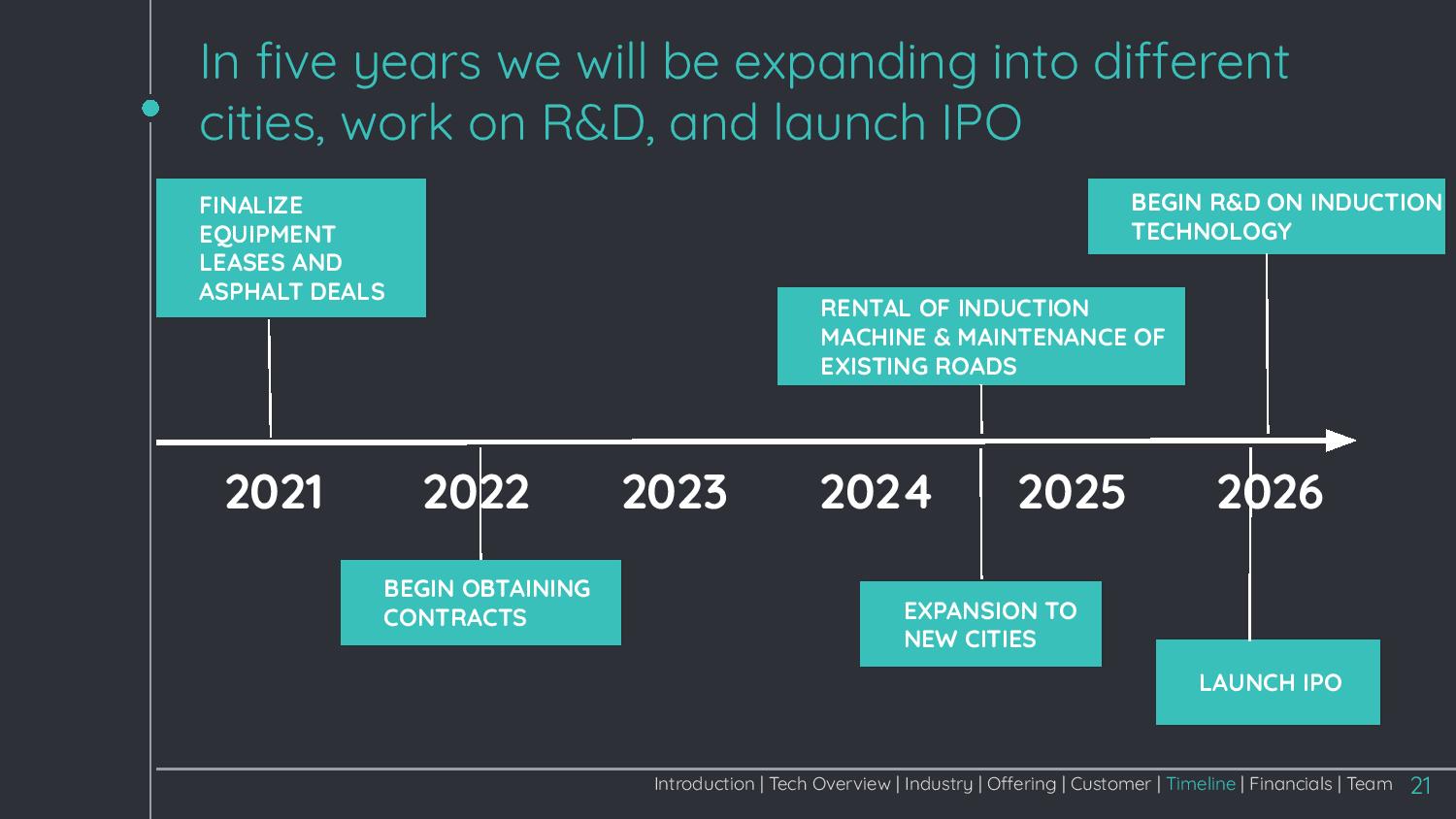
Prior to our launch in 2022, rePave will begin to identify and market to our first few target municipalities and begin equipment leasing. We will also begin negotiations with our asphalt supplier for the steel-wool fiber asphalt mixture. In our first year, rePave is conservatively estimating that we will get one contract. In this year, our CMO will also begin reaching out to more municipalities in the Utah area to discover future expansion prospects. Based on our estimated time for expansion to a new city, team size over time, and predicted increase in efficiency, the number of expected contracts for 2021-2026 are shown in the figure below.
Another component of rePave’s long-term development is the R&D of the induction machine. The induction machine will not be ready until August of 2021, meaning there may be significant improvements needed. In order to make the machine more efficient, rePave plans to begin an R&D department for the induction machine once after we raise funds via our IPO in 2026.
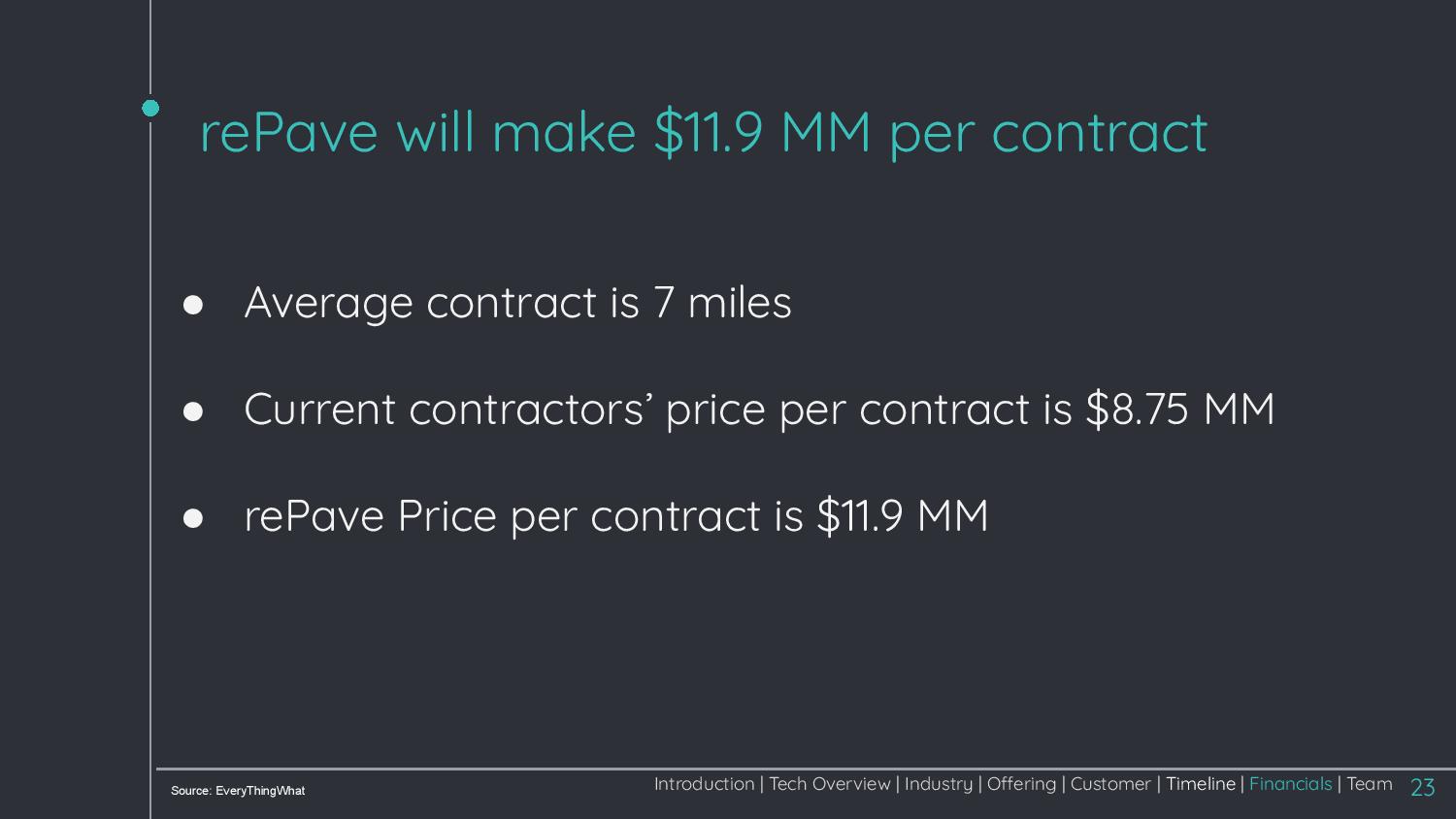
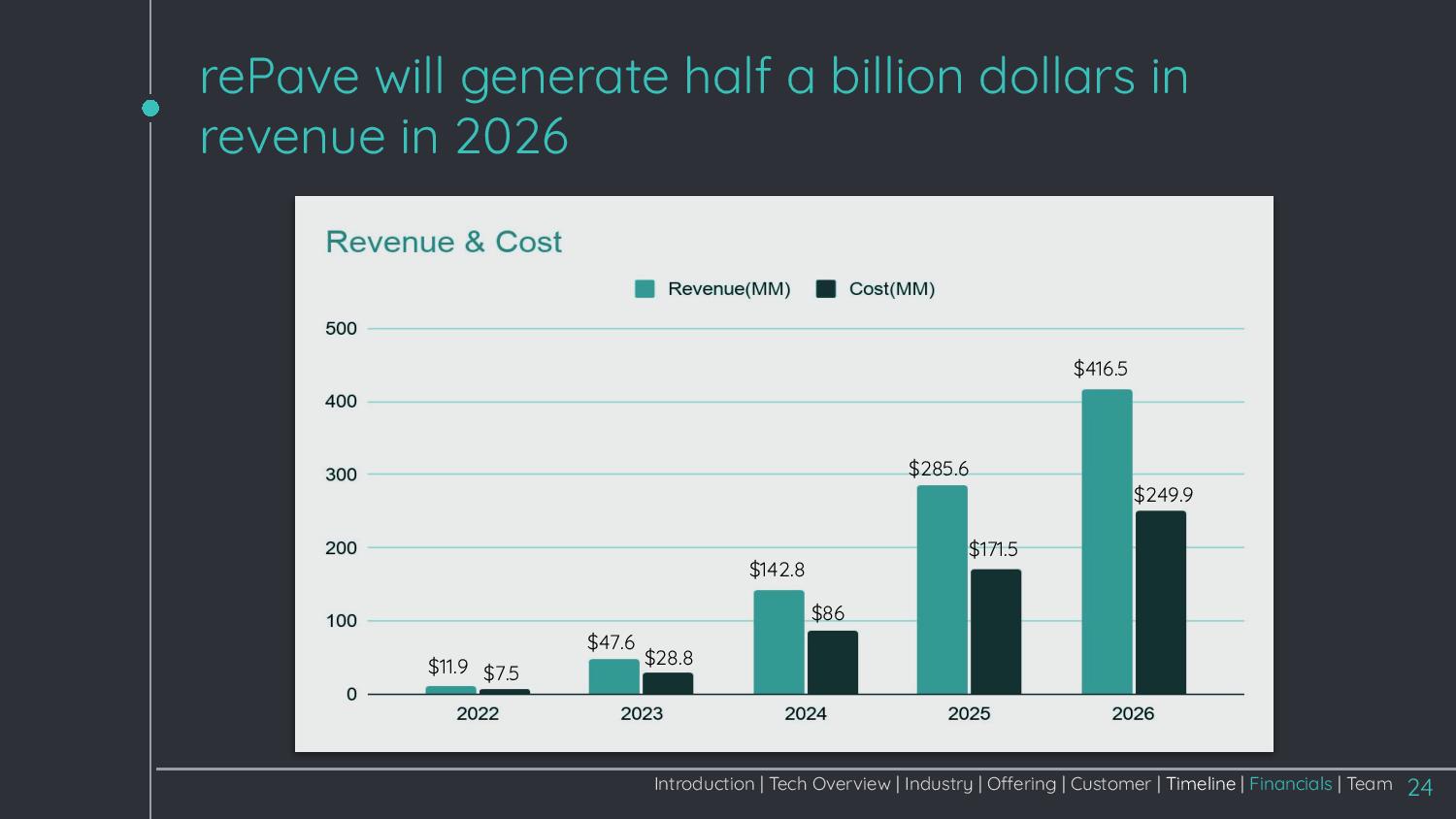
Our revenue is generated through the payment received for each contract. Based on industry averages, the average road length for a contract is 7 miles, with an average price of $1.25M per mile. This means that the government will pay on average a total of $8.75M to a road contractor to pave 7 miles of a 4-lane highway (How Much Does It Cost, 2018). To account for rePave’s higher material costs, we will price the government an average of $11.9M per contract. We assume that the government will provide some portion of the money upfront with the remaining amount after the project is completed, which will be completed within the same year we receive the contract (EveryThingWhat, 2020). Based on our projections for the number of contracts per year listed above, by 2026 we estimate that we will generate about $417 million in revenue.
To reduce initial funding needs, we will lease all equipment and warehouse space at least through the first five years. We also plan to lease our first induction machine in 2024, as they are used in the road repair process, and will not be needed until 3-4 years after the initial paving of a road. We then plan to increase the number of machines and warehouse space around 2024 and 2026 to align with our predicted increase in contracts and expansion to new locations.
Some of our main additional expenses include salaries for our Marketing Managers, Sales Reps, Project Managers, and co-founders. Cost of goods and services mainly includes labor costs (on a contract basis), asphalt costs, and steel wool costs. For each project we estimate we need 10 laborers, 4 operating engineers, and 1 supervisor, and that a project takes five days to finish, bringing us to a total materials and labor cost of around 7 million per contract. Operation Expenses consist of travel and operations costs for the marketing team, a well as bidding costs. Bidding costs are typically 2-3% per contract, or about $250,000-350,000 for our estimates (Wolters Kluwer, 2021) .
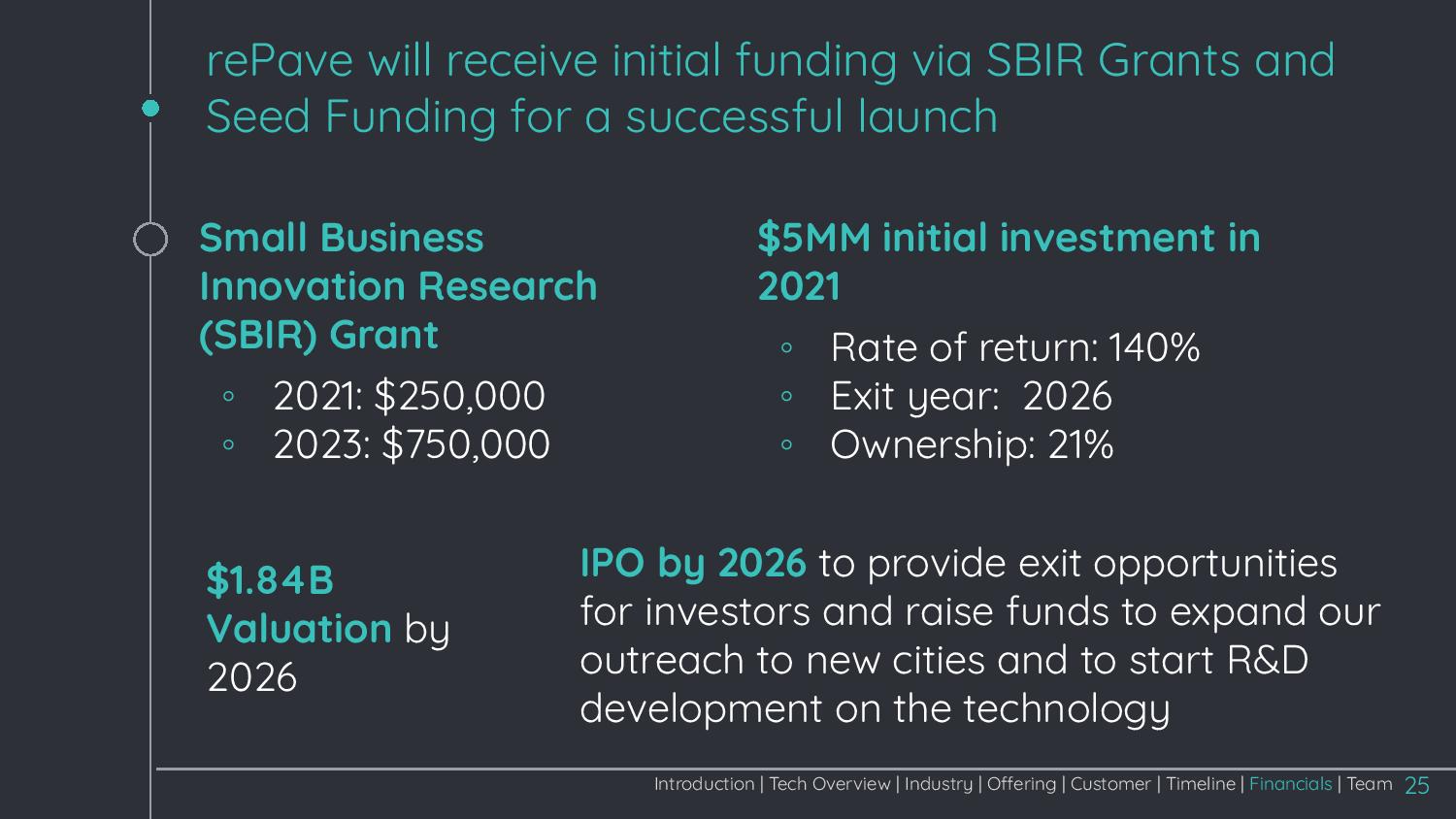
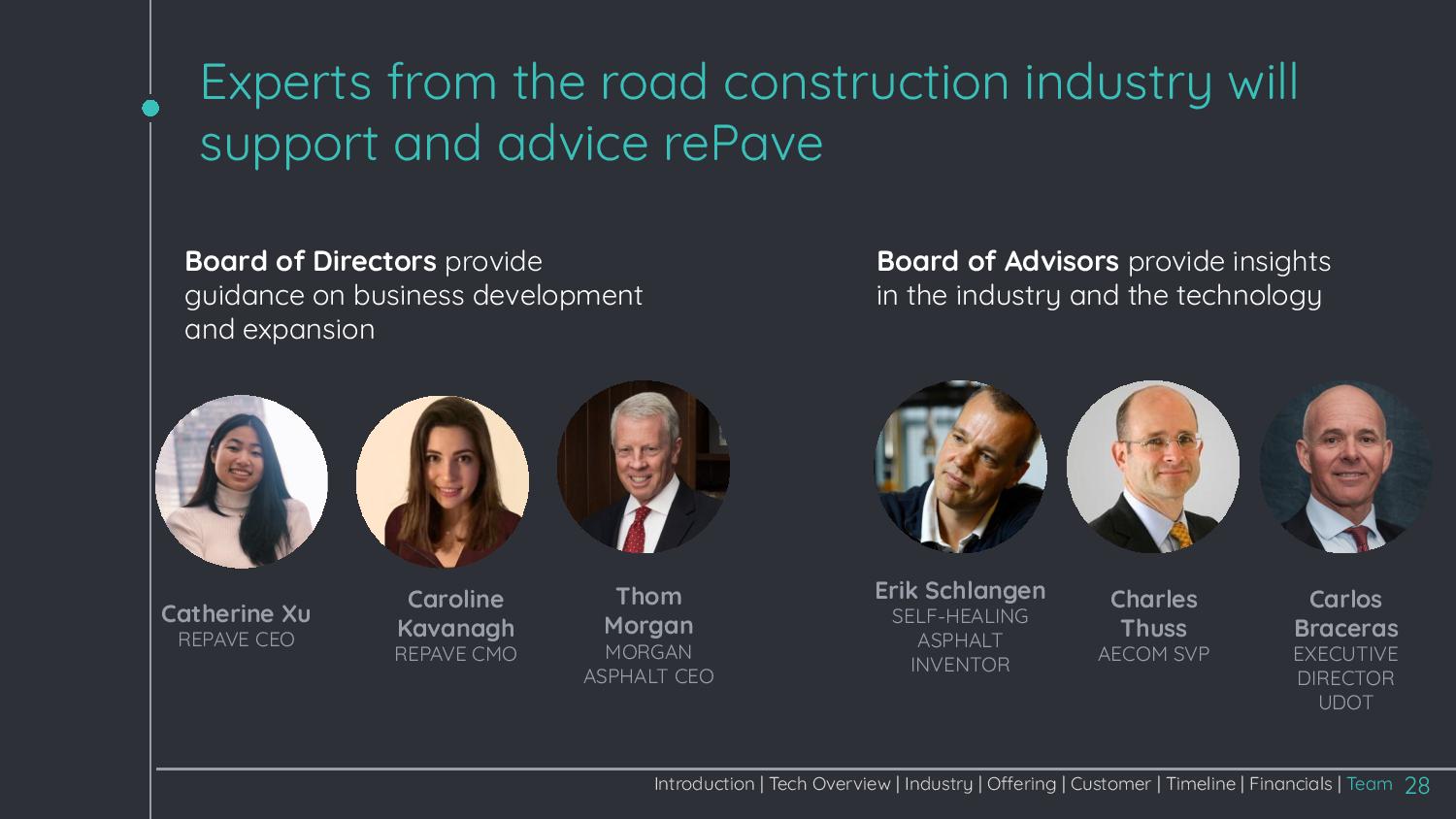
For our funding, we will be obtaining a Small Business Innovation Research (SBIR) grant from the government, which total $250,000 in 2021 and $750,000 in 2023. In addition, we will be raising $5M in venture funding in 2021 to cover initial costs for equipment leases and materials (assuming a 140% rate of return with an exit in 2026). After 2021 our cash flow sheet is positive and we will be able to generate enough revenue to cover our costs without raising any additional funds. By year 2026 we value rePave at $1.84B (using a P/E ratio of 20 derived from our comparable companies Granite Construction and Sterling Construction, multiplied by our expected 2026 earnings of $92M). We will be launching an IPO in 2026 to provide an exit opportunity for our investors and to raise funds to expand to new locations, buy assets (our machinery), and to start R&D development on the induction machine technology (to improve upon the technology and develop our own patents to gain a competitive advantage). rePave is run by a highly talented team with experience within their relative roles. We have Chief Executive Officer Catherine Xu, who has leadership experience relating to managing teams and organizing projects, Chief Marketing Officer Caroline Kavanagh, who has a background in campus outreach, Chief Financial Officer Nina Chung, who has previously served as VP Finance for a Penn organization, Chief Technology Officer Jihang Liu, who has experience in tech related research and development, and Chief Operating Officer Eugene Enclona, who has prior experience in the areas of organizing and sourcing materials. We will also have a Board of Directors who will provide guidance on business development and expansion. On the BOD we have Catherine and Caroline, as well as Thom Morgan, the CEO of Morgan Asphalt. Finally, we will have a Board of Advisors who will provide insights in the industry and the technology. Our BOA will consist of Professor Erik Schlangen, the founder of this technology and a pioneer in implementing it in the Netherlands, operations expert Charles Thuss, the SVP of Operations at AECOM (a large construction company), and Carlos Braceras, the Executive Director of Utah DOT and a great resource to help us manage the bidding process and make connections.
Built With
- roads

Log in or sign up for Devpost to join the conversation.