-
-
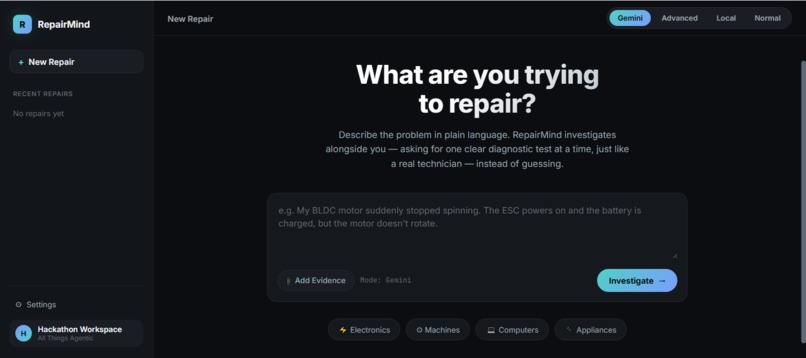
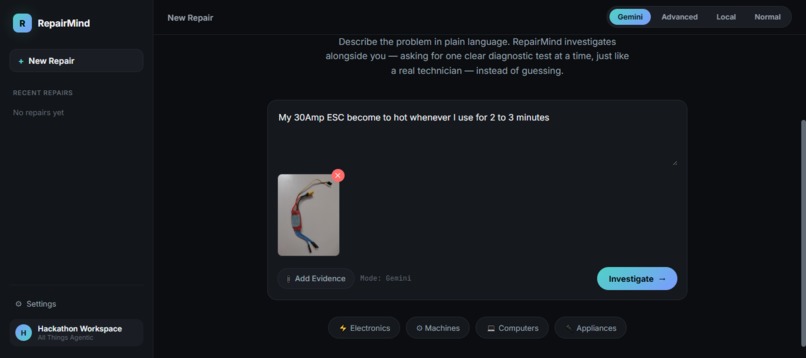
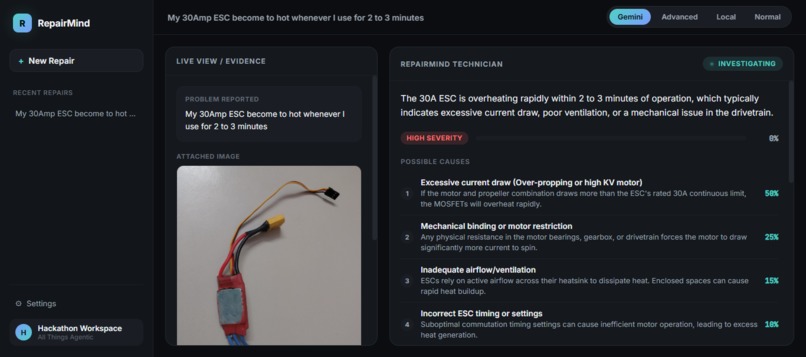
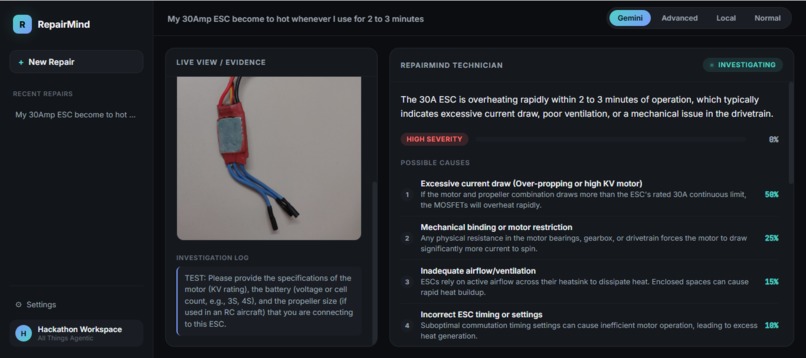
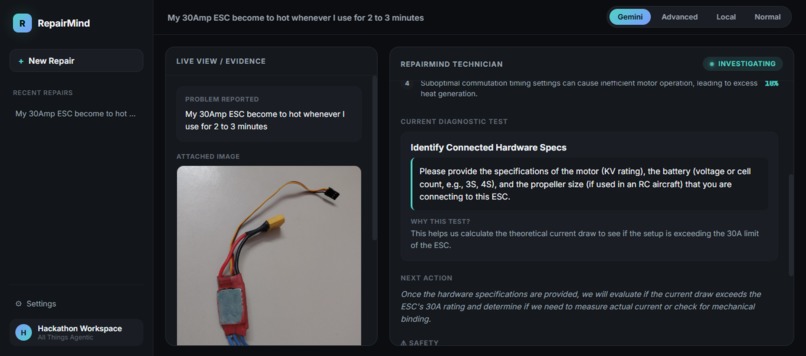
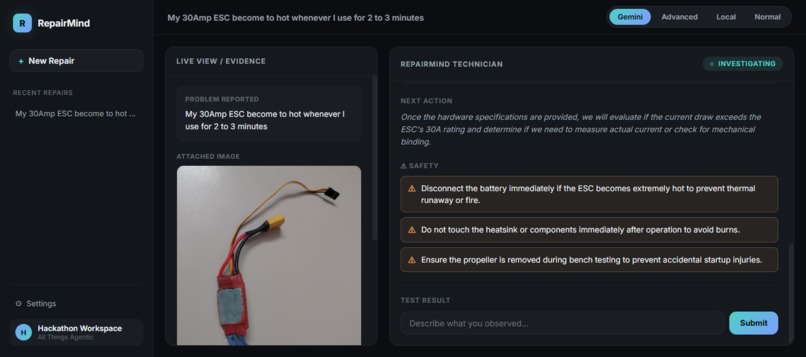
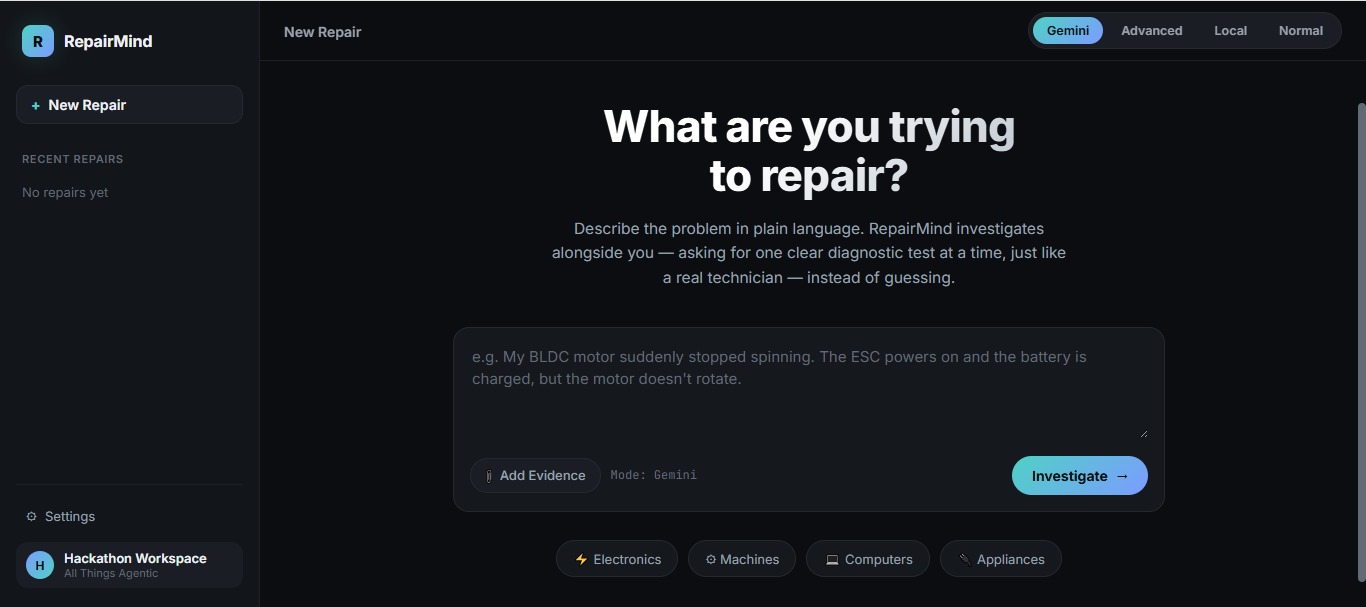
Main UI
-
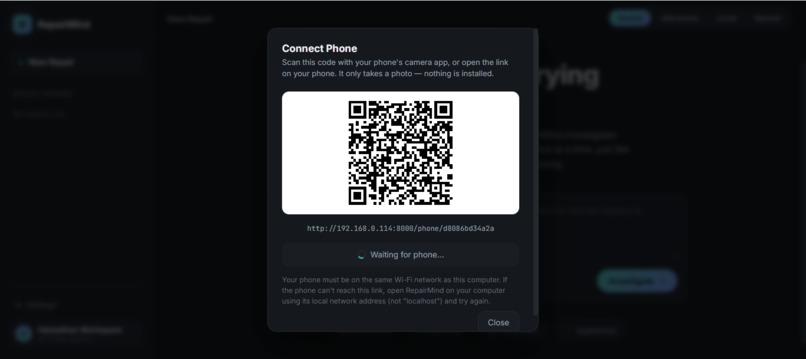
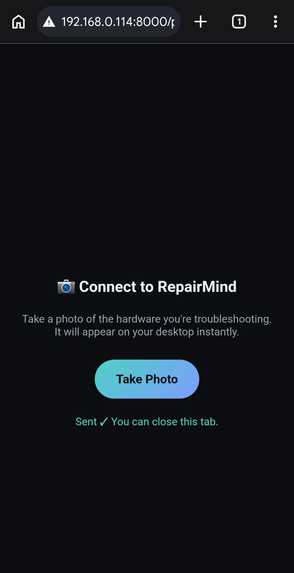
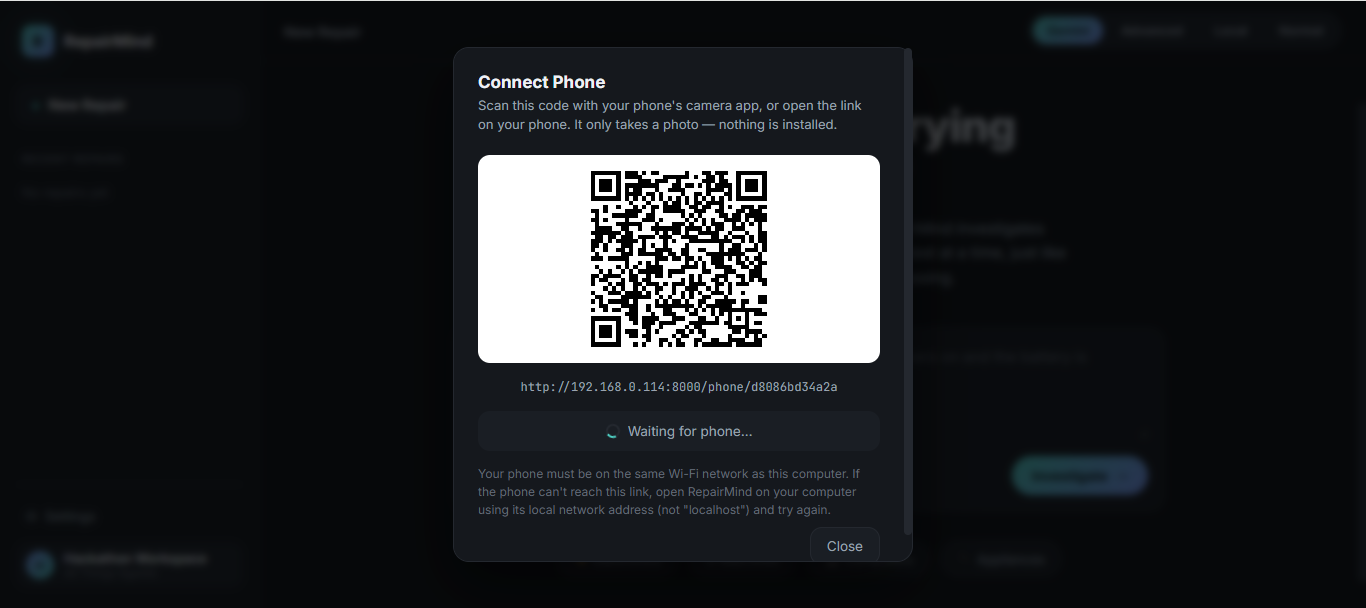
Connect from any Devices
-
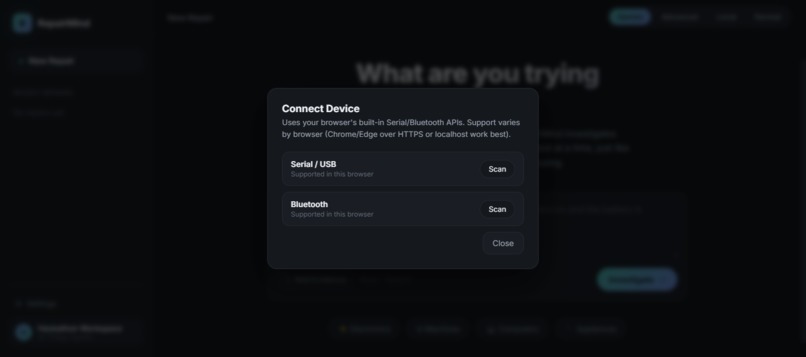
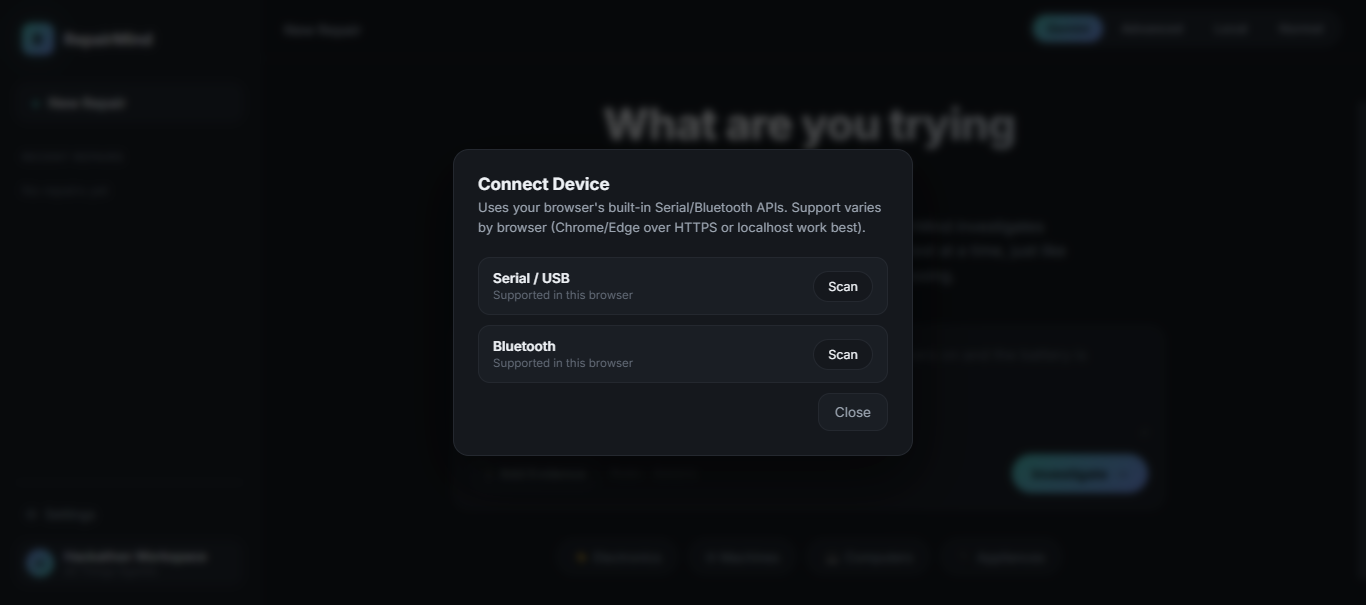
More way to connect from any Devices
-
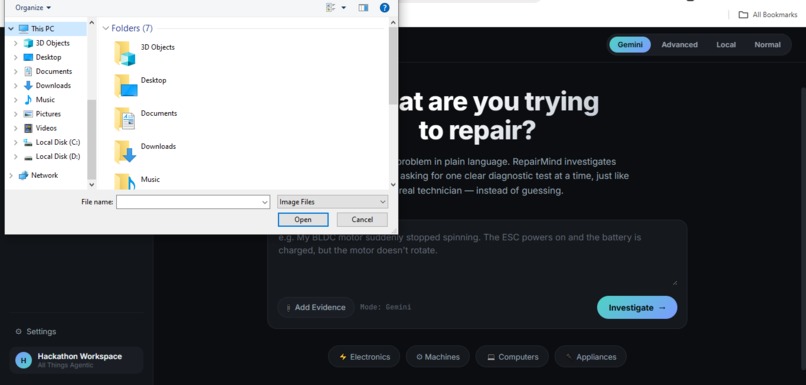
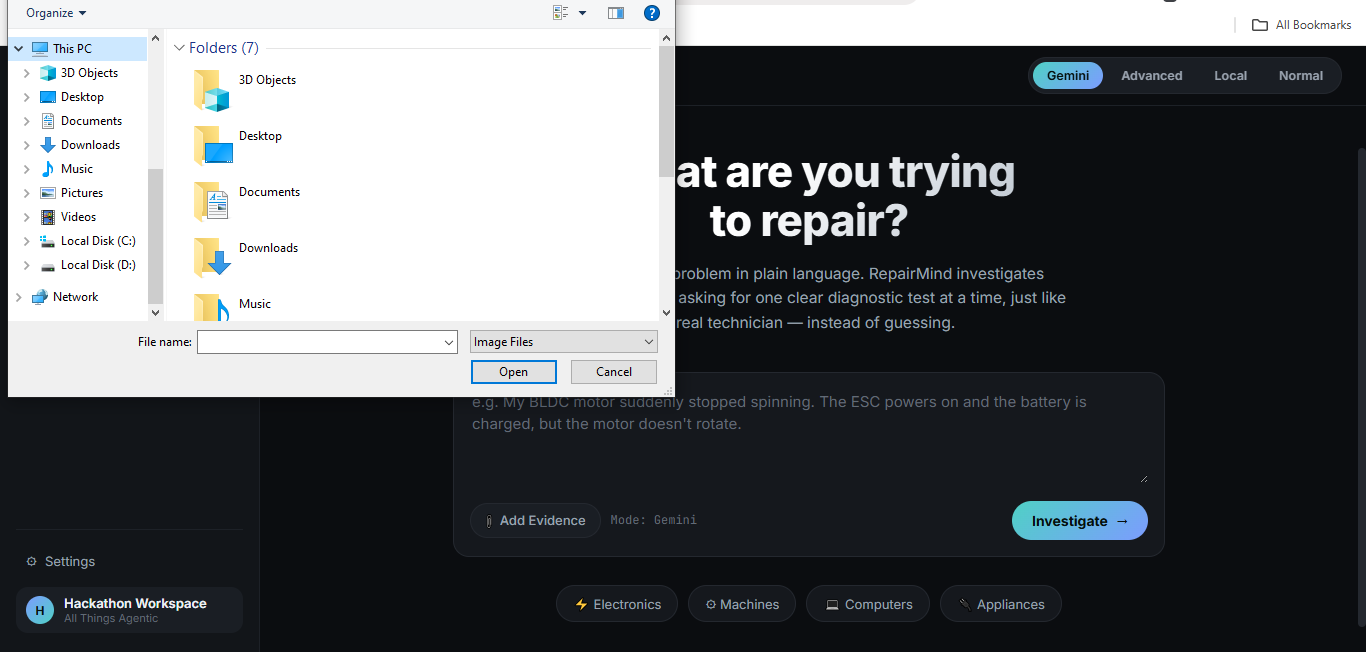
Upload Photos
-
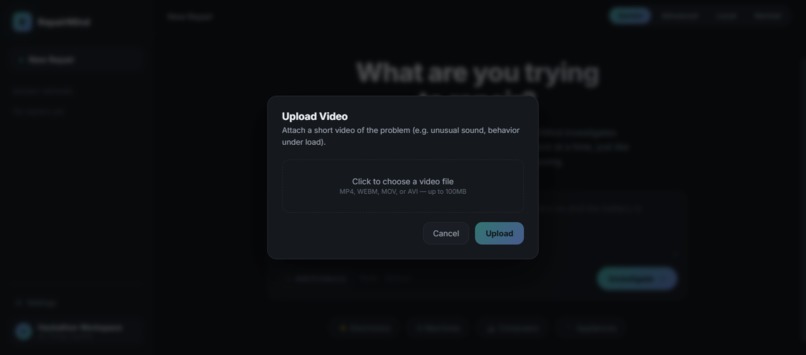
Upload Videos
-
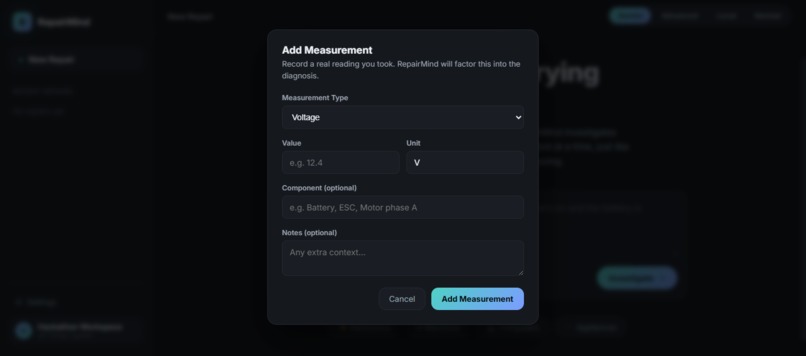
Add the Measurements
-
-
-
-
-
-
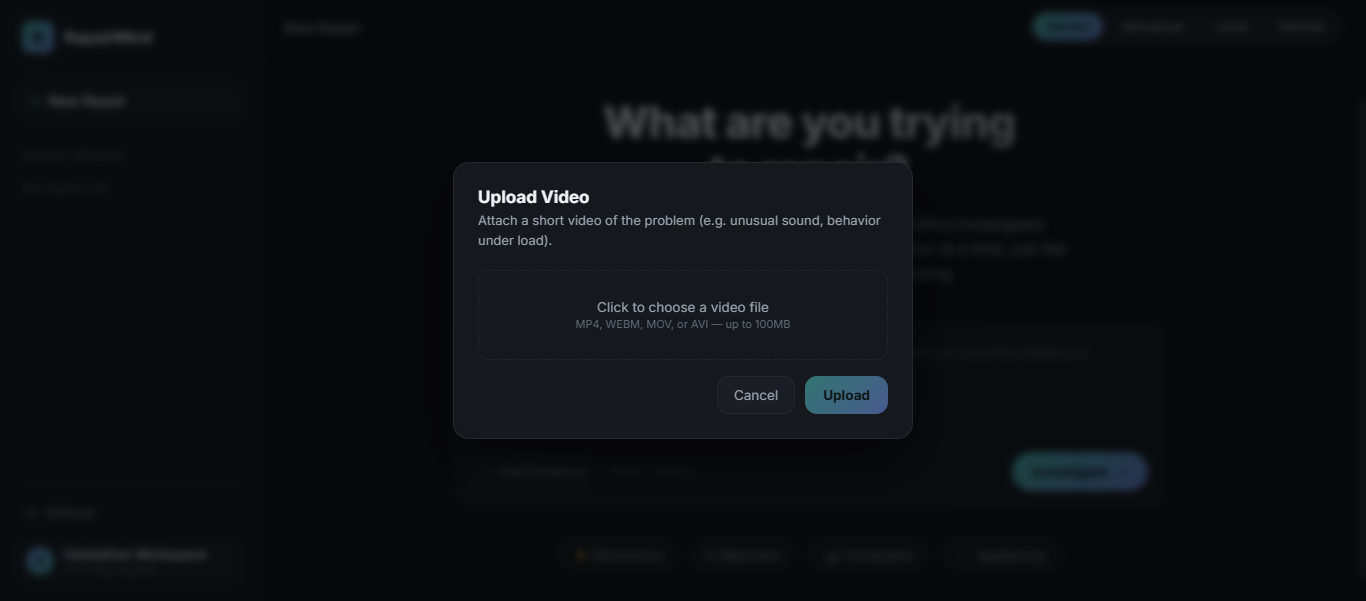
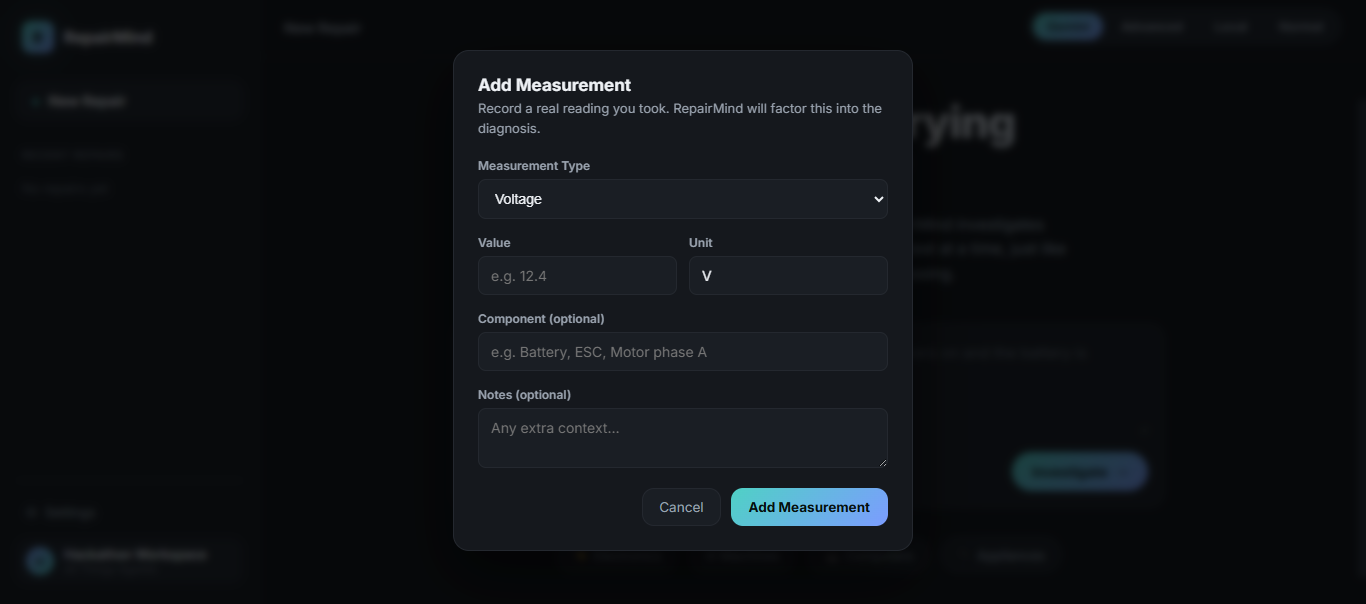
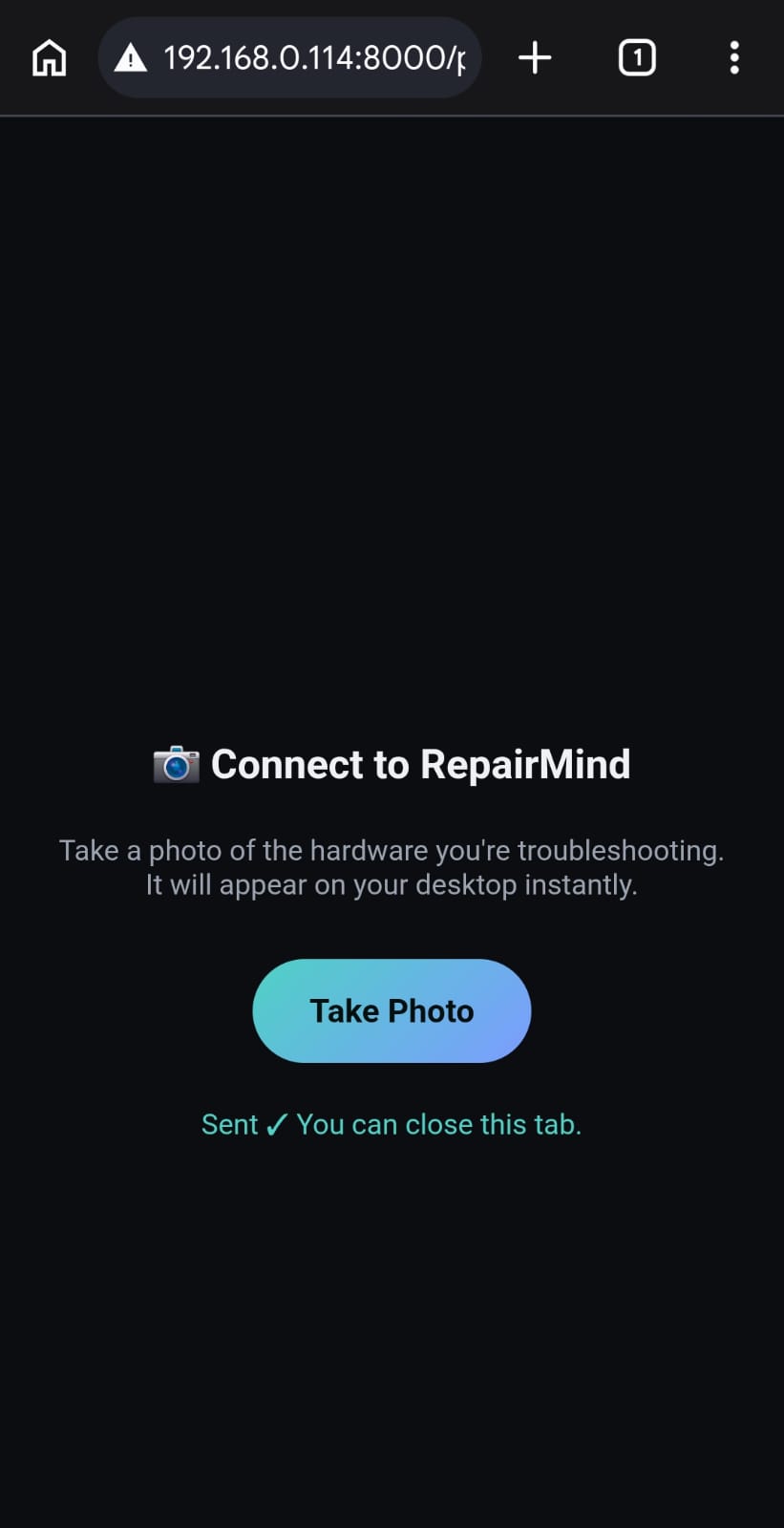
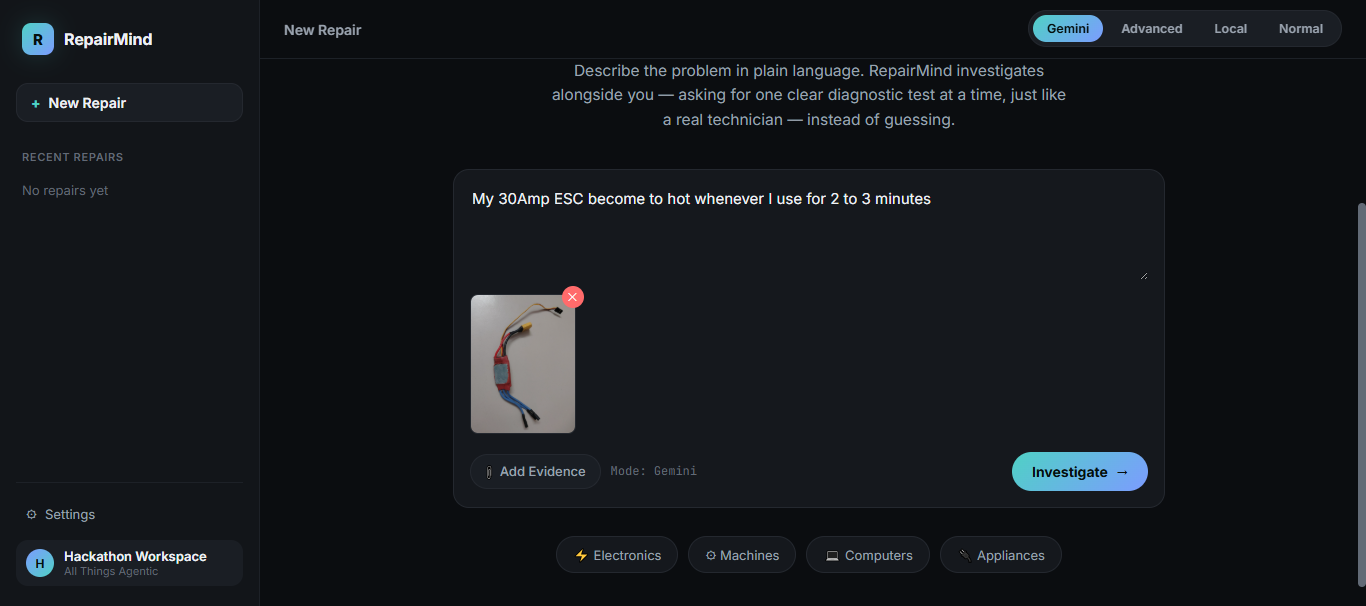
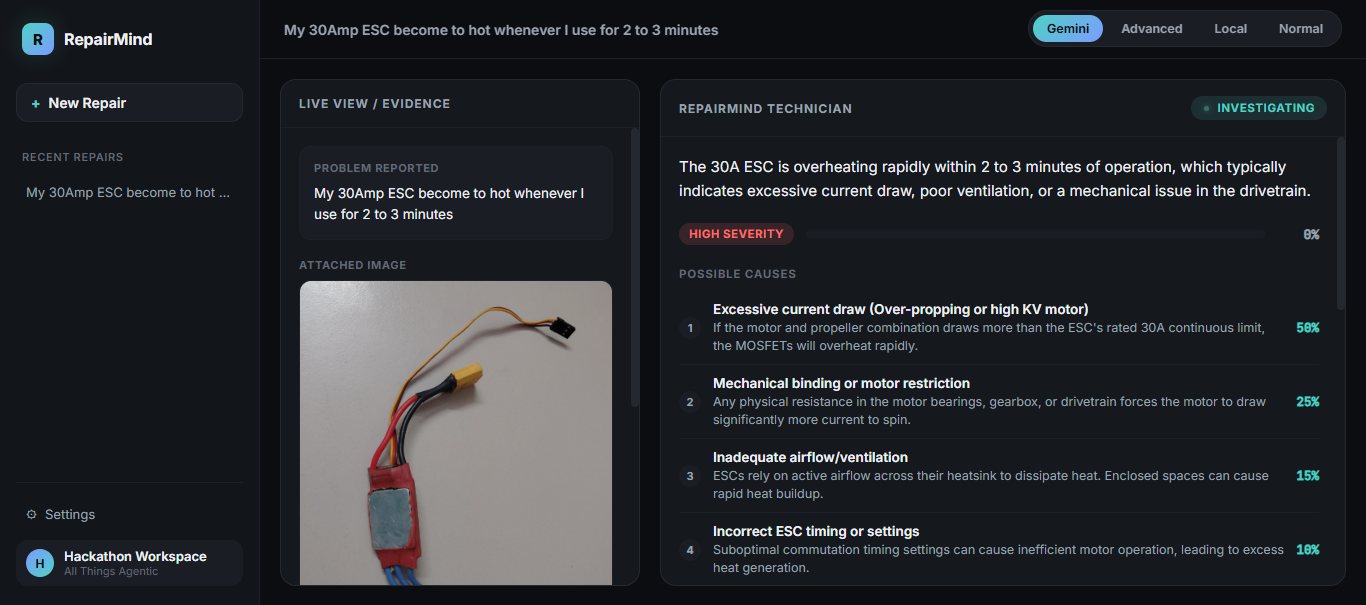
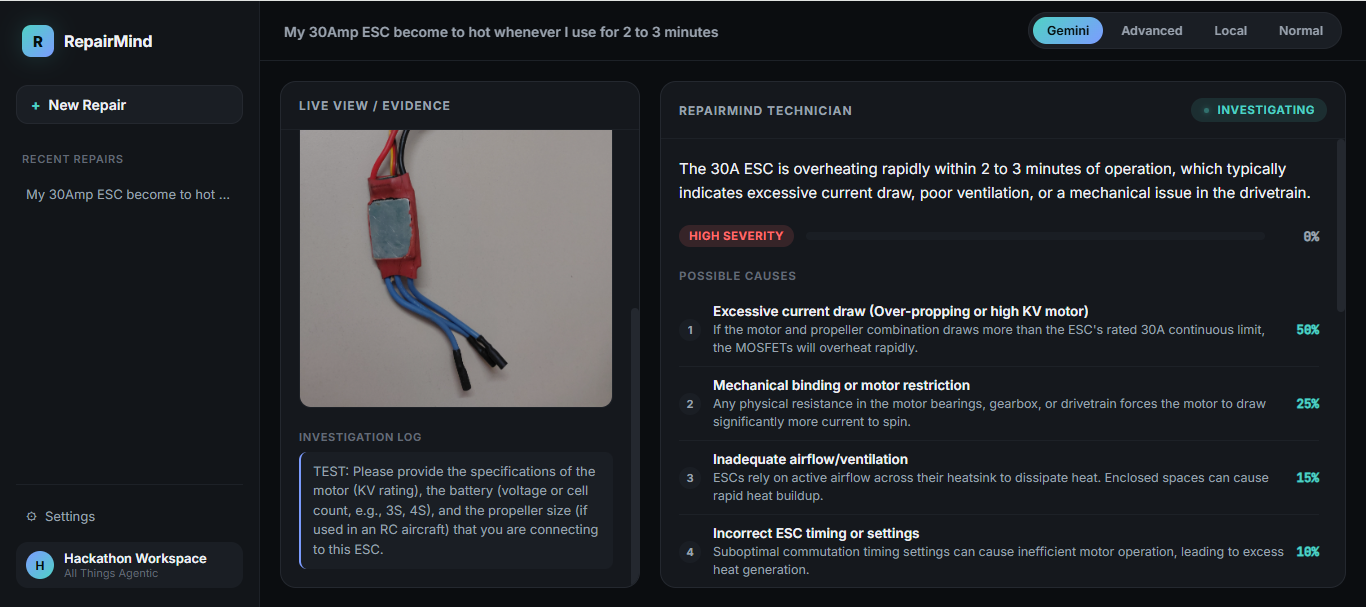
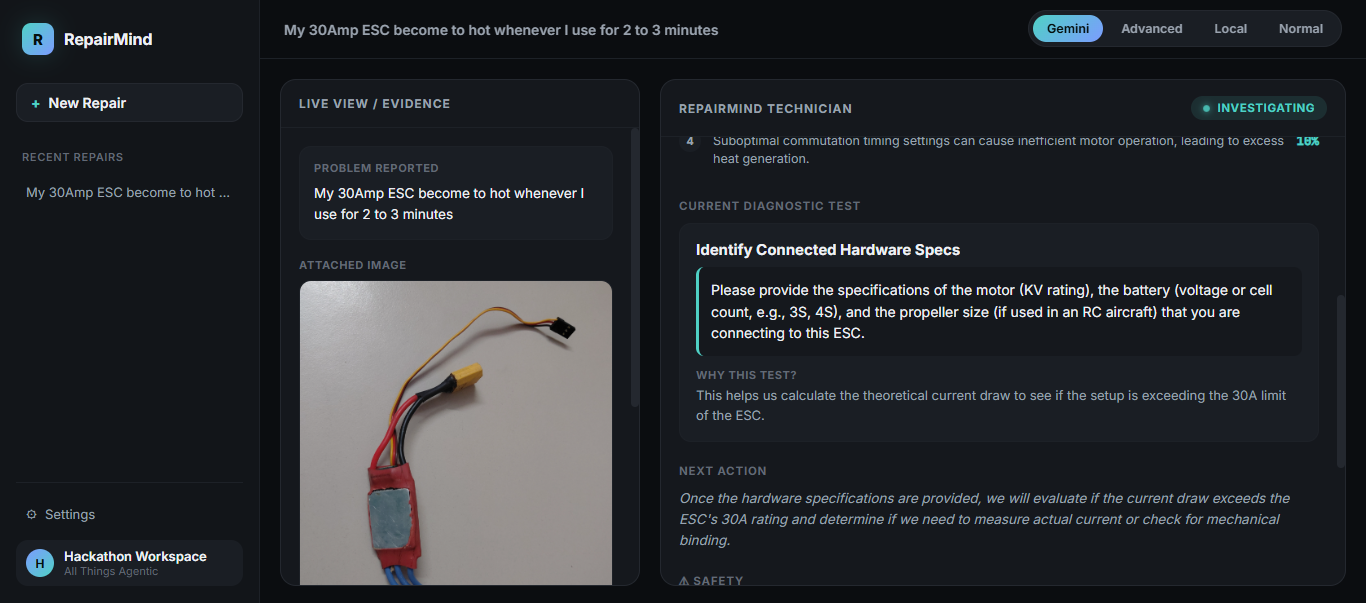
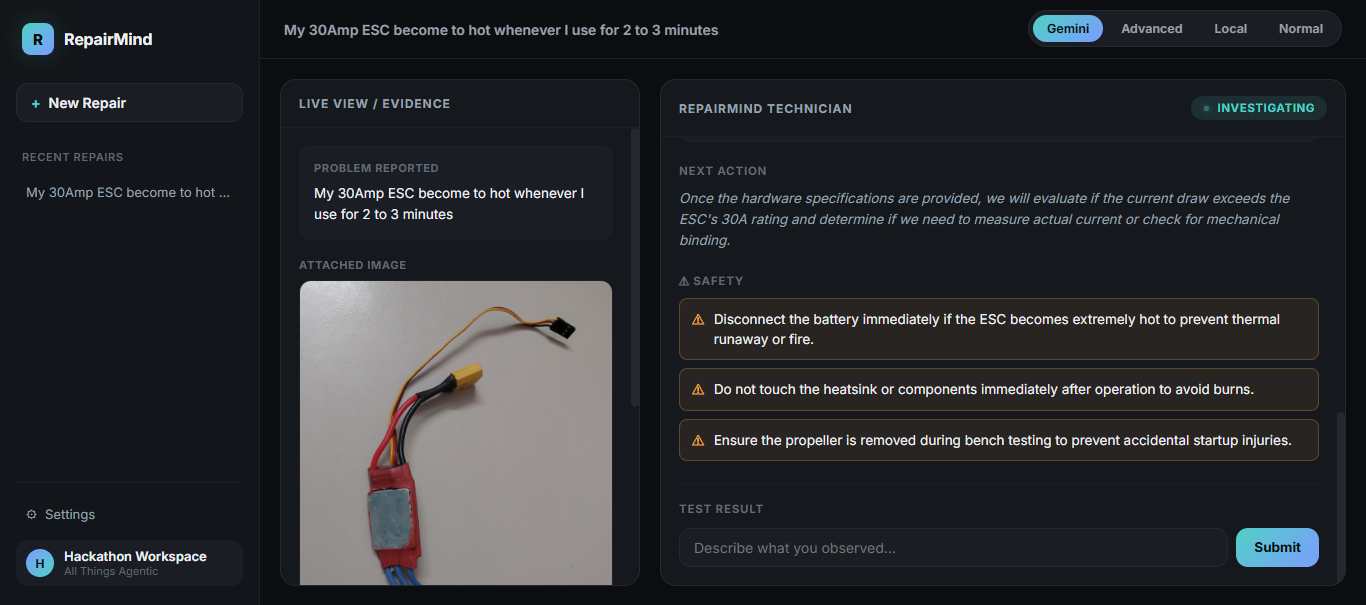
RepairMind — An Agentic AI Troubleshooting Assistant
Inspiration
When something breaks, most people don't need a generic AI answer — they need a technician-like process that helps them find the actual fault.
A typical AI assistant might give a long list of possible causes and leave the user to figure out what to do next. I wanted to build something different.
I created RepairMind, an AI-powered troubleshooting assistant that approaches repair problems like a diagnostic technician.
For example, if a user says:
"My BLDC motor suddenly stopped spinning. The ESC powers on and the battery is charged, but the motor doesn't rotate."
RepairMind doesn't immediately claim that the motor or ESC is broken.
Instead, it analyzes the symptoms, identifies possible causes, selects a useful diagnostic test, asks the user to perform that test, and uses the result to narrow down the problem.
This idea became the foundation of RepairMind.
What RepairMind Does
RepairMind turns a repair problem into an interactive diagnostic investigation.
The system can:
- Understand natural-language repair problems
- Analyze symptoms and available evidence
- Identify multiple possible causes
- Estimate the likelihood of possible faults
- Select useful diagnostic tests
- Ask the user for measurements or test results
- Update its diagnosis using new evidence
- Recommend repair steps when enough evidence exists
- Provide safety warnings
- Continue an investigation across multiple diagnostic steps
- Accept supporting evidence such as images
- Use different AI providers depending on the user's needs
The goal is not simply to answer:
"What is wrong?"
The goal is to determine:
"What should we test next to find out what is wrong?"
Agentic Architecture
The Gemini-powered version of RepairMind uses the Google Agent Development Kit (ADK) to implement the diagnostic agent.
The agent receives:
- The original problem
- Symptoms
- Previous diagnostic results
- User-provided test results
- Measurements
- Additional evidence
It then reasons about the current state of the investigation and selects the next useful diagnostic action.
The investigation can therefore follow a loop:
User Problem
     ↓
RepairMind Diagnostic Agent
     ↓
Analyze Symptoms
     ↓
Identify Possible Causes
     ↓
Select Diagnostic Test
     ↓
User Performs Test
     ↓
Test Result
     ↓
Agent Updates Diagnosis
     ↓
Another Test OR Diagnosis
     ↓
Repair Recommendation

