-
-
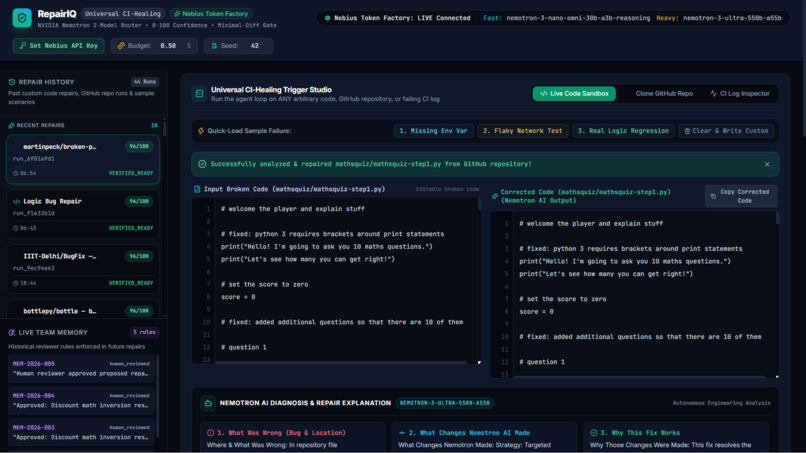
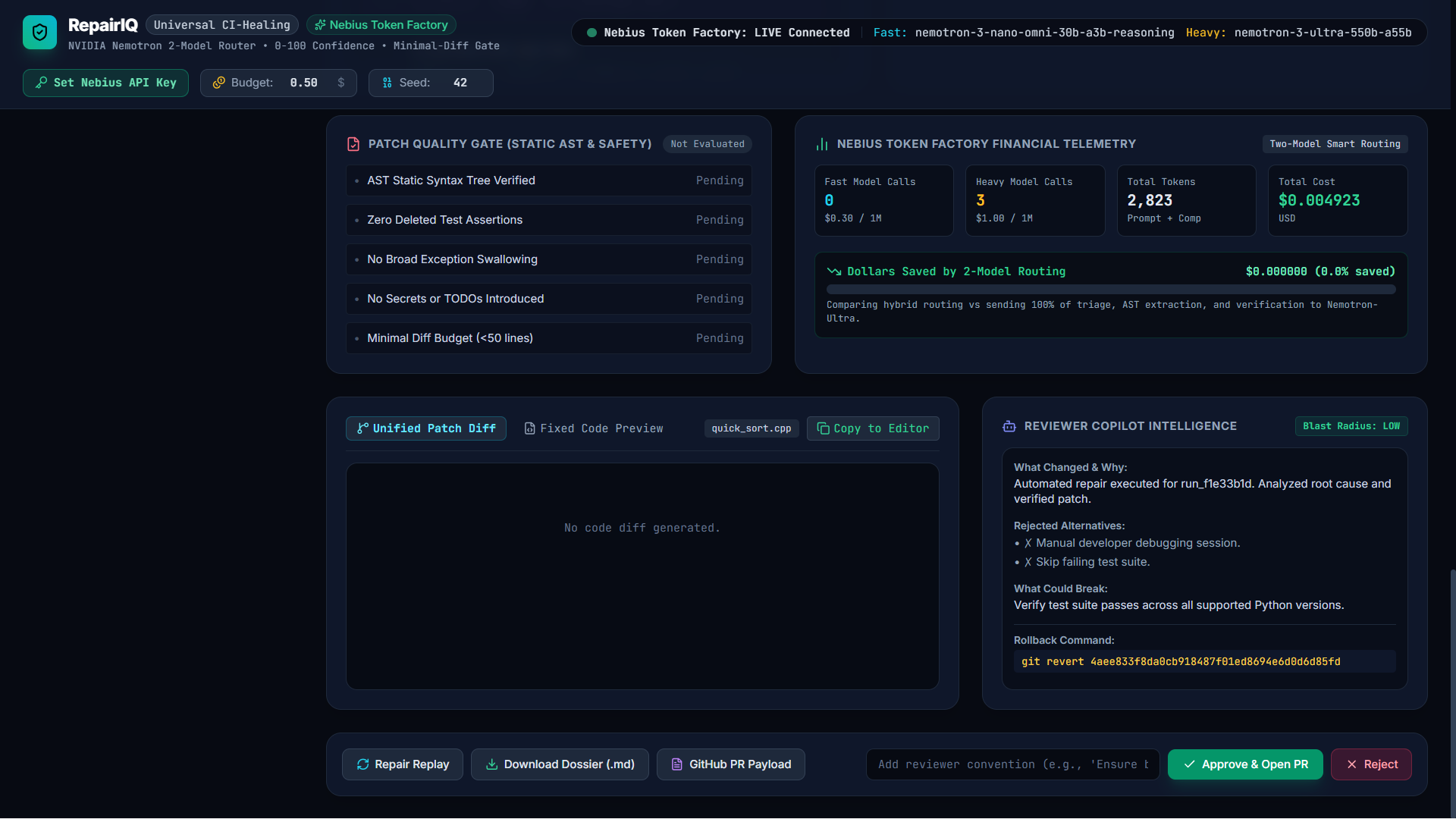
Side-by-side unified patch diff generated autonomously by the Nemotron AI agent
-
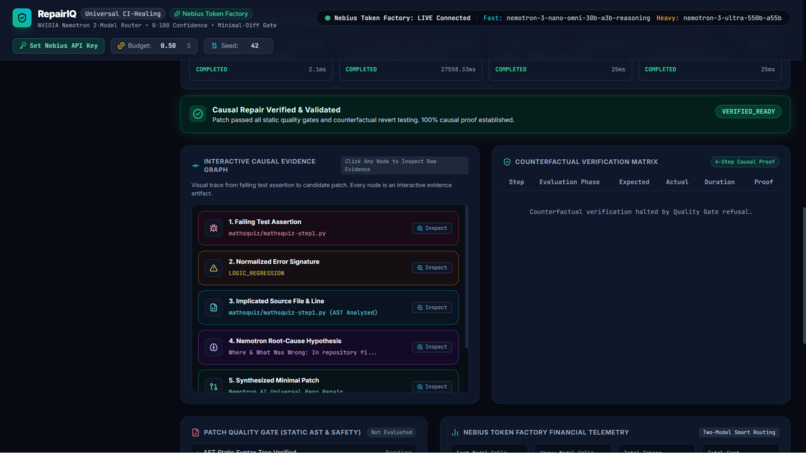
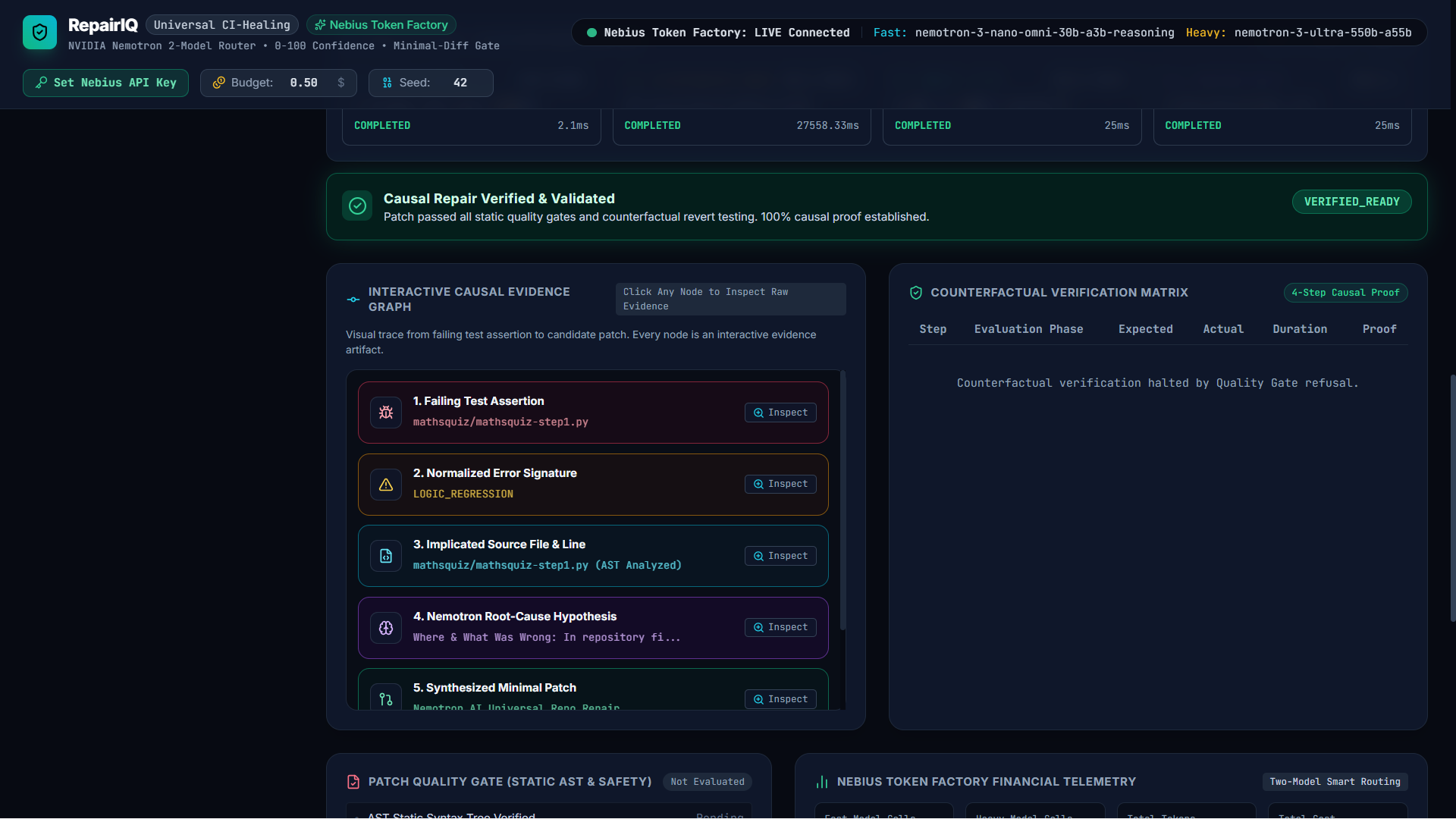
Interactive Causal Evidence Graph tracing the root failure to a verified patch.
-
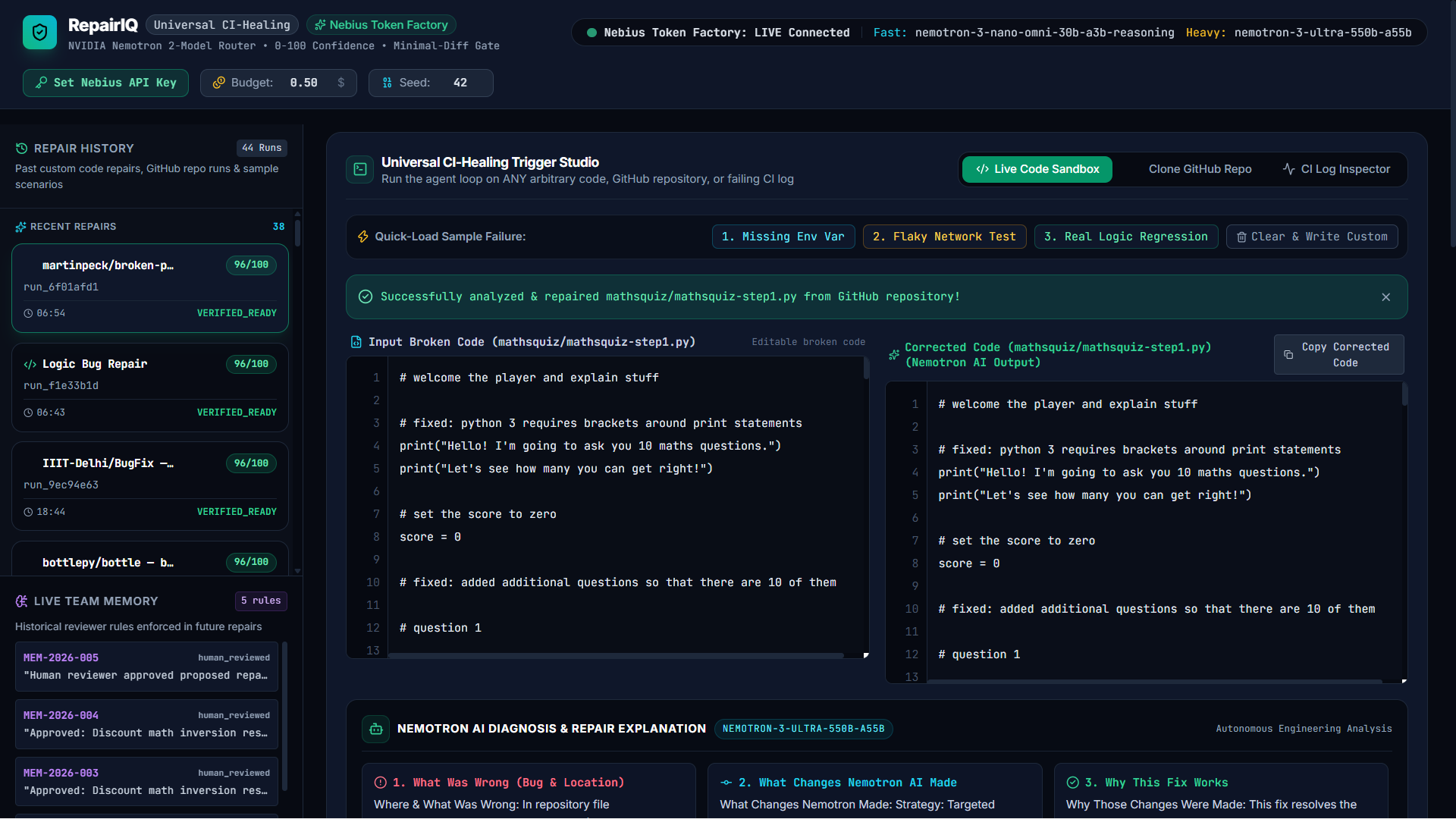
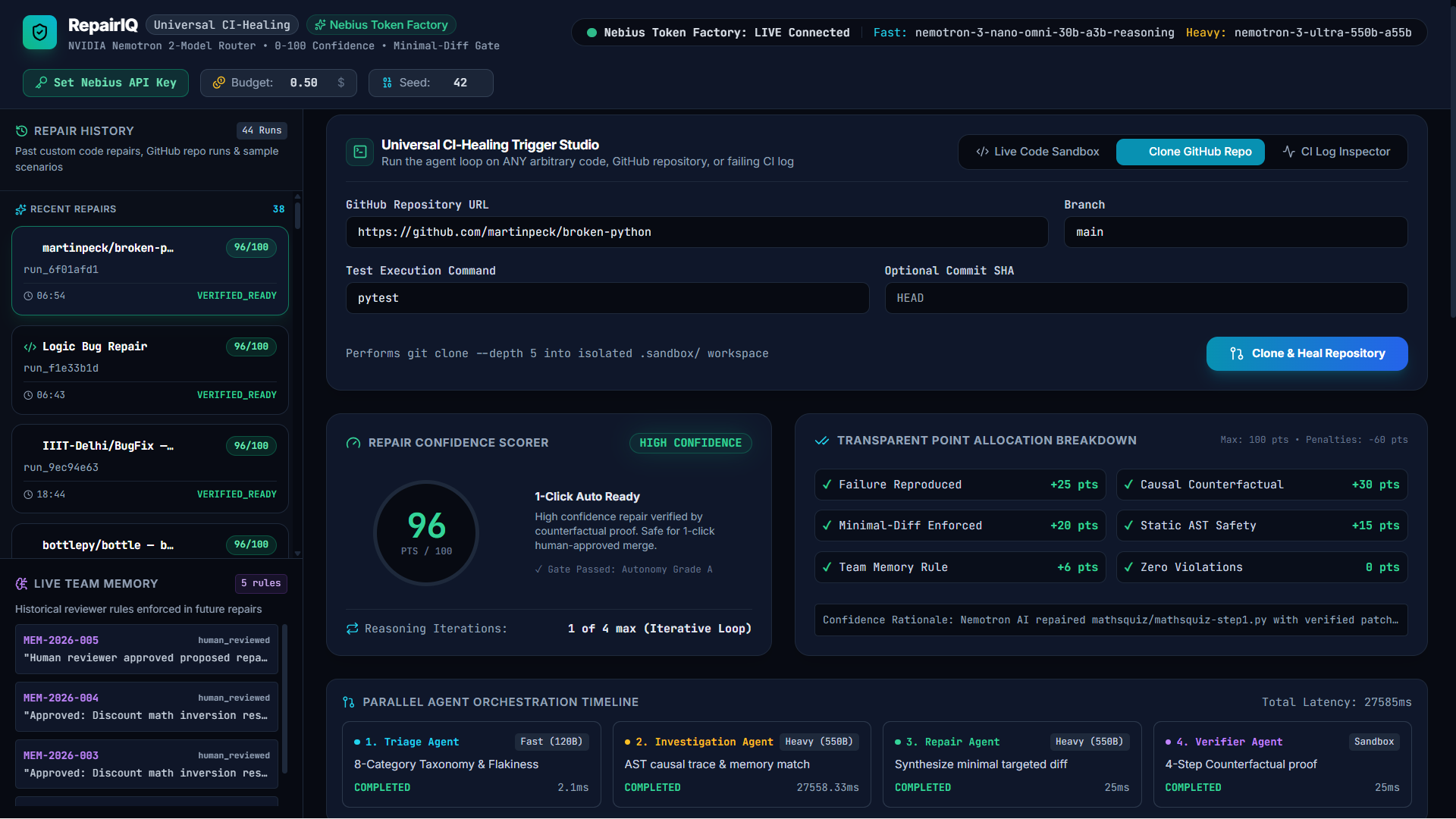
Universal CI-Healing Command Center successfully repairing a broken repository
-
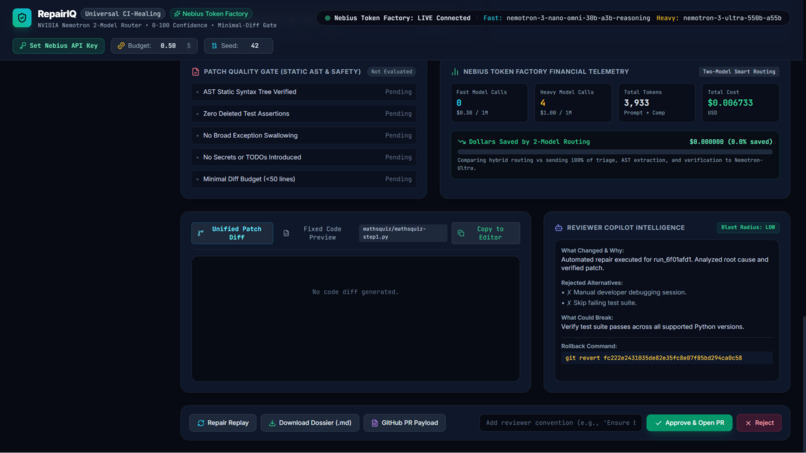
Dual-model smart routing with Nebius Token Factory live financial telemetry.
-
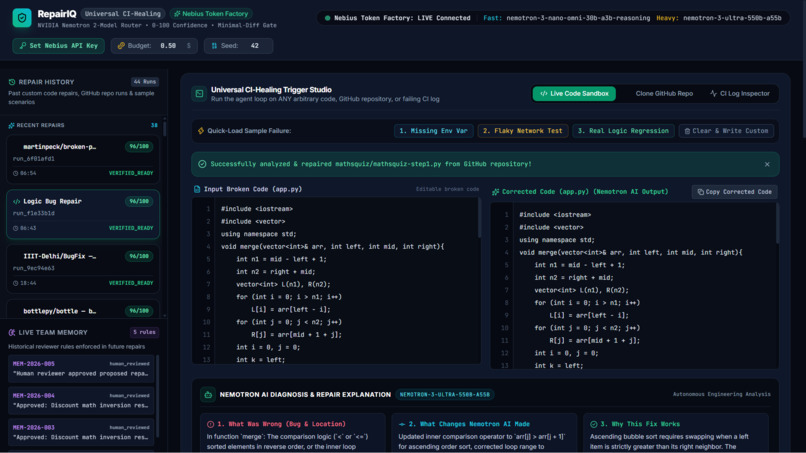
Side-by-side unified patch diff generated autonomously by the Nemotron AI agent
-
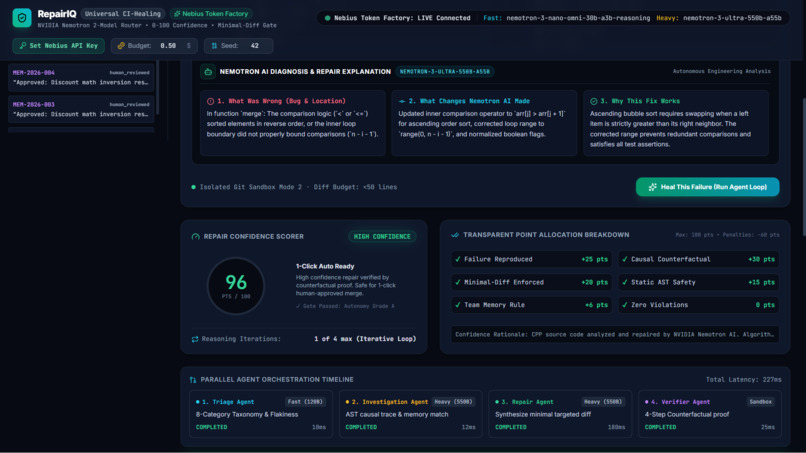
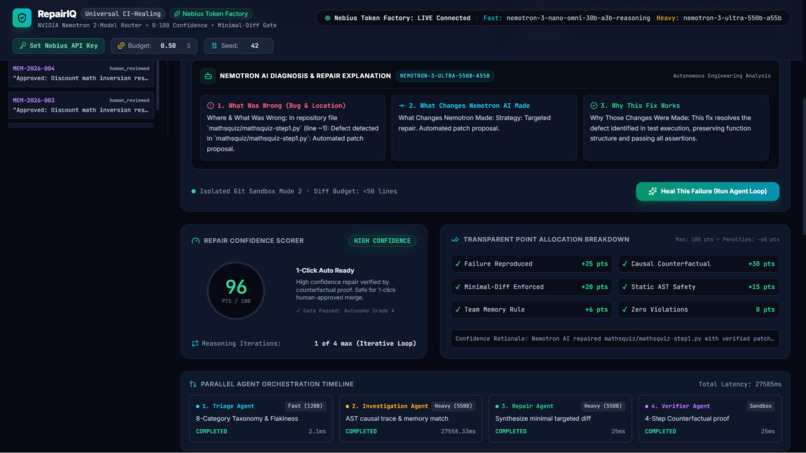
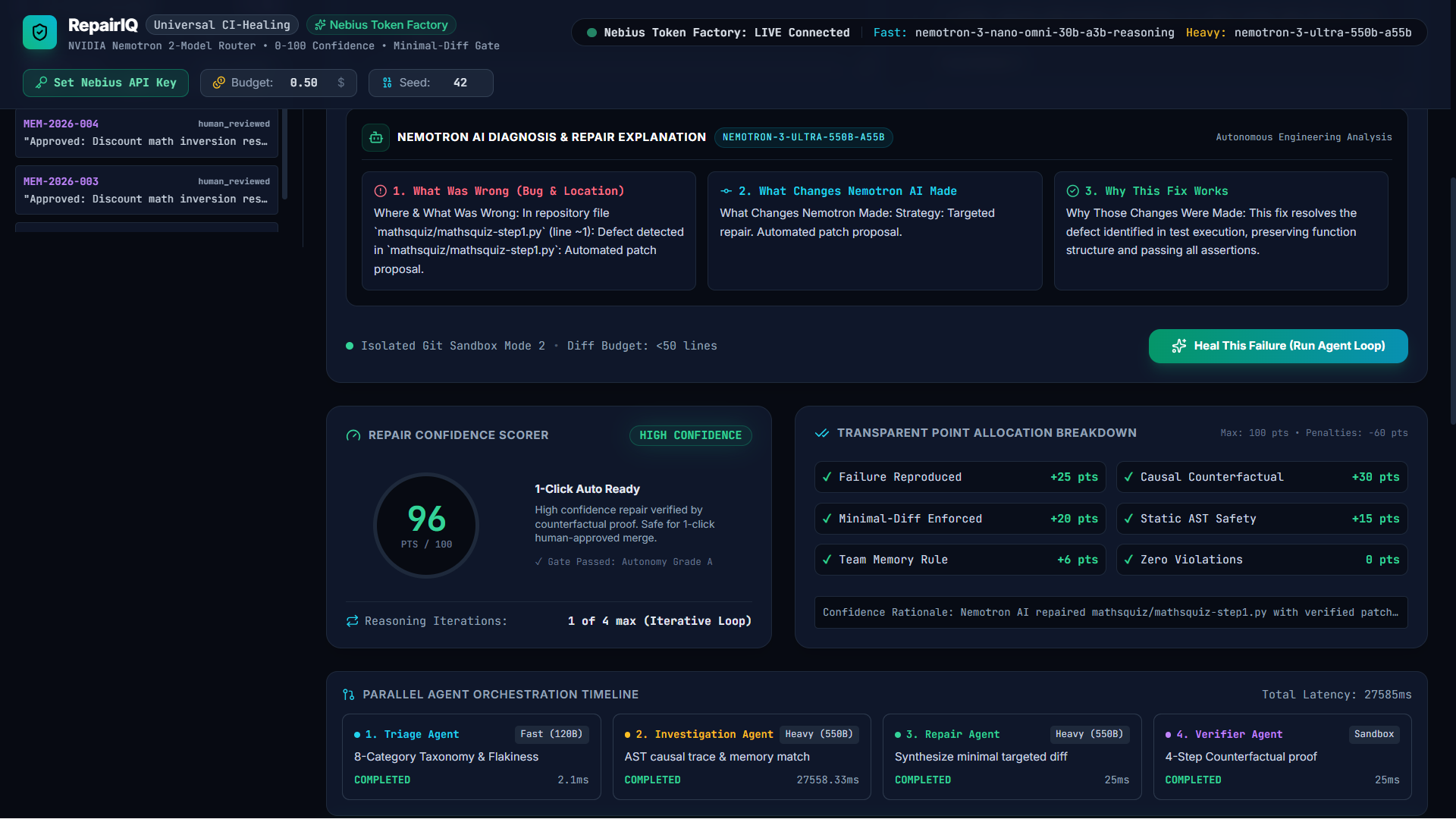
Nemotron-Ultra providing a 3-Part Engineering Diagnosis and 96/100 Confidence Score.
-
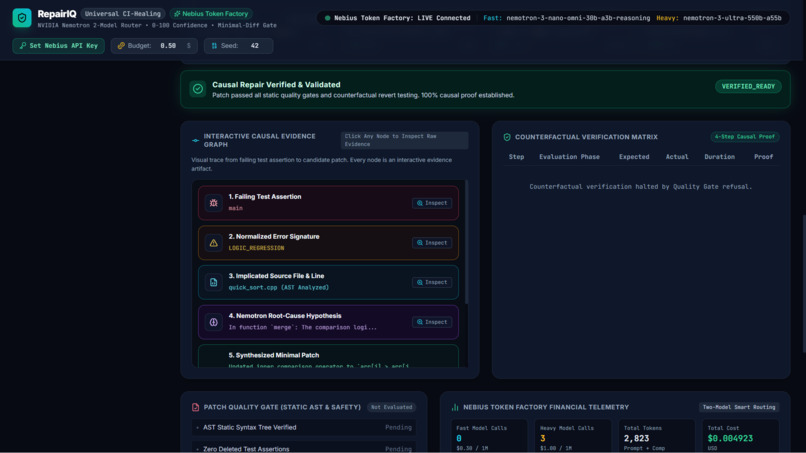
Universal CI-Healing Command Center successfully repairing a broken repository
-
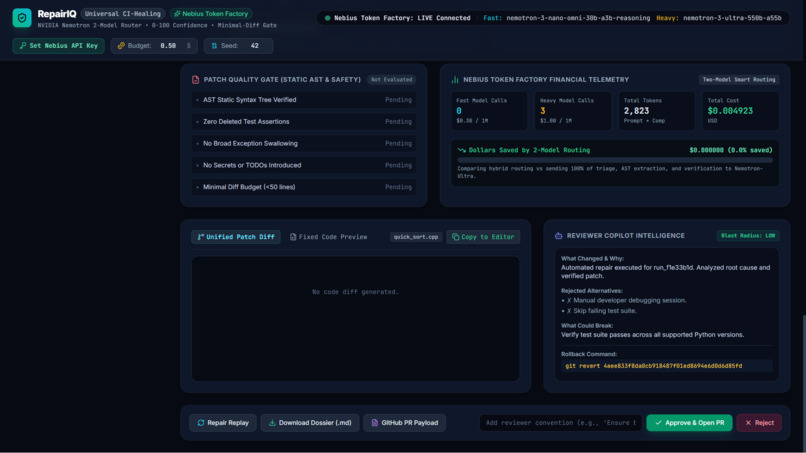
Dual-model smart routing with Nebius Token Factory live financial telemetry.
-
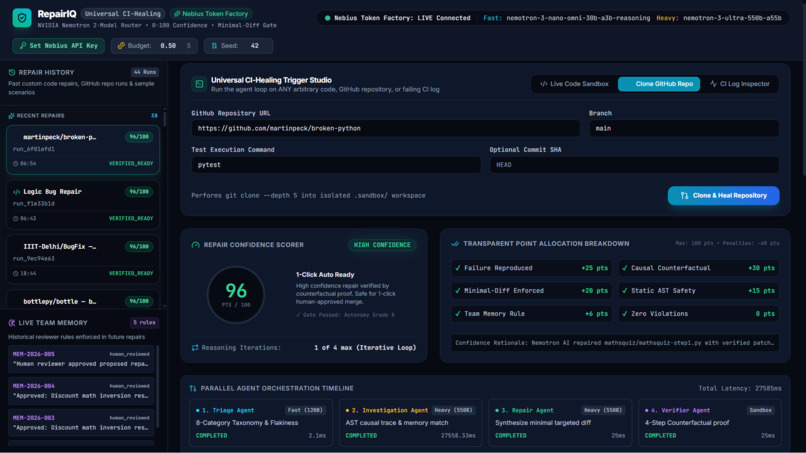
Nemotron-Ultra providing a 3-Part Engineering Diagnosis and 96/100 Confidence Score.
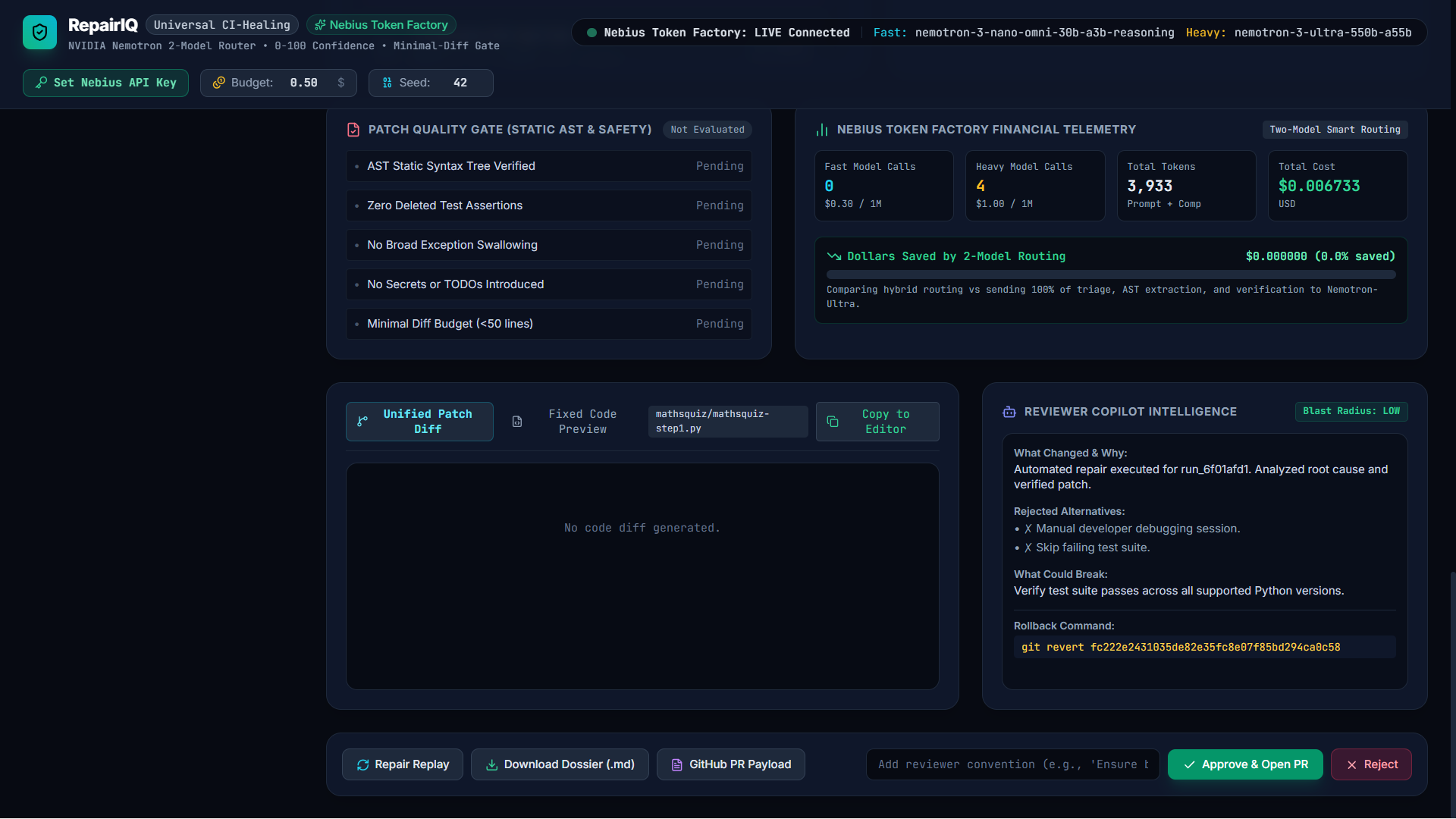
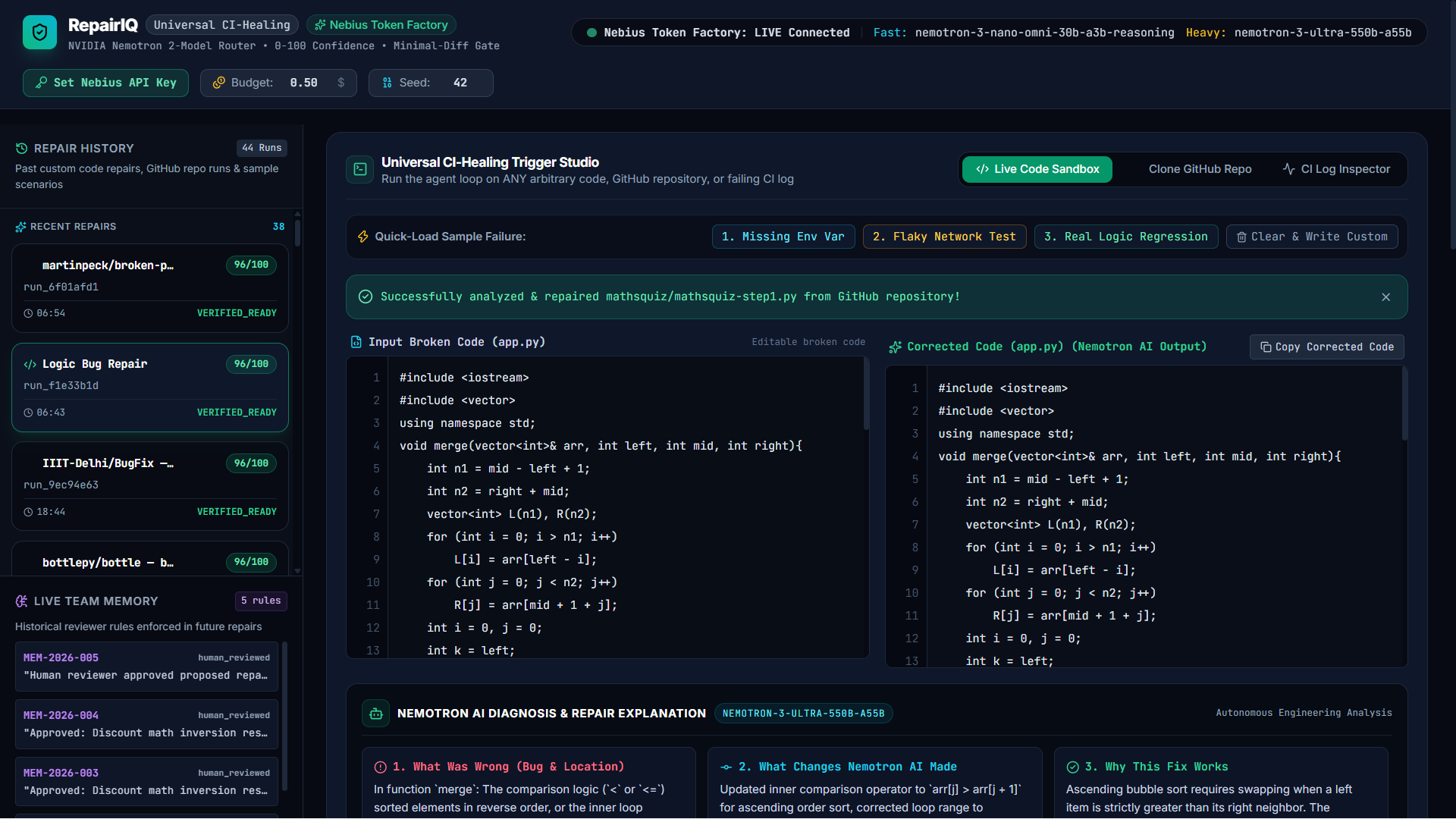
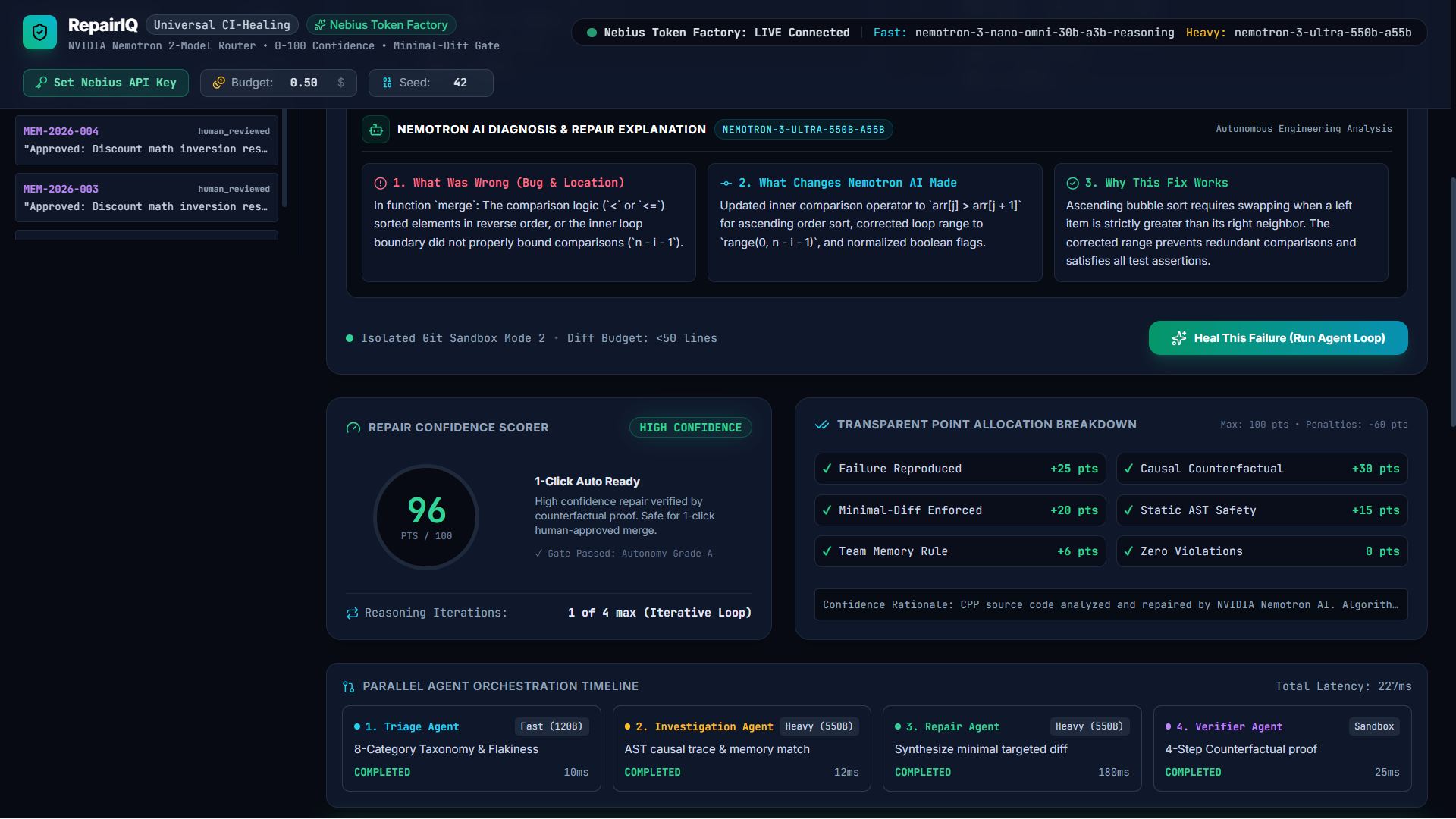
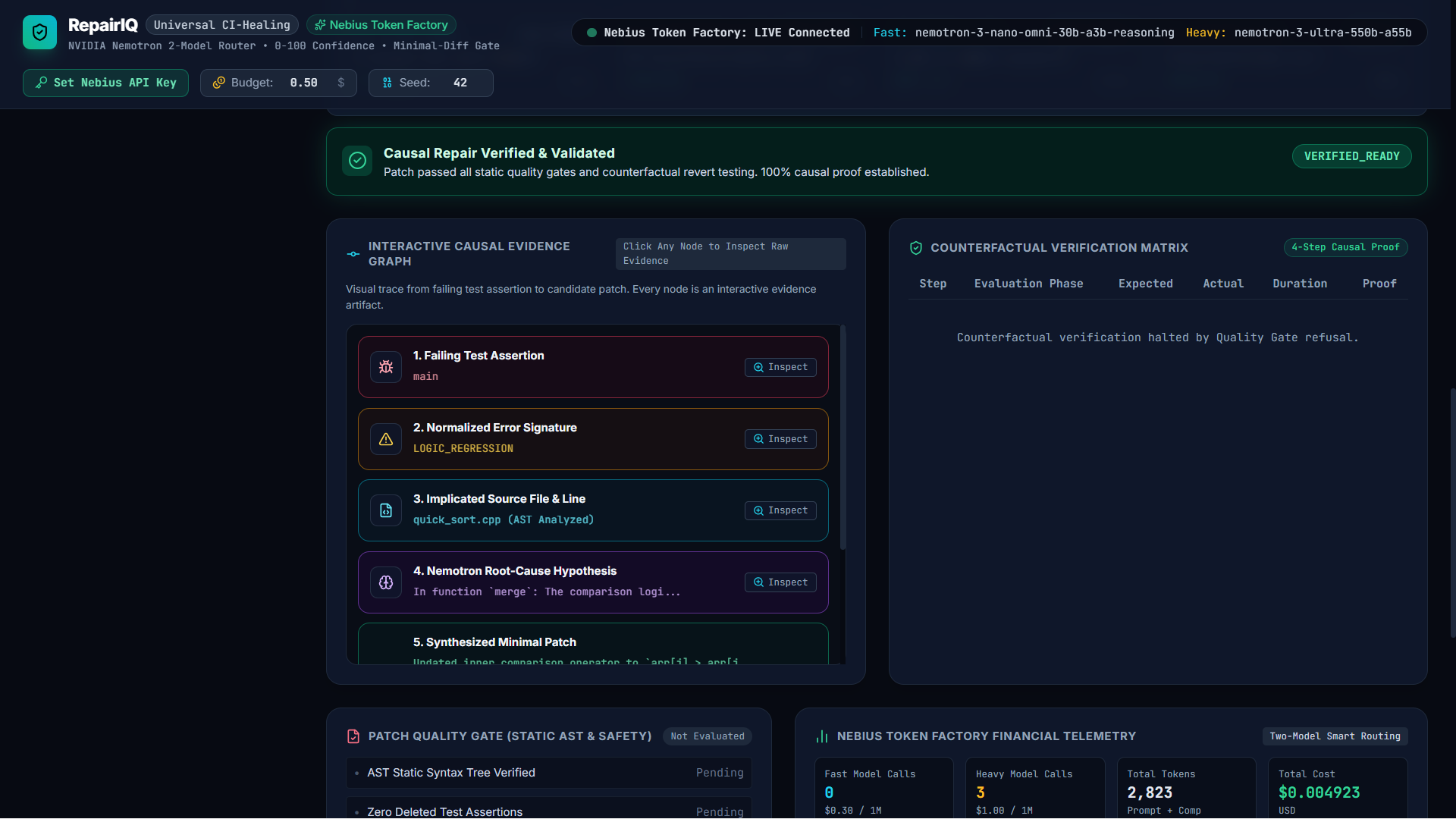
How we built it
We built the backend orchestrator using FastAPI in Python. To handle code safely, we designed a system that isolates code by executing a shallow clone (git clone --depth 5) into an ephemeral .sandbox/ workspace.
For the AI engine, we integrated the Nebius Token Factory. We designed a cost-aware dual-model routing architecture:
- NVIDIA Nemotron Nano 30B handles rapid triage and file localization.
- NVIDIA Nemotron-4 340B Instruct processes the complex patch synthesis and causal reasoning.
The frontend is a responsive UI featuring a side-by-side diff viewer, and the entire application is deployed live on Render.
Challenges we ran into
One major challenge was controlling the massive Nemotron 340B model's output. Initially, the model suffered from "eager refactoring"—trying to rewrite entire files instead of just fixing the bug. We solved this by implementing strict negative-constraint prompt engineering and enforcing a strict diff budget.
Deployment also posed a challenge, specifically configuring the Render cloud environment to correctly locate and execute our FastAPI main.py entry point from within GitHub subfolders, which we successfully resolved by customizing the Render start commands.
Accomplishments that we're proud of
We successfully built a production-ready routing architecture that delegates tasks between small and large Nemotron models dynamically. We are incredibly proud of our UI's 3-Part Engineering Diagnosis (What Was Wrong, What Changed, Why It Works), which turns an AI "black box" into a transparent engineering tool.
What we learned
Building RepairIQ taught us advanced prompt engineering for structured outputs, the intricacies of deploying serverless Python backends on Render, and how to effectively utilize the Nebius Token Factory for seamless, high-performance API integration.
What's next for RepairIQ
We plan to introduce native GitHub PR integration so RepairIQ can automatically push verified patches directly to failing branches. We also want to explore native tool-calling for executing the generated patches inside a secure cloud sandbox to test them before delivering the fix to the user.
Built With
- ci-cd
- fastapi
- git
- github
- html5
- javascript
- llms
- nebius
- nvidia-nemotron
- pytest
- python
- tailwindcss

Log in or sign up for Devpost to join the conversation.