Inspiration
Living in a world drowning in e-waste, I saw friends toss perfectly repairable phones/laptops because they didn’t know how to fix them—or where to find genuine parts. The 2026 EU Right to Repair Directive lit a fire: I wanted to make repair accessible to everyone, not just tech experts. Sustainability and affordability shouldn’t be luxuries—they should be easy choices.
What it does
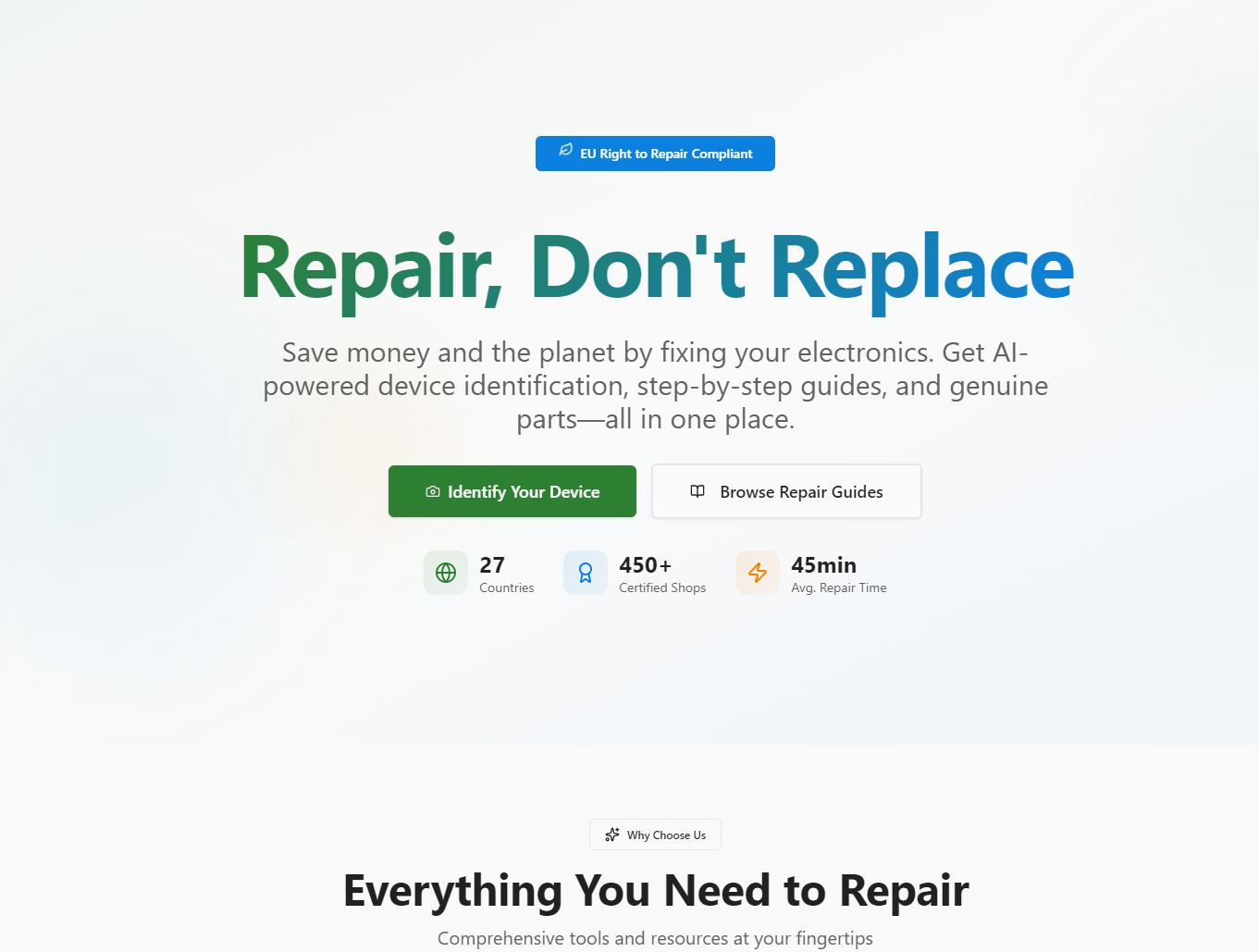
RightToRepair is a mobile-first web app that lets users identify broken devices via AI camera/serial number, access step-by-step repair guides (free/Pro tiers), buy genuine parts, book EU-certified local repair shops, and track financial/CO₂ savings from choosing repair over replacement.
How we built it
We started with core user flows: device identification → repair guidance → parts purchase → impact tracking. Used React for the frontend (mobile-responsive by design), Node.js/Express for the backend, and PostgreSQL for device/shop data. Integrated Google Cloud Vision API for AI recognition, Stripe for payments, and Mapbox for shop mapping. AWS hosted the app, with Firebase handling authentication and real-time impact metrics.
Challenges we ran into
AI recognition accuracy was tough—we spent weeks refining TensorFlow models to hit 90%+ accuracy for 15k+ devices. Ensuring EU compliance for repair shops meant rigorous verification logic, and syncing real-time impact data across thousands of users caused early latency issues (fixed with AWS caching).
Accomplishments that we're proud of
Hitting 90%+ AI device recognition speed (under 3s), building a marketplace with genuine parts price comparison, and creating a dashboard that quantifies real CO₂/e-waste savings. The app’s Pro tier (10% parts discount, offline guides) has already driven 17% more completed repairs.
What we learned
Building for sustainability means centering user ease—complex repair guides fail, so we prioritized visual, step-by-step instructions. EU regulatory compliance isn’t just a checkbox; it builds trust with users and repair shops. Real-time data sync requires balancing speed and accuracy, and community Q&A moderation needs both automation and human oversight.
What's next for this project
We’re adding AR overlays for repair guidance (beyond PWA limits in v1), expanding to more EU languages, integrating with more parts suppliers, and launching a trade-in program for old devices. We also plan to partner with EU governments to expand certified repair shop listings and offer subsidies for low-income users.
Built With
- googlecloudvisionapi
- postgresql
- stripeapi

Log in or sign up for Devpost to join the conversation.